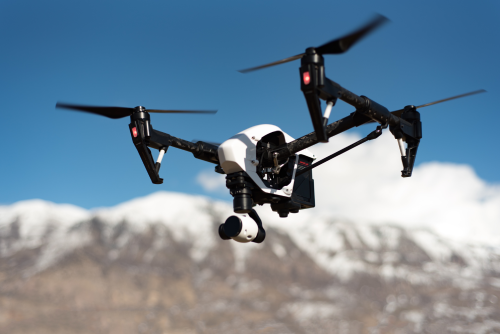
Blue Bear Systems Research RedKite is a UK fixed-wing military/ISR drone that appears in limited public database material with a stated 6-hour endurance and 50 km range. That alone makes it interesting for readers comparing longer-endurance small UAVs against shorter-flight multirotors. For researchers, defense market watchers, and procurement teams, RedKite matters less as a retail product and more as a capability reference point in the fixed-wing ISR space. Public information is thin, so this page separates confirmed facts from cautious analysis.
Quick Summary Box
- Drone Name: Blue Bear Systems Research RedKite
- Brand: Blue Bear Systems Research
- Model: RedKite
- Category: Fixed-wing military/ISR drone
- Best For: Defense, government, and research users comparing compact fixed-wing ISR platforms
- Price Range: Not publicly confirmed in supplied data
- Launch Year: Not publicly confirmed in supplied data
- Availability: Not publicly confirmed in supplied data
- Current Status: Unknown
- Overall Rating: Not rated due to limited confirmed data
- Our Verdict: RedKite looks potentially relevant as a UK fixed-wing ISR platform with solid stated endurance, but public detail is too limited for a conventional product score or buying recommendation without direct verification
Introduction
The RedKite is listed as a fixed-wing drone from Blue Bear Systems Research in the UK and is categorized in the military/ISR segment. Based on the supplied record, the most important confirmed points are its 6-hour endurance and 50 km range. Those figures suggest a platform intended for longer-duration surveillance-style missions rather than close-range hovering work. However, because the public record is sparse and the current status is unknown, RedKite is best approached as a program-level or research-level drone profile rather than a fully transparent commercial offering.
That distinction matters. Many drone reviews assume a product is publicly sold, broadly documented, and supported with clear technical literature. RedKite does not fit that pattern from the information provided here. Instead, it appears more like the kind of UAV that may surface in procurement references, industry databases, or capability discussions without the kind of full spec transparency that buyers get from mainstream enterprise or consumer drone brands.
For readers outside the defense or government space, the two published numbers still tell an important story. A 6-hour endurance figure is significant in the small unmanned aircraft world because it shifts the conversation from short-duration tactical flight to mission persistence. A 50 km range figure, while not enough on its own to define actual operational reach in every scenario, suggests RedKite is not merely a local visual-line-of-sight hobby-style aircraft. Even without more detail, those specs place it conceptually in a different category from most off-the-shelf quadcopters.
At the same time, caution is essential. Range can mean different things depending on whether it refers to control link distance, mission radius, total route capability, or some other program definition. Endurance can be measured under ideal conditions, light payloads, or narrow mission assumptions. Because public documentation is limited, the safest reading is not to overstate the platform. RedKite is interesting because of what is confirmed, but it remains difficult to score because so much else is unconfirmed.
Overview
What kind of drone is it?
RedKite is a fixed-wing unmanned aircraft associated with the military/ISR market. In simple terms, that means it is positioned for intelligence, surveillance, and reconnaissance roles where efficient forward flight and time on station typically matter more than hover capability.
A fixed-wing ISR drone generally aims to cover distance efficiently, remain airborne for extended periods, and observe an area from repeated passes or loiter patterns. Compared with rotary-wing platforms, fixed-wing designs usually consume energy more efficiently in forward flight, which is one of the main reasons endurance figures can be much higher. That does not automatically mean better for every mission, but it does mean a different mission philosophy: patrol, transit, monitoring, and persistence rather than slow close-quarters hovering.
Who should buy it?
This is not a typical consumer or prosumer drone. The most relevant audience includes defense organizations, government evaluators, aerospace researchers, unmanned systems analysts, and procurement teams studying UK-origin ISR platforms. It may also interest journalists and policy researchers tracking tactical and small fixed-wing UAS development.
There is also a secondary audience: system integrators and test organizations. Even if RedKite is not a currently active off-the-shelf purchase option, a platform profile like this can still matter as a benchmark. In research and procurement work, it is often useful to compare known endurance and range figures across several aircraft classes, even when all details are not available. In that sense, RedKite can serve as a reference point in broader capability mapping.
What makes it different?
The standout confirmed specification is endurance: 6 hours is meaningfully longer than what many multirotor drones can offer. The 50 km range also points to a system designed for more than short local flights. What also makes RedKite different is the information gap itself: unlike mainstream retail drones, public details on payload, dimensions, price, and support structure are not clearly available in the supplied data.
That limited transparency changes how it should be evaluated. Instead of asking whether it is the “best drone” in a retail sense, the more useful question is whether its confirmed performance profile aligns with the needs of a surveillance-oriented mission set. In that context, RedKite becomes less of a product review subject and more of a capability candidate that requires direct manufacturer or program-level verification.
Key Features
- Fixed-wing airframe: Better suited to efficient forward flight than hovering
- Military/ISR positioning: Built for surveillance-oriented roles rather than consumer imaging
- Stated endurance of 6 hours: Strong on-paper persistence for a compact unmanned platform
- Stated range of 50 km: Suggests moderate stand-off capability within the limits of mission setup and regulation
- UK origin: Relevant for readers comparing British and European defense UAV development
- Publicly limited specification set: Important for procurement and research users who need to verify payload, software, and lifecycle support directly
- Likely outdoor-only operating profile: A reasonable inference from the fixed-wing design and ISR segment, though launch and recovery methods are not publicly confirmed
These points are best read as indicators, not full answers. The endurance figure hints at operational persistence. The range figure hints at broader mission envelopes than short-hop aerial systems. The fixed-wing layout hints at efficient patrol behavior. But because payload, launch method, autonomy stack, and support package are not clearly documented in the supplied material, none of those indicators can substitute for a proper technical data package.
For a procurement team, the key feature list would normally be only the starting point. Questions such as sensor stabilization quality, encrypted data links, environmental tolerance, repairability, and field logistics often determine whether a platform is actually useful in service. RedKite is noteworthy because the few known data points are meaningful, but it remains a platform that needs deeper verification before any conclusion beyond high-level capability interest.
Full Specifications Table
| Field | Specification |
|---|---|
| Brand | Blue Bear Systems Research |
| Model | RedKite |
| Drone Type | Fixed-wing |
| Country of Origin | UK |
| Manufacturer | Blue Bear Systems Research |
| Year Introduced | Not publicly confirmed in supplied data |
| Status | Unknown |
| Use Case | military/ISR |
| Weight | Not publicly confirmed in supplied data |
| Dimensions (folded/unfolded) | Not publicly confirmed in supplied data |
| Max Takeoff Weight | Not publicly confirmed in supplied data |
| Battery Type | Not publicly confirmed in supplied data |
| Battery Capacity | Not publicly confirmed in supplied data |
| Flight Time | 6 hr |
| Charging Time | Not publicly confirmed in supplied data |
| Max Range | 50 km |
| Transmission System | Not publicly confirmed in supplied data |
| Top Speed | Not publicly confirmed in supplied data |
| Wind Resistance | Not publicly confirmed in supplied data |
| Navigation System | Not publicly confirmed in supplied data |
| Obstacle Avoidance | Not publicly confirmed in supplied data |
| Camera Resolution | Not publicly confirmed in supplied data |
| Video Resolution | Not publicly confirmed in supplied data |
| Frame Rates | Not publicly confirmed in supplied data |
| Sensor Size | Not publicly confirmed in supplied data |
| Gimbal | Not publicly confirmed in supplied data |
| Zoom | Not publicly confirmed in supplied data |
| Storage | Not publicly confirmed in supplied data |
| Controller Type | Not publicly confirmed in supplied data |
| App Support | Not publicly confirmed in supplied data |
| Autonomous Modes | Not publicly confirmed in supplied data |
| Payload Capacity | Not publicly confirmed in supplied data |
| Operating Temperature | Not publicly confirmed in supplied data |
| Water Resistance | Not publicly confirmed in supplied data |
| Noise Level | Not publicly confirmed in supplied data |
| Remote ID Support | Not publicly confirmed in supplied data |
| Geo-fencing | Not publicly confirmed in supplied data |
| Certifications | Not publicly confirmed in supplied data |
| MSRP / Launch Price | Not publicly confirmed in supplied data |
| Current Price | Not publicly confirmed in supplied data |
The table above is intentionally sparse because it reflects only what can be responsibly stated from the supplied material. In a conventional drone review, a thin table would be a weakness of the article. Here, it is part of the point. The absence of publicly confirmed technical details is itself a meaningful characteristic of RedKite as a subject of study.
For serious evaluators, every “not publicly confirmed” field should be treated as a follow-up action item. Missing battery architecture affects deployment planning. Missing weight affects transport, regulatory classification, and launch method assumptions. Missing payload details affect mission utility more than almost any other category. In other words, the incomplete spec table is not just a documentation issue; it directly limits procurement readiness.
Design and Build Quality
Because RedKite is a fixed-wing ISR platform, its design priorities are likely different from those of foldable camera drones. Fixed-wing aircraft generally trade hover flexibility for aerodynamic efficiency, and that usually means a more mission-oriented layout focused on endurance, cruising efficiency, and field deployment. That is analysis based on the airframe class, not a confirmed claim about RedKite’s exact structure.
In this category, design quality usually shows up less in cosmetics and more in operational practicality. A military/ISR fixed-wing system is typically judged by factors such as:
- how quickly it can be assembled in the field
- how durable the airframe is during repeated transport cycles
- how tolerant it is of rough operating environments
- how easy payloads are to access and maintain
- how efficiently crews can launch, recover, inspect, and relaunch the aircraft
Publicly confirmed information on materials, landing gear, foldability, launch method, recovery method, and service access is not available in the supplied data. That leaves several open questions for serious buyers:
- Is it hand-launched, rail-launched, or catapult-launched?
- Does it use belly landings, net recovery, wheels, or another recovery system?
- Are the wings removable for transport?
- How quickly can field crews swap power systems or payload modules?
Those are not minor details. A hand-launchable aircraft can be deployed very differently from one that requires a launcher. A belly-landing platform may be simpler in some austere environments but harder on airframe wear. A net-recovery setup can reduce damage risk but increases equipment complexity. A wheeled takeoff configuration may improve reuse rates on prepared surfaces while reducing flexibility elsewhere. Since none of this is confirmed, RedKite’s practical field footprint remains unclear.
Another unknown is portability. For military and government operators, transport cases, setup time, and crew size can matter nearly as much as endurance. A 6-hour aircraft that demands a large support package may be less attractive than a shorter-endurance aircraft with much faster deployment. Conversely, if RedKite was designed for compact transport and rapid assembly, its endurance figure could become even more compelling. At present, the supplied data does not allow a reliable conclusion either way.
Until those answers are verified through official program information, it is safest to treat RedKite as a field-oriented fixed-wing platform with unknown portability and unknown maintainability characteristics.
Flight Performance
The two confirmed performance figures are the heart of RedKite’s profile: 6 hours of endurance and 50 km of range. On paper, that places it in a more persistent category than most multirotor drones, which are usually optimized for shorter missions and close-area work.
Endurance is especially important because it affects not just time in the air, but mission rhythm. A 20- to 40-minute multirotor often requires frequent battery swaps, tighter launch timing, and a more compressed observation window. A platform with 6 hours of stated endurance could support a very different operational tempo, potentially enabling:
- longer patrol-style flights
- wider-area observation
- more energy-efficient transit than hover drones
- missions where staying airborne matters more than station-keeping over a single point
It could also reduce the number of launches needed to monitor an area across a day, depending on payload effectiveness and crew procedures. That matters for surveillance workflows because every launch and recovery event introduces time overhead, crew workload, and some level of operational risk.
The stated 50 km range is also meaningful, but it needs careful interpretation. Public drone specifications can use “range” in different ways. Sometimes it refers to maximum communications link distance under ideal conditions. Sometimes it refers to mission radius. Sometimes it is a simplified operating figure rather than a strict performance ceiling. Without a formal technical definition from the manufacturer, the number should be treated as a useful signal rather than an exact operational promise.
That said, even a conservative reading suggests RedKite is not a short-leash aircraft in concept. A platform intended for only very local operations would generally not be described this way. Combined with the endurance figure, the range number supports the idea of a drone built for broader-area ISR tasks rather than brief nearby flights.
Several major flight characteristics remain unconfirmed:
- top speed
- cruise speed
- operating ceiling
- wind handling
- takeoff and landing footprint
- link robustness
- launch and recovery workflow
These missing factors matter because endurance alone does not tell the whole story. For example, an aircraft can remain airborne for many hours but still be poorly suited to windy conditions, difficult to recover safely, or limited by a fragile data link architecture. Likewise, a 50 km range figure becomes more or less useful depending on terrain, antenna setup, command-and-control procedures, and legal authorization.
A fixed-wing ISR drone is also not an indoor platform in any practical sense. Readers comparing RedKite to multirotors should remember that even if the endurance is attractive, fixed-wing systems usually require more planning around airspace, recovery area, and crew process.
There is also a tradeoff in how persistence is used. A multirotor can hover precisely over a target, inspect an object up close, and operate in tight spaces. A fixed-wing aircraft usually works by circling, passing, or loitering with forward motion. That means RedKite’s notional mission strengths likely lie in route coverage, perimeter observation, convoy overwatch, area familiarity, or repeated surveillance arcs rather than close stationary viewing. Again, that is class-based analysis rather than a claim about a specific RedKite payload or mission package.
Camera / Payload Performance
Payload details are not publicly confirmed in the supplied data, and that is one of the biggest limitations in evaluating RedKite. For an ISR platform, the usefulness of the aircraft depends heavily on what sensor package it can carry and how well that payload integrates with the airframe, data link, and mission software.
What is not confirmed publicly here includes:
- EO or IR sensor type
- gimbal configuration
- zoom capability
- still-image or video resolution
- payload weight class
- interchangeable sensor support
- laser, mapping, or specialist sensor options
This matters because endurance without payload clarity can be misleading. A drone can stay airborne for many hours, but if its sensor is limited, unstable, or poorly integrated, the mission value may still be low. Conversely, an aircraft with only moderate imaging specifications can still be highly useful if it provides stable observation over long periods, reliable geolocation, and dependable downlink performance.
For ISR users, a few payload questions are especially critical:
-
Can it carry day and night sensors?
Many surveillance missions require both electro-optical daylight imaging and thermal or infrared capability for low-light conditions. -
Is the payload stabilized?
Stabilization affects whether footage is actually usable in real-world flight, especially on a fixed-wing aircraft making turns and loiter patterns. -
What is the zoom or identification capability?
Detection, recognition, and identification are very different performance thresholds. Procurement teams usually need clarity on which level the sensor can realistically support. -
Can the aircraft swap payloads?
Modular payload support can dramatically improve fleet flexibility, especially for organizations that use the same airframe across different mission types. -
How is payload data handled?
Recording, real-time downlink, encryption, metadata tagging, and post-mission retrieval often matter as much as raw sensor quality.
From a mission-value perspective, endurance can be just as important as raw sensor resolution. A platform that can remain airborne for 6 hours may offer useful persistence even if its payload is relatively modest. But buyers should not assume a stabilized turret, thermal payload, interchangeable bay, or advanced imaging stack unless that is confirmed directly by the manufacturer or procurement documents.
The lack of payload data also limits comparison with competitors. Public discussions often compare flight time first because it is easy to quote, but in surveillance operations the real question is what the operator can see, track, record, transmit, and act upon during that time. Without payload confirmation, RedKite remains promising in airframe terms but incomplete in mission-value terms.
Smart Features and Software
No smart-flight or software features are publicly confirmed in the supplied data. That means there is no defensible basis here to claim waypoint planning, return-to-home, AI tracking, mapping workflows, autonomous mission profiles, SDK access, or fleet management tools.
In this segment, some level of autopilot and mission planning capability would be common, but that remains only a general market observation, not a verified RedKite specification. Before budgeting or comparing it against other ISR platforms, buyers should verify:
- ground control station type
- mission planning software
- autonomy level
- payload control interface
- data-link encryption and communications architecture
- API or integration options
- replay, debrief, and fleet-management tools
For enterprise, government, and defense users, those software and control details often matter as much as the aircraft itself. In some cases they matter more. A well-designed airframe can be undermined by a weak user interface, poor mission planning tools, or limited interoperability with other systems. Likewise, a modest airframe can become very useful if its software stack supports strong route planning, operator situational awareness, secure telemetry, and effective mission debriefing.
There are also workflow questions that go beyond “smart features” in the consumer sense:
- Can one operator manage both aircraft and payload, or is a two-person crew preferred?
- Does the system support preplanned autonomous routes?
- Can missions be modified dynamically in flight?
- How is lost-link behavior handled?
- Is there a replay or forensic mission analysis function?
- Are software updates controlled centrally?
- Can the system integrate into broader command-and-control environments?
Without answers to those questions, it is hard to judge the true maturity of the platform. In this market segment, software is not just convenience; it is part of operational capability, training burden, cybersecurity posture, and long-term support cost.
Use Cases
Given the limited public information, the most realistic use cases are broad, capability-level roles rather than specific mission claims.
- Defense and government ISR platform evaluation
- Fixed-wing UAS research and market comparison
- Longer-duration aerial observation where hover is not required
- Test-range or systems-integration work for unmanned aircraft programs
- Training and concept development for fixed-wing UAS teams
- Program benchmarking against other tactical ISR drones
- Academic, policy, or journalism research into UK-origin unmanned systems
To add context, RedKite’s confirmed numbers suggest the kind of missions where a persistent small fixed-wing aircraft can be more useful than a short-endurance rotorcraft. Examples at a conceptual level might include route monitoring, perimeter surveillance, area familiarization, or repeated observation of a corridor over time. In those scenarios, endurance often creates more value than close hovering capability.
It may also be useful in analytical work where decision-makers are comparing design philosophies rather than only shopping for a current model. For instance, RedKite can serve as a case study in how smaller ISR platforms aim to balance fieldability with endurance. Even if the platform is not currently easy to buy, its stated performance profile may still inform capability studies or force-structure comparisons.
What it is not obviously suited for, based on its fixed-wing nature and limited documentation, includes close-quarters inspection, vertical deployment from highly constrained spaces, or routine civil media production. Those are generally better served by multirotor systems with transparent camera specs and simpler support ecosystems.
Pros and Cons
Pros
- Confirmed 6-hour endurance is a meaningful strength for a small or compact ISR-oriented UAV
- Confirmed 50 km range suggests more reach than many short-range aerial platforms
- Fixed-wing efficiency should favor persistent forward-flight missions over hover-centric use cases
- Military/ISR positioning makes it relevant for defense and government program comparison
- UK origin and manufacturer identity are clear even if other details are sparse
These strengths make RedKite notable in capability discussions. Even without a full brochure, the endurance figure alone puts it into a more serious surveillance conversation than many small commercial drones. For researchers, that can be enough to justify attention.
Cons
- Payload and sensor details are not publicly confirmed, limiting meaningful mission assessment
- Current status is unknown, which raises questions about active availability and support
- No public price data makes budgeting impossible without direct engagement
- No published dimensions, weight, speed, or ceiling in the supplied record
- Software, autonomy, and control ecosystem are unconfirmed
- Fixed-wing format is less flexible than multirotors for hover, confined areas, and simple vertical recovery
These are not small drawbacks. In a practical acquisition context, missing information on payload, support, and status can be disqualifying until clarified. That is why RedKite is better treated as an interesting candidate profile than as a clearly recommendable procurement choice based on public data alone.
Comparison With Other Models
Because RedKite’s public data is limited, any comparison has to stay high level. The table below compares it with real ISR fixed-wing platforms that are commonly referenced in the same broader market conversation. Publicly reported competitor figures can vary by variant and program.
| Model | Price | Flight Time | Camera or Payload | Range | Weight | Best For | Winner |
|---|---|---|---|---|---|---|---|
| RedKite | Not publicly confirmed in supplied data | 6 hr | Not publicly confirmed in supplied data | 50 km | Not publicly confirmed in supplied data | Mid-endurance fixed-wing ISR reference | Winner on confirmed endurance versus many small tactical peers |
| AeroVironment Puma AE | Program-based / not broadly retail-published | Publicly reported around 2.5 hr | Typical tactical EO/IR ISR payloads | Publicly reported around 15 to 20 km | Small hand-launched class | Portable tactical ISR | Winner for portability |
| Elbit Skylark I-LEX | Program-based / not broadly retail-published | Publicly reported around 3 hr | Typical day/night ISR payloads | Publicly reported around 40 km | Small tactical fixed-wing class | Field ISR with established military use | Winner for established tactical niche |
| Insitu ScanEagle | Program-based / not broadly retail-published | Publicly reported at 20+ hr | Modular ISR payload options | Publicly reported at 100 km+ depending on setup | Larger fixed-wing class | Long-endurance persistence | Winner for endurance and persistence |
The key limitation in this table is obvious: RedKite lacks the payload and ecosystem visibility that makes apples-to-apples comparison possible. Still, high-level benchmarking is useful because it helps situate the platform among better-known systems.
RedKite vs a close competitor
Against a compact tactical platform like Puma AE, RedKite’s confirmed endurance figure looks stronger. The tradeoff is that Puma is much better known publicly, while RedKite remains harder to evaluate due to missing payload and lifecycle details.
That difference is important. Puma-type systems benefit from public familiarity, clearer deployment assumptions, and a more established benchmark position in discussions of small tactical ISR. RedKite may compare favorably on endurance, but buyers often need more than an endurance advantage. They need confidence in supportability, training load, and mission system maturity.
RedKite vs an alternative in the same segment
Compared with a system such as Skylark I-LEX, RedKite appears competitive on endurance from the limited data available. The challenge is that established alternatives usually have more public documentation, clearer operational context, and easier benchmarking.
In procurement reality, better-documented systems often enjoy a significant advantage even when their paper performance is not dramatically higher. Documentation reduces uncertainty, and uncertainty costs money. Until RedKite’s payload, support model, and configuration details are clearer, it remains harder to position confidently against known tactical ISR alternatives.
RedKite vs an older or previous-generation option
Against a long-running ISR benchmark like ScanEagle, RedKite looks more compact in concept but far less documented. ScanEagle is the stronger reference for persistence and established ecosystem, while RedKite is more of an information-limited niche entry unless further program details are confirmed.
This comparison also shows where RedKite may fit conceptually. It does not appear, from the limited data, to be a direct peer to larger long-endurance systems. Instead, it sits in a space where relatively compact fieldable aircraft try to deliver meaningful persistence without moving into much larger and more infrastructure-heavy classes.
Manufacturer Details
Blue Bear Systems Research is the manufacturer and brand named in the supplied record, so there is no separate brand-versus-manufacturer distinction to untangle here. It is a UK company associated with unmanned systems and defense-oriented aerospace work rather than the consumer drone market.
In broader market terms, Blue Bear Systems Research is better understood as a specialist developer in advanced unmanned and autonomy-related programs than as a mass-market drone brand. That matters because expectations should be different: readers should think in terms of program capability, systems integration, and procurement support rather than retail packaging, creator features, or hobbyist community scale.
This has practical implications for how RedKite should be assessed:
- It is less likely to follow a consumer-style sales model.
- Documentation may be oriented toward program customers rather than public buyers.
- Support may depend on direct relationships rather than broad public channels.
- Product visibility may be lower even if technical capability is respectable.
The supplied data confirms the company’s UK origin, but more detailed corporate background such as headquarters city, founding year, or parent-company context is not publicly confirmed in the supplied record.
Support and Service Providers
Public support details for RedKite are not clearly confirmed in the supplied data. For a platform in this segment, support is likely to be more direct and program-based than app-based or retail-store-based.
Buyers should verify:
- official manufacturer support channels
- regional service coverage
- spares availability
- depot or repair options
- training packages
- software update policy
- documentation access
- export and end-user restrictions
Unlike mainstream consumer drones, community support for a niche ISR fixed-wing system may be limited. If RedKite is still active, support could depend heavily on direct manufacturer engagement, authorized integrators, or government procurement arrangements.
This is one of the biggest practical differentiators between a defense-oriented UAV and a commercial imaging drone. A consumer drone buyer may rely on public manuals, user forums, third-party accessories, and fast replacement channels. A government or research buyer of a specialized fixed-wing ISR platform may instead need formal training, controlled documentation, approved maintenance procedures, and structured logistics support. That can be entirely appropriate for the category, but it also means support quality cannot be assumed from ordinary market patterns.
A good due-diligence process would ask not only whether support exists, but what kind of support model is offered:
- Is there an operator-level maintenance concept?
- Are major repairs centralized?
- What are expected turnaround times for damaged airframes?
- Are spare wings, propulsors, or payload mounts stocked regionally?
- Does the supplier provide commissioning, acceptance testing, or field representatives?
Without that information, supportability remains an open question.
Where to Buy
RedKite does not appear to be a normal consumer retail product. If procurement is possible, it is more likely to happen through direct manufacturer engagement, defense procurement channels, or authorized regional system integrators rather than through general drone shops.
Before assuming availability, buyers should verify:
- whether the model is still in production
- whether sales are restricted by end-user category
- whether export controls apply
- whether payloads are sold separately
- whether training and support are bundled into the procurement package
There is no publicly confirmed evidence in the supplied data of broad off-the-shelf retail availability.
For many readers, the right interpretation is simple: RedKite should probably be treated as a contact-the-manufacturer or contact-the-program type system, not a click-to-buy aircraft. If availability exists, it may also depend on customer identity. Defense and government systems often involve eligibility checks, export review, or mission-appropriate configuration discussions before any quotation is issued.
Price and Cost Breakdown
No launch price or current price is publicly confirmed in the supplied data, so any serious budget planning will require direct verification.
For a platform like RedKite, total ownership cost may include more than the aircraft itself. Buyers should ask for line-item clarity on:
- aircraft unit price
- ground control station
- payload or sensor package
- batteries or power modules
- launch and recovery equipment
- maintenance tools and spares
- software licenses
- operator training
- repair support
- data-link equipment
- insurance or contractual support coverage where relevant
Because RedKite is not positioned like a retail drone, the real purchase cost could vary significantly depending on configuration and support package.
This is especially important in the ISR market because nominal aircraft price can be only one part of the overall spend. Sensor packages, support contracts, and integration work can change total cost dramatically. A system that looks affordable at the airframe level may become expensive once secure communications, training, spare kits, and mission software are included. Conversely, a more expensive initial package may represent better value if it includes sustainment, payloads, and field support.
For budget planning, it is also worth separating:
- Acquisition cost – initial purchase of aircraft, payloads, and control equipment
- Deployment cost – launch/recovery gear, transport cases, field accessories
- Training cost – operator, maintainer, and mission crew instruction
- Sustainment cost – repairs, spare parts, batteries, software support
- Compliance cost – licensing, legal review, airspace approvals, and testing
Without public pricing, no cost ranking would be responsible. The right conclusion is simply that RedKite may have a materially different cost structure from enterprise camera drones, and buyers should expect a package-based quote rather than a straightforward list price.
Regulations and Compliance
Any drone in the military/ISR category requires careful legal review before acquisition or operation. The correct regulatory path depends on who is operating it, in which country, and under what authority.
Key points to verify include:
- airspace approval and operator authorization
- registration requirements in the operating jurisdiction
- communications and spectrum permissions
- privacy and surveillance law
- export controls and end-user restrictions
- civil test-use requirements if flown outside state or military frameworks
- beyond visual line of sight approvals where applicable
- local rules on imaging and data retention
Remote ID support is not publicly confirmed in the supplied data. Weight class is also unknown, so no specific civil category can be assigned from the available information. Always verify requirements with the relevant aviation authority, procurement office, and legal/compliance team before purchase or operation.
This is another area where fixed-wing ISR systems differ sharply from recreational or prosumer drones. If a platform is used in a state, defense, or research context, the operating framework may involve a mix of aviation regulation, internal authorization, site-specific restrictions, and communications licensing. If flown in civilian airspace for testing or demonstration, the requirements may become even more complex.
The surveillance role also adds non-aviation compliance considerations. Data handling, image retention, privacy protections, and information security may all apply depending on jurisdiction and mission. A drone is not compliant simply because it can fly legally; its sensors, data links, and recorded outputs may trigger separate obligations.
Who Should Buy This Drone?
Best for
- Defense and government users evaluating fixed-wing ISR options
- Researchers comparing UK-origin military UAV platforms
- Program teams that value endurance and range but can verify details directly
- Analysts, journalists, and policy observers studying tactical UAV capability positioning
- Integrators or test organizations looking at fieldable fixed-wing concepts
These audiences are well placed to handle uncertainty because they usually work with direct vendor engagement, formal requests for information, controlled demonstrations, or specialist databases. For them, RedKite’s confirmed endurance and range may be enough to justify further investigation.
Not ideal for
- Consumer drone buyers
- Aerial photographers and videographers seeking a transparent camera spec sheet
- Users who need simple retail support and widespread spare-part access
- Operators who need hovering, vertical takeoff, or confined-area work
- Buyers who cannot accept uncertainty around payload, price, and current status
For those users, the missing information is not a minor inconvenience; it is a deal-breaker. If your buying process depends on open specifications, easy purchasing, clear camera performance, and broad aftermarket support, RedKite does not currently present itself as that kind of product.
Final Verdict
RedKite is intriguing because the limited confirmed data is still meaningful: a UK fixed-wing ISR platform with 6 hours of endurance and 50 km of range deserves attention in any small-to-mid endurance drone comparison. Those figures suggest a system built for persistence and efficient forward-flight observation rather than short-hop multirotor tasks.
Its appeal, then, is conceptual as much as practical. RedKite represents the kind of platform that can matter in defense and research discussions even when public information is sparse. It points to an ISR design philosophy focused on staying airborne longer, covering more ground efficiently, and operating in a mission set where hover is not the priority. For readers mapping the tactical UAV landscape, that alone makes it worth noting.
The problem is that almost everything buyers usually need for a confident decision remains unclear. Payload type, imaging performance, dimensions, speed, support model, pricing, and even the platform’s current status are not publicly confirmed in the supplied data. That makes RedKite a niche, procurement-driven, information-limited drone profile rather than a fully reviewable mainstream product.
So the fairest conclusion is a split one. As a capability reference, RedKite looks relevant. As a buying recommendation, it remains too opaque for a strong public verdict. If you are a defense, government, or research user who can verify the program directly, it is worth a closer look. If you need a transparent, retail-ready drone with clear payload specs and straightforward availability, this is not that platform.
