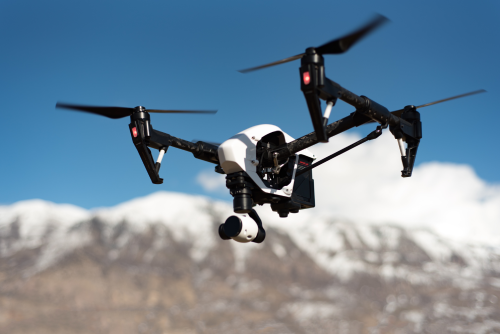
Sky Sapience Hover Mast 100 is a niche multirotor built for tethered surveillance rather than ordinary consumer flying. It matters to buyers who need a persistent elevated view from a fixed or semi-fixed position, especially where a drone is being used more like an aerial mast than a long-range aircraft. Publicly confirmed specifications are limited, but the available data is enough to show that this is a specialized Israeli-made platform aimed at professional observation work.
Quick Summary Box
- Drone Name: Sky Sapience Hover Mast 100
- Brand: Sky Sapience
- Model: Hover Mast 100
- Category: Tethered surveillance drone
- Best For: Persistent elevated observation, site security, infrastructure monitoring, and mission-specific overwatch
- Price Range: Not publicly confirmed in supplied data
- Launch Year: Not publicly confirmed in supplied data
- Availability: Not publicly confirmed in supplied data
- Current Status: Unknown
- Overall Rating: Not rated due to limited confirmed data
- Our Verdict: A specialized tethered multirotor with clear surveillance-oriented positioning, but buyers need direct vendor confirmation on payloads, endurance, pricing, integration, and support before making any procurement decision.
Introduction
The Sky Sapience Hover Mast 100 sits in the tethered surveillance segment, which already tells you a lot about its mission: stable, persistent, elevated observation rather than recreational flying or fast point-to-point work. Built by Sky Sapience of Israel, it appears to be aimed at enterprise, security, and possibly government-style monitoring roles where staying aloft over one area matters more than free-flight range or cinematic flexibility.
That distinction is important. Most people think of drones as aircraft that launch, travel, capture data, and return. A tethered surveillance system changes that mental model. Instead of behaving like a miniature helicopter substitute for mobile missions, it behaves more like a deployable observation node. In other words, the aircraft is only one piece of a larger system that may include a tether, a power source, a control station, and possibly a vehicle or site-based integration package.
This makes the Hover Mast 100 relevant to a much narrower buyer group than mainstream consumer or enterprise drones. The right customer is not usually asking, “How portable is it for weekend use?” The real questions are more likely to be: Can it maintain a stable elevated viewpoint for long periods? Can it improve perimeter visibility without building a permanent tower? Can it be integrated into a vehicle or temporary command post? Can it support a surveillance sensor package in a reliable way?
The challenge for buyers is that open public data on this model is thin. That does not automatically mean the system is immature or unsuitable; specialist surveillance products often have lighter public-facing documentation than mass-market drones. But it does mean any serious evaluation must focus on confirmed basics, likely mission fit, and the long list of items that still need direct verification from the manufacturer or an authorized integrator.
Overview
What kind of drone is it?
The Hover Mast 100 is a multirotor in the tethered surveillance category. That means it is best understood as an aerial observation platform designed to operate while connected to ground equipment, rather than as a conventional untethered camera drone. The supplied data confirms a ceiling of 50 meters and a rotor span of 1.8 meters, which points to a purpose-built hovering platform rather than a compact foldable aircraft.
The term “tethered” is central here. In this class, the aircraft is usually linked to the ground by a cable that can provide power, data connectivity, or both, depending on the system design. Even without full public documentation for this specific model, the category itself implies a different operational philosophy from battery-limited free-flight drones. The goal is not to roam widely over a landscape. The goal is to maintain a useful observation position over a known location with more persistence and predictability than a standard multirotor can usually deliver.
This puts the Hover Mast 100 in a hybrid space between aviation hardware and elevated surveillance infrastructure. It is still a drone, but one that often solves the same problem as a temporary mast, tower, or raised sensor pole.
Who should buy it?
This model is most relevant to professional users who need elevated situational awareness from a controlled location. That can include:
- site security teams protecting industrial or commercial areas
- infrastructure operators monitoring large facilities
- public-safety organizations managing incidents or events
- government and defense users evaluating persistent overwatch options
- integrators building complete surveillance solutions for clients
- vehicle-based teams that need a rapidly deployable aerial lookout point
It is far less relevant to hobby pilots, travel creators, real-estate photographers, or buyers looking for a general-purpose drone. Even many enterprise drone operators may find it too specialized if their work depends on mobile inspection, corridor mapping, or repeated off-site deployment without support equipment.
A useful way to think about the ideal buyer is this: if your problem is “I need to fly out, inspect several assets, and come back,” the Hover Mast 100 may not be the right tool. If your problem is “I need a stable eye in the sky over this location for as long as operationally necessary,” then the system becomes much more interesting.
What makes it different?
What sets the Hover Mast 100 apart is its role. A tethered surveillance drone is effectively competing with towers, poles, and telescopic mast systems as much as it is competing with other drones. Instead of prioritizing long free-flight missions, this class prioritizes station-keeping, persistent viewing angles, controlled operating areas, and integration into broader security workflows. The 50-meter ceiling reinforces that mast-replacement style mission profile.
That matters because buyers sometimes compare every drone to a mobile enterprise platform such as a DJI Matrice series aircraft. In practice, that comparison only goes so far. A conventional enterprise drone offers mobility and flexibility. A tethered platform offers dwell time, controlled geometry, and a more infrastructure-like operating concept. They solve overlapping problems, but in fundamentally different ways.
The Hover Mast 100 therefore stands out less because of a flashy headline spec and more because of what it is trying to replace or improve: short-endurance overwatch from untethered drones, line-of-sight limits from ground cameras, and the logistical burden of erecting physical mast systems in temporary or vehicle-supported deployments.
Key Features
- Tethered surveillance positioning for persistent aerial observation
- Multirotor airframe suited to hovering and stable low-altitude station-keeping
- Confirmed ceiling of 50 m
- Confirmed rotor span of 1.8 m
- Israeli manufacturer with specialization in this professional segment
- Likely intended for fixed-site or vehicle-supported deployment, based on market segment analysis
- Mission profile appears closer to an aerial mast than a free-roaming drone
- Potential value in security, public-safety, and infrastructure monitoring workflows
- System-level evaluation is essential, since the air vehicle is only one part of the operating package
- Payload details are not publicly confirmed in supplied data
- Endurance, speed, free-flight range, software stack, and control ecosystem are not publicly confirmed in supplied data
Full Specifications Table
| Specification | Details |
|---|---|
| Brand | Sky Sapience |
| Model | Hover Mast 100 |
| Drone Type | Multirotor tethered surveillance drone |
| Country of Origin | Israel |
| Manufacturer | Sky Sapience |
| Year Introduced | Not publicly confirmed in supplied data |
| Status | Unknown |
| Use Case | Tethered surveillance / persistent aerial observation |
| Weight | Not publicly confirmed in supplied data |
| Dimensions (folded/unfolded) | Rotor span: 1.8 m; folded dimensions and full length not publicly confirmed in supplied data |
| Max Takeoff Weight | Not publicly confirmed in supplied data |
| Battery Type | Not publicly confirmed in supplied data |
| Battery Capacity | Not publicly confirmed in supplied data |
| Flight Time | Not publicly confirmed in supplied data |
| Charging Time | Not publicly confirmed in supplied data |
| Max Range | Not publicly confirmed in supplied data |
| Transmission System | Not publicly confirmed in supplied data |
| Top Speed | Not publicly confirmed in supplied data |
| Wind Resistance | Not publicly confirmed in supplied data |
| Navigation System | Not publicly confirmed in supplied data |
| Obstacle Avoidance | Not publicly confirmed in supplied data |
| Camera Resolution | Not publicly confirmed in supplied data |
| Video Resolution | Not publicly confirmed in supplied data |
| Frame Rates | Not publicly confirmed in supplied data |
| Sensor Size | Not publicly confirmed in supplied data |
| Gimbal | Not publicly confirmed in supplied data |
| Zoom | Not publicly confirmed in supplied data |
| Storage | Not publicly confirmed in supplied data |
| Controller Type | Not publicly confirmed in supplied data |
| App Support | Not publicly confirmed in supplied data |
| Autonomous Modes | Not publicly confirmed in supplied data |
| Payload Capacity | Not publicly confirmed in supplied data |
| Operating Temperature | Not publicly confirmed in supplied data |
| Water Resistance | Not publicly confirmed in supplied data |
| Noise Level | Not publicly confirmed in supplied data |
| Remote ID Support | Not publicly confirmed in supplied data |
| Geo-fencing | Not publicly confirmed in supplied data |
| Certifications | Not publicly confirmed in supplied data |
| MSRP / Launch Price | Not publicly confirmed in supplied data |
| Current Price | Not publicly confirmed in supplied data |
Design and Build Quality
The main confirmed physical clue is the 1.8 m rotor span. That suggests the Hover Mast 100 is not a small handheld deploy-and-fly unit in the consumer sense. It appears to belong to the larger, more mission-specific class of multirotors that are transported and deployed as equipment rather than casually carried for spontaneous flights.
That size has practical implications. A rotor span of this scale usually means the system demands a clearer launch area, more disciplined setup, and more attention to operational safety than a compact prosumer quadcopter. It may also indicate design priorities centered around lift, hover efficiency, or payload support rather than extreme portability. Even without confirmed weight or material details, the footprint alone tells buyers that this is likely a serious field system, not a backpack-first drone.
Because it is a tethered surveillance platform, field readiness likely depends not just on the aircraft but on the full operating package around it. In this category, the important build questions usually include:
- How robust is the tether interface under repeated deployment?
- How is the cable managed during launch, hover, and recovery?
- How durable is the ground station or reel mechanism?
- Can the system be deployed from uneven ground or vehicle platforms?
- How easily can rotors, landing components, or payload hardware be serviced in the field?
- Is the system intended for daily use, occasional mission use, or long-duration site deployment?
Those details are not publicly confirmed for the Hover Mast 100, but they matter more here than consumer-friendly traits like foldability or travel convenience.
From a buyer perspective, that means the design should be judged as a system, not just as an airframe. A platform in this class can be extremely useful when deployed from a site or vehicle, but much less attractive if you need lightweight portability or rapid movement between many scattered locations. The question is not “Is it easy to carry?” The better question is “Is it efficient to deploy in the operating environment I care about?”
Build quality in a surveillance platform also includes tolerance for repeated professional use. Security teams and public-safety crews tend to care less about glossy finish and more about reliability: connector quality, wiring protection, weather handling, replacement part availability, landing gear durability, and how the aircraft behaves after dozens or hundreds of launch cycles. In that sense, the most valuable design features may be invisible in simple marketing photos.
Flight Performance
The most useful confirmed performance figure is the 50 m ceiling. That strongly suggests the Hover Mast 100 is intended to provide a modest but tactically useful elevated viewpoint over a localized area, rather than operate at long distances or higher altitudes like a traditional free-flight mission drone.
A 50-meter operating height is meaningful in surveillance terms. It can lift a sensor above fences, walls, vehicles, vegetation, containers, rooftop clutter, or crowd-level obstructions. It can widen a security team’s field of view without requiring a permanent structure. It can also create a better observation angle for monitoring entrances, roads, perimeter zones, or incident scenes. For many fixed-area applications, that kind of vertical separation is more operationally useful than having kilometers of horizontal flight range.
As a multirotor, it should be expected to prioritize hover stability over speed. That is an analysis based on class and use case, not a newly confirmed performance claim. In practical terms, buyers should expect a tethered platform like this to be evaluated primarily on:
- how steadily it can hold position
- how confidently it can operate in real outdoor conditions
- how it behaves under tether load and cable drag
- how quickly it can be raised and recovered
- how cleanly it integrates with a ground power or tethering setup
- whether it can support stable imaging at operational height
For tethered systems, “performance” often means something slightly different from what it means in untethered drones. Raw speed matters less. Acceleration matters less. Maximum range matters much less. Instead, the most important flight-performance questions become:
- Can it remain stable for surveillance tasks?
- Can it handle gusts without degrading sensor usefulness?
- How reliable is it over long dwell periods?
- What happens if site power fluctuates or the tether experiences strain?
- How consistent is the hover quality with a payload attached?
Top speed, range, wind resistance, and flight endurance are all unconfirmed in the supplied data. For that reason, no serious buyer should assume free-flight flexibility comparable to an untethered enterprise drone. The likely operating model is controlled-area launch, stable hover, and persistent observation from a known point.
Another practical note: tethered aircraft can face aerodynamic and operational constraints that free-flight platforms do not. The cable itself introduces drag, handling considerations, and potential snag risks. Deployment procedures become more important. The landing zone must stay clear. Operators may need additional site discipline to avoid cable interference from vehicles, personnel, or nearby structures. These are not flaws unique to the Hover Mast 100, but they are part of the reality of the class.
Camera / Payload Performance
Public payload information for the Hover Mast 100 is not confirmed in the supplied data. That is a major limitation, because the real value of a tethered surveillance drone often depends more on its sensor package than on the aircraft itself.
That point cannot be overstated. A tethered aircraft is often little more than a stable elevated platform unless it carries the right observation equipment. In many professional deployments, the payload determines whether the system is useful for broad awareness only, detailed inspection, low-light monitoring, thermal detection, target tracking, evidentiary video capture, or command-center integration.
In this segment, the typical mission value would come from carrying an observation payload such as stabilized electro-optical or other surveillance-oriented sensors, but the exact camera type, gimbal details, zoom capability, and recording specifications for this model are not publicly confirmed here. Buyers should therefore avoid assuming anything about:
- image resolution
- optical zoom range
- thermal capability
- low-light sensitivity
- stabilization quality
- target recognition or identification distance
- onboard recording format
- multi-sensor payload support
What can be said responsibly is that a 50 m elevated platform can be useful for wide-area visual awareness if paired with the right payload. The aircraft’s role is likely to provide stable height and persistent placement; the payload determines the real operational output.
For procurement teams, payload questions should probably come first, not last. Useful points to verify include:
- Is the payload integrated by the manufacturer or third-party selectable?
- Is there a stabilized gimbal?
- Can operators pan, tilt, and zoom smoothly from the ground station?
- Are there visible and thermal options?
- What is the latency on the live video feed?
- Can the system stream to external displays or command centers?
- Is metadata embedded in the video?
- Can footage be stored locally, centrally, or both?
- Are there interchangeable payloads for different missions?
Another critical distinction is between detection, recognition, and identification. In surveillance work, a camera that can detect a person-shaped object is not the same as one that lets operators recognize activity patterns, and that is not the same as one that allows legally or operationally meaningful identification. Without payload details, buyers cannot judge where the Hover Mast 100 sits on that spectrum.
So while the aircraft concept appears well aligned with surveillance work, the payload remains the biggest unknown and likely the single most important area for direct vendor clarification.
Smart Features and Software
No confirmed public details are available in the supplied data for the Hover Mast 100’s software stack, autonomy features, or app ecosystem. That means functions many buyers ask about, such as return-to-home, automated mission modes, AI tracking, waypoint routines, cloud fleet tools, SDK access, or mapping workflows, cannot be treated as confirmed.
For a platform in this class, however, the more important software questions may actually be different from typical consumer-drone questions. A tethered surveillance system is often less about automated flight creativity and more about reliable command-and-control. Buyers should verify:
- Ground control station workflow
- Tether and power management logic
- Payload control interface
- Live video distribution options
- Recording and evidence-export workflow
- Data security and logging practices
- User roles and permissions
- Integration with command, security, or monitoring systems
- Alarm triggers or event markers
- Network architecture and cyber-hardening options
- API or software interoperability with existing site systems
Those are mission-critical issues in tethered surveillance, but they are not publicly confirmed for this model in the supplied record.
It is also worth noting that the absence of public software detail does not automatically mean the system lacks professional software capability. Specialist vendors often sell into organizations that evaluate systems through demonstrations, integration plans, and bid documents rather than through glossy app-store-style feature pages. Still, from a buyer’s perspective, undocumented software functions should never be assumed.
If you are evaluating the Hover Mast 100 for institutional use, ask not just “What features does it have?” but also:
- How many operators can view the feed simultaneously?
- Can command staff view the output remotely?
- Is video encrypted in transit?
- Are operator actions logged?
- Can payload control be handed off between users?
- Does the interface support gloves, outdoor visibility, and field use?
- Is there multilingual support if needed?
- How are software updates delivered and validated?
For security, public-safety, and government users, those questions may matter more than autonomous cinematic functions ever would.
Use Cases
The Hover Mast 100 makes the most sense when used as a persistent elevated observation tool rather than a general flying camera.
-
Fixed-site perimeter monitoring
Useful where security teams need an elevated look over fences, roads, storage yards, or facility boundaries without building permanent tower infrastructure. -
Temporary elevated surveillance at events or controlled venues
Can serve as a rapid-deployment aerial viewpoint for crowd monitoring, access-point observation, traffic flow awareness, or venue security coordination. -
Infrastructure and industrial site observation
Relevant for ports, utilities, energy sites, logistics yards, or construction zones where a fixed overhead visual position may improve situational awareness. -
Public-safety scene overwatch
Potentially valuable at emergency incidents, disaster areas, search coordination points, or traffic-control scenes where responders need a live elevated view from a known staging area. -
Border, facility, or checkpoint observation in regulated settings
The mast-like mission profile may suit controlled monitoring zones where persistence and continuity matter more than free maneuvering. -
Vehicle-supported deployment where a rapid aerial mast is useful
Particularly attractive if the complete system can be mounted or operated from a response vehicle, mobile command platform, or temporary operations base. -
Research or evaluation of tethered ISR-style drone concepts
Organizations testing persistent overwatch doctrines, remote observation workflows, or elevated sensor concepts may find it useful as a niche evaluation platform. -
Situations where a conventional mast or tower is too static and a free-flight drone is too short-endurance
This may be the clearest category fit of all: users who want something more flexible than a pole but more persistent than a battery-limited aircraft.
A helpful way to judge these use cases is to ask whether the mission depends on dwell time over one point. If the answer is yes, tethered systems become far more attractive. If the mission depends on repeatedly changing location, following moving targets over distance, or covering wide geographic areas, the Hover Mast 100 becomes a less natural fit.
Pros and Cons
Pros
- Clearly positioned for tethered surveillance, which is valuable for persistent overwatch tasks
- Multirotor layout is well suited to stable hovering
- Confirmed 50 m ceiling supports mast-replacement style observation
- Confirmed 1.8 m rotor span suggests a substantial professional platform
- Built by an Israeli manufacturer known in the tethered-drone space
- Potentially useful for site-based and vehicle-based observation workflows
- Likely to appeal to buyers who prioritize persistence over mobility
- Could offer operational advantages where tower installation is impractical or too slow
Cons
- Public specifications are very limited
- Payload and camera details are not publicly confirmed
- Endurance, range, speed, and wind performance are not publicly confirmed
- Pricing and procurement path are not publicly confirmed
- Availability and current production status remain unclear
- Tethered systems are inherently less flexible than untethered drones for mobile missions
- Full system complexity may be higher than buyers expect if they are used to standard drone packages
- Support, spare parts, and regional service coverage need verification before purchase
Comparison With Other Models
Reliable public spec matching for the Hover Mast 100 is limited, so any comparison should be treated as category-level guidance rather than a final procurement matrix. In this class, comparisons often come down to system philosophy rather than simple numbers. Buyers are typically weighing persistence, deployment workflow, ecosystem maturity, and procurement support more than top speed or consumer-style camera specs.
| Model | Price | Flight Time | Camera or Payload | Range | Weight | Best For | Winner |
|---|---|---|---|---|---|---|---|
| Sky Sapience Hover Mast 100 | Not publicly confirmed in supplied data | Not publicly confirmed in supplied data | Not publicly confirmed in supplied data | Not publicly confirmed in supplied data; 50 m ceiling confirmed | Not publicly confirmed in supplied data | Persistent elevated observation from a fixed or supported position | Baseline reference |
| Fotokite Sigma | Enterprise procurement class; exact price varies | Tethered persistent-use class | Integrated situational-awareness style payload package | Tether-limited operating area | Not publicly confirmed here | Public-safety and incident-scene overwatch | Fotokite Sigma if responder-focused ecosystem matters most |
| DJI Matrice 30/30T | Enterprise pricing varies by package | Untethered enterprise mission class | Integrated enterprise imaging options | Free-flight mission profile rather than tether-limited hover | Not publicly confirmed here | Mobile inspection and flexible enterprise operations | Matrice 30/30T if mobility matters more than persistence |
| Sky Sapience Hover Mast 50 | Not publicly confirmed here | Not publicly confirmed here | Not publicly confirmed here | Not publicly confirmed here | Not publicly confirmed here | Buyers comparing within the Sky Sapience tethered family | Depends on verified support and configuration |
Hover Mast 100 vs a close competitor
Against Fotokite Sigma, the Hover Mast 100 appears to sit in a similar broad problem space: persistent tethered aerial observation. The difference is that Fotokite is more publicly visible in responder and incident-scene discussions, while the Hover Mast 100 has thinner open-source public documentation. If you are comparing the two, support model, payload maturity, deployment workflow, training requirements, and live-video integration should matter more than raw marketing claims.
A buyer choosing between them should look at the operational environment. Public-safety agencies often value simple workflows, fast launch, minimal pilot burden, and strong incident-command integration. Security or defense buyers may prioritize payload flexibility, integration options, and system ruggedness. The better system is the one that fits the exact doctrine and support structure of the user, not necessarily the one with the most visible branding.
Hover Mast 100 vs an alternative in the same segment
An untethered enterprise drone such as the DJI Matrice 30 series is an alternative only in mission outcome, not in system philosophy. A Matrice-type platform gives you more mobility, broader mission flexibility, and a larger ecosystem of accessories, training materials, and public user experience. A tethered system like the Hover Mast 100 is better judged as a persistent observation node.
Buyers deciding between the two are really choosing between mobility and dwell time. If your team needs to inspect multiple structures, fly around obstructions, or rapidly relocate between tasks, an untethered enterprise drone is usually the better match. If your team needs a fixed elevated lookout that can remain in place as part of an ongoing operation, the tethered concept is much stronger.
Hover Mast 100 vs an older or previous-generation option
If the Hover Mast 50 is available in a buyer’s region, it may represent the more relevant internal comparison within the same manufacturer family. However, because open public details are limited, it is difficult to say whether the Hover Mast 100 is a clean upgrade in payload capacity, altitude, supportability, vehicle integration, or mission profile. That comparison should be verified directly with the manufacturer or an authorized integrator.
Internal family comparisons are often useful because support packages, training methods, and control concepts may carry over between models. For a professional buyer, that may matter more than isolated hardware differences.
Manufacturer Details
Sky Sapience is the manufacturer and brand behind the Hover Mast 100, so there is no brand-versus-manufacturer split to explain here. The company is associated with Israel and appears to operate in the professional tethered drone space rather than the mainstream consumer market.
In market terms, Sky Sapience is best understood as a specialist player. That usually means products are more likely to be sold as integrated mission systems than as off-the-shelf retail drones. For buyers, that can be positive if they need a tailored surveillance solution, but it also means less casual public documentation and fewer community-generated reviews than you would see around consumer brands.
This specialist positioning has a few implications:
- procurement may be quote-based rather than retail-based
- configurations may vary by customer need
- payload options may be bundled differently across contracts
- support may depend on region and integrator relationships
- product information may be more detailed in private brochures or direct briefings than in open marketing pages
That is normal in many security and surveillance markets. It does, however, put more responsibility on the buyer to ask the right questions early. A specialist vendor can be a major advantage if your deployment needs are unusual, but it also means there may be less independent public benchmarking available.
Support and Service Providers
No detailed public support network is confirmed in the supplied data for the Hover Mast 100. That means prospective buyers should verify the following before purchasing:
- Official technical support channels
- Regional repair capability
- Spare parts availability
- Tether and ground-station servicing
- Payload integration support
- Training availability for operators and maintainers
- Warranty terms and response times
- Local distributor or integrator coverage
- On-site commissioning options
- Software and firmware update policy
- Service-level agreements for institutional customers
For a tethered surveillance drone, support quality matters a great deal. This is not the kind of platform most buyers should treat as self-supported hardware unless they already have internal aviation and maintenance capability. A failure in the aircraft is only one part of the risk; cable systems, ground stations, power interfaces, and payload links all matter. If any one of those becomes difficult to service, mission readiness suffers.
Buyers should also ask practical questions such as:
- What are the expected wear items?
- How often should the tether be inspected or replaced?
- Are spare rotors, motors, and connectors stocked locally?
- Can payload calibration be performed in-house?
- What training is required before the warranty remains valid?
- Is there remote diagnostics support?
A niche platform can still be a good purchase if support is strong. A technically impressive platform with weak regional service can become a procurement headache very quickly.
Where to Buy
The Hover Mast 100 does not appear, from the supplied data, to be a normal consumer retail product. Buyers should expect procurement to be handled through the official manufacturer, authorized enterprise dealers, regional integrators, or specialized security and aerospace distribution channels.
Depending on the intended use case and region, sales may be restricted, quote-based, or tied to integration and training packages. If you are evaluating this model, the most realistic purchase path is likely direct enterprise inquiry rather than marketplace checkout.
In practical terms, that means buyers should expect a sales process that may include:
- initial capability discussion
- mission-fit consultation
- system configuration proposal
- quote or tender response
- possible demonstration or proof-of-concept
- training and acceptance planning
- support and maintenance terms negotiation
If your organization is comparing several platforms, it is wise to request a structured demo scenario. For example, ask each vendor to show deployment time, hover stability, feed quality, payload control, recovery procedure, and any command-center integration. With niche platforms, real operational workflow often matters more than brochure language.
Price and Cost Breakdown
No launch price or current market price is publicly confirmed in the supplied data for the Hover Mast 100. That is important, because a tethered surveillance system can cost substantially more in real ownership terms than a standard drone even when the aircraft itself is not the largest line item.
Before budgeting, buyers should verify whether the quote includes:
- Air vehicle
- Tether system
- Ground power unit
- Control station
- Payload or camera package
- Spare propellers and maintenance items
- Batteries, if applicable
- Cases, mounting gear, or vehicle integration
- Training
- Software licenses
- Warranty or service contract
- Ongoing inspection and repair costs
If you are comparing this against untethered enterprise drones, total system cost is the right metric, not airframe price alone.
A more realistic ownership model should also include:
- operator training hours
- refresher or recertification costs
- replacement tether or cable servicing
- vehicle or site mounting hardware
- networking and video distribution equipment
- storage for recorded surveillance data
- insurance and compliance costs
- downtime risk and backup equipment planning
For institutional buyers, the cheapest quote is not always the least expensive solution over time. A platform with stronger support, clearer maintenance schedules, and better integration may reduce operational friction enough to justify a higher upfront cost.
Regulations and Compliance
A tethered drone is still an aircraft in most jurisdictions, and buyers should not assume that tethering automatically removes aviation obligations. Local law may still regulate altitude, line of sight, operator qualification, airspace use, site permissions, privacy, and commercial activity.
Key points to verify include:
- Whether the drone must be registered in your country
- Whether the operator needs commercial or organizational authorization
- Whether tethered operation has separate local rules
- Whether surveillance use triggers privacy and data-handling obligations
- Whether operation near people, roads, or sensitive sites is restricted
- Whether the system supports any locally required identification standard
- Whether export, import, or end-use restrictions apply in your region
Remote ID support is not publicly confirmed in supplied data. Weight class is also unconfirmed, so buyers should not assume any specific regulatory category without documentation. Always verify current local rules before operation.
For surveillance-oriented systems, legal compliance goes beyond aviation. Buyers may also need to review:
- privacy law
- workplace monitoring rules
- public recording restrictions
- retention policies for video evidence
- cyber-security requirements
- radio frequency use and interference rules
- critical-infrastructure permissions
This is especially important if the system is being evaluated for urban security, event monitoring, or government deployment. A technically suitable drone can still become difficult to deploy if the legal and policy framework is not addressed early.
Who Should Buy This Drone?
Best for
- Organizations needing persistent elevated observation over a fixed area
- Security and infrastructure teams evaluating tethered overwatch tools
- Public-safety or government users comparing mast alternatives
- Buyers who can procure through enterprise or institutional channels
- Programs that value hover persistence more than long-range mobility
- Teams that want a system-level surveillance solution rather than a retail drone purchase
Not ideal for
- Hobbyists and first-time drone buyers
- Travel, vlogging, or cinematic users
- Operators who need long-distance untethered missions
- Buyers wanting a lightweight, foldable, backpack-friendly aircraft
- Anyone who needs transparent public specs before shortlisting
- Users without access to formal support, training, or maintenance pathways
A simple way to decide whether this drone belongs on your shortlist is to ask: Do I need an aircraft, or do I need an elevated surveillance position? If the answer leans strongly toward the second option, the Hover Mast 100 makes more sense.
Final Verdict
The Sky Sapience Hover Mast 100 looks like a serious, niche tethered surveillance platform rather than a mainstream drone purchase. What is clearly attractive is the concept: a multirotor built for persistent elevated observation, with a confirmed 50 m ceiling and a substantial 1.8 m rotor span that fit the aerial-mast role well. Those two public facts alone are enough to place it firmly in the professional overwatch category rather than the flexible enterprise-drone category.
Its likely value is also easy to understand. Many organizations need better visibility over fixed or semi-fixed areas, but they do not necessarily need a free-flying aircraft traveling kilometers away from the launch site. In that space, a tethered platform can be a smart compromise between static infrastructure and battery-limited drone operations. It may provide quicker deployment than a physical mast, more persistence than a standard drone, and a more elevated viewpoint than fixed cameras.
What holds the Hover Mast 100 back from a stronger recommendation is not the apparent mission concept, but the lack of public confirmation around almost everything else. Payload, endurance, wind handling, software environment, pricing, procurement path, support network, and current availability all remain unclear in the supplied record. For a hobby purchase, that would be a red flag. For a specialist security system, it is not unusual, but it does push the burden onto the buyer to conduct a disciplined vendor evaluation.
For buyers in security, infrastructure, public-safety, or government-style monitoring roles, the Hover Mast 100 is worth attention as a specialist system. But it is only worth serious consideration if you can verify the full package: sensor performance, tether management, command interface, support terms, training, compliance, and total cost of ownership. For everyone else, it is too procurement-driven and too thinly documented to recommend without direct manufacturer validation.
In short: potentially useful, clearly mission-specific, and plausibly valuable in the right overwatch role—but only a serious option if you can confirm the complete operational system before committing.
