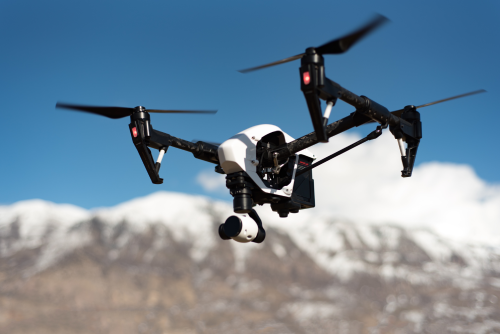
Skydio 2+ is a USA-made multirotor drone built around autonomous flight, obstacle avoidance, and solo-friendly aerial capture. It is aimed at buyers who care less about pure manual piloting and more about getting reliable footage in complex environments with less workload. What makes it matter is simple: few consumer/prosumer drones became as closely associated with AI-driven tracking and self-directed flight as the Skydio 2+.
Quick Summary Box
- Drone Name: Skydio 2+
- Brand: Skydio
- Model: Skydio 2+
- Category: Consumer/professional multirotor drone
- Best For: Solo creators, action-sports filming, autonomy-first flying, visual documentation in obstacle-rich environments
- Price Range: Launch bundles historically started around the lower four-figure range; current price is not publicly confirmed in supplied data
- Launch Year: 2022
- Availability: Not publicly confirmed in supplied data
- Current Status: Active in the supplied record
- Overall Rating: Not rated due to limited confirmed data
- Our Verdict: A standout autonomy-focused drone that is most attractive to users who prioritize smart tracking and obstacle avoidance over pure camera spec chasing.
Introduction
The Skydio 2+ is an active consumer/professional drone from Skydio, a U.S. manufacturer known for autonomy-focused flight systems. In practical terms, this model sits in the prosumer space: more advanced than a basic hobby drone, but still relevant to solo creators, field teams, and buyers who want intelligent flight assistance. Readers should care about it because Skydio built its reputation on letting the drone do more of the situational thinking, especially around obstacle avoidance and subject tracking.
That distinction is more important than it may sound on paper. Many drones can record sharp footage in an open field on a clear day. Far fewer are designed with the expectation that the subject will be moving quickly, the route will be unpredictable, and the environment will include trees, poles, branches, fences, structures, or other visual clutter. The Skydio 2+ became notable precisely because it was not just trying to be another flying camera. It was trying to be a flying camera that could make better decisions in real environments.
For some buyers, that makes it unusually compelling. A cyclist riding through wooded trails, a runner moving under changing cover, a solo content creator hiking alone, or a visual documentation user working around structures may care less about having the biggest sensor in the segment and more about whether the aircraft can maintain framing without colliding or forcing constant pilot correction. That is the lens through which the Skydio 2+ is best understood.
This also means the Skydio 2+ should not be judged only by traditional spec-sheet categories. If a buyer compares it only by camera sensor size, video headline, or maximum range, they may miss the main reason the model exists. The real value proposition is the combination of computer vision, autonomous navigation, subject tracking, and a workflow that lowers the burden on the operator.
Overview
What kind of drone is it?
The Skydio 2+ is a multirotor camera drone designed around autonomous navigation rather than just manual camera flying. Its public identity has long been tied to computer-vision-based obstacle avoidance, AI tracking, and autonomous follow behavior. That gives it a different character from camera-first rivals that mainly compete on sensor size, zoom, or headline video resolution.
In the broader drone market, that places it in a fairly distinctive niche. A lot of consumer and prosumer drones are best described as pilot-centered tools with useful automated aids. The Skydio 2+ feels closer to an autonomy-centered tool that still allows pilot input. That difference affects how it is used, who enjoys it most, and where it delivers its strongest value.
It is also best thought of as an integrated aerial imaging platform. You are not buying it as a heavy-lift frame, a specialized thermal system, or a modular enterprise aircraft with multiple payload paths. You are buying a self-contained drone whose identity depends on onboard sensing, integrated imaging, and software-driven flight intelligence.
Who should buy it?
This drone makes the most sense for:
- Solo video creators
- Cyclists, runners, and outdoor athletes wanting follow footage
- Users filming in tree-lined, narrow, or obstacle-heavy areas
- Prosumer operators who value smart flight assistance
- Visual inspection and documentation users who need stable footage more than interchangeable payloads
Those categories deserve a little more explanation. A solo creator often has a very different problem from a traditional two-person camera team. They are simultaneously the subject, the director, and the operator. A drone that can help with framing and route management can unlock shots that would otherwise be difficult or unsafe to attempt alone.
Likewise, action-sports users may value consistency over absolute image flexibility. A perfectly framed, stable, usable clip often matters more than theoretical maximum dynamic range if the alternative is losing the subject or avoiding the shot entirely because the environment is too complex.
For documentation work, the Skydio 2+ can also appeal to users who do not need a specialized industrial payload but do need dependable autonomous safety features. Rooflines, exteriors, facades, and structural overviews often benefit from stable visual capture and obstacle awareness more than they benefit from cinema-oriented imaging.
What makes it different?
What separates the Skydio 2+ from many mainstream rivals is its autonomy-first design philosophy. Skydio became known for drones that could track subjects and navigate around obstacles with unusually high confidence for the consumer/prosumer class. Even when other brands offered stronger camera hardware, Skydio often stood out for how the aircraft moved through real environments.
That difference is not just about convenience. It can affect the kind of footage a user is able to collect at all. A conventional drone may perform well in open air but require more pilot concentration once the scene becomes complex. The Skydio 2+ was built for the opposite emphasis: helping the operator stay productive even when the environment becomes less forgiving.
Another part of its differentiation is philosophical. Many drones assume the pilot remains the central intelligence at all times and automation is secondary. Skydio’s approach has historically implied that the aircraft itself can contribute meaningful situational awareness. That is a major reason the model attracted attention well beyond hobby circles.
Key Features
- USA-made multirotor drone from Skydio
- Consumer/professional positioning with strong prosumer appeal
- AI-driven autonomous flight and subject tracking
- 360-degree obstacle avoidance based on onboard vision sensing
- Stabilized integrated camera for aerial photo and video capture
- Publicly listed video capability commonly associated with up to 4K capture
- Multiple control approaches, including app-based control and Skydio accessory ecosystem
- Designed for solo operation in complex environments
- Strong emphasis on follow-me and cinematic autonomy tools rather than modular payloads
- Active in the supplied record, though buyers should verify current regional availability and bundle status
What makes this feature list meaningful is how the items work together. On many drones, obstacle sensing, tracking, and app control are side features added around a camera platform. On the Skydio 2+, they are central to the product’s identity. The aircraft is most interesting when those systems are being used in combination: tracking a moving subject, dynamically avoiding obstacles, and reducing the need for constant manual corrections.
The multi-control approach also matters. Different buyers may prefer different levels of involvement. Some want traditional handheld control. Others want an accessory-led workflow better suited to follow shooting. Others still may want to set up autonomous route behavior and focus on the shot rather than active stick inputs. The Skydio ecosystem historically appealed because it tried to serve more than one style of flying.
Full Specifications Table
| Field | Specification |
|---|---|
| Brand | Skydio |
| Model | Skydio 2+ |
| Drone Type | Multirotor autonomy camera drone |
| Country of Origin | USA |
| Manufacturer | Skydio |
| Year Introduced | 2022 |
| Status | Active |
| Use Case | Consumer/professional aerial imaging, autonomous tracking, visual documentation |
| Weight | Approx. 800 g |
| Dimensions (folded/unfolded) | Not publicly confirmed in supplied data |
| Max Takeoff Weight | Not publicly confirmed in supplied data |
| Battery Type | Lithium-ion flight battery |
| Battery Capacity | Approx. 4,280 mAh |
| Flight Time | Up to 27 minutes |
| Charging Time | Not publicly confirmed in supplied data |
| Max Range | Up to 6 km with dedicated controller |
| Transmission System | Skydio Link |
| Top Speed | Approx. 58 km/h |
| Wind Resistance | Not publicly confirmed in supplied data |
| Navigation System | GNSS-assisted and vision-based navigation |
| Obstacle Avoidance | 360-degree visual obstacle avoidance with onboard autonomy system |
| Camera Resolution | 12 MP |
| Video Resolution | Up to 4K |
| Frame Rates | Commonly listed as up to 4K/60fps and 1080p/120fps |
| Sensor Size | 1/2.3-inch CMOS |
| Gimbal | 3-axis stabilized gimbal |
| Zoom | Not publicly confirmed in supplied data |
| Storage | Not publicly confirmed in supplied data |
| Controller Type | Mobile app, Beacon accessory, optional dedicated controller |
| App Support | Skydio mobile app |
| Autonomous Modes | AI subject tracking, autonomous follow, KeyFrame-style route capture |
| Payload Capacity | Not publicly confirmed in supplied data |
| Operating Temperature | Not publicly confirmed in supplied data |
| Water Resistance | Not publicly confirmed in supplied data |
| Noise Level | Not publicly confirmed in supplied data |
| Remote ID Support | Not publicly confirmed in supplied data; verify by firmware and region |
| Geo-fencing | Not publicly confirmed in supplied data |
| Certifications | Not publicly confirmed in supplied data |
| MSRP / Launch Price | Launch bundles historically started around US$1,099 |
| Current Price | Not publicly confirmed in supplied data |
A few specification notes are worth keeping in mind when reading this table.
First, several headline numbers should be treated as ideal figures rather than guaranteed real-world results. Flight time, top speed, and max range are all heavily influenced by wind, route complexity, temperature, battery condition, control method, and how aggressively the drone is being flown. A drone focused on dynamic tracking can consume battery differently from one hovering in open air for test conditions.
Second, the specification profile reinforces the product’s position. The camera system is capable and mainstream for its class, but the table does not describe a sensor monster or a modular work platform. Instead, it describes a drone whose strongest story is intelligent movement and autonomous capture.
Third, the presence of several “not publicly confirmed” fields is important in a buying context. This is not just a technicality. Buyers considering new old stock, refurbished units, or regional inventory should verify firmware support, regulatory compliance, and included accessories before assuming a listing matches launch-era expectations.
Design and Build Quality
The Skydio 2+ belongs to the compact integrated-camera class rather than the modular industrial class. Its design priorities appear to center on situational awareness, onboard sensing, and stable camera work, which is consistent with Skydio’s long-standing autonomy focus.
A few practical design takeaways:
- It is built as a self-contained camera drone, not a swappable-payload platform.
- The aircraft’s visual sensing system is a core part of the product identity, so keeping sensors clean and undamaged is especially important.
- Build expectations should be closer to premium prosumer drones than to toy drones or stripped-down racing quads.
- Field readiness is likely strong for general aerial filming and documentation, but not the same as a weather-hardened enterprise airframe unless separately confirmed.
Because foldability, materials, and exact dimensions are not fully confirmed in the supplied data, buyers should verify pack size, travel convenience, and replacement-part access before purchase.
There is also a practical implication to the Skydio design philosophy: the drone’s value depends heavily on the quality and condition of its sensor suite. On a conventional camera drone, a small cosmetic issue on the body might be mostly a durability concern. On an autonomy-first drone, anything that affects visual sensing can influence flight behavior, tracking reliability, or obstacle avoidance confidence. That means care, cleaning, and transport protection matter a great deal.
From a field-use standpoint, integrated systems can be a benefit. Setup tends to be simpler than on modular platforms, and there are fewer moving parts in the workflow compared with drones that rely on changing payloads. That makes the Skydio 2+ appealing to users who want to arrive, launch, capture, and move on without building out a more complex aviation kit.
At the same time, integrated design always comes with trade-offs. You usually gain convenience and product coherence, but you give up flexibility. If your use case later expands to thermal imaging, loudspeakers, spotlight payloads, surveying sensors, or interchangeable optics, the Skydio 2+ is not positioned as that sort of expandable system based on the supplied data.
Another important build-quality consideration is maintenance over time. Buyers looking at remaining inventory or used units should inspect not just the frame and props, but also the camera gimbal behavior, battery health, and especially the condition of any external sensing surfaces. Autonomy can only work as intended when the aircraft sees the world clearly.
Flight Performance
In broad terms, the Skydio 2+ is best understood as an autonomy-led flyer rather than a manual-performance-first machine. Publicly associated figures of up to 27 minutes of flight time, roughly 58 km/h top speed, and up to 6 km range with a dedicated controller place it in serious prosumer territory, not entry-level territory.
What that likely means in use:
- It should feel most confident in scenarios where obstacle avoidance and subject tracking matter more than raw stick precision.
- It is particularly well matched to moving-subject footage, trail environments, and flying where the path is not perfectly open.
- The dedicated controller setup should offer better signal confidence and control feel than a phone-only workflow.
- Indoor or close-quarters use may benefit from the vision-heavy design, but lighting conditions, reflective surfaces, and local operating rules still matter.
Wind handling is harder to judge because a confirmed wind-resistance figure is not available in the supplied data. As analysis, buyers should not assume it is a high-wind specialist just because it has strong autonomy. Autonomy and wind performance are not the same thing.
This distinction matters in real operations. A drone may be excellent at avoiding branches and maintaining a follow path, yet still struggle to deliver clean footage or efficient battery use in stronger wind. When evaluating the Skydio 2+, it is safer to think of wind resistance as a separate performance category that should be verified in official materials or user testing rather than assumed from the aircraft’s intelligence.
Battery life also deserves a reality check. “Up to 27 minutes” should usually be interpreted as a best-case benchmark. In practical shooting, especially when flying actively, tracking subjects, changing elevation, and working around obstacles, real flight time is often lower. That is not a criticism unique to this model; it is simply how drone endurance works in the field. Buyers planning follow shoots or documentation sessions should assume multiple batteries are highly desirable.
The top speed figure is similarly contextual. Approximate speeds around 58 km/h are respectable for a drone of this category, but the more important question is whether the aircraft can maintain stable, safe tracking at the speeds your activity demands. For runners, hikers, and many cyclists, the answer may be favorable. For faster vehicles or more aggressive sports, users should confirm whether the drone’s tracking behavior and regional safety rules match the intended use.
Control style can also influence the experience significantly. Some users will prefer a dedicated controller because it offers the most conventional piloting feel and likely the strongest confidence in range and responsiveness. Others may prioritize accessory-led workflows such as Beacon-oriented operation because the real goal is not traditional piloting but autonomous follow behavior. The right choice depends less on raw specification and more on how you expect to work.
Finally, one of the Skydio 2+’s biggest flight-performance advantages is psychological as much as technical: reduced operator workload. A drone that helps manage route complexity can let the user focus more on composition, safety monitoring, and the broader mission rather than making constant micro-adjustments. That is part of why its flight performance should be judged by usable outcomes, not only by benchmark numbers.
Camera / Payload Performance
The Skydio 2+ is primarily a camera drone, but its selling point is not just image quality alone. The real value is the combination of stabilized footage and the drone’s ability to keep flying intelligently around obstacles while tracking a subject.
Based on widely publicized specs, the camera setup commonly includes:
- 12 MP still capture
- 1/2.3-inch sensor class
- Up to 4K video
- 3-axis stabilization
That profile suggests a capable mainstream aerial camera rather than a large-sensor flagship imaging platform. In practice:
- Video shooters will likely appreciate the smoothness and consistency more than dramatic cinematic low-light performance.
- Action and adventure creators may get more usable footage because the drone can preserve framing while navigating around obstacles.
- Buyers focused on maximum dynamic range, strongest low-light results, or the most flexible grading pipeline may prefer larger-sensor alternatives.
Nothing in the supplied data points to interchangeable payloads or heavy-lift payload support, so this should be treated as an integrated camera platform rather than a general-purpose payload carrier.
There is a practical reason that distinction matters. A technically superior camera does not always produce superior results in motion-heavy, solo-operated scenarios. If a competing drone has a larger sensor but requires significantly more pilot attention, the final footage may still be less useful because framing is inconsistent, the subject is lost, or the operator avoids more complex routes altogether. The Skydio 2+ often makes its case by delivering a higher percentage of usable clips.
For still imaging, the 12 MP specification indicates competent aerial photography for general documentation, social content, and straightforward visual capture. It is less likely to be the first choice for buyers whose priorities are large-format prints, advanced post-processing latitude, or the latest high-resolution imaging trends. Again, the appeal is reliability and workflow efficiency more than outright sensor dominance.
For video, up to 4K and commonly cited high-frame-rate options make it suitable for mainstream aerial production. Creators shooting action content may find the ability to capture smoother follow footage and slow-motion-friendly material more relevant than the absence of a larger, more cinema-oriented sensor. The drone’s imaging system is best viewed as “good enough to capitalize on the autonomous flight advantage,” which for many users is exactly the right balance.
Low-light expectations should remain modest. Sensor class matters, and buyers who regularly shoot at dawn, dusk, deep shade, or mixed-light environments should understand that autonomy does not magically erase the normal limitations of smaller aerial camera sensors. The Skydio 2+ may still perform well in many practical conditions, but it is not positioned as a night-production specialist based on the supplied data.
For documentation use, however, the camera package can be a strong fit. Rooflines, facades, exterior conditions, and general visual overviews do not always require premium cinema imaging. What they often require is stable, clear capture from useful angles with a reduced chance of pilot error near obstacles. That is where the Skydio 2+ camera system gains relevance beyond pure content creation.
Smart Features and Software
This is where the Skydio 2+ matters most. Skydio’s public reputation was built on computer vision, autonomous pathing, and subject-following tools that reduced pilot workload.
Likely highlights for this model include:
- AI subject tracking
- Autonomous follow behavior
- Advanced obstacle avoidance
- KeyFrame-style cinematic route creation
- App-based control ecosystem
- Optional Beacon-based workflow for tracking-oriented use
That combination is especially valuable for solo operators who cannot actively pilot, frame, and manage obstacle risk all at once.
A few smart-feature cautions are worth noting:
- Exact current firmware features should be verified through official support materials.
- SDK, API, mapping, or fleet-management capabilities are not publicly confirmed in the supplied data for this specific model.
- Remote ID behavior, geofencing behavior, and region-specific feature support should be checked before purchase or deployment.
- Autonomy reduces workload, but it does not remove the pilot’s legal responsibility.
What sets these smart features apart is not the presence of automation alone, but the maturity of the intended workflow. Subject tracking on many drones can work well in ideal conditions, especially in open spaces. Skydio’s reputation was built on pushing that concept into less forgiving environments, where the drone needs to make routing decisions rather than simply fly behind a target in a straight line.
KeyFrame-style route creation is also significant for a different kind of user. Not everyone wants a pure follow-me tool. Some creators want repeatable cinematic movement: a route that can be planned, rehearsed, and executed smoothly. Features in that category can help solo operators create shots that feel more intentional and professional without requiring advanced manual piloting ability.
The Beacon-style workflow deserves special mention because it reflects the product’s autonomy-first thinking. Rather than forcing every user into a traditional controller mindset, the system historically allowed tracking-oriented use cases where the subject relationship mattered more than standard piloting. For athletes and mobile solo creators, that can be much more practical than trying to manually operate a controller while also participating in the activity being filmed.
Still, smart features always have boundaries. Computer vision depends on conditions. Lighting, background contrast, occlusion, reflective surfaces, dense visual clutter, and fast directional changes can all influence performance. Responsible buyers should see autonomy as a powerful aid, not as infallible automation. The best results usually come from understanding what the system does well and operating within sensible margins.
Another software-related consideration is long-term support. Smart drones age differently from simpler aircraft because software experience is part of the value. Buyers should therefore care not only about hardware condition but also about app compatibility, firmware support, mobile-device support, and whether the feature set they want remains available in their region.
Use Cases
The most realistic use cases for the Skydio 2+ are the ones that benefit from autonomous movement and obstacle awareness.
- Solo action-sports filming
- Cycling, running, hiking, and outdoor follow footage
- Prosumer travel and adventure content creation
- Real-estate and property overviews where autonomous safety adds confidence
- Roof, facade, and structure visual documentation
- Basic inspection-adjacent visual capture where a fixed camera is sufficient
- Training users who want strong intelligent flight assistance
- Research or demonstration of consumer-grade autonomy workflows
Each of these use cases benefits from a slightly different part of the Skydio 2+ value proposition.
For action sports, the advantage is obvious: the operator is often also the subject. A drone that can maintain pursuit, route intelligently, and avoid common obstacles can capture footage that would otherwise require another person or a much simpler environment.
For hiking and travel content, the strength is convenience. A user moving through varied terrain may value an aircraft that can handle changing surroundings with less intervention. In scenic outdoor capture, the ability to stay focused on movement and composition rather than constant avoidance inputs can be a major quality-of-life improvement.
For real estate and property overview work, the benefit is confidence near structures. That does not mean operators should become reckless around buildings, trees, wires, or facades. It does mean the aircraft’s obstacle-awareness profile may offer an extra margin of support in tasks where close-proximity aerial visuals are helpful.
For documentation and inspection-adjacent use, the Skydio 2+ can fit situations where visual clarity and stable positioning matter more than specialized sensors. It is not a replacement for every enterprise drone workflow, but it can be very relevant where the mission is simply to see and record exterior conditions efficiently.
For training and demonstration, the drone also has value as an example of how consumer/prosumer autonomy changed expectations in the market. Even users who ultimately purchase a different model can learn a lot from understanding why Skydio’s software-first approach stood out.
Pros and Cons
Pros
- Excellent autonomy-first positioning for a consumer/professional drone
- Strong reputation for obstacle avoidance and subject tracking
- Well suited to solo creators and moving-subject filming
- Integrated stabilized camera covers mainstream aerial video needs
- Multiple control options improve flexibility for different users
- USA-made option in a market often dominated by non-U.S. brands
Cons
- Current retail availability is not publicly confirmed in supplied data
- Current pricing may be harder to verify than launch-era bundle pricing
- Camera hardware is not the biggest draw compared with larger-sensor rivals
- Payload flexibility appears limited compared with industrial platforms
- Some important details, including Remote ID status and service coverage, require buyer verification
- Wind-resistance and some operational specs are not fully confirmed in the supplied data
The clearest way to interpret these pros and cons is to ask a simple question: what kind of problem are you trying to solve? If the answer is “I need the smartest follow and obstacle-navigation behavior in this class,” the pros become unusually compelling. If the answer is “I want the best pure imaging spec per dollar” or “I need a drone with interchangeable payloads,” the cons become much more significant.
In other words, the Skydio 2+ is not weak because it is specialized. Its specialization is exactly why many users found it valuable. The only mistake is buying it for the wrong reason.
Comparison With Other Models
| Model | Price | Flight Time | Camera or Payload | Range | Weight | Best For | Winner |
|---|---|---|---|---|---|---|---|
| Skydio 2+ | Launch bundles from about US$1,099; current price not publicly confirmed | Up to 27 min | 12 MP, 1/2.3-inch, up to 4K, strong autonomy | Up to 6 km | Approx. 800 g | Solo tracking and obstacle-rich flying | Autonomy and tracking |
| DJI Air 2S | Historically around US$999 at launch | Up to 31 min | 1-inch 20 MP camera, up to 5.4K | Up to 12 km | 595 g | Travel creators and camera value | Camera value |
| DJI Mavic 3 Classic | Historically around US$1,599 at launch | Up to 46 min | 4/3 camera, up to 5.1K | Up to 15 km | 895 g | Premium image quality | Imaging and endurance |
| Skydio 2 | Legacy/used market, verify seller pricing | Up to 23 min | 12 MP, 1/2.3-inch, up to 4K | Lower than 2+ depending on control setup | Approx. 775 g | Existing Skydio users on older hardware | 2+ is the better Skydio pick |
The main theme is straightforward: if you want the smartest self-directed flight behavior, the Skydio 2+ stands out. If you want the best camera-per-dollar or the biggest sensor, DJI alternatives are usually stronger on pure imaging.
That contrast is important because buyers sometimes compare these drones as if they are trying to win the same contest. In reality, they are optimized around different priorities. The Skydio 2+ is often less about winning a spec-sheet duel and more about winning a workflow duel.
Skydio 2+ vs a close competitor
Against the DJI Air 2S, the Skydio 2+ is the more autonomy-centric choice. The Air 2S is usually the better fit for buyers who care most about image quality, lower weight, and strong all-round value. The Skydio 2+ is the better fit for buyers who expect the drone to do more of the flying work around obstacles.
That makes the choice fairly practical. If your typical flights happen in open spaces and your biggest concern is image quality for the money, the Air 2S-style proposition is easier to defend. If your footage depends on following a moving subject through visually complicated terrain, the Skydio 2+ becomes much more compelling despite having less camera-spec appeal.
Skydio 2+ vs an alternative in the same segment
Compared with the DJI Mavic 3 Classic, the Skydio 2+ is not the imaging-first option. The Mavic 3 Classic is the stronger pick for premium aerial video and longer endurance. The Skydio 2+ still has a clear appeal if autonomous tracking and obstacle-rich movement matter more than sensor size.
This comparison highlights the Skydio 2+ most clearly. It is not trying to beat a premium large-sensor drone at being a premium large-sensor drone. Instead, it is offering a different kind of advantage: more confidence in autonomous movement for users whose shot opportunities depend on environment-aware tracking and reduced piloting workload.
Skydio 2+ vs an older or previous-generation option
Compared with the original Skydio 2, the 2+ is generally the safer recommendation when both are available because it represents the newer refinement of the same autonomy-led concept. Buyers looking at used or legacy inventory should still verify battery health, accessory compatibility, and support status.
This matters especially in the secondhand market. A lower price on an older model can look attractive until you factor in aging batteries, uncertain firmware support, missing accessories, or reduced range and convenience. For many buyers, a newer refinement of the same platform is worth the extra caution and cost if it reduces ownership headaches.
Manufacturer Details
Skydio is both the brand and the manufacturer in this case. It is a U.S. drone company and one of the most recognized American names in modern autonomous drone development.
In market terms, Skydio became known for:
- Computer-vision-heavy drone autonomy
- Consumer and prosumer camera drones
- Public-safety and enterprise drone solutions
- Strong emphasis on AI-assisted navigation
That reputation matters because Skydio’s identity has never been only about camera hardware. The company’s differentiation has mostly come from software, sensing, and navigation intelligence.
For buyers, the U.S.-based identity can matter for several reasons. Some prioritize domestic manufacturing or sourcing considerations. Others care about procurement preferences, enterprise trust, or ecosystem differentiation in a market often led by non-U.S. brands. Even outside institutional buying, some consumers simply value having a credible American option in the drone category.
More importantly, Skydio’s brand story helps explain the Skydio 2+. This is not a company best understood through megapixel competition alone. Its significance comes from the argument that drone usefulness can improve when onboard intelligence improves. The Skydio 2+ is one of the clearest consumer/prosumer expressions of that philosophy.
Support and Service Providers
Support should be verified directly through Skydio’s official support channels and current regional service structure. For a drone like the Skydio 2+, buyers should specifically check:
- Official repair options
- Spare battery and propeller availability
- Accessory availability, including controllers and Beacon units
- Firmware support status
- Regional service turnaround
- Warranty terms for new, old-stock, or refurbished units
Community knowledge can also be helpful, especially for setup, troubleshooting, and accessory compatibility. That said, community advice should not replace official support when it comes to batteries, safety notices, or regulatory features.
This section matters more than it might for a simpler drone because the Skydio 2+ is an ecosystem purchase, not just an airframe purchase. The aircraft, batteries, app support, controller options, and autonomy tools all contribute to the ownership experience. If any one of those pieces becomes hard to replace or maintain, the practical value of the drone can change quickly.
For used buyers, support verification is especially important. Ask whether the aircraft has been bound to any account systems, whether the battery cycle count or health can be checked, and whether key accessories are included and functioning. A bargain airframe without reliable accessories or current firmware support may not be a bargain in practice.
It is also worth confirming what “support” means in your region. Some sellers offer only basic retail handling, while others can provide pre-sale setup assistance, post-sale troubleshooting, and clearer guidance on regulatory configuration. For autonomy-focused products, that extra competence can make a meaningful difference.
Where to Buy
Potential purchase channels may include:
- Official brand store
- Authorized drone dealers
- Specialist camera and robotics resellers
- Refurbished or legacy inventory sellers
- Regional distributors, if available
Because present-day availability is not publicly confirmed in the supplied data, buyers should confirm whether they are looking at:
- New stock
- Old stock
- Refurbished units
- Used-market listings
- Enterprise-only or region-limited sales channels
Before buying, verify what is actually included in the package. Bundle contents can change the real value significantly.
That last point is critical. A drone advertised at an attractive price may not include the control option that best fits your workflow. Another listing may include extra batteries, controller hardware, carrying gear, and accessories that make it far better value despite a higher sticker price. With the Skydio 2+, bundles often matter almost as much as the airframe itself.
When evaluating a seller, practical questions include:
- Is the battery new, used, or old stock?
- Are propellers and charging accessories included?
- Is the Beacon or dedicated controller included?
- Has the unit been activated before?
- Is there any remaining warranty or seller guarantee?
- Can the seller confirm firmware/app compatibility?
If buying used, ask for recent test footage, gimbal condition, battery information, and clear photos of the aircraft’s sensors and body. Because the autonomy system is central to the product, sensor condition matters more than casual shoppers sometimes realize.
Price and Cost Breakdown
Launch-era bundle pricing for the Skydio 2+ historically started around US$1,099, but current pricing is not publicly confirmed in the supplied data. That makes budgeting more about package verification than headline MSRP alone.
Important ownership costs to check:
- Extra batteries
- Dedicated controller or Beacon accessory
- Charger and power accessories
- Spare propellers
- Carry case or field kit
- Repair or replacement costs
- Insurance or protection plans
- Commercial operating costs if used for business work
This is especially important because autonomy-focused drones are often sold in bundles, and the cheapest package may not include the control method or accessories you actually need.
A realistic cost assessment should also separate hobby use from work use. A casual owner might be satisfied with the aircraft, one or two batteries, and a simple carry solution. A commercial or semi-professional operator may need redundant batteries, spare props, a travel-ready case, insurance, and time-saving charging accessories. The ownership gap between those two scenarios can be substantial.
Battery costs deserve special attention because real-world follow shooting can drain packs faster than gentle hovering. If your use case involves repeated active flights, budgeting for multiple batteries is not optional; it is part of making the drone useful.
There is also the hidden cost of support confidence. A slightly cheaper listing from an uncertain source may end up costing more if accessories are missing, batteries are weak, or repair options are unclear. Especially for an ecosystem-dependent drone, the lowest price is not always the lowest total cost.
Regulations and Compliance
The Skydio 2+ sits in a drone class that generally requires careful regulatory review before use.
Practical points to consider:
- In many jurisdictions, a drone of roughly this weight class will require registration.
- In the United States, commercial use typically requires the appropriate FAA authorization, commonly Part 107 for standard civil operations.
- Remote ID support is not publicly confirmed in supplied data and should be verified by current firmware, region, and official documentation.
- Obstacle avoidance and autonomous follow features do not override line-of-sight, airspace, or pilot-responsibility rules.
- Subject-tracking features create added privacy expectations, especially in public or residential areas.
- Local laws may restrict flying over people, near roads, around infrastructure, or in controlled airspace.
Always verify the rules in your operating country, state, and municipality before flying.
Because the Skydio 2+ weighs approximately 800 g, it is well above the ultralight threshold used in some markets for more relaxed treatment. Buyers should therefore assume that registration and standard drone operating rules are highly relevant unless their local framework clearly says otherwise.
Autonomy can create a false sense of regulatory freedom if users are not careful. A drone that can follow a subject intelligently still does not grant permission to operate beyond visual line of sight where not allowed, to ignore airspace restrictions, or to treat obstacle avoidance as a legal substitute for pilot responsibility. If anything, autonomous capability makes it more important that the operator understands the limits of their authority and the boundaries of acceptable use.
Privacy is also worth emphasizing. A follow-me drone operating around trails, neighborhoods, or public recreation spaces can raise concerns even when the pilot’s intent is harmless. Responsible operators should be mindful not only of legal requirements, but also of social expectations and the visibility of their actions.
Who Should Buy This Drone?
Best for
- Solo creators who want the drone to help with tracking and path management
- Outdoor athletes who need follow footage in obstacle-rich areas
- Buyers who prioritize autonomy over pure camera bragging rights
- Prosumer operators who want strong safety assistance in visual documentation work
- Users specifically looking for a U.S.-made option in this class
The ideal buyer is someone who sees the drone as an active collaborator rather than just a remotely piloted camera. If your biggest frustration with conventional drones is that they demand too much attention in complex spaces, the Skydio 2+ may feel unusually well aligned with your needs.
It is also a good fit for users who judge a drone by how much usable footage it helps them create. That is a different mindset from buying based on raw image specs alone, and it suits Skydio’s strengths.
Not ideal for
- Buyers who want the cheapest possible camera drone
- Pilots who mainly care about manual flight feel over autonomous behavior
- Creators who need a larger sensor for top-tier image quality
- Enterprise users who need interchangeable payloads or specialty sensors
- Buyers unwilling to verify current availability, support, and bundle contents before purchase
The “not ideal” list is just as important as the “best for” list. Many disappointing purchases happen when someone buys a drone for the wrong mission. If your main goal is cinematic image quality at the highest level the money can buy, there are more camera-focused options. If your main goal is industrial flexibility, there are more modular options. If your main goal is bargain shopping, the value case depends too heavily on bundle specifics and support status to assume a simple yes.
Final Verdict
The Skydio 2+ remains one of the clearest examples of an autonomy-first consumer/professional drone. Its biggest strengths are smart subject tracking, strong obstacle avoidance, and the ability to help solo users get shots that would be harder on a conventional camera-first drone. Its biggest drawbacks are the uncertainty buyers may face around present-day availability, support details, and the fact that its camera package is solid rather than class-leading by modern large-sensor standards.
What makes the Skydio 2+ worth remembering is that it shifted the conversation away from specs alone and toward outcome. Instead of asking only how sharp the footage is or how large the sensor may be, it pushed buyers to ask a more practical question: can this drone actually help me get the shot in the environment where I work? For a meaningful slice of users, the answer was yes.
If your top priority is intelligent flying in real environments, the Skydio 2+ is still a highly compelling model to consider. If your top priority is maximum image quality per dollar or the simplest current retail buying path, you may want to compare it carefully against mainstream alternatives first.
In short, the Skydio 2+ is not the universal answer for every drone buyer. It is a specialized answer to a very specific problem: how to make aerial capture more autonomous, more solo-friendly, and more confident around obstacles. For the right user, that is not a minor benefit. It is the entire reason to buy the drone.
