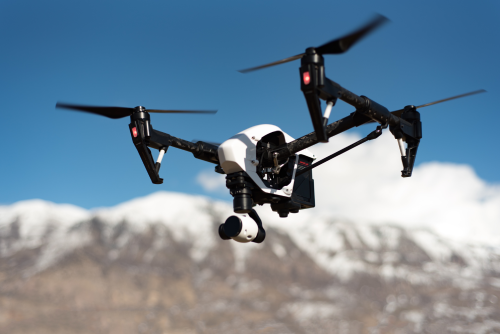
Teal 2 is a USA-made multirotor drone from Teal Drones aimed at defense and public-safety users rather than casual consumer pilots. It matters because buyers in this segment often care as much about sourcing, support, cybersecurity posture, and program fit as they do about pure flight numbers. In other words, the right question is not simply “How long does it fly?” but also “Can our team buy it, deploy it, support it, and trust it inside our operating environment?” For readers comparing secure small-drone platforms, Teal 2 is best viewed as a mission-oriented quadcopter with active market status but a still-limited public spec sheet in the supplied data.
Quick Summary Box
- Drone Name: Teal 2
- Brand: Teal
- Model: Teal 2
- Category: defense/public safety
- Best For: Government, defense, and public-safety teams seeking a U.S.-origin small multirotor platform
- Price Range: Not publicly confirmed in supplied data
- Launch Year: Not publicly confirmed in supplied data
- Availability: Active platform; exact retail or procurement availability should be verified with official channels
- Current Status: active
- Overall Rating: Not rated due to limited confirmed data
- Our Verdict: A notable U.S.-origin public-safety and defense quadcopter with credible positioning, but buyers should verify the exact payload, software, pricing, training, and support package before purchase
Introduction
Teal 2 is an active drone platform from Teal Drones, marketed under the Teal brand and positioned in the defense/public-safety segment. Unlike creator drones or hobby aircraft, this model sits in a procurement-driven part of the market where operational suitability, domestic sourcing context, and institutional support can be more important than headline camera specs. That makes it relevant to agencies, researchers, and fleet buyers comparing U.S.-linked small UAS options.
This difference in market context is important. A consumer drone is often judged by convenience, automatic shooting modes, social-media output, and retail value. A drone like Teal 2 is more likely to be judged by whether it fits agency policy, whether it integrates into a training program, whether its supply chain aligns with buyer requirements, and whether it can be sustained across a fleet over time. That changes the entire buying conversation.
For many organizations, especially in public safety and government operations, a drone is not a gadget purchase. It is a system purchase. The aircraft, controller, batteries, charging workflow, software environment, maintenance path, data handling process, and support relationship all matter. In that kind of environment, even limited public specs do not necessarily reduce a platform’s relevance. They simply mean the evaluation process should rely more heavily on official documentation, vendor engagement, and hands-on demos than on retail-style comparison charts alone.
Overview
Teal 2 enters a market where small multirotor drones are increasingly evaluated not just on endurance and image quality, but also on trust, supportability, and policy fit. The supplied source basis identifies it as a U.S.-origin platform from Teal Drones and notes Blue sUAS context, which is especially relevant for defense and public-safety buyers.
That broader market has become more specialized over time. Many institutional buyers are no longer looking for “the best drone” in a generic sense. They are looking for the best drone that can satisfy a specific mission set while fitting procurement rules, internal security policy, training resources, and budget structure. In that environment, the Teal 2 proposition is easier to understand: it is less about mass-market appeal and more about being a viable small-UAS option for buyers who need a purpose-oriented platform.
What kind of drone is it?
Teal 2 is a multirotor, specifically a quadcopter-style small UAS in the defense/public-safety category. That means it is designed for vertical takeoff and landing, hover capability, and flexible deployment in constrained areas rather than long-runway or fixed-wing operations.
This form factor is well suited to missions where launch space is limited and aircraft positioning matters. A quadcopter can be deployed from a roadside turnout, parking area, rooftop staging point, or incident scene with much less setup than a fixed-wing aircraft. It can stop and hold position over a target area, orbit slowly, or inspect a structure from multiple angles. For many responder and security workflows, that type of control is more valuable than maximum cruise efficiency.
Who should buy it?
The most likely buyers are:
- Public-safety organizations
- Government drone programs
- Security and emergency-response units
- Defense-linked evaluation teams
- Procurement staff comparing U.S.-origin small UAS options
It is much less likely to be the right fit for casual hobby flying, travel photography, or budget-first consumer use.
A useful way to think about the target buyer is this: Teal 2 makes the most sense for teams that want a drone as part of an operational capability, not just as a flying camera. A sheriff’s office, municipal fire department, infrastructure security team, defense contractor test unit, or federal program office may all have reasons to examine this class of platform. A vacation traveler or weekend aerial content creator almost certainly does not.
What makes it different?
What sets Teal 2 apart in the supplied data is not a long list of public numerical specs, but its positioning:
- U.S. manufacturer context
- Defense/public-safety targeting
- Active status
- Blue sUAS relevance
- Multirotor form factor suited to compact deployment and hovering missions
In other words, it stands out more for program fit and sourcing context than for publicly disclosed consumer-style specification marketing.
That distinction matters because in secure-drone discussions, “different” often means governance fit rather than feature novelty. A buyer may choose one platform over another not because it shoots prettier footage, but because it aligns better with internal approval processes, source-country requirements, cybersecurity expectations, or serviceability needs. Teal 2 appears to belong in that conversation.
Key Features
- U.S.-origin drone platform from Teal Drones
- Teal-branded multirotor aimed at defense and public-safety use
- Active current model rather than a clearly discontinued legacy aircraft
- Quadcopter configuration for vertical takeoff, landing, and stable hover
- Blue sUAS context noted in the supplied record
- Likely procurement-first sales model rather than mass retail consumer distribution
- Suitable for buyers who prioritize institutional deployment factors over lifestyle or creator features
- Exact sensor package, endurance, range, speed, and software stack should be verified directly through official documentation
Beyond those headline points, the most important “feature” may actually be the platform’s procurement relevance. Many drones can fly. Far fewer can clear the practical barriers that matter to agencies: approval pathways, documentation quality, training support, fleet sustainment, and acceptable sourcing. A platform that meets those standards can be far more valuable in the field than a technically impressive aircraft that is difficult to purchase or operationally awkward to maintain.
Another practical feature to keep in mind is category alignment. A drone made for defense and public safety is often expected to function within a team workflow rather than around a single enthusiast operator. That means it may be evaluated for things like handoff between personnel, standard operating procedures, repeatable battery management, and predictable deployment under stress. Even without a full public feature list, Teal 2’s market role suggests that these institutional considerations are central to its value.
Full Specifications Table
| Field | Specification |
|---|---|
| Brand | Teal |
| Model | Teal 2 |
| Drone Type | Multirotor / quadcopter |
| Country of Origin | USA |
| Manufacturer | Teal Drones |
| Year Introduced | Not publicly confirmed in supplied data |
| Status | active |
| Use Case | defense/public safety |
| Weight | Not publicly confirmed in supplied data |
| Dimensions (folded/unfolded) | Not publicly confirmed in supplied data |
| Max Takeoff Weight | Not publicly confirmed in supplied data |
| Battery Type | Not publicly confirmed in supplied data |
| Battery Capacity | Not publicly confirmed in supplied data |
| Flight Time | Not publicly confirmed in supplied data |
| Charging Time | Not publicly confirmed in supplied data |
| Max Range | Not publicly confirmed in supplied data |
| Transmission System | Not publicly confirmed in supplied data |
| Top Speed | Not publicly confirmed in supplied data |
| Wind Resistance | Not publicly confirmed in supplied data |
| Navigation System | Not publicly confirmed in supplied data |
| Obstacle Avoidance | Not publicly confirmed in supplied data |
| Camera Resolution | Not publicly confirmed in supplied data |
| Video Resolution | Not publicly confirmed in supplied data |
| Frame Rates | Not publicly confirmed in supplied data |
| Sensor Size | Not publicly confirmed in supplied data |
| Gimbal | Not publicly confirmed in supplied data |
| Zoom | Not publicly confirmed in supplied data |
| Storage | Not publicly confirmed in supplied data |
| Controller Type | Not publicly confirmed in supplied data |
| App Support | Not publicly confirmed in supplied data |
| Autonomous Modes | Not publicly confirmed in supplied data |
| Payload Capacity | Not publicly confirmed in supplied data |
| Operating Temperature | Not publicly confirmed in supplied data |
| Water Resistance | Not publicly confirmed in supplied data |
| Noise Level | Not publicly confirmed in supplied data |
| Remote ID Support | Not publicly confirmed in supplied data |
| Geo-fencing | Not publicly confirmed in supplied data |
| Certifications | Blue sUAS context noted in supplied data; full certification details not publicly confirmed in supplied data |
| MSRP / Launch Price | Not publicly confirmed in supplied data |
| Current Price | Not publicly confirmed in supplied data |
The large number of unconfirmed fields does not automatically indicate a weak product. In enterprise, government, and defense-adjacent drone markets, detailed public-facing spec disclosure is often less complete than in consumer markets. Some details may be quote-gated, bundle-specific, distributor-specific, or documented primarily in official sales collateral rather than broad retail listings.
Still, from an evaluator’s perspective, these missing fields matter. If Teal 2 is on your shortlist, you should request a formal spec sheet, configuration list, included accessories list, and support statement directly from the vendor or authorized channel. Without those documents, it is difficult to compare total system value against competing aircraft in a consistent way.
Design and Build Quality
The supplied record does not confirm the exact materials, dimensions, foldability, or weight of the Teal 2 airframe. Even so, its multirotor defense/public-safety role suggests a design philosophy centered on field deployment, repeatability, and quick launch rather than consumer aesthetics.
From a practical buyer perspective, the likely design priorities for a drone in this class would include:
- Fast setup and pack-down
- Stable hover behavior
- Easy propeller and battery swaps
- Compact transport for vehicle or go-kit use
- Serviceable parts and accessories for institutional fleets
Because those details are not fully confirmed here, buyers should verify whether Teal 2 uses folding arms, tool-free prop changes, sealed connectors, protected landing geometry, and modular field-replaceable components. In this segment, build quality is less about premium finish and more about dependable handling in repeated professional use.
There is also an ergonomic dimension to build quality that is easy to overlook. For public-safety and defense teams, a drone may be handled by operators wearing gloves, under time pressure, in poor lighting, or in bad weather. A “good” design in this category is not just strong; it is intuitive. Batteries should insert cleanly, prop orientation should be obvious, status indicators should be readable, and the airframe should withstand routine transport without constant adjustment or delicate treatment.
Another part of build quality is repair logic. Some aircraft are designed in a way that turns even minor damage into a depot event, while others make field-level maintenance more realistic. Buyers should ask how Teal 2 handles common wear items, what replacement parts are available, whether parts are serialized, and how long typical repair cycles take. A durable airframe is valuable, but a maintainable one is often even more valuable for fleet use.
Flight Performance
Publicly confirmed flight figures for Teal 2 are limited in the supplied data, so hard conclusions on endurance, top speed, range, or ceiling would be speculative. That said, the quadcopter layout itself tells us a few useful things.
A multirotor in this category is usually chosen for:
- Controlled vertical takeoff and landing
- Hover precision
- Short-area deployment
- Fine positioning around scenes, structures, or observation points
That generally makes this type of platform better suited to short-to-medium-radius situational flights than to fixed-wing-style long-distance coverage. If you are comparing Teal 2 against other public-safety aircraft, you should verify:
- Real battery endurance under payload
- Link reliability and transmission range
- Wind handling
- GPS-denied or degraded-environment behavior
- Landing stability on uneven surfaces
- Indoor or close-structure performance
In short, the likely flight character is controlled and mission-focused, but the exact performance envelope is not publicly confirmed in the supplied data.
For institutional users, flight performance should also be judged in operational terms rather than only numerical ones. A drone with strong published endurance may still be less useful if it takes too long to launch, requires too much open space, or becomes difficult to control near structures. Conversely, a drone with moderate flight time may prove highly effective if it launches quickly, hovers steadily, and gives the pilot predictable control in complex scenes. That is especially true for police overwatch, fire-scene reconnaissance, and infrastructure checks.
Pilot workload is another hidden performance variable. Agencies should ask whether the aircraft behaves consistently during takeoff, whether it maintains stable positioning during observation, how it reacts during rapid altitude changes, and how much manual effort is needed in moderate wind. A platform that reduces operator workload can improve safety and mission outcomes, especially when crews are multitasking during active incidents.
Finally, consider turnaround performance, not just airborne performance. How long does it take to swap batteries? Can a team keep the platform cycling through multiple short flights? Does charging fit vehicle-based deployment? In many responder programs, those questions matter as much as maximum advertised endurance.
Camera / Payload Performance
The supplied data does not confirm the exact camera system, payload options, stabilization hardware, or sensor suite for Teal 2. That is important, because in the defense/public-safety segment the payload often matters more than the bare airframe.
For buyers in this class, the key questions are usually:
- What imaging payload is included by default?
- Are there low-light or thermal options?
- Is there zoom capability?
- How stable is the video output?
- Can the payload be swapped or upgraded?
- How well does the drone support evidence, inspection, or scene-documentation workflows?
Because those details are not fully confirmed here, Teal 2 should not be judged as a photo-creator drone first. Its value is more likely tied to mission utility, scene awareness, and institutional sensor workflows than to cinematic image specs. Buyers should confirm the exact payload package offered in their intended bundle.
In public safety, payload capability often defines the real mission envelope. A daylight camera may support scene awareness, but thermal or low-light capability can fundamentally change search, recovery, and nighttime operations. Zoom can matter for standoff observation. Stabilization matters for readable footage. Metadata matters for documentation and reporting. These are not minor add-ons; they are core mission variables.
It is also worth asking how the payload supports team operations. Can an observer interpret the video feed quickly? Is latency low enough for tactical use? Are captured images easy to export into a case file, incident report, or inspection record? Can footage be stored and transferred according to agency policy? A technically capable sensor can still be operationally weak if the workflow around it is clumsy.
If you are evaluating Teal 2 for a specific mission, define the mission before discussing camera quality. A fire department may need heat-source awareness and scene overview. A law-enforcement unit may need standoff observation and documentation. A security team may need perimeter visibility. An infrastructure unit may need close visual inspection. The “best” payload depends on that mission context.
Smart Features and Software
No detailed software or autonomy list is publicly confirmed in the supplied data. That means features such as return to home, waypoint missions, AI tracking, fleet management, SDK support, encrypted links, or advanced autonomy should all be verified directly before procurement.
For a drone in this segment, the software questions that matter most include:
- Mission planning support
- Firmware update process
- User and fleet management
- Data handling and export workflow
- Flight log retention
- API or integration options
- Controller ecosystem
- Mapping or public-safety workflow compatibility
If you are evaluating Teal 2 for an agency or enterprise team, software quality may be just as important as the airframe itself. The supplied data supports the platform’s market positioning, but not a full software feature audit.
Software is often where enterprise drone programs either become scalable or become frustrating. A platform may fly well, but if updates are difficult to manage, logs are hard to retrieve, accounts are not easy to administer, or mission planning is too limited, the burden shifts to the operator. Over time, those frictions affect adoption, training consistency, and total ownership cost.
For secure or policy-sensitive buyers, cybersecurity and data-control questions should be part of the software review. Ask where flight logs are stored, whether cloud services are optional or required, how firmware is distributed, how user permissions are handled, and whether offline or restricted-network operations are supported. Those issues can be central in government and critical-infrastructure environments.
Integration also matters. Some teams need a self-contained aircraft with minimal software complexity. Others need compatibility with existing fleet systems, reporting tools, or mapping workflows. The right choice depends on whether Teal 2 is intended as a standalone responder tool or part of a broader program architecture.
Use Cases
Based on its confirmed market segment and platform type, these are the most realistic use cases for Teal 2:
- Public-safety aerial scene awareness
- Search-and-rescue support and overwatch
- Government and agency drone program deployment
- Defense observation and training roles
- Critical-site visual assessment
- Emergency response support
- Secure small-UAS evaluation programs
- Team training and readiness exercises
Each of those use cases places slightly different demands on the platform. For public-safety scene awareness, rapid launch, stable hover, and clear visual output are often the priority. In search and rescue, the sensor package and practical endurance become more important. For training, consistency, reliability, and supportability may matter more than raw performance. For defense observation or evaluation roles, sourcing context and program fit can become decisive.
Teal 2 may also be relevant in pilot-program settings where an organization wants to build or expand a secure small-UAS capability. In those cases, the drone is not only a tool for missions but also a benchmark for policy development, operator training, and procurement planning. An active platform from a U.S.-origin manufacturer can be attractive in that context even when public retail information is limited.
Another realistic use case is readiness maintenance. Agencies often need a platform that can be trained on regularly, packed into a vehicle, deployed on short notice, and sustained without consumer-style fragility. If Teal 2 supports that kind of routine professional cycle, its value may be higher than a spec-only comparison would suggest.
Pros and Cons
Pros
- U.S.-origin platform from Teal Drones
- Active model status, which is preferable to a clearly obsolete legacy platform
- Purpose-built market positioning for defense and public safety
- Multirotor format supports vertical takeoff, landing, and hover in tight areas
- Blue sUAS context may be meaningful for some institutional buyers
- Likely better aligned to government and responder workflows than consumer drones
Cons
- Many core specs are not publicly confirmed in the supplied data
- Exact camera and payload configuration is not clearly documented here
- Price and total ownership cost are not publicly confirmed
- Support, accessories, and regional procurement terms need verification
- Likely over-specialized for hobbyists or casual photography users
- Hard to compare on raw numbers without a fuller public spec sheet
The balance here is straightforward: Teal 2’s strengths are mainly strategic and operational rather than retail-friendly. Its appeal is strongest when buyer priorities include sourcing, mission alignment, and institutional suitability. Its weaknesses are mainly about transparency from a public comparison standpoint. If your buying process depends on open, side-by-side published numbers, Teal 2 will require more direct engagement than a typical commercial drone listing.
That does not make it a poor option. It simply means the evaluation path is different. This is the kind of platform where demos, official briefings, and procurement documents may reveal more value than a basic spec card.
Comparison With Other Models
Because Teal 2 public-source details are limited in the supplied record and enterprise/public-safety drones often ship in different bundles, this is a positioning comparison rather than a lab-grade hard-spec shootout.
| Model | Price | Flight Time | Camera or Payload | Range | Weight | Best For | Winner |
|---|---|---|---|---|---|---|---|
| Teal 2 | Not publicly confirmed in supplied data | Not publicly confirmed in supplied data | Mission-oriented public-safety/defense payload; exact package should be verified | Not publicly confirmed in supplied data | Not publicly confirmed in supplied data | Buyers prioritizing U.S.-origin public-safety/defense fit | Winner on procurement positioning for the right buyer profile |
| Skydio X10D | Enterprise/government quote dependent | Varies by configuration; verify official documentation | Advanced enterprise/defense sensor ecosystem | Varies by configuration | Configuration dependent | Agencies prioritizing autonomy and software ecosystem | Winner on autonomy-led platform positioning |
| Parrot ANAFI USA | Enterprise/public-safety pricing varies | Configuration and package dependent | Compact public-safety imaging platform | Package dependent | Package dependent | Teams prioritizing portability and compact deployment | Winner on compactness and portability |
Teal 2 vs a close competitor
Against Skydio X10D, Teal 2 appears more relevant to buyers specifically focused on Teal’s defense/public-safety positioning and U.S.-origin sourcing context. Skydio’s market reputation is strongly tied to autonomy and software-driven workflows. If autonomy depth is the deciding factor, Teal 2’s software stack should be carefully verified before comparison.
A practical way to compare the two is to ask what your operators need most. If your team wants heavy assistance from obstacle-aware autonomy, intelligent route handling, and advanced software tooling, Skydio-class positioning may feel stronger. If your team is more focused on source-country preferences, procurement fit, and mission alignment within a secure small-UAS discussion, Teal 2 may deserve closer attention. The right answer depends less on brand prestige and more on internal mission priorities.
Teal 2 vs an alternative in the same segment
Compared with Parrot ANAFI USA, Teal 2 sits closer to the U.S.-origin defense/public-safety procurement conversation. ANAFI USA is often considered by teams that want a compact responder drone, while Teal 2 may attract buyers who place extra weight on domestic manufacturing context and program alignment.
This comparison also reflects two different buying personalities. Some organizations want maximum compactness and quick portability in a highly mobile package. Others care more about the broader sourcing and program context around the platform. Depending on your policy environment, one of those factors may matter much more than the other.
Teal 2 vs an older or previous-generation option
Publicly confirmed legacy Teal comparison data is limited in the supplied source set. If you are comparing Teal 2 with an older Teal platform, verify battery compatibility, controller support, firmware path, spare-parts availability, and whether the older aircraft is still fully supported for your intended program.
That last point is especially important. Legacy platforms can look attractive on price, but if batteries are aging, software support is reduced, or parts are becoming scarce, the short-term savings may disappear quickly. For professional fleets, current support status often matters more than historical familiarity.
Overall, Teal 2 should be compared as a system fit, not merely as an airframe. Buyers should weigh sourcing, policy alignment, deployment style, payload package, software maturity, and support continuity together.
Manufacturer Details
Teal Drones is the manufacturer, while Teal is the product brand. The supplied source basis comes through the broader Red Cat product presence, so buyers should understand the drone within that wider corporate context as well.
What is clear from the supplied record:
- Manufacturer: Teal Drones
- Brand: Teal
- Country of origin: USA
- Market focus: defense/public safety
That matters because Teal is not primarily positioned as a lifestyle consumer drone name. Its market identity is much more institutional, with relevance to public-safety, government, and defense-adjacent buyers who may care about sourcing, platform trust, and support continuity.
Manufacturer context matters in professional purchasing because the aircraft is only part of the equation. Buyers should consider whether the company’s market focus aligns with their own. A firm centered on institutional users may provide more relevant onboarding, dealer relationships, documentation, and roadmap support for agency buyers than a brand built around high-volume consumer retail.
It is also wise to ask about product lifecycle planning. How long is the expected support window? How are firmware updates communicated? What does the roadmap look like for accessories, payloads, and compatibility? In enterprise and public-safety procurement, the quality of the manufacturer relationship can affect operational success as much as the platform itself.
Support and Service Providers
Detailed warranty, repair, and service terms are not publicly confirmed in the supplied data. For a platform like Teal 2, buyers should verify support in the following areas before purchase:
- Official manufacturer support channels
- Repair turnaround times
- Spare battery availability
- Propeller and airframe replacement parts
- Firmware and software update policy
- Controller and accessory support
- Training or onboarding options
- Regional service coverage
If your organization needs guaranteed uptime, ask whether service is handled directly by the manufacturer, through authorized dealers, or through regional integration partners. That is especially important for public-safety and agency fleets.
Support should be treated as a procurement criterion, not an afterthought. A platform that looks good in a demo can become difficult to sustain if response times are slow or if local service coverage is limited. Organizations should ask for clarity on return-material procedures, advance replacement options, spare-part stocking, and whether service-level commitments are available for fleet customers.
Training support also deserves attention. Some agencies need only basic pilot onboarding, while others need train-the-trainer resources, documentation packages, or structured rollout assistance across multiple teams. If Teal 2 is being considered for a larger deployment, ask whether support includes implementation guidance, not just technical troubleshooting.
Where to Buy
Teal 2 should be treated as a procurement-oriented platform rather than a typical consumer shelf product. In practice, that means buyers should expect availability through:
- Official manufacturer sales channels
- Authorized enterprise or public-safety dealers
- Government procurement channels
- Regional distributors or integrators
It may not be sold with the same broad retail visibility as mainstream hobby drones. Availability can also vary by geography, end-user type, and procurement requirements, so buyers should confirm eligibility and lead time directly.
For many organizations, the buying process will likely involve a quote, a configuration discussion, and possibly a demo rather than an instant online checkout. That is normal in this category. Buyers may need to specify batteries, payloads, cases, chargers, software options, or training requirements as part of the package.
If your team is serious about evaluation, the best purchase path may start with a structured inquiry rather than a price search. Ask for a full bill of materials, delivery timelines, included support, and any documentation relevant to compliance or procurement review. For agencies, that paperwork can matter as much as the drone itself.
Price and Cost Breakdown
Launch price and current price are not publicly confirmed in the supplied data. That means any serious budgeting exercise should go beyond the aircraft alone and verify the full package cost.
Key items to confirm include:
- Aircraft price
- Controller or ground station cost
- Battery count included
- Charger and field charging options
- Carry case or deployment kit
- Spare props and wear parts
- Payload or sensor bundle price
- Software or fleet-management subscription costs
- Training costs
- Repair and service plan costs
- Insurance and liability coverage
For public-safety and defense buyers, the real ownership cost often sits in the total system bundle, not just the drone body.
A useful way to budget for Teal 2 is to separate acquisition cost from operating cost. Acquisition includes the aircraft, payload, controller, initial batteries, cases, and setup materials. Operating cost includes replacement batteries, propellers, repairs, training refresh, software renewals if applicable, and downtime risk. A drone that seems expensive up front may still be a sound value if it reduces policy friction, improves support reliability, or aligns better with institutional needs.
Fleet buyers should also plan for scale. A single aircraft package may not reflect the real cost of a deployable program. You may need multiple aircraft, redundancy batteries, charging infrastructure, operator training, maintenance stock, and standardized accessories. If Teal 2 is being evaluated for broad adoption, request pricing at the system level, not just the unit level.
Regulations and Compliance
Drone legality depends on where and how Teal 2 is flown. Even for government and public-safety users, buyers should not assume that mission role overrides aviation law.
Practical points to verify:
- Registration requirements in the operating country
- FAA rules if operating in the United States
- Pilot qualification requirements for commercial or agency use
- Airspace authorization for controlled areas
- Remote ID requirements, if applicable
- Privacy and evidence-handling rules for imaging payloads
- Internal agency policy on data security and retention
- Procurement or restricted-use rules for government systems
The supplied data notes Blue sUAS context, but that should not be treated as a blanket statement of legal compliance in every jurisdiction. Remote ID support, certification scope, and operational permissions all need case-by-case confirmation.
For public-safety teams in particular, compliance often has two layers: external aviation law and internal policy. A drone may be legal to fly under applicable rules but still require agency approval for data handling, evidence retention, training standards, or secure deployment. Those internal requirements can significantly shape how the platform is configured and used.
It is also important not to confuse procurement acceptability with operational authorization. A platform may satisfy sourcing requirements while still needing airspace approvals, qualified operators, and mission-specific policies. Buyers should involve both operational leadership and compliance stakeholders early in the evaluation process.
Who Should Buy This Drone?
Best for
- Public-safety agencies evaluating mission-focused small UAS platforms
- Government programs that prefer U.S.-origin sourcing
- Defense-related teams comparing compact multirotor options
- Organizations that care about platform fit, supportability, and procurement context
- Buyers willing to verify system details through direct vendor engagement
These buyers are likely to get the most out of Teal 2 because they are evaluating it on the criteria that matter most to the platform’s positioning. They are also more likely to have a structured procurement process that can absorb quote-based sales, formal demos, and documentation review.
Not ideal for
- Casual hobby pilots
- Travel photographers seeking lightweight creator drones
- Budget-focused consumers who want easy retail pricing
- Buyers who need a fully transparent public spec sheet before shortlisting
- Users who primarily want cinematic features or mainstream consumer app simplicity
For those users, Teal 2 is probably the wrong category match. Even if the aircraft were technically capable, the purchase process, likely pricing model, and mission-first orientation make it a poor substitute for consumer-friendly drones designed for casual flying and content creation.
A simple buying test is this: if your first questions are about cinematic color profiles, travel portability, and consumer app ease, you are likely looking in the wrong segment. If your first questions are about support continuity, policy fit, sensor bundle, and procurement suitability, Teal 2 becomes far more relevant.
Final Verdict
Teal 2 looks most compelling as a mission-oriented U.S.-origin quadcopter for defense and public-safety buyers, not as a general-purpose consumer drone. Its biggest strengths are its category fit, active platform status, multirotor practicality, and relevance in the Blue sUAS conversation. Its biggest drawback is that many of the details most buyers use for side-by-side evaluation, including price and several core performance specs, are not publicly confirmed in the supplied data.
That means the right way to evaluate Teal 2 is not through casual retail comparison alone. It should be assessed as part of a system-level buying process: what payload is included, what controller environment it uses, how updates are handled, what support pathway exists, how the platform aligns with procurement rules, and what the full ownership model looks like over time. For agencies and secure-program buyers, those questions are often more important than whether one drone has slightly better top speed or a more polished marketing page.
If you are a government, responder, or security-focused buyer, Teal 2 is worth serious consideration. But this is a platform that should be purchased through verification, not assumption: confirm the exact sensor package, endurance, controller ecosystem, service model, training options, and total ownership cost before making it part of a fleet.
In short, Teal 2 appears to be a credible option in a category where trust, sourcing, and mission suitability can outweigh consumer-style spec visibility. For the right buyer, that can be a real advantage. For the wrong buyer, it will likely feel opaque and over-specialized. The deciding factor is not whether Teal 2 is broadly appealing; it is whether it fits your mission, your policy environment, and your deployment model.
