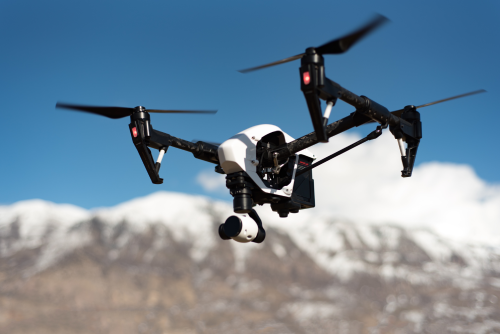
senseFly eXom is a legacy Swiss commercial mapping drone built on a multirotor platform for close-range survey work. It matters most to readers comparing older enterprise UAVs, evaluating used equipment, or documenting the evolution of professional mapping systems. Publicly confirmed data is limited, but the available figures point to a short-range, site-focused aircraft rather than a long-endurance area-mapping platform.
For most buyers in 2026, the eXom is not a first-choice modern procurement option. Instead, it is a reference point: a discontinued professional drone that helps illustrate how enterprise mapping platforms were designed before today’s expectations around Remote ID, tightly integrated cloud workflows, and highly documented payload ecosystems became standard. That legacy status does not make it irrelevant. It simply changes the questions buyers need to ask. With a current drone, the focus is often price, software, and warranty. With an older aircraft like the eXom, the bigger issues become supportability, battery viability, payload completeness, and whether the system can still fit into a modern survey workflow at all.
Quick Summary Box
- Drone Name: senseFly eXom
- Brand: senseFly
- Model: eXom
- Category: commercial mapping
- Best For: Small-site mapping, close-range survey missions, and legacy fleet evaluation
- Price Range: Not publicly confirmed in supplied data
- Launch Year: Not publicly confirmed in supplied data
- Availability: Not publicly confirmed in supplied data
- Current Status: Legacy/discontinued
- Overall Rating: Not rated due to limited confirmed data
- Our Verdict: A niche legacy mapping multirotor that may still interest used-market buyers, but only if payload, software, parts, and compliance can all be verified first
In one sentence, the senseFly eXom looks like a professional, short-range multirotor intended for compact mapping jobs where hover capability and vertical takeoff matter more than long endurance or wide-area coverage. That makes it potentially useful for some specialized used-market scenarios, but difficult to recommend casually because too many procurement-critical details remain unconfirmed in the supplied public record.
Introduction
The senseFly eXom is a discontinued multirotor drone from Swiss manufacturer senseFly, positioned in the commercial mapping segment. Based on the confirmed figures available in the supplied record, it offered about 0.4 hours of endurance, a 1 km range, and a top speed of 43 km/h. For readers today, the eXom is mainly relevant as a legacy enterprise platform rather than a mainstream current-production option.
That distinction matters. A current enterprise drone is usually judged on active support, firmware maturity, ecosystem integration, regulatory readiness, and the predictability of parts availability. A legacy enterprise drone is judged differently. The first question is not “How good is it on paper?” but “Can this exact aircraft still be put to work reliably?” In the case of the eXom, the answer depends less on the headline performance numbers and more on the practical details around the payload, software access, battery condition, and regional support.
The available figures suggest the eXom was designed for local, contained survey activity rather than broad agricultural, corridor, or regional mapping runs. A 24-minute endurance and 1 km range are not unusual for older multirotor operations aimed at small sites, especially where takeoff space is limited and controlled hovering is valuable. Construction pads, stockpile measurements, compact earthworks, campus-scale documentation, and repeat progress capture are the kinds of roles a multirotor format usually fits better than a fixed-wing aircraft.
The challenge is that confirmed data remains sparse. We do not have a complete public technical picture of the eXom from the supplied record. That means any serious purchase decision should be based on direct verification, not assumptions carried over from senseFly’s broader brand reputation. senseFly is a credible name in geospatial UAV work, but that credibility should be treated as context, not as proof that every eXom listing on the used market is still mission-ready.
Overview
What kind of drone is it?
The eXom is a commercial mapping multirotor. That matters because multirotors are typically chosen for vertical takeoff and landing, steady hovering, and tighter site access than fixed-wing aircraft. The confirmed performance figures suggest the eXom was built for shorter, more controlled mapping missions rather than very large-area coverage.
In practical field terms, a multirotor mapping aircraft usually appeals when a team needs flexibility more than acreage efficiency. If a site has uneven terrain, little room to launch, nearby structures, or repeated points of interest that benefit from hovering or slow repositioning, the multirotor format can be the better tool. Fixed-wing platforms generally win on total area covered per battery, but they usually ask for more space, more forward motion, and a different operating style. The eXom’s published numbers place it firmly on the controlled-site side of that spectrum.
That does not automatically tell us everything about capability. Mapping performance depends on much more than whether the aircraft has four or more rotors. It also depends on the sensor, the navigation stack, how images are triggered and geotagged, whether flight planning is automated, how much overlap is needed, and whether the software output fits the survey team’s processing workflow. But even with limited data, the airframe category alone strongly suggests a job profile centered on smaller areas and closer pilot supervision.
Who should buy it?
The most realistic buyers today are:
- Existing senseFly fleet operators researching compatibility
- Survey teams considering a used legacy system
- Researchers documenting older enterprise UAV platforms
- Buyers who need a hovering mapping aircraft for small sites and can verify support before purchase
A broader audience may be curious about the eXom, but curiosity and suitability are not the same thing. If you are a first-time commercial drone buyer looking for a dependable turnkey mapping package, the eXom is probably too uncertain. If you are a procurement manager trying to build a current-production fleet with known warranty support, it is also a difficult fit. By contrast, if your team already understands older survey UAV workflows, has access to technical support, and can inspect the aircraft before buying, the eXom becomes more plausible.
The used-enterprise category often attracts three kinds of buyers. First are operators who want a backup unit or spare parts source for an existing fleet. Second are technically capable teams looking for cost savings and willing to tolerate extra setup effort. Third are institutions or researchers documenting the history of professional UAV development. The eXom can make sense for one or more of those groups, but usually not for buyers who need frictionless deployment.
What makes it different?
senseFly is widely associated with professional mapping workflows, especially in the survey and geospatial market. Within that context, the eXom stands out as a multirotor entry in a brand more commonly linked with mapping-focused aircraft. Its confirmed 1 km range and discontinued status also make it very different from newer enterprise drones that emphasize longer links, broader software ecosystems, and clearer compliance support.
What makes the eXom interesting is not that it dominates on raw numbers. It does not, at least based on the confirmed specs available here. What makes it notable is where it sits historically: in the era when enterprise mapping buyers were often choosing between highly purpose-built systems, sometimes with specialized workflows, instead of today’s more unified “all-in-one” enterprise camera drone market. That means the eXom may reflect a more specialized philosophy, one centered on survey tasks rather than general-purpose aerial imaging.
It is also different in the questions it forces buyers to ask. With a new platform, buyers often compare megapixels, obstacle avoidance, link range, and smart modes. With the eXom, the meaningful differentiators are more basic: Is the payload still present? Does the mission software still run? Can batteries be sourced safely? Can firmware be updated or reinstalled if needed? Can it satisfy current operational rules in the country where it will fly? Those are legacy-platform questions, and they are central here.
Key Features
- Commercial mapping orientation, meaning the platform was aimed at professional data capture rather than casual recreational use
- Multirotor airframe, which inherently supports vertical takeoff, landing, and hovering in constrained job-site environments
- Approximate flight endurance of 0.4 hours, or about 24 minutes, a workable figure for compact missions if battery turnover is well managed
- Confirmed maximum range of 1 km, indicating a close-range operating profile rather than long stand-off deployment
- Confirmed top speed of 43 km/h, enough for practical site repositioning and structured local survey work
- Swiss-made senseFly platform, which places it within a brand known for mapping-oriented professional systems
- Legacy/discontinued status, an important point for buyers because supportability often matters more than the original spec sheet
- Likely best suited to compact, close-control mapping jobs, such as stockpiles, construction zones, localized 3D models, and repeat progress capture
- Camera and payload details are not publicly confirmed in the supplied data, which is the biggest unresolved issue for anyone considering the aircraft today
- Potential used-market relevance, especially for organizations that already know the senseFly ecosystem or can source a complete working kit
These features should be read as a practical profile rather than a modern feature brag sheet. The eXom’s value, if any, lies in fit-for-purpose utility on the right small-site jobs, not in spec-sheet superiority over current enterprise UAVs.
Full Specifications Table
| Specification | Details |
|---|---|
| Brand | senseFly |
| Model | eXom |
| Drone Type | Multirotor |
| Country of Origin | Switzerland |
| Manufacturer | senseFly |
| Year Introduced | Not publicly confirmed in supplied data |
| Status | Legacy/discontinued |
| Use Case | Commercial mapping |
| Weight | Not publicly confirmed in supplied data |
| Dimensions (folded/unfolded) | Not publicly confirmed in supplied data |
| Max Takeoff Weight | Not publicly confirmed in supplied data |
| Battery Type | Not publicly confirmed in supplied data |
| Battery Capacity | Not publicly confirmed in supplied data |
| Flight Time | 0.4 hr (about 24 minutes) |
| Charging Time | Not publicly confirmed in supplied data |
| Max Range | 1 km |
| Transmission System | Not publicly confirmed in supplied data |
| Top Speed | 43 km/h |
| Wind Resistance | Not publicly confirmed in supplied data |
| Navigation System | Not publicly confirmed in supplied data |
| Obstacle Avoidance | Not publicly confirmed in supplied data |
| Camera Resolution | Not publicly confirmed in supplied data |
| Video Resolution | Not publicly confirmed in supplied data |
| Frame Rates | Not publicly confirmed in supplied data |
| Sensor Size | Not publicly confirmed in supplied data |
| Gimbal | Not publicly confirmed in supplied data |
| Zoom | Not publicly confirmed in supplied data |
| Storage | Not publicly confirmed in supplied data |
| Controller Type | Not publicly confirmed in supplied data |
| App Support | Not publicly confirmed in supplied data |
| Autonomous Modes | Not publicly confirmed in supplied data |
| Payload Capacity | Not publicly confirmed in supplied data |
| Operating Temperature | Not publicly confirmed in supplied data |
| Water Resistance | Not publicly confirmed in supplied data |
| Noise Level | Not publicly confirmed in supplied data |
| Remote ID Support | Not publicly confirmed in supplied data |
| Geo-fencing | Not publicly confirmed in supplied data |
| Certifications | Not publicly confirmed in supplied data |
| MSRP / Launch Price | Not publicly confirmed in supplied data |
| Current Price | Not publicly confirmed in supplied data |
The table above shows an unusually large gap between what is known and what remains unconfirmed. That is not just a documentation issue; it directly affects buyer confidence. For a commercial mapping drone, missing details about payload, navigation, battery system, and software are not small omissions. They are the very things that determine whether the aircraft can still be used in survey work with predictable results.
Design and Build Quality
The supplied data confirms that the eXom uses a multirotor airframe, but it does not confirm dimensions, weight, folded size, materials, or rotor span. That means any judgment on portability has to stay cautious.
Still, the airframe type tells us a few useful things:
- A multirotor is generally easier to deploy from tight spaces than a fixed-wing aircraft
- Vertical takeoff and landing reduce the need for launch rails or landing strips
- Hover capability is usually valuable for precise positioning over smaller work areas
Those traits are not minor conveniences. For many survey teams, they determine whether a drone is practical on real job sites. Construction environments are often messy, uneven, and crowded with equipment. Industrial sites may have fencing, parked vehicles, machinery, and active work zones that make hand launches or belly landings less appealing. A multirotor platform solves some of that by letting the crew operate from a compact launch area and hold position when needed.
What is not publicly confirmed here is just as important as what is known. We do not have verified information on:
- Foldability
- Landing gear design
- Ruggedization
- Weather sealing
- Field-serviceability
- Propeller or motor architecture
Those missing pieces matter more with a legacy drone than with a current one. A current model can often be assessed by manufacturer literature and recent field reports. A discontinued platform cannot. If a used eXom appears portable, rugged, or cleanly designed in photos, that still does not answer whether it is easy to repair, whether stress points are common, or whether specific components are now unobtainable.
For a legacy enterprise drone, build quality on paper matters less than actual condition in the field. If buying used, battery health, arm integrity, motor wear, controller condition, and firmware accessibility are more important than the original brochure description.
A practical used-market inspection should include more than a quick visual check. Buyers should look for:
- Cracks or stress whitening around arm joints and landing structures
- Play in the motors or signs of bearing noise
- Propeller damage, non-matching replacements, or evidence of poor balancing
- Corrosion on connectors, battery terminals, or exposed fasteners
- Signs of previous impact repair, including mismatched hardware or adhesive reinforcement
- Degraded damping or mounting points around the payload area
- Battery swelling, unusual cycle count behavior, or poor voltage consistency
- Missing labels, serial mismatches, or unclear ownership history
Even if the original build quality was excellent, time changes the equation. Plastics harden, adhesives age, lithium batteries degrade, and support parts disappear. That is why a well-kept legacy aircraft can be more valuable than a cheaper “complete” listing of uncertain origin. With the eXom, the physical state of the specific unit may matter more than the nominal design quality of the model line as a whole.
Flight Performance
The eXom’s confirmed endurance is 0.4 hours, which works out to roughly 24 minutes. For an older commercial multirotor, that is usable for compact mapping jobs, but it is modest by current enterprise standards.
Endurance figures always need context. A claimed flight time is not the same as productive mapping time. In actual survey work, some of that battery is consumed by takeoff, transit to the mission area, turning, climb adjustments, safety reserve, and landing. If the aircraft is flying a high-overlap photogrammetry grid, especially in wind, the useful mapping window may be meaningfully shorter than the headline number suggests. In that sense, 24 minutes can still work, but it implies tighter mission planning and likely more battery swaps on medium-size jobs.
The confirmed 1 km range suggests a close-in operating profile. In practical terms, that points toward:
- Smaller work sites
- Controlled line-of-sight operations
- Construction pads, stockpiles, and localized survey blocks
- Missions where the team stays near the aircraft rather than pushing wide stand-off distances
That range figure should not automatically be treated as a legal operating distance target. In many jurisdictions, commercial UAV work is still constrained by visual line-of-sight rules unless the operator holds special authorization. So even if the link technically reaches 1 km, the real relevance is that the platform appears designed for near-site operation rather than long corridor work or remote wide-area coverage.
Its 43 km/h top speed is enough for repositioning and structured site work, but raw speed is only one part of mapping productivity. Actual output depends more on overlap requirements, sensor type, battery turnover, and workflow efficiency.
For example, a faster aircraft is not always a more productive mapper. If the payload requires slow movement to maintain image quality, or if the software prescribes specific flight lines and overlap percentages, a higher top speed may have little effect on total deliverables. Mapping quality also depends on stability, trigger timing, and image consistency. Since those details are not confirmed here, the top-speed figure should be seen as general operational capability rather than a direct measure of survey throughput.
A few performance areas remain unconfirmed:
- Wind resistance
- Ceiling
- Navigation precision
- Link robustness
- GNSS setup
- Takeoff and landing automation
Each of those gaps matters. Wind tolerance is critical for multirotor mapping because low-altitude grid flights can be heavily affected by gusts. Navigation precision matters because image overlap and repeatability depend on stable path execution. Link robustness affects operational confidence near interference sources such as industrial equipment or urban site infrastructure. Without public confirmation, it would be irresponsible to promise performance in any of those areas.
Based on airframe type alone, the eXom likely offered the steady low-altitude behavior and hover control that make multirotors attractive for small-area mapping. That is analysis, not a direct claim of tested performance.
If evaluating one in person, buyers should ask the seller for actual flight logs or demonstration data where possible. Useful checks include:
- Hover stability in normal field conditions
- Real-world battery duration under mapping payload load
- GPS acquisition and home-point reliability
- Link quality at realistic site distances
- Any drift, oscillation, or abnormal motor output during flight
- Safe and repeatable auto-landing behavior, if available
A legacy drone can still be useful if it flies predictably and has a complete workflow. It becomes risky when the flight envelope is uncertain and the support path is weak.
Camera / Payload Performance
This is the biggest information gap in the supplied record. The eXom is clearly categorized for commercial mapping, but the public data provided here does not confirm its camera, payload model, resolution, shutter type, gimbal details, or storage workflow.
For mapping buyers, that missing payload information is critical. Before considering an eXom today, verify:
- The exact sensor included with the aircraft
- Whether it uses a mapping-appropriate camera setup
- Image geotagging method
- Calibration file availability
- Gimbal or mount status
- Whether replacement sensors or compatible payloads are still obtainable
Those questions are essential because the payload is often the true value of a mapping drone. The airframe gets the camera over the site; the payload determines whether the output is useful. A mapping workflow can fail even when the aircraft flies perfectly if the sensor is missing, unsupported, damaged, poorly calibrated, or incompatible with current processing software.
One especially important issue is shutter type. For photogrammetry, rolling shutter behavior can complicate image consistency in some workflows, while a mapping-optimized capture approach may be preferred. The supplied data does not confirm what the eXom used, so buyers should not assume survey suitability from the category label alone. The same caution applies to geotagging. If accurate metadata is unavailable or difficult to extract, post-processing becomes harder and downstream deliverables may suffer.
If configured with a suitable mapping payload, a multirotor like this would generally be useful for:
- Small-area photogrammetry
- 3D site modeling
- Structure or terrain documentation
- Repeated progress capture over the same area
Those use cases are reasonable because the aircraft category matches them, not because the record confirms a particular sensor package. That distinction matters. A complete eXom mapping kit with a known, healthy payload could still have real niche value. An incomplete eXom airframe with no verified camera path may be little more than an expensive restoration project.
Buyers should also verify the data pipeline, including:
- How images are stored and retrieved
- Whether file formats are still readable in current software
- Whether metadata exports properly into photogrammetry tools
- Whether there are any license restrictions tied to payload operation
- Whether calibration or reference files are still available from the original setup
It would also be wise to ask whether the aircraft depended on a proprietary mission ecosystem to trigger and organize captures. Some legacy enterprise systems work well only inside their intended software stack. If that stack is no longer supported, even a functioning payload can become awkward to use. For modern teams, interoperability is often as important as optics.
Without confirmed payload data, it would be misleading to score the eXom for image quality, low-light performance, cinematic video capability, or survey accuracy. Those are outcomes determined by sensor details we do not have. In other words, the eXom’s mission category is promising, but the absence of payload specifics prevents any serious claim that it remains competitive in delivered data quality.
Smart Features and Software
The supplied record does not publicly confirm the eXom’s software stack, autonomous modes, return-to-home behavior, waypoint support, or app ecosystem.
That said, buyers in this segment should investigate whether the aircraft still supports:
- Automated mission planning
- Grid or waypoint flight paths
- Return-to-home
- Geotagged image capture
- Export into current mapping software
- Firmware updates
- Controller and tablet compatibility
For mapping work, software matters almost as much as the aircraft. A drone can have a capable airframe and a good payload, but if mission planning is clumsy or the export path is broken, efficiency collapses. On a current platform, this is usually a solved problem. On a discontinued one, it can be the deciding factor.
senseFly has a strong reputation in mapping-oriented workflows, but readers should not assume every current senseFly software or enterprise support path still applies to a discontinued eXom. For legacy platforms, software lock-in can be a bigger risk than hardware condition.
That is because many professional UAVs rely on a chain of dependencies:
- Aircraft firmware
- Controller firmware
- Mission-planning software
- Mobile operating system compatibility
- Desktop processing or export tools
- License activation servers or login accounts
- Data formatting expected by downstream survey software
Any break in that chain can render a perfectly intact aircraft cumbersome or unusable. If the required app no longer supports current tablets, if licenses cannot be transferred, or if firmware tools are no longer accessible, the total system value drops quickly.
Prospective buyers should ask very specific questions:
- Does the seller still have the original software accounts or licenses?
- Can the mission-planning tool still be installed on currently supported hardware?
- Is there a known workflow from flight planning to image export to processing?
- Are there region-specific restrictions or locked features?
- Has the drone been flown recently using the same software package being offered?
Return-to-home behavior is another feature worth verifying directly rather than assuming. On enterprise aircraft, safe automated recovery is a major operational convenience and risk-control feature. But with legacy systems, the exact behavior may depend on firmware version, controller settings, and GNSS performance. If the eXom will be used on active worksites, predictability in failsafe behavior matters.
The short version is simple: a mapping drone without a usable mission ecosystem is not really a mapping system. It is just hardware. Before buying an eXom, confirm the workflow, not just the airframe.
Use Cases
Given the confirmed segment and airframe type, these are the most realistic use cases for the senseFly eXom:
- Small-site aerial mapping
- Construction progress documentation
- Stockpile and earthworks measurement
- Localized 3D modeling
- Facility or campus-scale survey capture
- Research into legacy commercial UAV systems
- Training around older enterprise multirotor workflows, if a complete supported kit is available
Some of these use cases depend heavily on the installed camera and software, both of which need verification.
The strongest practical use case is probably small-site mapping where hover capability and compact deployment are more important than total area covered per flight. A controlled site with clear boundaries, a nearby operator position, and repeatable tasks is where a legacy multirotor has the best chance to remain useful.
Construction progress documentation is another plausible role. If a team needs periodic visual or photogrammetric records of the same site, a short-range aircraft can still serve the mission if the workflow is intact. The value there comes from consistency, not from cutting-edge features. The same logic applies to stockpile work, where flights are local and data collection windows are relatively contained.
The eXom may also be relevant in educational or historical contexts. Universities, training centers, and UAV historians sometimes study older commercial systems to understand how professional drone operations evolved. In those settings, the aircraft’s significance may be less about current competitiveness and more about platform design, mission philosophy, and workflow history.
What it is not ideal for is easy to define:
- Large agricultural blocks
- Long corridor mapping
- organizations needing modern compliance features out of the box
- teams with no tolerance for legacy software friction
- buyers who need instantly documented, turnkey payload performance
Pros and Cons
Pros
- Multirotor format is well suited to tight launch and landing areas, making it more practical than fixed-wing alternatives on compact job sites
- Approximate 24-minute endurance is workable for compact site missions, especially when the area is small and battery logistics are planned
- 43 km/h top speed is adequate for practical site coverage, even if it is not the main driver of mapping productivity
- senseFly is a credible brand in professional mapping circles, which gives the platform some legacy enterprise legitimacy
- Close-range design profile may fit controlled, local survey jobs, where the operator remains near the aircraft and hover control is useful
- Can still be of interest for used-market buyers with existing ecosystem knowledge, particularly if they already understand the software and support landscape
Cons
- Legacy/discontinued status raises obvious support and spare-parts risks, which may be the single biggest drawback
- Publicly confirmed specifications are sparse, leaving too many unanswered questions for casual buyers
- Camera and payload details are not confirmed, which is a major issue for mapping procurement because the payload defines output quality
- 1 km range is limited compared with many newer enterprise drones, even if some jobs do not require more
- Remote ID and modern compliance support are not publicly confirmed, so regulatory fit must be checked carefully
- Unknown battery age and firmware access can make used purchases risky, even when the initial purchase price looks attractive
The balance here is clear: the eXom’s pros are situational and practical, while its cons are procurement-related and structural. That usually means it only makes sense for buyers who have a specific reason to pursue it.
Comparison With Other Models
| Model | Price | Flight Time | Camera or Payload | Range | Weight | Best For | Winner |
|---|---|---|---|---|---|---|---|
| senseFly eXom | Not publicly confirmed in supplied data | 24 min | Not publicly confirmed in supplied data | 1 km | Not publicly confirmed in supplied data | Small-site VTOL mapping on a legacy platform | Hover work in constrained sites |
| DJI Phantom 4 RTK | Enterprise-priced legacy model; verify current used-market pricing | About 30 min | Integrated 20 MP 1-inch mapping camera | Longer than eXom in published specs | About 1.4 kg class | Turnkey small-area RTK mapping | Better documented option for many buyers |
| senseFly eBee X | Enterprise-priced; varies by payload and bundle | Up to 90 min class | Interchangeable fixed-wing mapping payloads | Much longer coverage class | About 1.6 kg class | Large-area surveying | Coverage efficiency |
Short version: the eXom makes the most sense when hovering control and tight deployment areas matter more than wide-area efficiency, and only when the legacy support picture checks out.
eXom vs a close competitor
Against DJI’s Phantom 4 RTK, the eXom is harder to assess because the payload and software details in the supplied data are incomplete. The Phantom 4 RTK is generally the easier benchmark for buyers who want a more clearly documented small-area mapping workflow. The eXom only becomes the more interesting option if a buyer specifically needs a legacy senseFly system or already has compatible knowledge and support.
The comparison is useful because both sit in the broad category of smaller-site mapping drones, but they reach that role differently. The Phantom 4 RTK is better known as a relatively integrated package: aircraft, camera, and mapping-oriented workflow are all easier to understand from public documentation. With the eXom, the uncertainty is much higher. That uncertainty alone can outweigh any possible advantage unless the buyer has special reasons to stay in the senseFly ecosystem.
In practical procurement terms, the Phantom 4 RTK often wins on clarity. Buyers usually know what camera they are getting, what software ecosystems are commonly used with it, and how it fits into established small-area photogrammetry workflows. The eXom, by contrast, demands more due diligence before even basic capability can be confirmed.
eXom vs an alternative in the same segment
Compared with the senseFly eBee X, the eXom represents a very different mapping philosophy. The eBee X is better suited to larger areas and longer survey runs, while the eXom’s multirotor format is more naturally aligned with smaller, tighter, hover-friendly environments. If your main priority is acreage, the fixed-wing alternative usually wins. If your priority is vertical takeoff and controlled close-site work, the eXom’s format is more suitable.
This comparison matters because buyers sometimes over-focus on brand continuity and under-focus on airframe logic. Sharing a manufacturer does not mean two aircraft solve the same problem. A fixed-wing mapping system is typically chosen to maximize coverage efficiency. A multirotor mapping system is typically chosen to maximize site access and local control. The eXom should therefore be evaluated as a local-work tool, not as a smaller version of a wide-area survey platform.
There is also an operational difference in crew workflow. Larger fixed-wing mapping flights may reduce the number of takeoffs required to cover an area, while multirotors can simplify launch and recovery in difficult terrain. Depending on the site, one advantage may matter far more than the other.
eXom vs an older or previous-generation option
A clearly documented direct predecessor is not identified in the supplied data. In practice, most buyers today are more likely comparing the eXom with other used enterprise multirotors than with a formal previous-generation eXom-family model. That shifts the decision away from marketing-era specs and toward condition, battery viability, payload completeness, and software access.
This is one of the most important mindset shifts when shopping legacy enterprise drones. The comparison is rarely “Which model was better when new?” The real comparison is “Which available used system is complete, supportable, and ready to work?” Under that standard, a slightly less famous model with a full kit, healthy batteries, transferable software, and known service history may be a better purchase than a more prestigious model with missing components.
If comparing the eXom to other used multirotors from its era, buyers should focus on:
- confirmed payload included in the sale
- recent flight proof
- spare battery availability
- controller and charger completeness
- software installation status
- repair history
- local regulatory fit
Those factors will usually matter more than small differences in headline speed or endurance.
Manufacturer Details
senseFly is both the brand and the manufacturer name used for this drone. The company is based in Switzerland and is well known in the professional drone market for mapping and survey-oriented aircraft.
The brand has built a strong reputation around geospatial workflows rather than consumer hobby flying. senseFly products are commonly associated with professional data capture, mapping missions, and engineering use cases. That reputation adds credibility to the eXom as a serious work platform, even though this specific model is now legacy.
That context is useful because it tells us the eXom should be understood as a professional tool first, not as a consumer camera drone adapted for business. In the enterprise world, manufacturers often optimize around mission outcomes, repeatability, and compatibility with survey processes. Even so, a strong manufacturer reputation does not remove the need for platform-specific verification. A respected brand can still have older models that are difficult to support in the present day.
Corporate ownership and support structures can change over time in the drone industry, especially for older enterprise products. For that reason, buyers should verify the current official entity responsible for senseFly product support before making any purchase decision.
Support and Service Providers
Support is one of the biggest caution points with the eXom.
Because the model is discontinued, buyers should verify:
- Whether official support still exists for this model
- Whether firmware and setup tools are still accessible
- Whether batteries, motors, props, and controllers are still available
- Whether there is any authorized repair route in their region
- Whether training and integration partners still service legacy senseFly systems
Warranty coverage on used enterprise drones is often expired, non-transferable, or highly limited. Community support may still exist through survey forums, reseller networks, and specialized used-equipment technicians, but that is not the same as active manufacturer backing.
This distinction matters because commercial uptime has a cost. A legacy drone can be economical to purchase yet expensive to keep operational if every part failure becomes a sourcing project. Some buyers are comfortable with that tradeoff; many are not. Survey firms working on contracted schedules, for example, usually need predictable downtime and clear repair options.
If supportability is mission-critical, confirm official channels and regional service coverage before spending money on hardware.
A good support check should include direct questions such as:
- Can the seller still demonstrate a full mission workflow?
- Is there documentation for setup, calibration, and troubleshooting?
- Are replacement batteries original, third-party, or no longer obtainable?
- Has any regional reseller committed to servicing the platform?
- Are there known firmware limitations on modern operating systems or devices?
Even if official support is gone, there may still be specialist technicians or integrators who can keep older systems flying. But that should be confirmed in advance, not discovered after purchase. For a professional buyer, the difference between “service exists somewhere” and “service exists in my region within a usable timeframe” is huge.
Where to Buy
The senseFly eXom is not a current mainstream retail drone, so buyers should not expect normal consumer store availability. The most realistic purchase channels are:
- Used enterprise drone resellers
- Survey integrators clearing legacy inventory
- Specialized commercial UAV brokers
- Auction or liquidation marketplaces
- Existing fleet operators selling complete kits
When evaluating a listing, confirm that the sale includes:
- Airframe
- Controller
- Batteries and charger
- Payload or camera
- Mounting hardware
- Any required software access
- Manuals and calibration data where applicable
For legacy enterprise drones, a “cheap” airframe without a usable payload or software path can become expensive very quickly.
The best listings are usually the ones that look less glamorous but more complete. A professionally retired fleet unit with known maintenance history, multiple batteries, original accessories, and evidence of recent operation is generally safer than an attractively priced incomplete bundle with vague descriptions. Buyers should also prefer sellers who can answer technical questions clearly. If the seller does not know what payload is installed, whether software is included, or when the batteries were last tested, that is a warning sign.
If possible, ask for:
- recent photos of the actual aircraft powered on
- battery screenshots or health reports
- sample flight logs or screenshots of mission software
- a list of included serial-numbered components
- proof of any calibration records or payload documentation
Because the eXom is a commercial tool, transaction quality matters. The value is in the whole system, not the shell of the aircraft.
Price and Cost Breakdown
No launch price or current market price is publicly confirmed in the supplied data.
That means buyers should budget for more than just the airframe itself. Key ownership-cost checks include:
- Aircraft purchase price
- Sensor or camera package
- Extra batteries
- Charger and power accessories
- Controller and tablet hardware
- Software licenses or mapping workflow subscriptions
- Spare props and maintenance items
- Repair or refurbishment costs
- Insurance, training, and compliance costs
With a legacy mapping drone, the biggest hidden expenses are often battery replacement, software compatibility, and time spent restoring a complete working kit. If you are budgeting for an eXom, verify the full mission package rather than comparing airframe prices alone.
This is where many used-enterprise purchases go wrong. A buyer sees a low acquisition price and assumes the platform is a bargain. Then the real costs appear: missing payload mounts, unavailable batteries, controller issues, obsolete tablets, license-transfer problems, or the need to replace basic wear items before the first useful flight. Those costs can easily erase the initial savings.
A sensible budgeting approach is to separate costs into three groups:
-
Immediate acquisition costs
What you pay for the aircraft and included hardware. -
Restoration or activation costs
What it takes to make the system actually usable, including batteries, software access, repairs, and accessories. -
Operational costs
What it takes to keep the drone flying legally and productively, including training, insurance, maintenance, and any mapping software subscriptions.
For buyers who bill for survey work, downtime also has a cost. If an eXom saves money upfront but delays deliverables due to support issues, the operational economics may be worse than simply buying a newer, well-documented system.
Regulations and Compliance
Commercial mapping operations are regulated in most jurisdictions, and legacy aircraft need extra scrutiny.
Buyers should verify:
- Whether the aircraft must be registered
- Whether the pilot needs commercial certification or operational authorization
- Whether the aircraft meets current Remote ID rules in the operating country
- Whether flights near infrastructure, construction sites, or populated areas need additional permissions
- Whether privacy, data protection, and landowner-consent rules apply to the intended work
Because the eXom’s weight and Remote ID support are not publicly confirmed in the supplied data, it would be unsafe to assume it fits any modern exemption or class category automatically. Always check local civil aviation rules, enterprise operating requirements, and any site-specific restrictions before flying.
This is especially important for discontinued enterprise models. Regulations evolve, but old hardware does not. A system that was perfectly normal when introduced may now require additional hardware, operational limitations, or documentation to remain compliant. In some regions, Remote ID or similar electronic identification requirements may affect how practical a legacy aircraft is for regular commercial work.
Buyers should also consider operational context. Construction sites, utility corridors, industrial plants, and urban areas often involve more than just aviation rules. There may be client-mandated safety procedures, internal site permits, radio-use policies, or security restrictions governing aerial imaging. A drone that is technically legal may still be operationally awkward if it cannot satisfy a client’s internal standards.
Privacy and data handling matter too. Mapping work often captures neighboring property, vehicles, workers, or sensitive infrastructure. Teams should ensure their use of any legacy platform still fits current internal data policies, especially if the software ecosystem involves old mobile devices or outdated storage practices.
In short, regulatory fit is not a box to check after purchase. It is part of deciding whether the eXom is worth buying at all.
Who Should Buy This Drone?
Best for
- Survey teams evaluating a used legacy multirotor for small-area work
- Existing senseFly ecosystem users who can verify compatibility
- Researchers documenting older commercial mapping platforms
- Operators who specifically want a hovering platform for compact job sites
These are all buyer profiles with one thing in common: they can tolerate uncertainty because they have a reason to. They either already understand the ecosystem, have technical capacity to validate the system, or are using the aircraft for study rather than purely for commercial efficiency.
Not ideal for
- Buyers who want current-production support and warranty coverage
- Operators who need clearly documented modern compliance features
- Teams planning long-range or large-area mapping missions
- Anyone who cannot verify payload, software, battery health, and spare-parts availability before purchase
For those groups, the eXom is likely the wrong tool. Modern alternatives exist with clearer documentation, stronger support, and far less uncertainty in procurement. The eXom becomes attractive only when its specific format, legacy fit, or acquisition circumstances line up with a buyer’s needs.
Final Verdict
The senseFly eXom looks like a purpose-built Swiss commercial mapping multirotor aimed at close-range, site-focused work. Its known strengths are straightforward: a multirotor format, about 24 minutes of endurance, and performance that makes sense for compact professional jobs rather than large-area surveying. Its biggest drawbacks are just as clear: it is discontinued, the public spec record is thin, and the most important procurement details such as payload, software, and compliance support are not confirmed in the supplied data.
In 2026, the eXom is not a blind-buy drone. It is a legacy platform that only makes sense for informed buyers who can verify the complete system, confirm supportability, and accept the risks that come with older enterprise hardware. If you need a dependable, current, turnkey mapping drone, newer alternatives are easier to recommend. If you understand the legacy tradeoffs and can secure a complete working kit, the eXom may still be relevant for specialized small-site mapping roles.
The best way to think about it is this: the eXom is no longer compelling because of novelty. It is compelling, if at all, because of fit. On the right job, in the right hands, with the right payload and software intact, an older multirotor mapping platform can still do useful work. But the burden of proof is on the buyer. With this model, careful verification is not optional. It is the product.
