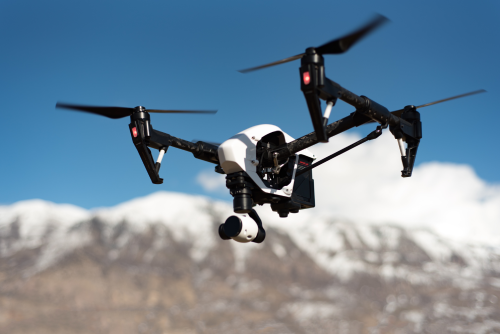
The Siam UAV Industries Mercury-1 is a fixed-wing military/ISR drone from Thailand that appears to be designed around long-endurance surveillance-style missions rather than consumer or commercial imaging work. Based on the supplied confirmed data, it combines a 25 kg maximum takeoff weight, a listed 12-hour endurance, and a 2,000 m ceiling, making it notable as a persistence-focused platform rather than a short-hop tactical multirotor.
What makes the Mercury-1 interesting is not just its headline endurance figure, but the broader context around it. Thailand-origin UAV programs attract attention from researchers and procurement watchers because they sit at the intersection of regional industrial development, national defense autonomy, and a market increasingly looking beyond the most established Western suppliers. At the same time, the Mercury-1 remains a lightly documented platform in public sources, so any serious evaluation has to separate confirmed specifications from reasonable inference.
That means this page is best read as a careful reference profile for researchers, procurement watchers, journalists, and readers comparing fixed-wing ISR UAVs. It is not a buyer-style review in the consumer drone sense, because too many practical details—payload options, launch method, control system, range, speed, and support model—remain unclear in the supplied data.
Quick Summary Box
- Drone Name: Siam UAV Industries Mercury-1
- Brand: Siam UAV Industries
- Model: Mercury-1
- Category: Military/ISR fixed-wing drone
- Best For: Defense-sector evaluation, ISR platform comparison, long-endurance fixed-wing UAV research
- Price Range: Not publicly confirmed in supplied data
- Launch Year: Not publicly confirmed in supplied data
- Availability: Not publicly confirmed in supplied data
- Current Status: Unknown
- Overall Rating: Not rated due to limited confirmed data
- Data Confidence: Moderate only for a small set of headline specs; low for broader operational details
- Our Verdict: A potentially interesting Thai fixed-wing ISR platform with strong publicly listed endurance for its class, but too many core details remain unconfirmed for a full buyer-style recommendation.
Introduction
The Mercury-1 sits in the military/ISR segment and is attributed to Siam UAV Industries of Thailand. In the supplied record, the confirmed headline numbers are a fixed-wing layout, 25 kg maximum takeoff weight, 12-hour endurance, 2,000 m ceiling, and a listed 11 m wingspan.
Even before looking at what is missing, those figures alone paint a certain picture. A fixed-wing UAV with long endurance usually points toward missions such as persistent observation, route monitoring, coastal watch, border-area patrol, training for ISR crews, or general-area intelligence support. It does not suggest a hobby aircraft or a prosumer camera drone. It suggests a mission aircraft built to stay aloft efficiently and cover more ground than a hovering multirotor can.
The Mercury-1 also matters because it represents a Thai-origin fixed-wing ISR entry. In the global drone discussion, a great deal of attention goes to large, highly visible manufacturers from the US, Israel, China, and Turkey. But regional aerospace ecosystems matter too, especially for countries or institutions that want local supply options, domestic industrial participation, or strategic diversification. In that sense, even a thinly documented platform can still be important as a signal of national capability or market intent.
That said, public-facing technical transparency is still limited, and the drone’s current status is unknown in the supplied data. There is no clear confirmation here on whether it is in active service, in demonstration, in niche institutional use, or simply listed in a database without a robust public support footprint. That uncertainty does not make it irrelevant—but it does mean readers should treat the Mercury-1 as a reference profile under incomplete visibility, not as a fully validated procurement-ready product overview.
Overview
What kind of drone is it?
The Mercury-1 is a fixed-wing unmanned aircraft in the military/ISR category. That classification immediately distinguishes it from the vast majority of drones familiar to the general public. Consumer drones are usually multirotors built for photography, inspection, or short-duration flying. By contrast, a fixed-wing ISR platform is built around efficient forward flight, longer time on station, and broader-area coverage.
In practical terms, fixed-wing aircraft are generally chosen when operators care more about endurance and range efficiency than hovering. They are well suited to missions where the aircraft needs to keep moving, maintain a patrol route, or circle a zone for extended observation. That makes them attractive for surveillance patterns, route reconnaissance, wide-area watch, and other persistent operations.
Based on the supplied data, Mercury-1 appears to fit exactly that endurance-led profile. The listed 12-hour flight time is the clearest clue. Even without confirmed speed or range, an endurance number at that level implies a platform whose design priorities likely include:
- aerodynamic efficiency,
- low-power cruise behavior,
- stable long-duration flight,
- and mission persistence over short-burst agility.
The fixed-wing layout also implies tradeoffs. Such aircraft are usually less convenient in cramped operating areas than multirotors. They may require more setup space, more structured mission planning, and more deliberate launch/recovery procedures. Since the Mercury-1’s exact takeoff and landing method is not confirmed in the supplied data, those tradeoffs remain theoretical here—but the category itself strongly points in that direction.
Who should buy it?
This is not a mainstream retail drone, and it should not be approached as one. The most relevant audience is likely:
- defense organizations evaluating smaller ISR platforms,
- public-sector users studying fixed-wing unmanned systems,
- institutional buyers comparing regional suppliers,
- researchers and analysts tracking Southeast Asian UAV programs,
- and journalists covering defense-industrial developments in Thailand and neighboring markets.
In a procurement context, Mercury-1 is more likely to be relevant as a program option or reference benchmark than as an off-the-shelf product. A defense customer may be interested in it because of local sourcing, sovereign capability goals, training value, or budgetary fit. An academic or think-tank researcher may be interested because it helps map the state of domestic Thai unmanned aviation. A regional buyer may care because it expands the field beyond a handful of globally dominant UAV makers.
It is far less relevant for:
- aerial creators,
- hobby pilots,
- industrial inspection teams needing hover,
- or buyers who need a completely transparent spec sheet before first contact.
What makes it different?
The most notable confirmed point is the 12-hour endurance paired with a 25 kg maximum takeoff weight. If those figures reflect the operational configuration accurately, that suggests an aircraft designed for efficiency rather than raw payload mass or high-speed tactical dash performance. In short: it appears optimized to stay airborne, not merely to launch quickly and return quickly.
The Thailand origin also makes the model noteworthy. For some buyers, origin is not just a branding detail; it affects:
- procurement politics,
- export control pathways,
- technology transfer possibilities,
- industrial offsets,
- local maintenance prospects,
- and strategic diversification away from dominant suppliers.
That can matter a great deal in government, security, and institutional acquisition environments.
At the same time, the public data gap is part of the story. Many UAV platforms can look strong on a small set of headline numbers, but the operational picture depends on details like:
- payload capacity,
- usable datalink range,
- cruise speed,
- launch/recovery infrastructure,
- autopilot maturity,
- maintenance burden,
- and support contracts.
Those details are not clearly confirmed in the supplied record. So what makes Mercury-1 different is a combination of promising endurance on paper and unusually limited public transparency.
Key Features
- Fixed-wing airframe intended for military/ISR use
- Manufacturer and brand: Siam UAV Industries
- Country of origin: Thailand
- Maximum takeoff weight: 25 kg
- Endurance: 12 hours
- Ceiling: 2,000 m
- Listed wingspan: 11 m
- Likely optimized for persistence rather than hover capability or casual portability
- Potentially relevant for border, coastal, patrol, or training roles where long loiter time matters
- Publicly confirmed speed, range, payload, and sensor details remain limited
- Current program or service status is unknown in the supplied data
- Best interpreted as an institutional/procurement platform, not a consumer drone
Those bullet points summarize the core known facts, but their real significance lies in how they combine. A 25 kg UAV is large enough to sit well outside the consumer market, yet still small compared with many heavier tactical systems. A 12-hour endurance claim is substantial in that class. And a fixed-wing airframe almost always indicates a design logic centered on energy-efficient cruise. That combination alone makes the Mercury-1 worth tracking, even if the rest of the spec sheet remains incomplete.
Full Specifications Table
| Specification | Value |
|---|---|
| Brand | Siam UAV Industries |
| Model | Mercury-1 |
| Drone Type | Fixed-wing UAV |
| Country of Origin | Thailand |
| Manufacturer | Siam UAV Industries |
| Year Introduced | Not publicly confirmed in supplied data |
| Status | Unknown |
| Use Case | Military/ISR |
| Weight | Not publicly confirmed in supplied data |
| Dimensions (folded/unfolded) | Folded: Not publicly confirmed in supplied data; Unfolded: listed wingspan 11 m, length not publicly confirmed |
| Max Takeoff Weight | 25 kg |
| Battery Type | Not publicly confirmed in supplied data |
| Battery Capacity | Not publicly confirmed in supplied data |
| Flight Time | 12 hr |
| Charging Time | Not publicly confirmed in supplied data |
| Max Range | Not publicly confirmed in supplied data |
| Transmission System | Not publicly confirmed in supplied data |
| Top Speed | Not publicly confirmed in supplied data |
| Wind Resistance | Not publicly confirmed in supplied data |
| Navigation System | Not publicly confirmed in supplied data |
| Obstacle Avoidance | Not publicly confirmed in supplied data |
| Camera Resolution | Not publicly confirmed in supplied data |
| Video Resolution | Not publicly confirmed in supplied data |
| Frame Rates | Not publicly confirmed in supplied data |
| Sensor Size | Not publicly confirmed in supplied data |
| Gimbal | Not publicly confirmed in supplied data |
| Zoom | Not publicly confirmed in supplied data |
| Storage | Not publicly confirmed in supplied data |
| Controller Type | Not publicly confirmed in supplied data |
| App Support | Not publicly confirmed in supplied data |
| Autonomous Modes | Not publicly confirmed in supplied data |
| Payload Capacity | Not publicly confirmed in supplied data |
| Operating Temperature | Not publicly confirmed in supplied data |
| Water Resistance | Not publicly confirmed in supplied data |
| Noise Level | Not publicly confirmed in supplied data |
| Remote ID Support | Not publicly confirmed in supplied data |
| Geo-fencing | Not publicly confirmed in supplied data |
| Certifications | Not publicly confirmed in supplied data |
| MSRP / Launch Price | Not publicly confirmed in supplied data |
| Current Price | Not publicly confirmed in supplied data |
| Ceiling | 2,000 m |
| Wingspan | 11 m |
| Length | Not publicly confirmed in supplied data |
| Source Basis | Public drone database listing referenced in supplied data |
A table like this can look sparse, but that sparseness is itself meaningful. It tells readers where the Mercury-1 currently sits in the public-information landscape: a platform with a few notable airframe-level data points, but without the kind of open technical disclosure that would enable a conventional review or straightforward apples-to-apples ranking.
Design and Build Quality
The Mercury-1 uses a fixed-wing layout, which usually points to an airframe built around aerodynamic efficiency rather than compact foldability or urban ease of deployment. In practical terms, that means it is more likely to be a mission platform than a backpack-portable aircraft. Even without a confirmed empty weight, propulsion architecture, or fuselage dimensions, the listed 25 kg maximum takeoff weight places it well above consumer drones and into a more structured operational category.
From a design-analysis perspective, fixed-wing UAVs in this class often emphasize several priorities:
- Lift efficiency over long flights
- Stable cruise behavior for surveillance payloads
- Moderate structural weight relative to span
- Predictable handling for repeatable mission planning
- Transportability by team or vehicle, even if not by one person alone
The supplied record does not confirm materials, landing gear type, propulsion layout, field assembly method, or whether the aircraft uses runway takeoff, catapult launch, hand-assisted launch, belly landing, net recovery, or another procedure. Those omissions matter more than they might seem. In real-world UAV operations, deployment practicality can determine whether a platform is useful in the field or merely attractive on paper.
For example:
- A runway-dependent aircraft may perform well but require more infrastructure.
- A catapult-launched system can be more expeditionary but may add equipment complexity.
- Belly landings simplify some setups but may increase wear or limit payload placement.
- Net recovery can support maritime or confined environments but requires specialized gear and training.
Without that information, the Mercury-1 cannot be judged fully on logistics.
The listed 11 m wingspan is also a major design cue if accurate. A long wingspan often indicates a desire for high aspect ratio efficiency, which is commonly associated with reduced drag during cruise and improved endurance. That would fit the published 12-hour flight time. However, because that span is attention-grabbing when paired with a 25 kg MTOW, potential buyers and researchers should verify the figure directly through official documentation before making assumptions about transport, storage, or launch-site footprint.
If accurate, an 11 m span would have significant implications:
- Transport footprint: It may require sectional wing assembly or dedicated transport arrangements.
- Ground handling: Larger span can complicate operations in tight or uneven spaces.
- Flight efficiency: Greater span can improve endurance performance if designed well.
- Field setup time: Assembly, rigging, and inspection procedures may be more involved.
Build quality itself cannot be fairly rated from the supplied data. There is no verified information on structural materials such as composites, foam-core construction, fiberglass, carbon fiber reinforcement, or modular fuselage elements. There is also no clear indication of maintainability features like quick-swap wings, removable payload bays, or standardized service panels.
So the best conclusion here is that the Mercury-1’s design appears conceptually oriented toward endurance and mission persistence, but its actual construction quality, robustness, repairability, and field ergonomics remain open evaluation points.
Flight Performance
From the confirmed data alone, the clearest performance strength is endurance. A 12-hour figure is substantial for a fixed-wing ISR platform in this weight class and suggests the Mercury-1 is intended for persistent observation, patrol-style presence, or long loiter windows rather than short, high-tempo sorties.
That number matters because endurance is often one of the most expensive and operationally valuable attributes in ISR aviation. More time in the air can mean:
- fewer launch cycles per day,
- longer area coverage with the same fleet size,
- reduced crew turnover during short missions,
- more flexible observation timelines,
- and better ability to wait for activity rather than rush to catch it.
In surveillance missions, persistence frequently matters more than top speed. A fast aircraft can reach an area quickly, but a long-endurance aircraft can keep watching after it gets there. For border, coastal, route, and area-monitoring work, that can be more useful than burst performance.
The confirmed ceiling of 2,000 m provides at least a baseline indicator of altitude capability, though it should be interpreted carefully. “Ceiling” can mean different things in different publications—sometimes a practical operating altitude, sometimes a service ceiling, and sometimes a simplified marketing figure. On its own, it does not define sensor effectiveness, survivability, or communications reach. A platform may be able to physically reach a certain altitude while still facing payload, datalink, weather, or mission-profile limitations.
There are also several major performance unknowns:
- Maximum speed is not confirmed.
- Cruise speed is not confirmed.
- Operational range is not confirmed.
- Data link range is not confirmed.
- Loiter profile is not confirmed.
- Wind tolerance is not confirmed.
- Takeoff distance or launch method is not confirmed.
Those gaps matter because endurance alone does not tell the full mission story. For example, a 12-hour aircraft with modest cruise speed and limited communications range may still be highly useful for local-area patrol, but not necessarily for wider tactical missions. Likewise, endurance claims are often highly dependent on payload weight, weather conditions, altitude, and reserve assumptions.
As analysis rather than confirmed fact, the fixed-wing design implies better cruise efficiency than a multirotor and likely more stable forward flight over long periods. That usually benefits ISR work by giving the aircraft more energy-efficient coverage patterns. But it also implies less flexibility in confined launch zones and, importantly, no ability to hover over a single point the way a quadcopter can.
Another underappreciated issue is real-world sortie management. Long-endurance UAVs require more than just fuel or battery efficiency. They also need:
- reliable autopilot stability over many hours,
- manageable thermal performance,
- sensor systems that can run for extended periods,
- effective lost-link behavior,
- and maintenance cycles compatible with long operational use.
Because none of those details are confirmed in the supplied record, the performance story remains promising but incomplete.
Takeoff and landing behavior are also undocumented here. That matters because field logistics can shape the real-world value of an ISR platform just as much as endurance numbers do. A drone that flies for 12 hours but needs an elaborate recovery setup may fit some users very well and others poorly. For actual procurement work, this would be one of the first areas to verify.
Camera / Payload Performance
Payload specifics are not publicly confirmed in the supplied data. That means there is no reliable confirmed basis here for:
- camera resolution,
- sensor type,
- gimbal stabilization,
- zoom capability,
- day/night performance,
- target-tracking features,
- or payload capacity.
That is a major limitation, because ISR aircraft are defined as much by their sensors as by their airframes. A long-endurance drone without a mission-effective payload is not an ISR solution in any practical sense. It is simply an aircraft capable of carrying something.
Given the drone’s military/ISR classification, it is reasonable to view Mercury-1 as a platform intended to carry some form of observation payload, potentially electro-optical, infrared, or similar surveillance-oriented equipment. However, that should be treated as a segment-level expectation, not a confirmed model-specific specification.
The most important payload questions for real evaluation are not glamorous marketing numbers. They are integration and mission questions such as:
- What sensor packages are officially supported?
- Is there a stabilized EO/IR turret?
- Does it use a modular payload bay?
- What is the maximum payload weight?
- How much electrical power is available to the payload?
- What is the onboard data interface?
- Can payloads be swapped in the field?
- Does payload drag or turret size significantly reduce endurance?
- Is there real-time downlink of video or metadata?
- Can operators cue sensors automatically to waypoints or tracks?
Without clear answers to those points, readers should avoid assuming the aircraft can support any particular surveillance workflow.
It is also important to distinguish between airframe endurance and mission endurance. A drone may stay airborne for many hours, but the useful mission time can be reduced if the payload:
- draws significant electrical power,
- adds aerodynamic drag,
- requires heavy stabilization hardware,
- or needs operators to control it manually for extended periods.
For surveillance tasks, payload quality is often judged by a mix of:
- image clarity,
- low-light or thermal performance,
- stabilization,
- tracking behavior,
- target identification range,
- metadata accuracy,
- and how easily the data feeds into an intelligence process.
None of those are currently confirmed here.
For procurement-style evaluation, the missing questions are straightforward and critical:
- What sensor packages are supported?
- Is there a stabilized turret or modular payload bay?
- What is the maximum payload weight?
- What is the power and data interface standard?
- Can the aircraft carry ISR payloads without sharply reducing endurance?
Until those answers are confirmed, payload performance remains one of the biggest unknowns on the Mercury-1 profile. For many buyers, this single category could determine whether the platform is merely interesting or truly operationally relevant.
Smart Features and Software
No detailed avionics, autonomy, or software stack is publicly confirmed in the supplied data. There is no verified information here on:
- waypoint missions,
- return-to-home logic,
- geofencing,
- mission planning software,
- AI object tracking,
- fleet management,
- SDK access,
- or cloud integration.
For a military/ISR fixed-wing platform, some level of autopilot and mission management would be typical. In fact, it would be surprising if a long-endurance UAV in this category had no meaningful automation at all. But that remains an inference, not a confirmed Mercury-1 feature set.
This matters because software is often what turns an air vehicle into a usable system. In long-endurance operations, the quality of the mission-management environment can affect:
- operator workload,
- route accuracy,
- lost-link recovery,
- sensor coordination,
- handoff procedures,
- mission repeatability,
- and post-flight analysis.
A drone that can stay up for 12 hours still needs competent command-and-control software to be practical. For ISR users, especially institutional ones, software questions often include:
- What ground control station is used?
- Is the interface ruggedized or laptop-based?
- Can operators build missions visually on a map?
- Are geospatial overlays supported?
- Is sensor control integrated into the same interface?
- Is the datalink encrypted?
- Are logs exportable for post-mission review?
- Is there support for multiple aircraft management?
- Are there user roles for pilot, payload operator, and commander?
No such features are confirmed in the supplied record.
Buyers should also verify the aircraft’s failsafe behavior. For a fixed-wing ISR platform, key autonomy and safety functions may include:
- lost-link loiter,
- automatic return-to-base,
- emergency landing logic,
- geofence containment,
- altitude hold,
- waypoint resumption,
- and pre-programmed contingencies.
In a defense or government context, the software layer may also matter for cybersecurity, access control, and integration with wider command systems. Even simple questions—such as whether mission logs can be archived cleanly or whether maps can be loaded offline—can become operationally significant.
For now, software capability is an open due-diligence item rather than a selling point that can be confidently scored.
Use Cases
Based on the confirmed platform class and available specifications, the most realistic use cases are:
-
Defense observation and ISR program evaluation
The Mercury-1 appears most relevant as a candidate for organizations studying smaller fixed-wing surveillance aircraft or comparing domestic and regional UAV options. -
Border, coastal, or area-monitoring roles at a high descriptive level
A long-endurance fixed-wing platform is structurally well suited to patrol-style missions where an aircraft follows a route, revisits an area, or maintains broad-area watch over time. -
Long-duration aerial watch where persistence matters more than hover capability
If the 12-hour figure reflects practical mission conditions, the aircraft could be useful in scenarios where staying aloft is more important than remaining stationary over one point. -
Institutional testing of fixed-wing UAV concepts
Universities, defense labs, or public agencies may find it relevant as an example of Thai unmanned aviation design in the ISR category. -
Regional aerospace and defense market analysis
Researchers comparing Southeast Asian UAV industrial development may view Mercury-1 as a useful data point even if the aircraft is not broadly marketed. -
Training and familiarization for fixed-wing UAV operating teams
Depending on actual systems integration and support availability, it may have value as a training or doctrine-development platform for organizations moving from multirotor to fixed-wing UAV operations. -
Comparative review of Thai-origin unmanned aircraft offerings
For procurement analysts focused on local sourcing, industrial policy, or sovereign supply chain resilience, Mercury-1 is notable simply because it is presented as a Thai-built ISR-class UAV.
Just as importantly, there are use cases where it is not a natural fit. This is not a consumer photography drone, casual hobby aircraft, compact urban inspection multirotor, or an obvious choice for operators who need vertical takeoff and landing convenience. Its profile points toward mission discipline, planning, and structured operation.
Pros and Cons
Pros
- Confirmed 12-hour endurance is a strong headline figure
- Fixed-wing layout is well suited to efficient long-duration flight
- 25 kg MTOW suggests a smaller platform than many larger tactical UAV systems
- Thai origin may be attractive for regional sourcing, industrial policy, or diversification analysis
- 2,000 m ceiling gives at least a baseline indication of mission altitude capability
- The model fills an interesting reference point in Southeast Asian ISR drone discussions
- Potentially favorable endurance-to-weight profile if the published figures reflect operational reality
- Institutionally relevant even with sparse data, because regional UAV ecosystems are increasingly important
Cons
- Current status is unknown
- Public payload and sensor details are not confirmed
- Range, speed, propulsion, and launch/recovery method are not confirmed
- No public pricing or support structure is confirmed in the supplied data
- Availability appears unclear and may be procurement-restricted
- Remote ID, software stack, and compliance details are not publicly documented here
- The listed wingspan-to-weight combination should be independently verified before procurement planning
- Too little open documentation for a confident buyer-style recommendation
The pros here are mostly about concept and headline metrics. The cons are mostly about verification risk. That balance is important: Mercury-1 looks interesting because of what the published figures suggest, but serious users will need far more than a promising endurance number before they can judge it against established ISR platforms.
Comparison With Other Models
Because Mercury-1 public data is limited, exact one-to-one comparison is difficult. The table below uses confirmed Mercury-1 data plus broad publicly reported positioning for well-known ISR fixed-wing alternatives. It should be treated as a context tool, not a strict specification shootout.
| Model | Price | Flight Time | Camera or Payload | Range | Weight | Best For | Winner |
|---|---|---|---|---|---|---|---|
| Siam UAV Industries Mercury-1 | Not publicly confirmed | 12 hr | Not publicly confirmed in supplied data | Not publicly confirmed | 25 kg MTOW | Buyers researching a Thai fixed-wing ISR platform with long endurance | Best when local program fit or regional sourcing matters |
| Insitu ScanEagle | Not publicly confirmed | Publicly reported around 20+ hr | Publicly associated with EO/IR ISR payload options | Publicly reported tactical long-endurance class | Publicly reported in the low-20-kg class | Mature long-persistence ISR ecosystem | Endurance benchmark |
| RQ-7 Shadow | Not publicly confirmed | Publicly reported around 6-9 hr | Publicly associated with tactical ISR payloads | Publicly reported tactical range class | Publicly reported as substantially heavier than Mercury-1 | Legacy tactical UAV ecosystem | Best for legacy-system context |
One reason this comparison is tricky is that fixed-wing ISR systems are often sold and evaluated as complete mission packages, not just airframes. A platform with slightly lower endurance might still be more attractive if it offers:
- stronger payload integration,
- better field support,
- clearer launch/recovery options,
- proven operational history,
- or better compatibility with existing user doctrine.
That is why the Mercury-1’s limited public documentation matters so much in comparison exercises.
Mercury-1 vs a close competitor
Against a platform like ScanEagle, Mercury-1 looks less publicly documented but still interesting on paper. ScanEagle benefits from a much more visible public record, a mature ecosystem, and broader recognition in ISR discussions. That makes it easier to evaluate on practical dimensions such as payloads, deployment method, sustainment, and operating history.
Mercury-1, by contrast, may appeal more where Thai sourcing, regional program alignment, domestic industrial participation, or national industry development matters. In other words, its value proposition may be less about beating mature incumbents on public documentation and more about fitting strategic sourcing priorities.
Mercury-1 vs an alternative in the same segment
The main challenge in this segment is that Mercury-1’s payload, software, and support data are not clearly public. That makes alternatives with broader documentation easier to score, even if Mercury-1’s endurance-to-weight profile looks promising.
For a buyer who needs a transparent procurement case, openly documented platforms still have an advantage. Evaluation teams generally need more than airframe numbers; they need lifecycle clarity. That includes:
- support terms,
- training pathways,
- payload roadmap,
- spare parts availability,
- and evidence of operational maturity.
Until those are known, Mercury-1 remains harder to benchmark fairly.
Mercury-1 vs an older or previous-generation option
Compared with older tactical UAV ecosystems such as RQ-7 Shadow, Mercury-1 appears lighter and more endurance-focused in headline form. That can be attractive in an era where smaller, more efficient systems often compete by lowering operational footprint while preserving useful mission persistence.
But older systems often benefit from established doctrine, maintenance pipelines, training ecosystems, and visible service history. That matters. A newer or less-public platform may look cleaner on paper, but legacy systems are often easier to model in terms of sustainment and mission fit.
So Mercury-1 may be more interesting as a compact modern reference point, while legacy systems remain easier to benchmark due to their public operating record.
Manufacturer Details
Siam UAV Industries is both the manufacturer and brand listed for the Mercury-1. The company is associated with Thailand in the supplied data. No separate parent company, founding year, broader corporate structure, or detailed product portfolio is publicly confirmed in the supplied record.
Because the brand and manufacturer names are the same, there is no meaningful distinction to explain here between product branding and industrial ownership. What can be said conservatively is that the company is presented as a Thai UAV manufacturer with at least one military/ISR fixed-wing platform visible in public database references.
That alone may interest analysts, because domestic UAV manufacturers often matter for reasons beyond immediate platform sales. They can be relevant to:
- national defense-industrial strategy,
- local workforce development,
- university or government lab collaboration,
- indigenous maintenance capability,
- and technology sovereignty efforts.
However, the company’s wider market reputation, installed base, certification history, export footprint, and service infrastructure are not clearly confirmed in the supplied data. Those are all important points for anyone considering Mercury-1 as more than a research subject.
Support and Service Providers
Official support arrangements are not publicly confirmed in the supplied data. For a military/ISR platform, support is often contract-based rather than retail-based, and may include:
- training packages,
- spare parts kits,
- maintenance agreements,
- software updates,
- payload integration assistance,
- and field-service support.
This is one of the areas where institutional buyers need to ask the most practical questions. A UAV system is only as useful as its sustainment model. Even a capable aircraft can become unattractive if spare parts are slow to obtain, training is limited, or software support is inconsistent.
Prospective buyers should verify:
- official service contact points,
- regional maintenance capability,
- spare airframe and component availability,
- battery or propulsion-system support,
- sensor integration support,
- software update policy,
- documentation quality,
- operator and maintainer training packages,
- warranty terms,
- and long-term sustainment commitments.
If the Mercury-1 is active only in limited or program-specific channels, support availability may vary significantly by region and customer type. That would not be unusual for a defense-linked UAV, but it would directly affect procurement risk.
Where to Buy
The Mercury-1 does not appear to be a conventional consumer retail product. Any acquisition is more likely to happen through:
- direct manufacturer engagement,
- authorized defense or enterprise channels,
- government procurement frameworks,
- or program-specific contracting arrangements.
That means buyers should not expect the usual commercial purchase flow of online listing, checkout, and standardized accessory bundles. Instead, the acquisition path, if available, will likely depend on organizational eligibility and mission requirements.
Buyers should expect availability, if any, to depend on:
- government or institutional procurement eligibility,
- regional export or import controls,
- local representation or distributor agreements,
- payload and integration requirements,
- after-sales support commitments,
- quantity ordered,
- and whether the aircraft is sold as an airframe or a complete system package.
In many defense-adjacent UAV cases, “where to buy” really means “who is authorized to open a procurement dialogue.” That may involve company contact through trade shows, defense exhibitions, official inquiry channels, or government procurement offices rather than a public storefront.
In short, this is a model to source through official brand channels or authorized procurement partners, not through mainstream drone stores.
Price and Cost Breakdown
No public launch price or current price is confirmed in the supplied data. That is common with defense-linked UAV systems, where final cost may depend heavily on:
- aircraft quantity,
- payload configuration,
- communications package,
- training scope,
- integration demands,
- warranty structure,
- and sustainment commitments.
For that reason, even if a unit price exists internally, it may not tell the real cost story. Institutional UAV procurement is often more about system cost and lifecycle cost than about airframe sticker price.
Before budgeting for the Mercury-1, buyers should verify the cost of:
- air vehicle package,
- ground control station,
- sensor payloads,
- communications and data-link equipment,
- spare parts and field maintenance kits,
- batteries or propulsion consumables,
- training and documentation,
- integration and acceptance testing,
- warranty or sustainment coverage,
- software licensing if applicable,
- and insurance or liability coverage where applicable.
It is also worth separating capital cost from operational cost. A drone can look affordable up front but become expensive if it requires specialized launch gear, rare parts, or recurring contractor support. Likewise, a higher initial cost may be justified if the platform comes with strong training, payload integration, and maintenance backing.
Because battery type, propulsion details, launch method, and support structure are not confirmed, there is not enough public data to estimate ownership cost responsibly. Any price assumption would be speculative.
Regulations and Compliance
For most jurisdictions, a 25 kg fixed-wing UAV sits well outside casual hobby norms and will likely require structured authorization, registration, and trained operators. If operated in any civilian or dual-use environment, airspace permissions, privacy rules, and data-handling laws become especially important.
The exact legal framework will vary by country, but buyers should expect scrutiny in areas such as:
- aircraft registration,
- operator licensing or certification,
- organizational operating authority,
- beyond-visual-line-of-sight permissions,
- command-and-control spectrum use,
- airworthiness or safety documentation,
- surveillance and privacy compliance,
- and insurance obligations.
Because Mercury-1 is categorized here as a military/ISR platform, additional complications may apply. These can include:
- export controls,
- import controls,
- end-user restrictions,
- classified or restricted payload handling,
- government procurement restrictions,
- and rules on cross-border technology transfer.
That is especially relevant for international buyers. In many cases, the limiting factor is not whether the airframe can be purchased, but whether the payload, communications equipment, software, or support package can legally be transferred.
Key points to verify locally:
- aircraft registration requirements,
- operator licensing or certification,
- airspace access and BVLOS rules,
- import and export controls for defense-related equipment,
- surveillance and data-protection obligations,
- radio-frequency permissions,
- insurance and organizational liability requirements,
- and Remote ID obligations, if applicable.
Remote ID support is not publicly confirmed in the supplied data. Readers should not assume automatic compliance in any country. Military/ISR classification may also mean procurement and operation are restricted to authorized entities rather than ordinary commercial operators.
Who Should Buy This Drone?
Best for
-
Defense or public-sector organizations evaluating fixed-wing ISR options
These users are best positioned to conduct the deeper technical and contractual checks the Mercury-1 requires. -
Analysts tracking Thai and Southeast Asian UAV development
Even with limited data, the aircraft is a useful marker of regional aerospace activity. -
Institutions comparing endurance-oriented military drone platforms
The headline endurance figure alone makes it relevant in comparative research. -
Buyers who value long-endurance airframe concepts and are prepared to do deep due diligence
This is a platform for structured evaluation, not impulse purchase. -
Programs where local or regional sourcing strategy matters
Thai origin could matter strongly for industrial policy or procurement diversification.
Not ideal for
-
Consumer drone buyers
This is outside the consumer market in both purpose and likely acquisition pathway. -
Aerial creators looking for a camera-first platform
No confirmed imaging specs support that kind of recommendation. -
Operators needing fully transparent public specs before evaluation
The Mercury-1 currently asks for direct verification rather than easy desk comparison. -
Buyers who require a clearly published dealer and support network
Those details are not openly established in the supplied data. -
Users needing hover capability or compact deployability like a multirotor
Fixed-wing aircraft are built for different mission logic. -
Anyone seeking an off-the-shelf hobby or prosumer aircraft
This is an institutional ISR profile, not a mainstream flying product.
Final Verdict
The Siam UAV Industries Mercury-1 is most compelling as a reference-point ISR platform rather than as an easy off-the-shelf recommendation. The confirmed numbers that stand out are its fixed-wing configuration, 25 kg maximum takeoff weight, 12-hour endurance, 2,000 m ceiling, and Thai origin. Taken together, those details suggest a persistence-oriented aircraft with serious mission intent.
If the published data reflects real operational configuration, Mercury-1 could represent an efficient small-to-mid-size surveillance platform with appeal for regional sourcing strategies, institutional evaluation, or sovereign capability discussions. The endurance figure is the main reason it deserves attention at all; long loiter time remains one of the most valuable characteristics in ISR aviation, especially when paired with a relatively modest takeoff weight.
The downside is equally clear: public information is thin. Payload details, speed, range, avionics, launch method, support coverage, pricing, and even current status are not clearly confirmed in the supplied data. For many buyers, those are not secondary details—they are the details that determine mission viability.
So the right way to interpret the Mercury-1 is this: it is interesting, potentially meaningful, and worth tracking, but still under-documented. Readers who should seriously consider it are institutional or defense-sector evaluators willing to verify every major program detail directly. Everyone else should view it as an intriguing but incomplete ISR drone profile—a platform with enough promise on paper to justify attention, but not enough public depth to justify an uncomplicated recommendation.
