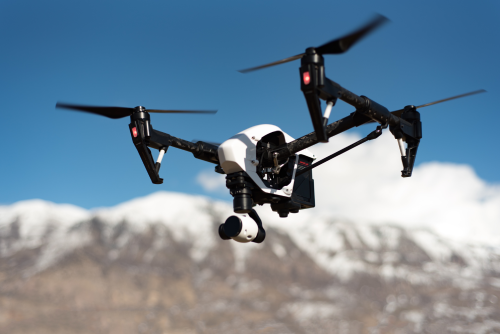
The CybAero Apid 60 is a Swedish helicopter-type unmanned aircraft in the military/VTOL segment. Based on the limited publicly confirmed data available, its most notable published figures are 6 hours of endurance and a top speed of 110 km/h, which makes it relevant to researchers, defense-market readers, and teams comparing legacy rotary-wing UAV concepts. What matters most here is not consumer appeal, but how the Apid 60 fits into the broader story of persistent VTOL drone development.
Quick Summary Box
- Drone Name: CybAero Apid 60
- Brand: CybAero
- Model: Apid 60
- Category: military/VTOL
- Best For: Researchers, defense-market analysts, and organizations comparing unmanned helicopter platforms
- Price Range: Not publicly confirmed in supplied data
- Launch Year: Not publicly confirmed in supplied data
- Availability: Not publicly confirmed in supplied data
- Current Status: unknown
- Overall Rating: Not rated due to limited confirmed data
- Our Verdict: A niche helicopter UAV with an appealing endurance figure on paper, but too many unconfirmed public details for a normal buying recommendation
For most readers, the key takeaway is simple: the Apid 60 is interesting primarily as a specialist unmanned helicopter reference point. It is not the sort of drone that can be meaningfully judged by the standards used for consumer quadcopters, camera platforms, or mass-market commercial systems. Its significance lies in concept, category, and mission profile rather than shopping convenience.
Introduction
The Apid 60 is a CybAero rotary-wing UAV from Sweden, positioned in the military/VTOL space rather than the consumer or prosumer drone market. That means readers should think of it as a specialized platform entry, not a shelf-ready camera drone. Its relevance comes from its helicopter airframe, runway-independent operating concept, and the relatively strong 6-hour endurance listed in the supplied data, even though many core procurement and payload details remain unclear.
That distinction matters. In the broader drone industry, multirotors dominate consumer awareness because they are easy to launch, increasingly automated, and often sold with integrated cameras and apps. Helicopter UAVs like the Apid 60 occupy a different branch of development. They are typically assessed in terms of persistence, hover capability, vertical access to difficult locations, payload flexibility, and mission sustainment. In other words, they are closer to aviation programs than electronics products.
The Apid 60 therefore deserves attention less as a product review subject in the usual sense and more as a case study in unmanned helicopter evolution. A platform with a published 6-hour endurance figure immediately stands out, because rotary-wing systems usually accept efficiency penalties in exchange for hover and VTOL functionality. If that number is representative of its intended mission profile, it suggests CybAero was aiming at serious operational persistence rather than brief tactical hops.
At the same time, any assessment has to remain disciplined. Publicly confirmed information appears sparse. That limits confidence on questions that normally matter most: payload capability, propulsion details, support network, launch year, current availability, and whether the platform remains practically obtainable or supportable. So while the Apid 60 is undeniably interesting, it is best approached as a specialist, partially documented military/VTOL aircraft rather than a transparent market offering.
Overview
What kind of drone is it?
The CybAero Apid 60 is listed as a helicopter-type unmanned aircraft in the military/VTOL segment. In simple terms, it belongs to the class of UAVs designed to take off and land vertically while also offering hover capability, something fixed-wing drones cannot do without special launch and recovery gear.
Unlike consumer quadcopters, a helicopter UAV in this category is typically evaluated for persistence, hover utility, and mission flexibility rather than ease of recreational use.
That airframe choice has practical implications. A helicopter-style UAV can operate from confined areas, hold position over a point of interest, and recover without a runway or catapult. Those advantages are especially relevant in shipboard operations, remote field sites, mobile detachments, and environments where infrastructure is limited. In military and institutional settings, that flexibility can be more important than simplicity.
It also places the Apid 60 in a narrower and more technically demanding segment than common electric multirotors. Rotary-wing UAVs with helicopter architecture often involve more complex mechanics, more involved maintenance routines, and greater dependence on specialized training and support. They are usually not optimized for low-cost ownership or broad accessibility. Instead, they are built around mission utility.
From an analytical standpoint, the Apid 60 belongs to a category that tries to bridge some of the advantages of helicopters and unmanned aircraft: hover when needed, but with enough endurance to remain useful beyond short inspection tasks. That is why even a small amount of confirmed performance data can make such a platform relevant to researchers.
Who should buy it?
The Apid 60 is most relevant to:
- Defense and aerospace researchers
- Government and institutional evaluators
- Analysts comparing rotary-wing UAV programs
- Buyers studying legacy or niche VTOL platforms
It is not an obvious fit for hobby pilots, creators, or general commercial drone buyers because the public data is too thin and the product category is too specialized.
To put that more concretely, the likely audience is not someone asking, “Can this drone shoot stabilized 4K video?” The more appropriate questions are along the lines of: How does this platform compare with other unmanned helicopters of its era? What endurance-to-flexibility tradeoffs does it represent? Was it positioned for surveillance, maritime work, or broader utility missions? How difficult would it be to sustain in service today?
Researchers may value it as part of the historical record of European UAV development. Procurement analysts may study it as an example of how smaller specialist manufacturers approached the unmanned helicopter market. Institutions exploring doctrine or fleet structure might use it as a reference point in understanding why some operators prefer VTOL rotary-wing systems despite higher complexity.
Anyone considering an actual acquisition would need a much higher threshold of verification. This is not a plug-and-play aircraft for general operations. Without clear support channels, documentation, and lawful transfer pathways, ownership could become far more difficult than the headline specifications suggest.
What makes it different?
What stands out most is the combination of:
- Helicopter VTOL architecture
- 6-hour endurance
- 110 km/h maximum speed
- Swedish unmanned helicopter heritage
On paper, that suggests a platform built for persistent missions where hover and vertical recovery matter. What limits its appeal today is not the concept, but the lack of publicly confirmed detail on payloads, dimensions, support, pricing, and current market availability.
The most interesting differentiator is not raw speed. It is endurance relative to airframe type. In the UAV world, endurance means options: more time on station, fewer launch/recovery cycles, wider patrol patterns, and more flexibility for observers or sensor operators. When that endurance comes in a helicopter format rather than a fixed-wing design, it becomes especially notable because the aircraft keeps the ability to hover and use small launch sites.
The Swedish angle also matters in industry context. Scandinavian and broader European UAV programs have long contributed specialist solutions in niches such as maritime surveillance, shipboard VTOL operations, and compact professional systems. The Apid 60 sits within that conversation, even if its public documentation is incomplete.
In short, the Apid 60 appears different because it represents a relatively uncommon combination: helicopter-style operation with endurance figures that attract attention, but without the transparency or commercial visibility that would make evaluation easy.
Key Features
- Helicopter-style VTOL airframe for vertical takeoff, hover, and landing
- Listed endurance of 6 hours
- Listed maximum speed of 110 km/h
- Positioned in the military/VTOL segment
- Swedish origin from CybAero
- Likely suited to persistent observation and confined-area deployment analysis, based on segment and airframe type
- Payload, camera system, navigation suite, and autonomy stack are not publicly confirmed in the supplied data
- Current operating or commercial status is unknown
These features deserve a little interpretation rather than just listing. The VTOL helicopter layout is important because it changes both mission planning and infrastructure demands. Operators do not need runway space, launch rails, or net recovery systems, which can simplify operations in rough terrain or compact operating locations. Hover also opens mission types that fixed-wing platforms cannot perform easily, such as focused overwatch, point inspection, and certain relay or spotting roles.
The 6-hour endurance figure is the standout technical line item. In this segment, endurance is often the difference between a platform that is tactically useful and one that is strategically useful. A helicopter UAV that can remain airborne for extended periods may serve as more than a quick-look asset; it may support planned surveillance cycles, patrol operations, or extended area observation.
The 110 km/h maximum speed is respectable in the context of a rotary-wing UAV intended for persistent missions. It does not suggest a high-speed dash platform, but it does imply enough mobility to reposition, patrol, or transit between task areas with some efficiency.
The final bullets, however, are just as important as the attractive ones. Unknown payload details, unclear software and navigation data, and uncertain status all sharply limit the certainty with which anyone can assess mission value. A drone platform is never just an endurance number. Sensors, links, reliability, sustainment, and support often matter more in real use.
Full Specifications Table
| Specification | Details |
|---|---|
| Brand | CybAero |
| Model | Apid 60 |
| Drone Type | helicopter |
| Country of Origin | Sweden |
| Manufacturer | CybAero |
| Year Introduced | Not publicly confirmed in supplied data |
| Status | unknown |
| Use Case | military/VTOL |
| Weight | Not publicly confirmed in supplied data |
| Dimensions (folded/unfolded) | Not publicly confirmed in supplied data |
| Max Takeoff Weight | Not publicly confirmed in supplied data |
| Battery Type | Not publicly confirmed in supplied data |
| Battery Capacity | Not publicly confirmed in supplied data |
| Flight Time | 6 hr |
| Charging Time | Not publicly confirmed in supplied data |
| Max Range | Not publicly confirmed in supplied data |
| Transmission System | Not publicly confirmed in supplied data |
| Top Speed | 110 km/h |
| Wind Resistance | Not publicly confirmed in supplied data |
| Navigation System | Not publicly confirmed in supplied data |
| Obstacle Avoidance | Not publicly confirmed in supplied data |
| Camera Resolution | Not publicly confirmed in supplied data |
| Video Resolution | Not publicly confirmed in supplied data |
| Frame Rates | Not publicly confirmed in supplied data |
| Sensor Size | Not publicly confirmed in supplied data |
| Gimbal | Not publicly confirmed in supplied data |
| Zoom | Not publicly confirmed in supplied data |
| Storage | Not publicly confirmed in supplied data |
| Controller Type | Not publicly confirmed in supplied data |
| App Support | Not publicly confirmed in supplied data |
| Autonomous Modes | Not publicly confirmed in supplied data |
| Payload Capacity | Not publicly confirmed in supplied data |
| Operating Temperature | Not publicly confirmed in supplied data |
| Water Resistance | Not publicly confirmed in supplied data |
| Noise Level | Not publicly confirmed in supplied data |
| Remote ID Support | Not publicly confirmed in supplied data |
| Geo-fencing | Not publicly confirmed in supplied data |
| Certifications | Not publicly confirmed in supplied data |
| MSRP / Launch Price | Not publicly confirmed in supplied data |
| Current Price | Not publicly confirmed in supplied data |
The table above is intentionally conservative. It reflects only what is confirmed in the supplied data and avoids filling gaps with assumptions. That means the spec sheet looks sparse, but that sparsity is itself meaningful. It tells prospective readers something important: the Apid 60 cannot be responsibly treated as a fully documented commercial product from the information currently at hand.
For analysts, the missing fields are not trivial omissions. Weight, payload capacity, propulsion type, and control architecture would normally define how seriously a UAV can be considered for real mission work. Without them, the Apid 60 remains interesting but difficult to benchmark precisely.
Design and Build Quality
Because the Apid 60 is a helicopter UAV rather than a multirotor or fixed-wing drone, its design priorities are likely centered on hover control, vertical operation, and sustained mission time rather than folding portability. That alone separates it from most commercial camera drones.
The exact materials, rotor span, landing gear layout, service access points, and transport footprint are not publicly confirmed in the supplied data. Still, rotary-wing UAVs in this segment are generally built for field use and modular maintenance rather than casual carrying. In practical terms, prospective buyers or researchers should expect a more specialized support and handling profile than a typical consumer drone.
It is also reasonable to assume that the Apid 60 was intended for mission equipment integration, but the actual airframe ruggedness, weather hardening, and maintenance philosophy are not clearly documented in the supplied data.
From a design perspective, helicopter UAVs often prioritize stable hover, reliable engine or powertrain operation, and payload mounting practicality over sleek form factor. That can produce an aircraft that is visually less compact than a modern multirotor but more capable in certain mission profiles. A platform like the Apid 60 would likely have been shaped by practical needs: stable landing stance, rotor clearance, ease of servicing, and accommodation for avionics and sensors.
Build quality in this class is also not just about materials. It includes maintainability. How quickly can a rotor blade be inspected or replaced? Can technicians access avionics without disassembling major sections? Is the landing gear robust enough for repeated field operations? Are the mechanical subsystems supportable over time? On specialized unmanned helicopters, those questions can matter as much as structural strength.
Another likely design consideration is transport. Even if the Apid 60 was not made for consumer portability, military and institutional operators usually need aircraft that can be moved with predictable logistics. Transport cases, support carts, maintenance kits, and control stations may form part of the practical “system,” even though they are not usually visible in headline specs. This is one reason why evaluating a platform solely from airframe data can be misleading.
Because the supplied data does not confirm weatherproofing, shipboard suitability, or ruggedization standards, no strong claims should be made about durability. But as a helicopter UAV in the military/VTOL segment, it is reasonable to view the design as mission-driven rather than convenience-driven.
Flight Performance
The two confirmed performance figures here are useful: 6 hours of endurance and 110 km/h top speed.
That endurance number is notable for a helicopter-format UAV. Rotary-wing platforms usually trade some cruise efficiency for the ability to hover and operate vertically, so a 6-hour figure suggests the Apid 60 was aimed at persistence rather than short-hop missions.
The 110 km/h top speed indicates a capable but not especially fast platform by defense-UAV standards. In analytical terms, that points more toward steady-area coverage, observation, or utility missions than rapid transit between distant locations.
Important limits remain:
- Max range is not publicly confirmed
- Ceiling is not publicly confirmed
- Wind resistance is not publicly confirmed
- Data-link confidence and control architecture are not publicly confirmed
So while the published figures imply respectable mission endurance, they do not tell us enough to judge full operational envelope, communications reach, or all-weather performance.
To understand the significance of the endurance figure, it helps to compare mission logic rather than just numbers. A short-endurance VTOL platform is often used for brief inspection, close tactical viewing, or rapid local response. A longer-endurance helicopter UAV can support more structured operations: route surveillance, maritime watch patterns, prolonged overwatch of a point of interest, or repeated tasking without immediate recovery pressure. Six hours, if achieved with useful payload and practical operating conditions, would place the Apid 60 in a much more serious category than hobby-grade or light commercial VTOL systems.
Speed matters differently. The 110 km/h figure is not extreme, but extreme speed is not usually the main requirement for rotary-wing ISR-style concepts. What operators often need is enough speed to transit between sectors efficiently while preserving fuel or power budget for on-station work. A UAV that can arrive reasonably quickly and then remain present may be more valuable than a faster aircraft that must recover sooner.
However, performance can only be judged holistically when range and communications are known. Endurance without range data creates ambiguity. A platform may technically stay airborne for many hours, but if its control or data link is limited, its practical area of operation could still be constrained. Likewise, endurance with a light payload may not equal endurance with a full mission sensor package. Those distinctions are impossible to resolve from the supplied data alone.
Environmental performance is another major unknown. Helicopter UAVs can be sensitive to wind, precipitation, salt exposure, and vibration-related wear, depending on their design. If the Apid 60 was intended for maritime or harsh-field use, that would materially affect how its flight performance should be interpreted. But without confirmed documentation, that remains an open question.
In practical terms, the flight performance story is promising but incomplete. The numbers suggest a platform aimed at persistent VTOL missions, yet the absence of operating-envelope data prevents a full operational judgment.
Camera / Payload Performance
The Apid 60’s payload configuration is not publicly confirmed in the supplied data. That is a major gap, because for a military/VTOL helicopter UAV, the payload often defines the platform’s real value.
In this class, buyers would usually want to know:
- What sensor turret or gimbal options were supported
- Whether EO/IR payloads were available
- Payload weight limits
- Stabilization quality
- Data-link integration
- Mission-specific payload interchangeability
None of those details are confirmed here. As a result, the Apid 60 should be treated as a platform with possible ISR or mission-sensor relevance, not as a well-documented camera drone. The endurance figure suggests payload utility could have been meaningful, but without a confirmed payload rating or sensor list, that remains only an analytical observation.
This uncertainty is more important than it may first appear. In specialist UAV programs, payload capability is often the difference between an interesting airframe and an actually useful system. Endurance alone does not guarantee mission value. A long-flight platform carrying a weak or poorly integrated sensor may be less effective than a shorter-endurance aircraft with better optics, thermal capability, and communications architecture.
For defense and institutional users, likely payload questions would include whether the Apid 60 could support day/night surveillance, maritime observation, border monitoring, relay packages, or custom mission modules. The answer depends not just on weight capacity but on power supply, vibration isolation, stabilization, and software integration. Helicopter-type UAVs have to manage rotor vibration especially carefully if they are expected to produce high-quality imagery or maintain stable sensor pointing.
Another critical issue is interchangeability. Many organizations value platforms that can shift between mission sets by swapping payloads rather than changing aircraft. If the Apid 60 was built with that flexibility in mind, it would strengthen its relevance considerably. If it was limited to a narrow sensor package, its appeal would be more specialized. Again, the supplied data does not allow a firm conclusion.
For readers coming from the consumer drone world, it is worth stressing that “camera performance” is almost the wrong lens here. The better question is “mission payload performance.” In this category, the platform’s usefulness usually depends on sensor integration, downlink reliability, thermal and electro-optical combinations, and operator interface quality, not on cinematic image specs.
Smart Features and Software
No publicly confirmed software stack is provided in the supplied data.
That means there is no confirmed public basis here for claims about:
- Return-to-home
- Waypoint automation
- Target tracking
- AI-assisted detection
- Mapping workflows
- SDK or API support
- Cloud fleet management
- Consumer mobile app integration
Given the segment, it is more likely that the Apid 60 would have relied on mission-oriented control systems rather than creator-style intelligent flight modes, but that should be verified directly through official documentation or program literature. Readers should also note that Remote ID support, geofencing, and modern civil software compliance features are not publicly confirmed.
This is an area where many readers may need a mindset shift. In military and institutional UAV programs, “smart features” often mean something very different from what the consumer drone market emphasizes. Instead of automated selfies, object tracking for social media, or integrated editing apps, the relevant software questions are usually about route management, safety logic, redundancy, control handoff, sensor tasking, and reliability of mission execution.
If the Apid 60 had waypoint navigation, loiter patterns, programmable mission legs, or fail-safe recovery behavior, those would be significant features. If it had payload cueing, moving-map integration, or interoperable ground control workflows, those would matter even more. But because none of this is publicly confirmed in the supplied dataset, it would be inappropriate to assume modern autonomy features or contemporary digital ecosystem support.
The lack of confirmed software information also affects long-term viability. Even if an airframe remains mechanically usable, supportable software and compatible control stations can become major barriers over time. Legacy systems may depend on discontinued hardware, older communications standards, or outdated operating environments. That is one reason why specialist UAV acquisitions cannot be judged only on aerodynamic performance.
In short, software remains one of the biggest unknowns surrounding the Apid 60. That uncertainty does not erase the aircraft’s historical or analytical value, but it does limit confidence in any real-world operational recommendation.
Use Cases
Based on the confirmed segment and airframe type, the most realistic use cases for the Apid 60 are:
- Defense observation and surveillance platform evaluation
- Government or institutional VTOL UAV research
- Legacy unmanned helicopter program comparison
- Payload and sensor integration study
- Maritime or confined-area VTOL concept assessment
- Training and doctrine development around rotary-wing UAV categories
- Historical and market analysis of Swedish UAV development
These use cases are best understood as categories of relevance rather than guaranteed capabilities. Because many core details remain unconfirmed, the Apid 60 should be viewed as a plausible fit for these roles based on architecture and published performance, not as a fully verified turnkey solution.
Defense observation is the most intuitive category. A helicopter UAV with extended endurance naturally aligns with surveillance, watch, and reconnaissance concepts, especially where vertical launch and hover are helpful. Government evaluators may also find value in using the Apid 60 as a benchmark when discussing how unmanned helicopters compare with fixed-wing assets and multirotors.
Maritime or confined-area assessment is another particularly interesting use case in theory. VTOL aircraft are often attractive for ship decks, remote sites, or environments where launching a fixed-wing aircraft is difficult. If the Apid 60 was ever considered in such contexts, its airframe type would make sense. But without confirmed public operational records in the supplied data, this should remain a cautious analytical inference.
Training and doctrine development may be one of the most realistic non-procurement uses today. Even if a platform is no longer easy to acquire or support, it can still help institutions understand design tradeoffs, maintenance burdens, or historical shifts in UAV doctrine. Researchers and archives may likewise value it as part of the technological record of European unmanned aviation.
Pros and Cons
Pros
- Confirmed 6-hour endurance is strong on paper for a helicopter UAV
- VTOL helicopter layout enables hover and runway-independent operation
- 110 km/h top speed suggests practical mission mobility
- Swedish origin from a recognized unmanned helicopter specialist
- Useful reference model for researchers studying legacy military VTOL UAVs
The strongest advantage is the endurance figure. Even allowing for the usual caution around public specification interpretation, six hours is enough to make analysts pay attention. It suggests that the Apid 60 was not merely designed as a short-duration hovering tool.
Its VTOL helicopter architecture is the second major strength. The ability to launch and recover vertically remains a valuable operational trait, especially when infrastructure is limited or mission geometry favors hovering and point observation.
Another positive is contextual rather than purely technical: the Apid 60 comes from a manufacturer associated with unmanned helicopter specialization. That gives the platform historical and analytical interest beyond raw numbers.
Cons
- Payload, sensor, and camera details are not publicly confirmed
- Price, launch year, and availability are not publicly confirmed
- Current status is unknown
- Range, ceiling, and core system details are missing
- Support, spare parts, and procurement path may be difficult to verify
- Not a consumer-friendly or broadly documented purchase option
The disadvantages are substantial and practical. The largest is information uncertainty. Missing payload data is especially problematic because mission value depends heavily on sensors and integration, not just endurance.
Unknown supportability may be an even bigger real-world issue. A drone can have compelling performance on paper and still be a poor acquisition if parts, training, radios, software, and documentation are not available.
Finally, the Apid 60 is simply not well suited to readers seeking a straightforward recommendation. It is far closer to a specialist aerospace system than a normal purchasable drone.
Comparison With Other Models
Because public information on the Apid 60 is limited, direct comparison is necessarily partial. The table below is best read as a market-positioning snapshot rather than a fully normalized spec shootout.
| Model | Price | Flight Time | Camera or Payload | Range | Weight | Best For | Winner |
|---|---|---|---|---|---|---|---|
| CybAero Apid 60 | Not publicly confirmed in supplied data | 6 hr | Not publicly confirmed in supplied data | Not publicly confirmed in supplied data | Not publicly confirmed in supplied data | Researching legacy Swedish helicopter UAVs | Endurance headline only |
| Schiebel Camcopter S-100 | Defense quote-based | 6+ hr | Multi-sensor ISR payloads, widely reported payload support | Around 200 km class, publicly reported | Around 200 kg MTOW class, publicly reported | Mature rotary-wing ISR programs | Public maturity and payload transparency |
| Saab Skeldar V-200 | Defense quote-based | Up to 5 hr | Maritime and ISR payload options, publicly reported | Around 140 km class, publicly reported | Around 235 kg MTOW class, publicly reported | Naval and ship-based VTOL surveillance | Maritime integration visibility |
The main lesson from this comparison is not that the Apid 60 is weak. It is that public documentation depth shapes market perception. The Camcopter S-100 and Skeldar V-200 are easier to analyze because more information is openly discussed around payloads, roles, and operational ecosystems. That transparency does not automatically make them superior in every respect, but it makes them easier to trust and benchmark.
Apid 60 vs a close competitor
Against the Schiebel Camcopter S-100, the Apid 60 looks interesting mainly because its listed endurance is in a competitive band. The difference is public documentation depth: the S-100 is much easier to assess because its payload class, weight class, and mission integration are more widely documented.
That matters more than many casual readers realize. In defense and institutional procurement, maturity is not just about how long an aircraft can fly. It is about whether buyers can understand what they are getting, how it integrates, what payloads it supports, and how it is sustained. In that sense, the Apid 60’s challenge is less about concept and more about visibility.
Apid 60 vs an alternative in the same segment
Compared with the Saab Skeldar V-200, the Apid 60 again suffers from sparse public detail. The V-200 is easier to place in naval and maritime discussions because there is more public information around that ecosystem.
The comparison is useful because both evoke the same broad operational conversation: helicopter-style UAVs for professional surveillance and VTOL missions. But the Skeldar family is generally easier to understand as part of a systems environment. The Apid 60, by contrast, remains more opaque to outside observers.
Apid 60 vs an older or previous-generation option
A reliable public generation-by-generation comparison inside the CybAero family is difficult from the supplied data alone. If you are trying to place the Apid 60 within an internal product lineage, you should verify official archives or program documents before drawing conclusions.
That is especially important for historical research. Legacy aviation products can accumulate inconsistent summaries over time, and secondary sources may merge data from related models. Any serious lineage analysis should therefore rely on original documents whenever possible.
Manufacturer Details
CybAero is both the brand and the manufacturer listed for the Apid 60, so there is no separate consumer sub-brand involved here. The company is associated with Sweden and is best known for unmanned helicopter development rather than mainstream camera drones.
In market terms, CybAero’s reputation is tied to rotary-wing UAV concepts aimed at professional and defense-oriented use cases. That makes the Apid 60 part of a more specialized branch of the drone industry, where hover capability, persistence, and vertical recovery can matter more than mass-market usability.
Because public information can vary across older aerospace programs, readers should verify whether the original manufacturer, a successor entity, or a rights holder is the appropriate point of contact for current support questions.
This manufacturer context is significant because specialist drone firms often operate very differently from consumer electronics brands. Their products may be sold through contract-driven processes, mission packages, and service agreements rather than through transparent retail channels. Product information may also be distributed unevenly depending on customer type, export limitations, or program stage.
For researchers, CybAero’s identity as a focused unmanned helicopter developer increases the Apid 60’s historical relevance. Even if public data is incomplete, the platform still reflects a design philosophy rooted in a demanding niche of the UAV market. That makes it worth tracking as part of the broader development of unmanned vertical-lift aviation.
Support and Service Providers
Support visibility is one of the Apid 60’s biggest uncertainties.
Before any acquisition or serious evaluation, buyers should verify:
- Whether official manufacturer support still exists
- Whether spare parts are available
- Whether any authorized service or overhaul partner remains active
- Whether control stations, radios, and mission equipment are still supportable
- Whether operator training is available
- Whether manuals and maintenance records can be obtained lawfully
For a niche helicopter UAV, support quality matters as much as airframe capability. If service channels are unclear, that significantly increases ownership risk.
This cannot be overstated. Helicopter UAVs are not casual-maintenance machines. They usually rely on a chain of support functions that includes mechanical inspection, software upkeep, communications compatibility, and mission-equipment servicing. A break in any one of those areas can render the whole system impractical.
Spare parts are especially important. Even if an airframe appears intact, consumables and wear items may be difficult to source. Sensors and radios can be even harder to replace than structural components. Ground control hardware is another common challenge in older or specialist systems, because it may depend on proprietary interfaces or aging computing platforms.
Training is also essential. A supportable aircraft is not necessarily an operable aircraft if no one can lawfully and competently run it. In institutional settings, operators, maintainers, and mission crews may all require separate training pathways.
For museums, archives, and non-operational holders, support requirements may be lower. But for anyone intending actual use, support is not secondary. It is central.
Where to Buy
The Apid 60 does not appear to be the type of drone typically sold through normal consumer retail channels. If available at all, procurement would more likely occur through:
- Official manufacturer channels, if active
- Authorized aerospace or defense distributors
- Government or institutional procurement processes
- Legacy inventory resellers or specialty brokers
Any buyer considering a secondary-market or brokered transaction should verify lawful transfer eligibility, end-use restrictions, documentation completeness, and serviceability before proceeding. This is especially important for military-linked platforms.
In practice, availability may be the first barrier rather than price. Even if a unit can be located, it may not include a complete system package. Some offerings may consist only of airframes without valid control stations, approved radios, payloads, or maintenance records. Others may involve export-control complications or unclear ownership history.
Brokered sales in aerospace and defense-adjacent markets require caution. Buyers should verify serial history, legal transfer rights, software status, and whether the system has been demilitarized or stripped of critical components. Incomplete paperwork can turn an already niche purchase into a dead-end asset.
For most readers, this means the Apid 60 should not be thought of as a drone you can simply “go buy.” It is a platform that would require institutional diligence, legal review, and technical verification before any transaction could be considered sensible.
Price and Cost Breakdown
No launch price or current market price is publicly confirmed in the supplied data.
That means any serious buyer should budget only after verifying the full package, which may include:
- Air vehicle
- Ground control station
- Antennas and communications equipment
- Payload or sensor package
- Training
- Spare parts
- Maintenance tools and scheduled servicing
- Software or mission-system licensing, if applicable
- Insurance and regulatory overhead
- Storage and transport equipment
For specialized helicopter UAVs, ownership cost can be driven as much by sustainment and supportability as by initial purchase price. Without confirmed public pricing, the Apid 60 should be treated as a quote-based or program-based platform rather than a transparent catalog product.
This is another area where consumer assumptions can be misleading. On a specialist UAV system, the air vehicle itself may be only one part of the total cost picture. Ground infrastructure, training, repairs, spares, documentation, and regulatory compliance can all be significant budget lines. If a system is legacy or only partially supported, those costs can increase sharply.
It is also important to distinguish between purchase price and operational cost. A platform that seems affordable as surplus hardware may become very expensive if every replacement component requires custom sourcing, engineering work, or specialist labor. Even storage and transport can become nontrivial for helicopter-format aircraft and their associated control equipment.
If a reader’s interest is academic rather than operational, price may be secondary. But for anyone considering actual use, the total cost of ownership will matter far more than a headline acquisition quote.
Regulations and Compliance
Any real-world operation of a platform like the Apid 60 must be checked against local law and program rules. Important considerations include:
- Aircraft registration requirements
- Airspace authorization
- Commercial or government operator licensing
- Radio and spectrum licensing
- Privacy and surveillance law
- Export control and end-use restrictions
- Restricted military technology handling rules
- Site-specific safety approvals
Remote ID support is not publicly confirmed in the supplied data. Max takeoff weight is also not publicly confirmed, so its civil weight-class treatment cannot be determined from the record alone.
Because this is a military/VTOL-linked platform, civil use may be impractical or restricted in some regions even if ownership is lawful. Always verify current national and local rules before any transfer, testing, or operation.
Regulatory complexity is likely higher here than with ordinary commercial drones. A helicopter UAV in this segment may raise issues around beyond visual line of sight operations, control frequencies, surveillance payloads, and certification pathways. Even test flights could require approvals that are not relevant to smaller off-the-shelf systems.
Export and end-use controls deserve particular attention. Depending on configuration, mission equipment, or origin, transfer restrictions may apply even where the bare airframe seems accessible. This is one of the reasons specialist UAV transactions typically involve legal and compliance review rather than simple purchase agreements.
For historical owners or museums, legal obligations may be different from those of active operators, but documentation and provenance still matter. In any case, no one should assume that civil drone rules designed for lightweight consumer aircraft map cleanly onto a platform like the Apid 60.
Who Should Buy This Drone?
Best for
- Researchers studying unmanned helicopter platforms
- Defense-market analysts comparing VTOL UAV categories
- Government or institutional teams evaluating legacy rotary-wing UAV concepts
- Archives, museums, or technical reference users tracking Swedish UAV development
- Buyers with access to specialist support and compliance review
These are users who can tolerate uncertainty and know how to work around it. They are not looking for instant deployment. They are looking for context, comparison value, or a specific systems-level capability that justifies deeper diligence.
Researchers may value the Apid 60 as a reference point in the evolution of rotary-wing UAV design. Analysts may use it to compare stated endurance and concept positioning against better-documented competitors. Institutional teams may find it useful as a case study in vertical-lift persistence and support complexity.
Not ideal for
- Hobbyists
- First-time drone buyers
- Content creators needing a camera-ready platform
- Commercial operators who need a clear support network
- Buyers seeking transparent pricing and documented accessories
- Anyone who needs modern, publicly verified software and compliance features
This list is long because the mismatch is large. A user who needs dependable support, easy procurement, modern compliance integration, or a clearly documented imaging workflow will almost certainly be better served elsewhere.
The Apid 60 makes sense only for buyers who understand that incomplete public information is not a minor inconvenience but the central condition of evaluating this platform.
Final Verdict
The CybAero Apid 60 is a compelling database entry and a potentially interesting legacy VTOL platform, mainly because its published 6-hour endurance is strong for a helicopter UAV and its 110 km/h top speed suggests credible mission utility. Its biggest strengths are the rotary-wing VTOL format and the persistence implied by the endurance figure.
Its biggest weaknesses are equally clear: sparse public documentation, unknown current status, unconfirmed payload details, and no publicly confirmed pricing or support picture. That makes it hard to recommend as a practical acquisition unless a buyer has direct access to verified manufacturer or program information.
In broader UAV context, the Apid 60 represents the kind of aircraft that can be more valuable as a technical and historical reference than as a conventional buying candidate. It highlights a persistent truth about unmanned aviation: the most interesting platforms are not always the easiest to assess. Endurance and VTOL capability create real appeal, but they do not replace the need for payload clarity, sustainment planning, and legal certainty.
So the right conclusion is neither dismissal nor blind enthusiasm. The Apid 60 deserves attention because its published profile suggests serious intent in the unmanned helicopter niche. But it also demands caution because too many of the supporting facts needed for procurement-grade evaluation remain unconfirmed.
In short, the Apid 60 is worth serious attention as a niche military/VTOL reference model, but not as a straightforward purchase candidate. Researchers, government evaluators, and specialist legacy-platform buyers should be the ones looking closest.
