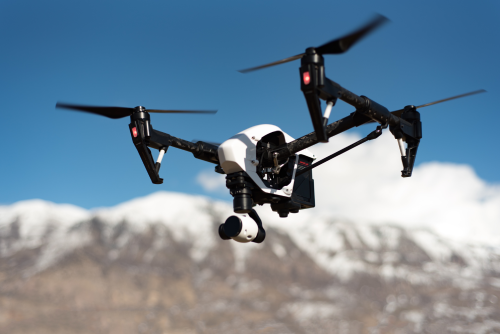
The Aludra SR-08 is a Malaysian fixed-wing military/tactical drone developed by CTRM, the brand name of Composite Technology Research Malaysia. Publicly available information on this model is limited, but the confirmed headline figures point to a short-range unmanned aircraft with 1 hour of endurance, a 15 km range, and a top speed of 130 km/h. That makes it most relevant to defense analysts, institutional buyers, and readers comparing compact tactical UAV platforms rather than consumer drone shoppers.
Even on sparse open-source data, the SR-08 is still worth attention. Small tactical UAVs occupy an important middle ground in unmanned aviation: they are more mission-oriented than consumer drones, more field-practical than larger runway-dependent systems, and often central to how militaries and government agencies build local surveillance, reconnaissance, and training capacity. In that context, the Aludra SR-08 matters less as a retail product and more as a reference point in Malaysia’s domestic aerospace and unmanned systems ecosystem.
Quick Summary Box
- Drone Name: CTRM Aludra SR-08
- Brand: CTRM
- Model: Aludra SR-08
- Category: Military/tactical fixed-wing drone
- Best For: Defense program research, short-range observation roles, institutional evaluation
- Price Range: Not publicly confirmed in supplied data
- Launch Year: Not publicly confirmed in supplied data
- Availability: Not publicly confirmed in supplied data
- Current Status: Unknown
- Overall Rating: Not rated due to limited confirmed data
- Our Verdict: A niche short-range tactical UAV with credible baseline performance figures, but public details are too thin for a full buyer-grade rating.
Introduction
The CTRM Aludra SR-08 sits in the military/tactical drone segment, where airframes are typically judged by mission endurance, range, supportability, and payload usefulness rather than creator features or retail convenience. In plain terms, this appears to be a short-range fixed-wing unmanned aircraft intended for institutional or defense-style observation tasks.
Readers should care about the Aludra SR-08 because it represents part of Malaysia’s unmanned aviation ecosystem. Even with limited public data, its confirmed performance numbers give enough context to place it within the broader class of compact tactical fixed-wing drones used for localized intelligence, surveillance, and reconnaissance-style work.
That broader context matters. Not every UAV program becomes globally visible in the same way as high-profile American, Israeli, Turkish, or Chinese systems. Regional aerospace efforts often receive uneven public coverage, and many tactical platforms remain lightly documented outside procurement circles, exhibitions, or specialist defense reporting. The Aludra SR-08 falls into that category: it is visible enough to establish that it exists and to identify some core performance figures, but not open enough in public documentation to allow a normal retail-style review.
As a result, this article should be read as a structured assessment of what can and cannot be said responsibly. The confirmed numbers are useful. The missing numbers are equally important. Anyone researching the Aludra SR-08 should therefore focus not only on its quoted speed, range, and endurance, but also on the unanswered questions around payloads, control systems, training, logistics, and support. In military and institutional aviation, those factors often define operational value more than top-line performance alone.
Overview
What kind of drone is it?
The Aludra SR-08 is a fixed-wing drone in the military/tactical segment. That means it is closer to a small unmanned aircraft than to a consumer quadcopter. Fixed-wing platforms are generally chosen when efficient forward flight matters more than hovering, especially for covering distance or staying airborne longer per battery or power unit.
That distinction is important for anyone unfamiliar with unmanned aircraft categories. A multicopter is often easier to launch, easier to stop in place, and better for short inspection or imaging jobs in confined spaces. A fixed-wing UAV, by contrast, usually trades hover capability for aerodynamic efficiency. It wants to keep moving through the air, and because of that it can often cover more area with less energy for the same general size class. In military and tactical contexts, that makes fixed-wing aircraft attractive for patrol arcs, route observation, perimeter scans, and localized ISR missions where staying over a broad area matters more than point hovering.
The SR-08’s known endurance, speed, and range all align with this general category. Nothing in the supplied data suggests a consumer imaging platform, a first-person-view hobby aircraft, or a large long-endurance system. It sits most plausibly in the compact tactical UAV space.
Who should buy it?
This is not a mainstream retail drone. The Aludra SR-08 is most relevant to:
- Defense and government evaluators
- Aerospace researchers and journalists
- Institutions comparing tactical UAV programs
- Buyers interested in Malaysian-made unmanned systems
For casual pilots, photographers, or hobby users, there is simply not enough public product detail to treat it like a normal consumer or prosumer purchase.
The “buyer” question also needs to be interpreted differently here than it would for a consumer drone. In this segment, the decision-maker is often not an individual but a unit, ministry, agency, university, state-linked enterprise, or systems integrator. Procurement may involve operational requirements, training packages, spare parts planning, legal review, and communication-security considerations. So when asking who should buy the Aludra SR-08, the practical answer is really: who should investigate or evaluate it? That group is much narrower than the market for general-purpose drones.
What makes it different?
What stands out most is the combination of:
- Malaysian origin
- CTRM aerospace manufacturing background
- Fixed-wing tactical positioning
- Publicly cited speed, range, and endurance figures despite otherwise limited disclosure
In other words, the Aludra SR-08 is interesting less because of a flashy feature list and more because it appears to be a regional tactical UAV platform with a comparatively sparse public profile.
Its significance is therefore partly industrial and strategic. Platforms like this can matter as indicators of domestic engineering capability, composite manufacturing competence, and national interest in sovereign or semi-sovereign unmanned aviation capacity. Even if the SR-08 is not widely marketed or broadly exported, its existence contributes to the picture of Malaysia’s aerospace ecosystem and local defense technology development.
Key Features
- Fixed-wing airframe for efficient forward flight compared with hovering multicopters
- 1 hour endurance based on supplied public data
- 15 km range based on supplied public data
- 130 km/h top speed based on supplied public data
- Military/tactical positioning, suggesting mission-focused operation rather than consumer convenience
- Malaysian-developed platform from Composite Technology Research Malaysia
- Short-range tactical profile, based on the confirmed endurance and range figures
- Public data remains limited, so payload, autonomy, support package, and system architecture should be verified directly through official channels
Those bullets capture the confirmed headline case, but they should be interpreted carefully. “Feature” in a military UAV context does not always mean the same thing it does in a consumer drone review. For a tactical platform, range, endurance, maintainability, launch method, payload compatibility, operator workload, and field support can all matter more than app polish or cinematic recording modes. The Aludra SR-08’s known strengths are therefore basic but meaningful: it is a real fixed-wing tactical aircraft with enough stated performance to suggest useful local-area mission capability.
Full Specifications Table
| Specification | Details |
|---|---|
| Brand | CTRM |
| Model | Aludra SR-08 |
| Drone Type | Fixed-wing |
| Country of Origin | Malaysia |
| Manufacturer | Composite Technology Research Malaysia |
| Year Introduced | Not publicly confirmed in supplied data |
| Status | Unknown |
| Use Case | Military/tactical |
| Weight | Not publicly confirmed in supplied data |
| Dimensions (folded/unfolded) | Not publicly confirmed in supplied data |
| Max Takeoff Weight | Not publicly confirmed in supplied data |
| Battery Type | Not publicly confirmed in supplied data |
| Battery Capacity | Not publicly confirmed in supplied data |
| Flight Time | 1 hour |
| Charging Time | Not publicly confirmed in supplied data |
| Max Range | 15 km |
| Transmission System | Not publicly confirmed in supplied data |
| Top Speed | 130 km/h |
| Wind Resistance | Not publicly confirmed in supplied data |
| Navigation System | Not publicly confirmed in supplied data |
| Obstacle Avoidance | Not publicly confirmed in supplied data |
| Camera Resolution | Not publicly confirmed in supplied data |
| Video Resolution | Not publicly confirmed in supplied data |
| Frame Rates | Not publicly confirmed in supplied data |
| Sensor Size | Not publicly confirmed in supplied data |
| Gimbal | Not publicly confirmed in supplied data |
| Zoom | Not publicly confirmed in supplied data |
| Storage | Not publicly confirmed in supplied data |
| Controller Type | Not publicly confirmed in supplied data |
| App Support | Not publicly confirmed in supplied data |
| Autonomous Modes | Not publicly confirmed in supplied data |
| Payload Capacity | Not publicly confirmed in supplied data |
| Operating Temperature | Not publicly confirmed in supplied data |
| Water Resistance | Not publicly confirmed in supplied data |
| Noise Level | Not publicly confirmed in supplied data |
| Remote ID Support | Not publicly confirmed in supplied data |
| Geo-fencing | Not publicly confirmed in supplied data |
| Certifications | Not publicly confirmed in supplied data |
| MSRP / Launch Price | Not publicly confirmed in supplied data |
| Current Price | Not publicly confirmed in supplied data |
The table above highlights the central challenge with the Aludra SR-08: enough data exists to classify it, but not enough to fully score it. For a normal commercial review, missing information on weight, dimensions, launch/recovery method, payload options, environmental limits, and supportability would be major gaps. For a tactical aircraft, they are even more significant, because they shape everything from deployability to sustainment.
Put simply, the known figures tell us what class of system the SR-08 belongs to. The unknown figures tell us why a final procurement judgment cannot be made from open sources alone.
Design and Build Quality
Because the Aludra SR-08 is a fixed-wing military/tactical platform, its design priorities are likely very different from those of consumer drones. In this class, the airframe is usually optimized for aerodynamic efficiency, stable forward flight, transportability, and field use rather than fold-flat portability or all-in-one convenience.
The supplied data does not confirm the aircraft’s materials, wingspan, length, landing gear arrangement, or launch-and-recovery method. That matters, because those details strongly affect field handling, storage footprint, repairability, and operating workflow. Without those specifics, the safest conclusion is that the SR-08 should be treated as a mission-oriented unmanned aircraft rather than a compact grab-and-go drone.
One point worth noting is the manufacturer itself. Composite Technology Research Malaysia has an aerospace-oriented identity, so it is reasonable to expect engineering attention to structural efficiency and airframe durability. However, the exact build quality characteristics of the Aludra SR-08 are not publicly confirmed in the supplied data.
There are several practical design questions that remain unanswered and would matter a great deal in real-world use:
- Is the aircraft optimized for hand launch, rail launch, catapult launch, runway operations, or another method?
- Does it break down quickly for transport by small ground team, or does it require a larger support footprint?
- Are the wings removable for packing and maintenance?
- How field-repairable is the structure if operators suffer rough landings or environmental wear?
- What kind of recovery area does it require?
- How resilient is the airframe in hot, humid, coastal, or rough-field operating conditions?
These are not trivial details. A tactical UAV with excellent nominal performance can still be cumbersome if launch and recovery procedures are demanding, or if the system needs highly controlled field conditions. On the other hand, a platform with modest endurance can be very useful if it is rugged, quickly deployable, and easy to maintain at unit level. With the SR-08, the open-source record does not yet tell us where it falls on that spectrum.
The manufacturer’s aerospace background does at least provide some contextual reassurance. Companies rooted in aviation structures and composites typically think differently about airframe design than hobby brands do. They tend to emphasize structural repeatability, manufacturability, aerodynamic efficiency, and systems integration. But that remains contextual inference, not a confirmed design assessment of the SR-08 itself.
Flight Performance
The clearest public performance figures are:
- Endurance: 1 hour
- Range: 15 km
- Top speed: 130 km/h
Those numbers suggest a short-range tactical fixed-wing profile. The 1-hour endurance is enough for localized missions, training sorties, and short observation tasks, but it does not place the SR-08 in the longer-endurance tactical or MALE-style categories. The 15 km range further supports that interpretation: this looks like a near-field or local-area aircraft, not a deep-range system.
A top speed of 130 km/h is respectable for a small fixed-wing unmanned aircraft and implies reasonable transit capability. In simple terms, it should be able to get to an observation area faster than many slower small-UAS platforms, though actual mission usefulness depends on sensor performance and the quality of the data link.
As analysis rather than newly claimed fact, fixed-wing drones in this class typically perform best outdoors and in open areas. They do not hover like quadcopters, and they are generally not appropriate for indoor use or tight confined spaces. Wind handling is not publicly specified, but fixed-wing aircraft usually cope with broader outdoor operating conditions better than very small multicopters, provided launch and recovery are well managed.
Those three headline figures are best understood together rather than in isolation. A top speed of 130 km/h sounds impressive, but tactical missions are rarely flown at absolute top speed from start to finish. Real mission profiles usually involve transit, search, loiter, course corrections, possible altitude changes, and safe recovery margins. So the practical endurance available “on station” will be lower than the theoretical maximum airborne time once reserve planning and outbound/return legs are considered.
Likewise, the 15 km range should not automatically be interpreted as guaranteed mission radius under all conditions. Range figures can depend on communications environment, terrain, antenna setup, line-of-sight conditions, regulatory constraints, weather, and payload configuration. In fixed-wing tactical use, the useful mission envelope is often smaller than the nominal maximum once conservative operations are applied.
Even so, the SR-08’s numbers remain meaningful. They suggest a platform suitable for:
- Short tactical reconnaissance loops
- Local perimeter or border-area observation
- Training missions focused on fixed-wing UAV workflow
- Rapid-area familiarization over a defined operational zone
- Short-duration surveillance where speed-to-target matters
They do not suggest a system built for long standoff persistence, broad operational theater coverage, or continuous deep reconnaissance. That is not a criticism so much as a classification point. The SR-08 appears to occupy the compact tactical tier, where the emphasis is on deployable local reach rather than strategic endurance.
A final performance caution concerns missing data. Endurance without payload details can be misleading, since different sensor weights and power requirements may affect actual time aloft. Speed without stall, cruise, and recovery data offers only partial insight into handling quality. And range without confirmed transmission architecture leaves uncertainty about control robustness. So while the available figures are enough to establish class and likely mission niche, they are not enough to predict field performance with precision.
Camera / Payload Performance
The biggest information gap around the Aludra SR-08 is its payload. Publicly available data in the supplied record does not confirm:
- Camera type
- Resolution
- Day or thermal sensor options
- Gimbal stabilization
- Payload weight
- Video downlink quality
- Storage or recording format
That means the real mission value of the aircraft is hard to judge from airframe data alone. In military/tactical systems, the sensor package often matters more than the raw speed figure. A modest airframe with a useful stabilized observation payload can be more valuable than a faster aircraft with limited sensor capability.
Given the segment, it is reasonable to think the SR-08 was intended for some form of observation or reconnaissance payload, but the exact configuration is not publicly confirmed in the supplied data. Buyers and researchers should verify whether the system supports electro-optical, infrared, interchangeable, or fixed payloads before drawing any firm conclusions.
This is where many tactical UAV evaluations either become meaningful or collapse. Airframes get attention because they are easy to compare on paper, but payloads determine what missions are actually possible. For example:
- A basic daylight camera may be sufficient for training or benign-condition visual reconnaissance.
- A stabilized EO sensor changes the usefulness of the aircraft for surveillance and target observation.
- Thermal or IR capability expands night operations and difficult-weather utility.
- Zoom optics can dramatically improve standoff observation value.
- Payload modularity affects whether one aircraft can support multiple mission types.
None of those attributes are confirmed here. So while the SR-08’s flight numbers imply a viable reconnaissance platform, its actual operational effectiveness remains hard to rank without payload disclosure.
There is also the question of integration quality. A tactical UAV’s sensor value is not just about raw camera specification. It depends on stabilization, operator interface, downlink latency, image clarity under vibration, metadata quality, and how well the payload works with the ground control station. In institutional procurement, a well-integrated but modest sensor suite can be preferable to a nominally better camera that is difficult to use, difficult to maintain, or poorly linked to mission software.
Potential evaluators should therefore ask for confirmation on at least the following:
- Payload type and swappability
- Day/night capability
- Stabilization method
- Detection and identification range, if available
- Downlink format and bandwidth requirements
- Recording and data export options
- Payload weight impact on endurance
- Whether payloads are proprietary or third-party compatible
Without those answers, the SR-08 remains an interesting airframe profile with unknown ISR depth.
Smart Features and Software
No public software or autonomy stack is confirmed in the supplied data for the Aludra SR-08. That includes unknown status for:
- Waypoint planning
- Return-to-home or return-to-base logic
- Autonomous takeoff or landing
- Ground control station features
- Mobile app support
- AI tracking
- Mapping tools
- SDK or API access
- Fleet management capabilities
For a tactical fixed-wing platform, some level of autopilot and mission planning would be common in the category, but it would be irresponsible to state specific features without confirmation. Readers should not assume consumer-style smart functions such as follow-me, obstacle sensing, or app-first workflows.
If this model is being considered in a professional context, the key software questions to verify are the control interface, telemetry visibility, mission planning options, data export, logging, encryption or security approach, and support for operator training.
Software matters especially in tactical aviation because it shapes operator workload. A capable fixed-wing aircraft can still be cumbersome if the mission planning tools are primitive, if situational awareness on the ground station is poor, or if flight log management is difficult. Conversely, a system with only moderate endurance can be very effective if its command-and-control workflow is clear, predictable, and well integrated with training and maintenance documentation.
For a platform like the SR-08, the most relevant software questions are less about flashy automation and more about operational discipline:
- Can operators set repeatable flight plans quickly?
- Is the telemetry presentation usable under field conditions?
- Does the system support safe contingency behavior if the link degrades?
- Are mission logs exportable for after-action review?
- Is the user interface suitable for institutional training pipelines?
- Are communications secure enough for the intended role?
The lack of public confirmation on these points does not mean the system lacks them. It simply means external analysts cannot rate them with confidence. In buyer terms, software uncertainty raises risk, because mission effectiveness often depends as much on the human-machine interface as on the aircraft’s aerodynamic performance.
Use Cases
Based on the confirmed data and the platform’s segment, the most realistic uses for the Aludra SR-08 are:
- Short-range aerial observation in defense or government contexts
- Perimeter or site awareness where a fixed-wing aircraft is useful for covering local distance
- Training and familiarization for operators learning tactical fixed-wing UAV workflows
- Program evaluation and benchmarking by institutions comparing regional unmanned systems
- Aerospace research and documentation related to Malaysia’s domestic UAV capability
Because payload details are not public, it should not be treated as a confirmed fit for mapping, cinematography, inspection, or general commercial workflows.
Each of those use cases deserves a little more explanation.
Short-range aerial observation:
With 1 hour of endurance and a 15 km stated range, the SR-08 appears suited to missions where the area of interest is relatively close to the operator and the objective is local awareness rather than prolonged persistent overwatch. That could include observation over training grounds, local security zones, coastal segments, or controlled operational areas.
Perimeter or site awareness:
Fixed-wing aircraft are often efficient for circling or sweeping larger perimeters than a multicopter would cover comfortably. If the payload supports meaningful observation, this kind of platform can be useful where teams want repeated aerial passes over a defined site or route.
Training and familiarization:
This may be one of the SR-08’s most plausible roles if adopted institutionally. Smaller tactical fixed-wing UAVs are often valuable not only for missions, but for building operator skill in mission planning, launch/recovery discipline, airspace coordination, and payload handling.
Program evaluation and benchmarking:
For analysts and institutions, the SR-08 can serve as a regional reference platform even if full technical details are unavailable. It contributes to the comparative picture of locally developed tactical UAV capability.
Aerospace research and documentation:
Researchers studying Southeast Asian defense industry development, composite airframe production, or indigenous unmanned systems have reason to include the SR-08 in that landscape.
Equally important are the use cases that should not be assumed. There is no confirmed basis to market the Aludra SR-08 as a turnkey commercial mapping platform, a cinematic camera drone, a consumer patrol aircraft, or a plug-and-play enterprise survey system. Those categories require workflow, sensor, accuracy, and support information that is simply not public here.
Pros and Cons
Pros
- Confirmed fixed-wing design should favor efficient forward flight over short missions
- 1-hour endurance is meaningful for localized tactical or training sorties
- 15 km range places it in a usable short-range mission envelope
- 130 km/h top speed suggests solid transit performance for a compact UAV
- Malaysian-made platform may matter for regional industrial interest or sovereign capability analysis
Cons
- Payload details are not publicly confirmed, limiting real mission assessment
- Weight, dimensions, and max takeoff weight are unknown in the supplied data
- Current status is unknown, which raises adoption and support questions
- No public price or availability data makes budgeting difficult
- Software, autonomy, and compliance details are unconfirmed
- Not a consumer-facing platform, so access may be restricted or procurement-led
Those pros and cons point to a simple conclusion: the SR-08 looks credible as a category member, but difficult to score as a purchase candidate. Its strengths are enough to make it relevant in discussions of compact tactical UAVs, especially in a Malaysian or regional context. Its weaknesses stem less from obviously poor performance than from lack of disclosure.
That distinction matters. A poorly documented tactical platform is not necessarily a poor platform. But from the outside, limited documentation increases uncertainty on everything from capability to sustainment risk. For researchers, that makes the SR-08 interesting. For buyers, it makes verification essential.
Comparison With Other Models
Reliable apples-to-apples comparison is difficult because public data on tactical UAVs is often incomplete. The table below uses the Aludra SR-08’s supplied figures and broad open-source reference figures for comparable tactical fixed-wing systems. Exact configurations can vary by customer and payload package.
Aludra SR-08 vs a close competitor
| Model | Price | Flight Time | Camera or Payload | Range | Weight | Best For | Winner |
|---|---|---|---|---|---|---|---|
| CTRM Aludra SR-08 | Not publicly confirmed in supplied data | 1 hr | Not publicly confirmed in supplied data | 15 km | Not publicly confirmed in supplied data | Short-range tactical fixed-wing missions | Regional relevance |
| AeroVironment Raven B | Procurement-based, not publicly standardized | Up to 90 min | Day/night observation payload options | Up to 10 km | Approx. 1.9 kg | Highly portable small-unit observation | Portability |
| AeroVironment Puma AE | Procurement-based, not publicly standardized | About 2+ hr | Stabilized EO/IR observation payload options | About 15 km | Approx. 6.8 kg | Longer-endurance tactical observation | Endurance |
The Raven B is the more publicly familiar benchmark for small tactical fixed-wing UAVs. Compared with that class, the Aludra SR-08 looks broadly competitive on headline speed and mission scope, but its public payload and system details are far less transparent.
That means the comparison is best read as directional, not definitive. The Raven family benefits from long public visibility, extensive military use, and clearer open-source references for payload and operational concept. The SR-08, by contrast, cannot be placed with the same confidence because too many underlying details are hidden. It may be competitive in some respects, but the open record does not allow firm ranking.
Aludra SR-08 vs an alternative in the same segment
Against a system like the Puma AE, the Aludra SR-08 appears less documented in open sources and likely less proven in public comparison literature. Based on public figures, the Puma AE has the clearer endurance advantage, while the Aludra SR-08 remains harder to rank because its sensor fit, support package, and total system weight are not publicly confirmed.
This is also a useful reminder that tactical UAV value is package-dependent. A Puma system is not just an aircraft; it is an aircraft plus payload plus launch/recovery concept plus software plus training plus sustainment. The same principle would apply to the SR-08. Without visibility into that broader package, the airframe-only comparison remains incomplete.
Aludra SR-08 vs an older or previous-generation option
The supplied data does not clearly identify an older or directly previous-generation Aludra model for a reliable generational comparison. Readers should verify Aludra family lineage through official manufacturer materials rather than assuming a specific predecessor.
If a family relationship does exist elsewhere in official literature, that could be useful for judging whether the SR-08 represents an early developmental stage, a mature production derivative, or a niche variant. For now, though, open-source caution is the better approach.
Manufacturer Details
Composite Technology Research Malaysia is the full manufacturer name, while CTRM is the shorter brand identity used in many references. In this case, the brand and manufacturer are effectively the same organization presented in different forms.
CTRM is a Malaysian aerospace company rather than a mass-market consumer drone brand. That matters because companies with aerospace and defense roots often publish less retail-style product detail than consumer drone makers. Publicly, CTRM is associated with Malaysia’s aerospace manufacturing and unmanned systems landscape, which gives the Aludra SR-08 relevance as part of a national industrial and defense context.
The supplied data confirms Malaysia as the country of origin. Additional corporate context, including parent-company structure and wider product portfolio details, should be verified through official company disclosures.
From an evaluation standpoint, the manufacturer’s identity is part of the story. An aerospace manufacturer entering or supporting UAV development typically brings different strengths than a software-led consumer drone company. Those strengths may include structural engineering, production discipline, composite fabrication, and integration knowledge. In defense procurement, domestic or regional manufacturing can also carry policy value, including local support potential, industrial participation, and reduced dependence on foreign suppliers.
At the same time, aerospace heritage alone does not guarantee field success. Tactical UAV programs live or die on supportability, operator usability, logistics, training quality, and system maturity. So while CTRM’s background helps explain why the SR-08 is notable, it does not substitute for verified operational data.
Support and Service Providers
Support for a platform like the Aludra SR-08 is likely to be more structured and procurement-led than what buyers see in consumer drone retail. In practice, support may depend on official manufacturer engagement, government contracts, training packages, and region-specific service arrangements.
Publicly available information in the supplied data does not confirm:
- Warranty terms
- Repair turnaround
- Spare parts channels
- Training providers
- Regional service centers
- Upgrade path
- Software support lifecycle
That means any serious buyer should verify official support channels, maintenance responsibilities, spare-part availability, and local service coverage before considering adoption. If the model’s current status is inactive or unclear, support risk becomes even more important.
This is one of the most important due-diligence areas for institutional buyers. Tactical UAVs generate ongoing needs that extend far beyond aircraft acquisition:
- Operator training and recurrent proficiency
- Maintenance manuals and approved repair procedures
- Replacement propellers, batteries, sensors, and structural components
- Software updates and compatibility management
- Calibration and payload servicing
- Documentation for airworthiness or internal operating approval
- Technical support responsiveness during faults or mission issues
A system with good performance but weak sustainment can become a burden quickly. Conversely, a platform with average performance but strong training and spare parts support can be much more valuable over time. Since the SR-08’s support ecosystem is not publicly described in the supplied data, serviceability should be treated as an open question rather than an assumed strength.
Where to Buy
The Aludra SR-08 does not appear to be a normal consumer retail product. Buyers should expect availability, if any, to come through:
- Official manufacturer engagement
- Authorized defense or enterprise representatives
- Government procurement channels
- Regional institutional distributors, if applicable
Readers should not assume that this model is available through mainstream drone stores or general online marketplaces. Procurement may be restricted, region-specific, or dependent on export controls and end-user eligibility.
In practical terms, “where to buy” for a tactical UAV often really means “how to begin an approved procurement conversation.” That can involve capability briefings, demonstrations, legal screening, compliance review, and package customization. Some systems are available only to government users; others may be sold to state-linked enterprises, research institutions, or carefully vetted commercial actors depending on local law and export policy.
Anyone who encounters unofficial resale or incomplete listings should be cautious. Without confirmed service support, software access, documentation, and legal transfer status, an aircraft alone may not constitute a usable system.
Price and Cost Breakdown
No public launch price or current market price is confirmed in the supplied data for the Aludra SR-08. That is common for tactical and institutional drone systems, where pricing often depends on package size, payload choice, training, and support obligations.
Before budgeting, buyers should verify whether a quote includes:
- Air vehicle count
- Ground control station
- Batteries and chargers
- Payload or sensor package
- Training and documentation
- Spare parts
- Maintenance support
- Software licenses, if any
- Launch or recovery accessories, if applicable
- Shipping, compliance, and export-related costs
For platforms in this segment, total ownership cost can matter more than airframe price alone. Sustainment, training, and spares often define the real long-term budget.
That point is especially important here. Tactical UAV procurement rarely resembles a one-box purchase. The operational package may include multiple aircraft, replacement airframes, mission payloads, control terminals, communications accessories, support tooling, operator courses, maintenance courses, manuals, and contract support. Depending on the customer, documentation, integration assistance, and acceptance testing may also be part of the financial picture.
As a result, the “price” of the Aludra SR-08 could vary dramatically based on configuration and buyer type. An evaluation package, a research package, and a full operational package would not necessarily cost the same or include the same support obligations. Without public price disclosure, cost discussions should remain package-focused rather than airframe-focused.
Regulations and Compliance
Regulatory treatment of the Aludra SR-08 will depend heavily on jurisdiction, operator type, and intended use. Even if a platform originates in the military/tactical space, that does not automatically mean it is exempt from civil aviation rules when operated outside official government frameworks.
Key points to verify include:
- Drone registration requirements
- Airspace permissions for fixed-wing UAV operation
- Operator licensing or institutional authorization
- Radio spectrum and communications approvals
- Imaging and privacy laws
- Restricted-area and border-area limitations
- Import or export controls
- End-user restrictions
Remote ID support is not publicly confirmed in the supplied data, so operators should not assume compliance with any specific civil rule set. Also, fixed-wing aircraft can have different operating-area implications than small hover-capable drones, so local aviation authority guidance is essential.
Regulatory risk is often higher for fixed-wing aircraft than for small recreational quadcopters, because the operational footprint can be larger. Launch and recovery area, flight path planning, lost-link contingencies, and overflight considerations may all trigger different approvals depending on the country. Tactical-grade systems may also attract scrutiny for encryption, imaging capability, radio use, and transfer to certain end users.
For international buyers, export and end-use controls can be just as important as aviation rules. A platform associated with defense or tactical applications may be subject to licensing requirements even if it is physically small. Institutions evaluating the SR-08 should therefore treat regulatory compliance as a front-end issue, not an afterthought.
Who Should Buy This Drone?
Best for
- Defense and government evaluators comparing short-range UAV options
- Researchers, analysts, and journalists tracking Malaysian drone programs
- Institutions that need a tactical fixed-wing reference platform in market studies
- Buyers who can directly verify manufacturer support, payload options, and legal eligibility
Not ideal for
- Casual hobbyists
- Content creators looking for camera-first features
- Commercial mapping teams that need published workflow and accuracy specs
- Buyers who want transparent online pricing and easy retail availability
- Operators who require well-documented autonomy, app ecosystems, or certified civilian compliance data
The dividing line is simple: this is a platform for structured evaluation, not impulse purchase. If a buyer has procurement access, technical review resources, and a reason to study Malaysian tactical UAV capability, the SR-08 may be worth serious attention. If the buyer wants a clearly documented drone with public accessories, strong commercial software support, and fast retail availability, this is the wrong category entirely.
There is also a difference between being a good research subject and being a good purchase candidate. The Aludra SR-08 is clearly interesting as a research subject. Whether it is a strong purchase candidate depends on answers that are not available in the supplied public data.
Final Verdict
The CTRM Aludra SR-08 is best understood as a short-range Malaysian tactical fixed-wing UAV with limited public disclosure. Its confirmed baseline numbers—1 hour endurance, 15 km range, and 130 km/h top speed—are enough to show that it belongs in the compact tactical unmanned aircraft category rather than the consumer or long-endurance enterprise classes.
Its biggest strengths are straightforward: a fixed-wing format, credible short-mission performance, and relevance within Malaysia’s domestic aerospace and defense landscape. Its biggest weaknesses are just as clear: payload details are unknown, pricing is unpublished, support is unclear, and the model’s current status remains unknown.
For defense analysts, institutional buyers, and researchers, the Aludra SR-08 is a worthwhile reference point. It illustrates how regional aerospace firms participate in the tactical UAV space and gives at least a partial view of Malaysia’s unmanned aviation capability. For buyers working in procurement, it may deserve further inquiry if local sourcing, industrial participation, or sovereign capability questions are part of the decision.
For most other buyers, however, it remains a niche, procurement-driven platform that requires direct manufacturer verification before it can be seriously evaluated for acquisition or operational use. In short: the SR-08 is credible enough to matter, but too lightly documented in open sources to judge with the confidence expected of a normal buyer’s guide.
