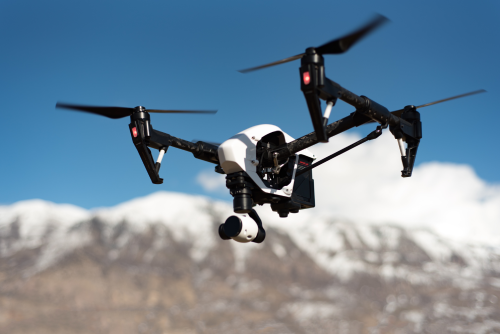
Black Hornet 3 is a military micro-drone from the Black Hornet family, associated with Teledyne FLIR and Norwegian developer Prox Dynamics. It sits in the helicopter-type nano-UAS class and is aimed at defense, government, and specialist institutional users rather than consumer pilots. Its importance comes from representing the extreme small end of the drone market, where size, portability, and discreet close-range airborne observation matter more than big payloads or creator features.
Unlike the drones most people encounter in retail stores, Black Hornet 3 is part of a much narrower category. It is not designed to compete with camera drones for travel photography, commercial quadcopters for roof inspections, or FPV craft for racing. Instead, it belongs to a specialist segment where the main questions are different: How quickly can a user deploy it? How discreetly can it operate? How useful is it for close-range situational awareness? And how practical is it to carry alongside other field equipment?
That context matters because a nano-UAS should not be judged by the same standards as larger consumer or enterprise platforms. A buyer evaluating Black Hornet 3 is usually not looking for 4K cinematic output, advanced creator modes, or broad third-party accessory support. They are evaluating whether a tiny rotorcraft can provide actionable airborne observation in places where a larger drone would be too visible, too slow to deploy, too difficult to operate in confined space, or simply too cumbersome to justify.
Quick Summary Box
- Drone Name: Black Hornet 3
- Brand: Black Hornet
- Model: Black Hornet 3
- Category: military/micro
- Best For: Defense, government, and specialist users needing an ultra-small helicopter-style observation drone
- Price Range: Not publicly confirmed in supplied data
- Launch Year: Not publicly confirmed in supplied data
- Availability: Not publicly confirmed in supplied data
- Current Status: active
- Overall Rating: Not rated due to limited confirmed data
- Our Verdict: A highly specialized nano-UAS with strong brand recognition and a unique size class, but public specs, pricing, and buying access are limited.
For most readers, the quickest way to understand Black Hornet 3 is this: it is not a mainstream drone at all. It is a niche, professional, procurement-oriented platform best viewed as a benchmark in the nano-drone category. Its name carries weight because the Black Hornet family is one of the most recognized references in ultra-small observation UAVs, even when full public specifications are limited.
Introduction
The Black Hornet 3 is an active military/micro UAV from the Black Hornet line, linked to Teledyne FLIR and the original Norwegian developer Prox Dynamics. Unlike consumer drones or mainstream enterprise quadcopters, it belongs to a highly specialized category built around very small form factor, rotorcraft hovering capability, and close-range observation utility.
Readers should care about this model because it is one of the best-known names in the nano-drone space. Even when public data is limited, Black Hornet 3 remains an important reference point for anyone comparing very small defense-oriented UAV platforms.
That significance goes beyond simple brand recognition. In the drone industry, many conversations focus on larger aircraft because they are easier to market and easier to compare. Bigger drones can carry larger batteries, more sensors, and more obvious headline features. Nano-UAS platforms are different. Their value comes from solving a narrow but important operational problem: getting an airborne perspective from an extremely compact system. In that sense, Black Hornet 3 is notable not because it tries to do everything, but because it represents a design philosophy built around doing one type of task well.
It is also useful as a category marker. If you want to understand the difference between a general-purpose drone and a mission-specific micro observation platform, Black Hornet 3 is a good example. It sits at the point where drone design stops being about broad versatility and becomes more about discreet deployment, tight-space use, and field practicality. That makes it relevant not only to procurement teams, but also to researchers, analysts, and anyone studying how unmanned systems are adapted for highly specific operational roles.
Overview
What kind of drone is it?
Black Hornet 3 is a helicopter-type micro drone in the military segment. In practical terms, that means it is designed around vertical takeoff and landing, hovering, and operation from very tight launch areas, rather than around long-range mapping, cinematic filming, or heavy payload transport.
The helicopter-style layout is important. Most modern small drones that non-specialists recognize are quadcopters, and most larger tactical UAV comparisons often involve fixed-wing aircraft. Black Hornet 3 sits in a different design lane. A helicopter-type nano-UAS is generally selected for its ability to maintain position, fly slowly and deliberately, and operate in space-constrained environments where simplicity of launch and recovery matters. That makes it conceptually closer to a compact airborne observation tool than to a general aerial work platform.
Its “micro” or “nano-UAS” identity also tells you something about expected trade-offs. At this end of the market, portability and low visual profile are usually prioritized over payload mass, weather tolerance, and broad multipurpose flexibility. A user typically accepts that a tiny aircraft will not match the endurance or robustness of a larger system because the whole point is to gain access to an observation capability that larger drones cannot deliver as discreetly or conveniently.
Who should buy it?
This is not a typical retail drone. The most realistic buyers are defense organizations, government units, specialist public-sector teams, and institutions evaluating nano-UAS platforms for professional use. Researchers and journalists may also care about it as a benchmark model in the ultra-small UAV category.
There is an important distinction here between “interest” and “fit.” Plenty of civilian readers may be interested in Black Hornet 3 because of its reputation and unusual size class, but that does not mean it is a practical purchase for them. The buyers most likely to benefit are organizations with a defined operational need, procurement authority, and the ability to support training, maintenance, and compliance. In other words, this is more of a program acquisition than an impulse buy.
Institutional users may consider it for evaluation, doctrine development, small-unit observation capability, or comparative assessment against other compact UAV systems. Academic and technical audiences may view it as a case study in miniature rotorcraft design or human-portable reconnaissance systems. But for ordinary drone hobbyists, content creators, and most small business operators, Black Hornet 3 is better understood as a specialist reference platform than a realistic buying target.
What makes it different?
What sets Black Hornet 3 apart is its market position at the tiny end of the UAV spectrum. Most drones people compare are quadcopters, fixed-wing mapping systems, or FPV craft. Black Hornet 3 instead represents a very small helicopter-style platform built for observation-focused missions where minimal footprint is a major advantage.
That difference shows up in almost every buying criterion. A consumer drone is often judged by video quality, obstacle avoidance, app polish, or ease of social-media content capture. A commercial inspection drone may be judged by sensor options, workflow integration, and repeatable data capture. Black Hornet 3 belongs to a class where the core differentiator is simply being extremely small while still providing a useful airborne perspective.
Its distinction is therefore strategic rather than glamorous. A tiny aircraft can be carried more easily, launched in tighter spaces, and used where low size matters more than high performance on paper. Even if a larger platform offers better camera quality, longer endurance, or stronger wind tolerance, it may still be the wrong choice if it is too visible, too bulky, or too slow to put into the air. That is the niche Black Hornet 3 occupies.
Key Features
- Military/micro market positioning rather than consumer or prosumer targeting
- Helicopter airframe for vertical takeoff, landing, and hover-oriented flight behavior
- Norwegian origin with Black Hornet brand recognition
- Manufacturer lineage tied to Prox Dynamics and Teledyne FLIR
- Active status in the supplied data
- Nano-UAS style concept that prioritizes portability and discreet deployment over heavy payload capacity
- Observation-focused platform class rather than photography-first design
- Publicly available detailed specs remain limited, so buyer verification is essential before procurement
Those headline features matter because they frame the entire product correctly. Black Hornet 3 is not just “a small drone.” It is a compact observation system built around a narrow role. The helicopter airframe suggests strong emphasis on hovering and controlled close-range flight. The military/micro positioning tells buyers to expect professional restrictions rather than consumer convenience. The Black Hornet and Prox Dynamics lineage signals that the platform belongs to a recognized specialist family rather than being an obscure one-off concept.
The final feature in the list may be the most important for actual procurement: the need for verification. Public awareness of Black Hornet 3 is relatively high compared with many niche defense-linked drones, but open-source technical detail is still limited. That means any serious buyer should treat public summaries as directional, not definitive. Exact kit contents, support packages, software access, and sensor details should come from official documentation rather than assumptions.
Full Specifications Table
| Specification | Details |
|---|---|
| Brand | Black Hornet |
| Model | Black Hornet 3 |
| Drone Type | helicopter |
| Country of Origin | Norway |
| Manufacturer | Teledyne FLIR / Prox Dynamics |
| Year Introduced | Not publicly confirmed in supplied data |
| Status | active |
| Use Case | military / micro observation |
| Weight | Not publicly confirmed in supplied data |
| Dimensions (folded/unfolded) | Not publicly confirmed in supplied data |
| Max Takeoff Weight | Not publicly confirmed in supplied data |
| Battery Type | Not publicly confirmed in supplied data |
| Battery Capacity | Not publicly confirmed in supplied data |
| Flight Time | Not publicly confirmed in supplied data |
| Charging Time | Not publicly confirmed in supplied data |
| Max Range | Not publicly confirmed in supplied data |
| Transmission System | Not publicly confirmed in supplied data |
| Top Speed | Not publicly confirmed in supplied data |
| Wind Resistance | Not publicly confirmed in supplied data |
| Navigation System | Not publicly confirmed in supplied data |
| Obstacle Avoidance | Not publicly confirmed in supplied data |
| Camera Resolution | Not publicly confirmed in supplied data |
| Video Resolution | Not publicly confirmed in supplied data |
| Frame Rates | Not publicly confirmed in supplied data |
| Sensor Size | Not publicly confirmed in supplied data |
| Gimbal | Not publicly confirmed in supplied data |
| Zoom | Not publicly confirmed in supplied data |
| Storage | Not publicly confirmed in supplied data |
| Controller Type | Not publicly confirmed in supplied data |
| App Support | Not publicly confirmed in supplied data |
| Autonomous Modes | Not publicly confirmed in supplied data |
| Payload Capacity | Not publicly confirmed in supplied data |
| Operating Temperature | Not publicly confirmed in supplied data |
| Water Resistance | Not publicly confirmed in supplied data |
| Noise Level | Not publicly confirmed in supplied data |
| Remote ID Support | Not publicly confirmed in supplied data |
| Geo-fencing | Not publicly confirmed in supplied data |
| Certifications | Not publicly confirmed in supplied data |
| MSRP / Launch Price | Not publicly confirmed in supplied data |
| Current Price | Not publicly confirmed in supplied data |
The table above highlights the core challenge in reviewing platforms like Black Hornet 3 from public sources: category, lineage, and mission role are clear, while many numerical details are not openly documented in the supplied data. That does not make the drone unimportant. It simply means any evaluation should emphasize role fit, procurement context, and manufacturer verification more than spec-sheet comparison.
Design and Build Quality
Based on the supplied record, Black Hornet 3 uses a helicopter-style airframe rather than the more common quadcopter layout. That matters because very small rotorcraft are usually selected for hovering precision and for operation in places where a runway, catapult, or broad takeoff zone would be impractical.
Because this is a military/micro model, the likely design priority is field portability rather than visual flair. In this class, compactness is often more important than foldability, and rugged transport matters more than consumer-style aesthetics. Exact materials, rotor protection, landing gear design, and modularity are not publicly confirmed in the supplied data.
From a buyer perspective, the most credible design takeaway is that Black Hornet 3 is built for a specialist mission set. Serviceability, spare part handling, and transport kit design should be verified directly through official channels rather than assumed from consumer drone norms.
It is also worth thinking about design quality in functional terms rather than cosmetic ones. On a nano-UAS, “build quality” is not mainly about premium finishes or premium-feeling plastics. It is about whether the system can be carried, prepared, launched, recovered, and repacked efficiently in field conditions. That includes questions such as how securely the aircraft is stored, how fragile exposed rotor elements may be during transport, how easy batteries are to handle, and how quickly the system can be readied by trained personnel. These details can matter more in practice than exterior appearance.
Another likely consideration in this class is signature management. While exact visual, acoustic, and thermal characteristics are not confirmed here, the general appeal of very small aircraft is that they can reduce operational footprint compared with larger drones. Buyers in this segment are typically interested in a platform that is unobtrusive to carry and less cumbersome to deploy. A compact helicopter airframe supports that concept, though the exact effectiveness of the design should be validated through official demonstrations and technical documentation.
For organizations assessing durability, the key issue is not whether Black Hornet 3 looks rugged in photos, but whether the full system package is practical to sustain. Nano aircraft can be impressive in capability while still requiring disciplined handling because tiny components are, by definition, less forgiving than larger structures. That makes transport case quality, spare airframe access, rotor replacement process, and operator training critical parts of the real-world design story.
Flight Performance
With a helicopter airframe, Black Hornet 3 is best understood as a hover-oriented micro platform, not a high-speed area coverage drone. That layout usually supports precise low-speed positioning and vertical takeoff/landing behavior, which is a practical fit for very small observation drones.
However, the supplied data does not confirm flight time, range, speed, or ceiling. That means buyers should not assume long endurance or strong wind performance without official documentation. As analysis rather than confirmed specification, nano-class aircraft typically trade raw endurance and weather tolerance for extreme portability.
Indoor versus outdoor suitability is also not fully confirmed. Still, a very small helicopter drone is generally more plausible for tight-space operation than a fixed-wing platform, while outdoor performance in wind is likely to be more limited than on larger tactical UAVs.
A useful way to think about Black Hornet 3 flight performance is through mission duration rather than raw numbers. In this category, a short, highly targeted flight can still be extremely valuable if it provides the right perspective at the right time. A platform intended for close-range reconnaissance does not necessarily need to stay airborne for long periods if it can launch quickly, hold position effectively, and return useful observation in a confined area. For the right user, that can matter more than the sort of endurance statistics that dominate consumer drone marketing.
Precision is another likely strength of the format. Helicopter-style micro UAVs are generally associated with controlled hover, fine movement adjustments, and the ability to operate from limited launch points. Those characteristics make sense for site awareness, short-range visual checks, or temporary airborne overwatch in compact areas. By contrast, they are usually less suitable for fast coverage of large landscapes, long linear inspections, or broad mapping missions where a fixed-wing or larger multirotor would offer better productivity.
Potential buyers should also consider environmental constraints. Small aircraft are often more sensitive to wind, turbulence, precipitation, and temperature extremes than larger systems, even if they are engineered for professional use. Since the supplied data does not verify Black Hornet 3’s weather envelope, field teams should treat environmental suitability as a critical procurement question. The smallest platform is not always the best platform unless the expected operating conditions align with its real-world capabilities.
Operator workload is part of performance too. A tiny aircraft may reduce physical burden in transport, but that does not automatically mean it is simple to fly effectively. Control responsiveness, latency, stabilization behavior, and interface design all shape usable performance. Since these details are not confirmed in the supplied data, organizations should ask for demonstrations or validated training materials before treating the platform as easy or difficult to operate. In specialist systems, the difference between “technically capable” and “operationally practical” often comes down to workflow and training rather than the aircraft alone.
Camera / Payload Performance
Black Hornet 3 should be viewed as a mission-observation platform rather than a content-creation drone. In this category, payload value is about situational awareness and compact sensing, not cinematic image quality or interchangeable camera systems.
The Black Hornet family is widely associated with miniature surveillance and observation payloads, but the exact Black Hornet 3 camera resolution, video settings, zoom capability, stabilization method, and sensor mix are not publicly confirmed in the supplied data. Because of that, readers should avoid treating it like a regular photo/video drone.
For professional evaluators, the key point is workflow fit: a platform this small is typically valuable when a larger drone would be too visible, too heavy, or too cumbersome. It is far less likely to be the right tool for mapping, inspection-grade measurement, or media production.
The right way to judge payload performance here is by asking operational questions, not consumer-camera questions. Can the system provide a clear enough view for close-range awareness? Is the video feed usable for real-time decision-making? How effective is the sensor package under the conditions in which the platform is expected to fly? Those are more meaningful criteria than megapixel count alone.
Miniature payloads also come with familiar trade-offs. Smaller sensors and lighter camera assemblies generally mean less flexibility than larger commercial imaging systems. That does not make them poor tools; it means they are optimized differently. A nano observation drone may provide exactly the right amount of imagery for tactical awareness while still falling far short of what a filmmaker, surveyor, or infrastructure inspector would require. Buyers should be careful not to confuse “mission-sufficient” with “commercial imaging grade.”
Stabilization is another area where expectations should be managed. Even if the platform delivers useful observation, a nano-scale aircraft should not automatically be expected to match the polished footage of larger gimbal-equipped prosumer drones. What matters more is whether the imaging system supports recognition and awareness at the intended distance and under realistic field conditions. For many institutional users, the threshold is practical utility, not visual perfection.
If your organization depends on particular sensor types, low-light performance, thermal capability, high-frame-rate capture, or evidence-grade recording workflows, those requirements need direct confirmation from official sources. The supplied data does not establish those details. That is especially important because organizations sometimes assume that a well-known defense-linked drone will naturally include all advanced sensing features. In reality, exact sensor configurations can vary and should be treated as procurement-specific until verified.
Smart Features and Software
Publicly confirmed information in the supplied data does not identify the Black Hornet 3 control software, app support, autonomy stack, navigation package, or return functions. That is normal for some defense-linked platforms, where public marketing detail may be limited or procurement-specific.
As a result, buyers should not assume consumer-style features such as follow-me, creator editing tools, waypoint mission design, cloud media sync, or open SDK access. If your use case depends on specific software workflows, verify them directly through official manufacturer and authorized dealer materials.
The same caution applies to encryption, fleet management, mission planning, GNSS assistance, and fail-safe behavior. These may exist in some form, but they are not publicly confirmed in the supplied data for this page.
In specialist micro-UAS systems, software quality can matter just as much as aircraft capability. The aircraft may be extremely compact, but the usefulness of the full system depends heavily on the operator interface, data presentation, mission planning workflow, and recovery procedures. A good nano-UAS experience is often defined by how quickly trained users can launch, view, interpret, and act on incoming information. That is why procurement teams should evaluate the whole operating concept, not just the air vehicle.
Security and data handling are especially important considerations. Institutional users may care about communications architecture, local versus networked data storage, encryption standards, access control, and compatibility with existing command or reporting workflows. None of those elements should be assumed from the platform’s reputation alone. Public recognition does not equal public technical transparency.
Another practical issue is integration. Some buyers need a drone to fit into a larger operational ecosystem that may include radios, tablets, secure networks, asset tracking, training systems, or evidence management procedures. Since the supplied data does not confirm software openness or integration options, decision-makers should verify whether Black Hornet 3 is intended as a self-contained system, a partially integrable tool, or part of a broader managed solution. That distinction affects not only usability, but also budget and sustainment planning.
Use Cases
Given its class and positioning, the most realistic use cases for Black Hornet 3 are specialist and professional rather than consumer-facing.
-
Close-range airborne observation by authorized defense users
A tiny rotorcraft can provide a quick overhead or forward-looking perspective in spaces where a larger UAV would be awkward or overly conspicuous. -
Government and public-sector micro-UAS evaluation programs
Agencies comparing compact aerial systems may use Black Hornet 3 as a reference model when assessing the nano-UAS category. -
Specialist security or site-awareness tasks where a larger drone is impractical
In some controlled professional contexts, the value lies in fast deployment and minimal physical footprint rather than large-area coverage. -
Training and familiarization in nano-UAS operation
Organizations interested in miniature rotorcraft concepts may use it to build operator understanding of the strengths and limits of very small UAVs. -
Research into miniature rotorcraft and very small UAV workflows
Technical, academic, or institutional teams may study it as an example of how extreme miniaturization shapes operation, payload, and support requirements. -
Comparative analysis against other military micro-drone platforms
Even when a buyer does not intend to procure this exact model, it can serve as a benchmark for comparing other systems in the same niche. -
Program-level procurement assessment where low size and hover capability are key factors
Black Hornet 3 is especially relevant when the procurement question is not “Which drone is best overall?” but “Which drone best serves an ultra-compact observation requirement?”
What these use cases have in common is that they center on access and agility rather than heavy sensing. A buyer looking for long-endurance patrol capability, photogrammetry outputs, multispectral agriculture workflows, or routine commercial inspection deliverables is almost certainly looking in the wrong category. Black Hornet 3 makes sense when the mission demands a very small airborne observation asset that can be introduced into a tight operating context with minimal burden.
Pros and Cons
Pros
- Distinct nano-UAS positioning makes it stand out from typical small drones
- Helicopter layout is well suited to hovering and tight launch/recovery spaces
- Active status suggests ongoing relevance rather than purely legacy interest
- Strong product lineage through Black Hornet, Prox Dynamics, and Teledyne FLIR
- Useful benchmark model for anyone studying military micro-drone categories
- Potentially valuable where discreet size matters more than broad capability
- More meaningful as a specialist tool than as a spec-sheet product
Cons
- Public technical specifications are sparse
- Price and commercial availability are not publicly confirmed in supplied data
- Not a normal consumer retail product
- Payload and imaging details are not clearly confirmed here
- Nano-class platforms usually sacrifice endurance and weather robustness for size
- Support and procurement may depend on region, end user, and official approval paths
- Limited public transparency makes independent comparison harder than with commercial drones
The strengths and weaknesses are tightly linked. Black Hornet 3 is compelling precisely because it sits in an unusual niche, but that same niche creates barriers for ordinary buyers. Its small size and specialist role are its main advantages. Its closed procurement context and limited open-source technical detail are its main disadvantages. In practical terms, that means the platform may be highly attractive to a narrow audience and largely irrelevant to everyone else.
Comparison With Other Models
Public apples-to-apples comparison is limited because this niche has relatively few openly documented models, and many procurement details are not public.
| Model | Price | Flight Time | Camera or Payload | Range | Weight | Best For | Winner |
|---|---|---|---|---|---|---|---|
| Black Hornet 3 | Not publicly confirmed in supplied data | Not publicly confirmed in supplied data | Miniature observation payload; exact spec not publicly confirmed | Not publicly confirmed in supplied data | Not publicly confirmed in supplied data | Ultra-small helicopter-style observation role | Best when tiny footprint is the main priority |
| Black Hornet 4 | Not publicly confirmed in supplied data | Not publicly confirmed in supplied data | Newer-generation Black Hornet family observation payload; exact public spec set varies | Not publicly confirmed in supplied data | Not publicly confirmed in supplied data | Buyers seeking the newest Black Hornet-family option | Likely better for latest-generation procurement |
| PD-100 Black Hornet PRS | Not publicly confirmed in supplied data | Not publicly confirmed in supplied data | Earlier-generation nano observation payload | Not publicly confirmed in supplied data | Not publicly confirmed in supplied data | Legacy comparison and historical baseline | Mostly relevant as an older reference point |
| AeroVironment Wasp AE | Not publicly confirmed in supplied data | Not publicly confirmed in supplied data | Small tactical ISR payload; different platform class | Not publicly confirmed in supplied data | Not publicly confirmed in supplied data | Users willing to trade tiny size for a different small tactical format | Better if broader-area coverage matters more than nano size |
Black Hornet 3 vs a close competitor
Against Black Hornet 4, the Black Hornet 3 is best understood as the earlier choice within the same family line. If a buyer has access to newer-generation procurement, the newer model will usually deserve first review. Black Hornet 3 still matters where installed base, training familiarity, or existing support channels make continuity more important than buying the newest variant.
This is a common issue in institutional procurement. The “best” platform on paper is not always the best procurement choice if an organization already has procedures, training pipelines, documentation, and support structures aligned to an earlier generation. In those cases, Black Hornet 3 may remain relevant because transition costs are real. A familiar system with known support requirements can sometimes be more practical than a fresh platform that requires doctrine updates and new sustainment planning.
Black Hornet 3 vs an alternative in the same segment
A model like AeroVironment Wasp AE sits in the same broad small defense-UAS conversation, but it is not the same kind of aircraft. The main trade-off is straightforward: Black Hornet 3 emphasizes nano scale and hovering rotorcraft behavior, while larger small tactical systems typically emphasize area coverage more than extreme compactness.
That distinction is important because buyers sometimes compare all “small military drones” as though they solve the same problem. They do not. A nano helicopter-type UAV answers the question, “How do I get an immediate airborne look from a minimal footprint?” A larger tactical system often answers, “How do I cover more ground or stay in the air longer?” Both can be valid, but they belong to different operational concepts.
Black Hornet 3 vs an older or previous-generation option
Compared with the earlier PD-100 Black Hornet PRS, Black Hornet 3 is the more relevant modern reference. The older system mainly matters for legacy fleet comparison, doctrine history, and understanding how the Black Hornet family evolved over time.
This historical comparison helps buyers and analysts understand maturity. A recognized family line suggests iterative development rather than a one-off experiment. Even when exact technical gains are not detailed in the supplied data, generational progression usually matters because it reflects how the category has been refined over time. For research and procurement teams, that lineage can be almost as important as a single raw performance figure.
Manufacturer Details
The manufacturer context here spans both Prox Dynamics and Teledyne FLIR. Prox Dynamics was a Norwegian company known for nano-UAS development and is closely associated with the origins of the Black Hornet line. That Norwegian heritage aligns with the supplied country-of-origin record for Black Hornet 3.
Over time, the business context shifted under FLIR Systems, and later under Teledyne FLIR after corporate acquisition activity. In practical terms, Black Hornet is the product brand, Prox Dynamics is the original development lineage, and Teledyne FLIR is the larger corporate identity many institutional buyers will recognize today.
This matters because support, procurement, documentation, and branding may appear under different names depending on the age of the system, the region, and the specific contract channel.
Manufacturer lineage is especially relevant in specialist markets because buyers are rarely purchasing just an aircraft. They are purchasing a support relationship, documentation trail, training environment, and long-term sustainment path. A product family tied to a recognized development history can carry more weight than a technically similar platform from a less established source. For institutional users, that can influence confidence in spare parts availability, program continuity, and future upgrade compatibility.
Support and Service Providers
Support for a platform like Black Hornet 3 is unlikely to look like consumer drone support. Buyers should expect official assistance to flow through manufacturer government or enterprise channels, authorized integrators, and approved regional partners rather than through general hobby shops.
Public information in the supplied data does not confirm warranty terms, repair turnaround, spare parts policy, or training packages. Those details should be verified before purchase, especially if the system is being considered for ongoing operational use rather than evaluation.
Community support is also likely to be narrower than for mainstream DJI-style or FPV platforms. That makes official training, parts access, and regional service coverage especially important.
For procurement teams, support questions should be asked early, not after selection. A nano-UAS can be impressive during demonstrations and still become difficult to sustain if replacement parts, batteries, maintenance procedures, or operator certification processes are poorly defined. Because this is not a broad consumer ecosystem product, buyers should expect support quality to depend heavily on contract structure and authorized provider access.
It is also wise to confirm whether support includes only hardware servicing or extends to operator training, software updates, documentation revisions, and lifecycle advisory help. In specialist systems, service is often part of the product value rather than an optional extra.
Where to Buy
Black Hornet 3 should be treated as a restricted or procurement-led product rather than a typical online retail drone. The most likely buying paths are official manufacturer sales teams, authorized defense or government distributors, and specialized integrators serving approved end users.
Availability can vary by country, procurement rules, export controls, and end-user eligibility. Civilian buyers should not assume open marketplace availability just because the model is well known by name.
If you are seriously sourcing this platform, verify:
- Whether sales are open in your region
- Whether your organization qualifies as an approved buyer
- What documentation is required
- What after-sales support is actually included
It is also sensible to ask whether procurement involves only hardware delivery or a broader package including training, spares, batteries, charging equipment, software access, and sustainment support. In specialist categories, published product names can obscure significant differences in package content. Two buyers may both say they are purchasing “Black Hornet 3,” yet receive materially different support, training, or accessory bundles depending on contract terms.
A serious buyer should therefore approach sourcing as a formal acquisition process. Request official quotations, confirm legal eligibility, review sustainment terms, and ask for a clear statement of included kit components before making budget assumptions.
Price and Cost Breakdown
No publicly confirmed launch price or current market price is provided in the supplied data. That is common for specialist defense-linked platforms, where pricing may depend on kit contents, quantity, support terms, and customer type.
Before budgeting, buyers should verify whether quoted pricing includes:
- One aircraft or multiple air vehicles
- Controller or display hardware
- Batteries and charging equipment
- Training and onboarding
- Spare parts and replacement rotors or airframes
- Maintenance and sustainment support
- Software or mission-system licensing, if applicable
- Shipping, import, or compliance-related costs
In this class, total ownership cost can matter more than the sticker price. A nano-UAS may be small, but lifecycle cost can still be shaped heavily by support structure and replacement parts.
That point is easy to underestimate. Because the aircraft is physically tiny, outsiders may assume it is simply a “small cheap drone.” In professional procurement, that assumption is often wrong. Specialist systems are priced not only for the hardware itself, but also for engineering, controlled distribution, training, support channels, and mission-specific packaging. The relevant budget question is therefore not just “How much is the drone?” but “How much does the capability cost to field and sustain?”
Organizations should also think in terms of fleet cost rather than unit cost. If a program requires multiple aircraft, spare batteries, replacement airframes, operator qualification, and recurring support, the total investment can differ substantially from a single-system headline quote. That is why budget planning should be tied to operational concept, not just to the platform name.
Regulations and Compliance
Black Hornet 3 sits in a regulated part of the market. Even though it is very small, that does not automatically mean it is exempt from aviation, radio, privacy, or procurement rules.
For non-military or cross-sector users, possible considerations include:
- National drone registration requirements
- Airspace authorization
- Pilot or operator certification
- Radio-spectrum approval
- Privacy and surveillance law
- Institutional procurement approval
- Export control and end-user restrictions
Remote ID support is not publicly confirmed in the supplied data, so buyers should not assume compliance with any specific civilian framework. Always verify local law, regional defense restrictions, and organization-level policy before acquisition or operation.
Regulatory complexity can actually be higher, not lower, for specialist micro-UAS platforms. A small aircraft might face fewer physical operating burdens than a larger one, but defense-linked procurement, communications approval, and surveillance-related legal questions can make the compliance process more involved. This is especially true for cross-border acquisition, mixed civil-government programs, or research institutions operating under both academic and security governance.
Buyers should also remember that legal permission to own a system is not the same as permission to operate it in all intended environments. Airspace restrictions, protected sites, secure locations, and local privacy rules can all shape the practical usefulness of the system. Because Black Hornet 3 is not aimed at casual retail use, due diligence on compliance should be treated as a core acquisition step.
Who Should Buy This Drone?
Best for
- Defense organizations evaluating ultra-small observation drones
- Government or public-sector teams needing a nano-UAS benchmark
- Institutions comparing helicopter-style micro-aircraft with larger tactical systems
- Researchers studying the evolution of miniature UAV platforms
- Buyers who value very small footprint more than open retail convenience
These groups are the best fit because they are likely to judge the platform by the right criteria: portability, observation utility, field workflow, and support structure. They are also more likely to have the procurement pathways and legal context needed to evaluate or acquire a specialist system responsibly.
Not ideal for
- Hobbyists and first-time drone buyers
- Aerial photographers and videographers
- Surveying, mapping, or inspection teams needing clear commercial specs
- Buyers who require transparent retail pricing and easy online ordering
- Users who need a broad civilian support ecosystem and abundant third-party accessories
For these users, even a technically impressive nano-UAS would be the wrong tool. The limited public specifications, likely restricted sales path, and mission-specific design make Black Hornet 3 a poor substitute for mainstream commercial drones. If your priority is cinematic image quality, easy parts sourcing, open app ecosystems, or well-documented commercial workflows, you will be better served elsewhere.
Final Verdict
Black Hornet 3 is a niche but important drone because it represents a rare category: the military nano-helicopter built for ultra-small observation roles. Its biggest strengths are its specialist size class, rotorcraft hovering profile, active status, and strong lineage through Prox Dynamics and Teledyne FLIR. Its biggest drawbacks are equally clear: sparse public specifications, restricted buying paths, and limited transparency on price, payload, and support compared with mainstream drones.
If you are a defense, government, or institutional buyer specifically interested in nano-UAS capability, Black Hornet 3 is a model worth serious attention. If you are a civilian user, creator, or standard enterprise buyer, this is best treated as a specialist reference platform rather than a practical off-the-shelf drone choice.
The most accurate way to summarize it is this: Black Hornet 3 matters less as a consumer product and more as a category-defining tool. It shows what happens when drone design is pushed toward extreme portability and discreet observation rather than broad versatility. That gives it real importance in the wider UAV landscape, even if many of the details a normal retail buyer would expect remain unavailable in public summaries.
In other words, Black Hornet 3 is not for everyone, and it is not trying to be. Its value lies in serving a narrow mission profile unusually well. For the right organization, that can make it far more relevant than a more powerful but less discreet drone. For everyone else, it remains a fascinating example of how specialized the drone market has become at the smallest end of the spectrum.
