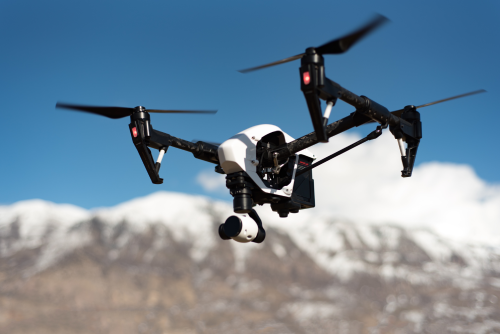
ADE Nishant is a legacy Indian fixed-wing tactical UAV associated with defense and surveillance-oriented use rather than consumer flying. It matters most to researchers, journalists, and readers comparing the evolution of Indian unmanned aircraft programs, especially those tracking indigenous systems from Aeronautical Development Establishment. Publicly confirmed specifications in the supplied data are limited, so this profile focuses on what is known, what can be responsibly inferred from the platform category, and what still needs independent verification before anyone treats it as a current technical benchmark.
That distinction is important from the start. Nishant should not be approached like a modern retail drone review where buyers can compare battery life, camera modes, software features, and accessory bundles from a product page. This is better understood as a legacy tactical aircraft program entry: relevant for context, historical comparison, capability analysis, and institutional research rather than normal purchase decisions. In that sense, the value of a page like this is not in pretending the public record is complete. It is in clearly separating confirmed information from educated category-level interpretation.
Quick Summary Box
- Drone Name: ADE Nishant
- Brand: ADE
- Model: Nishant
- Category: military/tactical
- Best For: Defense researchers, journalists, institutional readers, and anyone comparing legacy Indian tactical UAV platforms
- Price Range: Not publicly confirmed in supplied data
- Launch Year: Not publicly confirmed in supplied data
- Availability: Not publicly confirmed in supplied data; not generally a consumer retail product
- Current Status: Legacy/discontinued in supplied data; exact status should be independently verified
- Overall Rating: Not rated due to limited confirmed data
- Our Verdict: A historically relevant Indian tactical fixed-wing UAV, but not a practical retail drone and difficult to judge as a current platform because key public specs, support conditions, and acquisition details remain unconfirmed in the available record
Introduction
The Nishant is listed as a fixed-wing military/tactical UAV from Aeronautical Development Establishment in India under the ADE brand. That places it in a very different category from consumer camera drones, FPV quads, or enterprise mapping multirotors.
For most readers, the reason to care about Nishant is not shopping in the usual sense. It is more useful as a legacy program reference: a platform that helps explain how Indian unmanned aircraft development evolved, what kind of roles fixed-wing tactical UAVs are built for, and why support, availability, and public-spec transparency matter so much when evaluating older defense-linked systems.
It also sits at the intersection of several topics that attract long-term interest: indigenous aerospace development, military reconnaissance doctrine, the shift from manned to unmanned tactical observation, and the practical challenge of maintaining older systems after their primary service window has passed. Even where detailed numbers are absent, a legacy UAV can still be worth studying because it reveals what an organization was trying to achieve at a given moment in time.
Another reason Nishant matters is methodological. Many discussions around unmanned aircraft collapse all platforms into one broad category called “drones,” but that can be misleading. A tactical fixed-wing UAV exists in an ecosystem of launch methods, communications links, ground control elements, trained operators, maintenance procedures, and mission payloads. The airframe alone is only part of the story. When public information is thin, the responsible way to write about such a system is to acknowledge the gaps rather than fill them with assumptions.
Overview
What kind of drone is it?
Nishant is a fixed-wing unmanned aircraft in the military/tactical segment. In practical terms, that means it should be viewed as a mission-driven surveillance-type platform rather than a photography, recreation, or creator drone.
The supplied record identifies it as a legacy/discontinued model, though that current status should still be verified independently. Publicly confirmed figures for endurance, range, top speed, ceiling, dimensions, and maximum takeoff weight are not included in the supplied data.
Even with that limitation, the category tells us a few useful things. Fixed-wing tactical UAVs are generally designed for forward-flight efficiency, broader area coverage, and structured mission use. They are usually evaluated around reconnaissance utility, sortie planning, launch and recovery arrangements, payload integration, and communications reliability. That is a different performance framework from consumer drones, which are often judged by camera quality, ease of use, vertical takeoff convenience, obstacle avoidance, and app polish.
It is also worth noting that military/tactical aircraft are often less visible in public documentation than commercial drones. Specifications may be scattered across official statements, media reports, defense literature, procurement references, or secondary databases, and those sources do not always agree. Since this article is grounded in the supplied data set, it avoids asserting numbers not confirmed there.
Who should buy it?
For normal drone buyers, the short answer is: probably nobody in the consumer market. Nishant is not positioned like a retail UAV with a standard online store, app ecosystem, and off-the-shelf accessory catalog.
The readers most likely to benefit from this page are:
- Defense and aerospace researchers
- Journalists covering unmanned systems
- Policy and procurement analysts
- Institutions studying Indian UAV development
- Readers comparing legacy tactical platforms with newer systems
A more practical way to frame the question is not “Who should buy it?” but “Who should study it?” If your interest is historical, doctrinal, industrial, or comparative, Nishant is relevant. If your interest is flying a supported aircraft next month, integrating a camera package into current workflows, or running a commercial survey business, it is almost certainly the wrong platform category and likely the wrong era.
For institutions, any hypothetical acquisition would require much more than a budget number. It would involve legal review, serviceability checks, documentation access, and an understanding of whether the system can still be safely operated. For private users, the barriers are even higher because availability, compliance, and support are all uncertain.
What makes it different?
What makes Nishant stand out is its role as an Indian-origin tactical UAV associated with Aeronautical Development Establishment rather than a commercial drone maker. It sits in a category where program context, supportability, and mission role matter more than lifestyle features.
It is also different because the public data footprint is relatively thin compared with modern commercial drones. That means any serious evaluation has to balance known facts with careful uncertainty.
There is also a broader strategic dimension. Indigenous unmanned systems are often discussed not only in terms of performance but also in terms of local development capability, institutional learning, technology maturity, and national aerospace ambition. A platform like Nishant can therefore matter even when it is no longer current, because it represents a stage in a larger developmental arc.
Finally, it differs from many retail drones because a tactical UAV is usually part of a system-of-systems. Its value depends on the aircraft, yes, but also on the payload, control station, communications architecture, deployment process, and sustainment chain. That makes legacy evaluation more complex. A technically capable airframe may still be operationally weak today if the support environment has disappeared.
Key Features
- Fixed-wing airframe: Better suited in principle to area coverage and forward flight efficiency than a hover-centric multirotor. In tactical roles, that usually translates into broader patrol patterns and more economical cruise behavior, though Nishant-specific endurance figures are not confirmed in the current source material.
- Military/tactical category: Built around mission utility rather than consumer photo or video use. The design priorities in this segment typically include surveillance persistence, operational workflow, and deployment logistics rather than cinematic content creation.
- Indian origin: Developed by Aeronautical Development Establishment under the ADE identity. That gives Nishant significance beyond hardware alone, because it sits within the story of indigenous Indian unmanned-aircraft development.
- Legacy platform status: Listed in the supplied record as legacy/discontinued, which affects support and procurement practicality. For older systems, current usability often depends less on raw design merit and more on whether spare parts, trained support staff, and compatible subsystems still exist.
- Mission-payload orientation: Likely designed around surveillance-type payload use rather than creator-camera workflows, though the exact sensor package is not publicly confirmed in the available data. In this class, payload effectiveness often matters more than headline airframe specs.
- Institutional rather than retail profile: More relevant to program comparison and research than direct consumer purchase. It is not the sort of aircraft a buyer should expect to activate with a smartphone, register casually, and fly the same afternoon.
- High verification need: Core performance figures and many system details are not publicly confirmed in the supplied data. Any formal comparison, historical paper, or procurement discussion should therefore cite independently verified sources rather than relying on assumptions.
Full Specifications Table
The table below keeps the standard spec fields readers often search for, but many entries remain unconfirmed in the provided record. That incompleteness is itself meaningful: it highlights the difference between a transparent commercial product listing and a legacy defense-linked aircraft profile.
| Specification | Details |
|---|---|
| Brand | ADE |
| Model | Nishant |
| Drone Type | Fixed-wing |
| Country of Origin | India |
| Manufacturer | Aeronautical Development Establishment |
| Year Introduced | Not publicly confirmed in supplied data |
| Status | Legacy/discontinued in supplied data; exact current status should be verified |
| Use Case | military/tactical |
| Weight | Not publicly confirmed in supplied data |
| Dimensions (folded/unfolded) | Not publicly confirmed in supplied data |
| Max Takeoff Weight | Not publicly confirmed in supplied data |
| Battery Type | Not publicly confirmed in supplied data |
| Battery Capacity | Not publicly confirmed in supplied data |
| Flight Time | Not publicly confirmed in supplied data |
| Charging Time | Not publicly confirmed in supplied data |
| Max Range | Not publicly confirmed in supplied data |
| Transmission System | Not publicly confirmed in supplied data |
| Top Speed | Not publicly confirmed in supplied data |
| Wind Resistance | Not publicly confirmed in supplied data |
| Navigation System | Not publicly confirmed in supplied data |
| Obstacle Avoidance | Not publicly confirmed in supplied data |
| Camera Resolution | Not publicly confirmed in supplied data |
| Video Resolution | Not publicly confirmed in supplied data |
| Frame Rates | Not publicly confirmed in supplied data |
| Sensor Size | Not publicly confirmed in supplied data |
| Gimbal | Not publicly confirmed in supplied data |
| Zoom | Not publicly confirmed in supplied data |
| Storage | Not publicly confirmed in supplied data |
| Controller Type | Not publicly confirmed in supplied data |
| App Support | Not publicly confirmed in supplied data |
| Autonomous Modes | Not publicly confirmed in supplied data |
| Payload Capacity | Not publicly confirmed in supplied data |
| Operating Temperature | Not publicly confirmed in supplied data |
| Water Resistance | Not publicly confirmed in supplied data |
| Noise Level | Not publicly confirmed in supplied data |
| Remote ID Support | Not publicly confirmed in supplied data |
| Geo-fencing | Not publicly confirmed in supplied data |
| Certifications | Not publicly confirmed in supplied data |
| MSRP / Launch Price | Not publicly confirmed in supplied data |
| Current Price | Not publicly confirmed in supplied data |
Design and Build Quality
With only the fixed-wing layout and tactical role confirmed in the supplied data, the safest conclusion is that Nishant was designed around mission endurance and area coverage rather than portability or casual deployment. Fixed-wing tactical UAVs generally prioritize aerodynamic efficiency, stable cruise behavior, and payload integration over compact folding mechanisms.
What is not publicly confirmed here are the details that buyers often want most: materials, wing configuration specifics, landing gear arrangement, recovery method, foldability, and service access points. That matters because build quality in this segment is not just about airframe strength. It is also about maintainability, transport requirements, and how much support equipment is needed to keep the system useful in the field.
In military and tactical UAVs, “build quality” has a wider meaning than it does in consumer reviews. A consumer drone might be praised for tight tolerances, a sleek body shell, and easy battery swaps. A tactical aircraft is judged more by how well its structure tolerates repeated deployment cycles, whether maintenance teams can access critical components quickly, how securely payload modules integrate, and how resilient the total system is under field conditions. Even if the airframe itself is robust, difficult servicing can reduce real-world effectiveness.
Another overlooked issue is transportability at the system level. Fixed-wing tactical UAVs may require dedicated packaging, transport frames, launch gear, recovery gear, antennas, and a ground control station. Without confirmed Nishant-specific configuration details, we cannot say exactly how heavy or logistically complex the full system was. But for a legacy aircraft, those support elements are often just as important as the fuselage. If they are unavailable, damaged, or incompatible with current infrastructure, operational usefulness declines sharply.
As a legacy platform, Nishant also faces a practical durability question: even if the airframe was rugged for its original role, long-term supportability may be more important than raw structural toughness today. Spare parts, documentation, and certified servicing can become the real limiting factors with older defense-linked UAVs.
Condition also matters more than original design intent once a platform becomes historical or semi-retired. A well-engineered older aircraft can still be difficult to use if seals, electronics, connectors, datalinks, or control surfaces have aged out of service condition. So any current assessment of build quality would need physical inspection, maintenance records, and parts traceability, not just archival descriptions.
Flight Performance
The supplied data does not confirm endurance, speed, operating range, or ceiling, so a strict performance review is not possible. Still, the fixed-wing tactical format tells us something about likely flight character.
Compared with multirotors, fixed-wing UAVs are usually favored for:
- Covering larger areas efficiently
- Sustaining forward flight more economically
- Handling broader surveillance patterns
- Operating in outdoor environments rather than confined spaces
That does not automatically mean Nishant outperforms newer alternatives. It only suggests the type of mission profile its category typically supports.
From a handling perspective, a fixed-wing military/tactical UAV is not an indoor or beginner-friendly platform. It would be relevant to structured outdoor operations and controlled mission environments, not casual neighborhood flying. Wind handling, launch behavior, landing behavior, and datalink confidence are all important in this class, but they are not publicly confirmed in the supplied data for Nishant specifically.
To add depth, it helps to explain what “good performance” means in this segment. For tactical surveillance aircraft, endurance is important, but endurance alone is not enough. Operators also care about loiter quality over an area of interest, predictable navigation, stable payload pointing, communications reliability, and repeatable sortie generation. A platform with decent airspeed but poor recovery reliability may be less useful than one with more modest numbers but stronger operational consistency.
Fixed-wing UAVs also come with tradeoffs. They usually cannot hover over a point the way multirotors can. They may require more planning for launch and recovery. They can also demand more space, more crew coordination, and more mission discipline. So while the aircraft type suggests efficiency advantages, it also implies a more structured operational environment than casual drone users may expect.
Because Nishant is described here as legacy, one more caution is necessary: performance numbers from the time of introduction do not automatically translate into current practical performance. Legacy avionics, changing airworthiness condition, aging sensors, and obsolete communication components can all affect the real-world value of an older tactical aircraft. In other words, historical capability and present-day capability are not the same thing.
Camera / Payload Performance
Nishant should be viewed as a mission-payload platform first, not a consumer camera drone. In the military/tactical segment, the real value usually comes from the sensor package, stabilization quality, target-area persistence, and data relay workflow rather than from creator-focused specs like color profiles, social-video formats, or cinematic frame rates.
That said, the exact payload configuration for Nishant is not publicly confirmed in the supplied data. The following details remain unverified here:
- Camera type
- Resolution
- Day/night capability
- Infrared or thermal support
- Stabilization method
- Zoom capability
- Payload capacity
- Sensor interchangeability
So the honest take is simple: Nishant likely had surveillance-oriented payload value within its intended role, but this page cannot confirm the specific camera or sensor performance buyers would need for a modern procurement decision.
This is one of the most important sections to interpret correctly. In a tactical UAV, the payload is often the real product. The aircraft exists to carry sensors to the right place, keep them there long enough, and return usable information to operators. Public discussion of drones often centers on the flying machine, but in reconnaissance work, image clarity, stabilization, geolocation accuracy, field of view, day-night performance, and downlink usability can matter more than the airframe’s top speed.
Modern enterprise buyers may be used to highly transparent payload specifications: megapixel count, thermal resolution, zoom ratio, encoding format, and software compatibility. A legacy tactical UAV does not always present itself that way in public material. It may have been integrated into mission systems where the end-user value was judged by observation effectiveness rather than spec-sheet completeness.
Another factor is mission workflow. A payload may produce acceptable imagery, but if the ground segment cannot efficiently display, record, annotate, or relay it, operational value drops. Since there is no confirmed Nishant-specific software or datalink detail in the supplied material, payload performance has to be left as an open question rather than scored.
For researchers, this uncertainty is not a weakness in the article; it is part of the subject. When discussing legacy unmanned systems, the gap between “it carried a surveillance payload” and “we know exactly how good that payload was” is often substantial.
Smart Features and Software
Publicly confirmed software and autonomy details are not available in the supplied data. That means there is no reliable basis here to claim features such as:
- Return to home
- AI tracking
- Consumer app support
- Waypoint planning
- Mapping automation
- SDK access
- Cloud fleet management
- Obstacle sensing
- Smartphone-based control
In a tactical fixed-wing context, it would be reasonable to expect some form of mission planning, navigation logic, and ground-control workflow, but that should be treated as general segment analysis rather than a confirmed Nishant feature list.
For readers comparing Nishant with modern enterprise drones, this is an important distinction. A contemporary commercial drone often advertises software clearly. A legacy defense-linked platform may depend on dedicated institutional systems, restricted documentation, or program-specific control infrastructure.
It is also important not to project consumer-drone language onto tactical systems. “Smart features” in a hobby or prosumer context usually means automation for convenience: quick shots, visual tracking, automated subject following, obstacle avoidance, and simple route creation from a phone screen. In a tactical context, the more relevant questions are different:
- Can the aircraft follow preplanned routes reliably?
- How does the ground station manage telemetry and payload feeds?
- What fail-safe logic exists if communications degrade?
- How is navigation handled in mission conditions?
- Can operators task the aircraft efficiently during a live mission?
- How tightly are flight control and sensor control integrated?
Those are the kinds of software questions that matter for a surveillance aircraft. But because the available record does not confirm Nishant-specific answers, the best we can do is define the evaluation framework. That still helps readers avoid false comparisons. Nishant should not be criticized merely because it lacks app-store-style features, nor should it be praised for autonomy features we cannot verify.
Use Cases
Given its market segment and public profile, the most realistic use cases for Nishant are the following:
- Tactical surveillance and reconnaissance roles
- Area observation in defense-related contexts
- Legacy UAV program study and technical benchmarking
- Institutional training or evaluation of older unmanned-aircraft concepts
- Historical analysis of indigenous Indian UAV development
- Comparative research against later tactical fixed-wing UAV programs
Each of these use cases deserves a little context. In a defense or institutional setting, a tactical fixed-wing UAV is typically valuable because it can observe an area of interest without placing a pilot onboard the aircraft. That makes it useful for reconnaissance, route observation, border-area awareness, and other surveillance-related tasks, depending on payload and communications capability.
For academic or policy readers, the aircraft is valuable in a different way. It can serve as a case study in indigenous aerospace development, procurement outcomes, doctrinal evolution, and the limits of publicly available technical information. A platform does not need to be commercially successful or currently fielded to be analytically important.
There is also a training and conceptual value in legacy systems. Institutions that study unmanned aircraft development sometimes use older programs to understand why later designs changed course. A legacy UAV can reveal where earlier platforms prioritized endurance, payload, launch method, or operational doctrine, and how those assumptions compare with newer systems.
What Nishant is not well suited for, based on the category and available information, are consumer imaging, casual flying, real-estate video work, general survey operations requiring active vendor support, or plug-and-play enterprise deployment.
Pros and Cons
Pros
- Clear tactical fixed-wing role: Easy to place within the military/UAV landscape even with limited public specs. That clarity helps researchers understand what mission class it belongs to.
- Indian indigenous relevance: Important for readers studying India’s unmanned-aircraft development path. Its value is not only technical but also historical and institutional.
- Fixed-wing format: Generally associated with better area coverage efficiency than hover-based drones. That makes the platform category inherently relevant to reconnaissance discussions.
- Research value: Useful as a historical and program-comparison reference. For some readers, this matters more than current buyability.
- Institutional significance: More meaningful in defense and aerospace analysis than many obscure drone-list entries. It belongs in conversations about local capability building and legacy UAV evolution.
Cons
- Very limited confirmed public specs: Key data such as endurance, range, speed, weight, and payload details are missing from the supplied record. That sharply limits objective scoring.
- Legacy/discontinued status: Raises support, spares, and long-term serviceability concerns. Even strong original design does not solve obsolescence.
- Not a consumer product: Unsuitable for most hobby, creator, or general enterprise buyers. The practical barriers are category-wide, not just brand-specific.
- Price transparency is absent: No publicly confirmed launch or current price in the supplied data. Budgeting therefore requires far more than a simple market check.
- Software ecosystem unclear: No confirmed app, autonomy, or workflow details available here. Operational evaluation remains incomplete without them.
- Acquisition path is likely restricted: Procurement is not expected to resemble normal drone retail channels. Availability may be limited or entirely impractical outside institutional contexts.
The balance of these pros and cons makes Nishant easier to understand as a reference platform than as a present-tense product. Its strengths are mostly analytical and historical. Its weaknesses are mostly practical and contemporary.
Comparison With Other Models
Because publicly confirmed model-level numbers for Nishant are limited in the supplied data, the table below is a positioning comparison rather than a verified spec shootout.
| Model | Price | Flight Time | Camera or Payload | Range | Weight | Best For | Winner |
|---|---|---|---|---|---|---|---|
| ADE Nishant | Not publicly confirmed for this comparison | Not publicly confirmed for this comparison | Tactical surveillance payload not publicly confirmed for this comparison | Not publicly confirmed for this comparison | Not publicly confirmed for this comparison | Historical reference and legacy Indian tactical UAV research | Strongest in indigenous legacy-program relevance |
| IAI Searcher Mk II | Not publicly confirmed for this comparison | Not publicly confirmed for this comparison | Tactical ISR payload options vary by operator | Not publicly confirmed for this comparison | Not publicly confirmed for this comparison | Benchmarking a more widely referenced tactical fixed-wing UAV class | No clear winner from confirmed public data here |
| DRDO Rustom-I | Not publicly confirmed for this comparison | Not publicly confirmed for this comparison | Developmental surveillance-oriented role; exact payload not confirmed here | Not publicly confirmed for this comparison | Not publicly confirmed for this comparison | Comparing later Indian UAV development direction | No clear winner from confirmed public data here |
Nishant vs a close competitor
Against a platform such as Searcher Mk II, Nishant is most interesting as an indigenous Indian tactical-UAV reference point rather than a normal buyer-vs-buyer comparison. Without confirmed public figures on this page, the real comparison is strategic: domestic program relevance versus a broader tactical UAV benchmark.
That strategic lens matters because “better” can mean very different things depending on the question. If the question is public-spec transparency, a widely referenced platform may be easier to analyze. If the question is indigenous development significance, Nishant becomes more interesting. If the question is present-day procurement practicality, neither should be judged from incomplete data alone.
Nishant vs an alternative in the same segment
Compared with Rustom-I, Nishant appears more useful as an earlier-stage reference in India’s UAV timeline. Readers comparing the two should focus less on lifestyle-style specs and more on program maturity, mission ambition, and how public information differs between generations.
A comparison like this is best approached as a developmental progression rather than a retail decision tree. Later programs often reflect lessons about payload demands, endurance expectations, systems integration, and operational doctrine. Nishant therefore has value as a waypoint in a broader story, even if it is not the most capable aircraft in that story.
Nishant vs an older or previous-generation option
A clean previous-generation comparison is hard to make responsibly from the supplied data alone. Rather than force an inaccurate matchup, it is better to say that Nishant should be treated as a legacy tactical fixed-wing platform whose strongest comparison value is historical, not retail.
That may sound less decisive than a normal review verdict, but it is the more useful conclusion. In defense-linked aviation, false precision is worse than qualified uncertainty. If a reader needs hard comparison figures, they should treat this article as a starting point and then move to independently verified program documentation.
Manufacturer Details
Aeronautical Development Establishment, commonly shortened to ADE, is an Indian aerospace research organization associated with unmanned systems and related aeronautical work. In market terms, ADE functions here as both the manufacturer identity and the brand shorthand.
ADE is widely known as part of India’s government defense research ecosystem rather than a consumer drone company. That matters because the expectations are different. A platform from this environment is usually evaluated by mission role, institutional support, and program context, not by app polish or direct-to-consumer sales reach.
For readers wondering about the name difference, there is not much separation here: “ADE” is effectively the abbreviated brand-facing label, while “Aeronautical Development Establishment” is the full organizational name.
This manufacturer context helps explain why Nishant should not be judged by the standards of mainstream drone brands. Consumer companies compete on ease of onboarding, camera output, firmware cadence, and dealer distribution. A defense research organization works in a different framework: prototype cycles, mission testing, state-led requirements, restricted documentation, and institutional integration. That does not make the aircraft better or worse by default, but it does make comparison more specialized.
It also means “brand trust” has a different meaning. With a consumer manufacturer, trust may mean warranty handling and software updates. With an institution-linked aerospace developer, trust may relate more to engineering credibility, program continuity, and the ability to support government or defense users within a formal structure.
Support and Service Providers
Support for a platform like Nishant should be assumed to be institutional rather than consumer-facing. There is no publicly confirmed evidence in the supplied data of a standard retail repair network, mail-in service program, or broad commercial spare-parts channel.
What prospective institutional users or researchers should verify:
- Whether official manufacturer support still exists
- Availability of spare airframe parts
- Sensor and datalink support status
- Documentation access
- Training availability
- Ground-control system compatibility
- Any regional restrictions on service or transfer
Because the supplied record lists Nishant as legacy/discontinued, support risk is one of the biggest practical concerns. Even if the aircraft itself was capable in its original role, a weak service chain can make a legacy UAV far less usable today.
In fact, support questions often determine the real-world fate of older unmanned systems more than aerodynamic questions do. A UAV may remain physically intact, but if core avionics are obsolete, software tools no longer run on current systems, or payload interfaces cannot be maintained, operations become difficult or impossible. Legacy aircraft can also suffer from “partial survivability” in institutional inventories, where some components remain but the full working system no longer exists in deployable form.
For anyone considering preservation, museum display, research access, or training use, documentation is especially important. Without maintenance manuals, operator procedures, wiring references, payload documentation, and legal clarity around operation, even a complete-looking aircraft may be functionally unusable.
Where to Buy
Nishant should not be treated like a drone you can simply order from a normal consumer store. It is not presented in the supplied data as a retail platform, and its military/tactical classification strongly suggests any procurement would be restricted, institutional, region-specific, or defense-led.
For most readers, realistic availability scenarios are:
- Not available through consumer drone stores
- Not commonly sold through standard enterprise resellers
- Potentially limited to official procurement channels, archives, or institutional holdings
- Possibly unavailable as a new-purchase platform if the legacy/discontinued status is accurate
If anyone is exploring acquisition for research, preservation, or institutional analysis, they should verify legality, demilitarization status where relevant, serviceability, and documentation before budgeting.
It is also wise to separate “locating an airframe” from “acquiring an operable system.” These are not the same thing. A display example, a decommissioned unit, a partially complete training article, and a serviceable mission system all have very different value. Without support gear and documentation, an airframe alone may be little more than a historical object.
For readers who arrived here through generic drone searches, the simple answer is that Nishant is not meaningfully “for sale” in the way commercial drones are. Any pathway would likely be exceptional rather than routine.
Price and Cost Breakdown
There is no publicly confirmed launch price or current price for Nishant in the supplied data. That is not unusual for defense-linked or institutionally procured systems, where contract structure can matter more than a simple sticker price.
Before building any budget around a platform like this, buyers should verify:
- Airframe cost, if acquisition is even possible
- Ground control station inclusion
- Sensor payload inclusion
- Launch and recovery support equipment
- Spare parts package
- Maintenance and overhaul support
- Training costs
- Documentation and certification costs
- Storage and transport requirements
- Insurance and liability coverage where applicable
With legacy systems, ownership cost can easily outweigh acquisition cost. Even if an airframe is obtainable, limited parts availability and older support infrastructure can make total lifecycle expense unpredictable.
That unpredictability is one reason public price comparisons are often misleading in this category. A low acquisition figure can hide a very high restoration or sustainment burden. Legacy electronics may need specialist attention. Batteries or power systems may be nonstandard. Ground equipment may be missing. Operators may need custom training. Regulatory approvals may require engineering assessment. By the time those factors are included, the economic reality can look nothing like the initial purchase idea.
For institutions, a smarter budgeting approach would focus on total system cost and mission readiness cost rather than unit price. In many cases, the question is not “How much does the aircraft cost?” but “What would it take to make this platform safely usable, legally compliant, and supportable over time?”
Regulations and Compliance
Nishant is a military/tactical UAV, so readers should be especially cautious about assuming civilian operability, unrestricted transfer, or standard consumer compliance. Laws vary by country, and defense-linked unmanned systems may face additional restrictions beyond ordinary drone rules.
Practical compliance issues to verify include:
- Aircraft registration requirements
- Airspace permissions
- Radio-frequency approvals
- Privacy and surveillance law
- Import/export controls
- Operator licensing
- Restricted or prohibited platform categories
- Local rules for legacy or ex-government unmanned aircraft
Remote ID support is not publicly confirmed in the supplied data. Weight class is also unconfirmed, which means you should not assume it fits any specific civilian regulatory bracket. If a demilitarized or institutional-use example exists, it would still need full local legal review before any operation.
This area deserves special emphasis because military heritage can create legal complications even when an aircraft is no longer in active service. Transfer restrictions, communications hardware rules, imaging restrictions, dual-use export concerns, and safety certification issues may all apply. Some countries also distinguish sharply between civil UAS operations and operation of aircraft originally developed for military use.
There is also the practical issue of proving airworthiness or equivalent operational safety in a civilian framework. A legacy tactical UAV may not map neatly onto current civil drone categories, especially if its control systems, frequencies, or operational concept differ from standard commercial platforms. Anyone considering live operation would need legal, technical, and insurance advice—not just pilot skill.
Who Should Buy This Drone?
Best for
- Defense and aerospace researchers
- Journalists covering UAV programs
- Policy and procurement analysts
- Academic institutions studying Indian unmanned systems
- Historical and comparative UAV database users
These readers benefit because Nishant functions well as a reference object. It can inform timelines, capability discussions, indigenous-development analysis, and comparisons between legacy and later unmanned systems.
Not ideal for
- Consumer drone buyers
- Hobby pilots
- Content creators and aerial filmmakers
- Survey teams needing active commercial support
- Enterprise operators who need transparent specs, accessories, and service coverage
- Beginners looking for a fly-ready platform
For these groups, the barriers are overwhelming. The product category is wrong, the support model is unclear, the specs are incomplete, the legal pathway may be complex, and the platform’s practical current availability appears highly uncertain.
A useful rule of thumb is this: if you need a drone for flying, filming, mapping, inspection, or training next quarter, Nishant is likely not your answer. If you need a reference point in the history and development of Indian tactical UAVs, it absolutely may be.
Final Verdict
ADE Nishant is best understood as a legacy Indian tactical fixed-wing UAV with real historical and comparative value, not as a modern drone-shopping recommendation. Its biggest strengths are its indigenous program significance, clear military/tactical positioning, and usefulness as a reference point in India’s unmanned-aircraft development story.
Its biggest drawbacks are equally clear: public specs are thin, pricing is unconfirmed, supportability is uncertain, and the platform is not positioned for normal civilian or commercial purchase. If you are a researcher, journalist, or institutional reader comparing legacy tactical UAVs, Nishant is worth knowing. If you are an actual drone buyer looking for a supported, transparent, currently available platform, this is almost certainly too niche, too restricted, and too outdated to be a practical choice.
The most responsible conclusion is therefore a two-part one. First, Nishant matters. It matters as a marker in the evolution of Indian unmanned aviation and as a useful entry in any discussion of tactical fixed-wing surveillance systems with indigenous roots. Second, Nishant is hard to evaluate as a present-day operational proposition from the supplied data alone. Too many core factors remain open: detailed performance figures, payload specifics, software architecture, serviceability, acquisition path, and compliance status.
That does not reduce its importance. It simply changes the lens through which it should be judged. Nishant belongs more in archives, defense analysis, aerospace research, and program-comparison databases than in mainstream buyer guides. As a piece of aviation and defense history, it is significant. As a current practical purchase, it is highly constrained. For the right reader, that distinction is exactly why it is worth studying.
