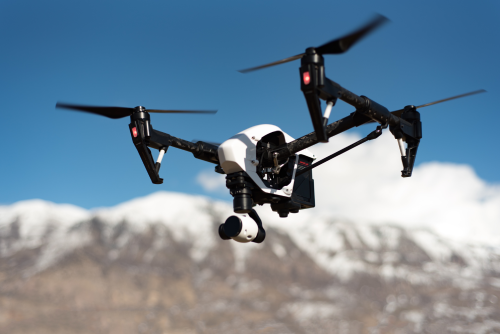
The Speck Systems Bird-Eye 650 is an Indian fixed-wing military/tactical UAV aimed at institutional users rather than consumer drone buyers. Based on the supplied public record, it combines an 11 kg maximum takeoff weight with 2 hours of endurance, 20 km range, a 120 km/h top speed, and a 2,000 m ceiling. That makes it relevant for defense analysts, procurement teams, and researchers comparing small tactical unmanned aircraft, even though many practical details such as payload, software, and price are not publicly confirmed in the supplied data.
What makes the Bird-Eye 650 worth a closer look is not that it is lavishly documented in the public domain, but that its available headline specifications place it in a meaningful part of the tactical UAV landscape. It appears to sit above very small hand-launched reconnaissance drones in overall physical scale, yet below larger and more resource-intensive long-endurance military systems. In other words, it occupies a middle space that often matters in real operations: a platform large enough to potentially carry useful sensors and stay airborne for a practical mission cycle, but still small enough to remain more deployable than heavier theater-level aircraft.
That middle category is important for agencies and organizations that need area awareness, route monitoring, local reconnaissance, training capability, or evaluation of indigenous drone programs. At the same time, this is also a category where public information is often incomplete. A tactical UAV is not judged only by how fast it flies or how long it stays aloft. Just as important are the sensor package, communications resilience, launch and recovery burden, operator workload, spare parts chain, and long-term supportability. Those areas remain largely opaque in the Bird-Eye 650’s publicly visible profile, so any strong conclusion has to stay measured.
Quick Summary Box
- Drone Name: Speck Systems Bird-Eye 650
- Brand: Speck Systems
- Model: Bird-Eye 650
- Category: Military/tactical fixed-wing UAV
- Best For: Authorized institutional users, defense observation programs, training, and platform comparison research
- Price Range: Not publicly confirmed in supplied data
- Launch Year: Not publicly confirmed in supplied data
- Availability: Not publicly confirmed in supplied data
- Current Status: Unknown
- Overall Rating: Not rated due to limited confirmed data
- Our Verdict: A potentially credible small tactical fixed-wing platform with solid published core figures, but too many key details remain unconfirmed for a stronger buying recommendation outside specialist procurement contexts.
Introduction
The Bird-Eye 650 sits in the military/tactical segment, where the priorities are usually endurance, field coverage, and mission utility rather than cinematic video or hobby-friendly flying. Speck Systems is listed as both the brand and manufacturer, and the supplied data identifies the drone as an Indian-origin fixed-wing platform with unknown current status. Readers should care about it because its published numbers place it in the small tactical UAV class, but the lack of public detail around payloads, control systems, and support means any serious evaluation still requires direct manufacturer clarification.
That distinction matters. Consumer drone reviews can often deliver a fairly complete picture from widely published specs, retail packages, and field testing. Tactical UAVs are different. Public brochures may list only a subset of capabilities, and institutional buyers often receive the crucial information through direct engagement rather than open marketing channels. As a result, the Bird-Eye 650 is better understood as a platform profile than as a conventional retail product review. The available data helps establish what size of aircraft it is, what basic performance envelope it may operate in, and what kinds of missions it could plausibly support. It does not yet support fine-grained conclusions about actual mission effectiveness.
There is also broader relevance here for anyone following the Indian UAV ecosystem. Indigenous and regionally developed systems increasingly matter in procurement decisions, training pipelines, domestic manufacturing strategies, and operational self-reliance. Even when public data is limited, documenting systems like the Bird-Eye 650 has value for comparative analysis. It helps map where a platform may sit relative to imported tactical drones, VTOL alternatives, and older reconnaissance airframes.
Overview
What kind of drone is it?
The Bird-Eye 650 is a fixed-wing unmanned aircraft in the military/tactical category. Fixed-wing drones trade hover capability for better forward-flight efficiency, which usually helps endurance and distance coverage. With a published 2-hour endurance, 20 km range, and 120 km/h top speed, this model looks positioned for short-range observation or situational-awareness roles rather than consumer imaging or close-quarters inspection.
That fixed-wing configuration is a major part of the story. In practice, fixed-wing UAVs are generally preferred when the mission involves covering corridors, surveying broad areas, patrolling boundaries, or sustaining eyes-on-target over a wider region without the power drain associated with continuous hovering. They are usually less suitable for operations that demand vertical takeoff, rooftop deployment, or precise stationary observation over a single point. So even before looking at sensor details, the Bird-Eye 650 appears to align more naturally with route-based or area-based missions than with confined-space use.
Its 11 kg maximum takeoff weight and 3 m wingspan further suggest that this is not an ultralight micro-UAV. It is still small by broader aviation standards, but it is substantial enough to imply a more deliberate operational footprint than a hand-launched hobby aircraft or consumer quadcopter.
Who should buy it?
This is most relevant to authorized government, defense, institutional, and research users evaluating tactical UAV platforms. It may also interest journalists and analysts tracking Indian drone manufacturers and small fixed-wing systems. It is not a typical off-the-shelf option for hobbyists, casual creators, or consumer drone buyers.
A more detailed way to frame the target audience is this: the Bird-Eye 650 is likely of interest to organizations that already understand UAV operations as a system problem, not just an aircraft purchase. Such buyers usually need to think about transport, launch teams, trained operators, maintenance, regulatory permissions, mission planning, and data handling. If an organization is not prepared for that ecosystem, a tactical fixed-wing platform can quickly become more complex than expected.
It may also be relevant in academic or policy settings, especially where the goal is to compare indigenous defense-adjacent UAV development, benchmark tactical airframe classes, or study how smaller fixed-wing platforms are positioned between portable hand-launched drones and larger, more expensive unmanned systems.
What makes it different?
Its standout public traits are the combination of:
- Fixed-wing layout
- 11 kg maximum takeoff weight
- 3 m wingspan
- 2-hour endurance
- 20 km range
- 120 km/h top speed
- Indian origin
That combination suggests a more substantial tactical airframe than ultra-light hand-carried drones, while still staying far below the size of larger long-endurance military UAV classes.
Another point of differentiation is that the Bird-Eye 650 appears to fit the practical tactical tier rather than the aspirational brochure tier. The published numbers are not exaggerated into extreme endurance or strategic-range claims. Instead, they describe a bounded, local-area platform with enough speed and endurance to be useful, but without implying a dramatically larger mission scope than the dimensions and weight would reasonably support. That internal consistency is a positive sign, even if it does not replace the need for deeper verification.
Key Features
- Fixed-wing airframe optimized for efficient forward flight
- Published endurance of 2 hours
- Published operating range of 20 km
- Published top speed of 120 km/h
- Published ceiling of 2,000 m
- 3 m wingspan, indicating a larger tactical footprint than compact consumer drones
- 11 kg maximum takeoff weight
- Military/tactical positioning rather than consumer photo/video focus
- Country of origin listed as India
- Payload, camera, autonomy stack, and software ecosystem are not publicly confirmed in supplied data
A few of those features deserve interpretation rather than just listing. A 2-hour endurance is long enough to be tactically relevant for many local surveillance and familiarization missions, especially when compared with multirotor systems that often provide shorter endurance under payload. A 20 km range can be useful, but buyers should verify what “range” means in the manufacturer’s terminology. In UAV marketing, range sometimes refers to control link distance, sometimes to practical mission radius, and sometimes to a best-case figure under ideal line-of-sight conditions. Those are not interchangeable.
Likewise, 120 km/h top speed sounds strong, but top speed alone does not describe loiter behavior, cruise efficiency, payload impact, or handling in real weather. Tactical users should want cruise speed, typical mission speed, launch profile, and recovery envelope, not just the maximum number.
Full Specifications Table
| Specification | Details |
|---|---|
| Brand | Speck Systems |
| Model | Bird-Eye 650 |
| Drone Type | Fixed-wing military/tactical UAV |
| Country of Origin | India |
| Manufacturer | Speck Systems |
| Year Introduced | Not publicly confirmed in supplied data |
| Status | Unknown |
| Use Case | Military/tactical |
| Weight | Not publicly confirmed in supplied data |
| Dimensions (folded/unfolded) | Unfolded wingspan 3 m; folded dimensions not publicly confirmed in supplied data |
| Wingspan | 3 m |
| Length | Not publicly confirmed in supplied data |
| Service Ceiling | 2,000 m |
| Max Takeoff Weight | 11 kg |
| Battery Type | Not publicly confirmed in supplied data |
| Battery Capacity | Not publicly confirmed in supplied data |
| Flight Time | 2 hr |
| Charging Time | Not publicly confirmed in supplied data |
| Max Range | 20 km |
| Transmission System | Not publicly confirmed in supplied data |
| Top Speed | 120 km/h |
| Wind Resistance | Not publicly confirmed in supplied data |
| Navigation System | Not publicly confirmed in supplied data |
| Obstacle Avoidance | Not publicly confirmed in supplied data |
| Camera Resolution | Not publicly confirmed in supplied data |
| Video Resolution | Not publicly confirmed in supplied data |
| Frame Rates | Not publicly confirmed in supplied data |
| Sensor Size | Not publicly confirmed in supplied data |
| Gimbal | Not publicly confirmed in supplied data |
| Zoom | Not publicly confirmed in supplied data |
| Storage | Not publicly confirmed in supplied data |
| Controller Type | Not publicly confirmed in supplied data |
| App Support | Not publicly confirmed in supplied data |
| Autonomous Modes | Not publicly confirmed in supplied data |
| Payload Capacity | Not publicly confirmed in supplied data |
| Operating Temperature | Not publicly confirmed in supplied data |
| Water Resistance | Not publicly confirmed in supplied data |
| Noise Level | Not publicly confirmed in supplied data |
| Remote ID Support | Not publicly confirmed in supplied data |
| Geo-fencing | Not publicly confirmed in supplied data |
| Certifications | Not publicly confirmed in supplied data |
| MSRP / Launch Price | Not publicly confirmed in supplied data |
| Current Price | Not publicly confirmed in supplied data |
This table is useful precisely because it shows both what is known and what is missing. The Bird-Eye 650’s basic airframe envelope is partially visible, but most system-level procurement questions remain unanswered. For a tactical UAV, that means the published record supports initial categorization, not final decision-making.
One additional caution: “service ceiling” and “operating altitude” can be interpreted differently by manufacturers. A 2,000 m ceiling may refer to maximum operational altitude above mean sea level, or it may reflect a simpler performance statement. Buyers operating in mountainous regions or high-density-altitude environments should seek explicit clarification on how altitude affects takeoff, climb, payload, and endurance.
Design and Build Quality
Publicly confirmed design data is limited, but the Bird-Eye 650’s fixed-wing layout, 3 m wingspan, and 11 kg maximum takeoff weight already tell us a few useful things.
First, this is not a compact fold-up consumer drone. A 3 m wingspan implies a much larger field footprint and transport requirement than a backpack quadcopter. That usually means more setup planning, more launch/recovery space, and a stronger focus on mission efficiency over convenience.
Second, fixed-wing aircraft in this size class are typically chosen because they can cover ground more efficiently than multirotors. That often makes them attractive for observation, perimeter coverage, and route-based monitoring. However, the supplied data does not publicly confirm the Bird-Eye 650’s airframe materials, wing attachment method, landing gear, propeller layout, or whether it breaks down for transport.
Third, ruggedness and field serviceability remain unclear. Tactical users should verify:
- Airframe material and repairability
- Wing removal or modular transport design
- Launch and recovery method
- Spare propeller and control-surface availability
- Environmental sealing
- Field maintenance requirements
In short, the Bird-Eye 650 appears sized like a practical tactical fixed-wing aircraft, but its actual build execution cannot be judged fully from the confirmed public record alone.
There are several additional design implications worth noting. An 11 kg MTOW airframe typically suggests a system that may require more deliberate assembly and preflight checks than small hand-launched drones. Even if transportable in segments, such a platform often benefits from a vehicle, cases, ground support kit, and a trained team that understands balancing, control-surface inspection, and communications setup. That does not make it unwieldy, but it does place it firmly in a professional operations context.
It is also worth considering that design quality in tactical UAVs is not only about durability. Good design also includes how quickly the aircraft can be assembled, how easy it is to swap a wing or nose section, whether connectors are robust under field use, and whether maintenance tasks can be done with simple tools. Since those details are not available here, institutional buyers should look beyond the glossy numbers and ask to see the platform’s logistics reality: transport case dimensions, setup time, required personnel, and common failure points.
If the aircraft uses a pusher propeller layout, belly landing, catapult launch, wheeled takeoff, or parachute recovery, each choice would have implications for survivability and operating flexibility. Unfortunately, none of that is confirmed in the supplied data. Those omissions matter because the “best” airframe on paper can become operationally inconvenient if it demands infrastructure or recovery conditions that the user cannot consistently provide.
Flight Performance
On paper, the Bird-Eye 650’s published flight profile is respectable for a small tactical fixed-wing UAV.
The confirmed figures suggest:
- Endurance: 2 hours
- Range: 20 km
- Top speed: 120 km/h
- Ceiling: 2,000 m
That points to a platform built for local-area or short-radius missions rather than very deep-range operations. The 120 km/h top speed is notably brisk compared with many small multirotors, and it suggests the aircraft should be able to reposition faster across a mission area. The 2-hour endurance is meaningful because it gives the system enough time to reach an area, remain on task, and return without being reduced to very short observation windows.
As analysis rather than confirmed fact, a fixed-wing platform with a 3 m span and 11 kg MTOW will usually be more comfortable outdoors than indoors and more efficient in straight-line coverage than in close stationary hovering. It is also likely to be less convenient than a multirotor when operating from tight spaces.
A few important unknowns still limit any deeper performance judgment:
- Launch and recovery method are not publicly confirmed
- Wind resistance is not publicly confirmed
- Navigation and datalink details are not publicly confirmed
- Stall characteristics and low-speed handling are not publicly confirmed
- Redundancy and failsafe behavior are not publicly confirmed
So while the headline flight numbers look useful, the real operational character depends heavily on systems details that are not available in the supplied data.
For analysts, the most interesting part of the published performance profile is how the figures fit together. A 2-hour endurance and 20 km range indicate a practical tactical radius rather than a long-haul ISR concept. If the aircraft cruises efficiently, a 2-hour sortie could allow transit, area coverage, and reserve, but actual mission value depends on whether the 20 km figure reflects safe datalink distance, practical line-of-sight control, or a more conservative operational envelope. A platform can have enough aerodynamic endurance to fly longer than its communications architecture allows it to operate effectively.
Top speed also needs context. In tactical use, high top speed helps with repositioning, time-sensitive tasking, and return-to-base efficiency. But many missions are won or lost at cruise and loiter speed, not maximum dash speed. If an aircraft needs to stay over a search area or maintain sensor stability, excessively fast patterns may reduce observation quality unless the payload and autopilot are well integrated. Since payload and stabilization details are unavailable, the interaction between speed and useful ISR performance remains unknown.
The 2,000 m ceiling could be adequate for many local missions, particularly if the aircraft is intended for low-to-mid altitude tactical observation rather than higher-altitude persistence. Still, ceiling figures alone say little about practical altitude use in hot weather, mountainous terrain, or with heavier payload configurations. Prospective users in elevated operating regions should ask for density-altitude performance data and climb-rate information.
Camera / Payload Performance
This is the biggest information gap in the public record.
The supplied data does not confirm:
- Camera type
- Resolution
- Video capability
- Gimbal stabilization
- Zoom capability
- Sensor size
- Payload capacity
- Sensor options
Because of that, the Bird-Eye 650 cannot be reviewed as a camera drone in the usual creator or aerial-photography sense. There is no defensible basis here to claim 4K video, thermal imaging, EO/IR payloads, mapping performance, or zoom capability.
What can be said responsibly is this: in the military/tactical segment, the value of a platform like this usually depends as much on the sensor package and datalink as on the airframe itself. A good fixed-wing airframe with a weak or poorly integrated payload is much less compelling than its basic endurance numbers may suggest.
As analysis, the 11 kg MTOW indicates a more substantial class than very small hand-launched micro-UAVs, which may allow for a useful mission payload. But without confirmed payload capacity or sensor data, that remains only a cautious inference, not a published specification.
This uncertainty has practical consequences. For many tactical UAV programs, the aircraft is essentially a delivery and persistence platform for the payload. If the payload can only provide a narrow daylight feed, then the mission set is much smaller than if the system supports stabilized electro-optical imaging, thermal sensing, zoom observation, or modular payload swaps. Similarly, payload integration affects not just image quality but operator workload, bandwidth needs, and maintenance complexity.
Potential buyers should verify at least the following before assigning serious value to the platform:
- Whether the aircraft supports interchangeable sensors
- Whether the payload is internally integrated or externally mounted
- Whether stabilization is single-axis, dual-axis, or full gimbal-based
- Whether live video can be viewed in real time at full mission range
- Whether imagery can be recorded onboard at higher quality than transmitted live
- Whether daylight and thermal options exist
- Whether payload swap requires tools and recalibration
- Whether the sensor package affects advertised endurance
If the Bird-Eye 650 is intended for reconnaissance or observation, payload maturity could ultimately matter more than raw airframe performance. An aircraft with a nominally lower top speed but a better stabilized sensor and more reliable downlink may be the superior operational system. That is why the absence of payload data is not a minor omission; it is central to the platform’s real-world value.
Smart Features and Software
No meaningful software stack details are publicly confirmed in the supplied data.
That means there is no verified basis here to promise features such as:
- Return to home
- Waypoint planning
- Automated takeoff or landing
- Terrain following
- AI target tracking
- Mapping workflows
- Fleet management tools
- SDK or API access
- Encrypted telemetry
- Mobile app support
In this category, software matters a lot. A tactical UAV is rarely judged only by airframe speed or endurance. Buyers also need to know how mission plans are created, how the ground control station works, how failsafes behave on lost link, and how sensor data is viewed, stored, and exported.
If the Bird-Eye 650 is under consideration, these are the software questions that should be verified directly with the manufacturer or authorized representative:
- Ground control station type
- Mission planning workflow
- Datalink range under real conditions
- Autonomous route support
- Lost-link behavior
- Recovery automation
- Video/data encryption
- Interoperability with other systems
- Training requirements for operators
At this stage, the Bird-Eye 650’s smart-feature profile should be treated as unconfirmed.
The lack of publicly confirmed software detail is especially important because tactical value increasingly depends on the quality of autonomy and user interface. Two aircraft with similar endurance can deliver very different outcomes if one has robust waypoint tools, intuitive sensor control, reliable failover logic, and efficient post-mission data export, while the other requires constant manual intervention. In institutional settings, software quality also influences training time, error rates, and the ability to scale operations across teams.
Ground control design deserves particular attention. Procurement teams should ask whether the Bird-Eye 650 uses a laptop-based ground station, a dedicated console, a tablet-driven interface, or some hybrid arrangement. They should also ask whether the system provides map overlays, georeferenced video, multi-vehicle management, user permissions, mission playback, and audit logging. These may sound like secondary issues, but in professional use they are often decisive.
Security and data governance matter too. Tactical and institutional operators may require encryption, secure storage, access controls, and compatibility with wider command or GIS systems. Since none of those are confirmed here, the Bird-Eye 650 should not be assumed to meet any specific digital interoperability standard without direct documentation.
Use Cases
Based on the confirmed data, the most realistic use cases for the Bird-Eye 650 are:
- Short-range military/tactical observation by authorized organizations
- Border, perimeter, or remote-area monitoring in permitted government contexts
- Training and familiarization for small fixed-wing UAV teams
- Program evaluation and procurement benchmarking
- Research and comparative analysis of Indian tactical UAV platforms
- Situational-awareness missions where fixed-wing endurance is more valuable than hover capability
These use cases make sense because the available specifications describe a platform designed for movement across an area rather than static station-keeping. A fixed-wing aircraft with 2 hours of endurance can be useful for teaching mission planning, route execution, observation patterns, launch/recovery discipline, and field-team coordination. For institutional training environments, that alone can be valuable, especially if the platform is intended to build operational familiarity before teams move to larger or more specialized systems.
In monitoring roles, the Bird-Eye 650 may be best suited to missions where a predictable corridor or sector needs periodic overflight rather than constant hovering. That could include perimeter awareness, route verification, search pattern practice, or broad-area scanning in legally authorized contexts. However, the lack of confirmed payload details means its effectiveness for specific mission types remains unknown. A tactical aircraft without an adequate sensor suite may still be useful for aircrew training and systems familiarization, but not necessarily for high-value observation work.
Pros and Cons
Pros
- Confirmed 2-hour endurance is useful for a small tactical fixed-wing platform
- Confirmed 20 km range is adequate for short-range observation roles
- Confirmed 120 km/h top speed suggests faster area transit than many multirotors
- Fixed-wing airframe should be more energy-efficient in forward flight than a comparable quadcopter
- 3 m wingspan and 11 kg MTOW indicate a more substantial platform class than ultra-light micro-UAVs
- Indian origin may matter for readers tracking domestic or regional procurement options
These strengths are significant because they describe a platform that, at least numerically, appears internally coherent. There is no obvious mismatch between the size and the claimed endurance, nor between the tactical role and the published top speed. For buyers comparing broad categories, that alone makes the Bird-Eye 650 a system worth noting.
Cons
- Camera and payload details are not publicly confirmed in supplied data
- Current status is unknown
- Price and availability are not publicly confirmed
- Launch and recovery method are not publicly confirmed
- Software, autonomy, and control-station details are not publicly confirmed
- Support network and spare-parts ecosystem are not publicly confirmed
- Fixed-wing format is less flexible than a multirotor for confined-area use
- Too little public data exists to score it confidently as a complete product
The weaknesses are more than checklist omissions. They directly limit procurement confidence. A tactical UAV cannot be judged responsibly without understanding its support, software, payload, and deployment burden. So while the Bird-Eye 650’s known strengths are meaningful, its unknowns remain procurement-grade unknowns, not minor documentation gaps.
Comparison With Other Models
Public apples-to-apples comparison is limited because tactical UAV data is often sparse, configuration-dependent, or procurement-restricted. Still, these models provide useful context.
| Model | Price | Flight Time | Camera or Payload | Range | Weight | Best For | Winner |
|---|---|---|---|---|---|---|---|
| Speck Systems Bird-Eye 650 | Not publicly confirmed in supplied data | 2 hr | Not publicly confirmed in supplied data | 20 km | 11 kg MTOW | Small tactical fixed-wing observation | Balanced published speed/range profile |
| AeroVironment Puma 3 AE | Not publicly confirmed publicly | Up to 2.5 hr | Modular ISR payloads | About 20 km | About 6.8 kg | Mature small tactical ISR deployments | Puma 3 AE if public maturity and lower weight matter more |
| ideaForge SWITCH UAV | Not publicly confirmed publicly | Up to 2 hr | ISR payload options | About 15 km | Not publicly confirmed in this article | VTOL tactical ISR in tight launch areas | SWITCH if runway-free/launcher-free deployment matters most |
| AeroVironment RQ-11 Raven | Not publicly confirmed publicly | Up to 60-90 min | Reconnaissance payload options | About 10 km | About 1.9 kg | Older ultra-light unit-level observation | Raven only if very low system weight outranks endurance |
Bird-Eye 650 vs a close competitor
Against Puma 3 AE, the Bird-Eye 650 looks competitive on published range and broadly competitive on endurance class, while also presenting a higher published top speed. Puma’s advantage is its better-known public profile and more established market visibility. If transparency, referenceability, and ecosystem maturity matter most, Puma remains easier to evaluate publicly.
Another way to put that comparison: the Bird-Eye 650 may look credible in raw airframe terms, but Puma benefits from a clearer operational reputation and a better-documented sensor ecosystem. For many procurement teams, certainty itself has value. A platform with slightly less attractive paper metrics may still be preferable if training, support, and mission payload integration are better understood.
Bird-Eye 650 vs an alternative in the same segment
Against a VTOL option like ideaForge SWITCH, the Bird-Eye 650 represents the more traditional fixed-wing approach. VTOL systems are easier to deploy from constrained sites because they do not depend on the same launch/recovery workflow. The Bird-Eye 650 may appeal more to buyers who prioritize a conventional fixed-wing format and its efficient transit behavior, but the exact deployment burden is still unknown because launch and recovery details are unconfirmed.
This is a significant tradeoff. Many modern institutional buyers are attracted to VTOL systems because they reduce the operational friction of field deployment. If the Bird-Eye 650 requires more open space, additional equipment, or more careful recovery planning, it may be better suited to units that can control their launch site rather than teams that must adapt rapidly to constrained terrain.
Bird-Eye 650 vs an older or previous-generation option
Compared with older lightweight tactical systems such as the RQ-11 Raven, the Bird-Eye 650 appears to offer a more substantial airframe and longer mission potential. The tradeoff is likely a larger logistics footprint. In simple terms, Raven-class systems emphasize portability, while the Bird-Eye 650 appears positioned closer to capability per sortie.
That likely makes the Bird-Eye 650 more relevant to users who can accept a bigger operational package in exchange for improved endurance and perhaps greater payload potential. But again, because payload data is absent, the “capability per sortie” argument remains tentative rather than fully proven.
Manufacturer Details
Speck Systems is listed as both the manufacturer and the brand for the Bird-Eye 650, and the supplied record identifies India as the country of origin. In other words, the brand and manufacturer appear to be the same entity here rather than separate labels.
Beyond that, public company detail in the supplied data is limited. The following items are not publicly confirmed in the supplied record:
- Headquarters city
- Founding year
- Parent-company structure
- Full product lineup
- Broader international market presence
Based on the available context, Speck Systems appears to operate in the specialist drone space rather than the consumer camera-drone market. Readers looking for deeper company background should verify official corporate and support channels directly.
For institutional buyers, manufacturer background is not just a branding footnote. It affects risk. A UAV platform may look promising, but long-term value depends on whether the company can provide engineering continuity, spare parts, software updates, operator training, and contractual support over multiple years. In defense-adjacent or enterprise procurement, the supplier’s maturity can matter almost as much as the aircraft itself.
That means due diligence should include questions about production capacity, domestic versus outsourced components, export experience, reference customers where legally disclosable, and the company’s roadmap for platform support. None of these can be inferred with confidence from the supplied public record alone.
Support and Service Providers
Support is a major due-diligence topic for any tactical UAV, and especially for one with limited public documentation.
The supplied data does not confirm:
- Official warranty terms
- Regional repair centers
- Spare-parts catalog availability
- Training partners
- Depot-level maintenance options
- Software update policy
For a system like the Bird-Eye 650, prospective buyers should verify:
- Direct manufacturer support availability
- Authorized service partners in their region
- Turnaround time for repairs
- Battery and propulsion spare availability
- Ground control station servicing
- Payload replacement options
- Operator training and documentation
- Long-term support commitments, especially since current status is unknown
If this model is still active, support is likely to be handled through direct institutional channels rather than a broad retail service network.
This section deserves extra weight because tactical UAV ownership cost and usability are often determined by support quality. A platform that performs well in a demonstration can become difficult to sustain if batteries are hard to replace, airframe parts are slow to source, software updates are irregular, or training documentation is thin. For a fixed-wing system, even seemingly minor components such as servos, connectors, landing skids, antennas, and field tools can affect readiness rates.
Institutional buyers should also ask about maintenance philosophy. Is the aircraft line-replaceable in modular sections, or does repair require factory return? Can operators conduct basic field repairs after training? Are there inspection intervals tied to flight hours or launch cycles? Is there a consumables list? Without answers to these questions, ownership forecasting remains speculative.
Where to Buy
The Bird-Eye 650 does not appear to be positioned like a normal consumer retail drone.
For most readers, the realistic purchase paths would likely be:
- Direct manufacturer inquiry
- Authorized defense or enterprise distributor
- Systems integrator
- Government or institutional procurement process
- Regional tender or approved supplier channel
Public e-commerce or open marketplace availability is not publicly confirmed in supplied data. Because this is a military/tactical platform, availability may be restricted, region-specific, institution-led, or limited to approved buyers.
That limited-access model is typical for this class. Tactical UAVs are often sold as part of a broader package rather than as a simple airframe-in-a-box transaction. Quotes may depend on payload choice, quantity, training requirement, support period, local regulations, and export compliance. So even if the aircraft is commercially obtainable for certain institutional customers, the buying experience is likely to look more like enterprise procurement than product checkout.
Price and Cost Breakdown
No launch price or current market price is publicly confirmed in the supplied data.
That matters because the true ownership cost of a tactical fixed-wing UAV is usually much higher than the air vehicle alone. Buyers should verify whether any quote includes:
- Airframe
- Ground control station
- Datalink equipment and antennas
- Batteries and chargers
- Transport cases
- Spare propellers and field parts
- Payload/sensor package
- Training
- Maintenance agreement
- Software licensing
- Documentation
- Taxes, import duties, or export-control handling where applicable
Since current status is also unknown, long-term cost risk may be more important than the initial purchase price. A lower acquisition quote is not a bargain if the support tail, spare parts, or software continuity are weak.
There is another important procurement point here: tactical UAV quotes can vary dramatically depending on whether the package includes one aircraft, multiple air vehicles, operator consoles, imaging payloads, encrypted communications, and support commitments. A “system price” may represent a complete operational kit, while a cheaper “platform price” may omit the elements that actually make the aircraft useful. Because none of that is visible in the supplied data, cost comparisons should be approached cautiously.
Buyers should also ask about recurring costs. These may include battery replacement cycles, software maintenance, calibration, operator recertification, data storage infrastructure, and consumable field parts. The result is that lifecycle cost can diverge sharply from initial acquisition cost, especially if the platform is used intensively.
Regulations and Compliance
The Bird-Eye 650 sits in a more serious operating class than a lightweight recreational drone.
Practical points to keep in mind:
- At 11 kg MTOW, it falls into a regulated size category in many jurisdictions
- Fixed-wing operations often require more launch/recovery space and site planning than multirotors
- Registration and operator authorization are likely required in many countries
- Commercial or institutional use may require additional permissions, training, or operating approvals
- Remote ID support is not publicly confirmed in supplied data
- Geo-fencing and built-in airspace safeguards are not publicly confirmed
- Privacy and data-protection rules still apply to any observation platform
- Military/tactical systems may be subject to additional procurement, transfer, or export restrictions
Readers should never assume universal compliance. Always verify local aviation law, institutional policy, privacy rules, and any import/export restrictions before planning acquisition or operation.
For a platform like this, compliance is not just about airworthiness or registration. It may also include where imagery can be collected, how data is stored, which personnel are allowed to operate the system, and whether the aircraft or its components are subject to transfer controls. If cross-border procurement is involved, licensing and end-user certification may also become relevant. The absence of public compliance detail does not imply a problem, but it does mean buyers should investigate early rather than late in the acquisition process.
Who Should Buy This Drone?
Best for
- Authorized defense and government users assessing small tactical fixed-wing UAVs
- Institutional procurement teams comparing Indian-origin drone platforms
- Researchers, journalists, and analysts building reference profiles on tactical UAVs
- Organizations that value fixed-wing endurance and area coverage over hover capability
These are the audiences most likely to benefit because they can place the Bird-Eye 650 in a broader systems context. They are also the audiences most likely to be able to obtain the missing details directly from the manufacturer or through formal channels.
Not ideal for
- Hobbyists and recreational pilots
- Consumer aerial photographers or videographers
- Buyers who need transparent retail pricing and broad dealer support
- Operators working mainly in tight urban or indoor spaces
- Anyone needing fully confirmed payload, software, and compliance details before shortlisting
In practical terms, if a buyer wants a transparent, widely reviewed, easily purchased drone with published camera specs and well-documented support, the Bird-Eye 650 is not that kind of product based on the current public record. It is better approached as a specialized institutional aircraft that requires direct due diligence.
Final Verdict
The Speck Systems Bird-Eye 650 looks, on paper, like a credible small tactical fixed-wing UAV with a sensible core spec set: 11 kg MTOW, 2 hours of endurance, 20 km range, 120 km/h top speed, 2,000 m ceiling, and a 3 m wingspan. Those numbers suggest a platform built for practical short-range observation and institutional use rather than casual flying.
Its biggest strength is that its published fundamentals make sense for the class. Its biggest weakness is the lack of public detail around almost everything else that matters in a real procurement decision: payloads, autonomy, ground control, support, price, and even current status. Serious buyers should consider it only as a procurement-led, specialist platform and only after getting direct confirmation from the manufacturer on sensor fit, serviceability, software, and availability.
The fairest conclusion is that the Bird-Eye 650 is interesting, but not yet transparent. It has enough confirmed data to justify attention from analysts and institutional evaluators, especially those tracking Indian tactical UAV offerings. But it does not yet have enough publicly confirmed information to support a stronger recommendation as a complete operational system. For most readers, that means the Bird-Eye 650 should be treated as a plausible tactical airframe with promising published basics, not as a fully validated purchasing decision.
If future information confirms a capable sensor package, dependable control architecture, practical launch/recovery workflow, and sustained support availability, the Bird-Eye 650 could become much easier to place confidently within the small tactical UAV market. Until then, it remains a system that is best understood through cautious analysis rather than definitive endorsement.
