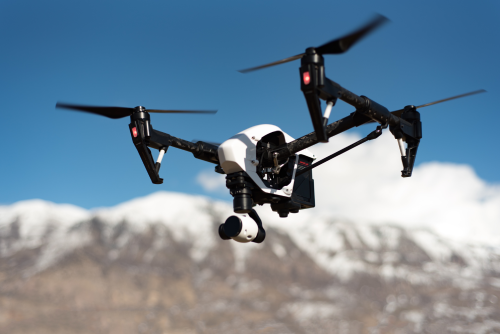
ideaForge NETRA is an Indian multirotor drone positioned for military and public-safety use rather than consumer flying. For readers comparing institutional UAV platforms, it stands out as an active, Indian-origin system from one of India’s best-known drone manufacturers. The main limitation is that public technical data on NETRA is thin, so it is best judged by its role, procurement fit, and platform category as much as by raw specifications.
Quick Summary Box
- Drone Name: ideaForge NETRA
- Brand: ideaForge
- Model: NETRA
- Category: Military / public safety multirotor
- Best For: Public-safety agencies, government users, and institutional buyers seeking an Indian-origin multirotor platform
- Price Range: Not publicly confirmed in supplied data
- Launch Year: Not publicly confirmed in supplied data
- Availability: Procurement-led availability likely; public retail availability not publicly confirmed in supplied data
- Current Status: Active
- Overall Rating: Not rated due to limited confirmed data
- Our Verdict: A strategically relevant Indian multirotor platform, but too lightly documented publicly for a normal retail-style score
Introduction
The ideaForge NETRA is an active multirotor UAV from ideaForge, an Indian manufacturer with a strong presence in government, enterprise, and defense-linked drone markets. NETRA matters because it represents the kind of hover-capable aerial platform often valued in public safety and observation work, where vertical takeoff, steady positioning, and quick deployment can matter more than long-range cruise performance.
That basic role already sets it apart from the way many people think about drones. A consumer buyer often starts with camera quality, retail pricing, flight time, portability, and app polish. An institutional buyer, by contrast, often starts with a different list entirely: procurement eligibility, domestic sourcing, service support, training, spare parts, interoperability, security, regulatory fit, and whether the platform can actually be deployed in the environments where teams work. For a drone like NETRA, those practical and organizational factors may be as important as the aircraft itself.
For buyers and researchers, the challenge is simple: NETRA is easier to place by mission segment than by a fully published spec sheet. That means procurement teams should focus on verified payload options, support coverage, regulatory fit, and service terms before making comparisons with more openly documented international systems.
This also changes how NETRA should be reviewed. It is not especially useful to force an institutional drone into the same framework used for a consumer quadcopter sold through online retail stores. Instead, it makes more sense to ask questions such as:
- Is the platform active and supportable?
- Is it likely aligned with public-sector procurement needs?
- Does its multirotor design match hover-centric operational tasks?
- Can the manufacturer support a fleet rather than a single hobby user?
- Are payload, software, and maintenance details available through direct sales engagement even if not fully public?
Those are the kinds of questions that shape the real-world value of a drone like NETRA.
Overview
What kind of drone is it?
NETRA is a multirotor drone from ideaForge in India, and it sits in the military/public safety segment. That positioning suggests a platform intended more for aerial observation, scene awareness, and institutional deployment than for consumer photography or hobby flying.
In practical terms, a multirotor in this category is usually selected for tasks that benefit from vertical takeoff and landing, precise station-keeping, and operation from restricted launch zones. Public-safety teams rarely get to choose ideal operating environments. They may need to deploy from a roadway shoulder, a building compound, a disaster zone, a field command post, or a constrained urban space. Multirotors are attractive in these situations because they do not require a runway, catapult, or large recovery area.
The military/public-safety positioning also matters because it implies a different operating philosophy. Consumer drones are often optimized for ease of use and media capture. Institutional drones are more often optimized for repeatability, field resilience, operator workflow, and mission usefulness under pressure. Even without a richly published spec sheet, NETRA’s category tells you a lot about the problem it is trying to solve.
Who should buy it?
This model is best suited to:
- Public-safety organizations
- Government departments
- Institutional drone programs
- Security and emergency-response teams
- Buyers specifically evaluating Indian-origin drone ecosystems
It is much less clearly aimed at casual retail buyers, creators, or entry-level pilots.
A useful way to think about NETRA is that it appears to sit inside a procurement-driven decision process rather than a casual purchase journey. A police department, emergency management authority, disaster-response unit, infrastructure security team, or government program may find that its needs line up with a platform like this. A hobbyist almost certainly will not. Even a professional commercial operator may find that NETRA only makes sense if domestic sourcing, enterprise support, or public-agency procurement rules are central to the buying decision.
What makes it different?
What makes NETRA notable is less a published headline spec and more its market context:
- It comes from a recognized Indian drone manufacturer
- It is an active platform rather than a purely legacy listing
- It belongs to a segment where domestic sourcing, supportability, and procurement alignment may matter as much as camera specs
- Its multirotor design implies hover-focused utility, which is often valuable in public-safety work
There is also a broader strategic angle. In many institutional markets, origin and supply chain are no longer secondary considerations. Agencies may care about domestic industrial ecosystems, local service capability, procurement compatibility, and reduced reliance on external vendors. NETRA can therefore be relevant even when public spec transparency is lighter than that of some international competitors. That does not eliminate the need for technical diligence, but it does explain why a platform like this may remain important in serious evaluations.
Key Features
- Indian-origin platform from ideaForge
- Multirotor airframe, which generally means vertical takeoff/landing and precise hover capability
- Positioned for military and public-safety use
- Active status, indicating ongoing relevance versus discontinued legacy systems
- Likely suited to rapid deployment in confined areas compared with runway-dependent UAVs
- Better aligned with observation and short-duration overwatch roles than with long-endurance fixed-wing coverage
- Procurement-oriented platform, not clearly a mainstream retail consumer drone
- Publicly confirmed sensor, endurance, and software details remain limited, so buyers should verify mission configuration directly
These points may look simple, but together they define the core value proposition. NETRA appears to be important not because it wins an obvious public spec-sheet race, but because it occupies a useful institutional niche. In real deployments, a drone often succeeds because it is available, supportable, compliant, trainable, and mission-fit. Those qualities do not always show up in retail marketing tables, yet they are often decisive.
Another feature worth highlighting is what might be called operational appropriateness. A drone intended for public safety does not need to excel at every possible aerial task. It needs to do a narrower set of jobs reliably: launch quickly, maintain visual awareness over an incident, support command decisions, reduce risk to responders, and fit into organizational workflows. NETRA’s category strongly suggests that this is the lens through which it should be judged.
Full Specifications Table
| Specification | Details |
|---|---|
| Brand | ideaForge |
| Model | NETRA |
| Drone Type | Multirotor |
| Country of Origin | India |
| Manufacturer | ideaForge |
| Year Introduced | Not publicly confirmed in supplied data |
| Status | Active |
| Use Case | Military / public safety |
| Weight | Not publicly confirmed in supplied data |
| Dimensions (folded/unfolded) | Not publicly confirmed in supplied data |
| Max Takeoff Weight | Not publicly confirmed in supplied data |
| Battery Type | Not publicly confirmed in supplied data |
| Battery Capacity | Not publicly confirmed in supplied data |
| Flight Time | Not publicly confirmed in supplied data |
| Charging Time | Not publicly confirmed in supplied data |
| Max Range | Not publicly confirmed in supplied data |
| Transmission System | Not publicly confirmed in supplied data |
| Top Speed | Not publicly confirmed in supplied data |
| Wind Resistance | Not publicly confirmed in supplied data |
| Navigation System | Not publicly confirmed in supplied data |
| Obstacle Avoidance | Not publicly confirmed in supplied data |
| Camera Resolution | Not publicly confirmed in supplied data |
| Video Resolution | Not publicly confirmed in supplied data |
| Frame Rates | Not publicly confirmed in supplied data |
| Sensor Size | Not publicly confirmed in supplied data |
| Gimbal | Not publicly confirmed in supplied data |
| Zoom | Not publicly confirmed in supplied data |
| Storage | Not publicly confirmed in supplied data |
| Controller Type | Not publicly confirmed in supplied data |
| App Support | Not publicly confirmed in supplied data |
| Autonomous Modes | Not publicly confirmed in supplied data |
| Payload Capacity | Not publicly confirmed in supplied data |
| Operating Temperature | Not publicly confirmed in supplied data |
| Water Resistance | Not publicly confirmed in supplied data |
| Noise Level | Not publicly confirmed in supplied data |
| Remote ID Support | Not publicly confirmed in supplied data |
| Geo-fencing | Not publicly confirmed in supplied data |
| Certifications | Not publicly confirmed in supplied data |
| MSRP / Launch Price | Not publicly confirmed in supplied data |
| Current Price | Not publicly confirmed in supplied data |
The table above is intentionally conservative. For institutional and defense-adjacent products, incomplete public documentation is not unusual, but it has two consequences for buyers. First, you cannot safely fill gaps with assumptions based on class averages. Second, the absence of public figures shifts the evaluation burden toward direct vendor engagement, demonstrations, tender documents, or authorized channel briefings.
In other words, the limited spec transparency is not just a missing-data issue; it shapes the entire buying process. With NETRA, it is more important than usual to distinguish between what is confirmed, what is likely given the category, and what is merely common in comparable systems.
Design and Build Quality
Because the supplied data does not confirm dimensions, weight, materials, or foldability, NETRA’s physical design has to be discussed at a high level. As a multirotor in the military/public-safety class, it is most reasonably understood as a field-deployable hover platform rather than a lightweight consumer camera drone.
That matters in practical terms. Multirotors are usually chosen for:
- Launching without a runway
- Holding position over a scene
- Operating in tighter urban or semi-urban spaces
- Supporting stop-and-observe workflows
For institutional users, design quality is not only about appearance or portability. It is also about whether the aircraft can survive transport, repeated field deployment, and operator handling under stress. A public-safety team may deploy a drone at night, in dust, in variable weather, or from awkward terrain. In those conditions, the details that matter most often include:
- Ease of assembly and pre-flight setup
- Battery swapping speed
- Propeller attachment security
- Landing gear stability on uneven surfaces
- Visibility of status indicators
- Ease of transport in protective cases
- Access to replaceable parts
- General maintainability in service
Details such as frame material, arm-folding design, landing gear layout, ingress protection, and service-module access are not publicly confirmed in the supplied data. Buyers who need ruggedness, weather tolerance, or transport-case readiness should verify those points directly with the manufacturer or authorized procurement channel.
It is also worth thinking about build quality in the context of fleet ownership rather than single-unit ownership. An institutional drone is often evaluated not just on whether it works well on day one, but on whether it remains serviceable after dozens or hundreds of deployments. Can airframes be repaired locally? Are consumables readily available? Are motors, arms, landing components, and payload mounts field-replaceable? Does the design minimize downtime? These questions are especially important for agencies that cannot afford operational gaps during emergencies.
Another aspect of design is operator ergonomics. Public-safety teams may include pilots with varying levels of technical comfort, and operational handovers may happen quickly. A platform intended for institutional use benefits from predictable setup, clear health checks, secure payload mounting, and ground-control workflows that reduce human error. Even if the public documentation is sparse, these are the design realities buyers should investigate.
Flight Performance
No confirmed public figures for endurance, range, speed, or service ceiling are provided in the supplied data, so any performance judgment has to remain general.
Based on its multirotor configuration, NETRA is likely better suited to:
- Stable hovering
- Precise low-speed positioning
- Short-notice deployment
- Close-to-mid-range aerial observation
That same airframe logic usually means lower endurance than a fixed-wing UAV of similar mission intent. In other words, NETRA is more likely to excel as a scene-awareness or overwatch platform than as a long-range area-coverage aircraft. That is analysis based on the airframe type and mission segment, not a newly claimed spec.
This distinction matters because institutional buyers sometimes compare drones that are built for very different missions. A multirotor and a fixed-wing platform can both be used for surveillance or observation, but they solve different operational problems. A fixed-wing aircraft generally covers larger areas more efficiently and may stay aloft longer. A multirotor is generally better when teams need to rise vertically, hold a viewpoint, reposition precisely, and land in confined spaces. If the mission involves traffic incidents, disaster scenes, crowd monitoring, perimeter observation, or tactical overwatch of a defined location, the multirotor form factor can be the better fit even with lower endurance.
Wind handling, takeoff behavior, landing behavior, and signal robustness are all important in public-safety workflows, but those details are not publicly confirmed in the supplied data. Agencies comparing NETRA with other platforms should request verified mission profiles rather than relying on generic class assumptions.
Those mission profiles should ideally answer questions such as:
- How long can the aircraft loiter with a standard payload?
- What is the operational communications range under regulatory conditions?
- How does performance change in wind, heat, or high-altitude environments?
- How quickly can a fresh battery cycle the aircraft back into the air?
- What is the real mission radius once reserve battery policy is applied?
- What are the practical limits for safe operation around infrastructure or electromagnetic interference?
Institutional flight performance should also be judged against the tempo of operations. Many public-safety missions are short but urgent. An aircraft with moderate endurance can still be highly effective if it launches quickly, provides immediate overhead awareness, and can be rotated through battery sets. Conversely, a platform with excellent paper endurance may be less useful if it requires more setup, more open space, or more operator burden. That is why real deployment workflow matters as much as headline numbers.
Finally, buyers should remember that public-safety flying is often conservative by necessity. Agencies may impose stricter flight reserves, stricter weather limitations, and stricter evidence-handling procedures than a commercial media operator would. So even if future vendor documentation provides strong performance claims, operationally useful performance may still depend on the organization’s own safety doctrine.
Camera / Payload Performance
The supplied data does not publicly confirm NETRA’s exact camera or payload configuration. That means buyers should not assume thermal capability, optical zoom, low-light optimization, mapping-grade imaging, or stabilized gimbal performance unless those features are documented in the specific package being quoted.
From a mission perspective, a drone in this category is generally most valuable when it can support:
- Real-time scene awareness
- Elevated visual observation
- Incident assessment
- Day or low-light monitoring, if properly equipped
For institutional buyers, the most important questions are not just image quality but also payload integration, stabilization, recording workflow, evidentiary handling, and sensor interchangeability. Those points matter more than headline megapixels in this segment.
This is a critical difference between public-safety and consumer evaluation. A consumer may ask whether the footage looks cinematic. A public agency is more likely to ask whether the image is stable enough for identification, whether the downlink is dependable, whether timestamps and metadata are retained, whether recordings can be archived securely, and whether operators can switch between payload modes efficiently during an incident.
Depending on mission requirements, the most relevant payload questions may include:
- Is there a daylight camera, and what is its effective detail level?
- Is there thermal imaging support for night operations or search tasks?
- Is optical zoom available for standoff observation?
- Is the payload fixed or modular?
- Can the gimbal maintain stable imagery in wind?
- Are stills and video stored onboard, transmitted live, or both?
- How is data exported for reporting or evidentiary use?
- Can payloads be calibrated and serviced through official channels?
For agencies working in law enforcement, emergency response, or infrastructure security, sensor trustworthiness often matters more than headline resolution. If a drone is being used to support real decisions in the field, operators need predictable image quality, consistent control latency, and workflows that do not break under pressure. The right payload is therefore the one that supports the mission and the evidence chain, not necessarily the one with the most marketable numbers.
Because NETRA’s payload details are not publicly specified in the supplied data, procurement teams should treat configuration confirmation as a high-priority step. Different packages, revisions, or agency-specific bundles may materially change the platform’s usefulness. A multirotor with a stabilized visual payload can be one kind of tool; the same aircraft with thermal support or higher-zoom optics can become a very different operational asset.
Smart Features and Software
Publicly confirmed information on NETRA’s software ecosystem is limited in the supplied data. Features such as return-to-home, waypoint planning, AI tracking, mapping workflows, SDK support, cloud fleet tools, and geofencing should therefore be treated as unconfirmed unless specified by the vendor.
For a public-safety or institutional drone, the software checklist should usually include:
- Mission planning tools
- Flight logging
- Data export workflow
- Security and access controls
- Offline operating capability where required
- Training and fleet management support
If NETRA is being considered for a real deployment, these software and workflow questions should be part of the procurement review, not left as assumptions.
In many institutional drone programs, software becomes the hidden deciding factor. Two aircraft with similar airframes may perform very differently from a program-management perspective depending on their ecosystem. Software questions to explore include:
- Can the platform operate without dependence on public cloud services?
- Are user permissions role-based for larger teams?
- Can flight logs be exported for compliance review?
- Is maintenance history tracked?
- Can missions be standardized across multiple units?
- How are firmware updates delivered and controlled?
- Are there cybersecurity assurances appropriate to the buyer’s environment?
- Can data be retained on-premises if the agency requires that?
These questions matter because institutional adoption is rarely just about flying. It is about integrating the drone into a larger operational system. Dispatch procedures, incident reporting, GIS mapping, evidence management, pilot credentialing, and maintenance logging can all influence whether a platform is truly practical.
Another important consideration is offline resilience. Public-safety teams may work in areas with poor connectivity or in situations where external network dependence is undesirable. A drone system that can plan, fly, record, and export data locally may be more suitable than one that assumes constant connectivity. Since NETRA’s public software details remain limited, buyers should request direct clarification on exactly how the ground-control and data workflows are structured.
Use Cases
Given its segment and airframe type, the most realistic use cases for NETRA are:
- Public-safety aerial observation
- Emergency-response scene awareness
- Search-and-rescue visual overwatch
- Disaster and damage assessment
- Government and agency drone training
- Perimeter and site monitoring within legal limits
- Defense-linked non-weaponized observation roles
- Rapid deployment for incident documentation
Each of these use cases draws on the basic strengths associated with multirotor institutional platforms. For example, in public-safety aerial observation, the value often comes from quickly giving commanders an elevated perspective without putting personnel in greater danger. In emergency-response scene awareness, even a brief overhead view can improve traffic control, hazard recognition, and responder coordination. For search-and-rescue, the ability to hover, search methodically, and reposition precisely is often more useful than fast long-distance flight.
Disaster and damage assessment is another area where a multirotor can be useful because teams may need to inspect structures, roads, or affected zones from multiple angles at short range. Agency training is also a practical use case because platforms in this class can help organizations build internal drone capacity, standard operating procedures, and pilot proficiency. For perimeter or site monitoring, the usefulness depends on legal and policy constraints, but the general mission fit is clear: short-range observation over a defined area.
The mention of defense-linked non-weaponized observation roles is intentionally cautious. A military/public-safety drone should not automatically be interpreted as a weapons platform. In many cases, the relevant value lies in reconnaissance, surveillance, situational awareness, and support to ground decision-making.
Pros and Cons
Pros
- Indian-origin platform from a recognized domestic drone manufacturer
- Active status makes it more relevant than purely legacy or discontinued systems
- Multirotor design is naturally suited to hover, vertical takeoff, and close-area observation
- Public-safety and military positioning fits institutional rather than hobby use
- May be attractive where domestic sourcing or Indian ecosystem alignment matters
- Likely easier to deploy in confined launch areas than fixed-wing alternatives
These strengths are meaningful for the kinds of buyers who are most likely to evaluate NETRA. The domestic-origin factor can influence procurement, support access, and strategic alignment. The active status is also important because supportability often matters more than marginal performance differences. An active platform is generally easier to justify for fleet planning, training investment, and parts stocking than a legacy model.
Cons
- Public specification transparency is limited
- Camera and payload details are not publicly confirmed in the supplied data
- Endurance, range, speed, and weight are not publicly confirmed
- Price and retail availability are not publicly confirmed
- Hard to benchmark directly against better-documented competitors
- As a multirotor, it is unlikely to match fixed-wing endurance for longer coverage missions
The biggest weakness is not necessarily the aircraft itself; it is the public information gap. That gap makes preliminary comparison more difficult, especially for researchers or buyers accustomed to enterprise drones with fully published documentation. It also means that many conclusions about mission suitability must remain conditional until confirmed in a quote, briefing, demonstration, or procurement package.
Comparison With Other Models
Because NETRA’s public spec sheet is limited in the supplied data, the comparison below is best read as a market-positioning snapshot rather than a perfect like-for-like technical benchmark.
| Model | Price | Flight Time | Camera or Payload | Range | Weight | Best For | Winner |
|---|---|---|---|---|---|---|---|
| ideaForge NETRA | Not publicly confirmed in supplied data | Not publicly confirmed in supplied data | Not publicly confirmed in supplied data | Not publicly confirmed in supplied data | Not publicly confirmed in supplied data | Indian-origin public safety / institutional use | Domestic-source positioning |
| DJI Matrice 30T | Enterprise-tier; varies by bundle | Up to around 41 min | Integrated wide, zoom, and thermal payload | Up to around 15 km | Around 3.8 kg | Public safety and inspection teams needing a well-documented package | Published specs and sensor clarity |
| Parrot ANAFI USA | Enterprise-tier; varies by bundle | Up to around 32 min | Zoom-focused payload with thermal variants | Around 4 km class | Around 500 g class | Highly portable emergency-response deployment | Portability |
| DJI Matrice 210 V2 | Discontinued; used/legacy pricing varies | Up to around 38 min | Interchangeable enterprise payload support | Around 8 km class | Around 6 kg class | Legacy fleets needing older enterprise payload flexibility | Legacy payload flexibility |
A table like this should not be read as proof that one aircraft is universally superior. It mainly highlights what can and cannot be evaluated publicly. The DJI and Parrot systems are easier to compare because their specifications, payloads, and workflows are more openly documented. NETRA may still be the more attractive choice in some procurement contexts, but the basis for that choice is more likely to include origin, support structure, or local ecosystem fit.
NETRA vs a close competitor
Against the DJI Matrice 30T, NETRA’s biggest challenge is documentation. The M30T is easier to compare on paper because its flight performance and sensor stack are widely published. NETRA may still appeal where Indian sourcing, program alignment, or institutional procurement criteria carry more weight than open-market spec transparency.
Another difference is buying posture. The M30T is commonly approached as a mature global enterprise platform with a broad accessory and knowledge ecosystem. NETRA appears more likely to be evaluated through direct engagement and structured procurement. That does not make it weaker, but it does make the comparison less retail-friendly and more context-dependent.
NETRA vs an alternative in the same segment
Compared with the Parrot ANAFI USA, NETRA appears less consumer-adjacent and more procurement-led. ANAFI USA is easier to understand for buyers who prioritize portability and published specs, while NETRA may be more interesting for agencies evaluating domestic or region-specific supply chains.
The ANAFI USA also represents a lighter, highly portable approach to public-safety deployment. Buyers choosing between that style of platform and a more institutional multirotor concept should think carefully about whether portability, sensor integration, fleet support, or procurement compatibility is the bigger priority.
NETRA vs an older or previous-generation option
Compared with an older enterprise platform like the DJI Matrice 210 V2, NETRA benefits from being listed as active rather than legacy. That alone matters for supportability. The tradeoff is that the older DJI platform is still easier to benchmark publicly because more of its hardware and payload details are known.
Legacy aircraft can still be capable, but many organizations now place greater value on forward support, software continuity, parts availability, and procurement defensibility. In that sense, NETRA’s active status may matter more than a raw spec comparison against discontinued systems.
Manufacturer Details
ideaForge is an Indian drone manufacturer headquartered in India and widely recognized as one of the country’s leading UAV companies. The company is known for serving government, public-safety, enterprise, and defense-linked markets rather than focusing only on consumer drones.
Its broader portfolio has included multirotor and hybrid/VTOL platforms for surveillance, mapping, and institutional use. In this case, the brand and manufacturer are the same: ideaForge. That simplifies brand identity but does not remove the need to verify product-specific support, configuration, and procurement details.
The manufacturer context matters because institutional drone programs often buy into a company ecosystem, not just an aircraft. They may depend on the manufacturer for pilot enablement, maintenance guidance, firmware support, spares, replacement units, payload updates, and service contracts. A recognized manufacturer with experience in government and enterprise channels can therefore be easier to work with than a smaller vendor with uncertain support depth.
At the same time, brand reputation should not replace verification. Even with an established manufacturer, serious buyers should confirm exactly which model variants are active, what service commitments apply, what response times are available, and whether regional support is adequate for their intended use.
Support and Service Providers
Support details for NETRA are not fully public in the supplied data, so buyers should verify the actual support path before purchase. For a platform in this segment, support is likely to be more enterprise-led than hobby-shop-led.
Key things to verify include:
- Official technical support channels
- Repair and maintenance process
- Spare propeller, battery, and airframe-part availability
- Payload replacement and calibration support
- Pilot training options
- Service-level agreements for institutional customers
- Regional support coverage and turnaround times
If you are outside India or outside an approved institutional procurement environment, confirm support availability before treating NETRA as a practical option.
For public-safety fleets, support quality can be more important than the initial airframe decision. A drone that is theoretically capable but hard to maintain becomes a liability. Agencies should ask about preventive maintenance cycles, expected battery life, parts stocking policies, warranty terms, and whether loaner or replacement arrangements exist for mission-critical downtime.
Training support is also a major piece of the service picture. Many institutions need more than a product handoff; they need onboarding, standard operating procedure guidance, pilot instruction, maintenance familiarization, and documentation that can stand up to audit or command review. If NETRA is being considered for operational use, the support package should be evaluated as part of the system, not as an afterthought.
Where to Buy
NETRA does not appear to be the kind of drone that should be assumed available through normal consumer retail channels. For many buyers, procurement is more likely to happen through:
- Direct manufacturer engagement
- Authorized enterprise or government dealers
- Regional distributors
- System integrators
- Tender or institutional purchasing channels
If you are a private buyer, international buyer, or non-government organization, verify whether the model is commercially available in your region and whether the seller is authorized to support it after delivery.
In practice, that may mean the purchase path includes demonstrations, compliance documentation, quotation rounds, approved-vendor checks, or pilot projects before a full order is placed. This is normal in enterprise and government procurement. It also means that the “where to buy” question is less about finding the lowest online price and more about ensuring that the seller can legally supply, configure, and support the platform for your use case.
Buyers should also confirm what exactly is included in a quoted package. Institutional UAVs are often sold as systems rather than stand-alone aircraft, and the difference between packages can be substantial. Batteries, chargers, controllers, cases, training, sensors, software access, and maintenance terms may all affect the final value.
Price and Cost Breakdown
No confirmed launch price or current market price is provided in the supplied data. That makes NETRA difficult to budget like a consumer drone.
Before making a cost decision, buyers should verify:
- Base airframe price
- Included controller or ground station
- Camera or sensor package
- Extra batteries and charging hardware
- Spare props and maintenance parts
- Training costs
- Software or fleet-management fees
- Repair contract or annual maintenance support
- Insurance and compliance costs
- Import, tax, or regional distribution markups
For public-safety and institutional drones, the true cost of ownership is often driven as much by support and readiness as by the aircraft alone.
A helpful way to evaluate cost is to break it into acquisition cost, readiness cost, and lifecycle cost.
Acquisition cost includes the aircraft, payloads, controller, charger, batteries, and basic accessories.
Readiness cost includes training, spare parts, procedures, certification, data management setup, and any infrastructure needed to field the drone properly.
Lifecycle cost includes maintenance, repairs, battery replacement, software support, calibration, updates, and downtime risk.
This matters because a platform can appear affordable at the purchase stage and become expensive later if support is slow, spare parts are hard to source, or batteries need frequent replacement. Conversely, a higher upfront system price may be justified if support and reliability reduce operational disruption.
For agencies operating on annual budgets, it is also important to model recurring costs. Batteries are consumables. Pilot training has to be refreshed. Firmware and cybersecurity management require attention. Payloads may need calibration or replacement. If NETRA is being considered for routine institutional use, the budgeting conversation should look beyond the first invoice.
Regulations and Compliance
NETRA buyers should treat regulations conservatively and verify them locally. Requirements may differ sharply depending on country, operating category, aircraft weight, and whether the user is a private entity, enterprise operator, or government agency.
Key checks should include:
- Drone registration requirements
- Pilot certification or training rules
- Airspace authorization requirements
- Night-operation and BVLOS restrictions
- Privacy and data-protection obligations
- Scene-of-incident recording rules
- Import/export or restricted-use considerations
- Remote ID requirements where applicable
Remote ID support is not publicly confirmed in the supplied data. Public-safety or government use may involve special approvals in some regions, but that should never be assumed as universal compliance.
Compliance for institutional drones often extends beyond flight legality. Agencies may also need to consider:
- Internal evidence-retention rules
- Cybersecurity policies
- Procurement eligibility rules
- Restricted-location operating permissions
- Cross-border transfer restrictions
- Chain-of-custody requirements for recorded media
- Public communications and privacy policy obligations
These considerations are especially important in public-safety settings, where recordings may be reviewed later in legal, administrative, or public-accountability contexts. A drone system that captures data without a clear export and retention workflow can create governance problems even if the flying itself is lawful.
International buyers should be particularly cautious. A platform that is operationally suitable in one country may face different certification, import, radio-use, or security requirements elsewhere. Always verify local rules before assuming a military/public-safety platform can be procured and deployed normally.
Who Should Buy This Drone?
Best for
- Public-safety agencies evaluating operational multirotor platforms
- Government departments seeking an Indian-origin UAV option
- Institutional buyers who care about procurement pathway and support structure
- Organizations prioritizing hover-based observation over long-endurance area coverage
- Researchers tracking Indian drone industry platforms
These are the buyers most likely to understand NETRA on its own terms. They are also the buyers most likely to have processes in place for direct validation, demonstrations, service review, and controlled procurement.
Not ideal for
- Casual consumers or hobby pilots
- Buyers who need a fully transparent retail-style spec sheet
- Content creators shopping mainly for camera quality
- Operators needing long-range fixed-wing endurance
- Users outside supported procurement regions who cannot confirm service access
If your buying process depends on easy online ordering, public accessories, influencer reviews, and clear published specs, NETRA will probably feel opaque. That does not mean it is weak; it means it belongs to a different market logic.
Final Verdict
ideaForge NETRA is best understood as a role-driven institutional multirotor, not a consumer-style product page drone with every specification neatly published. Its biggest strengths are its Indian origin, active status, and likely suitability for hover-centric public-safety or government observation work. Its biggest weaknesses are the lack of publicly confirmed technical detail, unclear pricing, and an apparent procurement-led buying path.
If you are an agency, enterprise team, or researcher comparing Indian public-safety drone platforms, NETRA is clearly worth attention. It sits in a strategically relevant part of the market: domestic, operationally oriented, and aligned with institutional use rather than casual flying. That alone gives it importance, especially in contexts where sourcing, supportability, and ecosystem alignment matter.
If you are a retail buyer who needs open pricing, published camera specs, and easy cross-shopping, the information gap is a major drawback. You will likely find better-documented alternatives easier to evaluate and buy. But that comparison may miss NETRA’s actual purpose. This is not primarily a lifestyle drone or content-creation tool; it appears to be a programmatic asset intended for organizations with more formal acquisition and operational requirements.
In short: NETRA looks strategically relevant, but serious buyers should evaluate it through direct vendor validation rather than consumer-drone assumptions. The right way to judge it is not by asking whether it behaves like a mainstream retail UAV, but by asking whether it can meet an institutional mission with dependable support, acceptable compliance, and a procurement path that works in the real world.
