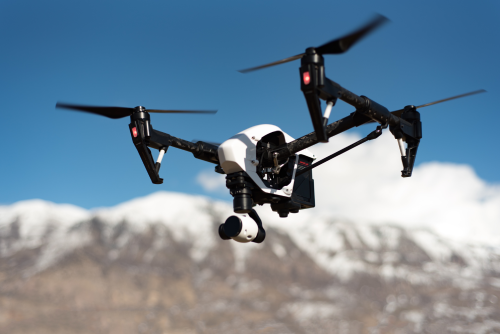
Steadicopter Falcon Eye is a little-documented Israeli helicopter UAV associated with the military VTOL segment. It appears to be aimed at institutional users that value vertical takeoff, hovering, and runway-independent deployment rather than consumer photography or hobby flying. The model matters mainly because it sits under the Steadicopter name, a brand known for rotary unmanned aircraft, but the public Falcon Eye record remains thin and incomplete.
That lack of documentation is not unusual in the defense-adjacent drone world. Many military and institutional platforms are presented publicly only in outline form, with detailed performance data, payload options, and user documentation withheld for commercial sensitivity, export-control reasons, or simple program age. In practice, that means Falcon Eye is more relevant as a reference point in rotary-wing UAV research than as a widely benchmarked product with clear, open-market comparison data.
Quick Summary Box
- Drone Name: Steadicopter Falcon Eye
- Brand: Steadicopter
- Model: Falcon Eye
- Category: Military / VTOL helicopter UAV
- Best For: Institutional buyers, defense-sector researchers, and analysts comparing rotary-wing UAV programs
- Price Range: Not publicly confirmed in supplied data
- Launch Year: Not publicly confirmed in supplied data
- Availability: Not publicly confirmed in supplied data
- Current Status: Unknown
- Overall Rating: Not rated due to limited confirmed data
- Our Verdict: A niche Steadicopter helicopter UAV with credible segment relevance, but too little confirmed public data for a conventional scored review
Introduction
The Steadicopter Falcon Eye is listed as a helicopter-type UAV from Israel and placed in the military/VTOL segment. Based on the supplied record, it should be treated as a procurement-oriented or program-oriented unmanned aircraft rather than a retail drone with transparent specs, dealer pricing, and consumer support materials.
Readers should care about Falcon Eye if they are tracking rotary-wing UAV development, comparing Israeli VTOL systems, or researching lesser-known defense drone platforms. The main challenge is simple: the supplied public record confirms the model’s existence and category, but not its detailed performance, payload, price, or service status.
That makes this article less of a normal hands-on review and more of a structured profile. In the consumer drone market, buyers can usually evaluate a model through spec sheets, launch announcements, test footage, dealer listings, firmware notes, and user communities. Falcon Eye does not seem to have that kind of open ecosystem. Instead, the available picture is shaped by category placement, manufacturer identity, and what can reasonably be inferred from helicopter-type VTOL design priorities.
This distinction matters. A lightly documented military or institutional UAV should not be judged by the same standards as a camera quadcopter sold through public retail channels. What matters here is not whether it shoots 4K for creators or folds into a shoulder bag. What matters is whether it represents a real rotary-wing UAV effort, how it likely fit into mission requirements, and what questions a serious buyer or researcher would need answered before treating it as a viable option.
In that sense, Falcon Eye is important less because of what is definitively known and more because of where it sits: under a specialist Israeli rotary-UAV manufacturer, inside a mission-driven VTOL category, and in a part of the unmanned aircraft market where public disclosure is often selective.
Overview
What kind of drone is it?
Falcon Eye is a helicopter UAV under the Steadicopter brand and manufacturer name. In practical terms, that means it belongs to the vertical takeoff and landing class and is associated with military or defense-linked use rather than consumer aerial imaging.
Because the supplied data comes from a defense-drone database entry and notes that specs were not captured in this build, Falcon Eye is best understood as a documented program reference with incomplete open-source technical detail.
The helicopter designation is especially important. Much of the drone market is dominated by multirotors and fixed-wing systems, each with familiar tradeoffs. A helicopter UAV belongs to a different design tradition. Instead of relying on four or more simple lift rotors in a multirotor layout, or on aerodynamic lift from forward flight as in a fixed-wing aircraft, a helicopter-style unmanned aircraft is usually optimized around rotorcraft behavior: vertical launch, stationary hover, controlled low-speed movement, and operation from areas where runway access is impossible or undesirable.
That does not automatically tell us Falcon Eye’s exact size, propulsion type, rotor configuration, or payload class. Those remain unconfirmed in the supplied material. But it does place the platform in a specific operational category that tends to attract naval users, border units, military reconnaissance programs, and other institutional operators who need persistent eyes-on-target capability from constrained spaces.
Who should buy it?
This is not a normal retail-buy recommendation drone. The most relevant audiences are:
- Government or institutional evaluators researching rotary-wing VTOL options
- Defense and aerospace analysts comparing unmanned helicopter programs
- Journalists and researchers building reference lists of Israeli UAVs
- Enterprise readers who need a model-specific profile before deeper manufacturer outreach
For casual flyers, creators, and mainstream enterprise buyers, the lack of public specification depth is a major limitation.
It is worth stressing that “who should buy it” in this case is really shorthand for “who should investigate it further.” Because no public price, dealer network, support map, or configuration sheet is confirmed in the supplied data, Falcon Eye does not fit the normal shortlisting process for commercial drones. It is more likely to matter in one of three scenarios:
-
You are tracing a specific UAV program or family history.
In that case, Falcon Eye may matter as part of a timeline of Steadicopter products or as an example of Israeli rotary-UAV design work. -
You are comparing aircraft concepts rather than shopping by price tag.
Analysts often need to compare helicopter UAVs, multirotors, and fixed-wing VTOL systems on mission suitability rather than open-market availability. -
You are already working inside a controlled procurement process.
Institutional buyers often contact manufacturers directly, issue information requests, or evaluate systems under tender conditions rather than through public storefronts.
Anyone outside those groups is likely to find Falcon Eye too opaque to be actionable.
What makes it different?
What makes Falcon Eye interesting is not a confirmed standout spec, because none is publicly confirmed in the supplied data. Its distinction is instead contextual:
- It is tied to Steadicopter, a manufacturer associated with unmanned helicopter systems
- It uses a helicopter airframe rather than the more common quadcopter layout
- It sits in the military VTOL space, where runway-free deployment and hover utility often matter more than foldability or app-driven ease of use
In short, Falcon Eye stands out more as a niche platform reference than as a transparent commercial product.
The broader market context adds to that distinction. Consumer and enterprise drone discussions today are often centered on camera quality, automated shooting modes, mapping workflow, and software convenience. Rotary-wing military UAVs solve a different problem set. Their value often lies in launch flexibility, stable observation, deck or field operation, payload integration, and mission continuity in places where infrastructure is limited. Even with sparse documentation, Falcon Eye belongs to that more specialized tradition.
It may also represent a category that receives less public attention than it deserves. Multirotors are everywhere, and fixed-wing tactical UAVs are widely discussed, but helicopter UAVs occupy a narrower band where mechanical complexity and institutional mission needs intersect. That alone gives Falcon Eye relevance for anyone studying the evolution of unmanned aircraft beyond mainstream quadcopters.
Key Features
- Helicopter-type VTOL airframe
- Military / defense-linked market positioning
- Israeli origin
- Built under the Steadicopter brand and manufacturer umbrella
- Likely intended for vertical launch and recovery without runway dependence
- Likely better suited to hover-centric observation tasks than fixed-wing-only workflows, based on airframe type
- Public performance specifications were not captured in the supplied data
- Public payload, camera, software, and pricing details are not publicly confirmed in supplied data
- Current operational or commercial status remains unknown
These “features” should be read carefully. In a conventional review, this section would highlight verified capabilities such as sensor type, endurance, obstacle sensing, or transmission range. Here, the most defensible feature set is structural and contextual rather than numeric. Falcon Eye is identifiable as a helicopter UAV in the military VTOL segment, and that alone implies certain mission priorities even if it does not reveal exact performance.
From a researcher’s perspective, the most important feature may actually be the manufacturer association. Steadicopter is not a random consumer electronics label applying a dramatic name to a generic drone. It is a specialist name in rotary unmanned aviation, which gives Falcon Eye more significance than the sparse public record might initially suggest.
The absence of disclosed specifications is also a feature of the profile in a practical sense. It tells buyers something important about due diligence: this is a platform that should be approached through direct verification, archived manufacturer material, or institutional contacts rather than through public retail assumptions.
Full Specifications Table
| Field | Details |
|---|---|
| Brand | Steadicopter |
| Model | Falcon Eye |
| Drone Type | Helicopter VTOL UAV |
| Country of Origin | Israel |
| Manufacturer | Steadicopter |
| Year Introduced | Not publicly confirmed in supplied data |
| Status | Unknown |
| Use Case | Military / VTOL |
| Weight | Not publicly confirmed in supplied data |
| Dimensions (folded/unfolded) | Not publicly confirmed in supplied data |
| Max Takeoff Weight | Not publicly confirmed in supplied data |
| Battery Type | Not publicly confirmed in supplied data |
| Battery Capacity | Not publicly confirmed in supplied data |
| Flight Time | Not publicly confirmed in supplied data |
| Charging Time | Not publicly confirmed in supplied data |
| Max Range | Not publicly confirmed in supplied data |
| Transmission System | Not publicly confirmed in supplied data |
| Top Speed | Not publicly confirmed in supplied data |
| Wind Resistance | Not publicly confirmed in supplied data |
| Navigation System | Not publicly confirmed in supplied data |
| Obstacle Avoidance | Not publicly confirmed in supplied data |
| Camera Resolution | Not publicly confirmed in supplied data |
| Video Resolution | Not publicly confirmed in supplied data |
| Frame Rates | Not publicly confirmed in supplied data |
| Sensor Size | Not publicly confirmed in supplied data |
| Gimbal | Not publicly confirmed in supplied data |
| Zoom | Not publicly confirmed in supplied data |
| Storage | Not publicly confirmed in supplied data |
| Controller Type | Not publicly confirmed in supplied data |
| App Support | Not publicly confirmed in supplied data |
| Autonomous Modes | Not publicly confirmed in supplied data |
| Payload Capacity | Not publicly confirmed in supplied data |
| Operating Temperature | Not publicly confirmed in supplied data |
| Water Resistance | Not publicly confirmed in supplied data |
| Noise Level | Not publicly confirmed in supplied data |
| Remote ID Support | Not publicly confirmed in supplied data |
| Geo-fencing | Not publicly confirmed in supplied data |
| Certifications | Not publicly confirmed in supplied data |
| MSRP / Launch Price | Not publicly confirmed in supplied data |
| Current Price | Not publicly confirmed in supplied data |
The empty fields are not just gaps; they shape how this aircraft should be evaluated. When a platform has no publicly confirmed weight, power system, endurance, payload, or support details, it cannot be responsibly scored against better-documented drones on a conventional buying scale. Instead, the absence of data becomes part of the assessment.
For institutional readers, the specification table functions more like a due-diligence checklist than a product sheet. Every missing line represents a question that would need to be answered before serious procurement work could begin. That includes not only performance values but also lifecycle issues such as environmental limits, ground-control configuration, regulatory pathway, and support continuity.
Design and Build Quality
No detailed materials, dimensions, or airframe drawings are confirmed in the supplied data, so Falcon Eye cannot be judged the way a consumer drone can. What is confirmed is the helicopter airframe type, and that alone suggests a different design philosophy from the foldable quadcopters most readers know.
A helicopter UAV typically prioritizes vertical takeoff and landing, hover control, and operation from constrained launch areas. That can be valuable for ship decks, rough terrain, temporary field sites, or any environment where a runway is impractical. It also usually means more mechanical complexity than a simple multirotor, which can affect maintenance needs, parts wear, and serviceability.
Portability is unknown. Unlike camera drones designed to fit in backpacks, military helicopter UAVs are often transported as mission equipment rather than travel gadgets, and they may rely on cases, support kits, and operator teams. Falcon Eye may fit that pattern, but its actual transport footprint is not publicly confirmed in supplied data.
Field-readiness is likely central to the design if the platform was built for defense use, but that should be treated as analysis, not a confirmed specification. Buyers should verify airframe ruggedness, rotor protection, landing gear design, environmental hardening, and maintenance intervals directly through official channels.
There are several additional design questions that matter in this segment:
- Rotor system complexity: Is the aircraft built around a conventional helicopter architecture, a coaxial arrangement, or another rotorcraft configuration? The answer affects stability, maintenance, and deck-handling behavior, but it is not publicly confirmed here.
- Assembly time: Some institutional UAVs are designed for rapid field setup, while others require more involved preparation. That difference can shape actual deployability more than headline endurance.
- Payload mounting philosophy: A useful military UAV often needs secure, vibration-managed payload integration. Whether Falcon Eye used a standardized turret, modular bay, or custom mission fit is unclear from public data.
- Landing gear and ground handling: Helicopter UAVs may need more deliberate ground procedures than consumer multirotors, especially in windy conditions or on uneven surfaces.
- Survivability and maintainability: In defense use, a “good build” is not just about materials. It is about how easily technicians can replace wear parts, inspect flight-critical elements, and return the aircraft to service.
So while there is not enough data to praise or criticize Falcon Eye’s construction in absolute terms, the airframe category itself points toward a design optimized for mission deployment rather than user-friendliness or mass-market portability.
Flight Performance
Public figures for endurance, range, top speed, and service ceiling were not captured in the supplied record, so Falcon Eye cannot be ranked on raw performance. That said, helicopter UAVs usually appeal because they can launch vertically, hold position, and work effectively in hover-heavy mission profiles.
Compared with fixed-wing drones, a helicopter layout is often better suited to observation from a stationary or slow-moving position. Compared with a typical quadcopter, it may offer a different efficiency and mission profile balance, though the exact Falcon Eye tuning is unknown. Without confirmed numbers, it would be irresponsible to claim superior endurance, speed, or range.
Wind handling is also unconfirmed. In general, rotary-wing VTOL aircraft can be useful for precise positioning, but actual stability depends on size, rotor system, control tuning, and payload configuration. Falcon Eye should be considered an outdoor institutional platform rather than an indoor or close-range recreational drone.
Takeoff and landing behavior should be one of its main operational advantages in principle, since helicopter UAVs do not need a runway. Signal performance, datalink confidence, and beyond-visual-line-of-sight suitability are not publicly confirmed in supplied data.
To understand Falcon Eye’s likely place in the market, it helps to think about performance in mission terms rather than just numbers:
- Launch independence: One of the key values of a helicopter UAV is the ability to get airborne from a limited footprint. For field units, coastal teams, or mobile operators, that can matter more than raw cruise speed.
- Hover persistence: A rotorcraft platform is often chosen because a mission requires staying over or near an area of interest, not merely passing over it.
- Low-speed control: Many surveillance and inspection-like mission types benefit from careful, deliberate movement rather than fast transit alone.
- Recovery flexibility: Returning to the point of launch without runway infrastructure can simplify operations in constrained environments.
What remains unclear is where Falcon Eye landed on the tradeoff spectrum. Some helicopter UAVs are relatively compact tactical systems; others belong to larger, more capable classes with greater support demands. Some emphasize persistence, others payload, others deployment convenience. Without confirmed specs, Falcon Eye’s exact performance tier cannot be placed with confidence.
Institutional evaluators would likely want answers to the following before making any operational judgment:
- Endurance with baseline payload
- Endurance with maximum mission payload
- Operational radius under secure datalink conditions
- Hover performance under wind and temperature stress
- Ceiling and hot/high performance
- Recovery behavior in degraded navigation conditions
- Engine or power-system redundancy, if any
- Mean time between required maintenance events
Until that information is verified, Falcon Eye remains a credible but unquantified VTOL reference rather than a benchmarked performer.
Camera / Payload Performance
Falcon Eye’s payload details were not captured in the supplied data. That means there is no confirmed camera resolution, gimbal type, zoom capability, thermal imaging package, or payload capacity available for this profile.
Given its military/VTOL positioning, the most realistic assumption is that Falcon Eye was designed around mission payload utility rather than creator-grade photo specs. Platforms in this segment are often relevant for observation, surveillance support, or sensor carriage, but the exact Falcon Eye payload class is not publicly confirmed in supplied data.
For researchers or institutional buyers, the key questions are not cinematic image quality but mission fit:
- What sensor options were offered?
- Was a stabilized day/night payload available?
- What was the onboard recording and downlink setup?
- Could the aircraft support interchangeable payloads?
- What metadata, target-marking, or integration functions were available?
Until those are verified from official material, Falcon Eye’s payload value should be treated as unknown.
This section is one of the biggest reasons Falcon Eye cannot be scored like a normal drone. In the military and institutional UAV world, payload is often the actual product. Airframe performance matters, but the mission system usually determines real operational value. A helicopter UAV with modest endurance but an excellent stabilized sensor package may be more useful than a longer-endurance aircraft with poor imaging integration.
Typical payload questions in this category go far beyond “how many megapixels?” Buyers would want to know:
- Whether the aircraft supports electro-optical, thermal, or dual-sensor payloads
- Whether zoom, stabilization, and target tracking are integrated at the payload level
- Whether georeferenced video or metadata overlays are available
- Whether payload control is operator-friendly in a ground station environment
- Whether the aircraft can carry non-imaging mission equipment in addition to cameras
- Whether payload swaps require tools, recalibration, or software changes
Even if Falcon Eye was intended primarily for ISR-type roles, its public record does not yet tell us whether it was a simple observation craft or a more adaptable sensor carrier. That difference is critical. A platform with interchangeable payload support can serve multiple departments or mission sets. A highly specialized payload fit may be excellent at one task and poor at everything else.
For analysts, the safest conclusion is that Falcon Eye belongs to a payload-sensitive class where mission system details likely matter more than public marketing language, but those details remain undisclosed in the supplied material.
Smart Features and Software
No confirmed software ecosystem, autonomy stack, control app, or mission-planning suite is included in the supplied data. As a result, Falcon Eye cannot be credited with features such as waypoint missions, return-to-home, AI tracking, fleet management, or SDK support unless verified elsewhere.
In a military or institutional VTOL platform, the most important software questions usually include:
- Mission planning and route programming
- Hover hold and automated flight stabilization
- Return-to-base or fail-safe behavior
- Payload control integration
- Data logging and mission replay
- User permissions and security architecture
- Ground control station compatibility
Those features may exist in some form, but they are not publicly confirmed in supplied data for Falcon Eye. Buyers should treat software capability as a verification item, not an assumed strength.
This is another area where consumer expectations can be misleading. For a hobby or commercial camera drone, “smart features” often means subject tracking, automated filming templates, obstacle avoidance, or beginner safety tools. In a defense-oriented rotorcraft UAV, software priorities are different. The more relevant questions are usually:
- Can the aircraft follow preplanned routes reliably?
- Can operators hand off control between stations?
- Does the system maintain stable hover under degraded signal conditions?
- Are command links encrypted or otherwise protected?
- Can mission data be logged, replayed, and audited?
- Does the software integrate with broader command or surveillance workflows?
Security also matters more in this segment. A public app ecosystem may be a strength in consumer markets, but it is not necessarily a virtue in institutional aviation. Closed, purpose-built control systems can be preferable when users care more about mission assurance, permissions, and controlled update cycles than about third-party app support.
It is also possible that Falcon Eye belongs to an earlier generation of UAV software design, depending on its actual program age. If so, it may not be fair to compare it directly with newer autonomy-rich systems without understanding its development context. But because launch year and software architecture are not confirmed, even that remains speculative.
Use Cases
Based on the confirmed segment and airframe type, the most realistic use cases are the following:
- Defense observation and reconnaissance support
- Perimeter and site monitoring for institutional users
- Border or coastal monitoring by authorized agencies
- Field deployment where vertical launch and landing are important
- Evaluation of rotary-wing UAV concepts by researchers or procurement teams
- Database and fleet comparison work by journalists, analysts, and defense observers
Because payload and certification details are not publicly confirmed, broader claims around mapping, inspection, or emergency response would need case-by-case verification.
These use cases can be expanded in practical terms:
Defense observation and reconnaissance support
A helicopter UAV is naturally suited to missions where operators need a persistent view over a defined area without runway support. That does not automatically mean Falcon Eye was heavily armed with advanced sensors or designed for every ISR role, but it does make surveillance-oriented deployment a plausible use context.
Perimeter and site monitoring
Institutional users such as protected facilities, border-adjacent sites, or strategic infrastructure operators sometimes value an aircraft that can launch quickly from a small prepared area and remain on station. Hover capability matters here more than high-speed transit alone.
Border or coastal monitoring
Rotary UAVs can be attractive for maritime-adjacent or border environments because launch conditions are often constrained and observation angles matter. Whether Falcon Eye was specifically designed or certified for such use is not confirmed, but the airframe category fits the mission concept.
Field deployment from austere locations
One of the clearest operational arguments for helicopter UAVs is deployment in places where runways do not exist and multirotor endurance may be limiting. This includes rough terrain, forward sites, temporary checkpoints, and mobile operations. Again, Falcon Eye’s exact readiness for harsh conditions is not documented, but the category alignment is strong.
Research and procurement evaluation
Because Falcon Eye appears in public records but with sparse detail, it also has value as a reference model for comparative study. Researchers may need to identify it as part of a broader unmanned aviation landscape even if they cannot fully benchmark it yet.
In contrast, some use cases should not be casually assumed. There is no public confirmation of mapping workflow compatibility, industrial inspection payloads, public-safety certifications, or disaster-response integration. Those may be possible in theory for some rotorcraft UAVs, but they are not evidenced here.
Pros and Cons
Pros
- Confirmed helicopter VTOL format supports vertical launch and recovery
- Military/VTOL positioning suggests a mission-focused airframe rather than a consumer compromise
- Built by Steadicopter, a manufacturer associated with rotary unmanned aircraft
- Likely better suited to hover-centric tasks than runway-dependent fixed-wing systems, based on airframe type
- Potentially useful in constrained launch environments where runway access is limited
Cons
- Public specifications are extremely limited
- Current status is listed as unknown
- No confirmed endurance, range, speed, payload, or camera data in the supplied record
- No publicly confirmed price, retail availability, or dealer structure
- Support, spare parts, and service pathways are not clearly documented in public-facing data
- Likely unsuitable for hobby, creator, or mainstream enterprise buyers seeking transparent ownership information
The key point in the pros-and-cons balance is that Falcon Eye’s strengths are mostly categorical, while its weaknesses are documentary. In other words, it appears potentially relevant because of what kind of aircraft it is and who built it, but it remains hard to endorse because too much of the evidence that would support a normal buying decision is missing.
For researchers, that may be acceptable. For buyers, it is a major constraint.
Comparison With Other Models
Because Falcon Eye’s public data is sparse, the most honest comparison is about market positioning and documentation quality rather than hard performance numbers.
| Model | Price | Flight Time | Camera or Payload | Range | Weight | Best For | Winner |
|---|---|---|---|---|---|---|---|
| Steadicopter Falcon Eye | Not publicly confirmed in supplied data | Not publicly confirmed in supplied data | Not publicly confirmed in supplied data | Not publicly confirmed in supplied data | Not publicly confirmed in supplied data | Model-specific research and procurement tracing | Best if Falcon Eye itself is the target platform |
| Steadicopter Black Eagle 50H | Quote-based institutional procurement | Public specifications vary by configuration | Better-documented ISR-oriented rotary UAV family | Public specifications vary by configuration | Public specifications vary by configuration | Buyers wanting a more visible Steadicopter rotary-UAV reference | Better public documentation |
| UMS Skeldar V-200 | Quote-based institutional procurement | Public specifications vary by configuration | Multi-sensor military VTOL payload class | Public specifications vary by configuration | Larger-class platform | Agencies comparing broader helicopter-UAV alternatives | Better known alternative ecosystem |
Falcon Eye vs a close competitor
Within the same manufacturer sphere, the Black Eagle family is the closer comparison point simply because it is better known publicly and comes from the same rotary-UAV specialist background. If you are comparing Steadicopter platforms, Falcon Eye currently suffers from a documentation gap that makes Black Eagle easier to evaluate.
That matters in procurement practice. Better-known systems are not always better systems, but they are easier to risk-assess. More public documentation, more references, and clearer support visibility can simplify early-stage evaluation even before formal manufacturer engagement begins.
Falcon Eye vs an alternative in the same segment
Against a platform like the UMS Skeldar V-200, Falcon Eye appears to be the more obscure option in public sources. That does not make it weaker, but it does make it harder to benchmark. Buyers comparing military helicopter UAVs should focus on mission class, payload fit, support model, and program maturity rather than assume the platforms are directly interchangeable.
The “same segment” label can be deceptive. Two helicopter UAVs may both be VTOL military systems, yet serve very different scales of operation, payload demands, and support structures. Without confirmed Falcon Eye specs, any claim of one-to-one competition would be premature.
Falcon Eye vs an older or previous-generation option
A reliable older-generation one-to-one comparison is difficult because Falcon Eye’s own program timeline, launch year, and detailed specs were not captured in the supplied record. Without that baseline, any “previous-generation” claim would be guesswork.
What can be said is that documentation maturity often affects perception. Older or niche systems can disappear into partial archives even if they were credible in their original context. Falcon Eye may be a case where the available public footprint says more about documentation gaps than about actual technical merit.
Manufacturer Details
Steadicopter is both the brand and the manufacturer here, so there is no meaningful separation between branding and production identity in this listing. The company is associated with Israel and is known in the drone market for rotary-wing and unmanned helicopter systems rather than mass-market consumer quadcopters.
That specialization matters. Rotary UAV manufacturers tend to compete on mission fit, hover behavior, payload integration, field deployment, and support contracts rather than app polish or creator features. In that context, Falcon Eye fits naturally within Steadicopter’s broader reputation as a specialist rather than a consumer electronics brand.
Public parent-company context is not confirmed in the supplied data. Major product-line discussion should therefore remain conservative, but Steadicopter is generally recognized for unmanned helicopter and VTOL-oriented systems.
For readers unfamiliar with the market, manufacturer specialization is often one of the most useful clues when hard specs are missing. A company known for rotary unmanned aircraft is more likely to approach design around operational discipline, sustainment, and sensor integration than around mass retail appeal. That does not tell us everything about Falcon Eye, but it helps explain why the platform exists in the first place.
It also affects how procurement and support may work. Specialist defense-oriented manufacturers often sell through direct engagement, demonstrations, integrator relationships, and contract packages rather than open channels. If Falcon Eye was part of that ecosystem, its low public visibility would be easier to understand.
Support and Service Providers
No Falcon Eye-specific public support program is confirmed in the supplied data. For a platform in this segment, support is more likely to come through official manufacturer channels, contract maintenance arrangements, system integrators, or regional representatives than through a consumer-style repair center network.
Prospective buyers should verify:
- Official technical support availability
- Regional service coverage
- Spare rotor and airframe component access
- Ground control station servicing
- Payload maintenance responsibility
- Training and certification packages
- Software update and lifecycle support
If Falcon Eye is legacy, niche, or no longer actively marketed, spare parts and service continuity may be a significant risk. That needs direct confirmation before adoption.
Support quality is especially important for helicopter UAVs because the mechanical and operational demands can be greater than with simple multirotor systems. Even if acquisition cost were acceptable, the long-term viability of the platform would depend on technical assistance, training, inspection procedures, and part availability.
Buyers should also think in lifecycle terms:
- Who performs scheduled maintenance?
- Are operators expected to replace routine wear items in-house?
- Is depot-level servicing required?
- Are software updates controlled by the manufacturer?
- Is payload servicing bundled or separate?
- What happens if a specific mission sensor is discontinued?
A platform with good flight characteristics but weak sustainment can become an operational liability. For Falcon Eye, that question is central because so much of the public record remains unclear.
Where to Buy
Falcon Eye should not be approached like a normal retail drone purchase. There is no confirmed consumer storefront or broad marketplace presence in the supplied data.
The most likely acquisition paths, if the model is still obtainable, would be:
- Direct manufacturer engagement
- Authorized regional defense or enterprise distributors
- Procurement tenders
- Contract-based institutional purchasing
- Integrator-led mission packages
Regional restrictions, export controls, and customer qualification may apply. Availability should be verified before any budgeting effort.
In practical terms, “where to buy” may really mean “who is eligible to inquire.” Defense-linked or institutional UAVs are often sold only to approved entities, qualified operators, or organizations with a clear operational and legal basis for ownership. Even where civilian sale is technically possible, export review, end-user checks, and local aviation approval may complicate the path.
For researchers or journalists, the better question may be “where to verify” rather than “where to buy.” Archived product literature, trade-show references, manufacturer outreach, and defense procurement records may provide more useful clarity than marketplaces ever will.
Price and Cost Breakdown
No publicly confirmed launch price or current price is available in the supplied data. For a military/VTOL helicopter UAV, that usually means pricing is quote-based and dependent on configuration rather than fixed retail MSRP.
Before budgeting, buyers should verify the cost of:
- Air vehicle package
- Ground control station
- Sensor or payload package
- Spare parts and wear components
- Operator training
- Maintenance support
- Software or mission-system licensing
- Shipping, import, and regulatory handling
- Long-term sustainment
Because battery type, fuel type, and maintenance cycle are not publicly confirmed, no responsible ownership-cost estimate can be provided here.
That said, one of the most common mistakes in evaluating institutional UAVs is focusing too heavily on the aircraft alone. Total cost of ownership in this class often includes far more than the airframe. Depending on the platform, the real budget picture may include:
- Operator and technician training courses
- Mission planning and control hardware
- Data links and communications equipment
- Payload calibration and servicing
- Consumables and wear items
- Documentation packages
- Warranty terms or service contracts
- Regulatory preparation and testing
- Deployment accessories, transport cases, and support infrastructure
If Falcon Eye is a low-volume or niche model, sustainment cost may matter even more than acquisition cost. A system with limited parts availability or uncertain lifecycle support can become expensive quickly, even if the initial quote appears reasonable.
Regulations and Compliance
Any drone in this class should be treated as a regulated aircraft system, not a casual flyer product. Registration, operator licensing, airspace permissions, and mission approvals depend heavily on local law and on whether the platform is civilian-certified, restricted, or defense-controlled.
Important checks include:
- Whether civilian ownership is permitted in your jurisdiction
- Whether operation requires government or military authorization
- Whether export or import controls apply
- Whether the aircraft must be registered
- Whether operator licensing or commercial flight approval is required
- Whether onboard imaging creates privacy or data-governance obligations
Remote ID support is not publicly confirmed in supplied data, and no universal compliance claim should be assumed. For military-linked systems, separate procurement, handling, and export rules may matter as much as flight law.
Spectrum and communications compliance may also be relevant. Even if an aircraft itself is legally importable, the datalink or control frequencies associated with the system may require separate approvals depending on country and intended use. Likewise, encrypted or specialized communications equipment can trigger additional review.
Another important distinction is the gap between aircraft legality and mission legality. A platform may be technically lawful to own while still requiring specific permissions for the kinds of surveillance, coastal monitoring, or BVLOS operations that give it value. For a helicopter UAV intended for institutional work, that distinction can be decisive.
Who Should Buy This Drone?
Best for
- Defense-sector researchers tracking helicopter UAV programs
- Institutional evaluators comparing VTOL drone concepts
- Procurement teams already in contact with Steadicopter or approved integrators
- Journalists and analysts building structured references on Israeli drone models
- Buyers whose priority is a specific Falcon Eye program match rather than open-market shopping
Not ideal for
- Hobbyists
- Content creators and aerial filmmakers
- Small businesses needing a ready-to-buy commercial drone
- Buyers who need transparent public specs before shortlisting
- Operators who depend on open app ecosystems, broad dealer networks, or easy spare-parts access
To put it more plainly: Falcon Eye is suitable only for readers who are comfortable operating in a low-transparency, verification-heavy environment. If your workflow begins with public spec comparison, YouTube reviews, dealer stock checks, and user communities, this platform will be frustrating. If your workflow begins with program tracing, institutional outreach, and mission-specific evaluation, it may still be relevant.
This is why Falcon Eye should be treated as a specialist research object first and a purchase candidate second. The right buyer is not the one looking for the “best drone” in the abstract. The right buyer is the one who already has a reason to investigate Falcon Eye specifically.
Final Verdict
The Steadicopter Falcon Eye is best understood as a niche, defense-oriented helicopter UAV with confirmed relevance but limited public transparency. Its biggest strength is contextual: it comes from a manufacturer associated with rotary unmanned aircraft, and its helicopter VTOL format points to practical vertical launch, hover utility, and constrained-area deployment potential. Its biggest weakness is the lack of confirmed open-source detail on nearly every spec that normal buyers use to judge a platform.
If you are a researcher, analyst, or institutional buyer specifically investigating Falcon Eye, this model is worth tracking. It occupies a meaningful place in the rotary-wing UAV landscape simply by virtue of manufacturer pedigree and segment classification. For historical research, procurement mapping, and comparative analysis of lesser-known Israeli VTOL systems, that is enough to justify attention.
If you are looking for a drone you can compare on endurance, payload, software, support, and price today, Falcon Eye is too thinly documented to recommend as a conventional shortlist candidate without direct manufacturer verification. In that sense, the most honest verdict is not that Falcon Eye is good or bad, but that it is under-documented. Its significance lies in category credibility, not in publicly demonstrated transparency.
The practical takeaway is straightforward: treat Falcon Eye as a specialized rotorcraft UAV reference that may be operationally interesting, but do not treat the absence of public detail as a blank space to fill with assumptions. Any serious evaluation should proceed through verified documentation, official outreach, and mission-specific due diligence.
