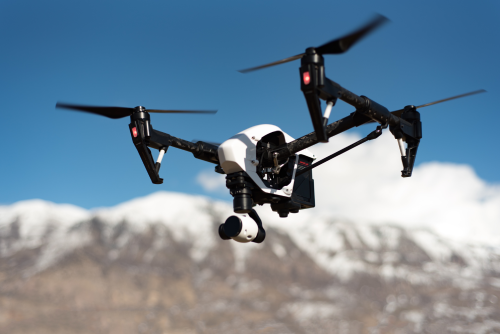
The IDS IA-17 Manta is an Italian fixed-wing military/ISR drone with limited public data but a notable published performance profile. It appears most relevant to defense researchers, procurement watchers, journalists, and readers comparing surveillance UAV classes rather than mainstream consumer buyers. What makes the IA-17 Manta interesting is its listed 8-hour endurance and 200 km/h top speed, even though many core details remain unconfirmed in open-source material.
That combination alone is enough to put the aircraft on the radar of anyone tracking tactical and small-to-medium ISR platforms. At the same time, the IA-17 Manta is a good example of a broader challenge in unmanned-systems research: some aircraft appear in databases, procurement references, or secondary listings with a handful of promising specifications, but without the kind of full brochure, operating manual, payload sheet, or program history that would let analysts evaluate them with confidence. As a result, this article should be read less as a traditional product review and more as a careful profile of a lightly documented platform.
Quick Summary Box
- Drone Name: IDS IA-17 Manta
- Brand: IDS
- Model: IA-17 Manta
- Category: Military/ISR fixed-wing drone
- Best For: Defense research, ISR platform comparison, institutional procurement review, aerospace reference use
- Price Range: Not publicly confirmed in supplied data
- Launch Year: Not publicly confirmed in supplied data
- Availability: Not publicly confirmed in supplied data
- Current Status: Unknown
- Overall Rating: Not rated due to limited confirmed data
- Our Verdict: A potentially capable fixed-wing ISR platform on paper, but public documentation is too thin for a conventional buyer-style rating.
Introduction
The IA-17 Manta is listed as an IDS drone from Italy in the military/ISR segment, using a fixed-wing airframe. The confirmed figures available in the supplied record are modest but important: 8 hours of endurance, 20 km range, and 200 km/h top speed. Its current status is unknown, and the available public information appears to come from a database snippet rather than a full technical brochure, so this page should be read as a careful profile of what is known, what is likely, and what still needs verification.
That distinction matters. In the consumer drone world, it is normal to expect a long list of published specs, accessory details, camera examples, software screenshots, firmware notes, and large user communities. In the military and ISR market, especially for lesser-known or older platforms, public visibility can be much lower. A drone may have existed in testing, niche service, demonstration activity, or limited institutional use without ever generating the kind of transparent public documentation seen in commercial aviation products.
So the most useful way to evaluate the IA-17 Manta is not to force it into a standard hobby-drone framework, but to ask three practical questions:
- What does the confirmed data suggest about the aircraft’s intended role?
- How does it compare directionally with other ISR UAV categories?
- What are the biggest unknowns that would affect any serious procurement or operational decision?
On that basis, the IA-17 Manta looks potentially interesting as a fixed-wing surveillance platform, but it remains far too lightly documented for a confident market recommendation.
Overview
What kind of drone is it?
The IA-17 Manta is a fixed-wing unmanned aircraft associated with military and ISR roles. That immediately places it in a very different class from consumer quadcopters: fixed-wing platforms are usually built for forward-flight efficiency, longer mission endurance, and broader area coverage rather than hovering, close-range inspection, or casual photography.
In practical terms, that means the IA-17 Manta should be thought of as a mission aircraft first and a “drone” second. Its likely value, if the published figures are accurate, would come from staying aloft for extended periods and covering ground efficiently. That is exactly the kind of profile that matters in surveillance, reconnaissance, perimeter monitoring, route observation, coastal watch, and similar roles where on-station persistence often matters more than maneuvering in tight spaces.
Fixed-wing UAVs also tend to sit within a more structured operational concept than small multirotors. They may require dedicated launch and recovery procedures, more pre-flight planning, more open operating space, and a better-defined ground-control workflow. Even when compact by military standards, they are usually part of a system rather than a single fly-anywhere device. The aircraft, data link, sensor package, recovery method, mission planning software, and operator training are all part of the picture.
Who should buy it?
This is not a typical retail drone for hobbyists or creators. The most realistic audience includes defense analysts, procurement teams, journalists, academic researchers, and organizations comparing tactical or surveillance-oriented UAVs. If the aircraft is still obtainable, access would likely be through formal institutional or government channels rather than a consumer storefront.
That buyer profile is important because the normal questions are different. A hobbyist asks about portability, camera quality, ease of use, app experience, and spare batteries. An institutional evaluator asks about endurance under payload, datalink resilience, support contracts, export status, operator training burden, launch/recovery footprint, payload modularity, and long-term sustainment. The IA-17 Manta belongs firmly in the second category.
Potentially relevant audiences include:
- Defense research teams building comparison sets of small and tactical UAVs
- Procurement analysts tracking European-origin unmanned systems
- Open-source intelligence researchers cataloging lesser-known ISR platforms
- Aerospace journalists looking for historical or niche UAV references
- Universities or institutes studying fixed-wing UAV concepts and surveillance mission design
What makes it different?
The standout point in the supplied data is the combination of 8-hour endurance and 200 km/h top speed in a fixed-wing ISR platform. Even with sparse public documentation, that suggests a drone designed around persistence and efficient area coverage. Those numbers are not enough on their own to prove overall capability, but they are enough to make the aircraft worth noting.
The main differentiator today, however, is also its biggest limitation: it is far less openly documented than many better-known ISR platforms. In one sense, that makes it interesting because obscure aircraft often fall through the cracks of mainstream UAV coverage. In another sense, it makes the IA-17 Manta hard to place. Without confirmed information on payload, launch method, weight, sensor integration, operating altitude, datalink type, or support status, even a promising endurance figure can only take analysis so far.
In other words, what makes the IA-17 Manta different is not just what is published, but what is missing. For researchers, that makes it a useful reference point in discussions about under-documented tactical UAVs. For buyers, it makes the platform inherently higher risk unless official information can be obtained directly.
Key Features
- Fixed-wing airframe suited to efficient forward flight and wider-area coverage, which is typically preferable for surveillance patterns over open terrain, borders, coastlines, or long routes.
- Military/ISR positioning rather than consumer, FPV, or creator use, signaling that the aircraft was likely intended as part of an operational surveillance system rather than a general-purpose imaging drone.
- Listed endurance of 8 hours, which is the strongest confirmed spec in the record and the single figure most likely to draw attention from ISR platform researchers.
- Listed top speed of 200 km/h, suggesting relatively quick repositioning for its class, at least in dash or maximum-speed terms.
- Listed range of 20 km, though the exact meaning of that figure is not clarified in the supplied data and could refer to control range, operational radius, or another mission limit.
- Italian origin, which may matter for readers comparing European aerospace and defense platforms or tracking national UAV development paths.
- Potential relevance in tactical surveillance discussions, especially where endurance and speed are more important than hover capability.
- Open-source public data is limited, so key items such as payload, launch method, autonomy stack, communications architecture, and dimensions remain unconfirmed.
- Current status is unknown, which affects support, parts, procurement confidence, and practical adoption.
- Best treated as a reference airframe profile, not a normal retail product review, until stronger source material is available.
Full Specifications Table
| Specification | Details |
|---|---|
| Brand | IDS |
| Model | IA-17 Manta |
| Drone Type | Fixed-wing military/ISR UAV |
| Country of Origin | Italy |
| Manufacturer | IDS |
| Year Introduced | Not publicly confirmed in supplied data |
| Status | Unknown |
| Use Case | Military / ISR |
| Weight | Not publicly confirmed in supplied data |
| Dimensions (folded/unfolded) | Not publicly confirmed in supplied data |
| Max Takeoff Weight | Not publicly confirmed in supplied data |
| Battery Type | Not publicly confirmed in supplied data |
| Battery Capacity | Not publicly confirmed in supplied data |
| Flight Time | 8 hr |
| Charging Time | Not publicly confirmed in supplied data |
| Max Range | 20 km |
| Transmission System | Not publicly confirmed in supplied data |
| Top Speed | 200 km/h |
| Wind Resistance | Not publicly confirmed in supplied data |
| Navigation System | Not publicly confirmed in supplied data |
| Obstacle Avoidance | Not publicly confirmed in supplied data |
| Camera Resolution | Not publicly confirmed in supplied data |
| Video Resolution | Not publicly confirmed in supplied data |
| Frame Rates | Not publicly confirmed in supplied data |
| Sensor Size | Not publicly confirmed in supplied data |
| Gimbal | Not publicly confirmed in supplied data |
| Zoom | Not publicly confirmed in supplied data |
| Storage | Not publicly confirmed in supplied data |
| Controller Type | Not publicly confirmed in supplied data |
| App Support | Not publicly confirmed in supplied data |
| Autonomous Modes | Not publicly confirmed in supplied data |
| Payload Capacity | Not publicly confirmed in supplied data |
| Operating Temperature | Not publicly confirmed in supplied data |
| Water Resistance | Not publicly confirmed in supplied data |
| Noise Level | Not publicly confirmed in supplied data |
| Remote ID Support | Not publicly confirmed in supplied data |
| Geo-fencing | Not publicly confirmed in supplied data |
| Certifications | Not publicly confirmed in supplied data |
| MSRP / Launch Price | Not publicly confirmed in supplied data |
| Current Price | Not publicly confirmed in supplied data |
The table above captures the current reality of the IA-17 Manta in open-source form: a few useful anchor points, surrounded by many unanswered questions. For general readers, that may feel incomplete. For defense-focused research, it is still enough to establish the aircraft’s broad category and to flag the areas where direct manufacturer or procurement-source verification would be essential.
Design and Build Quality
Because the IA-17 Manta uses a fixed-wing layout, its design priorities were likely very different from those of compact multirotors. Fixed-wing ISR aircraft generally emphasize aerodynamic efficiency, mission endurance, and stable forward flight rather than foldability or backpack portability.
That alone tells us something about the likely design philosophy. A drone built for ISR persistence usually prioritizes:
- efficient lift generation over static hovering,
- stable cruise behavior over aggressive low-speed maneuvering,
- mission payload carriage over consumer-facing features,
- and operational reliability over visual polish.
That said, the supplied data does not confirm the airframe material, wing geometry, propeller arrangement, launch method, landing method, or landing gear type. Those unknowns matter a lot. A hand-launch or catapult-launched aircraft implies a lighter tactical footprint, while runway dependence implies a more structured operating environment. Likewise, a pusher-prop layout would support a cleaner forward sensor field, but that configuration is not publicly confirmed here.
The lack of size and weight data also prevents a more precise assessment of where the IA-17 Manta sits on the tactical-UAV spectrum. A small fixed-wing system with 8-hour endurance would suggest an efficient and potentially compact design. A larger airframe would imply a more formal deployment package and a different support burden. Without dimensions or mass, analysts can only place it broadly in the ISR fixed-wing category, not in a sharply defined sub-class.
Build quality is similarly difficult to judge from open information. In a military or institutional UAV, “build quality” is not just about finish or materials. It includes:
- structural durability under repeated launches and recoveries,
- maintainability in field conditions,
- tolerance to vibration and weather exposure,
- ease of replacing mission modules,
- and the robustness of wiring, connectors, antenna mounts, and sensor interfaces.
Those are often more important than cosmetic refinement, yet they are rarely visible without official documentation or operator testimony.
From a field-readiness perspective, the IA-17 Manta should be viewed as a purpose-built mission aircraft rather than a general portable drone. Serviceability, modularity, and spare part access are not publicly documented in the supplied record, so support expectations should remain conservative. If a platform is no longer in production, or if it existed only in a narrow institutional context, even basic support items such as replacement propellers, control surfaces, batteries, or payload mounts can become major issues.
One more design consideration worth noting is sensor integration. ISR aircraft are often judged less by their basic airframe and more by how cleanly they support observation payloads. A very capable wing can still be operationally weak if it offers poor sensor fields of view, limited payload power, insufficient stabilization, or awkward balance characteristics. Since those areas are unconfirmed here, the IA-17 Manta remains an airframe with interesting published performance, but not yet a fully characterized surveillance system.
Flight Performance
On paper, the IA-17 Manta’s flight profile is the most interesting part of the available data. An 8-hour endurance figure is substantial for a fixed-wing UAV in ISR-oriented use, and a 200 km/h top speed suggests it may be able to reposition faster than many smaller observation drones.
Those numbers deserve careful interpretation. Endurance and top speed are often published under very different conditions. Endurance usually reflects an efficient cruise profile with a defined payload and fuel or power state, while top speed may represent a short-duration maximum rather than a normal mission pace. So the existence of both figures is useful, but it does not mean the aircraft flies for eight hours at 200 km/h. Serious evaluation would require cruise speed, loiter speed, payload assumptions, and mission profile data.
The 20 km range figure needs especially careful interpretation. In drone databases, range can mean control radius, datalink reach, mission radius, or another operational limit rather than total distance the aircraft can physically travel during an 8-hour flight. Since the supplied data does not define the term, the safest reading is that 20 km is a published range figure, but not necessarily the aircraft’s full distance capability across a sortie.
This ambiguity matters because the three published numbers create different possible operational pictures:
- If 20 km is a line-of-sight control radius, the aircraft could still travel much farther within a local ISR orbit while remaining within communications reach.
- If it is a practical mission radius, the system may have been designed for relatively local surveillance despite long endurance.
- If it reflects a specific datalink package rather than the airframe’s true potential, then the platform’s physical performance and operational performance may differ significantly.
A fixed-wing aircraft with 8-hour endurance could, in theory, cover considerable cumulative distance over a full mission, but that does not automatically translate to useful ISR output. Real surveillance missions involve climb, transit, orbiting, repositioning, sensor tasking, and reserve margins. Time on station is what matters operationally, not just total airborne time.
In practical terms, a fixed-wing aircraft with these listed figures would likely be best suited to outdoor operations and broader surveillance patterns rather than hover-based tasks. It would not be appropriate for indoor work, tight urban maneuvering, or stationary observation in the way a multirotor would be. Wind handling may be better than many small quadcopters simply because of the airframe category, but no official wind-resistance spec is publicly confirmed.
There are several additional flight-performance unknowns that would strongly affect real-world utility:
- Cruise speed: More useful than top speed for endurance and ISR planning.
- Loiter behavior: Important for surveillance efficiency and sensor tasking.
- Operational altitude: Critical for line of sight, sensor footprint, and survivability.
- Climb rate and ceiling: Useful for terrain and weather adaptation.
- Recovery accuracy: Important if the aircraft uses net, skid, parachute, or runway landing.
- Environmental tolerance: Heat, cold, precipitation, and gust performance all matter in field use.
Takeoff and landing behavior are also unconfirmed. That remains a major operational question for anyone trying to evaluate the platform seriously. A runway-dependent aircraft offers different advantages and burdens than one that can be launched by catapult and recovered in a smaller area. Tactical usability often depends as much on the launch/recovery footprint as on the aircraft’s airborne performance.
In short, the IA-17 Manta’s known flight figures are strong enough to justify attention, but not complete enough to define mission effectiveness on their own.
Camera / Payload Performance
This is the least documented part of the IA-17 Manta profile. The aircraft is categorized for military/ISR use, so it is reasonable to assume it was intended to carry surveillance-oriented payloads, but the supplied data does not confirm:
- Electro-optical camera details
- Infrared or thermal capability
- Gimbal type
- Zoom capability
- Sensor resolution
- Payload capacity
- Multi-sensor support
That means the IA-17 Manta cannot be fairly reviewed as a camera drone in the consumer sense. There is no confirmed evidence here of photography-first features, cinematic stabilization, or creator-friendly imaging specs.
For ISR use, payload detail is often more important than airframe branding. A fixed-wing platform can seem impressive on paper, but the actual operational value comes from what it can see, how clearly it can see it, how steadily it can point a sensor, how far it can transmit that data, and whether the imagery is actionable in real time. Without those answers, it is impossible to judge the Manta as a complete surveillance system.
In this class of aircraft, common payload possibilities might include:
- EO daylight cameras for visual observation
- IR or thermal sensors for night or low-visibility tracking
- Stabilized gimbals for target hold during banking or turbulence
- Zoom optics for standoff observation
- Laser rangefinding or designation equipment in more advanced configurations
- Communications relay payloads in niche mission sets
However, none of those should be assumed for the IA-17 Manta without documentation. The point is not that the aircraft definitely has them, but that their absence from public data prevents a meaningful mission-grade assessment.
Another key question is payload integration quality. Even if an ISR drone carries an EO/IR turret, performance can vary widely depending on:
- vibration isolation,
- field-of-view obstruction from the airframe,
- power availability,
- thermal management,
- bandwidth for live transmission,
- onboard recording,
- and the usability of the payload-control interface.
What can be said is this: if paired with a suitable ISR sensor package, an 8-hour fixed-wing platform could offer useful persistence for broad-area observation and monitoring workflows. But without a confirmed payload description, readers should treat the IA-17 Manta as an airframe-and-mission-class reference, not as a fully documented sensing platform.
Smart Features and Software
No specific software or autonomy stack is publicly confirmed in the supplied data.
In this class of aircraft, readers might expect some combination of stabilized flight control, mission planning, route management, autopilot functions, and recovery logic. However, none of the following are confirmed for the IA-17 Manta in the supplied record:
- Return-to-home behavior
- Waypoint missions
- Autonomous patrol patterns
- AI target recognition
- Mapping workflows
- SDK or API access
- Cloud fleet tools
- Mobile app ecosystem
- Remote ID support
For researchers or institutional buyers, this means software maturity is a major unknown. The real value of a military/ISR fixed-wing platform often depends as much on the ground control station, datalink reliability, mission planning software, and sustainment workflow as on the airframe itself. Those areas would need direct verification through official channels.
This is worth emphasizing because modern UAV capability is often software-defined. Two airframes with similar endurance may deliver very different operational results depending on whether they support:
- fast mission programming,
- reliable lost-link behavior,
- live payload cueing,
- map overlays and georeferencing,
- operator role separation,
- post-mission data exploitation,
- and integration with wider command-and-control systems.
A drone with strong raw flight performance but immature software can be frustrating or even unsuitable in real deployment. Conversely, a modest airframe backed by robust mission software may be far more useful. Since the IA-17 Manta’s software stack is undocumented in the supplied material, that entire side of the evaluation remains open.
The same caution applies to communications security and datalink sophistication. Military and institutional UAV users often care about encryption, interference resistance, antenna options, retransmission, and integration with secure networks. None of that is publicly confirmed here, so readers should avoid projecting the capabilities of better-known systems onto the Manta.
Use Cases
Given its listed role and airframe type, the IA-17 Manta is most realistic for the following applications:
- Defense and ISR platform comparison
- Persistent aerial observation in broad outdoor areas
- Border, coastal, or perimeter monitoring concepts
- Training and evaluation in fixed-wing UAV operations
- Institutional research into tactical surveillance aircraft
- Aerospace journalism, open-source intelligence reference, and database work
- Payload integration study, if official support and documentation exist
These use cases make sense because the aircraft’s value, as currently documented, lies more in its flight-envelope implications than in any confirmed consumer-facing feature set. An 8-hour endurance figure suggests endurance-oriented tasking. A 200 km/h top speed suggests the ability to reposition or transit more quickly than slower loiter-optimized aircraft. The fixed-wing layout suggests missions where distance, persistence, and area coverage matter.
If formally supported and equipped with the right payload, a platform like this could conceptually fit missions such as:
- overwatch of linear infrastructure,
- recurring patrol of defined sectors,
- wide-area route familiarization,
- coastal observation where on-station time matters,
- and operator training in non-hovering UAV workflows.
It is not a realistic fit for casual flying, indoor work, cinematic content creation, or consumer photography. It is also not ideal for jobs that depend on stationary hover, close proximity to structures, or tight obstacle navigation. Even in legitimate surveillance contexts, the unknowns around payload, control architecture, and legal status mean the IA-17 Manta remains more of a comparison subject than a default operational recommendation.
Pros and Cons
Pros
- Listed 8-hour endurance is strong on paper for an ISR-oriented UAV and suggests meaningful persistence potential.
- Fixed-wing layout usually means better efficiency for area coverage than multirotors, especially over larger outdoor spaces.
- Listed 200 km/h top speed suggests fast repositioning capability, at least relative to slower tactical observation platforms.
- Military/ISR role makes it relevant for institutional and defense-focused comparison rather than consumer drone chatter.
- Italian origin may appeal to readers tracking European unmanned systems and regional industrial ecosystems.
- Interesting open-source profile because it sits in the under-documented category of platforms that may otherwise be overlooked.
Cons
- Public documentation is very limited, which restricts serious evaluation and prevents confident specification-based conclusions.
- Payload and sensor details are unconfirmed, limiting mission assessment far more than the endurance figure alone can compensate for.
- Current status is unknown, which raises adoption, sustainment, and support risk.
- Price and availability are not publicly confirmed, making budget and acquisition planning impossible from open sources alone.
- Weight, dimensions, and launch/recovery method are unconfirmed, which obscures the aircraft’s real deployment footprint.
- The published 20 km range figure is not fully explained, so operational interpretation remains uncertain.
- Not a consumer retail drone, making access more difficult for most readers and eliminating the normal safety net of open reviews and reseller channels.
Comparison With Other Models
The IA-17 Manta is hard to compare directly because public documentation is thin. The table below uses widely reported public figures for better-known ISR platforms as directional context only; exact configurations can vary.
| Model | Price | Flight Time | Camera or Payload | Range | Weight | Best For | Winner vs IA-17 |
|---|---|---|---|---|---|---|---|
| IDS IA-17 Manta | Not publicly confirmed in supplied data | 8 hr | Not publicly confirmed in supplied data; ISR role implied | 20 km | Not publicly confirmed in supplied data | Readers comparing lightly documented fixed-wing ISR platforms | Baseline |
| AeroVironment Puma AE | Procurement-based / not publicly standardized | ~2.5 hr | EO/IR tactical ISR payloads | ~15 km | ~6.8 kg | Portable tactical reconnaissance | Puma AE for portability; IA-17 for listed endurance/speed |
| Insitu ScanEagle | Procurement-based / not publicly standardized | 20+ hr | Stabilized ISR sensor payloads | 100 km+ class | ~22 kg | Long-endurance land and maritime ISR | ScanEagle for mature public record and endurance/range |
| AAI RQ-7 Shadow | Procurement-based / not publicly standardized | ~6 hr | Tactical EO/IR ISR payloads | ~125 km | ~170 kg class | Older brigade-level tactical ISR | Shadow for documented legacy context; IA-17 remains more obscure |
The most important thing to remember about this comparison is that the IA-17 Manta is not being compared from a position of equal transparency. Puma AE, ScanEagle, and Shadow all benefit from broader public documentation, operational history, or well-established reference material. The Manta does not. That means any comparison involving it should be treated as directional rather than definitive.
IA-17 Manta vs a close competitor
Against AeroVironment Puma AE, the IA-17 Manta looks stronger on listed endurance and speed. Puma AE, however, is much better known publicly and is associated with a more portable tactical use profile. If portability, field familiarity, and documentation matter most, Puma AE is the easier benchmark.
The more revealing contrast is conceptual: Puma AE represents the kind of tactical small-UAV system whose mission profile is well understood. The IA-17 Manta, by contrast, may offer more persistence on paper but lacks the surrounding context needed to judge how deployable or user-friendly that persistence really is.
IA-17 Manta vs an alternative in the same segment
Compared with Insitu ScanEagle, the IA-17 Manta appears less established in public reporting and less impressive on published range. ScanEagle is the more mature reference point for long-endurance ISR, especially where strong public documentation and well-known mission history matter.
If the comparison is about endurance-led surveillance doctrine, ScanEagle remains the safer analytical anchor because its system architecture, operational concept, and mission legacy are widely discussed. The IA-17 Manta may still be interesting as a smaller or different-category European reference, but it cannot currently challenge better-documented systems on transparency alone.
IA-17 Manta vs an older or previous-generation option
Versus RQ-7 Shadow, the IA-17 Manta is not really a clean one-to-one replacement in open-source analysis. Shadow is older but much more documented. The IA-17 Manta remains a niche, less transparent platform whose real-world standing is harder to assess.
This makes Shadow useful mainly as a reminder that raw endurance figures do not tell the whole story. Doctrine, support structure, operator training, launch/recovery infrastructure, and payload maturity can outweigh isolated speed or endurance claims. The IA-17 Manta may have an attractive paper profile, but it lacks the documented ecosystem that gives older platforms their analytical weight.
Manufacturer Details
The supplied record lists both the brand and manufacturer as IDS, so there is no separate consumer sub-brand indicated here. IDS is associated with Italy, and the IA-17 Manta should therefore be understood as an Italian-origin unmanned aircraft entry.
Beyond that, the supplied data does not publicly confirm the company’s founding year, current parent-company structure, or complete drone portfolio. In broader market terms, IDS appears tied to defense and aerospace-oriented systems rather than mass-market consumer drones. That matters because the expectations around documentation, availability, support, and procurement are very different from those of mainstream retail drone brands.
In defense-oriented aerospace, manufacturers often publish less than consumer companies do, especially for niche, export-controlled, program-specific, or discontinued platforms. Product visibility may depend on trade-show material, official defense catalogs, archived brochures, or procurement notices rather than public launch campaigns. So the relative scarcity of consumer-style information around the IA-17 Manta is not unusual for its category, even if it limits confidence for outside readers.
Support and Service Providers
Support details are not publicly confirmed in the supplied data, and that is important. For a drone in the military/ISR category, support is often tied to formal contracts rather than open retail repair channels.
Readers should verify all of the following before assuming the platform is supportable:
- Official manufacturer support availability
- Regional service coverage
- Spare parts access
- Payload servicing options
- Ground station maintenance support
- Operator training availability
- Documentation and technical manual access
- Long-term sustainment commitments
Unlike popular commercial drones, there is no obvious public indication here of a broad third-party repair ecosystem or strong community support network. If the IA-17 Manta is legacy, restricted, or program-specific, service access may be limited.
This section matters more than many buyers realize. In institutional UAV procurement, the aircraft itself is only one part of the lifecycle burden. A system with thin support can quickly become expensive or unusable if batteries, propulsion components, flight-control parts, antennas, data-link hardware, or payload interfaces are difficult to replace. Even software updates and documentation access may depend on active contractual relationships.
So for any serious buyer, supportability may actually be the first decision gate, ahead of endurance or speed.
Where to Buy
The IA-17 Manta should not be treated as a normal retail drone listing. If it is still available at all, procurement is more likely to happen through:
- The official manufacturer
- Authorized defense or enterprise integrators
- Regional aerospace representatives
- Government or institutional procurement channels
Consumer marketplace availability is not publicly confirmed, and readers should not assume ordinary online storefront access. Because this is a military/ISR-linked platform, regional restrictions, export rules, and end-user checks may apply.
In practical terms, “where to buy” may really mean “who is eligible to request information.” Some systems in this category are available only to state entities, approved institutional users, or vetted commercial operators with a lawful and documented use case. Even when a product technically exists for sale, the sales process may begin with capability discussions, compliance review, and technical evaluation rather than a price list.
Price and Cost Breakdown
No launch price or current price is publicly confirmed in the supplied data.
For a platform in this segment, headline airframe price alone is rarely the full ownership picture. Buyers or institutions should verify whether a quoted package includes:
- Air vehicle only, or multiple air vehicles
- Ground control station
- Sensor payloads
- Datalink equipment
- Batteries or propulsion consumables
- Recovery equipment
- Training
- Spare parts kits
- Software or mission-planning licenses
- Maintenance support
- Shipping, compliance, and export-related costs
Because the IA-17 Manta appears procurement-driven rather than retail-driven, any budget estimate without official documentation would be speculative.
This is especially important in military and ISR contexts because system cost often scales around integration, support, and sustainment rather than around the airframe alone. Two aircraft with similar published endurance may differ dramatically in total program cost once payloads, training, software, encryption, and maintenance contracts are included. For that reason, the lack of public pricing is inconvenient, but not unusual.
Readers comparing the IA-17 Manta with consumer drones should avoid making direct cost assumptions. Institutional UAV programs operate on a completely different cost logic.
Regulations and Compliance
Rules for operating a platform like the IA-17 Manta depend heavily on jurisdiction, operator type, and mission profile. The military/ISR label does not automatically mean unrestricted use, and it definitely does not guarantee civilian legality.
Points to verify include:
- Aircraft registration requirements
- Pilot or operator licensing
- Fixed-wing operating area restrictions
- Visual line of sight or beyond visual line of sight rules
- Privacy and surveillance law
- Airspace authorization
- Export-control or defense-related purchase restrictions
- Data handling rules for any imaging payload
Remote ID support is not publicly confirmed in the supplied data. That means operators should not assume compliance with any local Remote ID requirement. Civilian readers should also remember that fixed-wing aircraft often require more launch and recovery space than multirotors, which can affect where legal operation is possible.
There is also a second compliance layer that matters here: procurement legality. Even before flight regulations, some buyers may face restrictions related to export control, end-use certification, telecommunications rules, encryption rules, or defense-related import processes. A platform categorized as ISR-capable can trigger more scrutiny than an ordinary commercial drone, especially if it is paired with advanced sensors or intended for security operations.
For civilian institutions, the mere fact that an aircraft exists in open-source references does not mean it can be legally purchased or flown in a local airspace environment. Every part of the chain—purchase, import, registration, pilot qualification, mission type, sensor use, data storage, and transmission—may require separate review.
Who Should Buy This Drone?
Best for
- Defense researchers comparing fixed-wing ISR platforms
- Journalists covering unmanned military aviation
- Academic or institutional users building reference databases
- Procurement analysts reviewing European-origin UAV options
- Organizations able to verify official support and lawful acquisition channels
For these users, the IA-17 Manta is valuable mainly as an object of analysis. It offers enough published performance data to justify inclusion in comparative studies, especially those focused on endurance-led tactical surveillance concepts or lesser-known European UAV entries.
Not ideal for
- Hobbyists and recreational pilots
- Content creators looking for a camera drone
- Buyers who need transparent public specs before purchase
- Users who need hover capability for inspection or close-range work
- Anyone expecting consumer-level retail access, accessories, or app support
- Operators who need clearly documented compliance and support information up front
Put simply, if your buying process depends on rich public documentation, abundant tutorials, easy spare-part access, and clearly explained software features, the IA-17 Manta is the wrong kind of platform to pursue based on open-source information alone.
Final Verdict
The IDS IA-17 Manta is an intriguing but lightly documented fixed-wing ISR drone. Its biggest strengths, based on the supplied record, are the 8-hour endurance, 200 km/h top speed, and the inherent efficiency advantages of a fixed-wing surveillance platform. Its biggest drawbacks are just as clear: payload details are unknown, range interpretation is uncertain, price and availability are unconfirmed, and the aircraft’s current status is unknown.
That combination makes it interesting, but not easy to recommend. For analysts, the Manta is a useful case study in how a small set of published specs can suggest real capability while still leaving major operational questions unanswered. Endurance, speed, and role category tell us enough to place it in the ISR conversation. They do not tell us enough to judge maturity, mission value, or supportability.
For most readers, the IA-17 Manta is best treated as a niche reference platform rather than a straightforward purchase recommendation. If you are a defense analyst, journalist, or institutional evaluator, it is worth noting for its published endurance-speed mix and for what it may represent in European UAV development. If you are a normal drone buyer, pilot, or creator, there are far better-documented alternatives.
In short, the IA-17 Manta matters more as a comparative ISR entry than as a fully transparent product-page buy today.
