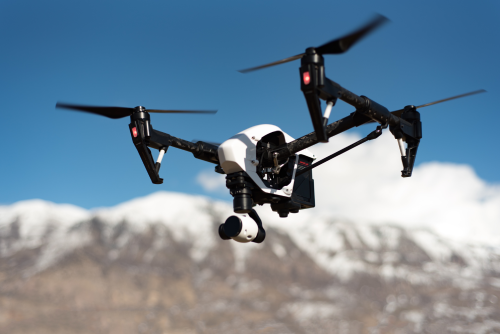
ACSL SOTEN is an active Japanese enterprise/security multirotor aimed at organizations that need a business-focused drone rather than a consumer camera platform. It matters because it sits in a niche where supply-chain origin, operational trust, and enterprise deployment can be just as important as headline flight specs. Based on the supplied manufacturer-backed record, SOTEN should be understood as a security-oriented platform, but many detailed public specifications still need to be verified before purchase.
In other words, this is not the kind of drone that wins attention primarily through flashy marketing around cinematic video, ultra-high-resolution stills, or hobbyist excitement. Its relevance comes from a different set of priorities: procurement suitability, institutional confidence, deployment discipline, and the ability to fit into organizations that care deeply about who made the aircraft, how it is supported, and whether it aligns with internal risk standards. That makes ACSL SOTEN a potentially important product even when its public-facing spec transparency appears more limited than that of better-known global competitors.
Quick Summary Box
- Drone Name: ACSL SOTEN
- Brand: ACSL
- Model: SOTEN
- Category: Enterprise/security multirotor
- Best For: Enterprise operators, security-conscious organizations, and buyers seeking a Japan-origin drone option
- Price Range: Not publicly confirmed in supplied data
- Launch Year: Not publicly confirmed in supplied data
- Availability: Not publicly confirmed in supplied data
- Current Status: Active
- Overall Rating: Not rated due to limited confirmed data
- Our Verdict: A potentially important secure enterprise drone for procurement-driven buyers, but too many public specs remain unconfirmed for a conventional score-based review
Introduction
The ACSL SOTEN is positioned as a Japanese enterprise/security drone from ACSL, with the supplied record identifying it as an active multirotor platform. For readers comparing enterprise drones, that immediately makes it relevant to public-sector teams, infrastructure operators, security programs, and corporate buyers who may care about country of origin and procurement suitability. The challenge is that the supplied public data confirms the platform’s role more clearly than its detailed hardware numbers, so this page is best used as a verified profile and buying checklist rather than a conventional spec-heavy review.
That distinction matters. In the consumer drone world, buyers often start with obvious comparisons: flight time, top speed, camera resolution, obstacle avoidance coverage, and retail price. In the enterprise segment, especially the security-sensitive end of it, the decision process can look very different. Organizations may begin with questions such as:
- Is the manufacturer acceptable under internal procurement policy?
- Can the aircraft operate within controlled or offline workflows?
- Is support available through approved regional channels?
- Does the platform fit data-governance expectations?
- Can it be documented, audited, serviced, and maintained predictably?
SOTEN enters that kind of conversation more naturally than it enters the hobbyist or creator market. That is why even incomplete public spec detail does not automatically make it irrelevant. It simply changes the way the product should be evaluated.
This article therefore takes a cautious approach. It does not fill gaps with assumptions or borrowed competitor claims. Instead, it explains what is confirmed, what appears strategically important, and what buyers should verify directly before making a purchase decision.
Overview
The enterprise drone market is crowded with platforms built for inspection, security, mapping, and public-safety work. Within that landscape, the ACSL SOTEN stands out less as a consumer-style spec monster and more as a security-oriented Japanese-made option that may appeal to organizations with stricter sourcing or governance requirements.
For some buyers, that point alone can move a product onto the shortlist. Over the past several years, drone procurement has increasingly become about more than aircraft performance. Institutional users now think about supplier concentration, domestic or allied manufacturing preferences, cybersecurity review, data residency expectations, and long-term support confidence. A drone may be technically capable, but still fail to fit the buyer’s operational or policy framework. SOTEN appears relevant precisely because it may answer those broader concerns for certain organizations.
What kind of drone is it?
SOTEN is a multirotor drone in the enterprise/security segment. That means it is best understood as a mission tool for professional operations rather than a recreational or creator-first aircraft.
A multirotor format generally brings familiar advantages for enterprise work:
- Vertical takeoff and landing without runway requirements
- Strong hovering capability for observation and inspection
- Controlled low-speed maneuvering around sites and assets
- Flexible deployment in confined or structured environments
- Operational simplicity compared with fixed-wing systems for short-area missions
Those qualities make multirotors especially useful for perimeter checks, facility monitoring, visual documentation, and site-specific tasks where precision positioning matters more than covering very large areas in a single flight. Even without the detailed numbers, SOTEN’s category tells us something important about intended use: it is likely meant to support professional workflows where predictable launch, hover, observe, document, and recover cycles matter.
Who should buy it?
It is most relevant to:
- Enterprise operators
- Security and site-monitoring teams
- Public-sector or regulated buyers
- Organizations that prefer or require a Japan-origin platform
- Procurement teams evaluating alternatives to more mainstream global brands
To expand that further, the best-fit buyer is probably not someone casually browsing for a drone online. It is more likely a team with a use case, a budget process, internal stakeholders, and a need for documentation. In many cases, the person researching SOTEN may be only one part of the decision chain. Operations managers, legal reviewers, IT or security teams, procurement officers, and finance departments may all influence the final purchase. Products in this class are often approved collectively, not individually.
That makes SOTEN especially interesting in environments where a drone is treated as an operational system rather than a gadget. If your organization has to justify aircraft selection in writing, compare supplier origin, or align procurement choices with institutional policy, SOTEN may deserve attention even before detailed benchmarking begins.
What makes it different?
What differentiates SOTEN, based on the supplied record, is its positioning as a Japanese secure enterprise drone. In practical terms, that matters when buyers are evaluating not just camera quality or flight time, but also sourcing, trust, and organizational fit. The trade-off is that the publicly confirmed spec sheet in the supplied data is limited, so buyers need a deeper pre-purchase validation process than they might with more consumer-facing models.
That difference is easy to underestimate. Many drone comparisons focus on what can be listed in a table. But procurement-driven buyers often care about factors that tables capture poorly:
- Whether a product comes from a preferred supply base
- Whether vendor risk is acceptable
- Whether support can be contracted in the region
- Whether internal security teams are comfortable with the software model
- Whether the platform can be integrated into regulated workflows
- Whether long-term parts access looks dependable
In that sense, SOTEN’s value proposition may be strategic more than spectacular. It may not win on public-facing visibility, but it can still be important because it offers an alternative path for organizations that need something other than the dominant enterprise ecosystems. That does not automatically make it better than those ecosystems, but it does make it meaningfully different.
Key Features
Based on the supplied record and the confirmed positioning of the aircraft, the ACSL SOTEN’s most important features are better understood in terms of deployment logic than headline numbers.
-
Enterprise/security market positioning
SOTEN is clearly framed as a professional-use aircraft rather than a leisure drone. That shapes expectations around support, workflows, and procurement. -
Japanese brand and manufacturer origin
For some organizations, country of origin is a major evaluation criterion. A Japan-origin platform may be attractive where supply-chain diversification or approved-supplier policy matters. -
Multirotor airframe for flexible takeoff, landing, and hovering
This is the right general format for site observation, close-range inspection, and controlled launches in operational environments. -
Active product status rather than legacy/discontinued status
Active status suggests current relevance and at least the possibility of ongoing support and lifecycle planning, which matters more in enterprise procurement than in hobby buying. -
Likely suited to controlled, professional workflows rather than casual flying
SOTEN appears aligned with organizational missions where process, repeatability, and traceability matter. -
Strong relevance for procurement processes where platform origin matters
This is one of the clearest strategic reasons to pay attention to the model, especially in public-sector or risk-sensitive contexts. -
Potential value as an alternative to mainstream enterprise ecosystems
Even when major global brands offer stronger public spec visibility, some buyers actively seek a second option for policy, sourcing, or strategic reasons. -
Publicly confirmed detailed specs such as endurance, range, payload, and speed are not included in the supplied data
This is not a feature in the positive sense, but it is a central reality of the buying process and should shape expectations. -
Security-focused positioning is confirmed at a high level, but specific data-protection or transmission details are not publicly confirmed in the supplied data
Buyers should treat this as an invitation to verify architecture, workflow, and governance details directly.
A fair reading of SOTEN is that its defining features may live as much in documentation, support structure, and deployment suitability as in the aircraft itself. That is common in enterprise technology and especially common in regulated equipment purchasing.
Full Specifications Table
| Field | Details |
|---|---|
| Brand | ACSL |
| Model | SOTEN |
| Drone Type | Multirotor |
| Country of Origin | Japan |
| Manufacturer | ACSL |
| Year Introduced | Not publicly confirmed in supplied data |
| Status | Active |
| Use Case | Enterprise/security |
| Weight | Not publicly confirmed in supplied data |
| Dimensions (folded/unfolded) | Not publicly confirmed in supplied data |
| Max Takeoff Weight | Not publicly confirmed in supplied data |
| Battery Type | Not publicly confirmed in supplied data |
| Battery Capacity | Not publicly confirmed in supplied data |
| Flight Time | Not publicly confirmed in supplied data |
| Charging Time | Not publicly confirmed in supplied data |
| Max Range | Not publicly confirmed in supplied data |
| Transmission System | Not publicly confirmed in supplied data |
| Top Speed | Not publicly confirmed in supplied data |
| Wind Resistance | Not publicly confirmed in supplied data |
| Navigation System | Not publicly confirmed in supplied data |
| Obstacle Avoidance | Not publicly confirmed in supplied data |
| Camera Resolution | Not publicly confirmed in supplied data |
| Video Resolution | Not publicly confirmed in supplied data |
| Frame Rates | Not publicly confirmed in supplied data |
| Sensor Size | Not publicly confirmed in supplied data |
| Gimbal | Not publicly confirmed in supplied data |
| Zoom | Not publicly confirmed in supplied data |
| Storage | Not publicly confirmed in supplied data |
| Controller Type | Not publicly confirmed in supplied data |
| App Support | Not publicly confirmed in supplied data |
| Autonomous Modes | Not publicly confirmed in supplied data |
| Payload Capacity | Not publicly confirmed in supplied data |
| Operating Temperature | Not publicly confirmed in supplied data |
| Water Resistance | Not publicly confirmed in supplied data |
| Noise Level | Not publicly confirmed in supplied data |
| Remote ID Support | Not publicly confirmed in supplied data |
| Geo-fencing | Not publicly confirmed in supplied data |
| Certifications | Not publicly confirmed in supplied data |
| MSRP / Launch Price | Not publicly confirmed in supplied data |
| Current Price | Not publicly confirmed in supplied data |
A missing public spec sheet does not necessarily mean the drone is underpowered or unsuitable. It simply means the buyer has to work harder. For SOTEN, that likely means requesting formal documentation, evaluating dealer material, reviewing training and support terms, and seeing the platform in a demo context instead of relying on retail-style public marketing.
For institutional buyers, that may not be unusual. Many enterprise systems are not sold the same way consumer products are sold. Still, the absence of broadly accessible public specifications does increase due diligence requirements and makes side-by-side benchmarking more difficult.
Design and Build Quality
Because the supplied record confirms only that SOTEN is an enterprise/security multirotor, the safest conclusion is that its design priorities are likely mission-readiness, stable hovering, and practical deployment rather than lifestyle portability or cinematic styling. Enterprise multirotors in this class are typically judged on how quickly they can be deployed, how easy they are to maintain in the field, and how dependable they feel during repetitive professional use.
That last point is especially important. An enterprise drone may fly shorter, more repetitive missions than a consumer drone, but it is often expected to do so on schedule, across shifts, under procedures, and with multiple trained operators. In that environment, build quality is not just about whether the body looks premium. It is about whether the system feels consistent and serviceable over time.
Practical design questions matter more than appearance:
- How quickly can the aircraft be unpacked and made flight-ready?
- Are batteries easy to swap without awkward delays?
- Can propellers be changed quickly in the field?
- Does the controller layout support gloved or professional use?
- Is the carrying solution appropriate for vehicle deployment?
- Are vulnerable parts easy to inspect during preflight checks?
What cannot be confirmed from the supplied data is just as important:
- Exact size and transport footprint are not publicly confirmed
- Foldability is not publicly confirmed
- Frame materials are not publicly confirmed
- Ruggedization or ingress protection is not publicly confirmed
- Landing gear design is not publicly confirmed
Those unknowns are not small details. In real enterprise operations, they shape how the aircraft fits daily work. A compact folding drone may suit security patrol teams that need rapid deployment from vehicles. A more rigid or larger platform might be better for controlled site-based operations where portability matters less than structural confidence. Without confirmed dimensions or design documentation, it is difficult to place SOTEN precisely on that spectrum.
For buyers, that means build-quality assessment should focus on official handling documents, service manuals, and dealer demonstrations rather than assumptions. If SOTEN is being considered for patrol, inspection, or regulated field work, verify propeller replacement procedure, battery swap time, transport case options, and repair turn-around before approval.
It is also wise to ask who the real-world operators are expected to be. A drone used by a specialized technical team can tolerate a more involved setup routine than a platform intended for broad organizational deployment. If SOTEN is being purchased for multiple departments or distributed teams, ease of handling becomes even more important than raw capability.
Flight Performance
No confirmed flight time, range, top speed, ceiling, or wind rating is provided in the supplied record, so SOTEN cannot be fairly benchmarked on pure numbers here. Still, some cautious analysis is possible.
As a multirotor in the enterprise/security segment, SOTEN is more likely to be tuned for:
- Stable hover behavior
- Controlled low-altitude mission work
- Predictable handling for professional operators
- Reliable takeoff and landing in structured operating areas
That usually makes a platform more valuable for site observation, inspection passes, and managed enterprise sorties than for long-distance cinematic flying. However, without confirmed figures for endurance, transmission system, wind resistance, or navigation stack, readers should not assume it matches the performance envelope of larger premium enterprise drones.
The most important performance question is not simply “how long does it fly?” It is “can it complete the specific mission reliably?” For example:
- A security patrol mission may need several short launches across a shift rather than one long sortie.
- An infrastructure inspection may need steady hover confidence near structures more than long range.
- A campus or facility operation may prioritize quick deployment, repeat routes, and dependable return procedures.
- A regulated organization may prefer conservative operating envelopes over maximum advertised performance.
In those contexts, a drone with moderate but dependable performance can outperform a more impressive paper spec that is harder to manage in routine use. That said, public buyers still need numbers. Battery planning, staffing, vehicle charging setup, and mission windows all depend on verified endurance and recharge assumptions.
Indoor suitability is also unclear. That depends heavily on sensors, positioning systems, and obstacle detection, none of which are publicly confirmed in the supplied data.
The same caution applies to wind performance and link robustness. Security and inspection teams often work in less-than-ideal conditions, where consistent control behavior matters more than absolute speed. A drone that is theoretically fast but uncomfortable in gusty conditions may be less useful than a slower, more stable one. Because SOTEN’s wind rating and transmission details are not publicly confirmed in the supplied record, field testing or direct documentation review should be part of the evaluation process.
Before purchase, performance validation should include:
- Realistic flight time with operational payload attached
- Battery turnaround and charger throughput
- Wind behavior during hover and slow inspection movement
- Control-link stability in the intended environment
- Return-to-home and failsafe logic
- Launch and recovery behavior from the actual deployment area
- Performance in expected seasonal temperatures
For enterprise buyers, those tests are often more valuable than generic “maximum” figures anyway.
Camera / Payload Performance
The supplied record does not publicly confirm SOTEN’s camera specifications, gimbal details, sensor size, zoom capability, or payload capacity. That limits any honest image-quality review.
From a market-position perspective, SOTEN appears more likely to be evaluated by enterprise teams on mission usefulness than on creator-focused image specs. In other words, buyers in this segment usually care more about whether the payload supports observation, documentation, and operational workflows than whether it produces social-media-ready footage.
That still leaves major questions. In enterprise operations, payload choice often defines the platform more than the airframe does. A drone may be suitable for one organization and completely unsuitable for another depending on what camera or sensor arrangement it supports.
Before purchase, buyers should verify:
- Whether the aircraft uses a fixed integrated camera or swappable payload system
- Still image and video resolution
- Low-light performance
- Zoom capability, if any
- Stabilization or gimbal arrangement
- Thermal or specialty sensor options, if any
- Data handling and storage workflow
If payload flexibility is central to your operation, that point needs direct confirmation from ACSL or an authorized enterprise reseller.
It is also worth clarifying how the payload serves the mission. A security team may value fast target awareness, clear situational video, and good performance in mixed lighting. An inspection team may care about distortion control, stable framing, and the ability to document assets consistently over time. A public-sector team may need footage and stills that can be archived in formal systems. A training department may simply need a dependable visual payload for familiarization flights.
These are not interchangeable requirements. A drone that is acceptable for general observation may still be weak for evidence-quality documentation or fine-detail inspection. Likewise, a payload that is technically impressive may be overkill for routine facility patrol use.
Another important but often overlooked issue is workflow after capture. Enterprise buyers should ask:
- How are files stored onboard?
- How are files transferred after flight?
- Can media be exported without mandatory cloud dependence?
- Are logs and imagery easily archived?
- Can operators separate mission media by user or project?
- Is chain-of-custody documentation possible if needed?
If SOTEN is being evaluated as a security-oriented platform, image quality is only one part of the equation. Traceability, reliability, and handling procedures matter too.
Smart Features and Software
The supplied data does not publicly confirm the SOTEN software feature set. That means key items such as waypoint missions, return-to-home behavior, AI tracking, mapping tools, SDK support, offline mission planning, cloud syncing, and fleet management should all be treated as unverified until confirmed by official documentation.
That said, for a security-oriented enterprise drone, software matters as much as hardware. In some procurement environments, it matters more. Buyers should pay particular attention to:
- Mission planning workflow
- Logging and flight record export
- User access controls
- Data transfer and storage behavior
- Firmware update process
- Remote operations policy, if supported
- Third-party integration support
- Any offline or closed-network operating options
A security-focused platform can be attractive even without headline consumer features, but only if its software and data-management model fit the operator’s internal requirements.
This is where enterprise evaluation becomes very different from consumer shopping. A hobbyist might accept a polished app with strong automated features and never think deeply about update policy or log handling. A professional organization may need answers to questions such as:
- Can the system be used in a restricted network environment?
- Does flight data leave the device automatically?
- Can updates be staged and approved centrally?
- Are there role-based permissions for operators and administrators?
- Can mission records be retained for auditing?
- Is there an SDK or integration pathway for internal tools?
- Can the aircraft be operated without unnecessary connectivity?
Those questions are central in security, industrial, and public-sector environments. A technically impressive aircraft can still fail evaluation if the software architecture is a poor fit.
Mission-planning capability is another major area to validate. If the drone is intended for repeatable inspections, perimeter patterns, or structured site surveys, the software must support repeatability. If the drone is intended for reactive security deployments, the operator interface must remain fast and clear under pressure. If the platform is intended for fleet use across multiple teams, administrative control becomes even more important.
Because none of those software details are publicly confirmed in the supplied record, SOTEN should be reviewed through demonstrations, documentation requests, and possibly pilot deployments rather than marketing assumptions.
Use Cases
Based on its confirmed segment and positioning, the most realistic use cases for ACSL SOTEN are professional and security-oriented missions.
-
Site security observation
Facilities that want occasional or scheduled aerial overwatch may find a multirotor useful for visual confirmation and rapid area checks. -
Facility perimeter monitoring
Hovering ability and controlled low-speed movement are especially helpful for perimeter review, fence-line inspection, and incident response visibility. -
Infrastructure visual checks
Even without confirmed specialty payload details, a multirotor enterprise platform can be relevant for general asset observation and visual documentation. -
Industrial documentation flights
Plants, yards, warehouses, and campuses often need recurring aerial records for operational oversight, project updates, or internal reporting. -
Corporate or campus aerial oversight
Large private sites may benefit from a drone that fits institutional governance more naturally than a consumer model. -
Public-sector evaluation programs
Agencies or departments exploring procurement alternatives may consider SOTEN as part of a broader capability and sourcing review. -
Enterprise training and familiarization
Organizations developing internal drone programs sometimes need a platform that aligns with policy expectations from the beginning. -
Supply-chain-sensitive drone procurement programs
This may be one of SOTEN’s strongest strategic roles: serving buyers whose decision criteria extend beyond flight performance.
Because the payload and performance details are not publicly confirmed in the supplied data, specialized roles such as thermal response, advanced mapping, or precision inspection should be validated before deployment planning.
That caution is important. It is easy to overextend the likely use cases of an enterprise drone based on general category alone. For example, a platform suitable for visual patrol is not automatically suitable for corridor mapping. A drone acceptable for site awareness is not automatically appropriate for emergency response support. And a drone positioned as secure is not automatically compliant with every internal security policy. Each use case needs its own validation.
A helpful way to think about SOTEN is as a candidate platform for organizations that need enterprise aerial capability and care about procurement context. It may support more specialized missions, but those should be confirmed directly rather than inferred.
Pros and Cons
Pros
- Japanese-made platform, which may be important for sourcing and procurement policy
- Clearly positioned for enterprise/security use rather than casual consumer flying
- Active status suggests current relevance instead of legacy-only interest
- Multirotor format is generally practical for hovering, controlled landings, and structured field operations
- Brand and manufacturer are the same, simplifying product identity
- Potentially appealing for buyers seeking alternatives to dominant mainstream enterprise ecosystems
These strengths make SOTEN strategically interesting even without a consumer-style marketing profile. For the right buyer, origin and operational fit may matter more than broad public awareness.
Cons
- Many core specifications are not publicly confirmed in the supplied data
- Price is not publicly confirmed, making budget planning difficult
- Camera and payload details are not publicly confirmed
- Software and autonomy capabilities are not publicly confirmed
- Service coverage and regional availability need verification
- Hard to compare fairly against better-documented enterprise competitors
These drawbacks do not necessarily disqualify the drone, but they do increase the effort required to evaluate it properly. SOTEN is not a platform that can be responsibly purchased on assumptions alone.
Comparison With Other Models
The table below is intentionally conservative. Because SOTEN’s detailed public specifications are limited in the supplied data, this comparison focuses on buying context rather than pretending to offer a precision benchmark.
| Model | Price | Flight Time | Camera or Payload | Range | Weight | Best For | Winner |
|---|---|---|---|---|---|---|---|
| ACSL SOTEN | Not publicly confirmed in supplied data | Not publicly confirmed in supplied data | Not publicly confirmed in supplied data | Not publicly confirmed in supplied data | Not publicly confirmed in supplied data | Buyers prioritizing a Japanese enterprise/security platform | Supply-chain- and procurement-driven buyers |
| Parrot ANAFI USA | Enterprise pricing; verify current quote | Publicly listed by seller; verify current figure | Integrated enterprise imaging package | Publicly listed by seller; verify current figure | Portable enterprise class | Compact public-safety and inspection work | Better public spec transparency |
| DJI Matrice 30T | Premium enterprise pricing; verify current quote | Publicly listed by seller; verify current figure | Integrated multi-sensor enterprise payload | Publicly listed by seller; verify current figure | Mid-size enterprise class | Multi-sensor industrial and response operations | Ecosystem and sensor depth |
| DJI Mavic 2 Enterprise Advanced | Legacy/older enterprise pricing varies by seller | Publicly listed by seller; verify current figure | Integrated enterprise imaging payload | Publicly listed by seller; verify current figure | Portable older-generation enterprise class | Buyers considering a used or older compact enterprise drone | Used-market value and familiarity |
This table should be read as a buying-orientation guide, not as a technical shootout. The reason is simple: SOTEN’s place in the market appears to be shaped by procurement logic as much as by flight specifications.
SOTEN vs a close competitor
Against Parrot ANAFI USA, the main reason to consider SOTEN is not raw consumer-style spec bragging but procurement fit. If your organization values a Japan-origin enterprise platform, SOTEN can become strategically interesting. If you want a compact enterprise drone with broader published documentation and easier public benchmarking, Parrot is usually easier to compare on paper.
Parrot also benefits from a clearer public profile in many markets. That makes pre-purchase research faster, which can reduce internal friction during approval. By contrast, SOTEN may require more direct vendor engagement. That can be acceptable in formal procurement environments, but it is less convenient for buyers hoping to complete preliminary comparison work independently.
So the real choice here may be less about “which drone is better?” and more about “which vendor and platform model fit the organization’s approval process?” If documentation access, public transparency, and compact deployment are top priorities, Parrot may be easier to move through internal review. If country of origin and security-oriented sourcing logic matter more, SOTEN may deserve the extra validation effort.
SOTEN vs an alternative in the same segment
Against DJI Matrice 30T, SOTEN appears to serve a different buyer logic. DJI’s stronger public ecosystem, well-known accessory environment, and clearer published package structure can make procurement simpler for payload-heavy operations. SOTEN may be more attractive when platform origin, trusted sourcing, or security positioning carry extra weight.
This is a classic example of two products solving different versions of the same problem. The Matrice line is often attractive because of ecosystem depth: accessories, batteries, training familiarity, user communities, and broad third-party awareness. That can reduce operational ramp-up time. It can also simplify replacement planning because the ecosystem is widely understood.
SOTEN’s possible advantage is not likely to be ecosystem scale. It is more likely to be strategic fit for organizations that either prefer a different supplier profile or need alternatives to heavily concentrated mainstream vendor options. In some sectors, that distinction is decisive. In others, it may not matter at all.
SOTEN vs an older or previous-generation option
Compared with an older compact enterprise option like DJI Mavic 2 Enterprise Advanced, SOTEN benefits from being an active product in the supplied record. The older DJI model may still matter on the used market, but long-term support, batteries, and replacement planning become more important concerns there. SOTEN’s challenge is that buyers still need more confirmed public detail before it can be judged as the better long-term value.
This is an important comparison because many organizations are tempted by older enterprise drones that remain capable and cheaper on the secondary market. That can make sense for training, light-duty work, or transitional programs. But it can also create hidden lifecycle problems:
- Harder-to-source batteries
- Reduced warranty certainty
- Older controller and app environments
- Less predictable long-term support
- Potentially weaker future compliance alignment
An active platform like SOTEN may look more attractive when viewed through total lifecycle planning rather than initial purchase price alone. Still, that advantage only matters if support, parts access, and official documentation are solidly in place.
Manufacturer Details
ACSL is the manufacturer and the brand for SOTEN, so there is no brand-manufacturer split to untangle here. The company is based in Japan and is known for developing professional drone systems rather than mainstream hobby aircraft.
In market terms, ACSL is most relevant to readers looking at:
- Industrial drone programs
- Security-oriented unmanned systems
- Enterprise procurement alternatives
- Japan-origin drone platforms
Its reputation is tied more to professional and strategic positioning than to mass consumer popularity. That makes ACSL especially relevant for institutional buyers, researchers, and regulated users who care about supplier identity as much as aircraft performance.
That brand-manufacturer alignment can be helpful in procurement. When the company marketing the drone is also the company developing it, the support and accountability chain may be easier to understand. Buyers still need to confirm how regional support is delivered, but at least the product identity is straightforward.
For some organizations, ACSL’s biggest appeal may simply be that it broadens the shortlist. Enterprise buyers often prefer not to rely on a single familiar vendor category if viable alternatives exist. Even being a credible alternative can make a manufacturer strategically important.
Support and Service Providers
For an enterprise/security drone like SOTEN, support quality can matter more than the spec sheet. The supplied data does not publicly confirm the exact service network, warranty structure, repair centers, or spare-parts model, so buyers should verify these directly before committing.
Key points to confirm:
- Official support channels from ACSL
- Regional service coverage
- Repair turnaround expectations
- Battery and propeller availability
- Payload servicing, if applicable
- Training or onboarding options
- Firmware and lifecycle support policy
- Spare parts stocking in your country or region
If you are buying for a team rather than an individual operator, ask whether support is handled directly by ACSL, by a distributor, or by a systems integrator.
This distinction matters because service quality can vary greatly depending on channel structure. A direct manufacturer relationship may provide clarity but not always local speed. A distributor may offer better regional access but less technical depth. A systems integrator may provide excellent deployment support if the drone is part of a larger solution, but that can also change pricing and support scope.
For enterprise buyers, support questions should include:
- Is there an SLA or defined service response target?
- Are loaner units available during repair?
- Can batteries and consumables be purchased in volume?
- Is operator training standardized?
- Are firmware changes documented in a change-management friendly way?
- What is the expected product support lifecycle?
A drone used in professional operations should not be judged only by how it flies when new. It should also be judged by how well it can be kept in service.
Where to Buy
SOTEN does not appear, from the supplied record, to be a straightforward consumer-retail drone purchase. It is better understood as an enterprise-led procurement item.
Most likely buying paths include:
- Official ACSL sales inquiry channels
- Authorized enterprise drone dealers
- Regional distributors
- Systems integrators serving security or industrial clients
- Government or institutional procurement frameworks, where applicable
Before buying, verify regional availability, import status, training requirements, and post-sale support coverage. If your organization has sourcing rules tied to approved vendors or domestic-origin products, SOTEN may need to be handled through formal procurement rather than normal retail checkout.
It may also be wise to request:
- A formal quote
- A demo or live evaluation
- Documentation on support and warranty
- Software architecture information
- A list of included components
- A spare-parts and battery availability statement
- A roadmap or lifecycle support indication, if available
In enterprise purchasing, “where to buy” is often inseparable from “how it will be supported after purchase.” The channel is part of the product.
Price and Cost Breakdown
No launch price or current price is publicly confirmed in the supplied data, so buyers should not build a budget around guesswork. That said, enterprise drone cost is usually broader than the aircraft alone.
Ask for clarity on:
- Aircraft base price
- Controller package
- Batteries and charging equipment
- Spare propellers and maintenance parts
- Payload or camera options
- Software or platform subscription costs
- Training and onboarding fees
- Repair and replacement terms
- Shipping, import, and tax implications
- Insurance and compliance costs
For an enterprise/security platform, the total ownership cost can be driven as much by service terms and workflow requirements as by the drone itself.
This is one of the biggest mistakes organizations make when budgeting for drones. They compare aircraft prices but ignore the surrounding costs that determine whether the system is actually usable. A lower quoted airframe cost can become less attractive if batteries are expensive, software is licensed separately, regional service is limited, or training is mandatory but not included.
A more realistic enterprise budget model should include:
-
Initial acquisition cost
Aircraft, controller, chargers, storage/case, and minimum spare items. -
Operational readiness cost
Extra batteries, replacement propellers, labeling, documentation, and pilot training. -
Support cost
Warranty extensions, repair programs, service agreements, and downtime planning. -
Compliance cost
Registration, operator certification, insurance, and policy implementation. -
Workflow cost
Any data-handling tools, subscriptions, storage systems, or integration effort. -
Lifecycle replacement cost
Battery renewal, future parts, and long-term availability risk.
For SOTEN, where public pricing is not confirmed in the supplied record, a formal quote should ideally be accompanied by a complete bill of materials and a support-cost explanation. That will make it much easier to compare against better-documented competitors.
Regulations and Compliance
Regulatory fit should be verified locally, not assumed globally. Since SOTEN is an enterprise/security multirotor, buyers should consider both standard drone rules and mission-specific governance.
Check the following before deployment:
- Aircraft registration requirements in your country
- Operator certification or commercial licensing requirements
- Weight-class rules, once the actual mass is confirmed
- Remote ID obligations in your operating region
- Airspace restrictions near cities, critical infrastructure, or sensitive facilities
- Privacy law and data-capture rules for security operations
- Internal corporate or public-sector procurement compliance
- Any site-specific permissions needed for industrial facilities
Because the supplied record does not publicly confirm Remote ID support, certifications, or geo-fencing, those items must be verified directly. Never assume that enterprise branding automatically means universal compliance.
Security-oriented use cases can introduce additional obligations beyond standard flight law. For example:
- Capturing footage over employees, visitors, or contractors may raise privacy and workplace-governance issues.
- Operating near sensitive infrastructure may require internal approvals even if external aviation rules permit flight.
- Public-sector use may trigger records retention or audit requirements.
- Security teams may need clear policy on when aerial monitoring is authorized and how footage is stored.
That means SOTEN should be reviewed not only by flight operations personnel but also by compliance, legal, security, and sometimes IT stakeholders.
Another important point is that country-of-origin preference does not replace operational compliance. A drone can be favorable from a sourcing perspective and still require careful work on registration, pilot competency, data management, and site procedures. Institutional buyers should treat compliance as a parallel workstream, not an afterthought.
Who Should Buy This Drone?
Best for
- Enterprise teams evaluating non-consumer drone options
- Security-conscious buyers who care about platform origin
- Public-sector or regulated organizations with procurement constraints
- Industrial users who value a Japan-origin supplier
- Buyers willing to request full technical and commercial documentation before purchase
These buyers are usually comfortable with a more formal evaluation path. They do not need everything to be visible on a retail product page as long as the vendor can provide proper documentation, support clarity, and procurement confidence.
Not ideal for
- Casual hobbyists
- Buyers who want a fully transparent public spec sheet before making first contact
- Creators shopping mainly for photo and video quality
- Budget-focused users looking for clear retail pricing
- Teams that need confirmed payload, autonomy, or sensor details immediately
For these users, the friction is likely to be too high. There are simply too many unknowns in the supplied public data to make SOTEN an easy recommendation for a casual or purely price-driven purchase path.
A useful way to decide is to ask whether your organization is buying a drone as a tool or as a product. If you are buying a tool that will sit inside a managed workflow, SOTEN may be worth formal investigation. If you are buying a product you want to compare instantly on public specifications, it is a more difficult fit.
Final Verdict
The ACSL SOTEN is most compelling as a strategic enterprise/security drone, not as a headline-spec consumer product. Its biggest strengths are its Japanese origin, active product status, and relevance to buyers who care about sourcing, trust, and enterprise deployment context. Its biggest drawback is the lack of publicly confirmed detail in the supplied data on core buying questions such as price, endurance, range, payload, and software capability.
That means SOTEN should not be judged by the same standards people use for off-the-shelf consumer drones. It belongs in a different buying conversation. For organizations that need a Japan-origin enterprise platform, want alternatives to dominant global brands, or must account for supply-chain and governance concerns, SOTEN may be much more interesting than its sparse public spec visibility initially suggests.
At the same time, this is not a drone to buy on brand impression alone. The missing details are too important. Serious buyers should consider SOTEN if procurement policy, security posture, or domestic-origin preference matters more than mainstream brand familiarity. But this is not a drone to buy on assumptions. Treat it as a shortlist candidate that requires a formal quote, full technical documentation, payload clarification, and support verification before any final decision.
In practical terms, the right next step is not to rank SOTEN against consumer favorites. It is to request documentation, review deployment needs, and test whether the platform fits your organization’s operational and compliance model. If it does, ACSL SOTEN could be a meaningful enterprise option. If it does not, the reason will likely be workflow fit and documentation confidence rather than raw drone capability alone.
