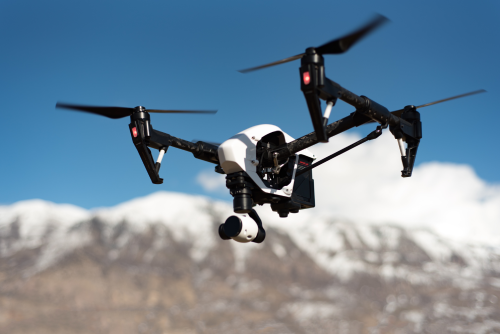
Sony Airpeak S1 is a professional imaging multirotor from Sony, aimed at cinema crews, commercial creators, and serious aerial production teams rather than casual hobby users. It matters because Sony is one of the most influential names in cameras and imaging, so any drone it builds immediately attracts attention from filmmakers, technical buyers, and production companies that already rely on Sony tools on the ground. Based on the supplied data, Airpeak S1 is an active model in the professional cinema segment, but several purchase-critical specifications still need direct verification through current official product materials.
Quick Summary Box
- Drone Name: Sony Airpeak S1
- Brand: Sony
- Model: Airpeak S1
- Category: Professional cinema multirotor
- Best For: Professional imaging teams, film crews, and Sony-focused aerial content workflows
- Price Range: Not publicly confirmed in supplied data
- Launch Year: 2021
- Availability: Not publicly confirmed in supplied data
- Current Status: Active
- Overall Rating: Not rated due to limited confirmed data
- Our Verdict: A niche, camera-first professional drone that is most relevant to Sony-centric production teams, but buyers should verify payload compatibility, software features, support, and total ownership cost before committing.
Introduction
The Sony Airpeak S1 is an active professional cinema drone from Sony, a Japan-based manufacturer best known for imaging hardware, sensors, and cameras. Publicly introduced in 2021, it sits in a specialized part of the drone market where image quality, camera flexibility, and production workflow matter more than casual convenience. Readers should care about it because Airpeak S1 represents Sony’s attempt to bring its imaging credibility into aerial production, potentially giving film and commercial teams another serious option beyond the usual drone brands.
That alone makes it notable. Most drone companies either begin with aircraft engineering and then add camera capability, or they focus on consumer convenience before moving upmarket. Sony comes from the opposite direction. It enters the conversation with deep expertise in sensors, professional video tools, color science, and camera ecosystems. For filmmakers, that creates immediate interest because aerial platforms are often judged by whether they fit the rest of the production pipeline, not just whether they fly well.
Airpeak S1 therefore belongs to a category where buyers think differently. They are not asking, “Can this get me a fun overhead shot on a weekend trip?” They are asking, “Can this aircraft become a dependable part of paid production?” They care about lens matching, gimbal behavior, service support, battery turnaround, flight repeatability, on-set reliability, and how easily the aerial footage can intercut with ground cameras. In that context, the Sony name carries real weight.
At the same time, professional buyers tend to be skeptical for good reason. A respected camera brand does not automatically make an aircraft platform the right choice. In the cinema drone market, purchase decisions are shaped by operational details: supported payloads, flight endurance with real camera weight, software maturity, maintenance access, legal compliance, training needs, and regional support. Because the supplied data does not confirm all of those practical points, the Airpeak S1 should be approached as an intriguing but carefully evaluated professional tool.
Overview
What kind of drone is it?
Airpeak S1 is a multirotor drone positioned for professional cinema and imaging work. That means it should be viewed as a production platform first, not as a recreational or beginner-friendly aircraft. Its purpose is tied to aerial image capture and controlled professional workflows.
In practical terms, a drone in this category is usually expected to do a few things very well:
- Hold position reliably for composed shots
- Deliver smooth, predictable movement
- Support a serious camera workflow
- Fit into crew-based operations
- Prioritize shot quality over consumer-friendly simplicity
That matters because professional imaging drones are not bought the same way creator drones are bought. A compact all-in-one drone may be judged on convenience, portability, and ease of use. A cinema multirotor is judged on whether it can become part of a repeatable production system. Airpeak S1 should therefore be evaluated more like a piece of aerial camera infrastructure than like a gadget.
Who should buy it?
The most likely buyers are:
- Professional filmmakers
- Commercial production companies
- Owner-operators serving advertising and branded content clients
- Enterprise creators who need high-end camera results
- Researchers or journalists comparing the evolution of pro aerial imaging platforms
It may also appeal to:
- Rental houses evaluating specialized cinema tools
- Directors of photography exploring aerial solutions that better match Sony ground cameras
- Agencies with recurring premium video work
- Technical production teams building a Sony-centered equipment stack
The key point is that Airpeak S1 is not primarily a mass-market product. It is most relevant to buyers who already understand aviation risk, professional camera workflows, and the economics of high-end production. If a team already has established preflight procedures, location permitting habits, and a need for premium aerial footage, then the Airpeak S1 makes far more sense than it would for a casual flyer.
What makes it different?
What makes Airpeak S1 stand out is Sony’s involvement. Sony is not just a drone brand trying to add a camera; it is an imaging giant entering the drone market. That makes the Airpeak S1 especially interesting for buyers who already trust Sony’s camera ecosystem and want a drone platform aligned with professional imaging priorities. Compared with many integrated-camera drones, its market identity is more cinema-oriented and system-driven.
This difference is important because professional camera teams often care about consistency across the entire production. They may want similar color characteristics between aerial and ground footage. They may want familiar menu logic, matching recording approaches, or hardware from a manufacturer they already use elsewhere in the shoot. If Airpeak S1 supports that kind of alignment in practice, it becomes more than just another drone. It becomes a workflow choice.
Its differentiation is also strategic. Sony is effectively saying that aerial imaging should not always be treated as a separate world from professional cinematography. Instead, the drone can be seen as another camera platform in the production environment. That idea gives the Airpeak S1 a distinct identity even before a buyer compares individual specs.
Key Features
- Professional imaging focus rather than hobby or toy positioning
- Active Sony-branded multirotor platform in the professional cinema segment
- Backed by a manufacturer with strong imaging and sensor expertise
- Designed for aerial production use cases where camera results matter most
- Likely best suited to dedicated crew operation and planned shoots, not casual flying
- Strong appeal for buyers comparing drone platforms through the lens of camera ecosystem fit
- Exact endurance, range, top speed, payload capacity, obstacle sensing, and autonomous feature set should be verified through current official documentation
Those high-level traits tell you what kind of product this is even before the fine print is confirmed. Airpeak S1 is fundamentally about professional image-making. It is the sort of platform that enters the discussion when a production team asks how to raise aerial quality or better align drone work with a broader cinema package. That does not automatically make it the best option for every buyer, but it does make its intended audience very clear.
Another practical takeaway from these features is that Airpeak S1 is likely best judged in the field, not just on a specification sheet. Professional drone users will want to know how quickly the aircraft can be prepared between takes, how it behaves under real payload conditions, how stable the image remains during complex movement, and how dependable the control and camera systems feel on working sets. Those experiential factors often matter more than headline numbers.
Full Specifications Table
| Specification | Details |
|---|---|
| Brand | Sony |
| Model | Airpeak S1 |
| Drone Type | Multirotor |
| Country of Origin | Japan |
| Manufacturer | Sony |
| Year Introduced | 2021 |
| Status | Active |
| Use Case | Professional cinema / professional imaging |
| Weight | Not publicly confirmed in supplied data |
| Dimensions (folded/unfolded) | Not publicly confirmed in supplied data |
| Max Takeoff Weight | Not publicly confirmed in supplied data |
| Battery Type | Not publicly confirmed in supplied data |
| Battery Capacity | Not publicly confirmed in supplied data |
| Flight Time | Not publicly confirmed in supplied data |
| Charging Time | Not publicly confirmed in supplied data |
| Max Range | Not publicly confirmed in supplied data |
| Transmission System | Not publicly confirmed in supplied data |
| Top Speed | Not publicly confirmed in supplied data |
| Wind Resistance | Not publicly confirmed in supplied data |
| Navigation System | Not publicly confirmed in supplied data |
| Obstacle Avoidance | Not publicly confirmed in supplied data |
| Camera Resolution | Not publicly confirmed in supplied data |
| Video Resolution | Not publicly confirmed in supplied data |
| Frame Rates | Not publicly confirmed in supplied data |
| Sensor Size | Not publicly confirmed in supplied data |
| Gimbal | Not publicly confirmed in supplied data |
| Zoom | Not publicly confirmed in supplied data |
| Storage | Not publicly confirmed in supplied data |
| Controller Type | Not publicly confirmed in supplied data |
| App Support | Not publicly confirmed in supplied data |
| Autonomous Modes | Not publicly confirmed in supplied data |
| Payload Capacity | Not publicly confirmed in supplied data |
| Operating Temperature | Not publicly confirmed in supplied data |
| Water Resistance | Not publicly confirmed in supplied data |
| Noise Level | Not publicly confirmed in supplied data |
| Remote ID Support | Not publicly confirmed in supplied data |
| Geo-fencing | Not publicly confirmed in supplied data |
| Certifications | Not publicly confirmed in supplied data |
| MSRP / Launch Price | Not publicly confirmed in supplied data |
| Current Price | Not publicly confirmed in supplied data |
Because so many fine details remain unconfirmed in the supplied data, this table should be treated as a framework for due diligence rather than a completed specification sheet. For a professional buyer, that is not a minor issue. Missing specifications affect insurance, legal classification, operational planning, crew staffing, and total budget. Before procurement, decision-makers should compare current official Sony materials, dealer listings, support documentation, and any regional regulatory disclosures.
Design and Build Quality
The supplied data does not confirm materials, folded size, rotor span, or weight, so any design judgment has to stay conservative. Even so, the basic format tells us a lot: Airpeak S1 is a professional multirotor built for imaging, which usually means the airframe is expected to prioritize stability, camera clearance, vibration control, and repeatable handling over pure travel convenience.
In this class, buyers should pay attention to:
- How easily propellers, batteries, and landing components can be replaced
- Whether the frame packs down efficiently for transport
- How much clearance the airframe gives to the camera system
- How robust the platform is for repeated field deployment
As analysis rather than confirmed specification, a cinema-oriented multirotor typically needs a rigid, confidence-inspiring structure because even small vibrations or flex can affect shot quality. For professional users, build quality is not just about durability; it is also about serviceability and how quickly the aircraft can be turned around between takes.
That serviceability point is easy to underestimate. On a film set, time is expensive. If a battery swap is awkward, if the propellers are cumbersome to remove, or if the payload mount requires lengthy rebalancing every time the setup changes, that affects the shooting day in real terms. Professional crews value hardware that feels predictable and maintainable under pressure. They also care about whether components appear purpose-built for repeated handling rather than occasional use.
Transport is another part of build quality. A specialized cinema drone may live in cases, vans, grip trucks, or travel shipments. Buyers should consider how the aircraft fits into real production movement:
- Does it require a large footprint on location?
- Can it be assembled quickly at call time?
- Are batteries and chargers easy to organize?
- Is there enough physical clearance to operate safely in tighter production environments?
Even without confirmed dimensions, these are the right questions because they reflect how professional drones are actually used. A strong airframe is only valuable if it can survive repeated deployment and still maintain shot reliability.
One more consideration is visual confidence. Clients, crews, and insurers tend to care whether the aircraft looks and feels like a serious professional tool. That may sound superficial, but perception matters in commercial work. A well-designed professional platform contributes to operational trust, especially when working around talent, locations, and expensive schedules.
Flight Performance
Because the supplied record does not confirm endurance, range, speed, or ceiling figures, Airpeak S1 cannot be fairly ranked by raw performance numbers here. That matters, because in the professional cinema category, battery life and real-world time on station are major cost and planning factors.
What can be said responsibly is this:
- A multirotor layout is generally well suited to hover stability and precise low-speed positioning
- Cinema drones are usually valued for smooth control response more than aggressive sport performance
- Real flight character depends heavily on the mounted camera load, weather, and battery setup
- Buyers should verify actual endurance with their intended payload, not just aircraft-only claims
As analysis, Airpeak S1 is likely most at home in controlled outdoor production environments where shot repeatability matters. It is probably less about long-distance flying and more about confidence during deliberate camera movement. Indoor operation, if attempted at all, should be limited to skilled crews in controlled settings with full safety planning.
For professional users, flight performance is not just about how fast the drone can go. It is about whether the aircraft can deliver a shot cleanly and repeatedly. Key performance questions include:
- Does it hold line and altitude smoothly during slow cinematic passes?
- How well does it resist small gusts while maintaining framing?
- Does it recover cleanly after directional changes?
- How predictable is braking behavior?
- Can a pilot and camera operator reliably repeat movement across multiple takes?
These questions matter because aerial cinematography often depends on precision rather than speed. A dramatic reveal, a slow push over terrain, or a controlled orbit around talent can be ruined by twitchiness, drift, or inconsistent acceleration. A drone that is technically powerful but difficult to smooth out may be less useful than a slower aircraft with excellent control tuning.
Another real-world issue is payload impact. A drone may behave very differently with a production camera attached than it does in a bare-airframe demo. Heavier payloads can reduce endurance, alter handling, and increase sensitivity to weather. That is why professional buyers should ask for performance data tied to the actual camera configuration they plan to use, not just headline numbers from a lighter setup.
Battery strategy is also part of performance. Short flights are not automatically a deal-breaker in cinema work if turnaround is efficient and crews plan accordingly. But limited endurance does affect staffing, charging logistics, and how often a location must pause for swaps. On a demanding shoot day, that can influence whether the system feels production-friendly or operationally restrictive.
Camera / Payload Performance
This is the section where Airpeak S1 is most interesting. Sony’s involvement makes the drone important primarily as an aerial imaging platform, not just as a flying machine. In practical terms, that means buyers should think about Airpeak S1 in relation to camera workflow, lens flexibility, stabilization, and final image quality.
The supplied data does not confirm payload capacity, supported cameras, gimbal options, or exact video specifications. That said, Airpeak S1’s professional imaging identity strongly suggests that camera choice is central to its value. If a drone supports externally mounted or interchangeable camera systems, that can offer meaningful advantages over fixed-camera aircraft:
- Greater control over image character
- Potentially better lens options
- Better fit with established production pipelines
- More flexibility for matching ground cameras on a shoot
The tradeoff is complexity. A camera-led drone system often means more setup time, more balancing considerations, more weight sensitivity, and higher total system cost. If your workflow depends on a specific Sony camera body, lens, or stabilization package, treat compatibility as something to verify directly rather than assume.
This is where the Airpeak S1 becomes especially relevant to professional crews. In many productions, the aerial unit is no longer expected to deliver merely “good drone footage.” It is expected to capture footage that cuts seamlessly into a premium edit. That means the aerial camera may need to match the project’s broader visual language in terms of color, dynamic range, lens behavior, and motion rendering. A system associated with Sony naturally raises the question of whether it can support stronger continuity with Sony-based ground cameras.
Buyers should also think beyond the camera body itself. Payload performance in real cinema use includes all of the following:
- Lens compatibility and weight limitations
- Balance requirements on the gimbal
- Filter use for shutter control in bright conditions
- Vibration isolation during high-frequency motor activity
- Camera control from the remote interface
- Monitoring quality for the camera operator
- File handling after flight
- Metadata and media workflow during production
If any one of those pieces is weak, the overall aerial workflow becomes less attractive. For example, excellent image quality means less if lens options are too restricted for the shots you need, or if remote camera settings are cumbersome to access mid-shoot.
There is also a strategic difference between integrated-camera drones and payload-driven platforms. Integrated systems often offer greater simplicity: camera, gimbal, transmission, and controls are all designed as one package. Payload systems can offer more creative flexibility, but they ask more from the crew. Airpeak S1 is interesting largely because it appears to lean toward the latter, more cinema-driven philosophy. That will appeal to some production teams and discourage others.
The most sensible buyer questions here are practical ones:
- Which cameras are officially supported?
- Which lenses are approved or recommended?
- Are there payload restrictions for weather, speed, or maneuver type?
- How much setup time is required when changing camera configurations?
- Can focus, exposure, and recording be controlled efficiently in flight?
- How well does the gimbal maintain horizon and shot stability under movement?
For teams that already live inside Sony’s camera ecosystem, these questions are more than technical details. They determine whether Airpeak S1 can serve as a true aerial extension of the rest of the production package.
Smart Features and Software
The supplied data does not confirm the Airpeak S1 software stack, app support, autonomous modes, AI features, SDK access, or cloud tools. That means software should be a major due-diligence checkpoint for any serious buyer.
For a professional cinema drone, the most important software questions usually include:
- How firmware updates are managed
- Whether return-to-home behavior is configurable
- Whether waypoint or repeatable route features are available
- How aircraft, gimbal, and camera controls are coordinated
- Whether flight logs and maintenance records are easy to access
- Whether geofence behavior or airspace prompts are built in
- Whether there is any support for dual-operator workflows
For many production teams, software maturity is just as important as airframe quality. A professional drone can look excellent on paper but still be a poor fit if setup, camera control, or operational consistency are weak. Airpeak S1 should therefore be evaluated as a workflow tool, not only as hardware.
This is particularly important in professional aerial work because software determines the difference between a technically possible shot and an operationally efficient shot. A flight platform may be physically capable of carrying the right camera, but if the interface is slow, the camera controls are buried, or the crew cannot save repeatable moves, the production value drops.
Professional operators should pay special attention to these workflow areas:
- Dual-operator coordination: Can one person focus on flight while another manages the camera cleanly?
- Shot repeatability: Are path planning and route repetition strong enough for multiple takes?
- Monitoring: Is the video feed reliable and useful enough for critical framing decisions?
- Logging: Are flight records detailed enough for compliance, maintenance, and incident review?
- System visibility: Does the interface clearly communicate battery state, sensor status, and warnings under pressure?
A software ecosystem can also influence the drone’s lifespan. Some professional buyers need confidence that firmware support, documentation, and integration pathways will remain available for years, not just months. That matters more in cinema than in consumer flying because pro buyers often amortize tools across multiple jobs and expect dependable support over time.
In short, Airpeak S1’s software environment should be treated as one of the main buying criteria, not a secondary consideration. For many crews, the best drone is the one that removes friction from the day.
Use Cases
The most realistic use cases for Airpeak S1 are centered on premium aerial image capture and professional production planning.
-
Film and television aerial shots
For scripted productions, controlled movement, image quality, and consistent repeatability matter more than travel-friendly convenience. -
Commercial advertising production
Brand work often demands polished visuals, deliberate camera language, and footage that can integrate with high-end edits. -
Branded content for high-end clients
Agencies and commercial studios may value an aerial platform that feels more cinema-oriented than creator-oriented. -
Location scouting and previsualization
Even when the final shoot uses other aircraft or cameras, a serious aerial system can support planning and creative blocking. -
Professional real estate and destination video at the top end of the market
Premium property, hospitality, or tourism work may justify a more advanced aerial setup when visual quality is central to the pitch. -
Music video and studio-led outdoor production work
Stylized work often benefits from stronger image control and coordinated camera movement. -
Sony-focused production environments that want tighter ecosystem alignment
Teams already invested in Sony may find Airpeak S1 particularly relevant if aerial footage needs to sit comfortably beside Sony-shot material. -
Technical evaluation by researchers or media comparing cinema drone platforms
Because Sony is a major imaging brand, Airpeak S1 is also interesting from an industry-analysis perspective.
The common thread across these use cases is that they are planned, budgeted, and quality-sensitive. This is not the ideal type of platform for quick personal travel shots or lightweight casual content creation. It makes more sense when a team has a defined creative objective and the resources to support a professional aerial workflow.
Pros and Cons
Pros
- Strong Sony branding and imaging credibility
- Clearly positioned for professional cinema and imaging work
- Multirotor format suits stable hovering and controlled framing
- Active status in the supplied data suggests ongoing relevance
- Especially interesting for teams already invested in Sony camera workflows
These advantages are not trivial. Brand strength matters in professional procurement, especially when it comes from a company with real authority in image-making. The cinema-oriented positioning also helps narrow the audience in a useful way: the Airpeak S1 is not trying to be everything to everyone.
Cons
- Many critical specifications are not publicly confirmed in supplied data
- Price and availability require direct verification
- Likely a niche and expensive platform compared with mainstream creator drones
- Professional ownership may involve higher training, maintenance, and accessory costs
- Support, repair coverage, and regional service options should be confirmed before purchase
These drawbacks are equally important. A professional drone is a poor purchase if the ownership model is unclear. Even a very capable platform can be difficult to justify if support is weak, parts are hard to source, or operational details are not transparent enough for procurement teams and insurers.
Comparison With Other Models
Because the confirmed Airpeak S1 data is limited here, the comparison below focuses on market positioning more than exact like-for-like numbers.
| Model | Price | Flight Time | Camera or Payload | Range | Weight | Best For | Winner |
|---|---|---|---|---|---|---|---|
| Sony Airpeak S1 | Not publicly confirmed in supplied data | Not publicly confirmed in supplied data | Professional imaging platform; exact supported payloads should be verified | Not publicly confirmed in supplied data | Not publicly confirmed in supplied data | Sony-centric cinema teams | Best if Sony ecosystem alignment is the main priority |
| DJI Inspire 3 | Premium professional pricing | Publicly documented pro-cinema endurance | Integrated full-frame cinema camera workflow | Professional long-range transmission class | Heavy professional class | Crews wanting a more integrated high-end cinema package | Workflow simplicity |
| Freefly Astro | Enterprise / professional pricing | Configuration-dependent | Modular payload platform for cinema and industrial work | Configuration-dependent | Enterprise multirotor class | Buyers wanting broad payload flexibility | Modularity |
| DJI Inspire 2 | Older pro-market pricing, often used-market | Legacy professional endurance | Interchangeable camera ecosystem | Legacy pro transmission class | Heavy professional class | Budget-conscious users entering older pro cinema workflows | Used-market value |
Airpeak S1 vs a close competitor
The clearest close competitor is DJI Inspire 3. Inspire 3 is easier to understand as a complete pro cinema package because it is widely known as an integrated high-end aerial imaging system. Airpeak S1 may be more compelling for buyers who specifically want Sony-branded aerial imaging alignment and are willing to validate the exact configuration details themselves.
This comparison really comes down to philosophy. Inspire 3 represents an integrated, highly legible workflow: the system is designed to be understood as a whole. Airpeak S1 appears more interesting when the buyer values ecosystem fit and is comfortable doing deeper validation around payload and workflow specifics. In other words, DJI may win on immediate clarity, while Sony may win on strategic alignment for the right team.
Airpeak S1 vs an alternative in the same segment
Freefly Astro is a good alternative for buyers who care about modularity across more than one mission type. If you want a platform that may bridge cinema, industrial, and custom payload roles, a modular enterprise airframe can be attractive. Airpeak S1 remains more distinctive if the decision is being driven by Sony imaging strategy rather than broad payload flexibility.
That makes the comparison useful for procurement teams. If your main question is, “What platform can serve multiple departments and mission profiles?” a modular enterprise option may be easier to justify. If your question is, “What helps us build a premium Sony-oriented imaging stack?” then Airpeak S1 becomes more interesting.
Airpeak S1 vs an older or previous-generation option
DJI Inspire 2 remains relevant as an older benchmark because many professionals still know its workflow well. Compared with an older legacy platform, Airpeak S1 looks more interesting as a current, active model in the supplied data. But if budget is the main concern, some buyers will still compare any niche cinema drone against proven older used-market systems.
That is an important reality check. In professional equipment buying, the newest system does not automatically win. Many operators prefer proven tools with a large user base, available spare parts, and well-understood behavior. Airpeak S1 therefore has to compete not just against current flagships, but also against trusted legacy setups that still make economic sense.
Manufacturer Details
Sony is both the brand and the manufacturer for Airpeak S1. The company is based in Japan and is globally recognized for cameras, image sensors, professional video gear, consumer electronics, gaming, and entertainment businesses.
That background matters. Sony enters the drone conversation from the imaging side, not from the hobby aircraft side. In other words, its reputation in cameras is much stronger than its track record in drones. That gives Airpeak S1 a different kind of credibility: buyers may trust Sony on image quality and camera integration, while still wanting to scrutinize the drone platform itself very carefully.
There are benefits to that positioning. Sony understands what professional image-makers care about: sensor performance, color, lens ecosystems, monitoring, and production expectations. A company with that background may design aerial tools with a stronger awareness of cinematic priorities than a purely aviation-driven company would.
There is also risk. Drone buyers do not just need image expertise; they need dependable aircraft engineering, mature control software, regulatory awareness, support infrastructure, and field serviceability. So Sony’s brand gives Airpeak S1 immediate relevance, but it does not remove the need for close technical evaluation.
Support and Service Providers
Support quality is especially important for a professional drone, because downtime affects jobs, schedules, and client confidence. The supplied data does not confirm the exact scope of Sony’s regional support network for Airpeak S1, so buyers should verify this before purchase.
Key areas to check include:
- Official support portal access
- Regional warranty terms
- Authorized repair options
- Spare propeller and battery availability
- Turnaround times for service
- Firmware update support
- Training or onboarding resources
- Compatibility help for camera and payload setup
Since this is not a mass-market consumer drone category, support may be more region-specific and dealer-dependent than with mainstream creator models. Community help may also be narrower than with larger-volume drone ecosystems.
For working professionals, support can be the difference between a viable tool and a risky purchase. Buyers should ask direct questions before placing an order:
- Is there local or regional repair capacity?
- Can common wear items be stocked in-house?
- How quickly can replacement parts ship?
- Is there phone or priority support for professional users?
- Are firmware issues handled through a clear escalation path?
If a drone will be used on client work, these questions are not optional. A lower-volume ecosystem can still be perfectly workable, but only if the support chain is visible and dependable.
Where to Buy
Airpeak S1 is best approached as a professional purchase rather than an impulse retail buy. Depending on region, buyers should look for:
- Official brand store listings
- Authorized professional imaging dealers
- Authorized drone resellers
- Enterprise or cinema equipment distributors
- Regional Sony business channels
Because this is a specialized professional platform, availability may be limited or structured around approved dealers rather than broad consumer retail. Buyers should confirm what is actually included in the package, whether batteries and controllers are bundled, and whether camera-mount hardware is sold separately.
It is also wise to treat the buying process as a consultation rather than a simple checkout flow. Professional dealers may be able to answer critical pre-purchase questions about payload support, recommended accessories, training, maintenance, and warranty procedures. If possible, request a current package list and a written breakdown of what is included so there are no surprises after delivery.
For serious buyers, a demo or workflow review is ideal. Seeing how the system assembles, how the interface works, and how the payload setup behaves in person can prevent a costly mismatch between marketing expectations and operational reality.
Price and Cost Breakdown
Exact launch price and current price are not publicly confirmed in the supplied data, so buyers should not budget from assumptions alone. For a drone in this segment, the total ownership cost is often much higher than the airframe-only number.
Before buying, verify the cost of:
- Aircraft package
- Controller system
- Extra batteries
- Charging equipment
- Camera mount or gimbal hardware
- Compatible camera body
- Lenses and filters
- Memory media
- Cases and transport gear
- Spare propellers and field-replaceable parts
- Insurance
- Pilot training
- Maintenance and repair
- Any required software or workflow subscriptions
For many professional cinema systems, the real budget question is not “What does the drone cost?” but “What does the complete flying camera package cost to own and keep operational?”
That distinction is critical. A professional drone purchase usually creates a chain of associated costs. Even if the aircraft itself is manageable, the surrounding ecosystem may not be. Batteries alone can represent a significant budget line if the goal is to maintain useful flight rotation on full shoot days. Add insurance, replacement parts, cases, chargers, travel logistics, and crew training, and the gap between sticker price and true operating cost can become substantial.
Production companies should also think in terms of lifecycle cost:
- How many batteries will need replacement over time?
- How often is preventive maintenance recommended?
- What is the expected turnaround cost for repairs?
- Are accessories standard and easy to source, or specialized and expensive?
- Does downtime require a backup aircraft or rental contingency?
For owner-operators, it can be useful to calculate the cost per billable production day rather than just the upfront purchase number. If the drone helps secure premium work, the higher cost may be justified. If usage will be occasional, rental or subcontracting may make more financial sense.
Regulations and Compliance
Even without confirmed weight and certification details, Airpeak S1 should be treated as a serious professional aircraft from a regulatory perspective. Operators should assume they may need registration, commercial authorization, and airspace approval depending on country and use case.
Important checks include:
- Whether the drone must be registered in your jurisdiction
- Whether commercial pilot certification or licensing is required
- Whether Remote ID rules apply in your market
- Whether the aircraft meets local equipment labeling rules
- Whether filming over people, roads, or controlled areas is restricted
- Whether privacy and consent rules apply to your production environment
- Whether closed-set filming still requires aviation approval
Remote ID support, geo-fencing, and certifications are not publicly confirmed in the supplied data, so those should be verified directly with official product and regulatory sources before operation. Never assume global compliance from a single market listing.
Professional operators should also remember that cinema work often creates regulatory complexity beyond normal flying. Productions may involve controlled streets, talent, moving vehicles, temporary structures, low-altitude operations, or private property with public adjacency. Even when a location feels “closed,” aviation rules may still apply fully. That means coordination may be required with local authorities, site owners, producers, insurers, and safety officers.
A responsible Airpeak S1 buyer should therefore think in terms of operational planning, not just legal minimums. The aircraft may be part of a larger safety system involving:
- Risk assessments
- Crew role assignment
- Observer placement
- Emergency procedures
- Weather monitoring
- Battery handling protocol
- Controlled takeoff and landing zones
In professional environments, compliance is not just a checkbox. It is part of what clients are paying for.
Who Should Buy This Drone?
Best for
-
Professional film and commercial crews
Teams that already understand aerial production and need a dedicated imaging platform are the natural audience. -
Sony camera users exploring aerial workflow alignment
If your project pipeline is already built around Sony equipment, Airpeak S1 may deserve serious attention. -
Production companies needing a specialized imaging platform
Businesses serving premium visual clients may value a more cinema-centered aerial option. -
Technical buyers comparing premium cinema drone ecosystems
Procurement teams evaluating long-term fit, support, and workflow integration may find Airpeak S1 strategically relevant. -
Owner-operators serving higher-end visual content clients
For the right client base, a niche cinema drone can become a differentiator rather than just another tool.
Not ideal for
-
Beginners learning to fly
This is not the right class of aircraft for entry-level training. -
Casual hobbyists
The product positioning is too specialized and likely too costly for recreational use. -
Buyers seeking a low-cost all-in-one camera drone
Simpler integrated creator drones are usually a better fit for that need. -
Users who need clearly published specs before procurement
If your process requires immediate, fully confirmed detail, more transparent alternatives may be easier to approve. -
Teams whose work is primarily mapping, agriculture, or basic inspection rather than cinema
The Airpeak S1 appears better suited to imaging-led workflows than broad utility missions.
The dividing line is simple: if your main requirement is professional aerial image creation with potential Sony ecosystem benefits, the Airpeak S1 is worth investigating. If your main requirement is affordability, simplicity, or broad mission flexibility, it may be the wrong tool.
Final Verdict
Sony Airpeak S1 is important less because it is a mainstream drone and more because it represents Sony’s serious push into aerial imaging. Its biggest strength is obvious: it comes from one of the most respected names in professional imaging, which makes it especially attractive to cinema teams that already think in Sony workflows. Its biggest drawback is also clear from the available record: too many practical buying details still need confirmation, including price, payload limits, endurance, software depth, and regional support.
That combination makes Airpeak S1 both compelling and cautious territory. It is compelling because the idea behind it is strong: a drone built with professional imaging priorities in mind by a company that genuinely understands cameras. For filmmakers and production teams, that is not a trivial proposition. It suggests a tool designed to participate in a serious visual workflow rather than simply generate generic drone footage.
But it also demands disciplined evaluation. Professional buyers should not rely on brand confidence alone. They should verify the actual camera configurations they want to fly, the software features they need on set, the support network available in their region, and the real total cost of ownership once batteries, accessories, training, and maintenance are added. They should also consider whether their workflow benefits more from a modular camera-centered approach or from a more integrated cinema drone system.
If you are a serious production buyer with a Sony-centered camera strategy, Airpeak S1 is a niche professional platform worth close consideration. If you want a simpler, more broadly documented, plug-and-play purchase, there may be easier options in the same segment. In short, Airpeak S1 looks most compelling as a specialist tool for informed professional crews, not as a general-purpose drone for everyone.
