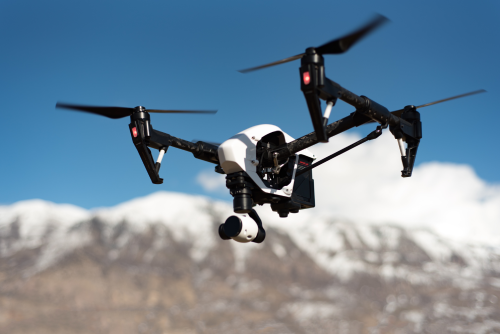
GIDS Shahpar is a Pakistani fixed-wing military/ISR drone built for surveillance-oriented institutional use rather than consumer flying. Based on publicly visible structured data, it combines a 480 kg maximum takeoff weight with 7 hours of endurance, a 250 km range, and an active program status. That makes it a relevant model for defense-watch readers, researchers, and organizations comparing sovereign ISR drone platforms.
Unlike consumer drones, where marketing usually emphasizes camera quality, flight-assist features, and mobile-app polish, the Shahpar belongs to a category in which persistence, operational coverage, payload flexibility, and supportability matter far more. It is better understood as part of a wider surveillance system than as a standalone flying product. For that reason, any serious assessment has to account not only for the aircraft’s published baseline numbers but also for the many details that remain outside the open public record.
That mix of visibility and opacity is exactly why the Shahpar is worth examining. Enough is known to place it within a clear class of medium fixed-wing ISR aircraft, yet not enough is publicly confirmed to produce the kind of neat buying recommendation you might see for a commercial enterprise drone. As a result, it is most useful as a benchmark platform: a real, active Pakistani unmanned aircraft program with sufficient published metrics to support comparison, but with many of the mission-critical details still requiring direct official verification.
Quick Summary Box
- Drone Name: GIDS Shahpar
- Brand: GIDS
- Model: Shahpar
- Category: military/ISR
- Best For: Institutional ISR evaluation, defense program benchmarking, and fixed-wing UAV comparison
- Price Range: Not publicly confirmed in supplied data
- Launch Year: Not publicly confirmed in supplied data
- Availability: Defense/government procurement oriented; retail availability not publicly confirmed in supplied data
- Current Status: active
- Overall Rating: Not rated due to limited confirmed data
- Our Verdict: A notable active Pakistani ISR UAV with useful published baseline specs, but public detail is too limited for a typical consumer-style buying verdict.
Introduction
The Shahpar is manufactured by Global Industrial & Defence Solutions and marketed under the GIDS brand. It sits in the military/ISR segment, where endurance, range, and platform scale matter more than creator-focused camera specs or consumer app features. Readers should care about it because Shahpar represents an active Pakistani fixed-wing drone program with enough public data to benchmark, while still leaving major questions around payloads, software, support, and cost.
That combination makes the aircraft interesting for several different audiences at once. For defense analysts, it offers a reference point for evaluating domestic UAV capability within Pakistan’s wider aerospace and defense-industrial landscape. For procurement researchers, it provides a case study in how sovereign drone programs are presented publicly compared with export-oriented or highly commercialized systems. For journalists, it serves as a useful example of a platform that is visible enough to track but not transparent enough to reduce to a simple specification sheet.
It is also important to recognize what kind of article this is not. This is not a first-hand operational review, and it is not a recommendation for general-purpose drone buyers. Because the public record used here is limited to structured, high-level specifications, the responsible approach is to interpret what those figures imply without pretending to know the details that have not been confirmed. In other words, the Shahpar can be assessed meaningfully, but only within the limits of what is actually established.
In practical terms, that means two things. First, the Shahpar deserves attention because it is active and because its published figures are substantial enough to place it well above small tactical hobby-class or commercial drones. Second, anyone considering it beyond comparative research must do a lot more due diligence through official channels. This article therefore aims to do two jobs at once: summarize what is known, and clarify what still needs verification before deeper conclusions are drawn.
Overview
What kind of drone is it?
Shahpar is a fixed-wing unmanned aircraft from Pakistan intended for military and intelligence, surveillance, and reconnaissance roles. Publicly confirmed core figures show a 480 kg maximum takeoff weight, 7-hour endurance, 250 km range, 150 km/h top speed, 5,000 m ceiling, 6.6 m wingspan, and 4.2 m length. In practical terms, that places it well above small tactical quadcopters and firmly in the category of institutional mission aircraft.
Its fixed-wing design is central to understanding its role. Fixed-wing UAVs are typically chosen when operators need longer on-station time, more efficient travel over distance, and broader-area coverage than a multirotor can economically provide. They trade away hovering ability and some deployment simplicity in exchange for much better endurance and more efficient flight profiles. That is why this class of aircraft is so often associated with border monitoring, route surveillance, maritime observation, and other persistent-watch missions.
The Shahpar’s dimensions and maximum takeoff weight also matter because they imply a full-system approach to operation. This is not something that an operator unfolds at the roadside and launches in a few minutes with a tablet. A 480 kg MTOW platform belongs to a category where logistics, crew training, maintenance planning, sensor integration, and command-and-control architecture all become major parts of the real capability story. Even before payload details are known, the scale alone tells you this is a serious fielded airframe.
Who should buy it?
This is not a normal retail drone. The most relevant audience includes defense organizations, state-linked research bodies, analysts tracking regional UAV capability, and journalists building comparisons across ISR platforms. Civilian hobbyists, content creators, and routine enterprise drone buyers will usually be looking in a completely different market.
Within the institutional audience, the Shahpar is especially relevant for organizations that care about sovereign or domestically supported systems. A drone like this is rarely judged only on raw performance. Buyers may also be evaluating industrial independence, local supportability, strategic supply resilience, export restrictions, training pathways, and compatibility with existing national procurement priorities. In that context, Shahpar’s importance may extend beyond the aircraft itself.
Academic and policy researchers are another clear audience. For them, the Shahpar is not necessarily a purchase candidate but a data point within a larger story about regional drone development, state-backed surveillance capability, and the evolution of Pakistani aerospace manufacturing. Because public data is partial, even the gaps in the record can be analytically useful. They highlight where transparency ends and where assumptions begin.
What makes it different?
What stands out is the combination of active status, fixed-wing efficiency, and public visibility as a Pakistani ISR platform. Shahpar is important less because of consumer-facing features and more because it gives observers a reference point for Pakistan’s domestic unmanned-aircraft capability. It is also a reminder that many military UAV programs are only partially transparent, so public specifications often stop at high-level performance figures.
That public visibility matters more than it may appear at first glance. Some military UAVs are known almost entirely through rumor or fragmentary reporting. Others are highly publicized but wrapped in broad marketing language with limited technical clarity. Shahpar sits somewhere in the middle: visible enough to establish key dimensions and performance claims, but not openly documented enough to answer many of the procurement questions a serious institutional buyer would ask.
Another differentiator is the way the platform fits into comparison work. The Shahpar can serve as a baseline in at least three directions: against later Pakistani UAV development, against more internationally visible ISR systems, and against the broader class of medium fixed-wing surveillance drones designed for state use. That makes it more analytically useful than a platform that is either too obscure to benchmark or too classified to discuss in even basic terms.
Key Features
- Fixed-wing military/ISR airframe
- Manufactured by Global Industrial & Defence Solutions under the GIDS brand
- Country of origin: Pakistan
- Current status: active
- Maximum takeoff weight: 480 kg
- Endurance: 7 hours
- Range: 250 km
- Maximum speed: 150 km/h
- Service ceiling: 5,000 m
- Wingspan: 6.6 m
- Length: 4.2 m
- Larger institutional platform class, not a portable consumer drone
- Publicly visible enough to support baseline comparison in regional UAV analysis
- Better suited to endurance-oriented surveillance discussion than consumer feature checklists
- Camera, sensor, payload capacity, autonomy stack, and mission-system specifics are not publicly confirmed in supplied data
Full Specifications Table
| Specification | Details |
|---|---|
| Brand | GIDS |
| Model | Shahpar |
| Drone Type | Fixed-wing |
| Country of Origin | Pakistan |
| Manufacturer | Global Industrial & Defence Solutions |
| Year Introduced | Not publicly confirmed in supplied data |
| Status | active |
| Use Case | military/ISR |
| Weight | Not publicly confirmed in supplied data |
| Dimensions (folded/unfolded) | Length 4.2 m; wingspan 6.6 m; folded dimensions not publicly confirmed in supplied data |
| Max Takeoff Weight | 480 kg |
| Battery Type | Not publicly confirmed in supplied data |
| Battery Capacity | Not publicly confirmed in supplied data |
| Flight Time | 7 hr |
| Charging Time | Not publicly confirmed in supplied data |
| Max Range | 250 km |
| Transmission System | Not publicly confirmed in supplied data |
| Top Speed | 150 km/h |
| Wind Resistance | Not publicly confirmed in supplied data |
| Navigation System | Not publicly confirmed in supplied data |
| Obstacle Avoidance | Not publicly confirmed in supplied data |
| Camera Resolution | Not publicly confirmed in supplied data |
| Video Resolution | Not publicly confirmed in supplied data |
| Frame Rates | Not publicly confirmed in supplied data |
| Sensor Size | Not publicly confirmed in supplied data |
| Gimbal | Not publicly confirmed in supplied data |
| Zoom | Not publicly confirmed in supplied data |
| Storage | Not publicly confirmed in supplied data |
| Controller Type | Not publicly confirmed in supplied data |
| App Support | Not publicly confirmed in supplied data |
| Autonomous Modes | Not publicly confirmed in supplied data |
| Payload Capacity | Not publicly confirmed in supplied data |
| Operating Temperature | Not publicly confirmed in supplied data |
| Water Resistance | Not publicly confirmed in supplied data |
| Noise Level | Not publicly confirmed in supplied data |
| Remote ID Support | Not publicly confirmed in supplied data |
| Geo-fencing | Not publicly confirmed in supplied data |
| Certifications | Not publicly confirmed in supplied data |
| MSRP / Launch Price | Not publicly confirmed in supplied data |
| Current Price | Not publicly confirmed in supplied data |
Design and Build Quality
With a 6.6 m wingspan, 4.2 m length, and 480 kg maximum takeoff weight, Shahpar is clearly a serious fielded airframe rather than a hand-carried or backpackable drone. Its fixed-wing layout points toward efficiency and persistence, which is consistent with ISR work where staying airborne matters more than hovering.
The physical scale alone has several operational implications. A drone of this size is likely to require a structured support environment, including transport planning, trained launch-and-recovery personnel, maintenance procedures, and a suitable operating area. Even without detailed public confirmation on deployment method, the platform clearly belongs to a class where operational readiness depends as much on ground infrastructure as on the aircraft itself. That is very different from the more software-led convenience model associated with prosumer UAVs.
Public data does not confirm the materials used, the landing-gear arrangement, whether the wings are easily removable for transport, or how the aircraft is launched and recovered. Because of its size and role, it is best understood as a vehicle-supported or base-supported platform rather than something designed for fast casual deployment by a single operator.
Those unknowns are not minor details. Materials affect durability, maintainability, and field repair complexity. Launch-and-recovery design influences where the aircraft can be used and how quickly it can be repositioned. Wing-removal or modular transport design affects strategic mobility and deployment footprint. In defense procurement, these factors can be nearly as important as the headline endurance figure because they shape real-world readiness and sortie generation.
From a build-quality perspective, the most responsible conclusion is that Shahpar appears mission-oriented and field-ready by class, but the finer details of structural ruggedness, maintainability, and component accessibility are not publicly confirmed in the supplied data.
Another point worth noting is that military-grade build quality is not always visible from dimensions alone. A platform can look substantial while still differing widely from peers in corrosion resistance, redundancy, environmental sealing, cable routing, service access, and landing-cycle durability. Those are the kinds of features that influence lifecycle value. Since the open record does not establish them here, Shahpar’s design should be read as plausible and operationally serious, but not fully characterized.
Flight Performance
The known numbers give Shahpar a clear performance profile. A 7-hour endurance figure is meaningful for a fixed-wing surveillance platform, especially compared with short-flight multirotors. The 250 km range and 5,000 m ceiling further suggest a drone intended for broader-area observation rather than close-range visual flying.
For many readers, endurance is the single most important figure because it determines whether a platform can conduct persistent surveillance rather than short episodic observation. Seven hours is long enough to support extended patrol patterns, transit to and from an area of interest, and a meaningful time on station, assuming payload, weather, and mission profile are aligned. It does not place the Shahpar at the extreme high end of endurance by global MALE-UAV standards, but it is still well beyond the capabilities of most commercial or tactical rotorcraft systems.
Its 150 km/h maximum speed indicates that Shahpar is designed more for transit and sustained mission work than for high-speed dash performance. That is typical of ISR-focused aircraft, where stability and persistence usually matter more than pure speed.
Speed in this class should also be interpreted carefully. Maximum speed is rarely the same as efficient cruise speed or best-endurance speed. Depending on configuration, payload, fuel or power state, and altitude, real mission performance can vary significantly from a single published top-speed figure. That does not reduce the usefulness of the number; it simply means it should not be over-read as a complete performance summary.
The 5,000 m service ceiling is another meaningful figure. Operational altitude affects survivability, sensor field of regard, weather options, and mission geometry. A higher ceiling can support wider observation footprints and more flexible route planning, though sensor quality ultimately determines how useful that altitude really is for surveillance. Without confirmed payload details, the ceiling tells us something important about the airframe, but not everything about the quality of the ISR output.
As analysis rather than newly claimed fact, a fixed-wing aircraft of this size would generally be expected to handle outdoor operations far better than a small quadcopter and to remain more efficient over distance. Wind-resistance data, link resilience, and takeoff/landing behavior are not publicly confirmed here, so buyers should verify those points through official program material before drawing procurement conclusions.
The same caution applies to the published range figure of 250 km. In UAV discussions, “range” can refer to different things depending on source: mission radius, line-of-sight datalink reach, total operational envelope, or a simplified public-facing distance figure. Because terminology is not standardized across all public summaries, prospective evaluators should confirm how this number is defined in the official context before using it in a formal comparison.
Overall, the flight profile suggested by the published numbers is coherent: moderate speed, useful endurance, substantial scale, and a mission orientation centered on surveillance rather than aerobatic agility or compact deployment. That makes the Shahpar credible as an institutional ISR aircraft on paper, even if the finer operational performance details remain outside public confirmation.
Camera / Payload Performance
Shahpar is best judged as a payload carrier for ISR work, not as a camera drone in the consumer sense. The supplied data does not confirm the sensor package, turret type, stabilization system, payload capacity, or recording formats. That means there is no defensible basis here to claim specific day/night imaging quality, zoom performance, thermal capability, or target-tracking features.
This absence of detail is especially important because payloads define much of an ISR platform’s real usefulness. Two aircraft with broadly similar endurance and range can deliver very different operational value depending on sensor quality, stabilization, onboard processing, datalink bandwidth, and operator interface. In a military context, the payload can be the capability. Without knowing what the Shahpar can actually carry, how those sensors are integrated, and how data is transmitted to operators, the airframe numbers tell only part of the story.
What can be said responsibly is that a 480 kg-class fixed-wing ISR platform is normally evaluated on its ability to support meaningful reconnaissance payloads over time. In workflow terms, that usually matters more than still-photo specs or cinematic video quality. For anyone assessing Shahpar as a procurement candidate, payload details are the single biggest missing part of the public picture.
From an evaluation standpoint, the questions that matter most would include:
- What electro-optical and infrared payload options are supported?
- Is there a standard stabilized turret, and if so, what level of zoom and image quality does it provide?
- Are there maritime, border-surveillance, or other mission-specific sensor packages?
- How is sensor data transmitted, stored, and exploited?
- Can the aircraft support modular payload swaps, or is it optimized around a fixed mission set?
- What effect do payload changes have on endurance and operational range?
None of those questions can be answered confidently from the limited public baseline used here, but they are exactly the areas that should dominate institutional evaluation.
It is also worth separating payload capacity from payload effectiveness. A platform may have enough size and power to carry a useful sensor, but the resulting surveillance quality still depends on stabilization, optics, thermal performance, software integration, operator ergonomics, and real-time data exploitation. That is why procurement teams often spend as much time on ground-segment demonstration and sensor output review as they do on the aircraft itself.
Smart Features and Software
Specific software and autonomy features are not publicly confirmed in the supplied data. There is no confirmed public record here of the ground-control software, app support, SDK access, waypoint system, return-to-home logic, mapping workflow, cloud portal, or AI-assisted tracking tools.
That lack of software clarity is normal for defense-focused platforms, but it is still a major limitation for anyone trying to compare capability. In modern UAV operations, the aircraft is only one part of the system. Mission planning, route editing, datalink management, payload control, fail-safe logic, logging, and post-mission analysis all shape how effective the platform is in actual service. A drone with solid airframe performance but weak software integration may be much less useful than its published endurance suggests.
Because Shahpar sits in the military/ISR category, it would be reasonable to expect some mission-planning and datalink management capability as part of a complete system. However, that should be treated as class-based analysis, not as a confirmed Shahpar feature list.
Institutional buyers would normally want clarity on software and autonomy in areas such as:
- Pre-mission planning and route creation
- Manual versus semi-autonomous versus fully programmed flight phases
- Emergency procedures and loss-link behaviors
- Payload control integration from the ground station
- Multi-user or networked mission management
- Recording, storage, and replay of mission data
- Security features such as access control and communications protection
- Interoperability with wider ISR or command systems
Navigation system details, obstacle avoidance, geofencing, and Remote ID support are also not publicly confirmed in the supplied data.
It is worth emphasizing that some features common in commercial drone marketing may be irrelevant here. Consumer-style obstacle avoidance, smartphone apps, social-sharing workflows, and creator presets do not define the value of a military ISR aircraft. What matters more is whether the aircraft can be planned, flown, monitored, and sustained within an operational command structure. Unfortunately, those are exactly the areas where public summaries are often least detailed.
Use Cases
Based on the confirmed airframe type, performance figures, and segment, the most realistic use cases are institutional and government-led.
- Military ISR and defense observation: The Shahpar’s fixed-wing design and endurance profile make it suitable in principle for surveillance missions where persistence matters more than hover capability.
- Border or maritime-area monitoring by authorized state operators: A platform with this kind of range-and-endurance balance can be relevant for broad-area patrol tasks, provided payload and datalink performance support the mission.
- Persistent aerial surveillance where multirotors lack endurance: This is one of the clearest role distinctions. A multirotor may be simpler to deploy, but it typically cannot match fixed-wing time on station.
- Operator training within larger unmanned-aircraft programs: Even where not used as the most advanced fleet asset, an aircraft like Shahpar can have value as part of doctrine, crew development, and systems training.
- Research and comparative analysis of Pakistani UAV capability: For academics, policy specialists, and think-tank researchers, Shahpar offers a concrete case study in sovereign ISR development.
- Public-interest journalism and strategic reference work on regional drone systems: The aircraft is visible enough to support informed comparison while still requiring careful source discipline.
These use cases also show why the Shahpar should not be judged by casual expectations imported from the consumer market. A wedding videographer, power-line inspector, or real-estate media operator does not need a 480 kg institutional aircraft with a 6.6 m wingspan. Conversely, a defense organization evaluating long-duration observation capability is not looking for a foldable 4K quadcopter. The categories barely overlap.
In addition, the Shahpar may be relevant in planning and doctrine discussions even when it is not the final acquisition choice. Analysts often use active UAV programs as reference models to understand capability tiers, support demands, or industrial strategy. In that sense, a platform can be influential simply by existing within the comparison set.
Pros and Cons
Pros
- Active status makes it more relevant than dormant or purely historical programs
- Fixed-wing design supports longer-duration missions than typical multirotors
- 7-hour endurance is meaningful for ISR-oriented operations
- 250 km range and 5,000 m ceiling suggest useful operational reach on paper
- 480 kg MTOW indicates a more serious institutional platform class
- Provides a clear public reference point for a Pakistani UAV program
- Useful for benchmark analysis where public data on sovereign systems is often sparse
Cons
- Camera, sensor, and payload details are not publicly confirmed in supplied data
- Price and procurement cost are not publicly confirmed in supplied data
- Software stack, autonomy features, and control system details are unclear publicly
- Support network and service coverage are not transparent in consumer terms
- Large platform size means much higher logistics demands than small drones
- Not a practical option for hobbyists, creators, or standard commercial operators
- Range and endurance figures still require context on mission configuration and official definitions
Comparison With Other Models
Public comparison data for military UAVs often varies by source and configuration. The Shahpar row below reflects the confirmed record used for this page, while the other rows summarize commonly reported public-positioning figures that should be verified directly before any formal comparison or procurement work.
| Model | Price | Flight Time | Camera or Payload | Range | Weight | Best For | Winner |
|---|---|---|---|---|---|---|---|
| GIDS Shahpar | Not publicly confirmed | 7 hr | ISR payload type not publicly confirmed | 250 km | MTOW 480 kg | Baseline sovereign fixed-wing ISR reference | Best as the confirmed baseline here |
| GIDS Shahpar II | Not publicly confirmed | Publicly reported around 14 hr | Larger ISR payload class; exact fit varies | Publicly reported around 300 km | Publicly reported MTOW around 1,050 kg | Operators wanting more endurance and growth margin | Capability upgrade |
| Bayraktar TB2 | Not publicly confirmed | Publicly reported around 24-27 hr | Mature EO/IR mission-payload ecosystem | Public reporting varies by datalink setup | Publicly reported MTOW around 650 kg | Buyers focused on widely discussed higher-endurance ecosystem | Endurance/ecosystem |
Shahpar vs a close competitor
Against the Bayraktar TB2, Shahpar appears less publicly documented and, on widely reported figures, shorter-endurance. TB2 generally benefits from broader international visibility and a more mature public ecosystem narrative. Shahpar’s main relevance is stronger in sovereign Pakistani program context and regional comparison.
The practical difference here is not just endurance. Internationally prominent systems like the TB2 often benefit from a wider pool of analyst commentary, imagery, operational reporting, and ecosystem familiarity. That makes them easier to compare and easier for outsiders to understand. Shahpar, by contrast, is more opaque, which can make it harder to assess but also more significant in studies focused on domestic capability rather than export footprint or media profile.
Shahpar vs an alternative in the same segment
The most natural alternative is Shahpar II from the same broader family. If the requirement is greater endurance and a larger growth path for payloads, Shahpar II is the more ambitious step up on public reports. Shahpar remains useful as a baseline reference for understanding the family’s earlier capability level.
This kind of same-family comparison is often more useful than comparing across entirely different industrial contexts. It helps researchers trace capability evolution: how endurance grows, how platform scale changes, and how a manufacturer appears to move from one operational tier toward another. Even when detailed subsystem information is limited, relative movement within a product family can reveal broader development priorities.
Shahpar vs an older or previous-generation option
No clearly standardized earlier Shahpar predecessor is confirmed in the supplied data. For most readers, Shahpar itself functions as the baseline model against which later Pakistani fixed-wing ISR developments are compared.
That baseline role is important. In many defense-technology discussions, the first publicly visible, quantifiable model becomes the reference point against which later claims of improvement are measured. Shahpar fills that role neatly because it combines enough known performance data with enough institutional relevance to anchor comparison work.
Manufacturer Details
Global Industrial & Defence Solutions is the manufacturer listed for Shahpar, and GIDS is the brand name attached to the aircraft. In practice, the company and brand identity are closely linked here rather than being separate consumer and parent brands in the way many retail drone companies operate.
The headquarters country is Pakistan. Publicly, GIDS is known in defense and aerospace circles rather than the mainstream consumer drone market, which helps explain why Shahpar is discussed more in strategic, government, and program-tracking contexts than in retail buying guides. Detailed founding history, corporate structure, and broader product-line breakdown should be verified through official company materials if those points matter to your research.
From an analytical perspective, the manufacturer matters because defense UAVs are rarely judged as isolated products. Buyers may care about domestic industrial support, integration experience, state relationships, export permissions, and the manufacturer’s ability to sustain long-term service obligations. In the military market, confidence in the supplier can be almost as important as the airframe itself.
That is especially true for sovereign or nationally significant programs. A domestically developed platform can have strategic value beyond its raw specification sheet if it supports local manufacturing, maintenance independence, training ecosystems, or national technology development goals. Shahpar’s significance therefore lies partly in what it represents within Pakistan’s aerospace landscape, not only in its individual performance numbers.
Support and Service Providers
Support for a drone like Shahpar should be assumed to be contract-based and program-based rather than walk-in retail support. Official maintenance, spare parts, training, and sustainment would typically be handled through the manufacturer or authorized defense channels, not the consumer repair ecosystem.
Public warranty terms, service turnaround expectations, spare availability, and third-party repair options are not publicly confirmed in the supplied data. Community support is also likely to be limited compared with popular commercial UAVs. If supportability is a major part of your evaluation, verify:
- Official maintenance arrangements
- Operator training and certification pathways
- Spare-parts availability
- Regional servicing rights
- Long-term program sustainment commitments
Support should also be understood as a lifecycle issue rather than a post-sale convenience issue. For institutional systems, operators need to know whether training includes aircrew, payload operators, and maintenance personnel; whether software updates are controlled centrally; whether depot-level maintenance is available; and whether the manufacturer can continue sustaining the system over years rather than months. These are major procurement considerations even when they are invisible in public brochures.
Another practical concern is configuration control. In regulated or defense environments, changes to payload fit, communications equipment, or software loads may require formal approval and testing rather than informal user customization. That makes the support model more structured and often more dependent on manufacturer involvement than in the commercial UAV world.
Where to Buy
Shahpar should not be treated like a normal retail drone. It is not a typical consumer-store or e-commerce purchase. Procurement is more likely to be government-led, defense-led, or handled through authorized institutional channels.
If you are researching acquisition rather than just comparing specifications, the most realistic buying routes would be:
- Direct manufacturer engagement
- Authorized defense or aerospace intermediaries
- Government procurement channels
- Region-specific institutional distributors, where applicable
Retail marketplace listings, if any appear, should be treated cautiously and verified carefully.
In reality, “where to buy” for a system like this usually means “how to begin a formal acquisition dialogue.” That process may involve requirements definition, compliance review, end-user documentation, demonstrations, contract negotiation, and support-package planning before any aircraft is delivered. A buyer is not simply purchasing a drone; they are potentially acquiring a surveillance system, training package, spares plan, support agreement, and long-term supplier relationship.
That distinction matters because the lowest visible sticker price, even if it were available, would not tell the real procurement story. Acquisition route, sustainment terms, mission-system fit, and regulatory approval can all determine whether a platform is actually viable for a given organization.
Price and Cost Breakdown
No reliable public launch price or current price is confirmed in the supplied data. That is normal for many military and state-focused UAV systems.
For budgeting purposes, the air vehicle alone is only part of the cost picture. Buyers would normally need to verify the cost of:
- The aircraft itself
- Ground control station equipment
- Sensor package or mission payload
- Communications and data-link equipment
- Training for operators and maintainers
- Spare parts and field maintenance
- Support contracts
- Transport and deployment equipment
- Insurance and regulatory overhead, where applicable
In other words, any real ownership estimate for Shahpar should be based on total system cost, not just airframe cost.
A useful way to think about military UAV cost is in layers. The first layer is acquisition: aircraft, payloads, control stations, software licenses if applicable, and initial training. The second layer is operational cost: fuel or power, maintenance labor, consumables, transit, and routine inspections. The third layer is sustainment: software updates, component replacement, repairs, inventory management, calibration, and long-term support contracts. For an institutional aircraft, these later layers can be substantial.
There can also be significant hidden costs tied to infrastructure and compliance. Organizations may need protected operating areas, secure communications facilities, storage and transport solutions, personnel clearance processes, or local certification work. In some cases, integration with existing command or intelligence systems adds another cost band entirely. That is why public “price comparison” for military UAVs is often more misleading than useful unless it is tied to a full system package and clearly defined support scope.
Regulations and Compliance
Shahpar sits far outside normal consumer-drone assumptions. At 480 kg maximum takeoff weight and in a military/ISR role, it belongs in a heavily regulated operating environment. Civil aviation rules, airspace permissions, operator qualification, spectrum use, surveillance law, and procurement law may all apply depending on country and operator type.
A few practical points matter:
- Do not assume consumer-drone exemptions apply
- Registration and airworthiness requirements are likely substantial
- Surveillance and privacy law still matters, even in state-operated contexts
- Cross-border sale or transfer may involve export-control and end-user restrictions
- Remote ID support is not publicly confirmed in supplied data
- Local military, civil aviation, and communications rules should all be checked before any use or demonstration
Compliance is country-specific, not universal.
The regulatory complexity here is not only about flying the aircraft. It may also involve radio-spectrum approval for datalinks, import or export controls on surveillance payloads, security classifications around mission data, and rules for operating in segregated or shared airspace. Large UAVs can trigger requirements that have more in common with crewed aviation than with recreational drone policy.
For institutional users, another major issue is integration into national airspace systems. Even where a military operator has broad authority, actual operations may still require coordination with civil aviation bodies, air-defense networks, and communications regulators. In cross-border or multinational contexts, this becomes more complicated still. As a result, compliance planning should be considered part of acquisition planning, not something left until after procurement.
Who Should Buy This Drone?
Best for
- Defense organizations evaluating fixed-wing ISR platforms: Especially those comparing endurance-oriented surveillance aircraft rather than short-range tactical drones.
- State or institutional buyers comparing sovereign UAV options: Shahpar is relevant where industrial independence or national-source capability matters.
- Researchers tracking Pakistani unmanned-aircraft development: It is a meaningful reference platform in regional capability analysis.
- Journalists and analysts building regional capability comparisons: The aircraft offers enough public data to discuss responsibly while still requiring careful qualification.
Not ideal for
- Consumer drone buyers: This is outside the recreational and retail market entirely.
- Aerial photographers and video creators: There are no public camera details here that would support that kind of evaluation, and the platform category itself is mismatched.
- Small commercial operators needing transparent pricing and support: The procurement model, support structure, and likely compliance burden make it unsuitable.
- Users who need confirmed camera specs, software tools, and retail availability: Those are exactly the areas where public information is thinnest.
A good rule of thumb is simple: if your buying process begins with “Can I order it online?” Shahpar is almost certainly not for you. If your process begins with “How does this compare within a national ISR capability framework?” then the platform becomes far more relevant.
It is also a strong fit for readers who are not buying at all but building informed reference material. In defense and aerospace research, a platform can be important because it helps map an ecosystem, reveal capability trends, or anchor comparisons with better-known systems. Shahpar fits that role well.
Final Verdict
The GIDS Shahpar is best understood as a publicly visible, active Pakistani fixed-wing ISR platform rather than a conventional product you can casually shop for. Its strongest confirmed points are straightforward: 7-hour endurance, 250 km range, 5,000 m ceiling, 480 kg MTOW, and active status. Those figures establish it as a serious institutional aircraft and give researchers a useful baseline for comparing medium fixed-wing surveillance systems.
Its biggest weaknesses are just as clear: very limited public detail on sensors, payload capacity, software environment, support structure, and cost. Those are not small omissions. In an ISR platform, payload and mission-system integration often determine most of the real capability value. Without them, the Shahpar can be placed within a category, but not fully judged against the strongest alternatives in that category.
If your goal is consumer purchase, commercial imaging, or off-the-shelf enterprise deployment, Shahpar is almost certainly the wrong fit. But if you are studying sovereign UAV programs, comparing defense ISR airframes, or tracking Pakistan’s unmanned capability development, Shahpar is a model worth serious attention precisely because it is real, active, and only partially transparent.
That final point is what gives the aircraft its broader significance. Shahpar is not merely interesting because of its published range or endurance. It is interesting because it reflects how real-world defense UAV programs are often encountered by outside observers: partly documented, strategically relevant, and best understood through careful comparison rather than simplistic product scoring. For that kind of reader, Shahpar is not just a drone specification sheet. It is a useful reference point in the evolving story of regional unmanned aviation capability.
