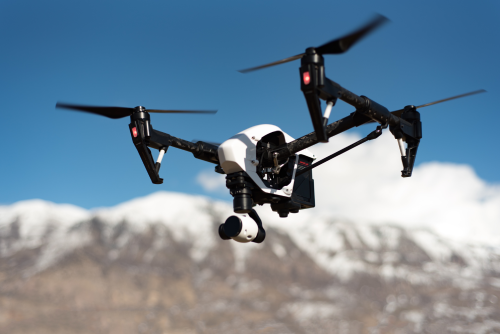
ST Aerospace Skyblade IV is a Singapore-made fixed-wing military/tactical drone aimed at endurance-focused observation roles rather than consumer flying. It is most relevant to defense analysts, institutional buyers, and readers comparing tactical UAV programs. Publicly confirmed data is limited, but its active status, 6-hour endurance, 70 km range, and 148 km/h top speed make it a notable platform in its class. That combination places it in the category of systems that are often judged less by lifestyle convenience or image quality marketing and more by mission persistence, field practicality, and the credibility of the organization behind the platform.
Just as important, Skyblade IV illustrates a broader truth about military and security-oriented drones: they are often discussed in a very different way from commercial UAVs. Consumer drones usually come with full spec sheets, launch videos, pricing, app screenshots, and abundant hands-on reviews. Tactical systems often do not. Instead, buyers and researchers are left with partial public data, trade show references, procurement notices, and occasional official statements. For that reason, a useful review of Skyblade IV has to be both analytical and careful. It should highlight what is confirmed, explain what those numbers likely mean in practice, and avoid turning unknowns into assumptions.
Quick Summary Box
- Drone Name: ST Aerospace Skyblade IV
- Brand: ST Aerospace
- Model: Skyblade IV
- Category: military/tactical
- Best For: Government, defense, and institutional users comparing active fixed-wing tactical UAV platforms
- Price Range: Not publicly confirmed in supplied data
- Launch Year: Not publicly confirmed in supplied data
- Availability: Not publicly confirmed in supplied data
- Current Status: active
- Overall Rating: Not rated due to limited confirmed data
- Our Verdict: A credible, endurance-oriented tactical fixed-wing UAV with limited public disclosure; most useful as a procurement and research reference rather than a retail buying option
Introduction
The ST Aerospace Skyblade IV is an active fixed-wing drone from Singapore in the military/tactical segment. In practical terms, that means it is positioned more for surveillance-style missions and institutional use than for filming, mapping, or hobby flying. Readers should care about it because the confirmed public numbers suggest a capable endurance platform, while the limited public disclosure also highlights how defense-linked drones differ from commercial UAVs in transparency, support, and buying process.
That distinction matters. In the consumer market, buyers usually compare drones through well-understood criteria such as camera resolution, obstacle avoidance, app quality, foldability, and retail price. In the tactical market, those questions are often secondary to endurance, deployability, data-link reliability, payload flexibility, training burden, and sustainment. A platform with modestly documented public specs can still be strategically relevant if it fits an institutional mission and is supported through formal channels.
Skyblade IV is therefore best approached as a program reference and capability benchmark. It is not a drone most readers can casually purchase, test, or review in the same way they would a consumer quadcopter. Instead, it belongs to the class of unmanned aircraft that procurement teams, military planners, security agencies, and defense researchers assess within broader operational frameworks. In that context, even a small set of confirmed figures can be meaningful, especially when those figures point to solid fixed-wing performance.
Overview
Skyblade IV sits in the part of the drone market where airframe efficiency, mission persistence, and field utility usually matter more than consumer-facing camera specs or app polish. Publicly available details are thin, so the safest way to assess it is to focus on what is confirmed and clearly separate that from reasonable analysis.
A fixed-wing tactical UAV like this is generally expected to serve observation, reconnaissance, or area-monitoring roles where remaining airborne for extended periods has real operational value. That gives Skyblade IV a very different profile from both hobby aircraft and short-endurance multirotors used for quick visual checks. In broad market terms, it belongs to the family of systems that prioritize time over target, controlled area coverage, and practical field deployment.
What kind of drone is it?
Skyblade IV is a fixed-wing military/tactical drone listed as active. Fixed-wing aircraft generally favor longer flight time and better forward efficiency than multirotor designs, which fits the confirmed 6-hour endurance and 70 km range. Its listed top speed of 148 km/h also points to a platform built for faster transit and broader-area coverage than a typical quadcopter.
That fixed-wing layout comes with familiar tradeoffs. Compared with multirotors, fixed-wing drones usually do a better job of covering linear routes, crossing open ground efficiently, and staying airborne long enough to support persistent overwatch. At the same time, they are less naturally suited to hovering over a single point, operating in very tight spaces, or launching from every improvised site unless they use specialized launch/recovery systems.
From a classification standpoint, “military/tactical” also signals a use environment where the airframe is only one part of a larger system. Ground control, communications, training, payload configuration, and supportability are likely central to its real-world value even though those elements are not fully described in the supplied public data.
Who should buy it?
This is not a mainstream retail drone. The likely audience is government, defense, security-adjacent institutions, and researchers comparing tactical UAV families. Journalists, analysts, and procurement teams may also find it relevant as part of a broader survey of Singapore-built unmanned systems.
More specifically, the strongest fit is likely among organizations that value endurance, controlled mission planning, and institutional support structures over plug-and-play simplicity. That could include armed forces, homeland security agencies, border or coastal surveillance units, training establishments, and aerospace research programs. Depending on procurement rules and export conditions, systems integrators and approved industrial partners may also be part of the buyer ecosystem.
For ordinary private users, the platform is mostly relevant as an object of study rather than a shopping option. Even if someone is interested in fixed-wing UAVs from a technical perspective, Skyblade IV is best understood through procurement and capability analysis rather than personal ownership expectations.
What makes it different?
What stands out most is the combination of active status and respectable confirmed performance figures in a fixed-wing tactical format. Compared with many publicly discussed small drones, Skyblade IV appears to emphasize endurance and range over creator features. It is also associated with ST Aerospace, a recognized Singapore aerospace and defense name, which adds context even though public specs remain limited.
Another point of differentiation is the level of public opacity. In commercial drone reviews, a lack of detailed information is often a warning sign. In defense-related aerospace, it is common. That does not automatically make a system better or worse, but it changes how it should be assessed. Skyblade IV’s value is less about internet-visible specifications and more about how it likely fits into institutional requirements, mission packages, and lifecycle support arrangements.
In short, what makes Skyblade IV different is not flashy consumer innovation. It is the fact that it appears to be a purpose-built, active, endurance-oriented tactical aircraft from an established defense-linked manufacturer, with public data that is limited but credible enough to sustain meaningful comparison.
Key Features
- Fixed-wing airframe for endurance-oriented flight and more efficient forward travel than typical multirotor designs
- Military/tactical market positioning rather than consumer, creator, or hobby use
- Active program status, which increases current relevance compared with retired or legacy UAVs
- Confirmed endurance of 6 hours, a strong headline capability for persistent observation roles
- Confirmed range of 70 km, suggesting operation beyond very short local missions
- Confirmed maximum speed of 148 km/h, indicating relatively fast transit for a tactical UAV in this class
- Singapore origin, making it relevant in discussions of regional aerospace and defense manufacturing
- Likely suited to surveillance and observation tasks based on segment, though exact sensor package is not publicly confirmed
- Public payload, camera, autonomy, and software details remain limited, which is important for serious evaluators
- Not positioned as a consumer, hobby, or creator drone, and likely obtained only through formal institutional channels
- Potentially useful as a reference point in fixed-wing UAV procurement comparisons even when not directly purchasable by most readers
- Best understood as part of a broader unmanned system package rather than just an airframe with a camera attached
Full Specifications Table
| Field | Specification |
|---|---|
| Brand | ST Aerospace |
| Model | Skyblade IV |
| Drone Type | Fixed-wing |
| Country of Origin | Singapore |
| Manufacturer | ST Aerospace |
| Year Introduced | Not publicly confirmed in supplied data |
| Status | active |
| Use Case | military/tactical; specific mission kit not publicly confirmed |
| Weight | Not publicly confirmed in supplied data |
| Dimensions (folded/unfolded) | Not publicly confirmed in supplied data |
| Max Takeoff Weight | Not publicly confirmed in supplied data |
| Battery Type | Not publicly confirmed in supplied data |
| Battery Capacity | Not publicly confirmed in supplied data |
| Flight Time | 6 hours |
| Charging Time | Not publicly confirmed in supplied data |
| Max Range | 70 km |
| Transmission System | Not publicly confirmed in supplied data |
| Top Speed | 148 km/h |
| Wind Resistance | Not publicly confirmed in supplied data |
| Navigation System | Not publicly confirmed in supplied data |
| Obstacle Avoidance | Not publicly confirmed in supplied data |
| Camera Resolution | Not publicly confirmed in supplied data |
| Video Resolution | Not publicly confirmed in supplied data |
| Frame Rates | Not publicly confirmed in supplied data |
| Sensor Size | Not publicly confirmed in supplied data |
| Gimbal | Not publicly confirmed in supplied data |
| Zoom | Not publicly confirmed in supplied data |
| Storage | Not publicly confirmed in supplied data |
| Controller Type | Not publicly confirmed in supplied data |
| App Support | Not publicly confirmed in supplied data |
| Autonomous Modes | Not publicly confirmed in supplied data |
| Payload Capacity | Not publicly confirmed in supplied data |
| Operating Temperature | Not publicly confirmed in supplied data |
| Water Resistance | Not publicly confirmed in supplied data |
| Noise Level | Not publicly confirmed in supplied data |
| Remote ID Support | Not publicly confirmed in supplied data |
| Geo-fencing | Not publicly confirmed in supplied data |
| Certifications | Not publicly confirmed in supplied data |
| MSRP / Launch Price | Not publicly confirmed in supplied data |
| Current Price | Not publicly confirmed in supplied data |
The table above is intentionally conservative. In a defense and institutional context, it is better to mark a field as unconfirmed than to infer specifics from similar aircraft. For analysts and buyers, that conservative approach helps prevent faulty comparisons. In tactical UAV procurement, a single assumed detail—such as launch method, payload interface, or communications architecture—can materially change how suitable a platform is for a mission.
Design and Build Quality
Because Skyblade IV is a fixed-wing tactical platform, the most reasonable design expectation is an airframe optimized for aerodynamic efficiency and field deployment rather than compact consumer portability. That usually means better endurance than a multirotor, but less flexibility for vertical takeoff, hovering, and tight confined-area operations.
Public details on materials, wingspan, fuselage length, foldability, landing gear, and launch or recovery method are not confirmed in the supplied data. That makes it impossible to judge transport convenience, repairability, or ruggedization with confidence. Still, the military/tactical positioning strongly suggests a design built for repeat operational use in outdoor environments rather than casual recreational flying.
There are a few broader design principles worth considering here. In tactical fixed-wing UAVs, build quality is not just about how “premium” the airframe feels. It is about whether the system can survive repeated deployment cycles, quick assembly, field handling, transport in rough conditions, and practical maintenance by trained teams. A military user may care as much about modular replacement of wings, nose sections, or control surfaces as about the initial material finish. They may also care about how quickly an aircraft can be prepared for a second sortie after landing or recovery.
Another design question concerns deployment philosophy. Some fixed-wing drones rely on hand launch, some on rail or catapult systems, and some require prepared recovery arrangements such as net capture, runway landing, belly landing, or other specialized methods. Since those details are not publicly confirmed for Skyblade IV in the supplied data, they remain an important unanswered question. For many buyers, the launch and recovery method can influence staffing needs, safety procedures, transportation footprint, and where the system can realistically be used.
From a buyer perspective, the missing physical data matters. For a fixed-wing platform, dimensions, recovery method, and service access can affect logistics just as much as endurance does. Anyone evaluating Skyblade IV seriously should request official airframe, handling, and maintenance documentation before comparing it to commercial or defense alternatives.
Flight Performance
The confirmed performance numbers are the clearest strengths of this model. A 6-hour endurance figure is meaningful in the tactical drone space because it implies persistent coverage well beyond the short mission windows common to many small multirotors. The listed 70 km range also suggests it was built for more than close-in observation, although the exact interpretation depends on how the manufacturer defines communications range, mission radius, and control architecture.
The 148 km/h top speed is another notable figure. In simple terms, it indicates Skyblade IV can likely reposition faster than most multirotor UAVs, which is one of the classic advantages of fixed-wing platforms. That makes it more suitable for covering larger areas, moving between observation zones, or maintaining efficient transit in open-air environments.
Those numbers deserve a little context. Endurance is especially valuable in tactical and institutional operations because it reduces the frequency of launch-and-recovery cycles. Fewer cycles can mean less operator workload, less exposure during deployment, and more continuous data collection. A drone that stays aloft for six hours can support longer patrol windows, sustained monitoring of a corridor or sector, and more efficient use of trained personnel than a platform that has to land every 30 to 60 minutes.
Range figures also require careful interpretation. A quoted range may refer to line-of-sight data-link distance, operational radius, or some form of total travel envelope depending on manufacturer conventions. Without official clarification, it is safest to treat 70 km as a useful public reference point rather than a precise mission-radius guarantee. Procurement teams would normally ask for specifics on command link performance, relay options, bandwidth, redundancy, and the conditions under which the range figure was measured.
The top speed figure similarly needs nuance. Maximum speed is not the same as efficient cruise speed, loiter speed, or sustained mission performance. However, even as a headline number, 148 km/h suggests that Skyblade IV is not a slow local scout. It appears capable of transiting to an area of interest with reasonable urgency, which can matter in time-sensitive surveillance tasks or distributed-area operations.
Wind handling, launch behavior, and landing behavior are not publicly confirmed. As analysis only, fixed-wing drones often cope better with forward-flight wind exposure than small hovering drones, but actual stability depends heavily on wingspan, mass, autopilot tuning, and control surface design. Indoor use is effectively out of scope for a platform like this; Skyblade IV should be thought of as an outdoor mission aircraft, not a confined-space drone.
Operationally, the most sensible reading of the known performance data is that Skyblade IV is built to cover ground efficiently and remain useful over meaningful time windows. That is exactly what many tactical organizations want from a small-to-medium fixed-wing UAV: enough endurance to matter, enough speed to reposition, and enough range to avoid being limited to only immediate local observation.
Camera / Payload Performance
Skyblade IV should be viewed as a payload-driven tactical aircraft, not a photography drone. The supplied public data does not confirm the onboard camera type, gimbal, zoom capability, sensor size, or whether the aircraft supports electro-optical, infrared, or interchangeable mission payloads.
That lack of payload detail is important. In the military/tactical segment, the sensor package often determines the platform’s real value more than the airframe itself. A drone with 6 hours of endurance can be highly useful, but only if its optics, stabilization, data link, and mission integration match the intended role.
This is one of the biggest differences between reviewing a tactical UAV and reviewing a consumer drone. On a consumer drone, image quality can often be discussed in terms of resolution, bitrate, color profile, dynamic range, and low-light performance. On a tactical platform, payload questions are more likely to focus on target detection, stabilization under movement, thermal capability, zoom performance, scene interpretation, geolocation accuracy, metadata handling, and how well the payload integrates with command workflows.
So the right conclusion here is cautious: Skyblade IV likely supports observation-oriented payload use consistent with its segment, but its actual imaging and ISR capability cannot be rated from the supplied data alone. Buyers should verify sensor options, stabilization quality, metadata handling, recording workflows, and downlink performance directly through official channels.
If Skyblade IV is being evaluated for a real mission, several payload questions become essential:
- Is the sensor fixed, gimballed, or modular?
- Are daytime electro-optical and thermal options available?
- What level of zoom or target discrimination is supported?
- How is imagery transmitted to the ground station?
- Can metadata be embedded for geospatial use or intelligence workflows?
- Are payloads swappable between missions?
- What is the impact of payload choice on endurance and balance?
Without answers to those questions, it is not possible to score Skyblade IV as an ISR platform in a comprehensive way. What can be said is that the endurance profile gives the aircraft potential relevance. Whether that potential translates into strong mission value depends heavily on payload integration, and that remains one of the key areas requiring official confirmation.
Smart Features and Software
No public software stack, flight app, autonomy package, or control ecosystem is confirmed in the supplied data. That means there is no defensible basis to claim features such as waypoint automation, return-to-home logic, AI target tracking, mapping workflows, SDK support, or cloud fleet management.
For a tactical fixed-wing UAV, software matters as much as airframe performance. Mission planning, route control, navigation redundancy, ground station design, and data link reliability all shape real-world usefulness. However, those details are often undisclosed or only shared in controlled procurement settings for defense-linked products.
The practical takeaway is simple: assume nothing beyond the confirmed basic airframe and flight figures. If you are evaluating Skyblade IV for serious use, ask for official documentation on navigation, autonomy, ground control, data handling, and cybersecurity posture.
That last point—cybersecurity posture—is especially important in modern institutional drone evaluation. Many organizations now look beyond “can it fly” and ask questions about software assurance, encryption, data custody, user authentication, firmware update procedures, offline capability, and integration with national or agency-specific security rules. A tactical drone that performs well aerodynamically but lacks trusted software controls may be less attractive than a slightly less capable aircraft with stronger systems integration.
Other software-related questions that matter in this segment include:
- How are missions planned and edited in the field?
- What happens in lost-link or degraded-GNSS conditions?
- Can the system maintain route discipline autonomously?
- What type of ground control station is used?
- How are logs captured, stored, and exported?
- Can the system support training mode, simulation, or playback?
- Is there a documented pathway for updates, patching, and sustainment?
Because none of those points are publicly confirmed in the supplied data, they remain open evaluation items rather than selling points. For a procurement team, they may be decisive.
Use Cases
Based on its confirmed role and airframe type, the most realistic use cases for Skyblade IV are:
- Tactical surveillance and observation
- Government and defense program evaluation
- Fixed-wing UAV fleet comparison and procurement shortlisting
- Extended-area monitoring where endurance matters more than hovering
- Training and doctrine development for institutional UAV teams
- Research and journalism focused on Singapore defense aerospace platforms
Those use cases can be read at two levels. At the direct operational level, Skyblade IV appears most relevant anywhere a user wants a relatively efficient aircraft to observe or patrol over time rather than conduct close-in hovering work. At the analytical level, it matters as a representative of Singapore’s defense aerospace capability and as a comparison point in the tactical UAV landscape.
Depending on payload and support configuration—which are not publicly confirmed—it could also be relevant to missions such as perimeter monitoring, route observation, border-area overwatch, coastal sector awareness, or training for fixed-wing unmanned operations. Those are reasonable segment-aligned possibilities, not confirmed mission claims. The key idea is that Skyblade IV appears optimized for persistence and movement, not for short, cinematic, or highly interactive civilian tasks.
Pros and Cons
Pros
- Confirmed 6-hour endurance is a strong headline capability
- Confirmed 70 km range supports broader-area operations than many short-range drones
- Confirmed 148 km/h top speed suggests efficient transit and fixed-wing performance benefits
- Active status makes it more relevant than legacy or retired systems
- Fixed-wing layout is generally better suited to endurance than multirotor alternatives
- Backed by a recognized Singapore aerospace and defense manufacturer
- Likely useful for surveillance-style roles where time on station matters
- Relevant as a procurement and research reference in the tactical UAV category
- Publicly known figures are credible enough to justify serious high-level comparison
Cons
- Publicly confirmed specifications are very limited
- Camera and payload details are not publicly confirmed
- Weight, dimensions, and max takeoff weight are not publicly confirmed
- Price and public retail availability are not publicly confirmed
- Software, autonomy, and navigation details are not publicly confirmed
- Launch and recovery method are not publicly confirmed in the supplied data
- Likely unsuitable for ordinary consumer, creator, or hobby buyers
- Support and procurement may be contract-based or restricted by region and end user
- Limited public transparency makes apples-to-apples comparison harder than with better-documented competitors
The overall pros-and-cons picture is fairly clear. Skyblade IV looks promising on the headline numbers that matter most for fixed-wing tactical relevance, but it remains difficult to fully assess because so many system-defining details are not public. That does not diminish its potential value; it simply means the platform should be discussed with appropriate caution.
Comparison With Other Models
Because public Skyblade IV data is limited, comparisons should be treated as high-level market positioning rather than a full specification shootout.
| Model | Price | Flight Time | Camera or Payload | Range | Weight | Best For | Winner |
|---|---|---|---|---|---|---|---|
| ST Aerospace Skyblade IV | Not publicly confirmed | 6 hr | Exact payload not publicly confirmed; tactical observation role implied | 70 km | Not publicly confirmed | Buyers seeking a balanced active fixed-wing tactical UAV | Best balance on confirmed public speed/endurance data |
| AeroVironment Puma LE | Not publicly confirmed | Up to 5.5 hr | Publicly reported tactical EO/IR payload options | Up to 60 km | Approx. 10 kg | Expeditionary tactical ISR with strong field portability | Portability |
| Insitu ScanEagle | Not publicly confirmed | 18+ hr | Publicly reported long-endurance ISR payloads | 100 km+ | Approx. 22 kg | Longer-persistence surveillance missions | Endurance |
The table helps frame Skyblade IV, but it should not be read as a final procurement ranking. Tactical UAVs are heavily influenced by launch method, payload package, sustainment ecosystem, training requirements, and mission doctrine. A platform that looks weaker on one visible metric may still be preferable if its support chain, data links, or field handling better match the operator’s needs.
Skyblade IV vs a close competitor
Against AeroVironment Puma LE, Skyblade IV looks competitive on publicly reported endurance and range. On the limited confirmed data available here, Skyblade IV slightly edges Puma LE in endurance and range, while Puma LE benefits from broader public documentation and a more familiar profile in open-source defense discussions.
That wider documentation matters. Puma LE has been discussed more extensively in open sources, which makes it easier for analysts to understand payload options, field deployment style, and mission fit. Skyblade IV, by contrast, is harder to profile in detail from public material alone. So while Skyblade IV may look strong on confirmed speed/endurance terms, Puma LE may feel lower risk to evaluators who need more transparent information before shortlisting.
Skyblade IV vs an alternative in the same segment
Compared with Insitu ScanEagle, Skyblade IV appears to sit in a more moderate endurance bracket. ScanEagle is better known for long mission persistence, while Skyblade IV looks more like a balanced tactical platform with solid, but not ultra-long, endurance. If the priority is maximum loiter time, ScanEagle has the edge; if the priority is a smaller tactical category with simpler public positioning, Skyblade IV may be the more relevant comparison.
The larger point is that these systems may serve overlapping but not identical mission concepts. ScanEagle has long been associated with more mature long-endurance ISR applications, and its ecosystem is relatively well understood. Skyblade IV seems more modest in public exposure but still credible in capability. That can make it attractive for buyers who want a tactically useful fixed-wing platform without necessarily stepping into a heavier or more infrastructure-intensive category.
Skyblade IV vs an older or previous-generation option
Earlier Skyblade-family options are the natural historical comparison, but reliable public side-by-side specifications are too limited to make a fair generational verdict here. If you are comparing within the Skyblade lineage, request official documentation rather than relying on scattered public references.
That advice is particularly important in defense aviation, where model names can conceal substantial internal changes. A new generation may look similar externally while incorporating meaningful shifts in avionics, propulsion, datalink architecture, maintainability, or payload interfaces. Without verified documentation, a generational comparison risks overstating or understating what changed.
Manufacturer Details
ST Aerospace is a Singapore aerospace and defense company name closely associated with the broader ST Engineering group. In industry terms, it is not just a drone startup; it comes from a larger aerospace and systems background that includes aviation services, engineering, and defense-related capabilities.
For this model, the brand and manufacturer are both listed as ST Aerospace, so there is no major distinction to explain at the product-page level. The broader company context matters, though, because it suggests institutional engineering depth and a defense-market orientation rather than a consumer electronics business model. That background aligns well with Skyblade IV’s tactical positioning and limited public marketing footprint.
This context has practical implications. Buyers considering a drone from an established aerospace and defense organization may expect a different support model than they would from a commercial drone brand. Instead of a simple retail transaction, they may encounter structured tenders, integrated packages, formal training, documentation control, and longer-term sustainment relationships. That can be a strength, especially for government customers who need system accountability and ongoing support rather than quick online ordering.
It also helps explain why public-facing detail may be sparse. Established defense manufacturers often present enough information to signal capability and market position, while reserving deeper technical detail for formal engagement. Skyblade IV fits that pattern.
Support and Service Providers
Support expectations for a drone like Skyblade IV are very different from those of a consumer quadcopter. Public warranty terms, mail-in repair options, and spare-part pricing are not publicly confirmed in the supplied data, and support is likely to be handled through official contracts, system integration partners, or defense procurement channels.
Potential buyers should verify:
- Official technical support access
- Regional maintenance coverage
- Spare airframe and component availability
- Sensor and payload servicing arrangements
- Operator training options
- Documentation access and software support
- Export and end-user restrictions
If you are outside government or institutional procurement channels, access to full support may be limited or unavailable.
For institutional buyers, supportability is often as important as performance. A tactical UAV is rarely purchased for the air vehicle alone; it is acquired as part of a capability package that must be trained, maintained, updated, and sustained over time. Questions about spare inventory, repair turnaround, technician training, software version control, and fleet availability rates can become more important than small differences in speed or range.
Another issue is service ecosystem maturity. Even if Skyblade IV is technically capable, prospective operators should ask whether local or regional service infrastructure exists and whether the manufacturer can support the platform over the intended lifecycle. For organizations planning multi-year deployment, this matters a great deal. Sustainment gaps can turn a promising procurement into a difficult operational burden.
Where to Buy
Skyblade IV should not be assumed to be a normal retail product. There is no publicly confirmed consumer store listing, public e-commerce channel, or open-market buying path in the supplied data.
The most realistic acquisition routes, if available, would be:
- Direct manufacturer engagement
- Authorized defense or aerospace sales representatives
- Government or institutional procurement channels
- Regional defense integrators or approved distributors
Availability may be restricted by geography, end-user status, and export controls. Buyers should confirm whether the platform is even offered in their region before budgeting time around it.
In practice, acquisition may involve considerably more than contacting a sales team. For many tactical UAVs, the process can include qualification checks, end-user verification, statement-of-requirement discussions, demonstrations, support-package negotiation, and regulatory review. That is normal for defense and security procurement, but it means Skyblade IV should not be approached with consumer expectations about lead times, public stock visibility, or standardized online pricing.
Price and Cost Breakdown
No launch price or current market price is publicly confirmed in the supplied data. That means any hard number would be speculation.
For budgeting purposes, institutional buyers should verify whether quoted pricing includes:
- Air vehicle only or full system package
- Ground control station
- Sensor payloads
- Batteries or power modules
- Launch and recovery equipment, if applicable
- Spare parts
- Training
- Software licenses
- Maintenance support
- Logistics and shipping
- Regulatory or export paperwork
With tactical systems, total ownership cost can be far higher than the aircraft alone. If Skyblade IV is on a shortlist, ask for full life-cycle cost visibility rather than just unit price.
That lifecycle view should include recurring expenses as well as initial procurement. Examples may include periodic maintenance, battery replacement or power-system servicing, software support agreements, operator recertification, payload recalibration, spare component stocking, and storage or transport requirements. A tactical UAV that seems affordable on a unit basis can become expensive if its support chain is demanding or if consumables and specialist equipment are priced separately.
For analysts and researchers, the absence of public pricing is not unusual. Defense platforms are often sold through package-based negotiations where cost depends heavily on quantity, payload selection, training scope, and support duration. That makes simple headline pricing less meaningful than the total contracted capability delivered.
Regulations and Compliance
A platform in the military/tactical class comes with more regulatory complexity than a hobby drone. Even where operation is legally possible, users may face airspace approvals, operator certification requirements, data-handling restrictions, and procurement controls that go beyond normal recreational UAV rules.
A few practical points matter here:
- Weight class is not publicly confirmed, so do not assume it falls into a light recreational category
- Remote ID support is not publicly confirmed in supplied data
- Registration requirements will depend on local aviation law
- Commercial or institutional operators may need additional permissions and pilot qualifications
- Defense-linked systems may be subject to export controls, restricted sales, and end-user screening
- Surveillance-capable aircraft can raise privacy and data-governance issues depending on jurisdiction
Always verify current national and local regulations before any acquisition, demonstration, import, or operation.
There are also deeper compliance issues that may apply depending on country and mission. Tactical UAVs can implicate spectrum licensing for control and payload downlinks, secure data-storage requirements, operational separation rules, cross-border movement restrictions, and agency-specific procurement standards. If the aircraft is intended for official surveillance or public-security work, privacy law and evidentiary handling may also become relevant.
In other words, compliance is not just about whether the drone can legally fly. It is about whether the full mission system can be lawfully acquired, imported, operated, connected, and supported within a given jurisdiction. That is another reason Skyblade IV is best understood as an institutional platform rather than a general-purpose aircraft.
Who Should Buy This Drone?
Best for
- Government and defense procurement teams
- Military and public-sector users evaluating tactical fixed-wing UAVs
- Analysts and researchers tracking active Singapore-made drone platforms
- Institutions that value endurance and speed more than hovering capability
- Buyers who can obtain official documentation and support through formal channels
These groups are the most likely to benefit from what Skyblade IV clearly offers: a credible fixed-wing tactical profile with useful confirmed performance numbers and likely institutional backing. For them, limited public detail is inconvenient but not necessarily disqualifying, because formal procurement channels can often provide the missing data under controlled conditions.
Not ideal for
- Consumer drone buyers
- Hobby pilots
- Content creators and aerial videographers
- Small commercial teams needing transparent pricing and easy dealer access
- Operators who require fully public camera, software, and compliance documentation before shortlisting
For these users, the platform’s strengths are largely irrelevant or inaccessible. If you need easy purchasing, abundant public tutorials, transparent payload specs, or app-based simplicity, Skyblade IV is not designed for that market. Even highly experienced civilian drone operators may find that the unknowns around pricing, support, and access make it impractical to consider outside institutional settings.
Final Verdict
ST Aerospace Skyblade IV stands out as a serious fixed-wing tactical UAV with a credible public performance baseline: 6 hours of endurance, 70 km range, 148 km/h top speed, and active status. Those numbers alone make it worth attention for defense-oriented comparison work, especially for readers tracking institutional UAV programs rather than consumer releases.
Its biggest strength is clear: it looks like an endurance-focused fixed-wing platform from a respected Singapore aerospace brand. Its biggest weakness is just as clear: public information is thin, especially around payloads, software, physical specs, pricing, and support. In short, Skyblade IV is a niche, procurement-driven platform that deserves serious consideration from qualified institutional buyers, but it is not a retail drone and it is not a good fit for ordinary civilian users.
The most balanced conclusion is that Skyblade IV appears meaningful precisely because it occupies a practical middle ground. It is not presented as a tiny consumer-style aircraft, and it is not publicly framed as an ultra-endurance flagship at the very top of the tactical ISR pyramid. Instead, based on confirmed numbers, it appears to offer a useful blend of endurance, range, and speed in an active fixed-wing format. That is enough to make it relevant in procurement research and tactical UAV comparisons.
At the same time, no responsible assessment should pretend the unknowns do not matter. In a real acquisition decision, payload integration, data links, launch and recovery method, support model, lifecycle cost, and regulatory fit may matter more than the headline figures. Until those details are confirmed through official channels, Skyblade IV remains best categorized as a credible and potentially capable platform whose public profile is strong enough to justify attention, but not complete enough to justify certainty.
For defense analysts, that makes Skyblade IV interesting. For institutional buyers, it makes it shortlist-worthy only after deeper engagement. For general readers, it is a reminder that some of the most relevant drones in the world are not the easiest to review—because they are not meant to be bought, compared, and flown like consumer products.
