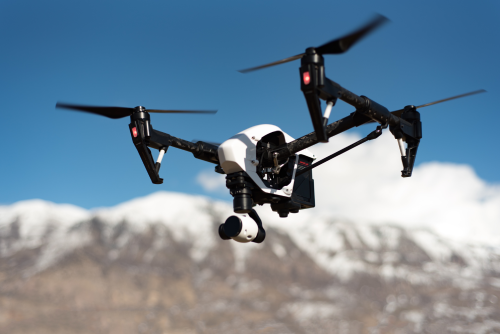
Alpha Unmanned Systems Sniper is an active Spanish helicopter-type military VTOL drone with a publicly confirmed endurance of 2 hours and a top speed of 70 km/h. It appears aimed at government, defense, and institutional users rather than mainstream consumer buyers, making it most relevant to readers comparing rotary-wing UAV platforms rather than shopping for a camera drone. What makes it notable is its helicopter airframe, which suggests runway-independent operation and hover capability in a segment where public specifications are often sparse, fragmented, or only disclosed at a program level. In practical terms, the Sniper is best understood not as a retail product with a polished public brochure ecosystem, but as a specialist unmanned aircraft whose real value likely depends on mission integration, payload fit, service support, and procurement context.
Quick Summary Box
- Drone Name: Alpha Unmanned Systems Sniper
- Brand: Alpha Unmanned Systems
- Model: Sniper
- Category: military/VTOL
- Best For: Government, defense, and institutional users evaluating compact helicopter-style VTOL UAVs
- Price Range: Not publicly confirmed in supplied data
- Launch Year: Not publicly confirmed in supplied data
- Availability: Not publicly confirmed in supplied data
- Current Status: Active
- Overall Rating: Not rated due to limited confirmed data
- Our Verdict: A niche active rotary-wing UAV with confirmed 2-hour endurance and 70 km/h top speed, but public data is too thin for a conventional retail-style score or buying recommendation
Introduction
The Sniper is listed as an active unmanned helicopter from Alpha Unmanned Systems, a Spanish drone manufacturer associated with rotary-wing UAV development. In market terms, it sits in the military/VTOL segment, which usually prioritizes hover, flexible takeoff and landing, mission persistence, and payload adaptability over consumer-style camera features, app polish, or impulse-buy affordability.
That distinction matters. Many drone buyers are used to comparing products through familiar headline metrics such as camera resolution, obstacle avoidance, follow modes, app ecosystems, and retail price. The Sniper belongs to a different world. Aircraft in this category are often evaluated through operational suitability questions instead: Can it launch from confined areas? How long can it remain on task? What payloads can it carry? How much pilot training is needed? What level of logistical support comes with the system? How mature is the ground control environment? How easily can it be maintained in the field?
Readers should care about the Sniper if they are comparing tactical or institutional UAV types, especially helicopter platforms that can operate without a runway. Even with limited public disclosure, the platform is relevant because helicopter UAVs remain an important niche between two better-known categories: fixed-wing aircraft, which tend to offer efficient forward flight but require different launch and recovery arrangements, and multirotors, which are easy to deploy and hover well but often trade away endurance. A helicopter-style UAV can potentially sit between those extremes, offering true hover with longer mission persistence than many small multirotor systems.
Overview
What kind of drone is it?
The Alpha Unmanned Systems Sniper is a helicopter-type UAV in the military/VTOL category. That means it is fundamentally different from both fixed-wing drones and standard quadcopters: it is designed around rotary-wing lift, which typically enables vertical takeoff, hover, and operation from tighter spaces than runway-dependent aircraft.
That classification is more important than it may first appear. In drone coverage, “VTOL” is sometimes used loosely to describe hybrid systems or multirotors, but a helicopter-style UAV suggests a design philosophy centered on sustained hover, efficient low-speed observation, and repeatable operations from unprepared sites. For tactical users, that can be valuable in environments where the aircraft must launch from a vehicle, a small clearing, a rooftop, a ship deck, or an improvised field position.
Helicopter UAVs also tend to carry a different operational profile than consumer drones. They are often tied to mission planning, defined procedures, technical crews, and support packages rather than casual self-service ownership. So while “drone” is still the correct broad label, the Sniper belongs to the professional unmanned aircraft ecosystem, not the hobby or creator market.
Who should buy it?
This is not a typical off-the-shelf creator or hobby drone. The most relevant buyers are likely:
- Defense or public-sector procurement teams
- Institutional users comparing rotary-wing UAVs
- Researchers tracking European military drone programs
- Integrators evaluating helicopter UAV classes for observation or testing roles
Those buyer groups share one common need: they are not simply looking for an aircraft to fly; they are evaluating a system. In this kind of procurement, the aircraft itself is only one part of the package. Training, technical support, maintenance planning, mission payload integration, data security, and regulatory permissions can all be as important as raw flight specifications.
For that reason, the Sniper makes the most sense for organizations that can engage directly with the manufacturer or an authorized representative, request technical documentation, and assess the platform within a structured evaluation process. It is much less suitable for buyers who need all key information to be publicly available before shortlisting.
What makes it different?
Its biggest point of distinction is the helicopter airframe in an active Spanish-made platform. Rotary UAVs often occupy a useful middle ground: more hover-capable and launch-flexible than fixed-wing aircraft, but often more persistent than very small multirotors. That alone gives the Sniper a meaningful identity in a market crowded with multirotor systems on one side and larger tactical fixed-wing aircraft on the other.
Another differentiator is simply its position in the public record. Many consumer drones are over-documented, with endless review videos and dozens of spec-sheet comparisons. The Sniper is the opposite. It stands out more as a specialized, database-tracked platform than as a transparently documented retail product. For analysts and procurement teams, that does not make it irrelevant. In fact, it can make it more interesting, because under-documented professional systems often need to be assessed through direct vendor engagement rather than public marketing.
Its Spanish origin may also matter. For some institutional buyers, supplier geography, industrial relationships, export considerations, and alignment with regional procurement preferences can influence a shortlist just as much as endurance or speed figures.
Key Features
- Helicopter UAV architecture
- VTOL-style operation is implied by the rotary-wing airframe
- Publicly confirmed endurance: 2 hours
- Publicly confirmed top speed: 70 km/h
- Active status rather than discontinued or prototype-only status
- Spanish origin, which may matter to buyers comparing regional suppliers
- Military/VTOL segment positioning, suggesting mission-focused rather than consumer-focused use
- Payload, sensor package, autonomy stack, and datalink details are not publicly confirmed in supplied data
A few of these points deserve context. The confirmed 2-hour endurance is especially meaningful because endurance is one of the hardest specifications to achieve in rotorcraft. Hovering is inherently demanding, and rotary systems pay aerodynamic and mechanical costs that fixed-wing aircraft do not. So even a single verified endurance figure can tell buyers something useful about the platform’s intended mission persistence.
Likewise, a 70 km/h top speed does not make the Sniper a fast tactical aircraft in absolute terms, but it does place it solidly in the category of mission-oriented rotary UAVs rather than static tethered observation tools or ultra-short-range hobby platforms. The combination of hover capability and moderate forward speed suggests an aircraft suited to surveillance, overwatch, test support, or institutional field use rather than recreational flying.
Full Specifications Table
| Specification | Details |
|---|---|
| Brand | Alpha Unmanned Systems |
| Model | Sniper |
| Drone Type | Helicopter UAV |
| Country of Origin | Spain |
| Manufacturer | Alpha Unmanned Systems |
| Year Introduced | Not publicly confirmed in supplied data |
| Status | Active |
| Use Case | military/VTOL |
| Weight | Not publicly confirmed in supplied data |
| Dimensions (folded/unfolded) | Not publicly confirmed in supplied data |
| Max Takeoff Weight | Not publicly confirmed in supplied data |
| Battery Type | Not publicly confirmed in supplied data |
| Battery Capacity | Not publicly confirmed in supplied data |
| Flight Time | 2 hr |
| Charging Time | Not publicly confirmed in supplied data |
| Max Range | Not publicly confirmed in supplied data |
| Transmission System | Not publicly confirmed in supplied data |
| Top Speed | 70 km/h |
| Wind Resistance | Not publicly confirmed in supplied data |
| Navigation System | Not publicly confirmed in supplied data |
| Obstacle Avoidance | Not publicly confirmed in supplied data |
| Camera Resolution | Not publicly confirmed in supplied data |
| Video Resolution | Not publicly confirmed in supplied data |
| Frame Rates | Not publicly confirmed in supplied data |
| Sensor Size | Not publicly confirmed in supplied data |
| Gimbal | Not publicly confirmed in supplied data |
| Zoom | Not publicly confirmed in supplied data |
| Storage | Not publicly confirmed in supplied data |
| Controller Type | Not publicly confirmed in supplied data |
| App Support | Not publicly confirmed in supplied data |
| Autonomous Modes | Not publicly confirmed in supplied data |
| Payload Capacity | Not publicly confirmed in supplied data |
| Operating Temperature | Not publicly confirmed in supplied data |
| Water Resistance | Not publicly confirmed in supplied data |
| Noise Level | Not publicly confirmed in supplied data |
| Remote ID Support | Not publicly confirmed in supplied data |
| Geo-fencing | Not publicly confirmed in supplied data |
| Certifications | Not publicly confirmed in supplied data |
| MSRP / Launch Price | Not publicly confirmed in supplied data |
| Current Price | Not publicly confirmed in supplied data |
A practical note on the table above: the large number of unconfirmed fields is not just an inconvenience for reviewers. It changes how the aircraft should be evaluated. With a typical commercial drone, a missing field on a spec sheet is often a minor gap. With a professional helicopter UAV, missing data on payload interfaces, datalink range, maximum takeoff weight, navigation redundancy, or maintenance burden can materially affect whether the system is even suitable for a mission. So this is not a case where one can simply “fill in the blanks later.” Direct technical confirmation is essential.
Design and Build Quality
Because the Sniper is identified as a helicopter airframe, its design logic is different from that of a foldable camera drone or a conventional quadcopter. A helicopter UAV is usually chosen when hover efficiency, compact launch footprint, and controlled low-speed observation matter more than consumer convenience features.
That has several design implications. First, helicopter-style unmanned aircraft are often built around mission reliability rather than visual minimalism. Consumer drones are typically optimized for portability, sleek industrial design, and quick startup. Institutional helicopter UAVs are more likely to be judged on whether they can be assembled, checked, launched, recovered, transported, serviced, and flown again under procedural conditions. In that context, build quality is not just about materials; it is about repeatability, access to components, tolerance for field handling, and maintainability over time.
Public details on dimensions, rotor span, length, materials, and landing gear are not confirmed in the supplied data, so any claim about compactness, transportability, or ruggedization would be speculative. Still, it is reasonable to say that rotary-wing unmanned helicopters tend to be more mechanically complex than simple multirotors, which can affect maintenance planning, vibration management, and field service routines.
That complexity deserves emphasis. A helicopter UAV generally involves a different maintenance culture from a standard multirotor. Mechanical assemblies, rotating components, linkages, drivetrain elements, or other rotor-system parts may require more structured inspection intervals and more disciplined servicing. This does not make such systems inferior. In many institutional use cases, the trade-off is worthwhile because the aircraft delivers mission behavior that a basic quadcopter cannot. But it does mean buyers should think beyond “airframe quality” in the consumer sense and instead ask about the total support concept.
For buyers, the practical takeaway is this: the Sniper likely belongs in a support-and-training-driven ownership model rather than a plug-and-play retail model. Serviceability, spare parts access, maintenance intervals, technical manuals, and approved procedures should be verified directly with the manufacturer or approved integrators. If your organization lacks the capacity to manage that type of system support, the aircraft may be operationally harder to adopt than its limited public specs suggest.
Flight Performance
The two confirmed performance figures are a 2-hour endurance and a 70 km/h maximum speed. Those numbers suggest a platform intended more for controlled mission persistence than for high-speed dash performance.
The 2-hour figure is the more significant of the two. In the rotary-wing UAV space, endurance is usually a central differentiator because hovering, low-speed observation, and vertical flight all consume energy in ways that limit smaller or simpler platforms. A 2-hour mission duration indicates that the Sniper is not just a short-hop observer designed for a few minutes of look time. It points to an aircraft meant to remain on station long enough to support actual operational tasks, training sorties, or structured observation windows.
The 70 km/h top speed is also worth interpreting correctly. For many military or institutional missions, top speed is not the dominant requirement. What often matters more is transit efficiency between launch point and observation area, stable loiter behavior, the ability to reposition quickly around a target area, and confidence in handling during different mission phases. A 70 km/h maximum speed suggests the Sniper is meant to move with purpose, but not to outrun weather systems or perform long-range tactical penetrations. Its speed profile appears aligned with observation-oriented work rather than aggressive high-speed response.
From an analytical standpoint, the helicopter format likely gives the Sniper a few advantages common to rotary UAVs:
- Vertical takeoff and landing without runway dependence
- True hover capability for observation tasks
- Better positioning flexibility than fixed-wing systems in confined launch areas
Those advantages are exactly why many operators continue to consider helicopter UAVs despite their complexity. If you need a platform that can lift off from a small site, travel to an area of interest, stop and hover, then reposition precisely without needing a launch rail or recovery net, a helicopter-type UAV can be operationally attractive.
At the same time, several key flight-performance factors remain unconfirmed in the supplied data:
- Maximum range
- Service ceiling
- Wind tolerance
- Datalink reliability
- Navigation redundancy
- Automatic takeoff and landing behavior
Those gaps matter because raw endurance only tells part of the story. Two hours of flight time sounds strong, but what portion of that is available as useful on-station time after transit? How far can the aircraft safely operate from its control point? How well does it hold position in gusty conditions? Does it maintain acceptable control margins in degraded GNSS environments? Can it continue safe recovery after a link interruption? Is there an automated contingency procedure? None of those questions can be answered confidently from the currently supplied public data.
In simple terms, the confirmed endurance is meaningful for a rotary platform, but the missing range and systems data make it hard to judge how the Sniper compares operationally with better-documented tactical UAVs. It should be viewed as an outdoor mission platform, not an indoor or casual-use aircraft, and any serious performance assessment should come from validated manufacturer documentation or direct demonstration rather than assumption.
Camera / Payload Performance
No camera, gimbal, or payload specification is publicly confirmed in the supplied data. That means it would be misleading to present the Sniper as a camera drone in the consumer sense.
This distinction is important because many readers reflexively ask, “How good is the camera?” With a platform like the Sniper, the more useful question is, “What mission payloads can the airframe support, and under what conditions?” In institutional UAV programs, the payload often defines the aircraft’s practical value. A rotorcraft with modest airframe specs can still be highly useful if it carries the right stabilized sensor, transmits data reliably, and integrates cleanly into the operator’s workflow.
Given its military/VTOL positioning, it is more useful to think of the Sniper as a payload carrier whose value likely depends on the mission package attached to it. In this class, buyers would typically want to verify:
- Daylight EO payload options
- Thermal or multisensor compatibility
- Gimbal stabilization quality
- Payload weight limits
- Power and data interfaces
- Downlink quality and recording options
Those questions go well beyond image sharpness. For example, a surveillance-oriented buyer may care about stabilized zoom, thermal sensitivity, target handoff workflows, and low-latency video transmission. A test or research user may care more about modular mounting, electrical interface standards, and data extraction. A public-sector overwatch team may prioritize rapid sensor startup, operator simplicity, and dependable line-of-sight video link performance.
Without those details, the safest conclusion is that payload capability is central to the aircraft’s purpose, but not transparent enough in public data to score or compare precisely. Any serious buyer should request official payload integration documentation before making assumptions about ISR, surveillance, or mapping suitability.
It is also worth noting what cannot be responsibly inferred. There is no basis in the supplied data to claim a particular gimbal size, thermal capability, zoom level, mapping suitability, or target-tracking function. Even if those features exist in some configuration, they should not be treated as established facts until confirmed.
Smart Features and Software
No smart-flight or software stack details are publicly confirmed in the supplied data. That includes waypoint support, return-to-home behavior, autonomous mission planning, tracking modes, cloud tools, SDK access, and fleet-management features.
In consumer drones, software is often framed as a convenience layer: automatic shots, simple flight modes, editing tools, and app integration. In institutional helicopter UAVs, software is much more foundational. Mission planning, route execution, failsafe behavior, recovery logic, system health monitoring, and secure data handling can determine whether the aircraft is merely flyable or operationally viable.
In the broader rotary-wing institutional UAV market, buyers often expect some level of:
- Mission planning software
- Failsafe logic
- GPS-assisted navigation
- Automated or assisted takeoff and landing
- Ground control station integration
Beyond those basics, serious buyers may also want to know whether the platform supports encrypted links, user permissions, maintenance logging, exportable flight records, payload control from the same ground station, software update control, and integration with broader command-and-control environments. None of that is confirmed here, but all of it can matter deeply in real-world procurement.
However, those should be treated as possibilities to verify, not confirmed Sniper features. For this model, software maturity may be just as important as airframe performance, but the public record does not currently provide enough detail to assess that confidently.
That absence should not be mistaken for irrelevance. In fact, it raises the importance of due diligence. A buyer evaluating the Sniper should treat software and autonomy as one of the first follow-up areas for vendor questions, because a capable airframe without a mature control environment can create avoidable operational burden.
Use Cases
Based on its confirmed segment and airframe type, the most realistic use cases for the Sniper are:
- Government and defense observation missions under lawful authority
- Institutional rotary-UAV evaluation and testing
- Border, coastal, or site awareness programs where hover matters
- Public-sector aerial overwatch roles with controlled operating procedures
- Training and familiarization with helicopter-style unmanned systems
- Research and comparative analysis of military VTOL UAV platforms
These use cases all reflect the same core strength: the ability to operate as a rotary-wing unmanned platform where launch flexibility and hovering observation are useful.
For example, in a border or perimeter monitoring scenario, the value of a helicopter UAV is not necessarily extreme speed. It is the ability to launch from a compact site, reach a defined observation area, hold position or reposition precisely, and continue operating long enough to support a real mission window. In a coastal or maritime-adjacent support role, vertical launch can also matter when infrastructure is limited. In a training or familiarization role, the Sniper may be relevant simply because helicopter-style UAVs demand different handling concepts, procedures, and support practices than multirotors or fixed-wing systems.
Institutional evaluation is another plausible use case. Organizations comparing rotorcraft UAV types often need platforms that can serve as demonstrators, training tools, or test assets in controlled programs. Even limited public data does not prevent a system from being useful in that context, provided the operator has direct access to manufacturer support and technical materials.
That said, suitability always depends on configuration. An aircraft may be physically capable of a mission category but still be limited by payload fit, datalink range, sensor maturity, regulatory permissions, or support availability. So the listed use cases should be read as plausible application areas, not guaranteed capabilities.
Pros and Cons
Below is the most balanced way to view the Sniper based on currently confirmed information.
Pros
- Active platform status is confirmed
- Helicopter airframe supports VTOL-style operation and hover
- 2-hour endurance is a meaningful confirmed figure for a rotary UAV
- 70 km/h top speed is adequate for observation-oriented mission profiles
- Spanish origin may appeal to buyers comparing European manufacturers
- Stands apart from mass-market multirotors by targeting a specialized UAV niche
Each of those advantages speaks to relevance rather than mass appeal. The Sniper is interesting because it is a living platform in a specialized category, not because it dominates a consumer-style spec race.
Cons
- Publicly available specification depth is very limited
- Price is not publicly confirmed in supplied data
- Payload, camera, and gimbal details are not publicly confirmed
- Range and communications performance are not publicly confirmed
- Software, autonomy, and navigation feature set are not publicly confirmed
- Procurement and support may be contract-based rather than simple retail purchase
- Rotary-wing UAVs are typically more maintenance-intensive than simple consumer multirotors
The biggest downside is not any one missing feature. It is uncertainty. Buyers who require transparent public documentation before investing time in evaluation may find the Sniper difficult to assess from open sources alone.
Comparison With Other Models
Because public information on the Sniper is limited, the comparison below is directional rather than a strict like-for-like buyer chart.
| Model | Price | Flight Time | Camera or Payload | Range | Weight | Best For | Winner |
|---|---|---|---|---|---|---|---|
| Alpha Unmanned Systems Sniper | Not publicly confirmed in supplied data | 2 hr | Not publicly confirmed in supplied data | Not publicly confirmed in supplied data | Not publicly confirmed in supplied data | Buyers evaluating a smaller-data-footprint helicopter UAV entry in the military/VTOL class | No clear winner due to limited confirmed data |
| Schiebel Camcopter S-100 | Not publicly confirmed publicly in standard retail terms | Publicly reported up to around 6 hr class | Broadly documented tactical sensor ecosystem | Publicly reported tactical-range class | Publicly reported around 200 kg MTOW class | Longer-endurance rotary UAV programs | Endurance |
| UMS Skeldar V-200 | Not publicly confirmed publicly in standard retail terms | Publicly reported around 5 hr class | Broadly documented heavier tactical payload class | Publicly reported tactical-range class | Publicly reported 200+ kg MTOW class | Larger institutional rotary UAV missions | Payload class |
This table is useful mainly for framing, not for declaring a winner. The Sniper should not automatically be judged as inferior simply because better-known systems have larger public footprints or higher reported headline figures. Bigger tactical helicopter UAVs often belong to different acquisition scales, mission sets, support structures, and budget classes. In some programs, a lighter or more focused platform with the right supplier relationship may be more relevant than a top-tier tactical rotorcraft.
Sniper vs a close competitor
Against the Camcopter S-100, the Sniper is harder to assess because the S-100 has a much deeper public record. Based on currently confirmed numbers alone, the Sniper does not match that platform’s widely reported endurance class, but it may still appeal in programs where supplier relationships, mission fit, regional considerations, or procurement structure matter more than headline specs.
The main challenge in this comparison is asymmetry of information. The S-100 is a well-known benchmark in rotary tactical UAV discussions, with a broad ecosystem of public references. The Sniper, by contrast, cannot be measured with the same confidence from open data. That means the comparison says more about documentation maturity than it does about absolute aircraft value.
Sniper vs an alternative in the same segment
Compared with the Skeldar V-200 class, the Sniper appears to sit in a less publicly documented position. Buyers looking for heavier payload ecosystems may gravitate toward better-known alternatives, while buyers prioritizing a specific supplier, national industrial alignment, or smaller program fit would need direct documentation from Alpha Unmanned Systems.
This is a common issue in institutional procurement: the most visible platform is not always the most appropriate one. Some organizations want an aircraft with a large and mature ecosystem; others want a more tailored supplier engagement with a different cost, scale, or integration profile. Without confirmed payload and system data, the Sniper cannot be cleanly placed on that spectrum from public information alone.
Sniper vs an older or previous-generation option
There is not enough reliable public information in the supplied data to position the Sniper against a clearly documented previous-generation Sniper model. If lineage matters for your evaluation, it is worth requesting official product-history and support-status clarification from the manufacturer.
That request matters because lineage affects risk. Buyers should know whether they are looking at a current baseline configuration, an evolved platform with backward compatibility, or a system that has undergone significant redesign. Spare parts continuity, training material relevance, and software support can all hinge on version history.
Manufacturer Details
Alpha Unmanned Systems is the manufacturer and brand name attached to the Sniper, so in this case the brand and manufacturer appear to be the same. The company is associated with Spain and is known in the market for rotary-wing unmanned aircraft rather than mass-market camera drones.
That specialization is relevant. Building and supporting helicopter UAVs is not the same as producing commodity multirotors. Rotary platforms impose different technical demands in airframe design, powertrain management, vibration control, payload stabilization, pilot training, and maintenance support. A manufacturer focused on that niche may offer domain experience that matters to institutional users, even if its products are less visible in the public consumer market.
Its reputation sits more in the specialized UAV space than in consumer retail. That usually means product evaluation is driven by mission need, support structure, integration capability, and procurement fit rather than influencer-style reviews or consumer app polish. Parent-company context is not publicly confirmed in the supplied data.
For prospective buyers, the key manufacturer questions are likely to be practical rather than branding-oriented: What support network exists? What training is offered? How mature is the logistics chain? What documentation can be supplied under evaluation? How responsive is the company to integration requests? Those answers matter more here than broad consumer brand recognition.
Support and Service Providers
For a drone in this segment, support is likely to be more structured and contract-based than what buyers expect from consumer brands. Readers should verify:
- Official manufacturer support channels
- Regional repair capability
- Spare parts availability
- Airframe and rotor-system maintenance procedures
- Training packages for pilots and technicians
- Payload integration support
- Software and firmware update policy
This section is especially important for helicopter UAVs because support quality directly affects mission readiness. A platform with good theoretical performance can still be a poor operational choice if spare parts are slow to obtain, training is limited, or maintenance requirements are not clearly documented.
Warranty terms, service turnaround times, and third-party repair coverage are not publicly confirmed in the supplied data. Because this is a defense-linked rotary UAV class, regional support may depend heavily on distributor, integrator, or government-contract arrangements.
Buyers should also ask whether support is organized at multiple levels. For example, some systems are supported through operator-level maintenance for routine tasks, regional technical centers for more involved service, and factory-level channels for upgrades or major repairs. Even if such a structure exists, it should not be assumed without confirmation.
In a practical procurement setting, service readiness may be a deciding factor. If your organization cannot afford extended downtime, then support commitments, spare kit availability, and training depth may deserve more attention than speed or endurance figures.
Where to Buy
The Sniper does not appear to be a typical consumer e-commerce drone. Procurement is more likely to happen through:
- Direct manufacturer inquiry
- Authorized institutional or defense distributors
- Approved systems integrators
- Region-specific procurement frameworks
Buyers should not assume normal retail availability. Availability may be restricted by geography, customer type, export review, or program-level purchasing requirements.
In many cases, the buying process for a system like this is closer to a project than a purchase. There may be introductory technical calls, capability presentations, restricted documentation exchange, demonstrations, trial programs, integration discussions, and formal procurement paperwork before any order is placed. That is normal for this class of aircraft.
A sensible first step for serious buyers would be to request a capability brief and a current technical data package, then clarify whether the Sniper is offered as a complete system or as a configurable platform with optional payload and control components.
Price and Cost Breakdown
No launch price or current price is publicly confirmed in the supplied data.
That matters because the total cost of ownership for a helicopter UAV can extend well beyond the aircraft itself. Before budgeting, buyers should verify:
- Air vehicle price
- Ground control station inclusion
- Standard versus optional payload package cost
- Spare rotor and maintenance parts
- Training and onboarding cost
- Software or mission-system licensing
- Repair and service contract terms
- Insurance and compliance costs where applicable
For this model, price transparency appears limited, so a real buying decision will likely depend on quotation-based procurement rather than posted MSRP.
It is also important to think in lifecycle terms. The cheapest airframe quote does not always produce the lowest program cost. Consumables, technical labor, recurrent training, software support, acceptance testing, operator certification, and stock of critical spare parts can all affect long-term affordability. If the Sniper is being considered for institutional deployment rather than occasional evaluation, those costs should be modeled early.
Another point often missed in drone discussions is that mission cost may depend on how complete the offered package is. A system sold as a turnkey capability with training, support, and payload integration may appear expensive up front but reduce deployment friction. A cheaper base platform with many optional components can look attractive initially while becoming more costly once all operational requirements are added.
Regulations and Compliance
Because the Sniper is a military/VTOL helicopter UAV, regulatory treatment will depend heavily on jurisdiction, operator type, and mission profile. Buyers and operators should verify all of the following locally:
- Aircraft registration requirements
- Airspace authorization rules
- Commercial or institutional operator licensing
- Data and privacy restrictions
- Spectrum and datalink permissions
- Import or export controls
- Restricted-use classification issues for defense-linked systems
Remote ID support is not publicly confirmed in the supplied data, so operators should not assume compliance with any particular national rule set. Weight is also unconfirmed, which means it cannot be placed into a consumer weight class from the information currently available. Even if operated by government users, local aviation law and airspace restrictions still need to be checked carefully.
For many institutional aircraft, the regulatory picture is more layered than for hobby drones. There may be one set of rules governing ownership, another governing radio use, another governing flight approvals, and still another governing the collection or transmission of imagery. If the aircraft or its payload has defense or dual-use relevance, export and end-user restrictions may apply as well.
Civil airspace integration is another key issue. An organization may lawfully own the aircraft but still face strict limitations on where and how it can fly, especially outside segregated or specially approved airspace. That is why compliance should be treated as a planning stream, not a post-purchase afterthought.
Who Should Buy This Drone?
Best for
- Government or institutional buyers evaluating helicopter-style UAVs
- Defense-related programs needing VTOL and hover capability
- Researchers comparing European rotary-wing drone manufacturers
- Integrators assessing niche military/VTOL platforms
- Buyers who can obtain direct technical documentation from the manufacturer
These are buyers who can work with incomplete public information because they have the means to request the missing details directly. For them, the Sniper may be a reasonable candidate for further investigation, especially if supplier geography, mission flexibility, or rotary-wing familiarity are relevant.
Not ideal for
- Consumer camera-drone buyers
- Hobbyists looking for transparent retail specs and pricing
- Creators wanting a known video system and editing workflow
- Budget-conscious operators who need easy parts access
- Buyers who require clearly published payload, range, and software details before shortlisting
In other words, if your buying process depends on publicly posted specifications, open-box reviews, street pricing, and a quick online order, the Sniper is the wrong type of product. This is a specialist aircraft for structured users, not a mass-market drone for casual acquisition.
Final Verdict
The Alpha Unmanned Systems Sniper is an interesting but tightly niche platform: an active Spanish helicopter UAV with two solid confirmed points in its favor, namely 2-hour endurance and 70 km/h top speed. Its biggest strength is the rotary-wing VTOL format, which usually brings hover capability and flexible launch options for institutional missions. That alone makes it relevant in a market where many alternatives are either multirotors with shorter endurance or fixed-wing systems without the same hover utility.
Its biggest drawback is simple but important: public documentation is too thin to treat it like a normal product-page drone buy. Too many critical variables remain unconfirmed in open sources, including payload specifics, datalink range, autonomy features, maintenance profile, software environment, and price. For mainstream buyers, that uncertainty is disqualifying. For professional evaluators, it is a signal that the platform must be assessed through direct engagement rather than public speculation.
If you are a defense, public-sector, or research buyer comparing helicopter UAV categories, the Sniper is worth noting on the shortlist. It has enough confirmed identity to justify attention: active status, helicopter architecture, 2-hour endurance, and moderate mission speed. If you are looking for transparent pricing, detailed camera specs, rich software disclosures, or an easy retail purchase path, this is not the right kind of drone.
In short, the Sniper looks like a procurement-driven specialist platform, not a mainstream published-spec UAV. Its relevance lies less in flashy public marketing and more in whether it fits a real operational need, under a support structure that can make helicopter-style unmanned aviation practical.
