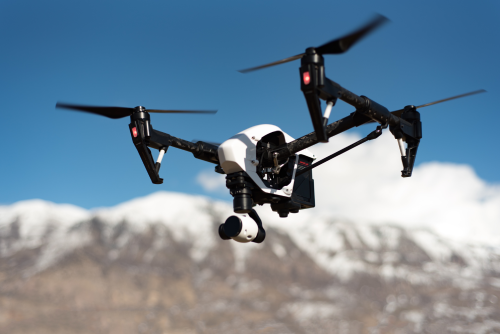
Wake Engineering Fulmar is a Spanish fixed-wing military/ISR drone built for long-endurance observation rather than consumer flying. Based on the supplied public record, it remains active and stands out for a stated 12-hour endurance, 800 km range, and 100 km/h top speed. That makes it relevant for defense analysts, institutional buyers, and researchers comparing persistent ISR platforms, even though many finer specifications are not publicly confirmed in the supplied data.
Unlike consumer drones, platforms in this category are usually judged less by ease of use or camera marketing and more by mission persistence, supportability, payload integration, and how well the broader system fits into an operational workflow. In other words, the aircraft itself is only one part of the story. Even a strong endurance number means little unless the drone can carry a useful sensor, maintain stable communications, and be deployed with a realistic field footprint.
That distinction is important when looking at the Fulmar. On paper, the confirmed figures suggest an aircraft designed to stay on task for extended periods and cover meaningful distance, which are desirable traits for intelligence, surveillance, and reconnaissance missions. But because the public specification set is still thin, Fulmar is best analyzed as a capability profile rather than a fully transparent product listing.
Quick Summary Box
- Drone Name: Wake Engineering Fulmar
- Brand: Wake Engineering
- Model: Fulmar
- Category: military/ISR
- Best For: Institutional users, defense researchers, and procurement teams assessing long-endurance fixed-wing ISR platforms
- Price Range: Not publicly confirmed in supplied data
- Launch Year: Not publicly confirmed in supplied data
- Availability: Not publicly confirmed in supplied data
- Current Status: Active
- Overall Rating: Not rated due to limited confirmed data
- Our Verdict: A niche Spanish ISR platform with strong stated endurance and range, but public details are too limited for a conventional retail-style rating.
The short version is straightforward: Fulmar appears interesting because of endurance and range, but difficult to evaluate conclusively because many operationally critical details remain unconfirmed in the supplied record. That makes it more suitable for shortlist research and program comparison than for a simple “buy or skip” recommendation.
Introduction
The Wake Engineering Fulmar is listed as an active fixed-wing drone from Spain in the military/ISR segment. ISR stands for intelligence, surveillance, and reconnaissance, so this is the kind of aircraft readers would evaluate for persistent monitoring and situational awareness rather than photography, racing, or hobby use.
That mission class changes how the platform should be judged. For a recreational drone, people usually ask about camera quality, obstacle avoidance, app quality, or how quickly the battery can be recharged between flights. For an ISR aircraft, the more important questions are different: How long can it stay airborne? What sort of sensor can it carry? How is data transmitted to the ground? Can it fly reliable preplanned missions? What launch and recovery infrastructure does it need? How much operator training is required? And perhaps most importantly, how sustainable is the system over time?
Why does Fulmar matter? On the confirmed figures alone, it presents an interesting profile: 12 hours of endurance, 800 km of range, and a 100 km/h maximum speed suggest a platform designed for staying airborne and covering distance efficiently. Those are the kinds of numbers that attract attention in any discussion of persistent aerial surveillance, especially when comparing fixed-wing aircraft against shorter-endurance tactical systems.
What is less clear from the supplied data is almost everything around the mission system, including payload, launch method, control architecture, autonomy features, crew requirements, and pricing. That does not make the drone unimportant. It simply means this is an aircraft that should be approached as a procurement or research subject rather than a conventional hands-on review target.
Overview
What kind of drone is it?
Fulmar is a fixed-wing unmanned aircraft in the military/ISR category. Compared with multirotor drones, a fixed-wing design typically gives up hover capability in exchange for better aerodynamic efficiency, longer flight times, and wider-area coverage.
That tradeoff is central to understanding the platform. A fixed-wing drone is generally chosen when the mission involves covering distance, loitering over a broad area, or maintaining endurance that small battery-powered quadcopters cannot realistically match. A multirotor can launch quickly, hover over a point of interest, and operate in tighter spaces, but it normally cannot compete with a purpose-built fixed-wing airframe for hours-long persistence. Fulmar’s confirmed endurance figure strongly suggests it belongs in the latter camp.
In practical terms, that means Fulmar is likely intended for structured outdoor missions in open operating areas. It is not the kind of drone a user unfolds on a sidewalk for a ten-minute visual inspection. It is better understood as part of a system that may involve operators, mission planning, potentially dedicated support equipment, and clear operating procedures.
Who should buy it?
This is not a consumer-retail drone in any normal sense. The most relevant audience includes:
- Defense and public-sector procurement teams
- Research organizations studying UAV fleets and ISR capabilities
- Journalists and analysts comparing tactical or mid-range fixed-wing drones
- Institutional operators looking at long-endurance surveillance platforms
That list deserves a bit more explanation. Procurement teams may view Fulmar as a candidate platform when comparing endurance, regional sourcing, logistical footprint, and lifecycle support. Researchers may examine it as an example of a Spanish ISR drone program in the wider European unmanned aviation ecosystem. Journalists and defense analysts may use it as a reference point in capability comparisons, especially where local or regional industrial context matters. Institutional operators may consider it if their mission requires prolonged observation rather than hover-based inspection.
Ordinary commercial drone buyers are unlikely to be the target market. Even if an aircraft like this were technically available for civilian acquisition in some circumstances, the support model, integration demands, and likely procurement process would place it far outside the usual purchase path for small businesses or independent operators.
What makes it different?
What makes Fulmar notable in the supplied record is its endurance-and-range combination. A stated 12-hour endurance and 800 km range place it in a more persistence-oriented category than small short-flight observation drones. The fact that it is listed as active also matters, because supportability and program continuity are usually major considerations in this segment.
The Spanish origin may also be relevant in a way that would not matter much for a consumer drone. In defense and institutional procurement, country of origin can influence exportability, interoperability assumptions, political alignment, sustainment options, and industrial-partnership considerations. That does not automatically make Fulmar better or worse than alternatives, but it does make the aircraft contextually important for some buyers.
Another differentiator is simply the scarcity of public detail. That can be frustrating from a review perspective, but it is not unusual in defense-linked UAV categories. Many platforms are known publicly through a limited set of confirmed performance claims while the deeper operational details remain available mainly through official documentation, tender processes, direct manufacturer contact, or specialized industry channels.
Key Features
- Fixed-wing airframe for efficient forward flight and longer-duration missions
- Military/ISR mission class aimed at surveillance and reconnaissance roles
- 12-hour endurance in the supplied data
- 800 km stated range in the supplied data
- 100 km/h top speed in the supplied data
- Active status in the supplied record
- Spanish origin, which may be relevant for regional procurement or comparison research
- Public specification set is limited, so payload, autonomy stack, and recovery method still need verification from official sources
Each of those features has a different kind of significance. The fixed-wing airframe and endurance figure speak to mission profile. The military/ISR classification tells you this is not optimized for casual operation or creator workflows. The active status suggests the platform is not merely a historical program entry. And the limited public spec set is itself a feature of the research challenge: anyone evaluating Fulmar seriously will need to validate the details directly rather than relying on broad consumer-style product pages.
Put another way, Fulmar’s value proposition is not “easy to understand at a glance.” It is “potentially capable, but requiring due diligence.”
Full Specifications Table
| Specification | Details |
|---|---|
| Brand | Wake Engineering |
| Model | Fulmar |
| Drone Type | Fixed-wing drone |
| Country of Origin | Spain |
| Manufacturer | Wake Engineering |
| Year Introduced | Not publicly confirmed in supplied data |
| Status | Active |
| Use Case | military/ISR |
| Weight | Not publicly confirmed in supplied data |
| Dimensions (folded/unfolded) | Not publicly confirmed in supplied data |
| Max Takeoff Weight | Not publicly confirmed in supplied data |
| Battery Type | Not publicly confirmed in supplied data |
| Battery Capacity | Not publicly confirmed in supplied data |
| Flight Time | 12 hr |
| Charging Time | Not publicly confirmed in supplied data |
| Max Range | 800 km |
| Transmission System | Not publicly confirmed in supplied data |
| Top Speed | 100 km/h |
| Wind Resistance | Not publicly confirmed in supplied data |
| Navigation System | Not publicly confirmed in supplied data |
| Obstacle Avoidance | Not publicly confirmed in supplied data |
| Camera Resolution | Not publicly confirmed in supplied data |
| Video Resolution | Not publicly confirmed in supplied data |
| Frame Rates | Not publicly confirmed in supplied data |
| Sensor Size | Not publicly confirmed in supplied data |
| Gimbal | Not publicly confirmed in supplied data |
| Zoom | Not publicly confirmed in supplied data |
| Storage | Not publicly confirmed in supplied data |
| Controller Type | Not publicly confirmed in supplied data |
| App Support | Not publicly confirmed in supplied data |
| Autonomous Modes | Not publicly confirmed in supplied data |
| Payload Capacity | Not publicly confirmed in supplied data |
| Operating Temperature | Not publicly confirmed in supplied data |
| Water Resistance | Not publicly confirmed in supplied data |
| Noise Level | Not publicly confirmed in supplied data |
| Remote ID Support | Not publicly confirmed in supplied data |
| Geo-fencing | Not publicly confirmed in supplied data |
| Certifications | Not publicly confirmed in supplied data |
| MSRP / Launch Price | Not publicly confirmed in supplied data |
| Current Price | Not publicly confirmed in supplied data |
A table like this makes one thing immediately clear: the public record currently tells us more about Fulmar’s role and broad mission envelope than about its detailed engineering. That is useful, but it also sets limits on what can be concluded. For institutional readers, the omissions are not minor. Weight affects transport and launch requirements. Payload capacity affects sensor choice. Control-link information affects mission radius and operational doctrine. Launch and recovery details affect deployment footprint. Without those data points, a true apples-to-apples comparison remains incomplete.
Design and Build Quality
Because Fulmar is a fixed-wing ISR platform, its design logic is likely centered on aerodynamic efficiency and mission endurance rather than compact storage or close-range maneuvering. That is a reasonable analysis based on the airframe type and confirmed 12-hour endurance, not a claim about exact construction materials.
For a platform in this class, design quality is not just about whether the aircraft looks refined. It is about whether the system architecture supports reliable operational use. On an ISR drone, important design questions include how quickly the aircraft can be assembled in the field, how resistant it is to handling damage, how easy it is to transport between sites, and whether its maintenance burden is reasonable for the intended user. None of those points are fully answerable from the supplied data, but they are exactly the issues serious buyers should investigate.
The supplied data does not publicly confirm its wingspan, length, airframe materials, foldability, landing gear arrangement, or whether it uses hand launch, catapult launch, runway takeoff, belly landing, or net recovery. Those unknowns matter a lot in real-world evaluation because they determine transport burden, crew size, and field-readiness.
A runway-dependent fixed-wing drone, for example, imposes a different operating model from one that can be catapult-launched from a compact site. Likewise, belly landing on rough terrain creates different sustainment concerns from wheeled recovery on prepared surfaces. Even apparently simple details like whether wings detach for transport can have major implications for vehicle storage, deployment speed, and operator workload.
In practical terms, readers should assume Fulmar is a purpose-built operational airframe rather than a consumer-friendly portable drone. If endurance and range are prioritized in the real configuration, the aircraft is likely optimized for efficient cruise and sustained missions more than ultra-fast deployment from a backpack-sized kit.
Build quality in this category is also tied to lifecycle durability. ISR users usually care about repeatable sorties, maintainability, and mission reliability more than cosmetic finish. A platform that performs well on paper but is difficult to service, repair, or reconfigure may be less attractive than a slightly less ambitious aircraft with better supportability. That is another reason Fulmar should be evaluated as a system program, not just as an airframe with performance claims.
Flight Performance
On confirmed figures alone, Fulmar’s flight profile looks endurance-first. A 100 km/h top speed is not unusually fast for a fixed-wing UAV, but combined with 12 hours of endurance it suggests a platform intended to remain on task rather than sprint through short sorties.
That distinction matters because top speed can be misleading when taken out of context. In many ISR missions, maximum speed is less important than efficient cruise, stable loiter behavior, and the ability to remain over or around a target area for long periods. A fixed-wing drone that can stay airborne for many hours may deliver more operational value than one that is faster on paper but needs frequent recovery and relaunch cycles.
The 800 km range figure is meaningful, but it should be interpreted carefully. In military and ISR contexts, public range numbers can refer to different things, such as ferry distance, mission radius, ideal endurance-based travel distance, or the wider system envelope rather than a simple operator-to-aircraft control link. So the number is useful, but it should not be treated automatically as a direct control radius without official clarification.
This is especially important because communications architecture often defines real-world utility. A drone may be physically capable of flying a long distance, but mission effectiveness depends on how it is monitored, controlled, and connected to payload data links throughout the sortie. A procurement team would therefore want to know not only the aircraft’s nominal range, but also whether the system supports beyond-line-of-sight operations, what datalink architecture is used, how lost-link behavior is handled, and what limitations apply in contested or congested electromagnetic environments. None of that is publicly confirmed here.
As a fixed-wing aircraft, Fulmar would be most suitable for outdoor operation in open airspace and structured mission planning. Unlike multirotors, it would not be expected to hover over a single point. Indoor use is effectively out of scope for this airframe class.
That does not mean fixed-wing ISR drones are inflexible. Many are effective at orbiting, patterning, and repeatedly covering large sectors, coastlines, borders, road networks, or maritime zones. But they do so by flying through space efficiently rather than by stopping in place. For some missions, that is a strength. For others, especially close-up inspection or point-station observation, it is a limitation.
Wind handling is not publicly confirmed, but fixed-wing drones generally cope with open-air flight better than tiny quadcopters, especially when cruise efficiency is the design priority. Even so, actual stability in gusts depends on wing loading, autopilot tuning, and airframe size, none of which are confirmed here.
Endurance figures also need context. A stated 12-hour flight time is usually best read as a headline mission capability under favorable conditions and configuration assumptions, not as a guaranteed result in every weather profile or payload setup. Extra sensor weight, tougher wind conditions, lower temperatures, aggressive maneuvering, or specific launch-and-recovery profiles can all affect actual sortie duration. Serious evaluation therefore requires knowing whether the endurance figure reflects a particular payload, fuel or power setup, and environmental baseline.
In short, Fulmar’s published performance outline is promising, but its real operational envelope still depends on the details behind those numbers.
Camera / Payload Performance
Payload is one of the biggest unanswered parts of the Fulmar profile. The supplied data confirms the aircraft’s military/ISR role, but it does not publicly confirm the onboard sensor package, camera resolution, thermal capability, gimbal type, stabilization system, zoom level, or payload modularity.
That matters because for an ISR drone, sensor quality often determines mission value more than raw airframe speed. A 12-hour endurance figure is attractive only if paired with a useful observation payload and reliable data flow. Long flight time without meaningful sensor performance can leave an aircraft operationally underwhelming, while a modest airframe with a highly capable EO/IR payload can be extremely valuable.
In this class, buyers would normally want to verify:
- Daylight electro-optical sensor options
- Thermal or infrared capability
- Stabilized gimbal performance
- Metadata tagging and recording workflow
- Real-time downlink options
- Payload swap or modular integration support
Beyond that, several deeper questions become important. Can the payload maintain stable imagery during loiter or in crosswinds? Is the system optimized for wide-area scanning, target observation, or both? Can operators control the sensor independently of the flight path? Is geolocation data embedded cleanly enough for downstream intelligence use? Can imagery be archived, exported, and integrated into broader command systems? These are not consumer-camera questions, but they are central to real ISR utility.
Without those details, Fulmar is best understood as an airframe-and-mission-profile entry rather than a fully transparent sensor platform listing.
That said, the military/ISR classification strongly implies that payload capability is central to the platform’s purpose. It would be unusual for a drone in this segment to be evaluated only by the aircraft body itself. In practice, buyers should view the aircraft and payload as a combined package. Even if the base airframe is capable, the mission result will depend on what can be mounted, how it is stabilized, and how effectively the information is delivered to operators in real time.
Smart Features and Software
Specific smart features are not publicly confirmed in the supplied data. There is no confirmed information here on return-to-home behavior, waypoint planning, automated takeoff or landing, target tracking, mapping workflows, mobile app ecosystem, SDK support, or fleet-management software.
In a drone of this class, readers would typically expect some degree of mission planning and autonomous navigation, because long-endurance fixed-wing ISR systems are rarely flown like manual hobby aircraft for the entire sortie. However, that is an informed expectation, not a confirmed Fulmar specification.
Software matters here for two separate reasons. First, it affects flight execution. A fixed-wing drone designed for long missions usually benefits from robust waypoint navigation, route planning, altitude management, geofenced mission areas, and automatic responses to lost-link or low-power conditions. Second, it affects information management. ISR aircraft often need software that handles payload control, image review, mission replay, data export, and integration with other operational systems.
Before any procurement or serious evaluation, buyers should verify:
- Ground control station type
- Mission-planning software
- Lost-link procedures
- Autonomous mission modes
- Sensor control interface
- Data export and archive tools
- Cybersecurity and communications protections where relevant
Those last points are particularly significant for government and defense users. Cybersecurity, encryption, network segmentation, user authentication, and software update policy may be just as important as basic navigation features. A drone that flies well but lacks confidence-inspiring software governance can create operational or compliance risk. Likewise, software interoperability can decide whether a platform fits smoothly into an existing ISR environment or remains an isolated tool with limited workflow value.
One more practical note: in institutional drone systems, the “user experience” is not mainly about app polish. It is about clarity, reliability, crew coordination, training burden, and how well the software supports repeatable mission outcomes. That is the lens through which Fulmar’s smart-feature story should ultimately be judged once more information is available.
Use Cases
Based on the confirmed segment and airframe type, the most realistic use cases for Fulmar are:
- Long-endurance surveillance missions
- Border, coastal, or wide-area observation programs
- Public-sector or defense ISR evaluation projects
- Fixed-wing UAV fleet comparison and capability research
- Training environments for institutional fixed-wing UAV operations
- Extended airborne monitoring where hover is not required
Those use cases can be expanded a bit. A platform with long stated endurance and fixed-wing efficiency may be especially relevant where the mission involves broad-area patrol patterns, recurring route coverage, or persistent observation over zones too large for short-endurance multirotors to service efficiently. Coastal watch, perimeter observation, maritime sector monitoring, and regional reconnaissance concepts all fit the general profile, provided the payload and communications package support them.
Fulmar may also be useful as a benchmark aircraft in research and capability studies. Not every analyst looking at a military drone is trying to buy one immediately. Some are mapping industrial ecosystems, comparing regional manufacturers, studying endurance classes, or tracking how smaller ISR platforms fit between hand-launched tactical UAVs and larger strategic systems. For those audiences, Fulmar’s confirmed numbers make it a relevant comparison point even before every field specification is known.
Training is another plausible use case. Institutional fixed-wing operations involve different planning and crew procedures than quadcopter flights. A platform like Fulmar could have value in organizations developing doctrine, workflows, and operator familiarity for endurance-oriented UAV missions, again depending on the actual support and system details.
Pros and Cons
Pros
- Confirmed 12-hour endurance suggests strong mission persistence
- Confirmed 800 km range indicates a wide-coverage operating profile
- Fixed-wing design is well suited to efficient long-duration flight
- Active status reduces the risk that the platform is purely historical or abandoned
- Military/ISR positioning makes it relevant for serious institutional comparison work
- Spanish origin may matter for regional ecosystem analysis and procurement context
These strengths all point in the same direction: Fulmar appears designed for missions where staying airborne and covering area matter more than hovering, portability, or mainstream user convenience. Even with limited public detail, those headline metrics are enough to make it worth attention in the right professional context.
Cons
- Payload and sensor details are not publicly confirmed in the supplied data
- Weight, dimensions, and MTOW are not publicly confirmed
- Launch and recovery method is not publicly confirmed
- Software, autonomy, and control-system details are not publicly confirmed
- No public pricing is confirmed, making budget planning difficult
- Not a consumer drone, so ordinary buyers may find availability and support opaque
- Cannot be assessed as a true hands-on review from the limited public record alone
The weaknesses are less about visible poor performance and more about uncertainty. For analysts, that limits the depth of comparison. For buyers, it raises due-diligence burden. For general readers, it means any recommendation has to stay narrow and cautious.
Comparison With Other Models
The closest public comparisons are other fixed-wing ISR drones, but readers should treat cross-model figures carefully because military-system specs often vary by block, payload, and source.
| Model | Price | Flight Time | Camera or Payload | Range | Weight | Best For | Winner |
|---|---|---|---|---|---|---|---|
| Wake Engineering Fulmar | Not publicly confirmed in supplied data | 12 hr | Not publicly confirmed in supplied data | 800 km | Not publicly confirmed in supplied data | Long-endurance fixed-wing ISR evaluation | Best on confirmed stated range in this table |
| Insitu ScanEagle | Procurement-based; public pricing not standardized | Approx. 24+ hr, public figures vary | EO/IR ISR payloads, configuration-dependent | Approx. operational figures vary publicly | Approx. public figures vary | Mature persistent ISR operations | Winner for publicly reported endurance maturity |
| AeroVironment Puma LE | Procurement-based; public pricing not standardized | Approx. 6.5 hr, public figures vary | EO/IR tactical ISR payloads | Approx. public figures vary | Approx. public figures vary | More portable tactical ISR | Winner for portability |
This table should be read as directional, not definitive. In defense UAVs, public numbers often reflect different payload states, different program versions, or different operational assumptions. A platform’s usefulness also depends heavily on supportability, launch method, communications package, and payload suite, all of which can be harder to compare cleanly than a headline endurance figure.
Fulmar vs a close competitor
Against a platform like Insitu ScanEagle, Fulmar appears less endurance-heavy on the confirmed number set, but still competitive as a persistence-oriented fixed-wing ISR aircraft. The main limitation is that Fulmar’s public payload and system details are much thinner in the supplied data, so comparison depth is limited.
Where ScanEagle benefits in public understanding is maturity of documentation and wider discussion in defense analysis. Fulmar, by contrast, is harder to benchmark confidently without deeper official sources. That does not mean it is weaker; it means the comparison is asymmetric in terms of available evidence.
Fulmar vs an alternative in the same segment
Against a more portable system like AeroVironment Puma LE, Fulmar’s stated endurance and range give it a more extended-mission feel. Puma-type systems often appeal where portability and fast tactical deployment matter more than staying airborne for half a day.
So the choice between the two general profiles is less about which one is “better” and more about mission design. If operators need a compact tactical drone that can be deployed quickly by smaller teams, a more portable system may make more sense. If they need longer persistence over a wider area, Fulmar’s confirmed numbers may make it more attractive, assuming payload and field logistics are acceptable.
Fulmar vs an older or previous-generation option
A clearly documented previous-generation Fulmar or direct predecessor is not publicly confirmed in the supplied data. If you are comparing blocks, variants, or historical configurations, verify that you are not mixing different program versions under the same model name.
This is a common risk in defense-drone research. Some aircraft names persist across updates, payload changes, or subsystem revisions, which can create confusion if readers compare figures drawn from different time periods or configurations. Any serious technical assessment should therefore confirm exactly which Fulmar configuration is under discussion.
Manufacturer Details
Wake Engineering is identified in the supplied record as both the manufacturer and brand of the Fulmar, and its country of origin is listed as Spain. That means there is no separate brand-versus-maker split to explain here; based on the supplied data, Wake Engineering is both the company behind the aircraft and the name under which the product is presented.
Beyond that, the supplied record does not publicly confirm the company’s founding year, headquarters city, parent-company structure, or wider product portfolio. Its appearance in a recognized drone reference context suggests relevance within defense-linked UAV tracking, but the supplied data does not support a broader claim about market share or global reputation.
Why does manufacturer context matter? In institutional acquisitions, the drone is only part of the decision. Buyers also assess the vendor’s technical depth, long-term support capacity, documentation quality, export experience, integration capabilities, and responsiveness to custom requirements. A smaller manufacturer can sometimes offer strong specialization and flexibility, while a larger one may offer broader sustainment and training infrastructure. Without more public information, Fulmar’s manufacturer profile remains one of the areas that deserves direct verification.
For analysts, Wake Engineering’s Spanish origin may also make the company relevant in discussions of national or regional UAV development. Even if a reader is not buying the system, the manufacturer’s presence can matter when mapping industrial capabilities, procurement alternatives, or European unmanned systems coverage.
Support and Service Providers
Support arrangements are not publicly confirmed in the supplied data. For a military/ISR fixed-wing platform like Fulmar, support is likely to be more contract-based and program-based than consumer-style.
That means prospective users should think well beyond a simple warranty model. Institutional drone support often includes spare parts planning, software updates, operator and maintainer training, payload servicing, repair turnaround times, and access to technical documentation. In some cases, support can also involve on-site assistance, periodic inspections, calibration services, or depot-level maintenance structures.
Before any purchase or evaluation, buyers should verify:
- Official manufacturer support channels
- Regional service availability
- Spare parts access and lead times
- Sensor repair or calibration options
- Ground control software support
- Training packages for operators and maintainers
- Documentation quality and update policy
- Warranty or sustainment terms
If no local service network is clearly documented, assume support may depend heavily on direct manufacturer engagement or authorized institutional partners.
This can affect total program risk. A drone with attractive performance figures may still be a weak choice if parts are hard to source, repair cycles are slow, or training requirements are poorly supported. Conversely, a platform with a modestly smaller capability envelope can be the smarter buy if the sustainment ecosystem is stronger and more predictable. For a system like Fulmar, where public details are limited, support due diligence should be considered a core part of evaluation rather than a final administrative step.
Where to Buy
Fulmar does not appear to fit the normal consumer retail model. The most likely purchasing paths are:
- Direct inquiry through Wake Engineering’s official sales channels
- Authorized defense or institutional integrators
- Regional distributors where permitted by local law
- Government or enterprise procurement processes
Readers should not assume broad e-commerce availability. For this class of drone, procurement may be region-specific, contract-led, or restricted by export and end-user rules.
In practice, buying a system like this may involve a request for information, a technical demonstration, a formal tender response, or a structured quote covering the aircraft, payload, ground station, support package, and training. Some acquisitions may also require compliance review, end-user documentation, or government approvals depending on jurisdiction and intended use.
For researchers and journalists, the practical implication is simple: if you want verified details, the most reliable path is usually official manufacturer or procurement documentation rather than retail listings or aggregator pages. For buyers, the implication is that acquisition should be treated as a project, not a transaction.
Price and Cost Breakdown
No launch price or current market price is publicly confirmed in the supplied data.
For budgeting purposes, serious buyers should look beyond the air vehicle alone and verify the full ownership stack, which may include:
- Air vehicle or airframe package
- Ground control station
- Sensor payload package
- Communications equipment
- Launch and recovery equipment, if required
- Batteries, power modules, or propulsion support items
- Spare parts and consumables
- Operator and maintainer training
- Software licenses or mission-planning tools
- Service agreements and depot-level maintenance
- Insurance and regulatory overhead where applicable
Because this is a military/ISR platform, pricing may be procurement-based rather than publicly posted. Always request a full configuration quote instead of assuming a single-unit sticker price.
This is especially important in endurance-oriented fixed-wing systems because the most expensive parts of the package are not always the airframe itself. A capable EO/IR sensor, secure communications equipment, field support kit, or sustainment contract can materially change the total cost. Likewise, training and qualification requirements may create meaningful indirect expenses that never appear in a simple product brochure.
Lifecycle cost should also be part of the conversation. Potential buyers should ask about scheduled maintenance intervals, expected component replacement cycles, software support terms, and whether mission equipment is modular or locked to specific configurations. If launch or recovery gear is required, that support hardware may influence not just cost but deployment complexity and staffing assumptions.
A low public visibility platform can also create quoting uncertainty. If the product is available mainly through tailored institutional engagement, two organizations may end up paying very different totals depending on payload choice, support duration, geography, and compliance requirements. That is another reason broad public price comparisons are often unreliable in this segment.
Regulations and Compliance
Rules for operating a fixed-wing ISR drone depend heavily on country, operator status, and mission type. The supplied data does not publicly confirm Fulmar’s Remote ID support, civil certifications, or specific compliance claims.
Practical points to verify include:
- Aircraft registration requirements in your jurisdiction
- Airspace authorization for fixed-wing UAV operations
- Whether institutional, government, or defense users face separate approval pathways
- Export-control and end-user restrictions
- Privacy and surveillance-law obligations if imaging payloads are used
- Pilot, crew, or organization licensing requirements
- Launch/recovery-area restrictions for fixed-wing flights
- Any national security constraints around communications equipment
Even where military platforms are exempt from some consumer-drone rules, civil testing, training, and demonstration flights may still require formal approval. Verify local law before any acquisition or operation.
Fixed-wing aircraft can introduce extra compliance considerations because they often need more operating space and may follow different risk models than small hovering drones. Range, command link type, mission altitude, and whether operations remain within visual line of sight all influence regulatory treatment. The ISR role can also add legal sensitivity around data capture, retention, and sharing, particularly if the payload includes imaging systems with surveillance applications.
For international buyers, export and transfer controls may be just as important as domestic flight rules. Even if the aircraft can be sold in principle, payloads, communications modules, or software features may be subject to restrictions or licensing requirements. This is another area where the limited public record means formal verification is essential.
Who Should Buy This Drone?
Best for
- Defense and public-sector teams evaluating fixed-wing ISR capability
- Research institutions comparing long-endurance UAV programs
- Analysts and journalists building reference profiles on military drones
- Organizations that prioritize endurance and area coverage over hover capability
These are the buyers most likely to benefit from Fulmar’s known strengths while accepting the extra verification work needed to understand the full system. They are also the audiences most equipped to assess a platform through demonstrations, direct documentation requests, or formal procurement channels rather than casual retail research.
Not ideal for
- Consumer drone buyers
- Aerial photographers and videographers needing transparent camera specs
- Operators who need VTOL convenience or hover
- Buyers who require public retail pricing and easy dealer availability
- Users who need clearly documented app ecosystems or mainstream support channels
That “not ideal” list is worth emphasizing. Even if someone is attracted by the endurance figure, this does not look like a drone built around the expectations of commercial creator workflows, small-business inspections, or turnkey retail support. The mismatch is not just about price or complexity. It is about mission concept. Fulmar appears to belong in organized institutional environments, not in mainstream drone shopping.
Final Verdict
The Wake Engineering Fulmar looks most compelling on its confirmed headline figures: 12 hours of endurance, 800 km of range, 100 km/h top speed, and active status. Those numbers suggest a serious fixed-wing ISR platform built around persistence and efficient coverage rather than consumer convenience.
Its biggest drawback is not obviously poor performance, but lack of public detail. Payload, dimensions, MTOW, autonomy, launch method, pricing, and support structure are all still unclear in the supplied data. So Fulmar is best treated as a procurement-oriented and research-oriented platform profile, not a retail drone buying guide.
That distinction shapes the final judgment. If your goal is to identify a potentially relevant endurance-oriented ISR aircraft from Spain, Fulmar deserves attention. If your goal is to compare consumer usability, camera output, or off-the-shelf buying convenience, this is the wrong category entirely. The information available today supports cautious interest, not blanket recommendation.
If you are a defense researcher, institutional evaluator, or procurement team comparing Spanish or European fixed-wing ISR drones, Fulmar is worth a closer look. Its confirmed endurance and range are enough to justify deeper inquiry, especially if long-duration observation is a priority. But that next step should involve direct verification of payload, datalink, launch-and-recovery method, software environment, training requirements, and sustainment terms.
If you are a normal drone buyer, creator, or small commercial operator, this is almost certainly too niche, too opaque, and too procurement-driven to be the right fit. Fulmar may be an interesting aircraft to study, but based on the supplied public record, it should be approached as a specialized ISR platform first and foremost.
