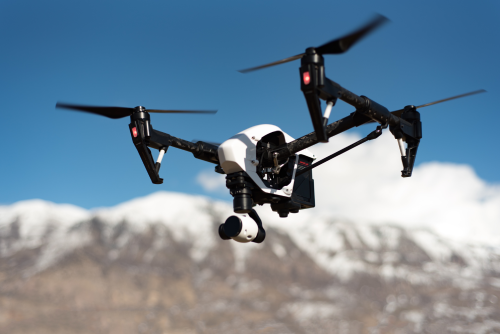
The senseFly eBee Ag is a fixed-wing agricultural drone built for crop mapping and farm data collection rather than casual flying. It is aimed at agronomists, precision-agriculture teams, and service providers that need efficient coverage over large fields. For readers comparing ag drones, the eBee Ag matters because it comes from a well-known mapping-focused brand and sits in the specialist end of the drone market.
Unlike consumer drones that are often marketed around camera quality, social-media footage, or beginner-friendly controls, the eBee Ag belongs to a more serious category of aircraft. Its reason for existing is operational efficiency: helping farm and mapping professionals collect consistent aerial data over acreage that would be inefficient to cover on foot or with a short-endurance quadcopter. That distinction is important, because buyers in agriculture often waste time comparing aircraft that are built for completely different jobs. The eBee Ag should not be judged by the same standards as a recreational drone or even a general enterprise quadcopter. It should be judged by how well it fits repeatable field survey work.
For that reason, the eBee Ag tends to appeal less to individual drone enthusiasts and more to organizations with a defined workflow. That may include a farm business that maps fields at key points during the growing season, a crop consultant who provides aerial monitoring as a service, or a surveying team that has expanded into agricultural analytics. In each case, the aircraft is only one part of the value proposition. The real purchase decision sits at the intersection of airframe, sensor, software, processing, agronomic interpretation, and support.
Quick Summary Box
- Drone Name: senseFly eBee Ag
- Brand: senseFly
- Model: eBee Ag
- Category: Agricultural fixed-wing drone
- Best For: Farm mapping, crop monitoring, and large-area agricultural survey work
- Price Range: Not publicly confirmed in supplied data
- Launch Year: Not publicly confirmed in supplied data
- Availability: Not publicly confirmed in supplied data
- Current Status: Active
- Overall Rating: Not rated due to limited confirmed data
- Our Verdict: A niche agriculture mapping platform for operators who prioritize large-area fixed-wing efficiency and professional workflow fit over consumer-drone convenience.
At a glance: the eBee Ag is best understood as a professional data-capture tool rather than a general-purpose drone. If your priority is field coverage, repeatable mapping, and integration into an agronomy or GIS workflow, it is a relevant product to investigate. If your priority is hovering, inspection around obstacles, or easy all-round use, other drone types will usually make more sense.
Introduction
The senseFly eBee Ag is an agriculture-oriented UAV from Swiss manufacturer senseFly, positioned in the fixed-wing mapping segment. Unlike multirotor drones that focus on hovering, close inspection, or general photography, this model is intended for covering farmland efficiently and turning aerial data into practical field insight. If your priority is crop monitoring and acreage coverage, it is a more relevant platform than a general-purpose camera drone.
That difference in mission profile shapes almost every aspect of the product. Agricultural mapping is rarely about flying for the sake of flying. It is about collecting information that can support decisions on crop condition, field variability, drainage issues, stand establishment, stress detection, and operational planning. In practical use, that means buyers are not simply asking, “How stable is the drone?” or “How good is the camera?” They are asking more specific questions such as: Can it cover enough hectares per sortie? Does it produce data suitable for orthomosaics and field analysis? Can the same route be flown again later in the season for comparison? Will the outputs fit with agronomy software, GIS tools, or client reporting requirements?
The eBee Ag enters that conversation as a specialist product from a brand associated with mapping. That alone gives it a different status from drones that add agricultural use as just one marketing bullet point. A mapping-first manufacturer usually designs around repeatable survey logic, not casual versatility. For professionals, that can be a major advantage. It often means the platform was conceived with mission planning, geospatial accuracy, and workflow consistency in mind.
At the same time, being specialist also narrows the audience. An aircraft optimized for broad-acre field survey may be less practical for orchard inspection, infrastructure checks, or ad hoc visual spotting around buildings and trees. The eBee Ag is therefore most compelling when a buyer already knows the work they need the drone to do and that work centers on agricultural mapping.
Overview
What kind of drone is it?
The eBee Ag is a fixed-wing agricultural mapping drone. In simple terms, that means it is designed more like a small aircraft than a hovering quadcopter, which usually makes it better suited to covering larger areas efficiently. Based on the supplied record, its role is agriculture mapping rather than spraying, cinematic filming, or recreational flight.
This distinction matters because “agriculture drone” is a broad phrase that can refer to very different machines. Some agricultural drones are spraying platforms built to carry liquid payloads and operate at low altitude over crops. Others are compact multirotor scouts used for spot checks, crop imagery, and small-field monitoring. The eBee Ag belongs to neither of those categories. It sits in the survey-and-mapping branch of agricultural UAV use, where endurance and area efficiency are more important than hover precision or chemical application capability.
Fixed-wing systems typically fly by maintaining forward motion, which improves aerodynamic efficiency. That often allows more land to be covered per battery cycle than a similarly sized quadcopter. The tradeoff is that the aircraft does not behave like a hovering camera platform. It generally requires more deliberate route planning and a suitable area for launch and recovery. Those characteristics are not flaws; they are simply part of the design logic of the category.
Who should buy it?
The most likely buyers are:
- Agronomists
- Precision-agriculture consultants
- Farm service companies
- Large growers managing broad acreage
- Mapping teams that need repeatable aerial field surveys
It is far less likely to suit casual pilots, content creators, or buyers who mainly need hover-based inspection.
To add more context, the eBee Ag makes the most sense for users who already have a data objective. For example, a grower with many hectares may want scheduled aerial maps at emergence, mid-season, and pre-harvest. A crop consultant may need consistent imagery across multiple client farms. A service provider may be selling orthomosaics, crop scouting outputs, or field-variability reports. In those settings, efficiency per mission and consistency over time can matter more than general flying convenience.
On the other hand, buyers who only occasionally need a drone may find a specialist fixed-wing system harder to justify. If the aircraft will spend most of its time in storage, or if the user mainly wants to hover near a suspected problem area, a multirotor can be the more practical choice even if it covers less acreage per flight.
What makes it different?
What separates the eBee Ag from many farm drones is its fixed-wing format and specialist mapping focus. That matters because fixed-wing designs are typically chosen when area coverage and route efficiency matter more than hovering in place. The senseFly name also places it in an enterprise and survey-oriented context rather than the low-cost consumer segment.
There is also a strategic difference in buyer mindset. Consumer and prosumer drones are often sold on convenience: fast setup, automatic modes, all-in-one apps, and easy transport. The eBee Ag is more likely to be evaluated on productivity and workflow reliability. Buyers in this segment care about whether the aircraft fits a professional process, whether it can be deployed repeatedly in season, and whether the resulting data can be trusted and used.
In short, the eBee Ag stands out not because it tries to do everything, but because it appears intended to do one kind of work well: agricultural mapping over significant areas.
Key Features
- Fixed-wing airframe designed for agricultural mapping missions
- Built by senseFly, a brand closely associated with professional mapping UAV workflows
- Switzerland-origin drone from an established enterprise drone maker
- Intended for large-field coverage rather than close-range hovering tasks
- Better aligned with crop monitoring and survey-style operations than general aerial photography
- Active product status in the supplied data
- Likely suited to repeatable route-based missions, though exact autonomous modes are not publicly confirmed in the supplied data
- Payload and camera specifics are not publicly confirmed in the supplied data, so buyers should verify the exact sensor configuration before purchase
These headline features suggest the drone should be viewed as part of a professional field-data system. The fixed-wing airframe is the defining feature, because it shapes how the aircraft flies, what scale of land it is comfortable surveying, and what kinds of operators will benefit most. The senseFly branding adds another layer: a buyer is not just purchasing an aircraft, but potentially entering a mapping-oriented ecosystem with its own procedures, software assumptions, and support expectations.
Another important feature, even though it is framed here as a caution, is the need for payload verification. In agricultural drone work, the sensor setup can change the value of the platform dramatically. An aircraft that is excellent for RGB mapping may not automatically be the best fit for plant-health analysis if the buyer actually needs multispectral data or another specialized imaging workflow. That is why any purchase decision should treat “drone platform” and “sensor package” as a combined question rather than separate topics.
Full Specifications Table
| Specification | Details |
|---|---|
| Brand | senseFly |
| Model | eBee Ag |
| Drone Type | Fixed-wing agricultural mapping drone |
| Country of Origin | Switzerland |
| Manufacturer | senseFly |
| Year Introduced | Not publicly confirmed in supplied data |
| Status | Active |
| Use Case | Agriculture mapping |
| Weight | Not publicly confirmed in supplied data |
| Dimensions (folded/unfolded) | Not publicly confirmed in supplied data |
| Max Takeoff Weight | Not publicly confirmed in supplied data |
| Battery Type | Not publicly confirmed in supplied data |
| Battery Capacity | Not publicly confirmed in supplied data |
| Flight Time | Not publicly confirmed in supplied data |
| Charging Time | Not publicly confirmed in supplied data |
| Max Range | Not publicly confirmed in supplied data |
| Transmission System | Not publicly confirmed in supplied data |
| Top Speed | Not publicly confirmed in supplied data |
| Wind Resistance | Not publicly confirmed in supplied data |
| Navigation System | Not publicly confirmed in supplied data |
| Obstacle Avoidance | Not publicly confirmed in supplied data |
| Camera Resolution | Not publicly confirmed in supplied data |
| Video Resolution | Not publicly confirmed in supplied data |
| Frame Rates | Not publicly confirmed in supplied data |
| Sensor Size | Not publicly confirmed in supplied data |
| Gimbal | Not publicly confirmed in supplied data |
| Zoom | Not publicly confirmed in supplied data |
| Storage | Not publicly confirmed in supplied data |
| Controller Type | Not publicly confirmed in supplied data |
| App Support | Not publicly confirmed in supplied data |
| Autonomous Modes | Not publicly confirmed in supplied data |
| Payload Capacity | Not publicly confirmed in supplied data |
| Operating Temperature | Not publicly confirmed in supplied data |
| Water Resistance | Not publicly confirmed in supplied data |
| Noise Level | Not publicly confirmed in supplied data |
| Remote ID Support | Not publicly confirmed in supplied data |
| Geo-fencing | Not publicly confirmed in supplied data |
| Certifications | Not publicly confirmed in supplied data |
| MSRP / Launch Price | Not publicly confirmed in supplied data |
| Current Price | Not publicly confirmed in supplied data |
The specification table above makes one thing very clear: publicly confirmed detail is limited in the source material used here. That does not mean the drone lacks these capabilities or characteristics; it means a buyer should not assume them without checking official documentation, dealer information, or current manufacturer resources. With professional drones, especially enterprise and mapping systems, package configuration can vary by region, reseller, and intended workflow. For that reason, the most reliable next step is always to confirm the exact aircraft bundle, sensor setup, software entitlement, and support terms attached to the quote you receive.
Design and Build Quality
Because the eBee Ag is a fixed-wing agricultural mapping drone, its design logic is different from that of a camera quadcopter. The likely priority is aerodynamic efficiency and large-area coverage rather than hovering stability or compact fold-up portability. That usually makes fixed-wing aircraft attractive for field-scale missions, especially where operators need to map more land per flight.
In practical terms, design quality on a drone like this should be judged less by cosmetics and more by field readiness. Professional agricultural operators care about questions such as: Is the aircraft quick to assemble on-site? Can it be transported safely between farms? Are payload components easy to service? How resilient is the airframe to repeated deployment in dusty, windy, or variable rural conditions? Even simple design choices like wing attachment, battery access, and landing durability can have a major effect on real-world uptime.
The supplied data does not publicly confirm the eBee Ag’s materials, folded dimensions, service-access layout, or transport format. It also does not confirm whether the aircraft uses hand launch, assisted launch, or a specific landing method. Buyers should therefore verify field deployment requirements, spare parts availability, and repairability through official product literature or an authorized dealer.
That missing detail is especially relevant because fixed-wing field handling can vary meaningfully between platforms. Some are easy to carry and launch with minimal setup; others demand more deliberate preparation and more operator practice. Likewise, landing behavior can influence where and when the drone can be used. A farm with open, unobstructed boundaries may be a simple environment for fixed-wing work, while fragmented parcels with power lines, hedgerows, roads, and tight margins may be less forgiving.
From a workflow perspective, a specialist agriculture airframe can be a strength. Fixed-wing drones are often chosen because they match mapping operations better than general consumer platforms. The tradeoff is that they can demand more planning, more space, and more training than a hover-capable drone.
Another point worth considering is maintenance culture. Enterprise drones are often purchased by teams rather than individuals, and teams need predictable procedures. An airframe that is efficient in the air but awkward to maintain can become expensive over time through downtime, training needs, and replacement parts. That is why design quality in this segment includes not only how the drone flies, but how smoothly it fits into repeated professional use.
Flight Performance
No confirmed endurance, range, top speed, or ceiling figures are provided in the supplied data, so any performance judgment has to stay general. Even so, the fixed-wing layout strongly suggests that the eBee Ag is built to prioritize efficient forward flight and field coverage rather than slow hovering work.
In practical terms, that usually means:
- Better suitability for large parcels than small, cluttered sites
- Less flexibility for close-up inspection than a multirotor
- More dependence on mission planning and landing area management
- Greater value when flights are repeated over broad farmland
For agricultural users, those characteristics can be more important than raw speed figures. A drone does not need to be the fastest aircraft in its class to be effective. It needs to fly stable survey lines, maintain reliable coverage, and produce usable imagery over the target area. Consistency is often more valuable than headline specifications. If a platform can repeatedly cover large fields under normal operating conditions and return data that is easy to process, it is doing its job.
Wind handling, signal reliability, and exact mission radius are not publicly confirmed in the supplied data. Operators comparing it with multirotors should remember that fixed-wing drones often feel more purpose-built for mapping, but less forgiving for stop-and-look tasks. Indoor use is not a realistic fit for this type of platform.
It is also worth noting that flight performance in mapping operations is not just about the aircraft. Field outcomes depend on the whole mission design: altitude, overlap settings, terrain, weather, crop height, and the resolution required for the task. A user who needs very fine detail may end up flying lower or making more passes, reducing the practical area covered in a session. A user conducting broader trend analysis may prioritize larger coverage and accept coarser ground detail. The aircraft’s value therefore depends partly on how well it matches the detail level the operator actually needs.
Another performance consideration is operational tempo. Some drones are excellent on paper but slow in practice because setup, checks, recovery, and data management consume too much time. Fixed-wing systems can still be very efficient overall if their field routine is streamlined, but buyers should think beyond the airborne minutes. Ask how long it takes to arrive on-site, prepare the aircraft, run the mission, recover safely, swap batteries if needed, and move to the next parcel.
Camera / Payload Performance
The eBee Ag is best understood as a payload-for-work drone rather than a content-creation drone. Its value is not mainly about producing cinematic video. Instead, it is about collecting imagery that supports agricultural interpretation, such as crop condition review, field variability tracking, and map generation.
The exact camera or sensor package is not publicly confirmed in the supplied data. That is an important gap, because agricultural drone value depends heavily on the payload. Buyers should confirm:
- Whether the aircraft uses RGB, multispectral, or another imaging configuration
- The sensor resolution and band information
- Geotagging or mapping workflow compatibility
- Output formats used for agronomy software and farm reporting
If the eBee Ag is being considered for precision-agriculture work, the payload matters at least as much as the airframe. A strong fixed-wing platform only delivers full value when the sensor and processing chain match the farm’s decision-making needs.
This is where many drone comparisons go wrong. People often compare airframes while underestimating the importance of the data objective. For example, a standard RGB camera may be sufficient for field boundary mapping, stand counts in some cases, visible stress observation, and orthomosaic generation. But if a buyer needs vegetation-index analysis or more nuanced spectral insight, then a multispectral configuration may be more appropriate. If the intended work is agronomic interpretation rather than visual documentation, the payload choice can determine whether the entire investment pays off.
There is also an important distinction between image quality and usable agronomic output. A sensor does not need to produce pretty photos to be useful. It needs to produce consistent, analyzable data. That may involve calibration procedures, reliable metadata, and compatibility with processing tools that convert raw captures into maps and actionable layers. In enterprise agricultural workflows, those “invisible” qualities often matter more than whether the raw images look impressive to a casual viewer.
Buyers should also ask practical payload questions before purchasing:
- Can the sensor be serviced or replaced easily?
- Is the workflow mature and well documented?
- Are outputs accepted by the software tools you already use?
- Does the package support seasonal repeatability, not just one-off flights?
- Can your team interpret the data without adding costly specialist dependency?
The eBee Ag may be highly capable in the right configuration, but that capability has to be matched to the agronomic problem being solved. A fixed-wing mapping drone without the right sensing and processing path can still produce large volumes of imagery without creating useful decisions. That is why payload due diligence is essential.
Smart Features and Software
The supplied record identifies the eBee Ag as an agriculture mapping fixed-wing drone, so it is reasonable to expect mission-based workflow relevance rather than purely manual flight. In this category, buyers usually care about route planning, repeatable coverage, data export, and mapping software compatibility.
However, the supplied data does not publicly confirm the exact software stack, supported apps, autonomous modes, or any cloud platform integration. It also does not confirm return-to-home behavior, waypoint tools, API support, or AI features.
Before buying, verify:
- The official mission-planning software used with the drone
- Current support status for agricultural mapping workflows
- Processing compatibility with your GIS, agronomy, or farm-management tools
- Whether any subscription, maintenance, or enterprise licensing cost applies
- Controller and ground-station hardware requirements
For an enterprise agriculture drone, software fit is often just as important as flight hardware.
This deserves emphasis because in mapping operations, software is not an accessory. It is part of the core product. A drone that flies well but creates friction in planning, processing, or export can become a liability, especially during busy seasonal windows. Conversely, an aircraft with a disciplined software workflow can save substantial time by making mission setup, data organization, and report delivery more predictable.
Repeatability is especially valuable in agriculture. If the same field is flown at multiple points in the season, the operator often wants comparable output from each mission. That means route planning, overlap, altitude, and data handling should be easy to standardize. A mature software environment helps make that possible. It also reduces operator variation, which matters if different staff members will be conducting flights across the season.
Another software-related issue is integration. Farms, consultants, and service companies rarely operate in a single-tool world. They may use GIS platforms, agronomy software, farm-management systems, cloud storage, and client reporting tools. A drone system that exports cleanly into those tools is far easier to justify than one that creates extra manual steps or locked-down data pathways.
Finally, enterprise users should look carefully at licensing and support structure. Some drone systems are affordable at the hardware level but costly once software subscriptions, processing seats, support contracts, and training are added. For a business, that may still be worthwhile if the workflow is productive. But it should be known in advance, not discovered after purchase.
Use Cases
The most realistic uses for the senseFly eBee Ag are agriculture data missions where area coverage matters more than hover capability.
- Large-field crop mapping
- Seasonal field monitoring
- Plant health analysis when paired with a suitable agriculture sensor
- Precision-agriculture scouting workflows
- Orthomosaic generation for agronomy review
- Field variability assessment
- Farm service-provider mapping contracts
- Repeatable survey flights across the same parcels over time
Each of these use cases benefits from the strengths of a fixed-wing platform. Large-field crop mapping is the most obvious one. When a farm or consultant needs to document broad acreage efficiently, fixed-wing flight usually makes more sense than repeatedly repositioning a shorter-endurance multirotor. Seasonal monitoring is another strong fit, especially when the goal is to track changes in crop condition or compare the same parcel through the year.
The eBee Ag may also be useful in pre- and post-event assessment. For instance, after weather stress, drainage issues, patchy emergence, or other field events, an operator may need a rapid wide-area picture of conditions. Although a multirotor is often better for a close look at one problem point, a fixed-wing mapping drone can be better for understanding how widespread the issue is across a whole parcel.
For service providers, the use cases extend beyond single-farm operations. A contractor serving many clients may value a system that can move through multiple properties with a repeatable workflow. In that situation, efficiency is not just convenience; it is the basis of profitability. The ability to capture consistent data over many hectares can directly affect how many jobs can be completed in a day or week.
Where the eBee Ag is less ideal is in highly localized, obstacle-rich, or inspection-style work. If the mission calls for hovering over a blocked tile outlet, circling a damaged irrigation point, or maneuvering near buildings and tree lines, a multirotor may still be the better companion tool.
Pros and Cons
Pros
- Fixed-wing format is well suited to covering large agricultural areas efficiently
- Purpose-built agricultural positioning is more relevant for farm mapping than a general camera drone
- senseFly is a recognized name in the professional mapping UAV space
- Active status is a positive sign for buyers avoiding clearly obsolete platforms
- Likely a better conceptual fit for broad-acre survey work than many small multirotors
These advantages matter most to buyers who know they need a mapping-first aircraft. The efficiency of fixed-wing coverage can be a genuine operational benefit rather than a theoretical one, especially when acreage is large and flights need to be repeated throughout the season. The senseFly brand reputation also matters, because in enterprise drone buying, trust in workflow maturity can be as important as isolated hardware features.
Cons
- Many key specifications are not publicly confirmed in the supplied data
- Exact payload and sensor details must be verified before making a buying decision
- Fixed-wing drones are generally less flexible than multirotors for hovering and close inspection
- Enterprise agricultural platforms often involve higher workflow complexity than consumer drones
- Pricing, support structure, and software costs are not publicly confirmed in the supplied data
The drawbacks are not trivial. The biggest limitation in evaluating the eBee Ag from the current record is incomplete confirmed detail. That means buyers should treat any early interest as the start of a procurement process, not the end of one. A platform can look ideal at a high level but still fall short if its payload, support terms, or software costs do not match the intended operation.
Another practical downside is specialization itself. A fixed-wing agricultural mapper can be excellent at its main job and still feel inconvenient when asked to do other work. That is why some organizations use a mixed fleet rather than expecting one aircraft to solve every aerial task.
Comparison With Other Models
| Model | Price | Flight Time | Camera or Payload | Range | Weight | Best For | Winner |
|---|---|---|---|---|---|---|---|
| senseFly eBee Ag | Not publicly confirmed in supplied data | Not publicly confirmed in supplied data | Agriculture mapping payload not publicly confirmed in supplied data | Not publicly confirmed in supplied data | Not publicly confirmed in supplied data | Large-area farm mapping | Best if you want a senseFly agriculture-focused fixed-wing workflow |
| WingtraOne GEN II | Enterprise quote-based pricing typically applies | Long-endurance VTOL mapping class | Interchangeable mapping and survey payload ecosystem | Enterprise survey mission class | Enterprise VTOL class | Users needing VTOL convenience plus mapping output | Winner for VTOL flexibility |
| DJI Mavic 3 Multispectral | Premium enterprise pricing tier | Shorter multirotor endurance class than fixed-wing platforms | Integrated RGB plus multispectral package | Smaller-area mission style compared with fixed-wing survey aircraft | Portable quadcopter class | Fast deployment and smaller farm parcels | Winner for portability and ease of use |
| senseFly eBee SQ | Legacy or used-market pricing varies | Fixed-wing agriculture mapping class | Agriculture-focused older-generation payload setup | Mission-dependent; verify current support data | Verify official or reseller listings | Buyers considering older ag-specific fixed-wing options | Winner only for legacy buyers prioritizing older ecosystem familiarity |
A comparison table helps frame where the eBee Ag sits in the market, but it should not be read as a simple spec-sheet contest. In agriculture and mapping, the “best” drone depends heavily on parcel size, launch conditions, workflow maturity, and staff skill. A more flexible VTOL aircraft may outperform a fixed-wing in constrained environments. A simpler multirotor may outperform both if the acreage is modest and the operator values fast deployment over maximum coverage. The eBee Ag’s case becomes strongest when the buyer’s workflow already points toward large-area survey logic.
eBee Ag vs a close competitor
Against WingtraOne GEN II, the key question is launch and recovery style versus pure fixed-wing simplicity. A VTOL platform can be easier in constrained fields because it reduces dependence on launch and landing space. The eBee Ag may still appeal more to teams already aligned with senseFly workflows or buyers who want a dedicated agriculture mapping identity rather than a broader survey platform.
This comparison is really about operational environment. If you regularly work near obstacles, narrow access points, or parcels where traditional fixed-wing recovery is inconvenient, VTOL capability can be a major advantage. It lowers the barrier to deployment and may reduce operator stress in tricky sites. On the other hand, a more conventional fixed-wing platform may still appeal if the operating areas are open and the team values a simpler mission profile centered on agricultural mapping.
There is also a question of organizational fit. Some buyers want one aircraft that can span multiple survey roles across agriculture, construction, and general mapping. Others want something that feels more purpose-built around farm data work. The eBee Ag is more likely to appeal to the second group.
eBee Ag vs an alternative in the same segment
Compared with DJI Mavic 3 Multispectral, the eBee Ag sits on the more specialist end of the market. The DJI option is easier to deploy, easier to hover, and simpler for smaller parcels or fast-response scouting. The eBee Ag is more compelling when the mission is about covering farmland efficiently in a fixed-wing mapping workflow.
This is probably the most useful comparison for many buyers, because it reflects a common real-world decision: specialist fixed-wing mapper versus highly capable multirotor. The multirotor wins on convenience. It can launch quickly, work in tighter spaces, pause over points of interest, and usually place less burden on training. It also tends to be easier for mixed-use operations where the same team may perform mapping one day and visual inspection the next.
The fixed-wing case emerges when scale matters. If fields are large, flights are frequent, and the organization is committed to structured mapping, then the efficiency advantage can outweigh the convenience gap. The decision therefore comes down to whether the buyer needs the easiest drone to operate or the most suitable drone for repeated broad-area coverage.
eBee Ag vs an older or previous-generation option
Compared with senseFly eBee SQ, the eBee Ag appears to be the safer choice for buyers who want a currently active model rather than relying on older ecosystem assumptions. Anyone looking at legacy alternatives should verify support, spare parts, and software continuity before treating an older platform as a bargain.
This is especially important in professional contexts. Used or legacy systems can seem cost-effective initially, but the risk grows if batteries, sensors, software support, or repair options become difficult to obtain. In agriculture, downtime has a real cost because data often needs to be collected during specific crop stages or narrow weather windows. A cheaper older platform is not a bargain if it compromises reliability during critical periods.
Manufacturer Details
senseFly is the brand and manufacturer here, so there is no distinction between the two at product level. The company is associated with Switzerland and has long been known for professional mapping drones rather than toy or hobby aircraft. Its reputation has been built largely around fixed-wing survey and mapping systems aimed at enterprise, research, and industrial users.
In the wider drone market, senseFly is typically discussed in the context of aerial mapping, data collection, and professional mission workflows. That gives the eBee Ag more enterprise credibility than many consumer-style alternatives. Buyers should still check current official corporate information, product support status, and regional availability through the latest brand channels.
Brand background matters more in this segment than it does in casual drone buying. Enterprise users are not just buying a flying product; they are buying into a support and ecosystem relationship. A mapping brand with a strong professional history may offer better documentation, more experienced resellers, stronger training options, and a user base that understands survey-grade workflows. Those are meaningful advantages when a drone is part of revenue-generating or decision-critical operations.
That said, reputation should not replace verification. Even well-known brands can change product direction, regional availability, or support structures over time. Before making a decision, confirm what the current manufacturer and reseller ecosystem actually looks like where you operate.
Support and Service Providers
For a drone like the eBee Ag, support quality matters almost as much as hardware quality. Buyers should expect to verify the following before purchase:
- Official product support availability
- Regional authorized dealers or enterprise resellers
- Repair and spare-parts channels
- Training and onboarding options
- Warranty terms for the airframe, batteries, and payload components
- Software support and update status
The supplied data does not publicly confirm a specific repair network or warranty structure. Because this is an enterprise-style agriculture platform, it is wise to confirm regional service coverage before committing, especially if the drone will be used during critical crop-monitoring windows.
This is one of the most overlooked parts of drone procurement. A professional user may spend far more time living with support realities than admiring product features. If a wing is damaged, a sensor needs recalibration, or software behavior changes after an update, the responsiveness of the support chain can matter more than a small difference in aircraft specifications.
Training is another support category worth emphasizing. Fixed-wing operations can be very manageable for trained teams, but organizations moving up from consumer quadcopters should not assume the learning curve is identical. Good onboarding can reduce errors, improve mission consistency, and shorten the path from purchase to productive field use.
For service providers, support has a direct business impact. If the drone is central to deliverables promised to farm clients, delays in parts or troubleshooting can affect reputation and revenue. That is why regional dealer competence, spare stock availability, and turnaround times deserve real scrutiny.
Where to Buy
The eBee Ag is more likely to be purchased through enterprise sales channels than through mass-market consumer retail. Typical buying routes may include:
- Official brand sales channels
- Authorized drone dealers
- Agricultural technology resellers
- Survey and mapping equipment distributors
- Regional enterprise integrators
Availability is not publicly confirmed in the supplied data, despite the model being listed as active. Buyers should confirm current market availability in their region and verify which package, payload, software, and support options are included in the quote.
Buying through the right channel matters because enterprise drone packages are rarely identical across sellers. One quote may include training, extra batteries, software access, and support onboarding; another may focus only on hardware. The cheapest price is not automatically the best deal if it excludes essential workflow components.
It is also useful to ask potential sellers about after-sales capabilities, not just delivery time. Can they assist with setup? Do they understand agricultural use cases? Can they advise on local regulations, insurance expectations, or data-processing options? A knowledgeable reseller can add more value than a slightly lower upfront quote from a less specialized supplier.
Price and Cost Breakdown
No official launch price or current price is publicly confirmed in the supplied data. That means buyers should avoid budgeting based on guesswork alone. For a specialist agricultural mapping drone, the total cost can depend on much more than the aircraft itself.
Before purchasing, verify the cost of:
- Airframe package
- Sensor or camera configuration
- Controller or ground-station hardware
- Batteries and chargers
- Spare parts and field consumables
- Mission-planning or processing software
- Training and setup
- Repair coverage and downtime handling
- Insurance, registration, and operational compliance costs
Even if the initial aircraft quote looks manageable, the full ownership cost may be significantly higher than that of a general-purpose multirotor.
This is especially true in enterprise agricultural workflows, where the drone may only be one line item in a broader data-acquisition system. For example, if the platform requires specific software subscriptions, cloud processing, or annual maintenance plans, those recurring costs can materially affect return on investment. Likewise, if a team needs formal training or dedicated field devices to run the workflow, implementation costs may rise beyond the airframe itself.
A sensible way to evaluate cost is to think in terms of mission economics rather than sticker price. Ask:
- How many hectares can be covered per outing?
- How much labor does each job require?
- What revenue or decision value does each mission create?
- How expensive is downtime during key crop stages?
- What is the cost per season, not just per purchase?
For a farm, the value may come through better decisions on inputs, field prioritization, or scouting efficiency. For a contractor, the value may come through billable jobs and faster delivery. In both cases, the right question is not “Is this drone expensive?” but “Is this drone economically justified within the workflow it enables?”
Regulations and Compliance
Agricultural mapping flights still fall under normal drone law. Even when flying over farmland, operators usually need to consider registration, pilot competency rules, airspace restrictions, privacy obligations, and commercial-use requirements.
Key points to verify locally include:
- Drone registration requirements
- Pilot licensing or certification for commercial operations
- Visual line of sight rules
- Permissions for flights near roads, homes, or sensitive areas
- Data privacy obligations tied to mapping imagery
- Any local fixed-wing operating restrictions
- Remote ID requirements where applicable
Remote ID support, certifications, and geo-fencing are not publicly confirmed in the supplied data. Do not assume universal compliance in every country. Always check current national and local rules before operating.
Agricultural users sometimes assume that open farmland means simplified regulation, but that is not always the case. Fields can still sit near roads, neighboring properties, utility corridors, protected areas, or controlled airspace. In some jurisdictions, the type of operation matters as much as the location, especially if the flight is commercial or if imagery is being collected for clients.
Fixed-wing operations can also raise additional practical compliance considerations because they may need more launch and recovery space. Even where the airspace itself is suitable, the ground environment may create risk if the aircraft must recover near bystanders, vehicles, livestock, or field obstacles. A good compliance approach therefore includes both aviation law and site risk assessment.
Data handling is another issue. Agricultural imagery can include neighboring land, buildings, people, or vehicles unintentionally. Operators should understand local privacy rules and be prepared to explain how imagery is collected, stored, and used. This becomes even more important for service providers working across multiple client properties.
Who Should Buy This Drone?
Best for
- Agronomists running structured field-mapping programs
- Precision-agriculture service providers
- Farms with large acreage to monitor regularly
- Survey-minded operators who prefer fixed-wing efficiency
- Teams that value enterprise workflow alignment over consumer convenience
The strongest candidates are buyers with repeatable, acreage-scale needs. If your work already involves planned survey routes, scheduled crop monitoring, and data outputs that feed into agronomy or GIS review, the eBee Ag is the kind of product that deserves attention. It is particularly suitable where efficiency over broad fields matters more than on-the-spot maneuverability.
It can also make sense for organizations that want a clear separation between “data drones” and “inspection drones.” In those cases, the eBee Ag may serve as the structured mapping platform, while a smaller multirotor handles ad hoc visual tasks.
Not ideal for
- Casual hobby users
- Buyers wanting a simple photo or video drone
- Operators who mainly need hover-based inspection
- Small-property users who do not need broad-area coverage
- Budget-focused buyers unwilling to manage specialist workflow complexity
For these users, the eBee Ag is likely too specialized. A hobbyist will not benefit much from a professional mapping platform unless they have a very specific research or farm-data goal. Likewise, small-property operators may find that a simple multirotor covers their needs faster and with less complexity.
There is also a mindset issue. Professional fixed-wing systems reward disciplined operation. Buyers who want a quick, intuitive, everything-capable drone may end up frustrated if they choose a platform designed around structured survey work.
Final Verdict
The senseFly eBee Ag looks most compelling as a specialist fixed-wing platform for agricultural mapping teams that care about acreage coverage, repeatable survey work, and professional workflow fit. Its biggest strengths are its agriculture-first positioning, fixed-wing efficiency, and senseFly enterprise pedigree. Its biggest drawbacks are the lack of publicly confirmed detailed specs in the supplied data, the likely need for careful payload verification, and the fact that fixed-wing systems are inherently less flexible than hover-capable multirotors.
For serious farm-mapping operators, the eBee Ag deserves a place on the shortlist. For general users, content creators, or buyers seeking a simple all-round drone, it is probably too specialized. The smart buying move is to treat it as a professional tool: confirm the exact sensor package, software workflow, regional support, and full ownership cost before making a final decision.
The most useful way to think about this drone is not as a gadget, but as an agricultural data platform. If your operation values repeatable field coverage, map-centric workflow, and an enterprise-oriented ecosystem, the eBee Ag could be a very relevant option. If instead your priorities are flexibility, hovering, easy deployment in confined spaces, or low-friction all-purpose use, you will probably be better served by a multirotor alternative.
So the final conclusion is straightforward: the senseFly eBee Ag is not for everyone, but that is exactly the point. It appears built for users who know why fixed-wing mapping matters and who are prepared to evaluate the aircraft as part of a broader precision-agriculture workflow. If that describes your needs, it is worth deeper investigation. If not, its specialization may be more burden than benefit.
