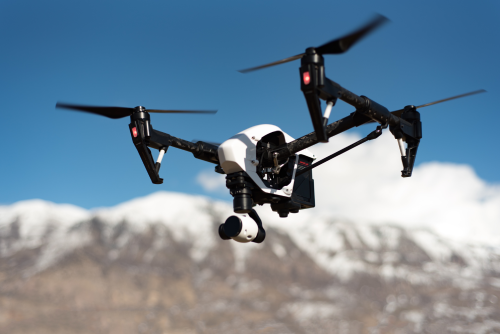
The senseFly eBee Geo is a professional fixed-wing drone aimed at commercial mapping and survey work rather than general consumer flying. It is most relevant to survey teams, GIS professionals, engineering firms, and researchers who need efficient aerial coverage over outdoor sites. What makes it notable is its positioning within the specialist geospatial drone market, although many detailed performance specifications are not publicly confirmed in the supplied data.
Quick Summary Box
- Drone Name: senseFly eBee Geo
- Brand: senseFly
- Model: eBee Geo
- Category: Mapping/survey fixed-wing drone
- Best For: Professional aerial mapping, surveying, and large-area geospatial data capture
- Price Range: Not publicly confirmed in supplied data
- Launch Year: Not publicly confirmed in supplied data
- Availability: Not publicly confirmed in supplied data
- Current Status: Active
- Overall Rating: Not rated due to limited confirmed data
- Our Verdict: A niche commercial mapping platform for enterprise users who value fixed-wing coverage efficiency and a specialist Swiss brand, but buyers should verify current payload, software, pricing, and support details before procurement.
For the right operator, that can still be a meaningful proposition. In the commercial UAV world, not every aircraft needs to appeal to a wide audience. Some tools are built to do one job well, and the eBee Geo appears to fall into that category: less a lifestyle drone, more a fieldwork instrument.
Introduction
The eBee Geo is an active senseFly drone in the mapping/survey segment, built around a fixed-wing airframe and positioned for commercial geospatial work. For readers comparing survey drones, that matters because fixed-wing designs are usually chosen for area efficiency rather than hovering, close inspection, or creator-style video. In simple terms, this is a work-focused aircraft for data collection, not a casual camera drone.
That distinction is important because many buyers enter the drone market through consumer models. Those products emphasize ease of use, compact folding designs, stabilized video, and automatic safety features suited to general flying. A mapping-first aircraft like the eBee Geo should be judged differently. Its value is less about cinematic image quality or recreational convenience and more about whether it can fit into a reliable data-collection workflow.
In practical terms, that means the questions surrounding the eBee Geo are not the usual hobby-drone questions. Instead of asking whether it shoots impressive social media footage, a serious buyer is more likely to ask:
- Can it efficiently cover the required number of hectares or acres?
- Does it fit with established photogrammetry or GIS processing workflows?
- How repeatable are survey missions over time?
- What is the support model if something fails during a client project?
- How well does it integrate with existing enterprise procedures and compliance requirements?
Those are the criteria that make specialist mapping drones worthwhile, and they are the lens through which the eBee Geo makes the most sense. Even without a fully transparent public spec sheet in the supplied data, the product category tells us quite a lot about the kind of operator it is intended to serve.
Overview
What kind of drone is it?
The senseFly eBee Geo is a fixed-wing commercial drone from Switzerland intended for mapping and surveying. Based on the supplied record and official manufacturer sourcing, it sits in the professional geospatial category rather than the consumer, FPV, or inspection-first markets.
A fixed-wing layout typically means the drone is optimized for sustained forward flight and efficient coverage of larger spaces. That usually makes this class of aircraft more suitable for fields, land parcels, infrastructure corridors, and broad outdoor sites than for hovering or tight urban maneuvering.
This alone separates it from a large share of the drone market. Multicopters dominate public awareness because they are easy to understand: they take off vertically, hover, turn on the spot, and usually require less airspace to operate. Fixed-wing drones, by contrast, behave more like small aircraft than airborne tripods. They are generally selected because they can travel farther or cover more area efficiently, not because they can stop and stare at one point in the sky.
That makes the eBee Geo best viewed as a specialized aerial survey platform rather than a general UAV. If you need repeatable, planned flights over outdoor terrain, the format makes sense. If you need to inspect a tower bolt, fly under a bridge, or film a building reveal, it likely does not.
Who should buy it?
The most logical buyers include:
- Survey and GIS teams
- Engineering and construction firms
- Mining and quarry operators
- Agriculture and land-management professionals
- Universities and research groups working with aerial mapping
- Enterprise drone programs that prioritize workflow repeatability over casual usability
These groups tend to have one thing in common: they need actionable geospatial output, not just aerial imagery. A drone like the eBee Geo is most useful when the output matters downstream. That output could be an orthomosaic, a digital surface model, stockpile estimate, field map, progress record, or terrain dataset for planning and analysis.
It may also appeal to organizations trying to improve productivity on recurring survey jobs. If a company repeatedly needs to map large parcels of land or revisit the same site over time, fixed-wing efficiency can become more valuable than the convenience of a small multicopter. The time saved during capture can affect staffing, project scheduling, and even client turnaround times.
On the other hand, smaller businesses or solo operators should think carefully about whether they truly need a fixed-wing system. If most jobs are small, irregular, or performed in space-constrained environments, a multicopter may still be more practical even if it is less efficient on paper.
What makes it different?
What stands out is the platform category itself. Many drone buyers first look at multicopters, but a fixed-wing mapping drone is usually selected for workflow efficiency over larger ground areas. The senseFly brand is also associated with geospatial drone applications rather than mainstream consumer imaging.
The model name suggests a geo-focused positioning, but exact details such as payload type, navigation stack, and mapping accuracy workflow are not publicly confirmed in the supplied data and should be checked in current official documentation.
Even so, the eBee Geo occupies an identifiable place in the market. It appears to target users who already understand that mapping hardware is not just about flight performance. In geospatial operations, the aircraft, sensor, mission planning software, control link, processing workflow, training, and support network all matter together. The drone is only one part of the system.
That is where specialist brands often differentiate themselves. They may not compete on mass-market visibility, but they can be compelling to professional buyers because their products are built around specific use cases, dealer channels, and enterprise support expectations. For teams that care about consistency more than novelty, that positioning can be more valuable than flashy consumer features.
Key Features
-
Fixed-wing airframe designed for mapping/survey missions
The aircraft format strongly suggests a focus on forward-flight efficiency, coverage, and planned route execution rather than freeform manual flying. -
Commercial geospatial positioning rather than consumer photography focus
This is a work-oriented platform aimed at generating useful spatial data, not a casual drone built primarily for travel shots or hobby enjoyment. -
Active model status in the supplied record
An active status is important for professional buyers because it usually implies a better chance of ongoing support, firmware continuity, and procurement viability than a clearly retired platform. -
Swiss manufacturer with specialist drone-market relevance
senseFly has recognition in mapping-oriented UAV discussions, which matters in a market where workflow credibility and support reputation can influence purchasing decisions as much as hardware itself. -
Likely intended for efficient coverage of larger outdoor areas, based on its airframe type and segment
This is the most natural advantage of the platform category: more site coverage per mission compared with many hovering aircraft. -
Better matched to planned survey flights than to hovering or close-quarters inspection
That makes it a clearer fit for land mapping, corridor overview, and field operations than for asset inspection in confined locations. -
Enterprise-oriented buying and operating profile rather than toy or casual retail use
Buyers should expect more emphasis on operational procedures, data handling, and support planning than on plug-and-play consumer convenience. -
Mapping workflow value likely depends heavily on mission planning, positional accuracy, and data-processing compatibility, all of which should be verified before purchase
In other words, the aircraft is only as useful as the system around it. Procurement decisions should account for software, training, and final deliverables.
One of the most important takeaways here is that the eBee Geo should not be judged by feature checklists alone. In mapping operations, a simpler platform with a strong workflow can outperform a more flashy drone with weaker integration or inconsistent support.
Full Specifications Table
| Specification | Details |
|---|---|
| Brand | senseFly |
| Model | eBee Geo |
| Drone Type | Fixed-wing |
| Country of Origin | Switzerland |
| Manufacturer | senseFly |
| Year Introduced | Not publicly confirmed in supplied data |
| Status | Active |
| Use Case | Mapping/survey |
| Weight | Not publicly confirmed in supplied data |
| Dimensions (folded/unfolded) | Not publicly confirmed in supplied data |
| Max Takeoff Weight | Not publicly confirmed in supplied data |
| Battery Type | Not publicly confirmed in supplied data |
| Battery Capacity | Not publicly confirmed in supplied data |
| Flight Time | Not publicly confirmed in supplied data |
| Charging Time | Not publicly confirmed in supplied data |
| Max Range | Not publicly confirmed in supplied data |
| Transmission System | Not publicly confirmed in supplied data |
| Top Speed | Not publicly confirmed in supplied data |
| Wind Resistance | Not publicly confirmed in supplied data |
| Navigation System | Not publicly confirmed in supplied data |
| Obstacle Avoidance | Not publicly confirmed in supplied data |
| Camera Resolution | Not publicly confirmed in supplied data |
| Video Resolution | Not publicly confirmed in supplied data |
| Frame Rates | Not publicly confirmed in supplied data |
| Sensor Size | Not publicly confirmed in supplied data |
| Gimbal | Not publicly confirmed in supplied data |
| Zoom | Not publicly confirmed in supplied data |
| Storage | Not publicly confirmed in supplied data |
| Controller Type | Not publicly confirmed in supplied data |
| App Support | Not publicly confirmed in supplied data |
| Autonomous Modes | Not publicly confirmed in supplied data |
| Payload Capacity | Not publicly confirmed in supplied data |
| Operating Temperature | Not publicly confirmed in supplied data |
| Water Resistance | Not publicly confirmed in supplied data |
| Noise Level | Not publicly confirmed in supplied data |
| Remote ID Support | Not publicly confirmed in supplied data |
| Geo-fencing | Not publicly confirmed in supplied data |
| Certifications | Not publicly confirmed in supplied data |
| MSRP / Launch Price | Not publicly confirmed in supplied data |
| Current Price | Not publicly confirmed in supplied data |
The lack of publicly confirmed specifications does not automatically mean the platform is weak. In enterprise drone markets, some details are distributed more through dealers, product documents, and commercial discussions than through consumer-style public listings. Still, it does mean buyers should be disciplined. If a feature matters to your workflow, ask for documentation and confirmation rather than relying on assumptions.
The most important missing specifications for professional decision-making are usually not cosmetic ones. They are the operational ones: endurance, payload configuration, positioning workflow, wind limits, software support, and recoverability in the field.
Design and Build Quality
Because the eBee Geo uses a fixed-wing airframe, its design priorities are likely very different from those of a folding quadcopter. In this class, the airframe usually exists to maximize aerodynamic efficiency, mission coverage, and operational consistency rather than to support stable hovering or quick hand-carried deployment in cramped spaces.
The supplied data does not publicly confirm the materials, exact dimensions, service-access layout, or portability system. That means buyers should verify practical field factors such as:
- How the wings attach and detach for transport
- Whether tools are needed for assembly
- How easy it is to replace wear items in the field
- How the aircraft handles launch and recovery
- What the official spare-parts situation looks like in their region
From a mission-readiness standpoint, fixed-wing survey drones are often appealing because they are purpose-built for repeatable outdoor work. The tradeoff is that they can be less convenient than small multicopters for spontaneous deployment or close-range site inspection.
That tradeoff is worth unpacking. In professional environments, convenience means different things depending on the mission. A multicopter may be more convenient to launch because it can take off vertically from a small pad. A fixed-wing drone may be more convenient for the overall job because it covers the same site in fewer flights or less total time. These are not the same kind of convenience, and buyers should decide which matters more.
Build quality in this segment should also be evaluated in terms of maintainability, not just visual finish. A mapping platform may travel in trucks, pickup beds, hard cases, or field kits. It may be assembled and disassembled repeatedly. It may operate from rough terrain or agricultural land. That means the real design question is not merely “Does it look robust?” but “Can it survive normal field handling without becoming expensive to own?”
Enterprise buyers should pay attention to design questions such as:
- How durable are the airframe surfaces under regular transport?
- Are replacement parts readily available?
- Can operators perform minor repairs without sending the whole aircraft away?
- Is the payload compartment easy to access?
- Does the design support predictable field setup times?
- Are batteries and consumables standardized or proprietary?
Those answers matter because downtime can cost more than hardware. A survey team delayed by a preventable parts issue may lose a weather window, miss a client deadline, or waste crew time already scheduled in the field.
Another design consideration is recovery area. Fixed-wing drones generally need more thought around takeoff and landing or recovery procedures than multicopters. Even if the eBee Geo is straightforward to operate, site geometry still matters. Buyers working in constrained terrain, near obstacles, or on dense construction sites should evaluate not just the aircraft itself, but whether their usual operating environments truly suit a fixed-wing workflow.
Flight Performance
The exact endurance, range, top speed, and ceiling for the eBee Geo are not publicly confirmed in the supplied data, so no hard performance claim should be made here. Still, the airframe type allows some careful analysis.
Analysis based on class: fixed-wing mapping drones are generally chosen because they can cover ground efficiently in forward flight. That makes them attractive for jobs where acreage, corridor length, or total site size matters more than hovering precision. In other words, the likely advantage of the eBee Geo is mission efficiency over open terrain, not stationary observation.
Likely flight-character implications of this format include:
- Better suitability for outdoor survey missions than indoor flying
- Less usefulness for hovering inspections
- More dependence on site layout and recovery area than a multicopter
- Greater sensitivity to mission planning and route design
- A stronger fit for repeatable survey patterns than freeform manual flying
Wind handling, signal confidence, and launch/recovery behavior should all be verified in current manufacturer guidance. Those details matter a lot for fixed-wing operations and should not be assumed from brand reputation alone.
For mapping work, “flight performance” is broader than how fast the drone flies. It includes the aircraft’s ability to maintain a stable, repeatable mission profile over the target area. A professional operator will often care more about consistency than raw speed. For example, an aircraft that flies predictably and supports clean overlap may be more useful than one that is technically faster but less stable in real field conditions.
Mission efficiency also depends on planning quality. A fixed-wing aircraft usually performs best when the operator can design clean, well-structured routes with enough space for turns and safe recovery. Site shape matters. Large rectangular fields and open land parcels are ideal. Irregular sites surrounded by obstacles may reduce the practical advantage.
Terrain can matter as well. If the survey area includes steep elevation changes, rough topography, or complex boundaries, the mission-planning software and operator expertise become more important. A fixed-wing aircraft covering a large area can be highly productive, but only when the mission is set up appropriately.
For recurring surveys, repeatability is one of the strongest potential advantages of this class. A drone that can fly planned patterns over the same location at different times may help organizations monitor progress, compare datasets, and standardize their capture process. This is especially valuable in construction, mining, agriculture, and environmental work where changes over time matter.
Operators should also think beyond the aircraft and ask performance-related questions such as:
- How many flights are needed to cover a typical project site?
- How much buffer is required for safe recovery?
- How weather-sensitive is the real-world workflow?
- How easy is it to abort or replan a mission if site conditions change?
- What happens if signal degradation or unexpected wind affects the route?
- How long does setup and post-flight processing add to the total job?
Those practical questions often matter more than a headline flight-time figure. A platform can look strong on paper but still be inefficient if it complicates recovery, transport, or data consistency.
Camera / Payload Performance
The exact camera or payload configuration for the eBee Geo is not publicly confirmed in the supplied data. That is an important limitation, because in the mapping market the payload often matters as much as the aircraft itself.
For a drone in this segment, payload value is usually judged less by cinematic video quality and more by:
- Image consistency across a survey mission
- Geospatial accuracy workflow
- Sensor suitability for orthomosaics or surface models
- Ground sample distance at usable flight altitudes
- Compatibility with photogrammetry and GIS software
- Ease of calibration, maintenance, and replacement
If you are evaluating the eBee Geo for professional work, the key questions are not only “What camera does it carry?” but also “How does that payload fit into my survey accuracy requirements?” and “What processing workflow does it support?” Those exact answers should be confirmed with current official product documentation or an authorized dealer.
This is where many non-specialist buyers underestimate the complexity of mapping drones. A good-looking camera spec does not automatically translate into better survey results. For geospatial work, factors like shutter behavior, lens characteristics, geotag reliability, calibration stability, and workflow support may matter more than a simple megapixel count.
For example, a survey team should think about:
- Whether the payload is optimized for visible-light mapping only or other sensor types
- Whether image capture supports consistent overlap and exposure control
- Whether the payload can be serviced locally if damaged
- Whether replacement units are available without long delays
- Whether software outputs align with client-required deliverables
The right payload also depends on the job. Construction progress mapping may have different needs than crop analysis, environmental observation, or stockpile modeling. Some organizations value straightforward RGB photogrammetry. Others may need more specialized data. Without publicly confirmed current payload details in the supplied data, it is especially important to match the product package to the intended work rather than assuming all mapping missions are alike.
Another factor is data quality management. Survey organizations should ask how the payload behaves across repeat jobs. If you are trying to compare site changes month over month, consistency matters. That includes not just the sensor but the broader capture process: altitude, overlap, mission planning, and post-processing standards.
In short, payload evaluation should focus on deliverables. Ask what the drone can help you produce reliably, not just what hardware it carries.
Smart Features and Software
The supplied data does not publicly confirm the eBee Geo’s software stack, app support, or autonomous modes. For a mapping drone, that is a major part of the buying decision.
Analysis based on the segment: commercial survey aircraft are typically expected to support planned mission routes, repeatable grid flights, and workflow-oriented data capture. However, buyers should verify whether the eBee Geo specifically supports features such as:
- Automated mapping missions
- Waypoint or survey-grid planning
- Return-to-home or failsafe recovery behavior
- Repeat mission capability for progress tracking
- Geotagging and export formats
- Integration with photogrammetry tools
- Fleet management or cloud features
- SDK or API access, if enterprise integration matters
This is one of the areas where enterprise buyers should be especially careful. A mapping drone may be technically capable, but its real value depends on software reliability, data output, user training, and support continuity.
In practice, software often determines whether a survey platform feels efficient or frustrating. Two aircraft with similar airframes can produce very different ownership experiences depending on the quality of planning tools, error messaging, firmware stability, documentation, and export compatibility.
A good mapping workflow usually needs more than just autonomous flight. It needs a full chain that may include:
- Mission planning – defining the area, altitude, overlap, and route.
- Field execution – launching, monitoring, and recovering the aircraft safely.
- Data transfer – moving image and metadata files without confusion or corruption.
- Processing – creating orthomosaics, point clouds, models, or other deliverables.
- QA and reporting – validating accuracy and packaging outputs for internal or client use.
If the software experience is weak at any point in that chain, the value of the aircraft drops. That is why software verification should be part of procurement, not an afterthought.
Questions worth asking an authorized seller or manufacturer representative include:
- What mission-planning tool is used?
- Is the interface suitable for teams with mixed experience levels?
- How often is firmware updated?
- What operating systems are supported?
- Are there licensing fees for planning or processing tools?
- Can missions be repeated with consistent parameters over time?
- How easily can data be exported into common GIS or photogrammetry environments?
- What training material is available for operators and analysts?
Enterprise buyers may also care about account management, fleet control, role permissions, or cloud collaboration. Academic and research users may care more about export flexibility and compatibility with independent workflows. The right software fit depends on the organization, but it should always be evaluated alongside the aircraft.
Use Cases
The eBee Geo makes the most sense in structured commercial and research workflows rather than casual flying.
-
Land surveying and aerial mapping
This is the most obvious application. A fixed-wing platform is naturally suited to covering larger parcels where efficient flight paths matter. -
Construction site progress documentation
For broad sites, repeatable aerial capture can help teams monitor earthworks, layout changes, and development progress over time. -
Mining and quarry surface mapping
Large open sites are often a strong fit for fixed-wing aircraft, especially when frequent topographic or surface updates are useful. -
Agricultural field mapping and land analysis
Farms and land-management operations often involve large, open areas where fixed-wing coverage efficiency can be an advantage. -
Environmental monitoring
Researchers and agencies may use mapping drones to document landscape change, vegetation patterns, erosion, habitat areas, or restoration progress. -
Land management and planning
Municipal, private, or institutional landowners can benefit from broad-area imaging and geospatial datasets for planning and record-keeping. -
Corridor overview missions where fixed-wing efficiency is useful
While corridor work should always be evaluated carefully, this class of aircraft can be appealing where long linear routes are involved. -
Research and teaching in geospatial data collection
Universities and research labs may value a platform that reflects real-world survey workflows rather than consumer-drone simplicity.
Less suitable use cases would include indoor flight, close-up facade inspection, cinematic content creation, and missions that require prolonged hover.
The key pattern is this: the eBee Geo appears most useful when the job is defined by area, repeatability, and data output. It appears less useful when the job is defined by agility, hovering, or live visual maneuvering around structures.
That makes it especially relevant to teams that already think in terms of deliverables such as maps, models, and measurable site documentation. If your workflow ends in GIS software, CAD, terrain analysis, or survey reporting, the platform category makes sense. If your workflow ends in a short social clip or live visual inspection, it likely does not.
Pros and Cons
Pros
- Fixed-wing configuration is a natural fit for larger-area mapping and survey work
- Positioned clearly for commercial geospatial use rather than vague general-purpose marketing
- senseFly is a recognized name in specialist mapping-drone discussions
- Active status is more reassuring than buying a clearly discontinued platform
- Likely better area-coverage efficiency than many multicopters in comparable survey roles, based on class analysis
- Stronger appeal for structured enterprise workflows than for one-off hobby use
- Potentially well suited to organizations that value repeatable missions and process consistency over casual flying convenience
Cons
- Many important specifications are not publicly confirmed in the supplied data
- Exact camera, payload, and navigation details need verification before any serious purchase decision
- Fixed-wing drones are not ideal for hovering, tight inspection work, or casual point-and-shoot flying
- Enterprise mapping ownership can involve added software, training, maintenance, and regulatory overhead
- Regional support, spare parts, and procurement path should be confirmed rather than assumed
- Likely less convenient than compact foldable multicopters for rapid ad hoc deployment
- Site suitability matters more than with a multicopter, especially for launch, recovery, and obstacle management
The overall picture is fairly clear: the eBee Geo may be very appropriate for the right mission profile, but it is not a universally flexible drone. That is not really a flaw. It is simply the reality of specialist tools.
Comparison With Other Models
Because publicly confirmed eBee Geo-specific specs are limited in the supplied data, the comparison below is best read as a platform-fit guide rather than a strict spec-sheet contest.
| Model | Price | Flight Time | Camera or Payload | Range | Weight | Best For | Winner |
|---|---|---|---|---|---|---|---|
| senseFly eBee Geo | Not publicly confirmed in supplied data | Not publicly confirmed in supplied data | Not publicly confirmed in supplied data | Not publicly confirmed in supplied data | Not publicly confirmed in supplied data | Buyers wanting a specialist senseFly fixed-wing mapping platform | Best if the current eBee Geo package and support match your survey workflow |
| senseFly eBee X | Enterprise pricing varies by configuration | Verify current configuration | Mapping-focused payload ecosystem depending on version | Verify current configuration | Verify current configuration | Teams wanting a more broadly documented higher-end senseFly option | Better for buyers prioritizing ecosystem depth |
| WingtraOne | Enterprise pricing varies by configuration | Verify current configuration | VTOL mapping payload options depending on version | Verify current configuration | Verify current configuration | Operators needing vertical takeoff and landing | Better for constrained launch and recovery sites |
| senseFly eBee Plus | Usually depends on used or legacy-market sourcing | Legacy configuration; verify listing | Older mapping-oriented setup | Verify listing | Verify listing | Budget-sensitive buyers considering an older platform | Better only if low entry cost outweighs support risk |
One caution with enterprise drone comparisons is that buyers often compare the wrong things. It is easy to compare only endurance, sensor claims, or brochure features. But in professional operations, procurement decisions should also account for:
- Availability in your region
- Support responsiveness
- Operator training burden
- Software licensing terms
- Repair turnaround
- Integration with your existing workflow
- Suitability for your most common sites, not your ideal sites
eBee Geo vs a close competitor
Against WingtraOne, the eBee Geo’s likely appeal is classic fixed-wing efficiency and alignment with the senseFly ecosystem. WingtraOne, by contrast, is often the more attractive choice when vertical takeoff and landing matters because the site lacks a comfortable fixed-wing launch or recovery area.
This is a meaningful difference. VTOL platforms can reduce site-access friction for operators working from small clearings, construction pads, or constrained field locations. Traditional fixed-wing designs may still be very efficient once airborne, but the site itself has to cooperate. So this comparison often comes down less to raw mapping intent and more to operational environment.
eBee Geo vs an alternative in the same segment
Within the broader senseFly-style mapping segment, eBee X is the more obvious alternative to compare. Buyers looking at both should focus less on headline marketing and more on payload options, workflow maturity, training needs, and dealer support.
If one platform offers a better-documented ecosystem, that alone can justify a higher cost for organizations that need predictability. On the other hand, if the eBee Geo provides enough capability for the intended work and is easier to procure or support locally, it may be the more practical buy.
eBee Geo vs an older or previous-generation option
An older platform such as eBee Plus may look attractive on the used market, but legacy hardware can bring spare-parts, software, and support risk. If the eBee Geo remains active in your region, that alone may justify the newer choice for professional operators.
Used-market savings can disappear quickly if a business ends up with unsupported batteries, outdated software dependencies, unavailable repair parts, or limited training resources. For organizations earning revenue from survey work, reliability and continuity usually matter more than the lowest entry price.
Manufacturer Details
senseFly is the manufacturer and brand listed for the eBee Geo, so in this case the brand and manufacturer are effectively the same. The company is associated with Switzerland and is known in the drone market for professional geospatial and mapping-focused aircraft rather than consumer lifestyle drones.
In practical market terms, that gives senseFly a different reputation from brands centered on recreational flying or creator video. The name is more closely tied to survey workflows, enterprise users, and fixed-wing mapping concepts. As with many specialist drone companies, corporate structures and regional business arrangements can change over time, so enterprise buyers should confirm the current contracting and support entity in their market.
That last point matters more than many first-time enterprise buyers expect. In commercial procurement, the effective “manufacturer experience” is often shaped by the local distributor, integration partner, or dealer network. Even a well-regarded brand can feel difficult to own if regional support is weak. Conversely, a specialist platform can become much easier to operate when backed by a knowledgeable local partner.
So while senseFly’s positioning is relevant and generally reassuring for mapping-focused buyers, procurement should still include questions about current support channels, warranty execution, and account ownership in your region.
Support and Service Providers
For a drone like the eBee Geo, support quality matters almost as much as the aircraft itself. Professional buyers should look beyond the airframe and confirm the full operating support picture.
Key support points to verify include:
- Official documentation and firmware access through senseFly support channels
- Regional repair and maintenance availability
- Spare parts lead times
- Battery and charger replacement path
- Payload servicing or calibration options
- Training for mission planning and data workflow
- Warranty terms at the time of sale
- Dealer-backed onboarding and troubleshooting
If a direct local service network is not clearly documented, buyers should verify official support channels and regional service coverage before committing.
This is especially important for organizations that cannot tolerate much downtime. A research group may be able to pause operations and wait. A commercial survey firm with active contracts often cannot. If a drone goes down during peak season, delayed repair logistics can become a real business issue.
A useful support discussion should include practical service questions such as:
- Who handles first-line troubleshooting?
- Is there loaner equipment or accelerated replacement support?
- What is the expected turnaround on common repairs?
- Are firmware and software issues resolved directly by the manufacturer or through the dealer?
- Is training included at purchase or sold separately?
- Can new staff be onboarded later if the original pilot leaves?
These are not minor details. In enterprise operations, support quality often determines whether a platform becomes a dependable tool or a recurring source of friction.
Where to Buy
The eBee Geo appears to be an enterprise-oriented product rather than a typical consumer retail drone. That means procurement is likely to make more sense through:
- Official brand sales channels
- Authorized enterprise drone dealers
- Survey and GIS equipment distributors
- Regional commercial UAV integrators
Some buyers may also encounter used or reseller listings, but that route can increase support risk. For a professional mapping platform, it is usually smarter to confirm software access, parts supply, and service eligibility before buying from any non-official source.
For many professional organizations, the best buying path is not simply the cheapest vendor. It is the vendor that can provide the clearest implementation path. That may include pre-sales consultation, workflow recommendations, training, documentation, and post-sale support. A mapping drone should ideally be purchased as part of a usable operational package, not just as a box of hardware.
Before placing an order, buyers should also ask whether a demo flight, reference call, or proof-of-concept project is available. Seeing how the platform fits a real site and workflow can be far more useful than reading a brochure.
Price and Cost Breakdown
No launch price or current price is publicly confirmed in the supplied data for the eBee Geo. That makes it unwise to quote a firm budget number without a current dealer proposal.
Before budgeting, buyers should verify:
- Airframe package price
- Included controller or ground station hardware
- Battery and charger costs
- Payload or sensor configuration costs
- Mapping or data-processing software costs
- Training and onboarding costs
- Spare parts and repair pricing
- Insurance and liability cover requirements
- Ongoing maintenance and support plans
For enterprise drone programs, the real cost is usually total workflow ownership, not just initial airframe purchase. A lower sticker price can still become expensive if training, support, repair turnaround, or software licensing are weak.
That total-cost view is especially important in geospatial work because the drone is rarely a standalone tool. Typical ownership cost may include:
- Pilot time and training
- Field transport and protective cases
- Tablets, laptops, or rugged ground devices
- Processing software subscriptions
- Data storage and backup
- Replacement batteries and charging infrastructure
- Spare airframe parts
- Regulatory compliance costs
- Insurance and operating procedures
- Internal QA and report preparation time
For procurement teams, it can help to separate costs into three buckets:
- Acquisition costs – aircraft, sensor package, accessories, setup.
- Operating costs – batteries, travel, software, routine maintenance, compliance.
- Risk costs – downtime, repairs, retraining, unsupported components, project delays.
A drone that looks more expensive upfront may still be cheaper over two years if it reduces field time, simplifies data handling, or comes with stronger support. That is why enterprise buyers should ask for a realistic operational quote rather than just a product price.
Regulations and Compliance
The exact certifications, Remote ID support, and geo-fencing details for the eBee Geo are not publicly confirmed in the supplied data. Operators should therefore treat compliance as a local verification task, not an assumption.
Practical points to check include:
- Drone registration requirements in your country
- Commercial licensing or pilot competency rules
- Airspace restrictions for fixed-wing operations
- Visual line of sight versus any special authorization requirements
- Launch and recovery area safety requirements
- Privacy and landowner consent obligations during mapping
- Data handling rules for surveyed sites
- Any local Remote ID requirement
- Insurance requirements for commercial operations
Commercial mapping work often falls under stricter operational expectations than casual recreational flying. Always verify current national and regional rules before deployment.
Fixed-wing aircraft can also introduce operational considerations beyond standard drone registration. Because they generally need more thoughtful takeoff and recovery planning than a hover-capable multicopter, site assessments can be more important. A location that is legally flyable may still be operationally poor if it does not provide adequate space or safety margins.
Professional operators should also think about compliance in terms of documentation and procedure, not just permissions. Depending on jurisdiction and industry, that may include:
- Pilot qualification records
- Pre-flight and maintenance logs
- Risk assessments and site briefings
- Client permissions or access agreements
- Privacy notices where people or private property may be involved
- Data retention and security practices
- Incident reporting procedures
For survey work, privacy and data ownership can be especially relevant. Mapping flights may capture adjacent land, structures, vehicles, or sensitive assets. Even where the flight itself is legal, the handling of captured data may require policies and client communication.
Organizations should therefore treat compliance as part of the workflow from day one. The best enterprise drone programs are not just technically capable; they are operationally accountable.
Who Should Buy This Drone?
Best for
-
Professional survey teams
Especially those working on larger outdoor sites where coverage efficiency matters. -
GIS and photogrammetry users
Teams that care more about data products and mapping workflows than live hovering flexibility. -
Construction, mining, and land-management operators
Organizations needing broad-area documentation or repeatable site capture. -
Organizations mapping larger outdoor areas
Fixed-wing platforms typically make the most sense when site size justifies them. -
Buyers who specifically want a fixed-wing geospatial platform from a specialist brand
For some teams, ecosystem familiarity and brand specialization are meaningful advantages.
Not ideal for
-
Casual hobby pilots
The platform category is too workflow-specific to make much sense as a recreational purchase. -
Indoor users
Fixed-wing aircraft are generally a poor fit for indoor spaces. -
Cinematic creators looking for stabilized video features
That is simply not the primary design purpose here. -
Close-range inspectors who need long hover capability
Towers, roofs, facades, and utility assets are usually better served by multicopters. -
Buyers who need fully transparent public specs before making a shortlist
If your procurement process depends on complete public specification visibility, this model may require too much direct verification.
The central buying question is simple: do you need a specialist mapping tool, or do you need a flexible general drone? If the answer is the former, the eBee Geo may deserve attention. If the answer is the latter, there are likely better fits.
Final Verdict
The senseFly eBee Geo looks like a specialized, work-first drone for mapping and surveying rather than a general-purpose UAV. Its biggest strengths are its fixed-wing mission profile, its relevance to efficient outdoor geospatial coverage, and the credibility that comes from a specialist Swiss brand in the mapping space.
Its biggest drawback is not necessarily capability, but lack of publicly confirmed detail in the supplied data. That means serious buyers should not proceed on assumptions about endurance, payload, software, or pricing. In a consumer product, that kind of uncertainty would be a major negative. In an enterprise product, it is more manageable, but only if the buyer is willing to do proper verification through official channels.
For the right organization, the eBee Geo could still be a very sensible shortlist candidate. If you are an enterprise operator, survey team, engineering group, or research unit that regularly needs broad outdoor coverage and already works comfortably within structured mission workflows, this kind of platform can offer real operational value. Fixed-wing efficiency remains compelling where site scale is large enough to justify it.
However, the platform will not be the best answer for every drone program. If your sites are tight, your operators need rapid ad hoc deployment, or your missions depend on precise hovering, obstacle-rich navigation, or visual inspection angles, a multicopter or VTOL alternative will usually be easier to live with. Likewise, if procurement depends on complete public transparency before vendor engagement, the limited confirmed specification detail may slow down the buying process.
Overall, the eBee Geo appears to be a niche but credible professional option: not a mass-market drone, not a creator tool, and not a universal inspection platform, but potentially a useful mapping aircraft for buyers whose priorities align with fixed-wing survey work. The smartest next step is not to rely on assumptions, but to validate the current package, sensor options, software workflow, support structure, and total ownership costs with an authorized source before making a decision.
