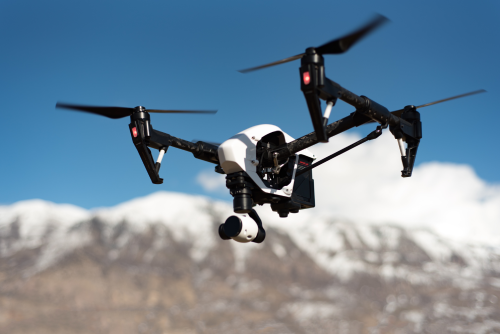
The 3D Robotics Solo is a legacy U.S.-made consumer/prosumer multirotor that still matters in drone history and in used-market comparisons. In the supplied record, it appears as a discontinued platform with about 0.4 hours of endurance, 0.8 km of range, and a published top speed of 89 km/h. For readers today, Solo is most relevant to legacy-drone buyers, GoPro-based aerial video users, and anyone comparing earlier American consumer drone platforms against more modern all-in-one camera drones.
Quick Summary Box
- Drone Name: 3D Robotics Solo
- Brand: 3D Robotics
- Model: Solo
- Category: Consumer/prosumer multirotor
- Best For: Legacy-drone enthusiasts, GoPro-based aerial video setups, researchers comparing discontinued consumer/prosumer platforms
- Price Range: Not publicly confirmed in supplied data
- Launch Year: Not publicly confirmed in supplied data
- Availability: Not publicly confirmed in supplied data; as a legacy/discontinued model, expect used-market rather than mainstream retail availability
- Current Status: Legacy/discontinued
- Overall Rating: Not rated due to limited confirmed data
- Ownership Style: Best treated as a hobbyist or enthusiast purchase, not a turnkey mainstream drone
- Main Risk: Software support, battery age, and parts availability may matter more than raw spec sheet numbers
- Our Verdict: Historically important and still interesting, but only worth buying now if you understand the risks around support, batteries, software, and parts
Introduction
The 3D Robotics Solo sits in an important part of the civilian drone timeline: a U.S.-branded consumer/prosumer multirotor from 3D Robotics that is now discontinued but still widely remembered. It appeals less as a mainstream current-buy option and more as a legacy aircraft for enthusiasts, tinkerers, collectors, and people who specifically want a GoPro-oriented flying platform. Readers should care because Solo helped define a phase of the market where software ambition, action-camera payloads, and user customization were all major selling points.
That context matters. Modern consumer drones are usually judged by how complete they feel out of the box: integrated camera, folding airframe, long-range digital transmission, obstacle sensing, easy app setup, and current regulatory support. Solo comes from an earlier stage of the market, when a drone could still be sold partly as a platform rather than just a flying camera appliance. For some buyers, that is exactly why it remains attractive. It represents a moment when the drone industry was still experimenting with how much openness, modularity, and software-driven automation consumers actually wanted.
For readers in 2026, the Solo is not primarily a recommendation for easy ownership. It is more of a case study in drone evolution and a practical question about whether a discontinued aircraft can still be worth buying. The answer depends heavily on what kind of buyer you are. If you want convenience, current support, and dependable app compatibility, modern models are far more sensible. If you want a historically meaningful aircraft with enthusiast appeal and you are comfortable troubleshooting a used system, Solo can still be worth serious attention.
Overview
What kind of drone is it?
Solo is a multirotor drone in the consumer/prosumer segment. Based on the supplied record, its confirmed headline figures are 0.4 hours of endurance, 0.8 km of range, and 89 km/h top speed, with many other specs not publicly confirmed in the supplied data. Its current status is legacy/discontinued, which is one of the biggest factors in any buying decision today.
Those numbers translate to about 24 minutes of flight time, about 800 meters of range, and a top speed of roughly 55 mph. On their own, they suggest that Solo was built as a serious outdoor aircraft rather than a casual toy. At the same time, the missing specification details matter. With a legacy drone, the published numbers tell only part of the story. The other part is real-world condition: battery health, controller behavior, firmware state, GPS performance, gimbal completeness, and the seller’s honesty about whether the aircraft is actually flight-ready.
It is also important to understand what Solo is not. It should not be approached like a current-generation compact travel drone with seamless app support and guaranteed imaging consistency. It belongs to an earlier era of drone design, and that means its appeal comes more from platform character and historical significance than from polished convenience.
Who should buy it?
This is mainly a drone for:
- used-market buyers who understand older platforms
- hobbyists who want a historically notable aircraft
- users interested in GoPro-style aerial capture rather than a fixed integrated camera ecosystem
- researchers and journalists comparing past drone platforms
- tinkerers who are comfortable verifying firmware, accessories, and battery condition
- collectors interested in important consumer/prosumer drone milestones
The ideal Solo buyer is patient, technically comfortable, and realistic about legacy hardware. This person does not assume a used drone will “just work” because it powers on. They know how to inspect batteries, verify controller pairing, test GPS lock, examine shell integrity, and confirm that the app path still functions on an available device.
It is much less attractive for first-time buyers who want a simple, current, supported drone. If someone’s top priorities are reliability, minimal setup time, modern safety features, and straightforward legal compliance, Solo is the wrong starting point. There are many newer drones that will provide a better experience with less friction.
What makes it different?
What makes Solo stand out is not just raw performance, but its place in drone history. It is widely associated with a more open, software-driven, GoPro-centered approach than many tightly integrated rivals of its era. Today, that gives it niche appeal, but it also means buyers must check bundle contents, app support, and replacement-part reality much more carefully than they would with a new drone.
In practical terms, Solo differs from an integrated camera drone in three important ways:
- The imaging experience depends on the camera setup, not just the airframe.
- Ownership is more variable from one used unit to another, because bundles may differ widely.
- Software and ecosystem condition matter more than ever, since official support for discontinued products can fade while community support becomes more important.
That combination makes Solo interesting in a way many legacy products are not. It is not simply “old.” It is old in a way that still tells you something about the direction the drone market almost took.
Key Features
- Legacy consumer/prosumer multirotor from 3D Robotics
- U.S. brand and manufacturer
- Published endurance of 0.4 hours, or about 24 minutes
- Published range of 0.8 km
- Published top speed of 89 km/h
- Current status is legacy/discontinued
- Historically associated with external action-camera workflows rather than a guaranteed integrated camera package
- More appealing as a platform and historical artifact than as a friction-free modern purchase
- Potentially useful for restoration, hobby flying, and comparison testing
- Many important details, including weight, camera specs, and battery details, are not publicly confirmed in the supplied data
- Buyers should verify controller, batteries, charger, gimbal, and camera compatibility before purchase
- Best evaluated as a used-market or collector platform, not a current mainstream buy
Full Specifications Table
| Field | Details |
|---|---|
| Brand | 3D Robotics |
| Model | Solo |
| Drone Type | Multirotor |
| Country of Origin | USA |
| Manufacturer | 3D Robotics |
| Year Introduced | Not publicly confirmed in supplied data |
| Status | Legacy/discontinued |
| Use Case | Consumer/prosumer |
| Weight | Not publicly confirmed in supplied data |
| Dimensions (folded/unfolded) | Not publicly confirmed in supplied data |
| Max Takeoff Weight | Not publicly confirmed in supplied data |
| Battery Type | Not publicly confirmed in supplied data |
| Battery Capacity | Not publicly confirmed in supplied data |
| Flight Time | 0.4 hr (about 24 minutes) |
| Charging Time | Not publicly confirmed in supplied data |
| Max Range | 0.8 km |
| Transmission System | Not publicly confirmed in supplied data |
| Top Speed | 89 km/h |
| Wind Resistance | Not publicly confirmed in supplied data |
| Navigation System | Not publicly confirmed in supplied data |
| Obstacle Avoidance | Not publicly confirmed in supplied data |
| Camera Resolution | Depends on fitted camera; not publicly confirmed in supplied data |
| Video Resolution | Depends on fitted camera; not publicly confirmed in supplied data |
| Frame Rates | Depends on fitted camera; not publicly confirmed in supplied data |
| Sensor Size | Depends on fitted camera; not publicly confirmed in supplied data |
| Gimbal | Not publicly confirmed in supplied data |
| Zoom | Not publicly confirmed in supplied data |
| Storage | Depends on fitted camera and bundle; not publicly confirmed in supplied data |
| Controller Type | Dedicated controller historically associated; exact bundle contents not publicly confirmed in supplied data |
| App Support | Historically app-linked; exact current compatibility not publicly confirmed in supplied data |
| Autonomous Modes | Historically associated with smart-flight features; exact current availability not publicly confirmed in supplied data |
| Payload Capacity | Not publicly confirmed in supplied data |
| Operating Temperature | Not publicly confirmed in supplied data |
| Water Resistance | Not publicly confirmed in supplied data |
| Noise Level | Not publicly confirmed in supplied data |
| Remote ID Support | Not publicly confirmed in supplied data |
| Geo-fencing | Not publicly confirmed in supplied data |
| Certifications | Not publicly confirmed in supplied data |
| MSRP / Launch Price | Not publicly confirmed in supplied data |
| Current Price | Not publicly confirmed in supplied data |
Design and Build Quality
As a legacy consumer/prosumer multirotor, Solo should be thought of as a field drone rather than a modern ultra-compact travel drone. The supplied data does not confirm its exact dimensions, weight, or material construction, so buyers should avoid assumptions about packability or carry comfort unless a seller provides those details clearly.
What can be said more safely is that aircraft in this class were generally built to be more substantial than small beginner drones, with a stronger focus on stable outdoor flight than on pocket portability. That tends to be good for flight confidence, but less convenient for casual travel. A drone like this usually makes more sense when you deliberately pack it for a session, rather than throwing it into a bag for spur-of-the-moment travel shooting.
Because Solo is discontinued, build quality today is not just about the original airframe. It is also about the condition of the specific used unit in front of you. On a legacy drone, the quality difference between a well-kept example and a neglected one can be enormous. Two Solo packages may look similar in listing photos while being worlds apart in actual usability.
For a used Solo, inspect or request proof of the following:
- battery age, cycle count if available, and signs of swelling
- motor smoothness and signs of dirt, corrosion, or bearing wear
- propeller condition and whether replacements are included
- shell cracks, repaired fracture points, or stress marks around the arms
- landing gear wear and evidence of hard landings
- gimbal or camera-mount security
- controller stick condition, buttons, antennas, and charging behavior
- charger functionality and power-cable completeness
- ports, connectors, and any signs of corrosion from poor storage
- whether the aircraft has been stored long-term at improper battery levels
A good seller should be willing to provide close-up photos and, ideally, a current test video showing startup, GPS acquisition, controller connection, and a short hover. That kind of documentation can matter more than cosmetic cleanliness. For Solo in particular, the overall bundle condition is often more important than the airframe alone.
Flight Performance
From the supplied record, Solo’s confirmed performance picture is fairly clear in three areas: about 24 minutes of endurance, 0.8 km of range, and 89 km/h top speed.
A published flight time of roughly 24 minutes is still respectable for a hobby platform, especially when viewed in historical context. However, buyers should interpret that as a best-case or near-best-case number, not a guaranteed real-world result from an aging used battery. On a discontinued drone, actual endurance can drop significantly depending on payload weight, flying style, wind, battery health, temperature, and how aggressively the previous owner used the pack. A unit sold with older batteries may deliver notably less than the published figure.
The published top speed of 89 km/h suggests that Solo was designed to feel lively and capable, not just to hover gently for basic video capture. That makes it more interesting than many entry-level drones, but speed by itself is not the whole performance story. For most current buyers, what matters more is whether the aircraft still flies predictably, holds position well, responds cleanly to control inputs, and can complete a safe return without sudden glitches.
The 0.8 km range is more modest by modern standards. Compared with contemporary drones that routinely advertise much greater transmission distance, Solo does not stand out here. But range is also easy to misunderstand. In legal recreational flying, many users operate within visual line of sight anyway. The more relevant issue for a legacy drone is not maximum advertised range, but signal stability and trust. An 800-meter range figure is less important than whether the controller, antennas, and video/control link still behave reliably in the real world.
A few practical performance points are worth keeping in mind:
- Older batteries often sag under load more quickly than newer ones.
- Wind can reduce both endurance and usable signal confidence.
- Added camera or gimbal weight may affect acceleration and flight time.
- Published speed may depend on mode, payload, and battery condition.
- The first test flights after purchase should be conservative and local.
Wind handling, takeoff behavior, landing behavior, and ceiling are not publicly confirmed in the supplied data. As analysis only, a larger legacy multirotor in this segment would usually be better suited to outdoor flying than tight indoor spaces. Buyers should not treat Solo as an indoor training platform unless they have specific experience, sufficient space, and a safe environment.
For a first post-purchase flight, the smart approach is simple: test in a wide open area, use a fully checked battery, confirm GPS behavior, keep altitude modest, remain close, and verify return-to-home or equivalent recovery behavior only in controlled conditions. With a legacy aircraft, caution is not paranoia; it is part of responsible ownership.
Camera / Payload Performance
Camera performance is one of the most important buying questions for the Solo because the supplied data does not confirm an integrated camera specification. Historically, Solo is best known for a GoPro-oriented approach rather than a guaranteed built-in camera package.
That has two major implications:
- image quality depends heavily on the specific camera included with the drone
- used listings may vary a lot between aircraft-only, gimbal-included, and full camera-ready bundles
For creators, that can be either a benefit or a drawback. The benefit is flexibility if you specifically want to use a compatible action-camera workflow. The drawback is inconsistency: one Solo package may be much more useful than another, and the camera quality can range from dated to still respectable depending on the included setup.
This flexibility was part of Solo’s identity. Instead of assuming one factory camera would define the user experience, the platform appealed to people who already owned or preferred action cameras. That could be attractive to users invested in a certain brand or workflow. It also fit an era when action cameras were central to consumer aerial video.
Today, though, that same flexibility creates buying complexity. A used Solo listing may fall into one of several categories:
- Aircraft only: useful mainly for restoration or buyers who already have compatible accessories
- Aircraft plus controller and batteries: closer to functional, but still not necessarily camera-ready
- Aircraft plus gimbal/mount: potentially viable for aerial video, but still dependent on camera compatibility
- Full bundle with action camera: the most convenient option, but image quality then depends on the included camera generation and condition
Not publicly confirmed in the supplied data:
- camera resolution
- video resolution
- frame rates
- sensor size
- zoom capability
- gimbal specification
- payload capacity
In practical terms, anyone considering Solo for aerial video should verify exactly what comes with the drone before buying. A bare airframe without the right gimbal and compatible camera setup can add cost and complexity very quickly.
There are also real workflow differences between a GoPro-style system and a modern integrated camera drone:
- Image consistency: modern integrated systems are usually easier to predict.
- Color and exposure behavior: depends on the specific action camera used.
- Low-light performance: older action cameras often lag behind newer integrated camera drones.
- Stabilization: may depend on both gimbal performance and camera setup.
- Live view quality: may feel more dated than current systems.
- File handling: may require camera-specific storage and settings management.
For hobby video in good light, a properly configured Solo setup can still be enjoyable. For demanding commercial imaging where you need predictable image quality, fast setup, and repeatable output, the lack of a single standardized camera package is a clear disadvantage.
If you are buying for video, ask the seller these questions before spending anything:
- Is a camera included?
- Is a gimbal included and working?
- Has the gimbal been tested recently?
- What exact camera model is mounted or supported?
- Does the live feed function correctly?
- Are vibration issues visible in sample footage?
- Is the camera mount complete, or are parts missing?
- Are sample stills or sample video files available?
With Solo, the phrase “camera drone” can mean very different things depending on the bundle.
Smart Features and Software
Solo’s historical appeal was tied strongly to software and smart-flight ideas, but this is also where legacy risk becomes most important. The supplied data does not confirm exact app support, autonomous modes, return-to-home behavior, waypoint tools, or current mobile compatibility.
Broadly speaking, Solo has long been associated with app-based control options and smarter automated flying than some simpler drones of its era. That said, current reality depends on the specific firmware version, controller condition, app availability, mobile device compatibility, and whether the owner is relying on official or community-preserved software paths.
This section is where many used buyers either get a bargain or inherit a headache. A legacy drone can be mechanically intact and still be frustrating if the software side has decayed. The aircraft might power on, but that does not guarantee that smart functions, live view, telemetry, or settings access still work the way you expect on a modern phone or tablet.
Before buying, readers should verify:
- whether the controller still pairs correctly
- whether the mobile app still works on their device
- whether smart-flight features are still accessible
- whether GPS-assisted functions behave normally
- whether firmware updates are still available or even advisable
- whether community support is needed for setup
- whether login requirements or activation steps still exist
- whether a seller is including the device they used to run the app successfully
A key point with discontinued tech is that software compatibility can break silently over time. App stores change, mobile operating systems change, security rules change, and older apps may no longer install cleanly. Some users solve this by keeping an older dedicated tablet or phone just for the drone. That can be an effective workaround, but it adds complexity and should be treated as part of the cost of ownership.
Firmware is another area where caution helps. On a current drone, “update to latest” is often reasonable advice. On a legacy drone, that may not be true. A well-working setup may depend on a particular firmware version, community guidance, or archived installation path. If you buy Solo, it is wise to research the current owner community before making any software changes.
For a discontinued drone, software support is never a minor issue. It can be the deciding factor between a useful aircraft and a frustrating project. In many cases, the best buyer experience comes from purchasing a unit from someone who can demonstrate the full system working today rather than simply stating that it worked in the past.
Use Cases
The most realistic use cases for Solo today are shaped as much by its legacy status as by its original market position.
-
Legacy aerial video with a compatible action-camera setup
Best for users who understand older workflows and are not expecting modern integrated-camera convenience. -
Hobby flying for experienced users who understand older drones
Solo can still be enjoyable as a manual flying platform if the aircraft is in good condition and the owner is comfortable with legacy setup steps. -
Collection and restoration of historically notable civilian drone platforms
For collectors, the platform matters even if the drone is not a daily flyer. -
Research and comparison work involving earlier U.S. consumer/prosumer drones
Useful for journalists, analysts, educators, and drone historians studying market evolution. -
Training in legacy multirotor maintenance and setup
Solo can be educational for people learning how earlier drones combined aircraft, controller, app, camera, and gimbal systems. -
Community-driven tinkering where legal, safe, and supported by available parts
It remains relevant to users who enjoy troubleshooting, repairing, and preserving older aircraft.
Less realistic modern use cases include primary commercial inspection, current mapping production, or compliance-sensitive enterprise operations, unless a user has a very specific controlled reason to keep the platform in service. Even then, the burden of proving reliability and compliance would be much higher than with a current supported drone.
Solo today is strongest as a special-interest aircraft, not a general-purpose workhorse.
Pros and Cons
Pros
- Recognizable and historically important 3D Robotics platform
- Confirmed published endurance of about 24 minutes is still usable for hobby flights
- Confirmed top speed of 89 km/h suggests a capable performance envelope
- Consumer/prosumer positioning makes it more serious than entry-level toy drones
- Historically associated with a flexible action-camera workflow
- Still interesting for collectors, researchers, and legacy-system enthusiasts
- U.S.-origin brand may appeal to readers comparing American drone manufacturers
- Educational value for understanding a major phase in consumer drone development
Cons
- Discontinued status is a major drawback for support and long-term ownership
- Many critical specs are not publicly confirmed in the supplied data
- Range of 0.8 km looks limited versus many modern alternatives
- Camera performance depends on bundle contents, not a single confirmed factory spec
- Official app and software compatibility may be uncertain on current devices
- Spare parts, batteries, and repair quality can vary widely in the used market
- Remote ID support is not publicly confirmed in supplied data
- Not an ideal buy for users who want modern obstacle sensing and turnkey reliability
- Hidden costs can appear quickly if the bundle is incomplete
Comparison With Other Models
Because Solo is a legacy model and the supplied data is incomplete, the most useful comparisons are high-level market-position comparisons rather than exact spec-sheet shootouts. With older drones, a perfect spreadsheet comparison often matters less than a simple question: which used package is actually complete, supported enough to fly, and suited to your goals?
When comparing Solo against other legacy aircraft, consider these criteria first:
- integrated camera versus external camera workflow
- completeness of the used bundle
- current battery and charger condition
- ease of app setup in 2026
- seller evidence that the system is flight-ready
- whether you value history and openness more than convenience
| Model | Price | Flight Time | Camera or Payload | Range | Weight | Best For | Winner |
|---|---|---|---|---|---|---|---|
| 3D Robotics Solo | Not publicly confirmed in supplied data; used-market pricing varies | 0.4 hr confirmed in supplied data | Historically associated with GoPro-style setup; exact bundle varies | 0.8 km confirmed | Not publicly confirmed in supplied data | Legacy buyers, tinkerers, 3DR enthusiasts | Legacy openness and historical appeal |
| DJI Phantom 3 Professional | Verify used-market pricing | Historically in the same broad class | Integrated camera workflow | Generally seen as a longer-range turnkey rival in its era | Verify seller details | Buyers wanting simpler all-in-one aerial imaging | Turnkey camera convenience |
| Yuneec Typhoon Q500 4K | Verify used-market pricing | Historically in the same broad class | Integrated camera workflow | Same general consumer/prosumer legacy class | Verify seller details | Casual stabilized video with bundle-oriented buying | Bundle simplicity |
| 3DR Iris+ | Verify used-market pricing | Earlier-generation legacy class | Action-camera era platform | Earlier-generation consumer range class | Verify seller details | Historical comparison within older 3DR hardware | Solo for later-generation refinement |
Solo vs a close competitor
Against DJI Phantom 3 Professional, Solo’s main appeal is not convenience. The Phantom family is usually the stronger choice for buyers who want a more integrated camera-first legacy drone. Solo makes more sense if you specifically want the 3DR ecosystem, a GoPro-style workflow, or historical significance.
Another way to frame this comparison is buyer psychology. A Phantom-type buyer typically wants a product that feels closer to a finished appliance. A Solo buyer is more willing to treat the drone as a system that may require more checking, more interpretation, and more attention to bundle details. If your priority is “best chance of flying soon after purchase,” the integrated-camera alternative often has the edge. If your priority is “I want this particular platform because it represents something distinct,” Solo can be more compelling.
Solo vs an alternative in the same segment
Compared with Yuneec Typhoon Q500 4K, Solo tends to look more interesting to enthusiasts and software-minded legacy buyers, while the Yuneec option is usually easier to understand as a conventional camera bundle. If simplicity is the goal, Solo may not be the easiest path.
This is an important used-market distinction. Legacy drones are often bought by people who underestimate how valuable completeness is. A drone with a clear, integrated imaging package and easy-to-identify accessories may actually be the safer buy, even if the airframe itself is less historically interesting. Solo wins on character and platform identity, but not automatically on ease of ownership.
Solo vs an older or previous-generation option
Within older 3DR hardware history, Solo represents a later and more ambitious direction than earlier platforms such as the Iris+ generation. If someone specifically wants an older 3DR aircraft, Solo is generally the more complete consumer/prosumer concept, but it still carries all the normal risks of discontinued drone ownership.
That is what makes Solo significant. It can be read as a more developed expression of 3DR’s consumer drone thinking: more polished than earlier hobby-adjacent platforms, but still rooted in an era when modularity and software ambition were part of the appeal. For a historian or collector, that alone can justify interest.
Manufacturer Details
3D Robotics, often shortened to 3DR, is an American drone company and the same name serves as both the brand and the manufacturer here. In other words, Solo was sold under the 3D Robotics name by 3D Robotics itself, rather than by a separate sub-brand.
The company became one of the more recognizable early names in civilian drones, especially in the period when consumer UAVs were evolving from hobbyist platforms into polished ready-to-fly products. Over time, 3D Robotics became known as much for software and enterprise workflow direction as for consumer aircraft hardware.
That broader company history is one reason Solo still gets remembered. It was not just another discontinued quadcopter. It came from a brand that played a meaningful role in shaping how people thought about consumer drones, autonomy, and software-led flight experiences. For readers interested in American drone development, Solo remains one of the clearer reference points in that story.
In market reputation terms, 3DR holds an important place in drone history, especially for readers interested in U.S. drone development, open-platform thinking, and the transition from DIY culture to more automated flight systems.
Support and Service Providers
Support is one of the biggest reasons to be cautious with Solo today. Because the drone is legacy/discontinued, buyers should assume support may be limited and verify the current situation directly through official brand channels before purchase.
Areas to check:
- official support status
- firmware availability
- battery replacement options
- propeller and motor parts availability
- gimbal and camera-mount parts
- controller repair options
- independent drone repair shop familiarity with the model
- community forum and archive support
Warranty coverage is unlikely to be meaningful on a drone of this age unless a seller offers a separate refurbisher guarantee. In practice, most support will likely come from a mix of seller honesty, specialist repair shops, used-parts sourcing, and owner communities.
It helps to think of support in layers:
- Official support – often limited or no longer central for legacy hardware.
- Specialist repair support – independent technicians who still know older models.
- Community knowledge – forums, archived guides, enthusiast groups, and user-made troubleshooting steps.
- Parts scavenging and used sourcing – often necessary for discontinued products.
Before you buy, it is worth contacting at least one repair provider or experienced community member to ask a very practical question: If something goes wrong, what can still be fixed and what usually becomes a dead end? The answer may shape whether a seemingly good deal is actually worth pursuing.
Battery support deserves special attention. Even if a legacy drone itself is durable, old batteries are consumables, and consumables often become the hardest part of long-term ownership. Shipping rules, storage age, and authenticity concerns can all make replacements difficult.
Where to Buy
Because Solo is discontinued, it is best approached as a used-market purchase rather than a normal retail product.
Possible buying channels include:
- used drone marketplaces
- general electronics resale platforms
- hobby classifieds
- local drone communities
- refurbishment sellers
- collector-oriented listings
Each source has different tradeoffs. General resale platforms may offer the widest selection, but often with the least technical accuracy in listings. Hobby communities may have better-informed sellers, but inventory can be limited. Refurbishment sellers may charge more, yet sometimes offer the best documentation and the lowest risk. Local pickup can be especially valuable because it may allow you to inspect the aircraft in person and avoid battery-shipping complications.
Before buying, confirm whether the listing includes:
- aircraft
- controller
- batteries
- charger
- props
- gimbal
- camera mount
- action camera, if any
- carrying case
- updated firmware status
- proof of functional test
For a legacy drone, a cheap incomplete bundle can become more expensive than a better-documented full kit.
Questions worth asking the seller include:
- When was it last flown successfully?
- How many batteries are included, and how healthy are they?
- Does it hold GPS lock normally?
- Does the controller pair immediately?
- Is the app currently usable on a device you can show?
- Are there any crash repairs?
- Are there missing screws, dampers, feet, or mounting parts?
- Can you provide a hover video from this week rather than an old clip?
“Untested” is usually not your friend in a discontinued drone listing. Unless you are intentionally buying for parts or restoration, documented functionality is worth paying for.
Price and Cost Breakdown
Launch price and current price are not publicly confirmed in the supplied data, so buyers should avoid assuming that any used listing represents good value without checking what is actually included.
The real cost of ownership may include more than the airframe:
- replacement batteries
- charger or power accessories
- propellers
- gimbal or camera mount
- compatible action camera
- spare landing gear or shell parts
- controller battery or controller replacement
- repair labor
- compliance add-ons if required in your region
- carrying case or storage solution
- a dedicated older phone or tablet for app compatibility
For budgeting, ask these questions first:
- Is it aircraft-only or a full flight-ready bundle?
- Are the batteries healthy and recently tested?
- Is the controller included and working?
- Does it include the camera hardware you actually need?
- Are spare parts still realistically available?
- Is software setup straightforward or community-dependent?
A low purchase price can be misleading if batteries are degraded or the camera/gimbal package is incomplete.
There are three common value traps with legacy drones like Solo:
-
The cheap airframe trap
The listing looks affordable, but you still need batteries, charger, gimbal hardware, and a compatible camera. -
The “works fine” but undocumented trap
The seller says it functions, but cannot show a recent test, leaving software or battery risk unresolved. -
The complete bundle with hidden aging costs
Everything is included, but batteries are old, rubber components are tired, and one missing accessory prevents full use.
A smart buyer should compare the total ownership cost against a basic modern drone, not just against other Solo listings. If your goal is simply to get into the air and capture stable footage, a newer entry-level or midrange drone may be the better value even if the Solo purchase price looks lower at first glance.
Regulations and Compliance
Regulation depends on your country, the actual configured weight of the drone, and how you intend to use it. Solo’s exact weight and Remote ID support are not publicly confirmed in the supplied data, so buyers must verify the real aircraft configuration before flying.
Practical points to consider:
- If the actual takeoff weight crosses your local threshold, registration may be required.
- If you fly commercially, additional pilot certification or operating approval may apply.
- Remote ID support is not publicly confirmed in the supplied data, and a legacy drone may need an external compliance solution where required.
- Privacy laws still apply when recording people, homes, vehicles, or private property.
- Local no-fly zones, airport restrictions, and airspace rules must be checked before every flight.
- A discontinued aircraft does not automatically meet newer compliance expectations just because it was once sold legally.
For U.S. buyers especially, compliance should be treated as a pre-purchase checklist item, not an afterthought.
There is another subtle issue with legacy aircraft: even if a drone is technically airworthy, the ecosystem around it may not reflect current rules. Older apps, mapping layers, or internal warnings may not match modern airspace tools or legal requirements. That means the pilot has to take even more responsibility for independent compliance checks.
If Remote ID or similar electronic identification rules apply in your area, verify not just whether the drone can physically fly, but whether it can fly legally in the way you intend to use it. Some owners may rely on external modules where permitted, but the details vary by region and should be confirmed against current local law.
Travel is another angle. Older drones, especially with aging batteries, may be more complicated to transport safely and legally than newer compact aircraft. Airline battery rules, storage limits, and state-of-health concerns all become more important with legacy gear.
Who Should Buy This Drone?
Best for
-
Legacy-drone enthusiasts
People who enjoy owning and flying important older platforms. -
3D Robotics fans and collectors
Buyers with specific interest in 3DR history and hardware. -
Buyers who specifically want a Solo platform for historical or hobby reasons
Best when the attraction is the aircraft itself, not just generic drone ownership. -
Users comfortable with used-market troubleshooting
Solo rewards patience and punishes unrealistic expectations. -
GoPro-oriented aerial video experimenters who understand the limitations
Especially relevant if you already have compatible workflow habits and accept bundle variability. -
Researchers comparing older consumer/prosumer drones
Useful as a historical benchmark and discussion point.
Not ideal for
-
First-time drone buyers
There are easier, safer, and more predictable starting points. -
Users who want guaranteed official support
Solo ownership may depend heavily on archives and community knowledge. -
Buyers who need modern obstacle avoidance and polished app ecosystems
This is not the strongest match for a convenience-first user. -
Commercial operators needing easy compliance and dependable uptime
Downtime, parts uncertainty, and legal complexity reduce practicality. -
Travelers who prioritize compact, foldable portability
Solo belongs to an earlier field-drone mindset. -
Anyone who wants a simple current-gen camera drone with minimal setup friction
A newer integrated model will usually be the better answer.
The key dividing line is mindset. If you want a tool, buy modern. If you want a platform, a project, or a piece of drone history, Solo becomes much more defensible.
Final Verdict
The 3D Robotics Solo remains an important name in consumer drone history, and the supplied data confirms a still-respectable core performance profile of about 24 minutes flight time, 0.8 km range, and 89 km/h top speed. Its biggest strengths are historical significance, enthusiast appeal, and the flexibility associated with its GoPro-era design philosophy. Its biggest drawbacks are even more important: it is discontinued, many key specs are not confirmed in the supplied data, and real-world ownership now depends heavily on used-market condition, software compatibility, and parts access.
That makes Solo a very specific kind of recommendation. It is not the sensible default buy for most people in 2026. It is not the easiest path to aerial photography, and it is not the safest way to get a dependable everyday drone. Modern all-in-one aircraft are better for that.
But that does not make Solo irrelevant. For the right buyer, it still offers something real: a direct connection to a formative period in civilian drone development, a distinctive GoPro-centered workflow, and the satisfaction of owning a platform that reflects a different philosophy from today’s tightly integrated camera drones. If you value history, tinkering, modularity, and 3DR’s place in the market, Solo can still be a meaningful purchase.
In short: buy Solo as a legacy platform, not as a convenience product. If you want a dependable everyday flying tool, look modern. If you want a notable piece of drone history and are prepared for the maintenance, software, and compliance reality, Solo is still worth serious consideration.
