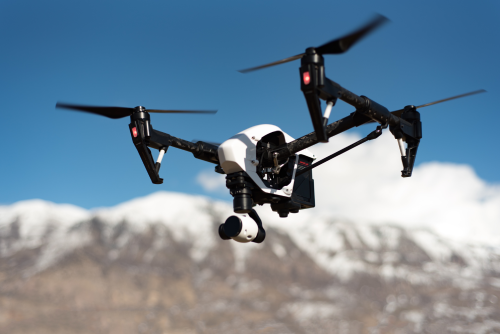
The AeroVironment Shrike is a compact US-made military/tactical multirotor listed in public database sources as a short-range observation platform. Based on the limited confirmed data available, it pairs a 2.5 kg maximum takeoff weight with about 36 minutes of endurance, 5 km range, and a 56 km/h top speed. Those figures place it in a niche but important category: small, hover-capable tactical drones intended for close-area reconnaissance, situational awareness, and field-deployable VTOL use rather than consumer photography or long-endurance fixed-wing patrol. As a result, it is most relevant to defense-market researchers, institutional evaluators, journalists covering unmanned systems, and readers comparing compact tactical UAVs—not ordinary consumer pilots shopping for a camera drone.
Quick Summary Box
- Drone Name: AeroVironment Shrike
- Brand: AeroVironment
- Model: Shrike
- Category: military/tactical multirotor
- Best For: Short-range tactical observation and defense-market comparison research
- Price Range: Not publicly confirmed in supplied data
- Launch Year: Not publicly confirmed in supplied data
- Availability: Not publicly confirmed in supplied data
- Current Status: unknown
- Overall Rating: Not rated due to limited confirmed data
- Our Verdict: A small tactical VTOL drone with credible close-range multirotor performance on paper, but public detail on payloads, software, pricing, support, and procurement remains limited.
Introduction
AeroVironment Shrike sits in the military/tactical segment, where public information is often much thinner than it is for consumer, prosumer, or even enterprise inspection drones. In those more commercial categories, buyers usually expect detailed spec sheets, promotional videos, price lists, accessory options, firmware notes, and broad dealer access. Tactical systems are different. Open-source records often provide only a skeletal outline: manufacturer, role, type, and a handful of basic performance numbers.
That is exactly how Shrike should be understood. The supplied record identifies it as a multirotor from AeroVironment in the USA, with an unknown current status and a compact performance envelope that strongly suggests short-range, hover-capable observation use. In simple terms, it appears to be a field-portable VTOL aircraft optimized for localized tactical awareness rather than wide-area patrol.
Readers should care about Shrike mainly as a niche defense-oriented platform reference, not as a typical retail drone option. It matters if you are mapping the landscape of small tactical unmanned aircraft, comparing multirotor versus fixed-wing approaches for reconnaissance missions, or tracking AeroVironment’s smaller UAS portfolio. It matters much less if your use case is aerial filming, roof inspection, mapping, or recreational flying.
That distinction is important because it shapes how this aircraft should be evaluated. With Shrike, the goal is not to pretend we have a complete product brief when we do not. The goal is to interpret the confirmed figures responsibly, explain what they likely mean in operational terms, identify the gaps that still matter, and place the model in context within the broader small tactical drone market.
Overview
Shrike appears to be a small tactical VTOL aircraft designed for missions where hovering, quick launch, compact footprint, and close-range observation matter more than fixed-wing endurance. Publicly confirmed data is limited, so the most useful way to understand this model is as a capability profile rather than a fully transparent retail product page.
What kind of drone is it?
Shrike is a multirotor tactical drone. That classification matters because multirotors behave differently from fixed-wing tactical UAS in several key ways.
A multirotor system is generally preferred when operators need to:
- take off and land vertically without a runway, launcher, or recovery net
- hover over a point of interest
- reposition precisely in tight spaces
- maintain visual focus on a stationary target or area
- launch rapidly from an improvised field position
By contrast, fixed-wing systems usually trade away hover capability in exchange for more efficient forward flight, longer endurance, and broader area coverage.
With a 2.5 kg maximum takeoff weight and 0.9 m rotor span, Shrike sits in a small tactical class rather than a large battlefield UAV class. That implies a drone that can probably be transported and deployed by a small team, possibly even a single operator depending on the full system kit, rather than requiring vehicle integration or elaborate launch equipment. In practical procurement terms, that makes it relevant to dismounted teams, rapid field deployment concepts, and compact surveillance workflows.
It is also notable that the public record frames it as a tactical platform rather than as a general-purpose industrial drone. That suggests the mission philosophy is likely centered on observation, reconnaissance, and close-range situational awareness instead of photogrammetry, media creation, or civilian inspection work.
Who should buy it?
For most readers, “buy” really means “evaluate through an official institutional channel” rather than “add to cart.” Shrike is most relevant to:
- defense and government procurement researchers
- journalists comparing tactical drone programs
- analysts tracking AeroVironment’s smaller UAS portfolio
- institutional users assessing short-range VTOL observation platforms
- think tanks and academic researchers studying tactical drone classes
- organizations benchmarking compact UAS for doctrine, training, or capability analysis
It is not positioned like a consumer photography drone, hobby quad, or open-retail inspection platform. There is no indication in the supplied record of consumer dealer channels, creator-focused imaging features, or civilian app ecosystems. Even if the airframe itself is physically compact, the market context is completely different from the one people associate with mainstream drones from DJI, Autel, or similar commercial brands.
That means the ideal reader is someone asking questions like:
- Where does this platform sit in the tactical VTOL landscape?
- How does a 36-minute multirotor compare with small fixed-wing ISR systems?
- Is the range sufficient for close-area military or public-sector observation?
- How portable is a 2.5 kg-class aircraft likely to be?
- How does AeroVironment’s brand position affect confidence in the platform?
Those are sensible questions for Shrike. Questions such as “Can it shoot 4K at 60 fps?” or “Does it work with a smartphone app?” are not supported by the available public evidence.
What makes it different?
What stands out is the combination of:
- small multirotor form factor
- tactical market positioning
- AeroVironment branding
- a publicly listed 36-minute endurance
- a stated 5 km range
- a 56 km/h top speed in a compact category
That combination places Shrike in an interesting middle ground. It is more specialized than mainstream enterprise drones, but still much smaller and more localized in mission scope than larger defense UAS. It appears to aim at the practical tactical question of how to get airborne quickly, hover over an area, and gather close-range information without needing fixed-wing launch methods or larger logistical support.
Its biggest differentiator may also be its biggest drawback: very limited public transparency. Some tactical systems are reasonably well documented even when they are not sold in retail channels. Shrike, based on the supplied record, is not one of them. That opacity does not automatically mean the platform is weak; it simply means evaluation is more difficult unless you have direct access to official documentation, demonstrations, or procurement contacts.
In short, Shrike is different not because it is publicly shown as radically advanced, but because it occupies a compact tactical VTOL niche backed by a recognized UAS manufacturer while remaining only lightly described in open sources.
Key Features
Based on the limited but usable confirmed record, the AeroVironment Shrike’s main identifiable features are:
- Multirotor airframe for hover-capable flight and vertical takeoff/landing
- Tactical/military segment positioning, indicating mission-oriented observation use rather than retail photography
- AeroVironment manufacturer and brand, significant because the company is well known in small UAS defense circles
- USA origin, which can matter in procurement, support, and regulatory contexts
- 2.5 kg maximum takeoff weight, suggesting a compact, field-portable size class
- About 36 minutes of endurance, which is a meaningful figure for a tactical multirotor of this size
- 5 km stated range, suitable for localized operations and short-area surveillance tasks
- 56 km/h maximum speed, enough for practical repositioning in a nearby operating area
- 0.9 m rotor span, indicating a system larger than ultra-compact consumer drones but still transportable
- Publicly documented at a high level, even though many sensor, software, and support details remain unconfirmed
There are a few reasons these core features matter more than they might seem at first glance.
First, the aircraft’s multirotor format means it is optimized for control and flexibility rather than pure endurance efficiency. In tactical settings, that can be valuable when the mission requires launching from concealed or improvised positions, holding visual attention on a point target, or supporting a unit that cannot spare space or time for fixed-wing launch and recovery.
Second, the 2.5 kg MTOW gives the platform a clearer identity. It is not a palm-sized nano-UAS, but it is also far from a large system requiring extensive setup. That usually implies a more practical compromise between portability and useful mission duration.
Third, the 36-minute endurance is arguably the most important published figure, because endurance determines how useful the platform is once it arrives on station. For many close-range reconnaissance scenarios, half an hour or a little more can be operationally meaningful, especially when the aircraft is easy to launch and does not depend on runway-style flight.
Finally, the AeroVironment name adds context. Even where open-source documentation is thin, a recognized manufacturer matters because it suggests the platform belongs to a serious tactical ecosystem rather than being an obscure or purely experimental listing.
Full Specifications Table
| Specification | Details |
|---|---|
| Brand | AeroVironment |
| Model | Shrike |
| Drone Type | Multirotor |
| Country of Origin | USA |
| Manufacturer | AeroVironment |
| Year Introduced | Not publicly confirmed in supplied data |
| Status | unknown |
| Use Case | military/tactical |
| Weight | Not publicly confirmed in supplied data |
| Dimensions (folded/unfolded) | Rotor span 0.9 m; folded dimensions and overall length not publicly confirmed in supplied data |
| Max Takeoff Weight | 2.5 kg |
| Battery Type | Not publicly confirmed in supplied data |
| Battery Capacity | Not publicly confirmed in supplied data |
| Flight Time | 0.6 hr (about 36 min) |
| Charging Time | Not publicly confirmed in supplied data |
| Max Range | 5 km |
| Transmission System | Not publicly confirmed in supplied data |
| Top Speed | 56 km/h |
| Wind Resistance | Not publicly confirmed in supplied data |
| Navigation System | Not publicly confirmed in supplied data |
| Obstacle Avoidance | Not publicly confirmed in supplied data |
| Camera Resolution | Not publicly confirmed in supplied data |
| Video Resolution | Not publicly confirmed in supplied data |
| Frame Rates | Not publicly confirmed in supplied data |
| Sensor Size | Not publicly confirmed in supplied data |
| Gimbal | Not publicly confirmed in supplied data |
| Zoom | Not publicly confirmed in supplied data |
| Storage | Not publicly confirmed in supplied data |
| Controller Type | Not publicly confirmed in supplied data |
| App Support | Not publicly confirmed in supplied data |
| Autonomous Modes | Not publicly confirmed in supplied data |
| Payload Capacity | Not publicly confirmed in supplied data |
| Operating Temperature | Not publicly confirmed in supplied data |
| Water Resistance | Not publicly confirmed in supplied data |
| Noise Level | Not publicly confirmed in supplied data |
| Remote ID Support | Not publicly confirmed in supplied data |
| Geo-fencing | Not publicly confirmed in supplied data |
| Certifications | Not publicly confirmed in supplied data |
| MSRP / Launch Price | Not publicly confirmed in supplied data |
| Current Price | Not publicly confirmed in supplied data |
The specifications table tells an important story even in its gaps. What is known—weight class, range, endurance, top speed, rotor span, and tactical role—is enough to establish the aircraft’s category. What is unknown includes almost everything a civilian or enterprise buyer would normally want for a purchasing decision. That is why Shrike should be treated as a platform profile for analysis, not a normal buy-guide product with a fully scored feature sheet.
Design and Build Quality
Because Shrike is confirmed only at a high level, design analysis has to stay conservative. The multirotor layout implies a hover-first aircraft with a practical VTOL setup, and the 0.9 m rotor span suggests a compact but not ultra-miniature airframe. In other words, it looks small enough for field portability, but large enough to support a meaningful battery and mission payload envelope within its 2.5 kg MTOW.
That size class matters. Very small tactical drones can be extremely portable, but they often sacrifice endurance, wind handling, sensor flexibility, or station time. Larger systems may carry more capable payloads or batteries, but they become slower to deploy and harder to move. Shrike’s published dimensions imply it was likely designed around a compromise: small enough to remain practical in the field, large enough to be operationally useful.
That weight class usually points to a one-operator or small-team portable system rather than a vehicle-launched or runway-dependent platform. It is also a sensible class for tactical observation drones that need to balance portability with enough energy reserve for useful station time. If you are thinking in doctrinal or operational terms, this is the sort of class that could support localized scouting, rapid visual checks, or short-duration area overwatch without becoming a major logistical burden.
From a build-quality standpoint, the available public record does not confirm construction materials, but tactical aircraft in this bracket are typically judged on somewhat different criteria than consumer drones. Buyers in this segment care less about premium finish or cinematic design and more about questions such as:
- Can it be deployed quickly in the field?
- Can operators swap batteries or props efficiently?
- Is the system durable enough for repeated transport and rough handling?
- Does it require frequent alignment, recalibration, or maintenance?
- How easy is it to pack, carry, and assemble under time pressure?
- Is the payload mounting method robust enough for repeated operations?
Those questions are critical for tactical systems, but the supplied record does not answer them.
What is not publicly confirmed matters here. There is no confirmed information in the supplied data on:
- frame materials
- foldability
- propeller quick-release design
- environmental sealing
- landing gear style
- modular payload bay
- maintenance access
- transport case format
- field assembly requirements
- battery insertion and retention design
So while Shrike likely prioritizes field readiness, the exact ruggedness and serviceability level should be verified through official documentation. A platform can look compelling on basic flight numbers while still differing dramatically in practical field usability. For example, two drones may share similar endurance and weight, but one may be much easier to launch, maintain, and repack in austere conditions.
Another useful point: a 0.9 m rotor span indicates the aircraft is not trivial in size. This may be a positive or a negative depending on the mission. The extra size can support stability, payload options, and more battery mass, but it can also affect concealment, carrying method, and indoor maneuverability. That makes Shrike look more like an outdoor tactical tool than a tiny covert microdrone.
The bottom line is that Shrike’s known physical profile is coherent for its class. What remains unclear is whether its detailed industrial design meets modern expectations for rugged modularity, rapid servicing, and field support.
Flight Performance
On confirmed numbers alone, Shrike’s performance profile is straightforward: about 36 minutes of endurance, 5 km range, and 56 km/h top speed. That places it in a realistic short-range tactical VTOL class rather than a long-endurance patrol platform.
The endurance figure is respectable for a compact multirotor. In practical terms, that suggests enough time for close-area observation, route checks, localized perimeter awareness, or brief point monitoring without pushing into fixed-wing territory. Many multirotors can launch quickly and hover well, but their usefulness depends on whether they can stay up long enough to provide meaningful overwatch. Thirty-six minutes is not extraordinary in the abstract, but in a small tactical category it is operationally relevant.
It helps to think about what that endurance likely means in real-world use. Published endurance figures are often measured under favorable conditions, with limited payload assumptions, low wind, and efficient flight profiles. Real mission time can drop when the aircraft is fighting wind, flying aggressively, climbing repeatedly, or carrying heavier sensors. So the practical on-station window may be lower than the quoted maximum. Even so, the published figure indicates Shrike is not merely a sprint platform; it appears intended for actual observation work, not just quick peeks over a ridge or wall.
The 5 km range further reinforces that role: useful for localized operations, but not a substitute for longer-range tactical aircraft. In a tactical multirotor, range should be interpreted carefully. Maximum range does not necessarily equal comfortable operating range, especially when operators need robust control, video downlink quality, terrain margin, and battery reserve for return. Still, 5 km is enough to frame Shrike as a drone for nearby surveillance and point-to-point reconnaissance rather than deep-area scouting.
Its 56 km/h maximum speed gives it decent repositioning ability within a local operating area. For a multirotor, that is enough to move with purpose between observation points, to react to changing local requirements, or to reduce transit time before settling into hover. Speed alone does not guarantee mission flexibility, but it helps prevent the aircraft from feeling sluggish when the operator needs to shift focus quickly.
A few careful inferences are fair:
- As a multirotor, Shrike should be better suited to stationary observation than fixed-wing alternatives.
- At 2.5 kg MTOW, it may handle outdoor conditions more confidently than very small nano-class drones.
- It is likely better suited to outdoor use than indoor use, simply because of its size and tactical role.
- The combination of endurance and range suggests close-area ISR, not broad regional coverage.
- Its profile likely favors rapid setup and local persistence over long-distance patrol efficiency.
However, a large part of flight performance remains undocumented in the supplied record. The following are not publicly confirmed:
- wind resistance or recommended operating wind limits
- hover precision in GPS-denied or degraded environments
- ascent and descent rates
- ceiling or altitude performance
- takeoff and landing automation quality
- control smoothness or pilot workload
- datalink robustness
- redundancy architecture
- emergency recovery logic
- battery performance in cold or hot weather
These omissions matter because tactical drones often succeed or fail on the margins of real field conditions, not in idealized specification sheets. A drone with a decent endurance figure but poor wind tolerance may be far less useful than a slightly shorter-endurance aircraft with stronger control authority and better stabilization. Likewise, a system with good speed but weak video link reliability may underperform in practical reconnaissance roles.
Another point worth making is that the multirotor-versus-fixed-wing trade-off is central to Shrike’s identity. Fixed-wing aircraft usually dominate in endurance and area coverage because they do not spend energy hovering. Multirotors dominate in flexibility: they launch from almost anywhere, loiter over exact points, and simplify close observation tasks. Shrike’s published numbers suggest it embraces that trade-off rather than trying to blur it. The platform seems designed to be judged as a compact, useful, localized VTOL observation tool—not as a fixed-wing competitor in long-range scouting.
Camera / Payload Performance
This is the section where public information becomes especially thin. The supplied record does not confirm the Shrike’s camera type, sensor format, gimbal setup, thermal capability, zoom level, video resolution, or payload capacity.
For a military/tactical multirotor, the value usually comes from an observation payload rather than from cinematic image quality. In this class, readers would typically want to know:
- whether it carries daylight EO, thermal, or dual-sensor payloads
- whether the payload is fixed or swappable
- whether stabilization is mechanical or electronic
- whether it supports low-light work
- whether it has target observation features
- whether there is onboard recording, live relay, or both
- whether image metadata and geolocation are embedded
- whether payloads can be updated over time
None of that is publicly confirmed in the supplied data.
That uncertainty significantly affects how Shrike can be compared with better-known tactical multirotors. In many modern systems, the airframe is only half the product. The payload can determine whether the platform is suitable for daylight spotting, nighttime surveillance, thermal search, route security, perimeter monitoring, or target confirmation. Two drones with similar flight time can have very different mission value depending on the sensor package they support.
There are a few broad, careful observations we can still make. Because Shrike is described as a tactical observation platform, it is reasonable to infer that payload usefulness is central to its intended role. A drone in this category would not normally be meaningful without some form of ISR-oriented sensor. But the exact level of capability remains unknown. For example, there is a major difference between:
- a basic stabilized daylight camera
- a dual EO/IR sensor package
- a zoom-capable system intended for standoff observation
- a low-light optimized payload
- a modular architecture that accepts multiple mission payloads
Without confirmation, those distinctions cannot be scored or assumed.
This is also where many buyers or evaluators should exercise caution. It is easy to look at the flight numbers and mentally fill in the rest, but that can be misleading. A compact tactical multirotor with 36 minutes of endurance might be very attractive if it carries a capable thermal/daylight sensor suite. The same aircraft would be much less compelling if the payload were basic, fixed, or poorly stabilized. Since payload performance often defines tactical usefulness more than raw speed or weight, this missing information is a major limitation in any serious assessment.
If payload performance is the deciding factor, this model needs direct manufacturer or procurement-channel verification before any meaningful comparison. That verification should ideally include:
- payload type and configuration options
- sensor specifications and focal lengths
- stabilization details
- thermal resolution, if applicable
- zoom functionality
- recording formats
- latency characteristics
- night and low-light performance
- swappability and upgrade path
So the safest conclusion is that Shrike’s payload utility may be mission-relevant, but its actual sensor capability cannot be responsibly rated from the available information.
Smart Features and Software
No public confirmation is provided in the supplied data for the software stack or intelligent flight features. That means there is no confirmed basis here for claiming:
- return-to-home
- waypoint missions
- AI subject tracking
- mapping workflows
- obstacle sensing
- cloud fleet tools
- SDK or API access
- encrypted command-and-control features
- denied-environment navigation aids
- autonomy-assisted landing or mission sequencing
A defense-oriented platform may well include some of these capabilities, but that would be assumption, not confirmed fact. Tactical drones often include some form of mission planning, telemetry management, navigation support, and command-and-control security. The problem is that the current open-source record does not tell us which of those functions are present, how mature they are, or how they are delivered.
This uncertainty matters because software increasingly defines the real usability of drone platforms. In consumer and enterprise markets, buyers now expect rich digital ecosystems: route planning, firmware updates, geofencing, flight logs, cloud data management, pilot aids, and smart battery information. In tactical contexts, the priorities shift somewhat, but software is still central. Institutional users may care more about:
- mission planning workflow
- control station ergonomics
- encryption or communications security
- interoperability with broader systems
- reliability under degraded signal conditions
- update management
- data export and review
- training burden
- navigation resilience
For Shrike, none of those points are publicly documented in the supplied record.
Buyers or evaluators should therefore request official details on:
- control station type
- mission-planning software
- data security architecture
- autonomy level
- navigation aids
- software update path
- integration support
- operator interface design
- telemetry display and logging
- training requirements for software use
If Shrike were to be judged only by consumer expectations, the lack of software transparency would be a major negative. In the tactical procurement world, it is more accurately described as a due-diligence requirement. Many capable defense systems simply are not presented in the same public-facing way as commercial drones. But that does not reduce the importance of software in actual use; it just means access to answers usually depends on official channels rather than public product pages.
In short, smart-feature depth is unknown from the supplied public record. That does not mean the platform lacks sophistication. It means outside observers cannot fairly rank it on autonomy, user experience, or systems integration without better documentation.
Use Cases
Given the limited but clear tactical profile, the most realistic use cases for Shrike are the following:
- short-range aerial observation in authorized government or defense contexts
- close-area situational awareness where hover is more useful than fixed-wing loiter
- operations from confined spaces where runway-free VTOL matters
- training on small tactical multirotor workflows
- defense-market benchmarking and program comparison
- public-sector or institutional evaluation of compact tactical VTOL systems
- localized perimeter monitoring in controlled operational environments
- route confirmation or area checks near a deployed team
- rapid launch observation when setup time is limited
These use cases all align with the same basic logic: Shrike looks most suitable when the mission demands nearby, controlled, hover-capable observation rather than long-distance area patrol.
A few examples illustrate the distinction.
If a team needs to quickly lift a camera above terrain, structures, or vegetation to understand what is happening in a nearby area, a multirotor makes sense because it can launch vertically and hold position. If the goal is to watch a specific crossing point, road segment, or structure for a limited period, endurance in the 36-minute class can be sufficient. If operators are working from a confined position with little room for launch infrastructure, the VTOL format becomes especially attractive.
By contrast, if the mission requires broad coverage over longer distances, repeated wide-area loops, or endurance measured in much longer patrol periods, a fixed-wing system will often be the more suitable reference category. That is why Shrike makes sense as a localized tactical asset, not as an all-purpose reconnaissance answer.
Because the public payload picture is incomplete, highly specialized missions should not be assumed. For example, it may or may not be suitable for thermal search, low-light surveillance, precision identification at standoff distance, or advanced autonomous inspection-like tasks. Those uses depend heavily on sensor and software specifics that have not been publicly confirmed here.
What can be said with confidence is that the published core numbers describe a platform consistent with the following mission profile:
- small-team deployable
- short-range
- observation-oriented
- VTOL-capable
- hover-centric
- tactical rather than commercial
That makes Shrike most useful as a reference point in discussions about compact military multirotors and their role alongside longer-endurance fixed-wing UAS.
Pros and Cons
Pros
- Confirmed multirotor format supports VTOL operation and hovering
- Compact 2.5 kg MTOW keeps it in a relatively portable tactical size class
- About 36 minutes of endurance is solid for a small tactical multirotor
- 5 km range is usable for localized observation tasks
- 56 km/h top speed is adequate for quick short-range repositioning
- AeroVironment is a recognized name in small tactical UAS
- The published size and role suggest a practical fit for close-area ISR missions
- Tactical positioning makes it relevant for institutional evaluation and defense-market comparison
Cons
- Camera and payload details are not publicly confirmed in the supplied data
- Price, launch year, and availability are not publicly confirmed
- Current platform status is listed as unknown
- Software, autonomy, and navigation features are not publicly confirmed
- Supportability and spare-parts continuity are unclear without procurement access
- Short range limits it compared with many fixed-wing tactical alternatives
- Open-source transparency is too limited for a fully confident product-level assessment
- Civilian-style dealer access and documentation should not be assumed
The key takeaway from the pros and cons is that Shrike’s known strengths are concentrated in its basic platform profile, while most of its weaknesses come from lack of publicly available detail rather than from documented underperformance. That distinction matters. A poorly documented tactical aircraft is not automatically a poor aircraft. But poor documentation does make it harder for outside analysts to judge mission suitability, support burden, and long-term relevance.
Comparison With Other Models
Apples-to-apples public comparison is difficult in the tactical drone market because many systems are only partially documented in open sources. The table below compares Shrike with a few recognizable alternatives at a high level.
| Model | Price | Flight Time | Camera or Payload | Range | Weight | Best For | Winner |
|---|---|---|---|---|---|---|---|
| AeroVironment Shrike | Not publicly confirmed in supplied data | 36 min | Not publicly confirmed in supplied data | 5 km | 2.5 kg MTOW | Short-range VTOL tactical observation | Best when you want the clearest confirmed core figures from the supplied record |
| Skydio X2D | Government / enterprise pricing | Around 35 min class in public marketing | EO/thermal mission packages depending configuration | Short-range tactical multirotor class | About 1.3 kg class in public marketing | Autonomy-heavy government observation workflows | Best autonomy-focused alternative |
| AeroVironment Wasp AE | Procurement-led pricing | Around 50 min class in public reporting | Small ISR payload class | Around 5 km class in public reporting | Lighter fixed-wing tactical class in public reporting | Longer-endurance tactical scouting without hover | Best endurance-focused alternative |
| AeroVironment Raven B | Procurement-led pricing | Longer fixed-wing endurance class in public reporting | Small ISR payload class | Longer-range legacy tactical class in public reporting | Lightweight tactical class in public reporting | Legacy fixed-wing tactical reconnaissance | Best legacy reference |
The comparison table is useful mainly for framing trade-offs rather than declaring a universal winner. Shrike belongs to a category where mission design matters more than abstract specifications. A drone that is “better” on paper may still be the wrong aircraft if it cannot hover, cannot launch in confined terrain, or requires more infrastructure than the user can support.
Shrike vs a close competitor
Against a platform like Skydio X2D, Shrike’s public endurance figure looks broadly competitive for a compact multirotor, but the documentation gap is much larger. X2D is easier to evaluate from a software and autonomy standpoint because the broader ecosystem around it is more visible in public-facing material. That tends to make it easier for institutional evaluators to understand feature maturity, operator experience, and mission planning approach.
Shrike, by contrast, remains more opaque in open-source terms. That does not automatically mean it is less capable. It means outside observers have fewer verified details about:
- control workflows
- autonomy depth
- sensor package options
- navigation resilience
- operator interface
- integration possibilities
So the choice here is partly about what you value. If you prioritize a platform with clearer publicly visible autonomy and user-interface context, an alternative like X2D may be easier to assess. If you are specifically studying AeroVironment’s tactical portfolio or looking at a compact VTOL aircraft through a defense-procurement lens, Shrike remains relevant even if public detail is thinner.
Shrike vs an alternative in the same segment
Compared with AeroVironment Wasp AE, the trade-off is classic multirotor versus fixed-wing logic. Shrike should be the better fit when hovering and VTOL matter. Wasp AE is the stronger reference when endurance and area coverage matter more.
This is one of the clearest conceptual comparisons in the article because it highlights a core tactical choice:
- Do you need to launch vertically and stare at a point?
- Or do you need to cover more distance and stay airborne longer?
Shrike appears aligned with the first answer. Wasp AE aligns more with the second. Neither is universally better. They are optimized for different mission problems.
A small multirotor like Shrike can be advantageous when:
- terrain is constrained
- launch space is limited
- operators need immediate hover capability
- the mission involves precise local observation
- the aircraft may need to remain over one small area
A fixed-wing system like Wasp AE can be advantageous when:
- operators need more efficient forward flight
- loiter time matters more than point hover
- area coverage is a priority
- launch and recovery methods are manageable
- the mission involves broader route or sector scouting
This is why Shrike’s value is best understood as mission-specific flexibility, not raw endurance leadership.
Shrike vs an older or previous-generation option
Compared with older fixed-wing tactical systems such as Raven B, Shrike likely offers easier confined-space launch and more flexible point observation. The older fixed-wing approach, however, typically makes more sense for longer patrol arcs and broader area coverage.
This comparison is helpful historically because it shows how small tactical UAS categories have diversified. Earlier generations of tactical drones often leaned heavily toward fixed-wing designs because endurance and portability were dominant priorities. As use cases expanded, compact multirotors became more valuable for missions where operators needed immediate vertical takeoff and exact hover positioning.
Shrike fits that later logic. It reflects the growing importance of localized VTOL reconnaissance in environments where quick deployment and precise observation can matter more than maximum patrol distance. In that sense, it can be read as part of a broader shift in tactical unmanned systems rather than just as a single isolated product entry.
The real challenge in comparing Shrike with older or alternative systems is the absence of equally detailed open-source information across all models. Tactical comparisons are often messy because one aircraft has well-publicized payload options while another has only partial performance figures in a database. That is why a responsible comparison has to stay focused on confirmed roles and broad trade-offs rather than pretending to score every platform on hidden details.
Manufacturer Details
AeroVironment is the manufacturer and the brand here, so there is no distinction between the two in this case. The company is based in the USA and is widely known in the drone sector for its long-standing involvement in small unmanned aircraft systems and other defense-related unmanned technologies.
Within the drone market, AeroVironment has a strong reputation in tactical and government-focused UAS rather than mass-market consumer drones. That matters for Shrike because it suggests the platform belongs in a procurement and mission-systems context, not a hobby or creator ecosystem.
Manufacturer context is especially important when product details are sparse. A recognized tactical UAS company brings certain expectations even when an individual model is thinly documented in public:
- institutional sales channels rather than retail storefronts
- program-level support rather than casual end-user assistance
- mission-oriented design priorities
- potential alignment with government procurement processes
- stronger emphasis on reliability, deployment, and training than on lifestyle marketing
That does not mean every product from a known manufacturer is automatically the right choice. It does mean Shrike should be viewed through the lens of a serious tactical supplier, not compared simplistically with consumer drones that happen to share similar weight or endurance numbers.
Support and Service Providers
Public support details for Shrike are not clearly confirmed in the supplied data. For a platform in this segment, support would typically be handled through:
- official manufacturer support channels
- contract-based service agreements
- authorized government or institutional dealers
- approved regional integrators or training partners
Because the current status is unknown, buyers should verify:
- whether the model is still supported
- battery and spare-parts availability
- payload servicing options
- software maintenance status
- training and certification pathways
- regional repair turnaround
- warranty terms
- obsolescence planning
- replacement timelines for key components
This is one of the most overlooked issues in tactical drone evaluation. With civilian drones, users often assume a simple model: buy product, add accessories, update firmware, replace batteries as needed. Tactical systems can be very different. Sustainment may depend on contracts, institutional relationships, approved channels, and export or end-user rules. Even if the airframe itself is attractive, long-term support can determine whether the platform is a practical choice.
Do not assume consumer-style repair convenience or community spare-parts availability. For many tactical systems, support quality depends on whether the operator is inside the intended procurement and training framework. If not, even basic details like spare battery sourcing or payload replacement may be hard to confirm.
Where to Buy
Shrike does not appear to be a normal consumer retail drone. If it is obtainable at all, access is more likely to be through:
- official AeroVironment sales channels
- authorized government or defense distributors
- institutional procurement processes
- region-specific approved integrators
Readers should not expect broad marketplace availability, casual e-commerce access, or normal consumer dealer listings. Regional access may also be affected by procurement rules, export controls, end-user restrictions, and organization-specific purchase requirements.
That means “where to buy” is really shorthand for “where to inquire through authorized channels.” If you are a legitimate institutional evaluator, the appropriate route is likely direct contact with the manufacturer or a recognized procurement intermediary rather than an online retailer.
Price and Cost Breakdown
No launch price or current price is publicly confirmed in the supplied data. That is common for defense-oriented drones, where pricing may depend on configuration, contract scope, accessories, training, and support package terms.
Before budgeting for a platform like Shrike, verify whether quoted cost includes:
- aircraft only or full system kit
- controller or ground control station
- batteries and chargers
- payload or sensor package
- spare propellers and maintenance parts
- software licenses or mission-planning tools
- training and onboarding
- warranty or service coverage
- transport case and deployment accessories
- documentation and support period
For this model, cost transparency should be treated as a procurement question, not a retail shelf-price question. That is an important mindset shift. A tactical drone’s “price” may be meaningless without knowing whether it includes sensors, support, spares, training, and software access. In many institutional purchases, the total system cost matters far more than the bare airframe number.
This also makes it hard to compare Shrike directly with consumer or dual-use drones. A commercial drone may look cheaper upfront, but the comparison can be misleading if the tactical system includes more specialized support, ruggedization, security features, or procurement-specific deliverables.
Regulations and Compliance
Shrike is listed with a 2.5 kg maximum takeoff weight, which places it well above the smallest toy-style drone categories used in some markets. If operated in civilian airspace, registration, operator qualification, and mission approval requirements may apply depending on country and mission type.
A few practical points matter:
- Remote ID support is not publicly confirmed in the supplied data
- civilian legality cannot be assumed from military or institutional use
- surveillance and privacy laws still apply where relevant
- export, import, or end-user restrictions may affect availability
- commercial or government operation may require additional authorization
- procurement clearance does not automatically equal civil airspace permission
This is a particularly important section for readers who are not used to defense-oriented systems. A tactical drone being available to a government user does not automatically mean it can be flown under ordinary civilian rules, in ordinary places, or with ordinary documentation. Depending on jurisdiction, there may be additional layers involving:
- national aviation authority requirements
- defense-use restrictions
- radio spectrum approvals
- data handling regulations
- operator certification or organizational authorization
- local privacy or surveillance constraints
Always verify local aviation rules, organizational permissions, and any defense-related restrictions before assuming deployability. For civilians, researchers, or journalists, the main takeaway is simple: Shrike should not be interpreted as a casual drone option. Its legal and operational context is likely more constrained than a standard consumer product.
Who Should Buy This Drone?
Best for
- defense or government evaluators assessing compact tactical VTOL systems
- researchers comparing AeroVironment platforms
- journalists and analysts tracking small military drone categories
- organizations that can obtain official documentation and support terms directly
- institutions studying multirotor versus fixed-wing trade-offs in tactical UAS procurement
Not ideal for
- consumer buyers looking for a camera drone
- content creators needing confirmed image specs
- enterprise teams that require transparent pricing and dealer access
- pilots who want well-documented civilian software features and compliance details
- casual users expecting mainstream app ecosystems or retail accessories
The key distinction is whether you can access the official context around the aircraft. If yes, Shrike may be worth evaluating as part of a tactical VTOL capability set. If not, it will likely remain too opaque to recommend confidently over better-documented alternatives.
Final Verdict
The AeroVironment Shrike looks like a credible small tactical multirotor on the limited facts that are publicly visible: 2.5 kg MTOW, roughly 36 minutes of endurance, 5 km range, and 56 km/h top speed. Its likely appeal is simple and clear: compact VTOL operation in a defense-oriented short-range observation role.
That alone gives it real relevance. In tactical drone discussions, there is always demand for systems that can launch quickly, hover precisely, operate from confined spaces, and provide useful close-area awareness without the overhead of fixed-wing launch and recovery. Shrike’s published profile fits that need well enough to make it worth tracking.
Its biggest weakness is not necessarily the aircraft itself, but the lack of public detail around almost everything else. Payloads, autonomy, support, availability, and price remain unclear, and its current status is listed as unknown. That prevents a full product-level recommendation and makes comparative judgment difficult unless the evaluator has access to official channels.
So the fairest conclusion is this: Shrike is a niche, procurement-driven platform profile rather than a mainstream drone recommendation. If you are a defense-market researcher, journalist, analyst, or authorized institutional buyer with access to official documentation, it is a relevant and potentially useful model to watch. For everyone else, especially those who need transparent specifications, readily available support, and civilian-friendly buying pathways, better-documented alternatives will usually be easier to assess and adopt.
