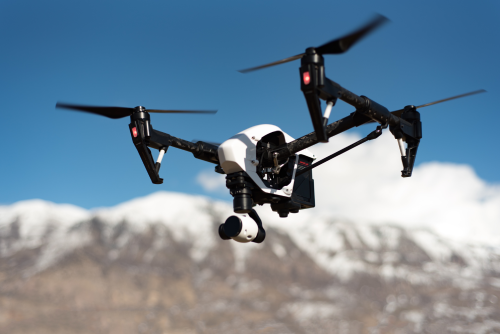
AeroVironment Switchblade 600 is a USA-made fixed-wing loitering munition from AeroVironment, positioned as an active defense-oriented one-way attack system rather than a consumer or enterprise camera drone. It is most relevant to defense procurement readers, researchers, journalists, and analysts comparing unmanned systems in the loitering munition segment. Publicly confirmed specifications in the supplied data are limited, so this page focuses on what is clearly known, what can be reasonably inferred from the platform class, and what still needs official verification.
This is also an important distinction for anyone arriving here from a general drone comparison search. Although it belongs to the broader unmanned aircraft conversation, the Switchblade 600 should not be evaluated by the same standards used for photography drones, mapping platforms, inspection UAVs, or recreational aircraft. Its relevance comes from defense procurement context, manufacturer pedigree, and role within a category that has become strategically significant in modern unmanned systems discussions. Where the public record is incomplete, this article deliberately avoids filling gaps with unverified claims.
Quick Summary Box
- Drone Name: AeroVironment Switchblade 600
- Brand: AeroVironment
- Model: Switchblade 600
- Category: loitering munition
- Best For: Authorized government programs, defense procurement research, and loitering munition market comparison
- Price Range: Not publicly confirmed in supplied data
- Launch Year: Not publicly confirmed in supplied data
- Availability: Procurement-driven and not publicly confirmed in supplied data
- Current Status: active
- Overall Rating: Not rated due to limited confirmed data
- Our Verdict: An important active US defense drone platform with clear market relevance, but public specs, pricing, and buyer access remain limited.
Because so many core details remain unconfirmed in the supplied material, assigning a conventional score would create a false sense of precision. For this platform, context matters more than star ratings. The useful question is not whether it is a “good drone” in a consumer-review sense, but whether it is a relevant and credible reference point in its class. On that standard, it clearly is.
Introduction
The AeroVironment Switchblade 600 sits in the loitering munition segment, a category that blends unmanned aircraft characteristics with one-time mission use. Built by AeroVironment under the same brand name, it is an active USA-origin platform that matters more to institutional and defense readers than to hobbyists, creators, or commercial drone operators. If you are comparing fixed-wing tactical unmanned systems, the Switchblade 600 is a meaningful name to know, even though many public-facing details remain sparse.
That limited transparency is not unusual for defense-linked systems. In the consumer drone market, buyers expect complete specification sheets, launch pricing, app screenshots, and dozens of side-by-side reviews. In the loitering munition space, public documentation is often narrower, configuration-dependent, or filtered through program announcements rather than retail product marketing. That means researchers and procurement-focused readers have to approach the Switchblade 600 differently: less like a store listing, and more like a program reference requiring document discipline.
The platform also sits within a larger trend. Loitering munitions have become a major topic in defense analysis because they combine aspects of reconnaissance, precision engagement, portability, and tactical responsiveness. Even when specific technical data is scarce, certain systems matter simply because of who makes them, where they originate, and how often they appear in institutional discussions. The Switchblade 600 qualifies on all three counts. It is relevant not because it is easy to buy or easy to compare, but because it occupies a real place in a strategically watched category.
This article therefore serves best as a grounded overview for readers who need a reliable starting point. It does not attempt to substitute for official program literature, procurement briefings, or manufacturer documentation. Instead, it organizes what is known, flags what is unknown, and frames how the Switchblade 600 should be understood in relation to its market segment.
Overview
What kind of drone is it?
The Switchblade 600 is a fixed-wing loitering munition. In plain terms, that means it is not a reusable photography or inspection drone, but a defense-linked unmanned aircraft system designed around a one-way mission profile. Its fixed-wing layout suggests efficiency and forward flight endurance are more central to the design than hovering or close-quarters maneuvering.
That basic classification alone tells prospective readers quite a lot. A fixed-wing design generally implies a platform optimized for covering ground efficiently and remaining aerodynamically effective in forward flight. A loitering munition classification indicates that the aircraft is part of the mission effect rather than just a carrier for an interchangeable civilian payload. In other words, the system should be thought of as a mission-specific military capability, not a general-purpose UAV with broad aftermarket uses.
For non-specialist readers, one of the most important mindset changes is this: in the consumer drone world, the aircraft is usually a reusable tool. In the loitering munition world, the aircraft may be treated as an expendable mission asset. That shifts how people should think about design priorities, sustainment, procurement cost, training burden, and even what counts as durability.
Who should buy it?
This is not a normal retail UAV purchase. The most realistic audience is authorized government and defense procurement channels, along with researchers, journalists, and analysts who need a reference point for active US loitering munition programs. Civilian buyers looking for aerial imaging, mapping, inspection, or recreational flying should look elsewhere.
More specifically, the platform is relevant to several distinct reader groups:
- Government and military evaluators comparing approved systems for doctrine, acquisition, or capability planning
- Defense market analysts tracking how US-origin unmanned systems are positioned in the broader loitering munition field
- Journalists and policy researchers covering procurement, battlefield technology trends, or aerospace and defense industrial activity
- Academic and think tank audiences studying the growth of one-way unmanned systems in modern conflict environments
By contrast, even advanced enterprise drone users will find very little overlap with their normal requirements. If you need repeatable flights, interchangeable sensors, photogrammetry output, thermal inspection, or compliance-ready civil operations, the Switchblade 600 is the wrong category entirely.
What makes it different?
What sets the Switchblade 600 apart is its position as an active AeroVironment fixed-wing loitering munition from a well-known US unmanned systems manufacturer. It sits in a defense-specific category where platform relevance, support ecosystem, and procurement context often matter as much as brochure specs. Unlike consumer drones, it is judged less by camera resolution or app polish and more by mission-system integration, supportability, and official program documentation.
There is also a credibility factor. In defense procurement conversations, the manufacturer matters enormously. AeroVironment is not an unknown startup trying to enter the unmanned space; it is a recognized US name with longstanding associations in military and professional UAV systems. That does not automatically make every product superior, but it does make the Switchblade 600 significant as a market signal. Systems from established manufacturers tend to receive more analyst attention because they are more likely to be supported by doctrine, training pathways, service infrastructure, and institutional procurement processes.
Another differentiator is visibility within a specific product family. Even when exact technical differences are not fully public in the supplied data, the Switchblade name has clear recognition value. That helps place the 600 not as an isolated platform, but as part of a broader family conversation that procurement teams and defense observers may already understand.
Key Features
- Fixed-wing airframe
- Loitering munition / one-way attack system classification
- Active program status
- Manufactured by AeroVironment in the USA
- Defense-oriented mission profile rather than civilian photography or mapping use
- Likely optimized for outdoor mission persistence, based on its fixed-wing segment classification
- Not positioned as a consumer app-driven drone with creator features
- Public technical transparency is limited, so official documentation is essential before any procurement decision
Those headline points can be unpacked a little further. A fixed-wing airframe usually signals aerodynamic efficiency and longer forward-flight suitability than a multirotor design, although exact performance remains unconfirmed here. A loitering munition classification means the platform belongs to a mission category that merges surveillance-like time on station with terminal one-way use. Active status matters because it suggests current market relevance, not merely historical interest. US origin and AeroVironment manufacturing matter because procurement decisions often involve industrial base, alliance compatibility, export policy, and sustainment confidence in addition to pure aircraft performance.
Equally important are the limits. Many consumer and enterprise drones are bought on the basis of well-documented features such as obstacle avoidance, camera specs, app usability, and ecosystem accessories. Here, those kinds of open-market comparison points are largely absent from the supplied material. That is not necessarily a weakness in a defense context, but it does mean responsible evaluation depends on official channels.
Full Specifications Table
| Specification | Details |
|---|---|
| Brand | AeroVironment |
| Model | Switchblade 600 |
| Drone Type | Fixed-wing loitering munition |
| Country of Origin | USA |
| Manufacturer | AeroVironment |
| Year Introduced | Not publicly confirmed in supplied data |
| Status | active |
| Use Case | Defense loitering munition / one-way attack system |
| Weight | Not publicly confirmed in supplied data |
| Dimensions (folded/unfolded) | Not publicly confirmed in supplied data |
| Max Takeoff Weight | Not publicly confirmed in supplied data |
| Battery Type | Not publicly confirmed in supplied data |
| Battery Capacity | Not publicly confirmed in supplied data |
| Flight Time | Not publicly confirmed in supplied data |
| Charging Time | Not publicly confirmed in supplied data |
| Max Range | Not publicly confirmed in supplied data |
| Transmission System | Not publicly confirmed in supplied data |
| Top Speed | Not publicly confirmed in supplied data |
| Wind Resistance | Not publicly confirmed in supplied data |
| Navigation System | Not publicly confirmed in supplied data |
| Obstacle Avoidance | Not publicly confirmed in supplied data |
| Camera Resolution | Not publicly confirmed in supplied data |
| Video Resolution | Not publicly confirmed in supplied data |
| Frame Rates | Not publicly confirmed in supplied data |
| Sensor Size | Not publicly confirmed in supplied data |
| Gimbal | Not publicly confirmed in supplied data |
| Zoom | Not publicly confirmed in supplied data |
| Storage | Not publicly confirmed in supplied data |
| Controller Type | Not publicly confirmed in supplied data |
| App Support | Not publicly confirmed in supplied data |
| Autonomous Modes | Not publicly confirmed in supplied data |
| Payload Capacity | Not publicly confirmed in supplied data |
| Operating Temperature | Not publicly confirmed in supplied data |
| Water Resistance | Not publicly confirmed in supplied data |
| Noise Level | Not publicly confirmed in supplied data |
| Remote ID Support | Not publicly confirmed in supplied data |
| Geo-fencing | Not publicly confirmed in supplied data |
| Certifications | Not publicly confirmed in supplied data |
| MSRP / Launch Price | Not publicly confirmed in supplied data |
| Current Price | Not publicly confirmed in supplied data |
The table above is intentionally conservative. In open-source research, it is often tempting to pull isolated numbers from secondary reporting, conference slides, reseller references, or social media posts. That can be risky, especially for defense systems where variants, export configurations, and evolving program baselines may differ. If you need specification certainty for publication, procurement, or analytical comparison, treat manufacturer documentation and official government materials as the standard of record.
Another practical point: many of the fields listed above reflect civilian drone buying habits. They remain useful for consistency, but some may not be the primary decision drivers in this category. For example, fields like app support, obstacle avoidance, and creator-oriented camera specs can be far less relevant than command architecture, training burden, logistics, and integration with authorized mission workflows.
Design and Build Quality
Because the Switchblade 600 is confirmed as a fixed-wing loitering munition, the design priority is almost certainly aerodynamic efficiency and mission purpose rather than consumer-friendly portability or long-term cosmetic durability. In this segment, airframes are typically built for field deployment and mission effectiveness, not for the fold-flat convenience, exposed gimbal protection, or repeated recreational use expected from camera drones.
That distinction matters when assessing “build quality.” In the consumer world, build quality often means finish, plastics, hinge confidence, weather resistance, and whether a drone survives many repeated transport cycles. In a defense one-way system, build quality is more about deployment reliability, environmental readiness, stability under mission conditions, and the robustness of the total package that operators handle in the field. The aircraft may still need to be portable, rugged, and quickly deployable, but those goals serve mission readiness rather than owner convenience.
The fixed-wing class also suggests certain likely design tradeoffs. Designers in this segment typically care about how compactly the platform can be transported, how quickly it can be prepared for launch, how predictable it is in forward flight, and how well the whole system supports operator use under time pressure. None of those details are fully confirmed in the supplied data, but they are the right categories of questions for serious evaluation.
That said, the supplied data does not confirm the exact materials, transport configuration, launch hardware, wing folding arrangement, landing method, or serviceability details. Readers should also remember that durability is defined differently here than with reusable civilian drones: this is a one-way attack system, so lifecycle assumptions do not map neatly to inspection, survey, or filmmaking aircraft.
A further nuance is the relationship between airframe design and support equipment. For institutional buyers, build quality is not only about the aircraft itself. It also includes storage containers, launch components if applicable, operator interfaces, batteries or power modules, maintenance handling, and documentation standards. A platform can have a capable air vehicle but still create friction if its field packaging, setup process, or sustainment design is weak. Since those elements are not publicly detailed here, they remain important unanswered questions.
Flight Performance
With only the fixed-wing layout confirmed, the safest conclusion is that the Switchblade 600 is intended for outdoor forward flight rather than hovering, indoor operation, or precision low-speed camera work. Fixed-wing aircraft generally offer better aerodynamic efficiency than multirotors, which often translates into stronger area coverage or longer on-station behavior for a given energy budget. That is a class-level observation, not a confirmed Switchblade 600 specification.
For analysts, this matters because the entire operating concept changes when you move from multirotor logic to fixed-wing logic. A multirotor is usually judged by how well it hovers, how steadily it frames shots, or how precisely it can hold position. A fixed-wing loitering platform is judged more by how it reaches an area, how efficiently it remains mission-relevant while airborne, how well it maintains control authority in forward flight, and how effectively the operator can manage the mission through the command system.
The supplied data does not confirm endurance, range, top speed, ceiling, wind tolerance, control-link type, or launch and recovery behavior. Because of that, any online claims about exact performance should be treated cautiously unless they come from official manufacturer or program documentation. For civilian drone buyers, the key takeaway is simple: this is not a hover-capable general-purpose aircraft, and it is not designed for normal recreational or commercial flying workflows.
It is also worth noting that flight performance in this category is not reducible to one number. “Flight time” by itself can be misleading if readers do not also understand operator workload, link reliability, environmental constraints, deployment speed, and mission-system responsiveness. In defense procurement, a platform with strong nominal endurance may still underperform if it requires burdensome setup, has restrictive operating conditions, or depends on a support ecosystem that is difficult to sustain in the field.
Environmental resilience is another likely concern. Fixed-wing systems often operate differently than multirotors in wind, terrain, launch space requirements, and line-of-sight management. None of those specifics are confirmed here, but they illustrate why institutional buyers need more than a superficial spec sheet. Real evaluation should consider how the platform behaves as part of a complete system, not just as an airframe with a quoted range.
Camera / Payload Performance
The Switchblade 600 is not a camera-first platform for creators, surveyors, or inspection teams. In this segment, the more relevant questions involve integrated mission payloads, observation capability, guidance, and authorized mission workflow rather than still-photo quality or cinematic video output.
That difference is easy to miss for readers coming from the broader drone market. On a civilian UAV review page, payload discussion usually starts with sensor size, bitrate, dynamic range, low-light quality, and whether the gimbal is stable enough for social video or mapping overlap. For a loitering munition, the more relevant issues are whether the sensor suite supports target observation, operator awareness, decision-making, and system effectiveness in approved operational contexts. Those are very different priorities.
Publicly confirmed payload details in the supplied data are minimal. Camera resolution, video resolution, sensor size, gimbal arrangement, zoom capability, and payload specifications are all not publicly confirmed in the supplied data. That means the usual buyer checklist for image quality, low-light performance, and stabilization simply does not apply in the way it would for a DJI-style camera drone. Anyone evaluating this system seriously should rely on official defense documentation and program briefings, not retail-style marketing expectations.
Even without confirmed details, researchers can still frame the right questions. For institutional evaluation, payload performance would normally involve issues such as:
- How well the onboard observation system supports identification and tracking
- Whether the operator interface provides usable situational awareness
- What latency, image clarity, and stabilization characteristics are available
- Whether the system supports day, night, or mixed-environment operation
- How payload data is presented, recorded, or integrated into command workflows
- What level of operator training is required to use the mission payload effectively
Because none of those elements are confirmed in the supplied record, they remain critical areas for official verification. That is especially important for journalists and analysts, who may otherwise over-index on incomplete open-source descriptions.
Smart Features and Software
Consumer drone features such as follow-me, social-media editing tools, creator templates, or beginner flight assists are not the point here. A loitering munition in active service would normally depend on mission planning, guided navigation, operator control, and system-level software support, but the supplied data does not confirm the exact software environment for the Switchblade 600.
This is one of the biggest areas where defense and consumer drone language diverge. In the retail market, “smart features” means automation that makes flying easier or filming more attractive. In the defense market, software value often lies in secure command-and-control, user permissions, planning logic, mission rehearsals, interface simplicity under pressure, and compatibility with larger tactical systems. These capabilities can matter more than raw airframe performance because they shape how effectively the system can be employed within institutional frameworks.
There is no publicly confirmed information in the supplied record on waypoint support, AI-assisted functions, return-to-home behavior, SDK availability, fleet management, cloud tools, or mobile app integration. Remote ID support and geo-fencing are also not publicly confirmed. For institutional buyers, the important software questions are likely command-and-control architecture, training pipeline, data security, and sustainment tooling, all of which should be verified directly through official channels.
Cybersecurity should also be part of the conversation. In a defense-linked unmanned system, software is not just about user convenience; it is tied to integrity, link protection, operator trust, update control, and potential interoperability with protected networks. These are not usually the kinds of things a general drone buyer asks about, but they can be decisive in institutional procurement.
Training support is another underappreciated software issue. Many defense systems are evaluated not only on mission performance, but on how quickly operators can be qualified and how realistically they can rehearse with simulation or training tools. Because the supplied data does not address this area, readers should treat software and training infrastructure as a major verification category rather than an afterthought.
Use Cases
Given its category and status, the most realistic use cases are institutional and defense-linked rather than civilian:
- Authorized government and defense program evaluation
- Defense capability comparison against other loitering munition systems
- Institutional training and doctrine development in approved settings
- Research and journalism covering active unmanned defense platforms
- Procurement benchmarking within the AeroVironment family and broader loitering munition market
Each of these use cases deserves a bit more context.
Authorized government and defense program evaluation is the clearest fit because this platform belongs to a restricted, mission-specific segment. Buyers in this group are not shopping for a general UAV; they are assessing whether a capability fits doctrine, budget, logistics, and legal constraints.
Capability comparison matters because the loitering munition segment includes multiple systems that may appear similar at a headline level but differ significantly in support model, deployment concept, operator burden, and procurement ecosystem. The Switchblade 600 is useful as a comparison anchor even where exact public specs are missing.
Institutional training and doctrine development is another logical context. Platforms like this are often relevant not just as hardware, but as part of evolving doctrine around unmanned systems, tactical integration, and operator training.
Research and journalism are important because high-profile defense UAV categories often attract inconsistent reporting. A grounded reference article helps separate confirmed facts from assumptions.
Procurement benchmarking within the AeroVironment family is especially relevant. Even limited public data can still help readers place the system within a broader manufacturer portfolio and understand why it appears in defense discussions.
What the Switchblade 600 is not for is equally important. It is not a farm drone, a real estate drone, a movie drone, a mapping tool, a first-person-view hobby platform, or a classroom UAV for beginner pilots. Treating it as if it belongs in those conversations leads to bad comparisons.
Pros and Cons
Pros
- Active platform status suggests ongoing relevance in its segment
- Built by AeroVironment, a recognized US unmanned systems manufacturer
- Fixed-wing classification points to an efficiency-oriented airframe concept
- Clear positioning in the loitering munition category, which helps comparison against similar defense systems
- Useful reference model for analysts, journalists, and procurement researchers tracking US-origin platforms
These advantages are mainly about strategic relevance and institutional credibility rather than lifestyle convenience. An active program is easier to track, compare, and contextualize than a discontinued or obscure system. AeroVironment’s role as manufacturer adds weight because buyers and analysts often care as much about support reputation and industrial base as about aircraft design. The fixed-wing class also gives the system a distinct place in comparison charts, even when exact numbers remain unavailable.
Cons
- Many core specifications are not publicly confirmed in the supplied data
- Pricing is not transparent in the way retail drone buyers would expect
- Not suitable for civilian photography, mapping, inspection, or hobby flying
- Support, training, and acquisition are likely restricted and region-specific
- Payload, software, and control-system details are not openly documented in the supplied record
These drawbacks do not necessarily reduce the platform’s value in a defense setting, but they do limit what public researchers can responsibly conclude. Lack of transparent pricing complicates budgeting assumptions. Limited specification visibility makes side-by-side comparison harder. Restricted access also means that even serious readers may only be able to analyze the platform indirectly through official statements and procurement reporting.
Comparison With Other Models
| Model | Price | Flight Time | Camera or Payload | Range | Weight | Best For | Winner |
|---|---|---|---|---|---|---|---|
| AeroVironment Switchblade 600 | Not publicly confirmed in supplied data | Not publicly confirmed in supplied data | Integrated mission payload not publicly confirmed in supplied data | Not publicly confirmed in supplied data | Not publicly confirmed in supplied data | Readers comparing active US loitering munition platforms | Best reference point if you specifically want the active Switchblade 600 profile |
| AeroVironment Switchblade 300 | Not publicly confirmed in supplied data | Not publicly confirmed in supplied data | Mission payload not publicly confirmed here | Not publicly confirmed in supplied data | Not publicly confirmed in supplied data | Comparing within the same AeroVironment family | Better family reference if your comparison starts with smaller-class Switchblade lineage |
| WB Group Warmate | Not publicly confirmed in supplied data | Not publicly confirmed in supplied data | Mission payload details not publicly confirmed here | Not publicly confirmed in supplied data | Not publicly confirmed in supplied data | Regional and segment-level loitering munition benchmarking | Depends on regional ecosystem, support access, and verified configuration |
| UVision HERO-120 | Not publicly confirmed in supplied data | Not publicly confirmed in supplied data | Mission payload details not publicly confirmed here | Not publicly confirmed in supplied data | Not publicly confirmed in supplied data | Alternative loitering munition comparison | Depends on official documentation, procurement terms, and support model |
The comparison table is intentionally high-level because the supplied data does not provide the technical depth needed for a firm numerical shootout. In this category, comparison quality often depends less on public specs and more on verified documentation, operator concept, support arrangements, and procurement compatibility. Two systems may look close on paper yet differ dramatically in how they are fielded, maintained, trained on, or integrated into a larger force structure.
Switchblade 600 vs a close competitor
A close public comparison is the UVision HERO-120, since both are often discussed in the broader loitering munition conversation. The challenge is that open-source specifications, customer configurations, and procurement terms are not always presented in a uniform way. For a real evaluation, buyers should compare official documents covering support, training, control systems, and authorized program fit rather than relying on headline claims alone.
What makes this comparison useful is not that the two systems can be cleanly ranked from public data, but that they represent the same broad analytical conversation: portable or tactical loitering munition solutions with institutional buyers in mind. In a real procurement context, the decisive issues may include export eligibility, interoperability with existing equipment, training time, sustainment burden, documentation quality, and the confidence that comes with the vendor’s support model.
Switchblade 600 vs an alternative in the same segment
WB Group Warmate is a reasonable alternative reference in the same broad segment. Here, the deciding factors may be less about public brochure numbers and more about regional supply chain access, documentation quality, interoperability, and long-term support. That makes procurement ecosystem and service backing as important as raw aircraft characteristics.
This is especially relevant for analysts comparing systems across different national industrial bases. A platform can be technically capable, yet difficult to acquire, support, or integrate depending on geography, alliance framework, and policy environment. That is why a simple spec comparison rarely tells the full story.
Switchblade 600 vs an older or previous-generation option
Within AeroVironment’s own portfolio, Switchblade 300 is the more obvious family comparison point. In practical terms, the 600 is best viewed as a different tier in the same broader product family conversation rather than as a simple like-for-like replacement. If your goal is family-level understanding, comparing the two helps clarify where the 600 fits, but exact generational and capability differences should be checked against official AeroVironment materials.
Family comparisons are often the most useful place to start because terminology, support philosophy, and manufacturer ecosystem may be more consistent within one brand than across the wider market. Even so, readers should avoid assuming that a higher model number automatically means a straightforward upgrade in every sense. Different systems within the same family may serve different roles, constraints, and deployment concepts.
Manufacturer Details
AeroVironment is a US aerospace and defense manufacturer with a long-standing reputation in unmanned aircraft and related robotic systems. In this case, the brand and the manufacturer are the same: AeroVironment. The company is widely associated with small unmanned aircraft systems and defense-linked platforms, which gives the Switchblade 600 more credibility as a program-driven product than as a retail-style drone listing.
For readers comparing manufacturers, AeroVironment’s reputation is strongest in professional and government unmanned systems rather than mass-market camera drones. That matters, because support model, procurement pathway, and program integration are central to understanding a platform like the Switchblade 600.
Manufacturer credibility matters in several ways:
- Program continuity: established defense contractors are more likely to support ongoing upgrades, training, and sustainment
- Documentation quality: serious procurement usually depends on formal manuals, certification records, and controlled technical data
- Institutional trust: government buyers often prefer vendors with known delivery history and support processes
- Portfolio context: systems from experienced UAS manufacturers can be evaluated as part of a broader ecosystem rather than as one-off products
None of this substitutes for technical verification, but it does help explain why the Switchblade 600 gets attention even when the public spec sheet is incomplete. The platform is not just a standalone aircraft; it comes with the significance of the company behind it.
Support and Service Providers
Support for a platform in this category is unlikely to resemble consumer drone repair and warranty channels. The more realistic expectation is official manufacturer support, contract-based sustainment, training packages, and approved regional or program-specific service arrangements.
The supplied data does not publicly confirm warranty terms, spare-parts policy, repair network, or third-party service coverage. If you are an institutional buyer, verify official support channels, training availability, software maintenance responsibilities, and regional service eligibility directly with AeroVironment or an authorized procurement partner. Civilian drone repair shops and hobby communities are not the right support path for this type of system.
In practical terms, support in this category usually raises questions such as:
- Who provides operator and maintainer training?
- How are software updates distributed and controlled?
- What is the process for spare parts, replacements, or damaged components?
- Are there formal sustainment packages or lifecycle support agreements?
- How are documentation revisions and configuration changes communicated?
- What level of field service or technical assistance is available in-region?
These are not minor issues. For institutional buyers, supportability may be as important as platform capability because systems that cannot be trained, maintained, and documented properly often become expensive procurement burdens. The one-way nature of the mission system also changes support economics; sustainment is not only about repairing airframes, but about managing training, storage, handling, and replenishment under controlled conditions.
Where to Buy
The Switchblade 600 should not be treated as a normal consumer drone listing with open retail checkout. Availability is likely procurement-driven, defense-led, and region-specific. That usually means official manufacturer engagement, government contracting pathways, or authorized institutional distributors rather than standard drone retailers.
If you are trying to source information, start with the official manufacturer, approved defense procurement contacts, and authorized regional representatives where applicable. Buyers should assume export, end-user, and eligibility restrictions may apply.
For most readers, the real “where to buy” answer is actually “where to verify.” Before availability even becomes a meaningful question, institutional users need to confirm legal eligibility, end-use restrictions, support access, documentation availability, and the procurement framework that applies in their jurisdiction. This is not a product that fits open marketplace assumptions. If you see a listing that presents it as a routine commercial UAV, that alone should trigger caution.
Price and Cost Breakdown
No launch price or current market price is publicly confirmed in the supplied data. That alone makes direct budget planning difficult for readers who are used to transparent consumer drone pricing.
For institutional budgeting, price should be considered in layers, including:
- Air vehicle procurement cost
- Control equipment and mission system components
- Training and certification requirements
- Spare units, sustainment, and logistics support
- Software or system-integration costs if applicable
- Regional compliance, documentation, and service overhead
Because the Switchblade 600 is identified as a one-way attack system, ownership economics differ from reusable camera, inspection, or mapping drones. Buyers should verify the full program cost, not just any headline unit number.
This is a key budgeting issue. In civilian drone purchases, buyers often focus on the sticker price of the aircraft bundle. In defense procurement, the visible air vehicle cost may be only one part of a broader system bill. Training packages, operator qualification, storage, spares, batteries or power support, software maintenance, technical manuals, mission controllers, support agreements, and legal compliance can materially change the total cost picture.
For analysts, another useful concept is cost per capability, not just acquisition price. A system may appear expensive or inexpensive in isolation, but that judgment means little without understanding what is included in the package, how much institutional support is bundled, and what operational or training benefits the system is intended to deliver.
Regulations and Compliance
Regulation around a platform like the Switchblade 600 is likely far stricter than for ordinary commercial or recreational drones. This is a defense-linked system, so readers should assume that procurement, transfer, export, training, and operational use may all be controlled by national law and institutional authorization.
A few practical points matter:
- Do not assume civilian drone rules alone are sufficient
- Operation may be restricted to authorized government or military users
- Export and cross-border transfer may require formal approval
- Remote ID support is not publicly confirmed in the supplied data
- Civil airspace use, if any, would require explicit legal and regulatory clearance
- Privacy, surveillance, and end-use law still matter where sensor systems are involved
Always verify local law, national defense controls, and procurement eligibility before treating this as an acquirable aircraft system.
There is also a broader compliance dimension beyond flight regulation. Defense-linked unmanned systems may be subject to end-user controls, storage requirements, documentation rules, chain-of-custody procedures, training authorization standards, and policy oversight on how systems are transferred or employed. Those issues are often invisible to general drone readers, but they are central in this category.
For researchers and journalists, this matters because a platform can be widely discussed while still being highly restricted in actual acquisition or use. Public visibility should never be mistaken for public availability. The compliance environment is part of the product reality.
Who Should Buy This Drone?
Best for
- Authorized government or defense organizations evaluating loitering munition platforms
- Analysts comparing AeroVironment’s defense portfolio
- Journalists and researchers covering active unmanned defense systems
- Institutional buyers who can obtain official documentation and support agreements
These groups benefit because the Switchblade 600 functions as a real reference point in an active defense market segment. Even when public data is incomplete, the platform matters for comparison, portfolio understanding, industrial analysis, and procurement awareness.
Not ideal for
- Hobbyists and recreational pilots
- Aerial photographers and filmmakers
- Surveying, mapping, and inspection teams seeking reusable sensor drones
- Buyers who need transparent pricing, open retail availability, and broad community support
This list is worth emphasizing because search engines often collapse very different drone categories into the same results pages. Someone looking for a “best professional drone” or “fixed-wing UAV” may land here by accident. If your needs involve image capture, operational simplicity, reusable missions, software integrations for business workflows, or a strong civilian user community, this is not the right platform.
Final Verdict
The AeroVironment Switchblade 600 stands out because it is an active, US-made fixed-wing loitering munition from a recognized defense UAV manufacturer. Its biggest strengths are clear segment relevance, strong manufacturer credibility, and importance as a comparison point in the loitering munition market. Its biggest drawbacks are equally clear: limited public specifications, opaque pricing, restricted buyer access, and little relevance to normal civilian drone use.
If you are an authorized institutional buyer, researcher, or journalist tracking defense UAV programs, the Switchblade 600 is absolutely worth understanding. It belongs to a category that has become increasingly important in defense analysis, and it carries the added weight of AeroVironment’s established presence in unmanned systems. Even without a full public spec sheet, it remains significant as a program reference and market benchmark.
If you are looking for a reusable drone for imaging, mapping, training, or hobby flying, this is the wrong category entirely. The Switchblade 600 should be approached as a specialized defense platform, not a broad-market UAV. That means the right way to evaluate it is through official documentation, procurement context, support structure, and legal eligibility, not through consumer-style expectations.
In short, the Switchblade 600 is important less because the public knows everything about it, and more because it occupies a meaningful place in an active and closely watched segment of unmanned defense technology. For the right audience, that makes it highly relevant. For everyone else, it remains a platform to understand rather than a drone to buy.
