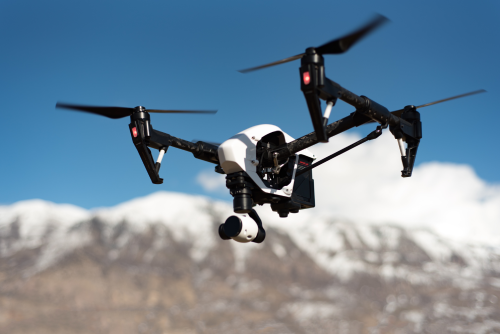
The AeroVironment Wasp is a compact fixed-wing military/tactical drone built for short-range observation-class missions rather than consumer flying. For researchers, institutional buyers, and readers comparing small defense-linked UAS platforms, it stands out for its very light 1.3 kg maximum takeoff weight, roughly 48-minute endurance, and portable 1 m wingspan. Publicly confirmed data is limited, so this profile focuses on what is known, what that suggests in practice, and what still needs direct verification.
A key point up front: the Wasp should not be read like a typical retail drone listing. Many consumer drone reviews can lean heavily on app features, camera quality, retail bundles, and easy price comparisons. That approach does not fit this platform very well. In the tactical unmanned aircraft world, product information can be incomplete in public sources, configurations can vary by customer and mission package, and procurement pathways are often institutional rather than open retail. As a result, the most useful way to evaluate the Wasp is by understanding its core airframe class, its likely operational role, and the implications of the few confirmed numbers that are available.
Quick Summary Box
- Drone Name: AeroVironment Wasp
- Brand: AeroVironment
- Model: Wasp
- Category: Military/tactical fixed-wing drone
- Best For: Institutional users, analysts, and researchers comparing compact tactical fixed-wing UAS platforms
- Price Range: Not publicly confirmed in supplied data
- Launch Year: Not publicly confirmed in supplied data
- Availability: Not publicly confirmed in supplied data
- Current Status: Active
- Overall Rating: Not rated due to limited confirmed data
- Our Verdict: A very small, lightweight tactical fixed-wing platform with a credible size-to-endurance profile, but public buyer-facing information is sparse and procurement is likely restricted
In short, the Wasp looks most interesting not because it is feature-rich in a consumer sense, but because it appears to deliver useful fixed-wing efficiency in a very small package. That alone makes it worth tracking for anyone studying compact tactical UAS categories.
Introduction
The Wasp is an AeroVironment-made, USA-origin fixed-wing drone in the military/tactical segment, and it is listed as active in the supplied record. That puts it in a very different category from consumer camera drones: this is a compact mission platform first, with public specs that are more limited than what buyers usually expect in retail drone listings. Readers should care about it because it represents the small end of the tactical fixed-wing market, where portability, airframe efficiency, and field practicality matter more than creator-focused features.
That small-end tactical niche is important. In unmanned aviation, there is a broad difference between larger tactical systems built for longer endurance and wider-area coverage, and very compact systems built to get into the field quickly with minimal logistical burden. The Wasp appears to sit firmly in the second category. A platform like this is typically interesting when a team needs lightweight reconnaissance capability, rapid deployment, and manageable transport requirements without stepping up into a larger, more demanding aircraft class.
Another reason the Wasp matters is that it reflects a design philosophy that is easy to overlook if you mainly follow consumer drones. Many civilian buyers associate “small drone” with a foldable quadcopter that can hover, film, and return home with minimal training. The Wasp instead appears to prioritize wing-borne efficiency over hover convenience. That usually means better endurance for size and weight, but it also means a different operational mindset. Fixed-wing aircraft must keep moving forward in flight, and that changes how they are deployed, how they observe a target area, and how operators think about launch, recovery, and mission planning.
Public information gaps are also part of the story. With a platform like this, missing data should not automatically be interpreted as weakness. In defense-linked products, it often simply means the public-facing record is incomplete or intentionally limited. Still, from a buyer or analyst perspective, missing details on sensors, control systems, software, or support are meaningful because they make comparison harder. This profile therefore separates confirmed numbers from reasonable operational interpretation and flags the limits clearly wherever necessary.
Overview
What kind of drone is it?
The AeroVironment Wasp is a small fixed-wing tactical drone. Based on the supplied data, it has a 1 m wingspan, 0.8 m length, 1.3 kg maximum takeoff weight, around 0.8 hours of endurance, 5 km range, and 83 km/h top speed. That combination places it in the lightweight, short-range, portable UAS class rather than the larger long-endurance tactical category.
Those numbers matter because they define the Wasp’s operating character better than a long list of unconfirmed features would. A 1 m wingspan is compact enough to suggest field portability, but still large enough to support an efficient aerodynamic shape relative to multirotor designs of similar mass. The 1.3 kg maximum takeoff weight further reinforces that this is not a payload-heavy aircraft. Instead, it appears optimized around keeping the overall system light while still delivering useful forward-flight endurance.
The listed 5 km range also helps place it. This is not a “deep reach” aircraft by tactical standards. It looks much more like a local-area observation platform intended to work close to the operator or control point. In some use cases, that is exactly the right balance: enough standoff distance for short-range observation, but without the transport, sustainment, and training burden that often comes with larger systems.
Who should buy it?
This is primarily a fit for eligible institutional buyers, defense-market researchers, journalists covering unmanned systems, and organizations comparing compact tactical aircraft. It is not positioned like a mainstream consumer drone, and there is no confirmed public-retail buying path in the supplied data.
For institutional users, the Wasp may be appealing when the mission requirement is straightforward: obtain lightweight airborne observation capability in a very compact form factor. The platform may also be relevant in training or evaluation settings where organizations want exposure to a small fixed-wing UAS without stepping into a much larger tactical aircraft class. Because it is active in the supplied record, it remains relevant enough to warrant consideration rather than being treated purely as a historical or legacy reference.
For researchers and journalists, the Wasp is useful as a benchmark platform. It helps illustrate what a very small tactical fixed-wing system can look like in terms of weight, endurance, and operational scale. In databases or comparative studies, it can serve as a reference point between hobby-class fixed-wings and more established military tactical aircraft families.
For general drone consumers, though, it is not a realistic purchase candidate. Too many key buyer-facing details are missing, and the intended market clearly differs from the usual consumer or prosumer segment.
What makes it different?
What makes the Wasp notable is its small physical footprint relative to a useful fixed-wing endurance figure. In simple terms, it appears to trade the hover capability of a multirotor for the efficiency of a winged aircraft, which is often the key design choice in this size class. The public record also suggests an active status, which matters more than legacy-only interest when evaluating relevance.
That efficiency tradeoff is worth emphasizing. In many small-UAS comparisons, buyers instinctively focus on camera specs or software polish. For a platform like the Wasp, the more interesting question is how much observation time and local-area coverage you can get out of a very small air vehicle. A roughly 48-minute endurance figure in a 1.3 kg class aircraft indicates that aerodynamic efficiency is one of the system’s strongest differentiators.
It also stands out because it sits at a practical edge of portability. Some tactical systems are transportable, but not especially light or simple to move with a small team. A 1 m wingspan and 0.8 m length suggest a system that is at least conceptually easier to carry, stage, and deploy than larger fixed-wing alternatives, even if the exact transport configuration is not publicly confirmed.
Finally, the Wasp is interesting because it highlights how limited public information can shape assessment. Unlike consumer products, where the challenge is often sorting through too much marketing, with the Wasp the challenge is making careful sense of a sparse public record without overstating what is known.
Key Features
- Fixed-wing airframe for efficient forward flight
- AeroVironment-branded military/tactical positioning
- USA-origin platform
- Active status in the supplied record
- Approximate 1.3 kg maximum takeoff weight
- Approximate 0.8-hour endurance, or about 48 minutes
- 5 km listed range
- 83 km/h listed top speed
- Compact dimensions for a fixed-wing platform: about 1 m wingspan and 0.8 m length
- Payload, camera, autonomy stack, and control system are not publicly confirmed in the supplied data
These features are important not just as isolated specs, but as a combined profile. Very light weight, modest range, and fixed-wing efficiency point to a tactical aircraft designed around portability and efficient local reconnaissance rather than broader-area persistence or rich payload flexibility. The missing sensor and software details also matter: on a system like this, those unknowns can significantly affect mission value even if the airframe numbers look promising.
Another practical way to read this list is to separate “air vehicle strengths” from “system unknowns.” The air vehicle strengths appear to be size, weight, and endurance efficiency. The system unknowns include the payload, control link, autonomy, and support architecture. For many institutional buyers, that second category can be just as important as the first.
Full Specifications Table
| Specification | Details |
|---|---|
| Brand | AeroVironment |
| Model | Wasp |
| Drone Type | Fixed-wing |
| Country of Origin | USA |
| Manufacturer | AeroVironment |
| Year Introduced | Not publicly confirmed in supplied data |
| Status | Active |
| Use Case | Military/tactical short-range observation-class use |
| Weight | Not publicly confirmed in supplied data |
| Dimensions (folded/unfolded) | Approx. 1 m wingspan and 0.8 m length; folded dimensions not publicly confirmed in supplied data |
| Max Takeoff Weight | 1.3 kg |
| Battery Type | Not publicly confirmed in supplied data |
| Battery Capacity | Not publicly confirmed in supplied data |
| Flight Time | 0.8 hr (approx. 48 min) |
| Charging Time | Not publicly confirmed in supplied data |
| Max Range | 5 km |
| Transmission System | Not publicly confirmed in supplied data |
| Top Speed | 83 km/h |
| Wind Resistance | Not publicly confirmed in supplied data |
| Navigation System | Not publicly confirmed in supplied data |
| Obstacle Avoidance | Not publicly confirmed in supplied data |
| Camera Resolution | Not publicly confirmed in supplied data |
| Video Resolution | Not publicly confirmed in supplied data |
| Frame Rates | Not publicly confirmed in supplied data |
| Sensor Size | Not publicly confirmed in supplied data |
| Gimbal | Not publicly confirmed in supplied data |
| Zoom | Not publicly confirmed in supplied data |
| Storage | Not publicly confirmed in supplied data |
| Controller Type | Not publicly confirmed in supplied data |
| App Support | Not publicly confirmed in supplied data |
| Autonomous Modes | Not publicly confirmed in supplied data |
| Payload Capacity | Not publicly confirmed in supplied data |
| Operating Temperature | Not publicly confirmed in supplied data |
| Water Resistance | Not publicly confirmed in supplied data |
| Noise Level | Not publicly confirmed in supplied data |
| Remote ID Support | Not publicly confirmed in supplied data |
| Geo-fencing | Not publicly confirmed in supplied data |
| Certifications | Not publicly confirmed in supplied data |
| MSRP / Launch Price | Not publicly confirmed in supplied data |
| Current Price | Not publicly confirmed in supplied data |
The most telling part of this table is not just what is present, but what is absent. We know enough to place the Wasp within a compact tactical fixed-wing class, but not enough to make a procurement-grade assessment of the total system. Buyers should therefore treat this as a profile of the known airframe envelope, not as a complete capabilities statement.
If you are doing serious evaluation work, the follow-up questions practically write themselves: What sensor package is installed on the exact variant? What is the launch and recovery method? What is the ground control architecture? How resilient is the data link? What training pipeline is required? These are the kinds of details that determine whether a platform is merely interesting on paper or genuinely fit for a given program.
Design and Build Quality
From the confirmed dimensions alone, the Wasp looks small by fixed-wing standards. A 1 m wingspan and 1.3 kg max takeoff weight suggest a platform designed around portability and low field burden rather than heavy payload carrying. That matters because fixed-wing aircraft often gain endurance from aerodynamic efficiency, and small tactical systems in this class are usually valued for how easily they can be transported and prepared in the field.
Small size in this category has several practical implications. First, it generally reduces the physical burden on the operator or team transporting it. Second, it can shorten deployment timelines if the aircraft requires little assembly or uses simple field procedures. Third, it often means the system can be integrated into more mobile operations than larger fixed-wing alternatives. Even without public confirmation of the packing configuration, the Wasp’s dimensions strongly suggest a portability-first design philosophy.
Publicly confirmed data does not identify the airframe materials, folding design, detachable wing structure, or launch and recovery method. So while the Wasp likely belongs to a field-portable tactical class, details such as ruggedness, service-access panels, replaceable control surfaces, or crash survivability cannot be confirmed from the supplied record.
Those unknowns are not trivial. In tactical field use, build quality is about much more than cosmetic finish or premium materials. It is about whether the aircraft can be handled repeatedly by operators in variable outdoor conditions, whether minor damage can be repaired quickly, and whether the design supports realistic sustainment over repeated sorties. An aircraft with attractive headline specs can become far less useful if it is difficult to maintain, fragile in transport, or burdensome to recover and relaunch.
What can be said confidently is that the Wasp’s form factor is more about efficient flight than convenience features. Unlike a fold-up consumer quadcopter, a fixed-wing system is generally designed around aerodynamic performance first. That usually brings better endurance for the size, but it can also mean more setup and recovery considerations depending on the exact configuration.
There is also a likely tradeoff in operational handling. Very small fixed-wing aircraft can be excellent for portability, but they may be more sensitive to environmental conditions than larger aircraft. Since wind resistance and exact control characteristics are not publicly confirmed here, it would be unwise to assume robust all-weather performance based only on the size and speed figures. Still, the aircraft’s compact dimensions clearly indicate that the Wasp aims to minimize platform bulk without abandoning the efficiency advantage of a wing.
For analysts comparing categories, this is one of the Wasp’s strongest design signals: it appears to sit in a sweet spot where the aircraft remains genuinely small, yet still benefits from the flight-efficiency logic of fixed-wing architecture. That is precisely why it attracts attention despite the limited public detail.
Flight Performance
The most useful confirmed flight figures here are endurance, range, and speed. At about 48 minutes of endurance, the Wasp appears efficient for its size. Its listed 83 km/h top speed is brisk for such a light aircraft, suggesting it can cover ground faster than a similarly sized multirotor.
Endurance is arguably the headline metric. In practical terms, roughly 48 minutes of flight time gives a platform like this enough persistence to perform meaningful local-area observation without feeling disposable or ultra-short-use. It is not in the same endurance league as larger tactical fixed-wings, but for a 1.3 kg class aircraft, it looks respectable. That endurance number is one of the clearest reasons the Wasp remains relevant in comparison discussions.
Speed matters differently. A top speed of 83 km/h does not necessarily mean the aircraft spends most of its mission flying at that pace, but it does indicate that the platform can reposition relatively quickly across a local operating area. That is useful in situations where a team needs to observe multiple points of interest during a single sortie or wants a small system that can transit faster than a hovering multirotor could manage.
The 5 km range places it in the short-range tactical class rather than the broader-area coverage class. In practice, that means its value is likely tied to compact deployment and local-area observation rather than extended stand-off operations. Readers comparing it with larger fixed-wing military systems should view the Wasp as a small-footprint option, not a long-range one.
One useful way to interpret these numbers together is to think in terms of mission geometry. A compact fixed-wing aircraft with moderate endurance and limited control range is typically best suited to circling, observing, and transiting within a relatively local mission box. It is not designed to project surveillance far from the launch point for long periods. That does not diminish its value; it simply clarifies the mission scale it likely serves best.
Because it is a fixed-wing design, its flight character is likely better suited to outdoor use in open airspace than to confined indoor environments. That is analysis based on the airframe type, not a separately confirmed operating claim. Wind resistance, ceiling, transmission robustness, and takeoff/landing behavior are not publicly confirmed in the supplied data, so buyers should avoid assuming performance beyond the listed headline figures.
Another important consideration is that fixed-wing efficiency does not automatically translate into operational simplicity. A multirotor can often take off from tight spaces and hover over a point of interest. A fixed-wing platform typically requires the operator to think in terms of circuits, passes, loiter patterns, and recovery zones. So while the Wasp may outperform similarly sized multirotors in raw endurance, the mission plan has to fit the aircraft type.
The limited range figure may also shape data-link expectations. For some users, 5 km will be entirely sufficient. For others, especially those accustomed to more expansive tactical systems, it will feel restrictive. That is why this aircraft should be understood as a local reconnaissance tool, not a broader-area surveillance asset.
Overall, the flight profile looks strongest when judged by efficiency and portability, and weaker when judged by reach and unknown environmental tolerance. That is a fair and useful reading of the confirmed data.
Camera / Payload Performance
The supplied data does not confirm the Wasp’s camera, gimbal, video specs, sensor size, or payload capacity. That means no responsible claim can be made here about image resolution, thermal capability, zoom level, low-light performance, or stabilization quality.
That absence of payload detail is especially important because, in many tactical systems, the mission value lives less in the airframe and more in the sensor package. A lightweight fixed-wing aircraft can have attractive endurance numbers, but if the payload does not meet operational needs, the system may still be a poor fit. For example, a user interested in daylight observation, thermal imaging, target recognition, route scanning, or low-light monitoring would need exact confirmation of the installed or supported sensor suite.
What can be said is that, as a military/tactical fixed-wing platform in this size class, the Wasp is more likely to be valued for lightweight observation utility than for cinematic output. In other words, this is not a creator drone profile where 4K video and image pipelines define the buying decision. The real payload question is mission-fit: what exact sensor package, if any, is tied to the specific Wasp variant being considered.
Payload capability in a small airframe is usually shaped by hard physical tradeoffs. More sensor weight can reduce endurance. More stabilization hardware can add complexity. Higher-quality optics can raise cost and support requirements. In this class, even small changes to the payload package can significantly alter the practical mission profile. That is one reason variant-level verification matters so much.
For researchers and procurement teams, that makes payload verification essential. The airframe-level numbers are useful, but the exact sensor and mission package will determine actual value.
Buyers should also ask a few deeper questions beyond headline sensor type. Does the system provide stabilized imagery? Is there onboard recording, real-time downlink, or both? Is metadata available for analysis and archiving? Can the sensor support day/night observation if needed? Is there any modularity, or is the payload tightly fixed to a specific mission configuration? None of these items are confirmed in the supplied data, but they are exactly the questions that separate a general airframe profile from a useful operational assessment.
In short, the Wasp’s payload story is the biggest open variable in this profile. The aircraft itself may be compelling, but the mission package is what determines whether it is merely compact or actually capable.
Smart Features and Software
No publicly confirmed data is supplied for the Wasp’s control app, software ecosystem, autonomous modes, navigation stack, return-to-home behavior, waypoint planning, SDK support, or cloud/fleet tools.
In a platform like this, some degree of stabilized flight control and mission automation would be common in general industry terms, but the exact functions should be treated as unconfirmed until verified through official product literature or approved procurement documentation. The same applies to controller type, transmission link details, geofencing behavior, and Remote ID support.
This matters because software and control systems often define real usability as much as the airframe does. A compact fixed-wing platform can look strong on paper, but actual fleet value depends heavily on the ground segment and sustainment model.
For example, a short-range observation drone becomes much more useful if the planning interface is efficient, if route editing is intuitive, and if operators can review data quickly after landing. Likewise, reliability features such as lost-link behavior, GPS-denied contingencies, user-role management, encrypted communications, and mission logging can be highly important in institutional environments. None of those should be assumed here, but all of them are worth verifying.
Software maturity also influences training time. A small fixed-wing aircraft with a capable, well-designed control system may be easier to operate consistently than a more advanced aircraft with a cumbersome interface. That is particularly relevant for programs that expect multiple operators, recurring sorties, or cross-training between teams.
Another institutional question is interoperability. Does the Wasp connect cleanly with existing mission-planning, mapping, or data-management workflows? Can recorded imagery be exported in standard formats? Is there a path for software updates and security maintenance? Again, these are not confirmed features, but they are exactly the kinds of factors that matter when moving from platform curiosity to actual program adoption.
So while the Wasp’s confirmed software picture is effectively blank, that blank space should not be ignored. It is one of the main reasons this aircraft is better suited to professional research or procurement attention than casual buying consideration. Anyone seriously assessing it should request direct documentation of the ground control and software environment before treating the platform as shortlist-ready.
Use Cases
Given the limited but clear core specs, the most realistic use cases for the Wasp are:
- Short-range military/tactical observation where a very small fixed-wing airframe is preferred
- Institutional evaluation of compact tactical UAS platforms
- Training and familiarization for small fixed-wing unmanned aircraft programs
- Defense-market comparison, journalism, and academic research
- Lightweight field deployment scenarios where portability matters more than heavy payload flexibility
These use cases all flow from the same basic logic: the Wasp seems most attractive when an organization values compactness and efficient flight more than deep-range coverage or heavy mission equipment.
For short-range observation, the aircraft’s main appeal is likely its ability to provide aerial perspective with relatively low platform weight. In situations where a team wants something smaller and less burdensome than a larger tactical fixed-wing system, the Wasp may sit in a very useful niche.
For institutional evaluation, the Wasp is also important as a category representative. A procurement team may not ultimately select it, but studying it can help clarify tradeoffs between micro-portability and mission depth. It is often useful to compare a very small fixed-wing platform against larger fixed-wings and against multirotors to understand where the operational crossover points really are.
Training and familiarization are another plausible application. Small fixed-wing UAS programs often need aircraft that are manageable enough for operator development while still reflecting real tactical flight concepts. Although training features are not confirmed here, the Wasp’s scale makes it a logical candidate for evaluation in such contexts.
For analysts, journalists, and academics, the Wasp is simply a meaningful data point. Small tactical UAS are often discussed in broad terms, but concrete examples help make the category easier to understand. The Wasp gives readers a way to anchor discussions about endurance, portability, and fixed-wing tradeoffs in a real product profile.
Finally, the platform may be attractive in lightweight field deployments where mobility is more important than payload richness. If a team’s mission does not demand extensive sensor modularity or long-range reach, a very small fixed-wing aircraft can be a smart compromise.
Pros and Cons
Pros
- Very light 1.3 kg maximum takeoff weight for a tactical fixed-wing platform
- Approx. 48-minute endurance is solid for the confirmed size class
- 83 km/h top speed suggests useful area coverage for a small aircraft
- Compact 1 m wingspan and 0.8 m length support a portable overall profile
- Listed as active in the supplied data, which improves relevance versus legacy-only systems
- Fixed-wing design should offer better energy efficiency than a similarly small multirotor
Cons
- Publicly confirmed information on payload, camera, software, and controller is very limited
- 5 km range is modest compared with larger tactical fixed-wing alternatives
- Fixed-wing aircraft cannot hover, which limits stationary-view flexibility
- Launch year, pricing, and public-market availability are not confirmed
- Support coverage, spare parts access, and service pathways need direct verification
- Ceiling, wind resistance, and obstacle sensing details are not publicly confirmed
The strengths here are concentrated and easy to understand: small, light, portable, and apparently efficient. The weaknesses are equally clear: too much of the system picture remains unknown to treat it like a transparent, easy-to-buy platform. That makes the Wasp a potentially strong niche tool, but not an easy or universally recommendable one.
Comparison With Other Models
Because the supplied record does not identify a specific Wasp sub-variant and public military-UAS data often varies by version, the table below should be read as a directional comparison rather than a procurement-grade spec sheet.
| Model | Price | Flight Time | Camera or Payload | Range | Weight | Best For | Winner |
|---|---|---|---|---|---|---|---|
| AeroVironment Wasp | Not publicly confirmed in supplied data | Approx. 48 min | Not publicly confirmed in supplied data | 5 km | 1.3 kg MTOW | Very small tactical fixed-wing use where portability matters most | Portability |
| AeroVironment Raven family | Not publicly confirmed in supplied data | Generally longer than Wasp, variant-dependent | Variant-dependent observation payloads | Generally longer than Wasp, variant-dependent | Generally heavier than Wasp | Small tactical fixed-wing programs needing more coverage | Coverage |
| AeroVironment Puma AE family | Not publicly confirmed in supplied data | Generally much longer than Wasp, variant-dependent | Broader sensor/payload flexibility by configuration | Generally longer than Wasp, variant-dependent | Substantially heavier than Wasp | Longer-endurance tactical observation programs | Endurance |
Wasp vs a close competitor
The closest in-family reference point is the Raven family. Broadly speaking, Raven makes more sense when a buyer wants a step up in area coverage and persistence, while Wasp is more attractive when minimizing size and field burden is the higher priority.
This is an important distinction because buyers sometimes treat small tactical fixed-wing platforms as interchangeable. They are not. Even when aircraft are built by the same manufacturer and serve overlapping observation roles, the actual decision can come down to how much range, endurance, and transport burden a team is willing to accept. Wasp looks like the option for those who want to push smaller and lighter. Raven-class systems generally become more interesting when the mission needs grow beyond what such a compact aircraft can comfortably support.
Wasp vs an alternative in the same segment
Against Puma AE, the Wasp sits at the smaller and lighter end of the tactical fixed-wing spectrum. If your priority is a compact air vehicle with less logistical burden, Wasp is the more interesting profile. If your priority is longer persistence and potentially richer mission payload options, Puma-class systems are usually the more relevant benchmark.
That makes the comparison less about “better or worse” and more about operational scale. A larger system may outperform the Wasp on endurance and sensor flexibility, but it may also require more transport space, more setup, more field support, and a more deliberate procurement decision. The Wasp’s role is to keep the system burden lower, assuming the mission requirement is modest enough to allow it.
Wasp vs an older or previous-generation option
The supplied record does not identify the exact Wasp family variant, so a reliable previous-generation comparison would risk mixing different Wasp versions. If variant-level buying decisions matter, confirm the exact aircraft designation first.
That caution is especially important in defense-linked UAS research, where family names can persist across updated configurations, sensor packages, or control systems. A comparison that ignores variant detail can easily mislead, particularly if one version has a substantially different payload or software environment than another.
The most useful high-level conclusion from this comparison section is simple: the Wasp appears to win on compactness and possibly ease of field transport, while larger AeroVironment tactical families generally look stronger on coverage, persistence, and mission growth potential. Whether that is a good trade depends entirely on the mission.
Manufacturer Details
AeroVironment is a U.S. aerospace and defense company with a long history in unmanned aircraft development. In this case, the brand and the manufacturer are the same: AeroVironment. The company is widely recognized for tactical uncrewed aircraft systems and related defense autonomy products, giving it strong credibility in the small military-drone market.
For buyers and researchers, that reputation matters. Even when public product detail is limited, AeroVironment is generally viewed as an established name rather than an unknown niche supplier. That does not remove the need for exact program verification, but it does place the Wasp in a serious institutional context.
Brand credibility has practical consequences in this segment. An established manufacturer is more likely to have experience with documentation, training, sustainment planning, and institutional procurement expectations than a small experimental supplier. That does not guarantee that every product variant will fit every need, but it does change the baseline assumption. The Wasp should be seen as part of a broader tactical UAS ecosystem rather than as an isolated, unproven concept.
For analysts, this also means the Wasp carries more significance than a random low-volume platform. It reflects a product strategy from a manufacturer already associated with operational small UAS. That alone makes it relevant in category comparisons.
Support and Service Providers
Support for a platform like the Wasp is likely to be more structured and procurement-led than what buyers see in the consumer drone market. Official support, repairs, spares, and training would typically be expected through the manufacturer, approved channels, or program-specific service arrangements rather than open hobby repair networks.
The supplied data does not confirm warranty terms, spare-part catalogs, regional repair depots, or third-party service coverage. Before budgeting or committing, buyers should verify:
- Official support channels
- Regional service availability
- Spare parts access
- Battery replacement availability
- Training and onboarding support
- Software and ground-system sustainment
Support matters more than many first-time institutional buyers expect. A small tactical aircraft is not just an airframe purchase; it is a capability that has to stay usable over time. If spares are difficult to source, if batteries are constrained, or if operator training is limited, the effective value of the platform can drop sharply even if the aircraft itself performs well.
Repair philosophy also matters. Some systems are designed around component replacement in the field, while others rely on depot-level servicing or complete module swaps. Since nothing specific is confirmed here, that question should be part of any serious procurement dialogue.
The same goes for software sustainment. Ground control systems, mission-planning tools, and data workflows often need updates, compatibility checks, and security maintenance. In a defense-linked or institutional context, the software support model can be just as important as physical repair support.
Where to Buy
The Wasp does not appear to be a normal retail drone purchase. Based on its military/tactical classification, procurement is likely to be institution-led, defense-led, or otherwise restricted by region and end-user status.
Potential buying paths may include:
- Official manufacturer sales channels
- Authorized government or enterprise distributors
- Approved regional defense or public-sector dealers
- Program-led procurement contracts
Buyers should not assume standard online marketplace availability or consumer-style checkout options. Eligibility, export restrictions, and regional sales rules may all matter.
In practice, this means the buying process may involve qualification, documentation, end-use review, and formal quotation rather than public web-store pricing. Depending on jurisdiction and intended use, the buyer may need to demonstrate organizational status, lawful operational intent, or regulatory compliance before any transaction proceeds.
Even for researchers or institutions not immediately purchasing, it may be difficult to obtain definitive commercial information without engaging approved channels. That is normal in this product class. The lack of open retail availability does not automatically imply the aircraft is rare or unavailable; it more likely reflects the market segment it belongs to.
Price and Cost Breakdown
No launch price, MSRP, or current market price is publicly confirmed in the supplied data. As of March 2026, that means any serious buyer should treat public budgeting claims with caution unless they come directly from an official procurement source.
For a drone in this segment, total ownership cost can include much more than the aircraft itself, such as:
- Ground control equipment
- Batteries and charging gear
- Spare airframes or replacement components
- Sensor or payload package costs
- Training
- Software or mission-system support
- Maintenance and sustainment
- Shipping, import, or regulatory costs
If you are preparing a budget, verify exactly what is included in the offered package. A low airframe price alone would not tell the full ownership story.
This is especially true for institutional systems because price is often bundle-dependent. One quote may cover only the air vehicle and a basic controller package, while another may include training, spares, software support, or multiple payload options. Without line-item clarity, cross-vendor comparisons become unreliable.
There is also a lifecycle perspective to consider. Even if the initial procurement cost is manageable, long-term sustainment can change the economics. Battery replenishment cycles, spare part lead times, software support subscriptions, and training refresh requirements can all affect the true cost of fielding the system over several years.
For analysts, the main takeaway is simple: the Wasp cannot be fairly categorized as “expensive” or “affordable” on the basis of the supplied data, because too little pricing context is public. Any meaningful cost assessment has to come from direct source material.
Regulations and Compliance
Because the Wasp has a listed max takeoff weight of 1.3 kg, it falls into a weight class that triggers registration or operational rules in many jurisdictions. Exact requirements vary by country, operator type, and mission profile.
A few conservative points matter here:
- Remote ID support is not publicly confirmed in the supplied data
- Civilian operation may require registration, pilot certification, or airspace authorization depending on local law
- Military/tactical systems may face additional import, export, or end-user restrictions
- Privacy and surveillance laws still apply wherever imaging or observation systems are used
- Commercial and institutional operators should verify insurance and operational approval requirements locally
Do not assume universal compliance based on brand, country of origin, or product category. Always verify current national and local regulations before acquisition or operation.
It is also worth noting that regulatory treatment can differ significantly depending on who the operator is. A government or defense user may operate under very different rules than a civilian institution, contractor, or research organization. A system that is technically available to an eligible organization may still require substantial legal review before it can be fielded in a particular country or airspace.
Export and transfer restrictions may be particularly relevant. Tactical drones often sit in a more controlled environment than consumer products, and cross-border transactions can involve not just shipping logistics but compliance checks, documentation, and approval pathways. None of those specifics are confirmed in the supplied data, but they are realistic considerations for a platform in this category.
There is also the operational side of compliance. Fixed-wing aircraft may require more careful planning around launch areas, recovery zones, and deconfliction with other airspace users than a small hovering drone would. So even if the aircraft is legally obtainable, actual lawful operation may involve more preparation than casual buyers expect.
Who Should Buy This Drone?
Best for
- Eligible institutional buyers needing a very small fixed-wing tactical platform
- Defense analysts and researchers comparing compact UAS classes
- Journalists and database users documenting military drone families
- Organizations that value portability more than heavy payload flexibility
- Programs evaluating short-range fixed-wing observation platforms
The best-fit buyer is someone who understands exactly why fixed-wing efficiency matters and who is comfortable working within a more formal procurement or evaluation environment. If your main goal is to study or deploy a compact aircraft that emphasizes low weight and local-area endurance, the Wasp is a meaningful candidate to examine.
Not ideal for
- Hobbyists looking for a consumer camera drone
- Creators who need known video specs and image quality data
- Buyers who need hover capability for stationary viewing
- Shoppers who want transparent retail pricing and easy online availability
- Organizations that require publicly documented software, support, and payload details before shortlisting
That “not ideal” list is just as important as the best-fit list. The Wasp is easy to misunderstand if approached with consumer-drone expectations. People who want transparent pricing, polished retail documentation, known camera performance, and easy ordering will likely find it too opaque and too specialized. Likewise, users whose missions depend on hover-based observation should look elsewhere, because fixed-wing platforms solve a different problem.
Final Verdict
The AeroVironment Wasp is best understood as a compact, lightweight, procurement-oriented tactical fixed-wing drone with a respectable endurance-to-size ratio. Its biggest strengths are portability, efficient airframe design, and active status in the public record. Its biggest drawbacks are the limited public visibility around payload, software, pricing, and support details, plus a 5 km range that looks modest next to larger tactical alternatives.
That makes it a platform with clear niche relevance rather than broad appeal. If you are evaluating it as a consumer drone, it is difficult to recommend because too many practical purchase questions remain unanswered. If, however, you are an eligible institutional user, a defense-market researcher, or an analyst comparing compact tactical UAS classes, the Wasp remains a meaningful model. It shows how far a very small fixed-wing aircraft can go when the design priority is efficient short-range observation instead of hover convenience or retail accessibility.
The most responsible conclusion is therefore a cautious one. The Wasp looks credible and strategically interesting within its size class, but it should be shortlisted only with direct confirmation of the exact variant, payload package, control system, support path, and procurement terms. In short: strong niche relevance, weak consumer transparency, and worth serious attention only if your use case is firmly in the compact tactical fixed-wing category.
