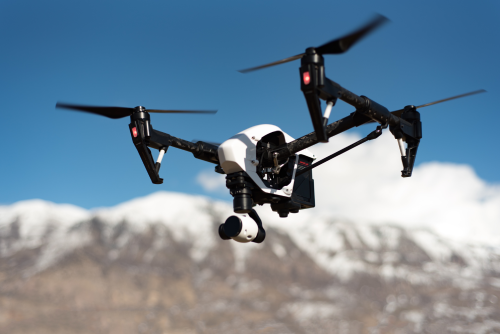
Aerovel Flexrotor is a compact VTOL fixed-wing unmanned aircraft designed for the military and ISR segment, not the consumer drone market. It matters because its published reference figures point to unusually long endurance for its size, combining runway-free launch and recovery with fixed-wing efficiency. For defense buyers, researchers, and professional readers comparing long-endurance small UAS platforms, Flexrotor is a model worth understanding even though many commercial details remain unconfirmed in public data.
Quick Summary Box
- Drone Name: Aerovel Flexrotor
- Brand: Aerovel
- Model: Flexrotor
- Category: Military / ISR VTOL fixed-wing drone
- Best For: Government, defense, and research users evaluating compact long-endurance ISR platforms
- Price Range: Not publicly confirmed in supplied data
- Launch Year: Not publicly confirmed in supplied data
- Availability: Not publicly confirmed in supplied data
- Current Status: Active
- Overall Rating: Not rated due to limited confirmed data
- Our Verdict: A highly endurance-focused VTOL fixed-wing ISR platform with standout published range and flight time for its class, but buyers need direct confirmation on payloads, software, support, and pricing.
Introduction
The Aerovel Flexrotor is an active USA-made VTOL fixed-wing drone positioned in the military/ISR market. Based on the confirmed reference data available for this page, its headline story is clear: it aims to deliver the efficiency of a fixed-wing aircraft without needing a runway, while also offering a published endurance figure of up to 40 hours.
That combination makes Flexrotor relevant to readers comparing compact surveillance-oriented aircraft for persistent observation, remote-area monitoring, and other long-duration professional missions. At the same time, this is not a consumer retail drone, and several important buying details are not publicly confirmed in the supplied dataset.
What makes the platform especially interesting is not just one big number, but the package those numbers suggest. In the unmanned aircraft world, endurance, launch flexibility, logistics footprint, and payload usefulness tend to pull against each other. A vehicle that can take off vertically usually gives up some efficiency compared with a pure fixed-wing aircraft. A vehicle optimized for very long endurance can become too large or too infrastructure-heavy for agile field deployment. Flexrotor is notable because its published profile suggests an attempt to balance those tradeoffs rather than optimize only one.
For professional readers, that is exactly why it deserves attention. Even if not every procurement variable is public, the aircraft sits in a category that many agencies and institutional operators care about: persistent ISR from constrained sites. That is a mission requirement that continues to matter across border security, maritime monitoring, expeditionary operations, disaster-area overwatch, and test or research environments.
This article keeps a clear line between published reference data and analysis. Where specifications are confirmed in the supplied material, they are presented directly. Where mission implications are discussed, they are framed as interpretation rather than undisclosed fact. That distinction matters, because in military and government UAS markets, the difference between baseline aircraft capability and configured system capability can be significant.
Overview
What kind of drone is it?
Flexrotor is a VTOL fixed-wing unmanned aircraft from Aerovel in the USA, categorized here under military/ISR. Its confirmed airframe dimensions are approximately 3 m wingspan and 2 m length, with a maximum takeoff weight of 21.5 kg. Public reference figures also list up to 40 hours of endurance, 3,400 km of range, a top speed of 158 km/h, and a ceiling of 7,315 m.
In plain terms, it sits in the niche where operators want fixed-wing efficiency and long time aloft, but also need vertical takeoff and landing from constrained locations. That means it is neither a simple quadcopter nor a traditional runway-launched tactical aircraft. It is better understood as a field-deployable long-endurance system intended to reduce dependence on launch infrastructure while still covering meaningful distance and duration.
The overall form factor is important. A 3 m wingspan is not tiny, but it is still relatively compact compared with larger tactical unmanned aircraft that often require more deliberate logistics, more personnel, or more elaborate support equipment. In other words, Flexrotor appears to target the middle ground between backpack-class convenience and large-system persistence.
Who should buy it?
The most likely audience is:
- Defense and government procurement teams
- ISR program evaluators
- Research organizations studying long-endurance small UAS concepts
- Enterprise or institutional users with legitimate need for persistent aerial monitoring and the ability to support a 21.5 kg-class aircraft
It is much less relevant for hobbyists, content creators, or casual commercial pilots.
A useful way to think about the buyer profile is this: Flexrotor is for organizations solving an operational problem, not individuals shopping for a flying camera. A procurement team might care about sortie duration, launch-site flexibility, logistics burden, training requirements, and mission-system integration. Those criteria are very different from the factors that dominate consumer drone buying, such as easy editing workflows, selfie modes, or retail accessory bundles.
This also means that the “right buyer” is not simply someone with the budget. It is someone with the operational structure to support the aircraft. A system in this class may require trained crews, maintenance planning, mission-specific payload integration, data-handling processes, and airspace coordination. Even if the aircraft is compact compared with larger ISR platforms, it still belongs to a more formal deployment model than plug-and-play commercial drones.
What makes it different?
What stands out most is the published endurance-to-size ratio. A 40-hour endurance figure in a roughly 3 m-span VTOL fixed-wing platform is notable on paper. Flexrotor also pairs that endurance claim with a runway-independent airframe format, which is valuable in field deployments where launch infrastructure is limited.
The main caveat is that payload, software, and pricing details are not confirmed in the supplied data, so its true mission fit depends heavily on configuration.
It is also different because of what it is not trying to be. Flexrotor is not presented as a high-speed strike platform, a heavy-lift utility drone, or a mainstream enterprise imaging tool. Its profile suggests a more focused proposition: stay up for a long time, launch from difficult locations, and support intelligence, surveillance, reconnaissance, or related mission sets. That degree of specialization can be a strength if your priorities align with it, and a limitation if they do not.
Key Features
- VTOL fixed-wing design for vertical takeoff/landing with fixed-wing cruise efficiency
- Published endurance of up to 40 hours, which is the most attention-grabbing performance figure in the supplied data
- Published maximum range of 3,400 km, indicating a serious long-distance mission concept on paper
- Published top speed of 158 km/h, enough for practical transit and repositioning even if endurance is the bigger story
- Published service ceiling of 7,315 m, suggesting a broad operating envelope subject to regulation and configuration
- Compact overall footprint for its segment at about 3 m span and 2 m length
- Maximum takeoff weight of 21.5 kg, placing it well beyond casual consumer categories but still below much larger tactical UAS classes
- Active product status in the military/ISR market rather than being only a legacy or historical listing
- USA origin, which may matter for some institutional buyers, procurement preferences, or compliance frameworks
- Likely optimized for persistent ISR-style missions rather than consumer imaging or recreational use
- Runway-independent deployment concept, which can improve flexibility in austere, remote, coastal, or temporary operating areas
- Potentially attractive logistics profile for organizations that need long-duration surveillance without moving to much larger aircraft systems
The most important thing to remember about these features is that they describe the platform’s published positioning, not a complete mission package. In practice, the usefulness of those features will depend on which payload is installed, how the aircraft is controlled, what communications links are available, and what operational approvals the user can obtain.
Full Specifications Table
| Specification | Details |
|---|---|
| Brand | Aerovel |
| Model | Flexrotor |
| Drone Type | VTOL fixed-wing |
| Country of Origin | USA |
| Manufacturer | Aerovel |
| Year Introduced | Not publicly confirmed in supplied data |
| Status | Active |
| Use Case | Military / ISR |
| Weight | Not publicly confirmed in supplied data |
| Dimensions (folded/unfolded) | Folded: Not publicly confirmed in supplied data; Unfolded: approx. 2 m length, 3 m span |
| Max Takeoff Weight | 21.5 kg |
| Battery Type | Not publicly confirmed in supplied data |
| Battery Capacity | Not publicly confirmed in supplied data |
| Flight Time | Up to 40 hr |
| Charging Time | Not publicly confirmed in supplied data |
| Max Range | 3400 km |
| Transmission System | Not publicly confirmed in supplied data |
| Top Speed | 158 km/h |
| Wind Resistance | Not publicly confirmed in supplied data |
| Navigation System | Not publicly confirmed in supplied data |
| Obstacle Avoidance | Not publicly confirmed in supplied data |
| Camera Resolution | Not publicly confirmed in supplied data |
| Video Resolution | Not publicly confirmed in supplied data |
| Frame Rates | Not publicly confirmed in supplied data |
| Sensor Size | Not publicly confirmed in supplied data |
| Gimbal | Not publicly confirmed in supplied data |
| Zoom | Not publicly confirmed in supplied data |
| Storage | Not publicly confirmed in supplied data |
| Controller Type | Not publicly confirmed in supplied data |
| App Support | Not publicly confirmed in supplied data |
| Autonomous Modes | Not publicly confirmed in supplied data |
| Payload Capacity | Not publicly confirmed in supplied data |
| Operating Temperature | Not publicly confirmed in supplied data |
| Water Resistance | Not publicly confirmed in supplied data |
| Noise Level | Not publicly confirmed in supplied data |
| Remote ID Support | Not publicly confirmed in supplied data |
| Geo-fencing | Not publicly confirmed in supplied data |
| Certifications | Not publicly confirmed in supplied data |
| MSRP / Launch Price | Not publicly confirmed in supplied data |
| Current Price | Not publicly confirmed in supplied data |
A practical reading tip: this table is unusually sparse compared with consumer drone spec sheets, but that is normal in this segment. Military and ISR aircraft are often discussed publicly through headline performance metrics rather than full retail-style documentation. That means the absence of detail should not automatically be read as a weakness, but it does mean serious buyers must ask more direct technical questions before treating the platform as shortlist-ready.
Design and Build Quality
From the confirmed specs alone, Flexrotor appears to target serious field use rather than portability in the consumer sense. A 3 m wingspan and 21.5 kg maximum takeoff weight place it well above the small foldable drone category, but still compact relative to larger runway-dependent ISR aircraft. That makes it more transportable by vehicle-team standards than by backpack standards.
The VTOL fixed-wing layout is important here. Compared with a pure multirotor, this design typically trades mechanical simplicity for better cruise efficiency and longer endurance. Compared with a hand-launched fixed-wing platform, it reduces reliance on launch equipment or open strip access. That usually improves field flexibility, especially in austere sites.
This has practical implications for deployment. A runway-free fixed-wing aircraft can be attractive when operations shift frequently, when teams need to work from rough terrain, when maritime or coastal sites are involved, or when the operator cannot rely on catapults, nets, or launch rails. In those situations, the value of VTOL is not just convenience. It can affect how many locations are usable, how visible the operation is, how quickly the aircraft can be repositioned, and how much extra gear the crew needs to move.
From a build-quality perspective, the dimensions and mission role suggest an aircraft intended for repeated operational cycling, not occasional recreational use. Even without confirmed public details on airframe materials or component ruggedization, a military/ISR-oriented product generally has to tolerate more demanding logistics than consumer gear. That may include transport in cases, assembly and disassembly in the field, exposure to varied terrain, and more structured maintenance schedules.
What is not publicly confirmed in the supplied data includes materials, propeller arrangement, weather hardening, landing gear details, ingress protection, or how quickly the system can be assembled and serviced in the field. So while the format suggests a field-ready military UAS, the exact build quality and maintainability still need direct verification from Aerovel.
Those unknowns matter more than they may first appear. Two aircraft with similar published endurance can be very different in practical ownership if one requires careful workshop support and the other is built around fast field turnaround. Buyers should therefore ask about:
- Assembly time from transport configuration to launch-ready state
- Number of operators needed for normal deployment
- Replaceable line-maintenance components
- Propulsion and control-surface access for field servicing
- Storage and transport case requirements
- Environmental hardening for dust, salt air, humidity, heat, or cold
For a platform like Flexrotor, design quality is not just about finish or materials. It is about how reliably the aircraft moves through an entire operational cycle: transport, setup, launch, mission execution, recovery, inspection, repair, and redeployment.
Flight Performance
On published numbers, Flexrotor’s flight performance is defined more by endurance and reach than by raw speed. A top speed of 158 km/h is respectable, but the bigger story is the stated 40-hour endurance and 3,400 km range. Those figures suggest a platform designed for long-station or extended-route missions rather than short, aggressive bursts.
The 7,315 m ceiling also points to a serious operational envelope on paper, though real-world usable altitude depends on local regulation, mission configuration, payload, and environmental conditions. As analysis rather than a newly claimed fact, a VTOL fixed-wing platform in this class would generally be expected to cruise more efficiently and cover more ground than a multirotor of similar size.
Endurance is often the most misunderstood number in drone marketing, especially outside specialist markets. In practice, “up to 40 hours” should be read as a best-case or optimized reference figure, not a guarantee for every mission. Actual endurance can be affected by payload choice, weather, loiter pattern, altitude, reserve policies, communications setup, and how often the aircraft is required to maneuver rather than cruise efficiently. A surveillance package with stabilized optics, data links, and mission electronics may shift the achievable duration relative to a baseline aircraft condition.
The same caution applies to range. A 3,400 km figure is significant, but it does not automatically describe what a routine civil or operational mission will look like. Range can be defined in different ways: total possible distance, ferry-style profile, route coverage under ideal conditions, or a profile with different reserves and return assumptions. For procurement teams, the right question is not “What is the maximum range?” but “What range and on-station time are achievable with our payload, our comms architecture, and our regulatory limits?”
Takeoff and landing behavior is one of the likely strengths. VTOL architecture means Flexrotor should be attractive where runway access is limited. That said, no public data is supplied here on transition behavior, hover margins, wind limits, or launch/recovery automation.
Those details are critical in real operations. A long-endurance aircraft only provides value if crews can recover it safely and repeatably in the conditions they actually face. Buyers should therefore verify:
- Minimum and maximum recommended launch/recovery wind conditions
- Automation level during vertical takeoff, transition, and landing
- Performance degradation with payload or density altitude
- Safety behavior during engine or system anomalies
- Recovery footprint requirements in tight terrain or on moving platforms, if applicable
Another useful way to evaluate the published performance is to think in mission categories rather than single statistics. Flexrotor appears better suited to the following profile than a multirotor of similar physical scale:
- Long overwatch where time on station matters more than frequent repositioning
- Route surveillance over coastlines, borders, pipelines, or other extended areas
- Sparse infrastructure deployment where there is no runway or catapult setup
- Reduced sortie count, since higher endurance can mean fewer launches to cover the same monitoring window
A practical caution: the published range figure should not be read as automatic approval for beyond visual line of sight operations. Buyers should verify how range is defined, what communications architecture is required, and what legal approvals are necessary in their jurisdiction.
Camera / Payload Performance
Flexrotor is best understood as a payload carrier for ISR missions, not as a consumer camera drone. The supplied data does not publicly confirm payload capacity, sensor type, gimbal format, camera resolution, video modes, zoom level, or supported ISR packages.
That means the most useful way to assess payload performance is by mission role rather than by image-creator metrics. If configured with electro-optical, infrared, or similar reconnaissance sensors, a platform with this published endurance could be valuable for long observation windows and reduced launch frequency. In many real programs, that can matter as much as pure image resolution.
This is a key difference between ISR aircraft and mainstream camera drones. Consumer buyers often begin with sensor size, megapixels, log color profiles, or vertical video support. ISR buyers usually begin with questions such as:
- Can it identify or track relevant targets at required distances?
- Can it hold a surveillance orbit long enough to matter operationally?
- Can it carry day/night sensing options?
- Does the payload integrate cleanly with the aircraft and mission system?
- How stable is the imagery during long sorties and in real weather?
Seen through that lens, Flexrotor’s endurance may be more meaningful than raw camera specs. A sensor that is “good enough” but can remain on station for many additional hours may outperform a sharper sensor mounted on a platform that must land and relaunch repeatedly.
Still, payload unknowns are a major buying limitation. Until the specific sensor options and payload integration limits are confirmed, it is not possible to rank Flexrotor accurately against other ISR systems for image quality, thermal performance, stabilization, or multi-sensor flexibility.
Payload flexibility can also determine whether the aircraft is a narrow-fit tool or a broader program asset. For example, some operators may want one airframe that can shift among visual ISR, thermal surveillance, communications relay, maritime observation, or test instrumentation roles. Others may be content with a more dedicated single-mission setup. Without confirmed public information on modularity, payload interfaces, or supported third-party systems, Flexrotor’s adaptability remains a question for direct manufacturer discussion.
For creators, surveyors, or mapping teams looking for public camera specs, this model is simply too lightly documented in the supplied data to recommend on imaging grounds alone.
Smart Features and Software
Publicly confirmed software and autonomy details are limited. The supplied data does not confirm:
- Return-to-home behavior
- Waypoint mission planning
- AI target tracking
- Mapping workflows
- SDK or API access
- Cloud fleet tools
- Payload control software
- App compatibility
- Navigation redundancy
- Obstacle avoidance logic
Even so, it would be unusual for a long-endurance military/ISR VTOL platform to rely only on basic manual piloting. As analysis, some level of autopilot, mission management, and navigation stabilization is likely part of the system concept, but readers should not assume feature parity with consumer drones.
Software matters especially in long-endurance operations because the aircraft may spend extended periods away from the launch site, carrying out repeatable mission geometry rather than short manual flights. In that context, the quality of the control and mission software can be as important as the airframe itself. A well-designed system reduces crew workload, supports predictable transitions between phases of flight, improves debrief quality, and makes it easier to integrate the aircraft into broader command or operational workflows.
For professional users, the most important software questions often include:
- How are routes planned and modified during flight?
- What level of automation exists for launch, transition, loiter, reroute, and landing?
- How are lost-link conditions handled?
- Can multiple users share control, observation, and payload tasks?
- What cyber protections exist for the control link and software environment?
- Are logs, telemetry, and mission data exportable for after-action review?
These may sound like implementation details, but they often determine whether a system scales well operationally. A platform with strong endurance but weak workflow tools can become crew-intensive and harder to justify. Conversely, a mature software and control environment can make a technically complex aircraft far more practical in daily use.
Before shortlisting Flexrotor, buyers should verify the exact ground control workflow, autonomy modes, data link architecture, software update path, cybersecurity posture, and any integration options for external command systems.
Use Cases
Flexrotor makes the most sense in missions where long endurance and VTOL flexibility matter more than consumer-friendly features.
-
Long-duration aerial observation for defense or government users
Suitable where agencies need persistent awareness over an area for many hours without frequent relaunch cycles. -
Persistent ISR coverage over remote areas
Useful for regions where operators need to maintain observation far from fixed airfields or support infrastructure. -
Maritime or coastal monitoring where runway access is limited
The VTOL concept is particularly relevant in environments where open launch strips are unavailable or undesirable. -
Border, infrastructure, or site overwatch in legitimate government or institutional contexts
Long endurance can support patrol-style missions over linear infrastructure or sensitive sites. -
Expeditionary or austere-site UAS deployment where vertical launch is valuable
A runway-independent aircraft is often easier to deploy from temporary or rough operating areas. -
Research, evaluation, and test programs focused on compact long-endurance VTOL fixed-wing aircraft
The platform may be of interest not only as an operational asset but also as a case study in endurance-focused small UAS design. -
Communications relay or broad-area situational awareness, if supported by the installed payload and mission system
Long time aloft can make the aircraft attractive for missions where persistence matters more than cinematic imaging quality.
The common thread in all of these use cases is not simply “surveillance.” It is persistent access. The aircraft’s value proposition appears strongest when the mission benefits from fewer launches, fewer recovery cycles, and the ability to operate from places that do not support traditional fixed-wing procedures.
Pros and Cons
Pros
-
Excellent published endurance figure at up to 40 hours
This is the standout metric and the main reason many professional readers will pay attention to the platform. -
VTOL fixed-wing layout combines flexible launch with efficient forward flight
That pairing can be especially useful in field conditions where infrastructure is limited but mission duration still matters. -
Strong published range figure of 3,400 km
On paper, this supports long-route or extended-area mission concepts. -
Compact dimensions relative to its long-endurance positioning
It appears easier to move and deploy than larger runway-dependent systems aimed at similar persistence goals. -
Active status suggests it is not just a legacy reference entry
For buyers, that is more reassuring than evaluating an aircraft known mainly from older promotional material. -
Published ceiling of 7,315 m indicates a serious mission envelope on paper
Even if real operations will be governed by approvals and payload configuration, it points to substantial design ambition. -
USA-made platform may appeal to some institutional buyers
Origin can influence procurement eligibility, supply-chain comfort, and policy alignment.
Cons
-
Camera and payload specifications are not publicly confirmed in the supplied data
That makes mission-fit evaluation incomplete without direct outreach. -
No public pricing in the supplied data, making budgeting difficult
Organizations cannot realistically compare lifecycle cost without a formal quote. -
Software, autonomy, datalink, and controller details are not publicly confirmed
These are central to operational usability in the ISR segment. -
Availability may be procurement-led rather than open retail
This is expected for the category, but it raises the barrier to casual evaluation. -
Range and endurance figures should be verified by configuration and mission profile
Published maximum numbers rarely tell the full story for real-world deployment. -
21.5 kg MTOW places it outside casual or lightweight drone categories
That implies more regulation, more training, and more structured operating processes. -
Not suitable for typical hobby, creator, or entry-level commercial users
It is simply aimed at a different market with different expectations.
The balance here is fairly clear: Flexrotor’s upside is compelling if endurance is your top priority, but its public-information gaps mean it is best approached as a serious procurement conversation, not a spec-sheet impulse buy.
Comparison With Other Models
Because public, configuration-stable data in this segment is often limited, the table below is best read as market positioning rather than a perfect apples-to-apples spec shootout. Different payloads, radios, mission kits, and customer-specific integrations can materially change what each system looks like in practice.
| Model | Price | Flight Time | Camera or Payload | Range | Weight | Best For | Winner |
|---|---|---|---|---|---|---|---|
| Aerovel Flexrotor | Not publicly confirmed in supplied data | 40 hr | Not publicly confirmed in supplied data | 3400 km | 21.5 kg MTOW | Compact long-endurance VTOL ISR | Winner on confirmed endurance |
| Shield AI V-BAT | Not publicly confirmed in supplied data | Publicly positioned below Flexrotor’s endurance class | ISR payload options vary by version | Not publicly confirmed in supplied data | Not publicly confirmed in supplied data | Runway-independent ISR from constrained sites | Winner if broader public program visibility matters more |
| AeroVironment JUMP 20 | Not publicly confirmed in supplied data | Publicly positioned below Flexrotor’s endurance class | ISR payload ecosystem varies by configuration | Not publicly confirmed in supplied data | Not publicly confirmed in supplied data | Larger-class VTOL ISR workflows | Winner if payload-class scaling matters more |
Flexrotor vs a close competitor
Against Shield AI’s V-BAT, Flexrotor’s headline advantage is its confirmed published endurance figure. If long time aloft is the main requirement, Flexrotor looks especially strong on paper. V-BAT may still enter the conversation where buyers prioritize broader public program familiarity, shipboard-style VTOL use cases, or a different integration ecosystem.
Another way to frame the comparison is by procurement confidence versus published persistence. A more publicly visible program can sometimes offer reassurance around adoption, support pathways, or ecosystem maturity. Flexrotor, by contrast, draws attention primarily through endurance-led positioning. Which matters more depends on the buyer: some organizations want the system with the strongest paper endurance, while others prefer the platform with the broadest known operational footprint.
Flexrotor vs an alternative in the same segment
Compared with AeroVironment’s JUMP 20, Flexrotor appears to emphasize compactness and endurance efficiency. JUMP 20 is often discussed in a larger tactical VTOL ISR context, so the choice between them should be driven by payload needs, logistics footprint, and support structure rather than category labels alone.
This is an important point. In professional UAS procurement, “same segment” rarely means “same mission fit.” One aircraft may be better for compact transport and long loiter, while another may be more compelling if the operator needs a different payload class, more visible support infrastructure, or closer alignment with existing fleet workflows. Flexrotor’s published case looks strongest when endurance is weighted heavily in the scoring model.
Flexrotor vs an older or previous-generation option
A clearly documented previous-generation Flexrotor baseline is not publicly confirmed in the supplied data. If you are evaluating earlier variants, block upgrades, or legacy configurations, confirm the exact version directly with Aerovel before comparing endurance, payload, or software capability.
That matters because older brochures, presentations, or references may describe a platform stage that differs from the current active configuration. In defense and research markets, even small version changes can affect payload support, control interfaces, maintenance items, and achievable performance.
Manufacturer Details
Aerovel is listed here as both the brand and the manufacturer, so there is no separate consumer-facing brand distinction to explain. The company origin in the supplied record is the USA.
Beyond that, public corporate detail in the supplied data is limited. Headquarters city, founding year, and full product-line breadth are not publicly confirmed in the supplied dataset used for this page. Based on the model discussed here, Aerovel is best understood as a specialist unmanned aircraft manufacturer operating in the long-endurance VTOL fixed-wing niche rather than in mass-market consumer drones.
That specialization matters. Companies serving procurement-led aviation markets often look different from consumer drone brands. They may publish less retail-style information, offer more configuration-dependent systems, and focus more on program engagement than broad public marketing. For buyers, that can be positive if it means stronger mission tailoring and institutional support. It can also make early comparison more difficult because fewer standardized public materials are available.
Its market reputation in this context rests mainly on the Flexrotor platform’s endurance-led positioning. If you are evaluating Aerovel as a supplier rather than only Flexrotor as an aircraft, it is worth looking beyond the airframe and asking about program history, training capacity, sustainment philosophy, integration support, and production responsiveness.
Support and Service Providers
Support expectations for a military/ISR platform are different from those for a consumer drone. Buyers should expect support, training, spares, and maintenance to be handled through official manufacturer channels, authorized program partners, or regional integrators rather than through retail walk-in repair networks.
What is not publicly confirmed in the supplied data includes:
- Warranty terms
- Global repair coverage
- Spare parts lead times
- Training packages
- Field service structure
- Regional service depots
- Software support policy
Before procurement, verify official support channels, spare availability, documentation quality, turnaround times, and whether regional service is available in your operating area.
It is also worth assessing support at the program level, not just the aircraft level. For professional users, sustainment often includes:
- Initial operator and maintainer training
- Mission planning and standard operating procedure development
- Spare part provisioning for expected sortie tempo
- Software update and cybersecurity management
- Technical reach-back for troubleshooting
- Refresh paths for sensors, radios, and control systems
A drone with strong paper performance can become expensive or frustrating if support is thin, parts take too long to arrive, or software changes are hard to validate. Conversely, a robust sustainment package can greatly increase the practical value of a system whose public spec sheet is relatively sparse.
Where to Buy
Flexrotor does not appear to be a normal consumer retail purchase. In practice, a platform in this segment is more likely to be sourced through:
- Direct manufacturer engagement
- Authorized defense or enterprise dealers
- Regional UAS distributors
- Government or institutional procurement channels
- System integrators handling payload and mission-package customization
Availability is not publicly confirmed in the supplied data, and access may be region-specific or subject to end-use review. Buyers should treat this as a procurement-led platform rather than an off-the-shelf hobby drone.
In many cases, the purchase path for an aircraft like this may involve a more formal sequence:
- Initial capability discussion to define mission needs
- Configuration review covering payloads, radios, and control options
- Compliance and eligibility checks, especially for export or end-use restrictions
- Demonstration or evaluation activity if required by the buyer
- Formal quote and support package review
- Training, delivery, and sustainment planning before operations begin
That is why “where to buy” is less about finding the cheapest storefront and more about identifying the correct acquisition channel. For institutional users, the best supplier path is usually the one that includes support, documentation, training, and configuration clarity.
Price and Cost Breakdown
No launch price or current price is publicly confirmed in the supplied data.
That makes total-cost planning especially important. For a platform like Flexrotor, buyers should verify whether quoted pricing includes:
- Air vehicle only, or full system kit
- Ground control station
- Installed ISR payload or sensor turret
- Batteries, chargers, and power support equipment
- Spare propellers and field spares
- Maintenance tooling
- Software licenses
- Training and certification packages
- Shipping, import, or export-control handling
- Service contracts and long-term support
In other words, the ownership cost may be much broader than the aircraft price alone. If you are budgeting, ask for a full program-level quote, not just a unit price.
For professional systems, a realistic cost model should usually include at least three layers:
1. Acquisition cost
This is the visible purchase number, but it may vary a great deal depending on payload, communications kit, and training package.
2. Operational cost
This includes consumables, maintenance labor, software support, spare parts, transport cases, power infrastructure, and crew time.
3. Lifecycle cost
This includes long-term sustainment, upgrades, fleet management, replacement components, and any required regulatory or organizational overhead.
A platform with exceptional endurance may reduce some operational costs by cutting sortie frequency, but that does not automatically make it inexpensive overall. The right economic comparison is cost per useful mission hour or cost per area covered, not simply cost per aircraft.
Regulations and Compliance
At a published 21.5 kg maximum takeoff weight, Flexrotor will fall into more tightly regulated categories than many small consumer drones in numerous jurisdictions. Registration, operator qualification, airspace approval, and operational limitations should all be assumed unless local law clearly says otherwise.
A few practical points matter here:
- The published 3,400 km range does not mean long-range operations are automatically legal
- Beyond visual line of sight operations generally require specific approval in many civil systems
- Remote ID support is not publicly confirmed in the supplied data
- Military/ISR platforms may face additional procurement, export, and end-use restrictions
- Privacy, surveillance, and data handling law can apply even when aircraft operation itself is authorized
- National security and restricted-area rules may be stricter than standard drone rules
Always verify local aviation law, data-use rules, and any sector-specific restrictions before purchase or operation.
For mixed civil-government use cases, the compliance picture can become even more complex. A platform may be technically capable of long-range or high-endurance operations, yet still limited by:
- Airspace segregation requirements
- Command-and-control link standards
- Operator licensing or organizational approvals
- Rules around surveillance over populated or sensitive areas
- Data retention and privacy obligations
- Frequency and spectrum approvals for communications equipment
This is another reason why published performance alone is not enough. An aircraft with extraordinary endurance still only delivers value if the operator can legally and practically employ that endurance in the intended airspace and mission context.
Who Should Buy This Drone?
Best for
-
Government and defense users evaluating persistent ISR aircraft
Especially those who care about staying power, deployment flexibility, and structured mission workflows. -
Research institutions comparing compact long-endurance VTOL fixed-wing designs
Flexrotor is a notable reference point in the endurance-versus-footprint conversation. -
Procurement teams that need runway-independent launch and recovery
This is one of the clearest practical advantages of the VTOL fixed-wing concept. -
Operators who value endurance and coverage more than consumer camera features
The platform makes more sense for persistent monitoring than for creative imaging. -
Programs that can support training, maintenance, and structured deployment workflows
Like many institutional systems, it is most suitable where supporting infrastructure already exists.
Not ideal for
-
Hobby pilots
The aircraft class, mission role, and likely procurement path place it far outside recreational use. -
Aerial photography creators seeking public camera specs
Too many imaging details are unconfirmed for this to be a practical content-creation recommendation. -
Buyers who need transparent retail pricing and fast online checkout
The system appears to require direct engagement rather than simple e-commerce purchase. -
Entry-level commercial operators without institutional support infrastructure
Even if technically obtainable, it would likely exceed what many small operators can practically support. -
Users who need fully public confirmation of payload, software, and compliance features before shortlist stage
This is a platform best evaluated through manufacturer dialogue, not open spec sheets alone.
The buyer decision really comes down to organizational maturity. If your team is already comfortable with procurement-led aviation systems and can evaluate support, training, and mission integration, Flexrotor may be a strong candidate. If you need immediate transparency and low-friction adoption, it is probably the wrong fit.
Final Verdict
Aerovel Flexrotor stands out because its published reference specs point to a rare combination: VTOL flexibility, fixed-wing efficiency, compact proportions, and extremely long claimed endurance. On paper, up to 40 hours of flight time, 3,400 km of range, and a 21.5 kg MTOW make it one of the more intriguing endurance-focused aircraft in the small VTOL ISR discussion.
The drawback is not the concept, but the information gap. Publicly confirmed details on payloads, software, support, pricing, and compliance are limited in the supplied data. That makes Flexrotor a strong comparison candidate for professional and institutional buyers, but not a plug-and-play option for mainstream drone shoppers.
What this means in practical terms is that Flexrotor is most compelling as a serious evaluation target, not as a paper-spec conclusion. If your mission model prioritizes persistence, runway independence, and compact field deployment, it deserves attention. If your selection process depends on detailed public payload matrices, published software features, or easy retail purchasing, the platform will feel incomplete until you engage directly with the manufacturer or an authorized channel.
Bottom line: if your organization is seriously evaluating compact, runway-independent ISR platforms and endurance is the top priority, Flexrotor deserves a close look. Just treat it as a niche, procurement-driven system that requires direct manufacturer validation before any buying decision.
