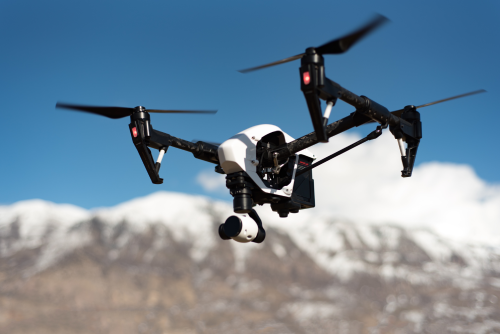
Kaman K-Max is an active uncrewed cargo helicopter from Kaman, aimed at cargo and logistics work rather than consumer flying or aerial content creation. Based on the supplied data, its headline numbers are unusually strong for this category, with up to 12 hours of endurance, 1,852 km of range, and a top speed of 185 km/h. That makes it a model worth watching for enterprise, government, and research teams comparing serious VTOL logistics platforms.
At the same time, this is not the kind of aircraft you judge by the standards used for camera drones, hobby quadcopters, or even most commercial multirotors. The right frame of reference is closer to mission aviation, remote-site logistics, and procurement-led operations. The K-Max appears to sit in that small but strategically important part of the market where uncrewed aircraft are expected to move real supplies over meaningful distances, often in places where roads, runways, or traditional transport options are limited.
The biggest story here is not just that it flies vertically, but that it combines helicopter-style access with unusually ambitious published mission numbers. That combination matters because many cargo-drone discussions still revolve around short-range delivery concepts. K-Max, at least on paper, points toward a different operational model: longer-duration, infrastructure-light, utility-driven cargo transport.
Quick Summary Box
- Drone Name: Kaman K-Max
- Brand: Kaman
- Model: K-Max
- Category: cargo/logistics
- Best For: Long-range uncrewed cargo and logistics missions
- Price Range: Not publicly confirmed in supplied data
- Launch Year: Not publicly confirmed in supplied data
- Availability: Not publicly confirmed in supplied data
- Current Status: Active
- Overall Rating: Not rated due to limited confirmed data
- Our Verdict: A highly specialized cargo helicopter drone with standout published endurance and range, but key buying details such as payload, autonomy package, propulsion details, certification basis, and price still need direct verification.
Introduction
The Kaman K-Max sits in a niche part of the drone market: uncrewed cargo aviation. Manufactured by Kaman in the USA and listed as active, it is positioned for logistics use cases where vertical takeoff and landing matter more than camera specs or consumer-friendly features. Readers should care about it because few drone platforms combine a helicopter airframe with long published endurance and long published range in a cargo-focused profile.
That alone makes it notable. Most people who hear the word “drone” still think of consumer photography, inspections, mapping, or short-range delivery. K-Max belongs to a different category entirely. Its value proposition is less about accessibility and more about operational utility. If your mission is to move equipment, resupply isolated sites, support infrastructure, or explore autonomous logistics concepts, then the K-Max becomes much more relevant than any prosumer UAV.
It is also important to approach this aircraft with the right expectations. The supplied data confirms several eye-catching figures, but many details that matter in real procurement are still unspecified. That means the K-Max is interesting not because it is easy to evaluate from public listings, but because it appears to occupy a high-capability mission tier where direct manufacturer engagement is almost certainly part of the buying process.
In other words, this is a platform that deserves serious attention from the right audience, while remaining far outside the needs of hobby pilots, casual commercial users, or media creators.
Overview
What kind of drone is it?
The K-Max is an uncrewed cargo helicopter in the cargo/logistics segment. Unlike small delivery multirotors or camera drones, this type of aircraft is aimed at moving supplies, equipment, or mission payloads in environments where runway access may be limited and vertical lift is valuable.
That distinction matters. A cargo helicopter platform is built around utility first. Its job is not to produce cinematic footage, fit in a car trunk, or simplify first-time flying. Instead, it exists to solve movement problems: how to get material from point A to point B when roads are poor, terrain is difficult, infrastructure is sparse, or time is critical. In that sense, K-Max should be assessed more like an aerial logistics asset than like a drone in the retail sense.
A helicopter configuration also suggests a different operating philosophy from fixed-wing cargo UAVs. Fixed-wing systems can be excellent for efficient long-distance transport, but they usually benefit from launch-and-recovery infrastructure or compromise on hover flexibility. A helicopter-type aircraft, by contrast, brings vertical takeoff, landing, and hovering into the mission profile. That can be especially useful in rugged terrain, remote clearings, industrial sites, temporary operating zones, and areas where cargo must be placed precisely.
Who should buy it?
This is not a casual-buy drone. The most relevant buyers are enterprise logistics teams, industrial operators, government programs, researchers studying autonomous cargo operations, and organizations evaluating unmanned resupply or remote-site transport.
A more practical way to think about the ideal buyer is this: you should already have a transport problem, not just an interest in drone technology. K-Max makes sense for teams asking questions such as:
- How do we supply remote assets without building runway infrastructure?
- How do we reduce the risk, time, or cost of moving material to hard-to-access sites?
- Can we automate or remotely supervise recurring cargo runs?
- Is there an unmanned option for long-range VTOL logistics in our operating environment?
- Can this aircraft fit into a broader network of industrial, humanitarian, or government transport operations?
Buyers who are still at the stage of “we need a drone for general company use” are probably not the target audience. This platform appears suited to organizations with dedicated operational planning, safety oversight, maintenance support, regulatory pathways, and budget structures aligned with aviation procurement.
What makes it different?
What stands out most in the supplied data is the combination of:
- Helicopter-type VTOL operation
- 12-hour endurance
- 1,852 km range
- 185 km/h top speed
On paper, that positions K-Max closer to a serious logistics aircraft than to a typical delivery drone. In practical terms, it appears designed for larger-scale cargo workflows, not short suburban package drops.
The significance of those numbers is not just that they are large. It is that they suggest mission flexibility. Long endurance can mean wider loiter windows, more routing freedom, better resilience to delays, and the ability to support extended logistics tasks rather than only straight-line hops. Long range may point to inter-site transport potential rather than purely local operations. A useful top speed helps compress route time and can improve overall mission throughput when the aircraft must cover distance efficiently.
Of course, published aviation numbers always need context. Endurance, range, and speed can vary with payload, weather, altitude, reserves, route structure, and operating assumptions. But even with that standard caveat, the K-Max profile is unusually strong for a cargo-focused VTOL listing.
Key Features
- Uncrewed cargo helicopter configuration built for logistics missions rather than imaging-led flying
- Active platform status, indicating that it is not presented merely as a historical or discontinued listing in the supplied data
- Built by Kaman in the USA, which may matter for procurement, support expectations, and origin-sensitive programs
- Cargo/logistics mission focus, making it more relevant to resupply and industrial operations than to retail delivery marketing
- Published endurance of up to 12 hours, a standout figure that implies substantial mission windows
- Published range of up to 1,852 km, suggesting serious point-to-point transport potential in the right operating conditions
- Published top speed of up to 185 km/h, which is meaningful for time-sensitive logistics missions
- Helicopter-type vertical takeoff and landing profile, useful where runway infrastructure is limited or unavailable
- Potential suitability for remote resupply and industrial logistics, especially in difficult terrain or isolated operating areas
- Procurement-oriented platform, likely sold through direct engagement rather than mass-market retail channels
- Better aligned with enterprise, government, and research buyers than with hobbyists or content creators
- A strong candidate for due-diligence evaluation if your organization is comparing long-range VTOL cargo systems rather than conventional drones
Full Specifications Table
The table below reflects only the information supplied. A large number of fields remain unspecified in the source material, which is typical for specialized aviation platforms that are marketed through direct sales or program-based engagement rather than full consumer-style spec disclosure.
| Specification | Details |
|---|---|
| Brand | Kaman |
| Model | K-Max |
| Drone Type | Uncrewed cargo helicopter |
| Country of Origin | USA |
| Manufacturer | Kaman |
| Year Introduced | Not publicly confirmed in supplied data |
| Status | Active |
| Use Case | Cargo/logistics |
| Weight | Not publicly confirmed in supplied data |
| Dimensions (folded/unfolded) | Not publicly confirmed in supplied data |
| Max Takeoff Weight | Not publicly confirmed in supplied data |
| Battery Type | Not publicly confirmed in supplied data |
| Battery Capacity | Not publicly confirmed in supplied data |
| Flight Time | 12 hr |
| Charging Time | Not publicly confirmed in supplied data |
| Max Range | 1,852 km |
| Transmission System | Not publicly confirmed in supplied data |
| Top Speed | 185 km/h |
| Wind Resistance | Not publicly confirmed in supplied data |
| Navigation System | Not publicly confirmed in supplied data |
| Obstacle Avoidance | Not publicly confirmed in supplied data |
| Camera Resolution | Not publicly confirmed in supplied data |
| Video Resolution | Not publicly confirmed in supplied data |
| Frame Rates | Not publicly confirmed in supplied data |
| Sensor Size | Not publicly confirmed in supplied data |
| Gimbal | Not publicly confirmed in supplied data |
| Zoom | Not publicly confirmed in supplied data |
| Storage | Not publicly confirmed in supplied data |
| Controller Type | Not publicly confirmed in supplied data |
| App Support | Not publicly confirmed in supplied data |
| Autonomous Modes | Not publicly confirmed in supplied data |
| Payload Capacity | Not publicly confirmed in supplied data |
| Operating Temperature | Not publicly confirmed in supplied data |
| Water Resistance | Not publicly confirmed in supplied data |
| Noise Level | Not publicly confirmed in supplied data |
| Remote ID Support | Not publicly confirmed in supplied data |
| Geo-fencing | Not publicly confirmed in supplied data |
| Certifications | Not publicly confirmed in supplied data |
| MSRP / Launch Price | Not publicly confirmed in supplied data |
| Current Price | Not publicly confirmed in supplied data |
One key takeaway from the table is that K-Max cannot be meaningfully assessed like a consumer spec-sheet product. The missing fields are not trivial extras; they include many of the variables that directly determine procurement suitability, regulatory fit, and operating cost. That does not reduce the platform’s interest, but it does mean real evaluation depends on deeper technical engagement.
Design and Build Quality
The supplied data confirms that K-Max is a helicopter-type cargo platform, which already tells you a lot about its likely design priorities. This is almost certainly a utility-first aircraft, where lift capability, mission endurance, structural strength, and service access matter more than compact portability or sleek consumer styling.
That is an important mindset shift for potential buyers. In the consumer drone world, design is often discussed in terms of folding arms, travel cases, app polish, controller ergonomics, and how quickly the aircraft can be airborne. In the cargo-helicopter world, design questions are more operational:
- How easily can the aircraft be inspected between missions?
- How much ground crew support does it need?
- How robust is it under repeated logistics cycles?
- How accessible are service points and components?
- How practical is it to transport, stage, and maintain at remote sites?
- How well does the aircraft tolerate a field environment rather than a showroom environment?
Specific details such as materials, rotor span, landing gear geometry, folded size, and service panels are not publicly confirmed in the supplied data. Even so, it is reasonable analysis that a cargo helicopter in this class is built for field use and repeated logistics cycles, not for backpack transport or quick consumer deployment.
Another design implication of a helicopter-type cargo aircraft is ground operations. Unlike many small multirotors, this class of system may require more deliberate site preparation, loading procedures, safety stand-off distances, and handling processes. Even if the uncrewed element reduces onboard pilot requirements, the broader system may still involve a serious operational footprint including planning staff, operators, maintenance personnel, and mission support equipment.
From a buyer perspective, the key design takeaway is this: K-Max should be evaluated as an operational aviation asset, not as a portable drone. That means maintainability, parts support, inspection routines, and ground handling matter as much as raw flight numbers. A platform can look excellent on paper but still prove difficult to deploy efficiently if support procedures, load workflows, or service requirements are poorly aligned with the mission.
Buyers should also think about the aircraft’s physical compatibility with their operating environment. Questions worth asking include:
- Can it be staged at the sites where you actually need it?
- What are the loading and unloading procedures?
- How much space is needed for safe takeoff and landing?
- Is the aircraft tolerant of unimproved surfaces or temporary landing zones?
- What transport method is needed to move the aircraft and support gear between locations?
Those are practical design questions, and for a cargo system they often matter as much as airframe elegance.
Flight Performance
The confirmed performance figures are the strongest part of the K-Max profile. A published endurance of 12 hours, a range of 1,852 km, and a top speed of 185 km/h suggest a platform meant for substantial logistics missions rather than short-hop delivery work.
In practical terms, those numbers imply:
- Long mission windows
- Potentially meaningful point-to-point transport capability
- Better suitability for remote or distributed operations than small delivery drones
- A mission profile focused on outdoor utility rather than close-range urban deployment
These numbers also hint at operational flexibility. Long endurance can matter in more ways than simple airborne duration. It can support route changes, waiting periods, alternate landing plans, surveillance or escort-adjacent support functions, and more resilient mission planning when the environment is unpredictable. For organizations operating in rugged terrain or sparse infrastructure, that extra buffer can be a major advantage.
The published range figure is especially notable because it suggests K-Max is not just about last-mile cargo drops. Depending on actual mission configuration, it may be relevant to longer logistics chains, inter-facility movement, or resupply routes that would be inefficient for small multirotor delivery systems. Again, the exact real-world figure will depend on mission conditions, but the headline number itself places K-Max in a very different conversation than local parcel drones.
Because it is a helicopter-type aircraft, vertical takeoff and landing should be a core operational advantage. That usually means better flexibility in uneven or infrastructure-poor environments than runway-dependent aircraft. It may also support more precise insertion and extraction workflows than fixed-wing cargo drones, although the supplied data does not confirm hover precision, wind limits, or landing automation performance.
It is also worth separating top speed from sustained operational speed. The supplied data gives a top speed of 185 km/h, but in cargo operations the more important metric is often practical mission speed under load, within regulatory limits, with required reserves, and under actual routing constraints. A platform can have a high top speed without routinely operating at that speed in service. Procurement teams should therefore ask for representative mission profiles rather than relying only on headline maxima.
Other performance variables remain unconfirmed and deserve close attention:
- Payload effect on range and endurance: Published maximum figures may not represent fully loaded missions.
- Weather sensitivity: Wind, precipitation, temperature, and density altitude can materially affect rotorcraft performance.
- Operational ceiling and terrain performance: Critical for mountainous, hot, or high-altitude sites.
- Takeoff and landing behavior under load: Especially important for constrained sites.
- Navigation resilience: Essential if the aircraft will operate in GPS-challenged or interference-prone environments.
- Redundancy and fail-safe behavior: A major consideration for long-range logistics missions.
Signal architecture, control link resilience, navigation redundancy, and takeoff/landing assistance systems are not publicly confirmed in the supplied data, so those mission-critical details should be checked directly before any serious procurement discussion.
This is clearly an outdoor platform. It is not an indoor drone, not a training toy, and not something intended for casual flying environments. Its performance profile points toward organizations that already understand mission planning, risk analysis, and the relationship between published aircraft figures and actual operational envelopes.
A good buying rule here is simple: treat the confirmed numbers as strong indicators of capability, but not as a substitute for a mission-specific performance model. If your use case involves remote resupply, heavy logistics, or long-distance VTOL routes, you should ask for performance data tied to payload assumptions, reserve policies, weather bands, and site conditions.
Camera / Payload Performance
For K-Max, payload matters far more than camera specs. The supplied data identifies it as an uncrewed cargo helicopter, but it does not publicly confirm payload capacity, cargo attachment method, internal cargo handling, or mission equipment options.
That means buyers should not assume any specific lift figure, sling arrangement, cargo bay design, or modular mission kit without checking current official information. Those details are central to whether the aircraft fits a real logistics workflow.
In fact, payload capability is probably the single most important missing variable in the public picture. Range and endurance are impressive, but cargo value depends on what the aircraft can actually move and under what conditions. A long-range aircraft with limited useful payload can still be valuable, but it serves a very different mission than one designed to move substantial loads consistently. That is why procurement teams should ask for more than a single headline payload number. They should also request:
- Payload versus range curves
- Payload versus endurance tradeoffs
- Center-of-gravity limits
- Approved load configurations
- Environmental restrictions on cargo handling
- Loading and securing procedures
- Mission turnaround times
- Any special equipment needed for cargo attachment or release
Camera-related specifications are also not publicly confirmed in the supplied data. If onboard imaging systems are present, they are likely more relevant to navigation, safety, or mission oversight than to photography or cinematography. In other words, K-Max should be judged primarily on logistics utility, not media performance.
That said, sensors still matter even on a cargo-first aircraft. Many platforms in this class use onboard imaging or situational-awareness systems for functions such as landing-zone assessment, remote supervision, line monitoring, day/night mission support, or operator oversight. The supplied data does not specify whether K-Max includes any of these, but buyers should ask because they can materially affect both safety and operational workload.
Another factor is mission modularity. Some cargo aircraft become far more useful when they can switch between pure logistics missions and secondary roles such as remote sensing, relay, observation support, or specialized enterprise tasks. The supplied data does not confirm whether K-Max offers such modularity, but that question is worth raising if your organization values multi-role return on investment.
Smart Features and Software
Because K-Max is described as an uncrewed cargo helicopter, some form of remote control, supervised autonomy, or autonomous mission management is likely part of the overall concept. However, the supplied data does not publicly confirm the exact software stack or feature set.
The following items are not publicly confirmed in the supplied data:
- Return-to-home behavior
- Waypoint or route planning
- Detect-and-avoid systems
- Fleet management tools
- Cloud operations software
- Mobile app support
- SDK or API access
- Autonomous cargo-specific workflows
- Geo-fencing
- Remote ID support
For enterprise buyers, this is a major due-diligence area. Before budgeting, verify the autonomy level, operator workload, mission planning tools, control station requirements, telemetry architecture, logging and compliance support, and whether the platform integrates with wider fleet-management or enterprise software systems.
This section is especially important because “uncrewed” can mean very different things in practice. Some platforms are remotely piloted for most of the mission. Others automate significant portions of navigation but still require close supervision. Others may support route autonomy with human authorization at key decision points. Those differences affect staffing, training, regulation, insurance, and operational scalability.
Questions buyers should ask include:
- Does the aircraft support preplanned route execution?
- What level of operator intervention is expected during normal missions?
- How are abnormal events handled?
- What communications links are used, and what happens if they degrade?
- Is there onboard decision logic for contingencies?
- Are mission logs exportable for compliance and incident review?
- Can the system integrate with existing dispatch or fleet software?
- How are software updates delivered and validated?
- What cybersecurity protections are in place for command, telemetry, and data handling?
In a platform intended for logistics, software can be just as important as hardware. Cargo missions are repetitive, schedule-driven, and often embedded in larger operational chains. That means the aircraft must not only fly, but fit into planning, dispatch, monitoring, maintenance tracking, and reporting workflows. A great airframe with weak software integration can become difficult to scale across real operations.
Another important software question is airspace integration. As uncrewed cargo missions become longer and more complex, platforms often need to coordinate with local rules, route planning tools, geospatial constraints, and possibly broader traffic-management systems depending on jurisdiction. The supplied data does not confirm how K-Max addresses these issues, but any organization considering serious deployment should investigate them early.
Finally, do not underestimate the importance of operator interface design. In mission aviation, clear control logic, alerting systems, checklists, and telemetry presentation can materially affect safety and productivity. A polished app is not the point here; operational usability is.
Use Cases
Given its published profile, the most realistic K-Max use cases are operational rather than consumer-focused.
-
Remote cargo resupply to locations without runway access
This is one of the clearest fits. A helicopter-type VTOL aircraft can reach sites where fixed-wing systems are less practical and ground routes are slow, risky, or unavailable. -
Long-range logistics between isolated facilities
If an organization operates distributed sites such as field bases, remote camps, industrial outposts, or dispersed infrastructure, K-Max may fit missions that require more reach than smaller delivery drones can offer. -
Industrial support missions for energy, mining, utilities, or infrastructure sites
Industries with hard-to-access assets often need tools, parts, sensors, emergency supplies, or maintenance materials moved quickly. A long-endurance VTOL cargo system can be attractive in those scenarios. -
Humanitarian or disaster-response supply movement where roads are damaged or slow
In emergency environments, vertical access and infrastructure independence can be extremely valuable. The ability to move supplies without relying on usable road networks is a major operational advantage. -
Government or enterprise evaluation of unmanned cargo aviation
Some organizations may consider K-Max not only for direct deployment, but as a test platform or benchmark in broader logistics modernization efforts. -
Expeditionary or hard-to-access site support where VTOL matters
Environments with temporary operating zones, constrained landing areas, or rugged geography are often where helicopter-style access provides the most obvious mission value.
What ties these use cases together is not simply “delivery,” but transport under constraints. K-Max looks most relevant when at least one of the following is true:
- Ground transport is too slow, risky, or expensive
- Runway infrastructure is absent or impractical
- Distance exceeds the sweet spot of small delivery UAVs
- The mission requires repeated access to remote or difficult sites
- Human-piloted alternatives are undesirable from cost, risk, or availability standpoints
That is why this aircraft is better understood as a logistics enabler than a delivery gadget.
Pros and Cons
Pros
- Strong published endurance of 12 hours
- Strong published range of 1,852 km
- Useful published top speed of 185 km/h for logistics missions
- Helicopter-type VTOL platform can be advantageous where runway access is limited
- Active status suggests the platform is not merely a legacy listing
- Built by an established US aerospace manufacturer
- Well aligned with serious cargo/logistics use cases rather than gimmick features
- Potentially relevant to industrial, government, and research operations that need more than short-hop delivery capability
Cons
- Price is not publicly confirmed in supplied data
- Payload capacity is not publicly confirmed in supplied data
- Key technical details such as weight, MTOW, autonomy package, propulsion specifics, and navigation system are not publicly confirmed
- Camera and onboard sensor details are not publicly confirmed
- Support network and regional availability need direct verification
- Likely far more complex to operate than small commercial drones
- Regulatory pathway may be significantly more demanding than for lightweight UAVs
- Not suitable for hobbyists, casual users, or creator-focused buyers
Comparison With Other Models
Direct apples-to-apples comparisons are limited because the uncrewed cargo helicopter market is much smaller than the camera-drone or multirotor delivery market. The table below is best read as a segment-positioning guide rather than a strict like-for-like spec shootout.
| Model | Price | Flight Time | Camera or Payload | Range | Weight | Best For | Winner |
|---|---|---|---|---|---|---|---|
| Kaman K-Max | Not publicly confirmed in supplied data | 12 hr | Cargo payload role; exact capacity not publicly confirmed | 1,852 km | Not publicly confirmed in supplied data | Long-endurance VTOL cargo logistics | Winner for published endurance and range among the models compared here |
| DJI FlyCart 30 | Not publicly confirmed in supplied data | Not publicly confirmed in supplied data | Cargo delivery payload platform | Not publicly confirmed in supplied data | Not publicly confirmed in supplied data | Shorter-range localized delivery workflows | Winner for smaller-scale delivery accessibility |
| Elroy Air Chaparral | Not publicly confirmed in supplied data | Not publicly confirmed in supplied data | Autonomous cargo transport platform | Not publicly confirmed in supplied data | Not publicly confirmed in supplied data | Middle-mile cargo network development | Winner for cargo-network style alternative architecture |
The main reason comparison is difficult is that these aircraft often solve different logistics problems even when all are broadly described as cargo drones. One may be optimized for localized last-mile delivery, another for structured route networks, and another for flexible VTOL transport into constrained sites. K-Max appears to lean toward the third category.
K-Max vs a close competitor
A practical comparison point is DJI FlyCart 30, not because it is a direct equal in scale, but because it is one of the better-known cargo drones on the market. K-Max appears aimed at a much larger and more endurance-driven logistics mission set, while FlyCart-class systems are better suited to shorter-range and more localized delivery tasks.
That difference is important. A smaller cargo multirotor may be easier to deploy, easier to train on, and easier to integrate into short-distance site operations. K-Max, by contrast, looks like it belongs in missions where endurance, reach, and aviation-style logistics matter more than ease of adoption. So the question is not necessarily which platform is “better,” but which one matches the transport problem.
If your mission is local delivery over modest distances with simpler deployment expectations, a smaller cargo drone may be the better fit. If your mission requires long-duration VTOL logistics at a more serious operational scale, K-Max becomes more compelling.
K-Max vs an alternative in the same segment
Elroy Air Chaparral is a more conceptually similar alternative in the broader cargo UAV space. The difference is airframe philosophy: K-Max is a helicopter-type VTOL cargo aircraft, while other cargo systems may use different hybrid or fixed-route logistics architectures. If hover flexibility and helicopter-style access matter most, K-Max is especially interesting. If a structured cargo network model is the goal, an alternative airframe may fit better.
This is where mission architecture really matters. Some cargo systems are designed around hub-to-hub movement, network efficiency, and repeatable corridor operations. Others are designed around flexibility, awkward terrain, and infrastructure independence. K-Max appears to lean toward the flexibility side of that equation.
K-Max vs an older or previous-generation option
The supplied data does not clearly separate older program phases, legacy configurations, or previous-generation unmanned K-Max variants. If you are evaluating used, trial, or earlier-configured aircraft, confirm the exact autonomy package, support status, airworthiness basis, and spare-parts path before treating them as equivalent to an active listing.
That point cannot be overstated in specialist aviation procurement. Aircraft that share a name may still differ materially in mission systems, supportability, approved operating concepts, or current manufacturer backing. Buyers should avoid assuming that all K-Max-branded configurations are interchangeable from an operational or lifecycle standpoint.
Manufacturer Details
Kaman is the manufacturer and brand behind the K-Max, so there is no separate consumer brand layer to decode here. In this case, brand and manufacturer are effectively the same name.
Kaman is a US aerospace company with a long-standing reputation in rotorcraft and aviation-related systems. It is better known for specialized aerospace and aviation work than for mass-market consumer drones. That matters because the K-Max should be viewed through an aerospace procurement lens, not through the expectations people might bring from consumer drone brands.
Why does that matter in practice? Because established aerospace manufacturers are often evaluated differently from drone-first startups or retail electronics brands. Buyers may look at issues such as documentation quality, engineering depth, program support, training structure, maintenance philosophy, supply continuity, and long-term fleet sustainment. None of those are guaranteed simply because a company has an aerospace background, but they become more central in the evaluation.
For many enterprise and government buyers, manufacturer credibility is not just about reputation. It affects confidence in areas such as:
- Technical support responsiveness
- Product lifecycle visibility
- Quality assurance processes
- Safety culture
- Integration support
- Program continuity over time
Those advantages still need to be verified directly, especially for a specialized active platform, but the manufacturer profile is part of why K-Max may draw attention from serious procurement teams.
Support and Service Providers
Public support details for the K-Max are not fully confirmed in the supplied data, so buyers should verify support structure directly through official channels. For a platform of this type, the most important support questions are usually:
- Factory-backed maintenance and repair coverage
- Regional service availability
- Spare-parts lead times
- Operator and maintenance training
- Software update policy
- Mission-system integration support
- Documentation quality and technical assistance
Unlike mainstream hobby or prosumer drones, community troubleshooting resources are likely to be much thinner. That makes official support, authorized service partners, and training pathways especially important.
A cargo aircraft can be strategically attractive and still become operationally frustrating if support is weak. Long lead times for key parts, unclear maintenance responsibilities, or limited field-service capacity can erode the value of the aircraft very quickly. That is why support should be treated as part of the product, not as an afterthought.
Organizations considering K-Max should ask not only whether support exists, but what form it takes:
- Is training included in acquisition?
- Is there onsite commissioning support?
- Are there defined maintenance intervals and inspection requirements?
- What consumables or spares should operators stock locally?
- Is remote diagnostic support available?
- Can the manufacturer assist with mission integration and regulatory documentation?
- Are software and hardware revisions tightly controlled and documented?
For aircraft in a logistics role, uptime matters. A cargo system that spends excessive time waiting for specialized parts or technical clarification may not deliver the operational value suggested by its headline performance numbers.
Where to Buy
K-Max does not appear to be the kind of drone you simply add to an online shopping cart. Based on its segment and profile, procurement is more likely to happen through direct manufacturer engagement, enterprise sales channels, government contracting pathways, or specialized aviation and systems-integration partners.
Before assuming availability, buyers should verify:
- Whether the aircraft is currently orderable in their region
- Whether sales are limited to enterprise or government customers
- Whether training and support are bundled into procurement
- Whether export, airspace, or regulatory restrictions apply
- Whether the aircraft is sold as a complete mission package or as a configurable platform
In short, this looks like a procurement-led platform, not a normal retail drone.
In many cases, the buying process for an aircraft like this may involve several stages rather than a simple quote request:
- Mission definition – identify what you need to move, where, how often, and under what conditions.
- Technical qualification – verify whether the aircraft can support your route, payload, site, and regulatory constraints.
- Demonstration or evaluation – many organizations will want a mission-specific proof point before commitment.
- Support and training planning – clarify operator requirements, maintenance responsibilities, and deployment structure.
- Commercial negotiation – include not just the aircraft, but the full support and lifecycle package.
- Regulatory preparation – align procurement with the approvals required to actually fly the intended missions.
That is normal for a specialized aviation platform, and buyers should budget time accordingly.
Price and Cost Breakdown
Launch price and current price are not publicly confirmed in the supplied data. That means any serious budgeting exercise should go beyond the airframe and ask for a full ownership picture.
Key cost areas to verify include:
- Aircraft acquisition price
- Ground control or mission-control equipment
- Cargo mission kit or payload interface hardware
- Training for operators and maintenance personnel
- Spare parts and consumables
- Scheduled maintenance costs
- Insurance and liability coverage
- Storage, transport, and ground support equipment
- Regulatory approval and compliance costs
- Software, telemetry, or enterprise integration costs if applicable
For a platform like K-Max, operating cost clarity is just as important as sticker price.
Another important point: the supplied data does not clearly identify the propulsion or energy system. So buyers should not assume a particular fueling, charging, or energy model. That matters because the infrastructure needed to keep the aircraft mission-ready can materially affect total cost of ownership. Energy logistics, field refueling or charging procedures, support equipment, and turnaround time can all influence whether the aircraft is economical in your environment.
A smarter budgeting approach is to ask for cost in layers:
- Acquisition cost – the aircraft and baseline hardware
- Deployment cost – what it takes to stand up operations at one site
- Recurring operating cost – per mission, per flight hour, or per month
- Sustainment cost – spares, inspections, upgrades, and training refresh
- Compliance cost – approvals, documentation, and oversight requirements
For large organizations, there may also be indirect costs related to safety management, site preparation, secure communications, cyber review, or internal operational staffing. Those are easy to miss if you focus only on aircraft price.
Because pricing is not public in the supplied data, K-Max should be treated as a solution sale rather than a shelf product. That usually means the real cost depends heavily on configuration, support level, geography, and intended mission profile.
Regulations and Compliance
A cargo helicopter drone of this type is likely to fall under stricter operational rules than small consumer UAVs. Registration, operator authorization, airspace approval, and commercial or specialized mission permissions are likely to be relevant in most jurisdictions.
Because the published range and endurance are substantial, many real-world missions could involve advanced operational approvals such as beyond visual line of sight or equivalent long-distance authorization, depending on local law. Those approvals vary widely by country and regulator.
Important compliance checks include:
- Aircraft registration requirements
- Commercial operator licensing or certification
- Airspace and route approval
- Large-aircraft or higher-risk UAV rules
- Operational safety case requirements
- Privacy rules if onboard sensors or cameras are used
- Local noise and site-access restrictions
- Remote ID obligations, if applicable
Remote ID support and specific certifications are not publicly confirmed in the supplied data, so do not assume compliance features without verification.
For specialized cargo operations, regulation is not just a box to tick after purchase. It shapes the viability of the mission. A platform with excellent technical performance can still be unusable in practice if the intended concept of operations cannot obtain approval in the areas where you need to fly.
That is especially true if your use case involves any of the following:
- Flying beyond visual line of sight
- Operating near populated areas
- Repeated transport over public or private land corridors
- Missions near critical infrastructure
- Flights in controlled airspace
- Night operations
- Operations carrying sensitive, hazardous, or regulated cargo
Even if the aircraft is technically capable, the regulator may require risk assessment, contingency procedures, operator qualifications, maintenance controls, communications redundancy, or detect-and-avoid provisions appropriate to the mission profile.
Buyers should also think about compliance at the organizational level, not just the aircraft level. Questions include:
- Do you have the internal capability to manage aviation-style risk documentation?
- Will your operations team need formal training and recurring qualification?
- Is your safety management process mature enough for long-range uncrewed cargo operations?
- Who is responsible for route approval, incident reporting, and maintenance sign-off?
- How will you document airworthiness, software changes, and operational limits?
For many buyers, regulation is the dividing line between theoretical interest and practical deployment. The earlier it is addressed, the better.
Who Should Buy This Drone?
Best for
- Enterprise teams evaluating serious unmanned cargo capability
- Industrial operators serving remote or difficult-access sites
- Government programs studying autonomous or remotely supervised logistics
- Research organizations analyzing long-range VTOL cargo operations
- Buyers who prioritize endurance, range, and helicopter-style access over consumer features
- Organizations willing to engage in direct technical, regulatory, and commercial due diligence rather than expecting a retail-style purchase path
The common theme here is organizational readiness. K-Max appears best suited to buyers who already understand that aircraft procurement is only one part of operational adoption.
Not ideal for
- Hobbyists or recreational pilots
- Aerial photographers or video creators
- Buyers wanting a lightweight, portable, low-cost drone
- Teams needing transparent off-the-shelf retail pricing
- Operators who require a fully documented public spec sheet before starting procurement
- Indoor users or short-range casual delivery experiments
- Organizations without the regulatory, safety, and support structure needed for a specialized cargo aircraft
If your needs are simple, local, or budget-sensitive, this is probably too much aircraft and too much complexity. If your logistics problem is substantial enough to justify a dedicated VTOL cargo platform, then K-Max becomes much more interesting.
Final Verdict
The Kaman K-Max stands out because the confirmed numbers are genuinely notable: 12 hours of endurance, 1,852 km of range, and 185 km/h top speed in an active uncrewed cargo helicopter profile. That makes it one of the more interesting specialist platforms in the cargo/logistics drone space, especially for organizations that need VTOL flexibility and are thinking beyond small package delivery.
Its appeal is not broad, but it is serious. K-Max appears positioned for buyers who need an aviation-grade tool for difficult transport problems, not a simple drone purchase. The combination of vertical access, long mission reach, and utility-first design philosophy could make it highly relevant for remote operations, industrial logistics, government programs, and research efforts focused on autonomous cargo movement.
Its biggest drawback is not obvious weakness in the published performance figures, but lack of public detail. Payload capacity, autonomy package, propulsion model, support structure, price, and many operational specs still need direct confirmation. That means the K-Max is best understood as a high-interest, procurement-driven logistics aircraft rather than a normal retail drone.
So the bottom line is straightforward: if your mission involves real cargo movement in hard-to-access environments, K-Max deserves serious attention and direct technical follow-up. If you need a simple, transparent, off-the-shelf drone purchase, it is probably too specialized. As a specialist VTOL cargo platform, though, it has enough published performance to remain firmly on the shortlist for organizations exploring long-range uncrewed logistics.
