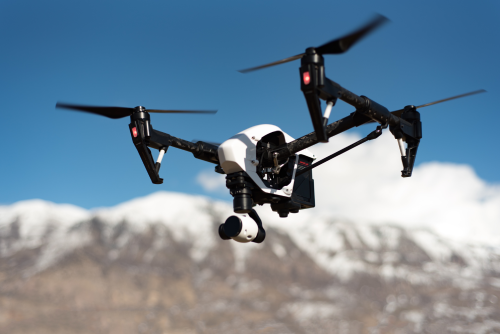
The L-3 Viking 400 is a fixed-wing military/ISR drone that appears in open-source reference material with a reported 10-hour endurance and 167 km/h top speed. That makes it most relevant to defense-focused readers, institutional evaluators, and researchers tracking unmanned aircraft programs rather than consumer drone buyers. Its importance is less about lifestyle flying and more about where it seems to sit in the broader class of persistent surveillance UAVs.
What makes the Viking 400 interesting is not just the limited data that exists, but what those few known figures imply. In the drone market, especially on the consumer side, products are usually easy to compare because manufacturers publish extensive specifications, accessory ecosystems, camera samples, and pricing. In the defense and institutional UAV space, that is often not the case. Publicly available information can be partial, outdated, customer-specific, or intentionally sparse. As a result, the Viking 400 is best approached not as a normal retail drone review candidate, but as a program-level reference aircraft whose significance lies in endurance, mission class, and procurement context.
Quick Summary Box
- Drone Name: L-3 Viking 400
- Brand: L-3
- Model: Viking 400
- Category: Military/ISR fixed-wing drone
- Best For: Institutional users and researchers assessing fixed-wing ISR platforms
- Price Range: Not publicly confirmed in supplied data
- Launch Year: Not publicly confirmed in supplied data
- Availability: Not publicly confirmed in supplied data
- Current Status: Unknown
- Overall Rating: Not rated due to limited confirmed data
- Our Verdict: A potentially capable mid-endurance ISR platform on paper, but public information is too limited to judge it as a transparent procurement option.
Introduction
The Viking 400 appears to be a U.S.-origin unmanned aircraft associated with L-3 and positioned in the military/ISR segment. In practical terms, that means it should be viewed as a mission-oriented fixed-wing system built for persistence and coverage rather than a consumer, creator, or hobby platform.
Readers should care about this model because even a small amount of confirmed data can still tell an important story. A 10-hour endurance figure immediately places the Viking 400 above short-flight multirotor classes, while the lack of broader public specs suggests a specialized, procurement-led aircraft with limited retail visibility. In the unmanned systems world, endurance is often one of the clearest signals of intended role: it affects how long a platform can watch an area, how much transit distance it can absorb before arriving on station, and how much operational value it can provide per sortie.
The Viking 400 is also a good reminder that open-source visibility and actual capability are not the same thing. Some platforms are heavily marketed, documented, and demonstrated in public. Others remain relatively obscure despite being operationally relevant in niche or government settings. That does not automatically make the Viking 400 more capable or less capable than better-known systems, but it does mean any serious evaluation has to separate confirmed facts from segment-based assumptions.
So this article should be read as a careful profile, not a fully conclusive review. Where the public record is thin, the right response is caution, not invention. Where the public record does provide credible indicators—such as endurance, speed, and category—we can still say quite a lot about the sort of mission space the Viking 400 likely occupies.
Overview
What kind of drone is it?
The Viking 400 is a fixed-wing drone listed under the military/ISR market segment. Fixed-wing aircraft in this category are generally valued for aerodynamic efficiency, longer time aloft, and better area coverage than multirotor drones, though they do not offer hover capability.
That basic classification matters more than it might seem. Fixed-wing UAVs are usually selected when an operator needs to cover distance, maintain station for extended periods, or support route-based observation rather than point inspection. In ISR roles, that often translates into missions such as perimeter watch, line-of-communication surveillance, border monitoring, maritime observation, training, or general reconnaissance over large areas.
Compared with consumer camera drones, fixed-wing systems typically involve a very different operating philosophy:
- They are optimized for forward flight, not stationary hovering.
- They often require more launch and recovery planning.
- They tend to be more useful for wide-area persistence than close-in precision positioning.
- Their value often depends as much on the sensor package, ground control system, and data link as on the airframe itself.
Because the Viking 400 is placed in the military/ISR category, the right lens is not “Is this a fun drone to fly?” but rather “What mission profile was this built to support, and how much of that profile can be verified?”
Who should buy it?
This is not a normal consumer purchase candidate based on the supplied data. The most suitable audience is:
- Government or defense-related evaluators
- Analysts comparing ISR platforms
- Researchers documenting U.S. unmanned aircraft programs
- Institutional teams seeking reference information on fixed-wing surveillance UAVs
A more practical way to frame that is this: the Viking 400 is relevant to people making programmatic decisions, not impulse purchase decisions. If you are comparing options for a public-safety unit, a military test program, a procurement shortlist, or a historical capability database, a model like this is worth noting. If you are a filmmaker, mapper, hobby pilot, or inspection contractor looking for a readily supported drone with transparent specs and retail channels, it is almost certainly not the right fit.
There is also a difference between a drone that can theoretically perform a mission and a drone that can be acquired, supported, certified, and integrated into a real organization. For institutional buyers, those downstream questions matter just as much as raw endurance.
What makes it different?
What stands out is the combination of:
- Reported endurance: 10 hours
- Reported top speed: 167 km/h
- Segment: Military/ISR
- Origin: USA
Those are modestly few data points, but they are meaningful ones. Ten hours of endurance is enough to separate the Viking 400 from short-duration aircraft and place it in a more persistent surveillance discussion. A 167 km/h top speed suggests the aircraft is not purely optimized for loiter at the expense of useful transit performance.
Just as important, the Viking 400 is unusual because so much remains unconfirmed in open-source material. That makes it more of a specialist reference platform than a well-documented commercial drone. In some cases, opacity can reflect defense procurement realities, customer-specific configurations, or a legacy product line that was never marketed openly. It can also make evaluation harder because the usual decision-making inputs—payload details, support terms, software ecosystem, launch method, and current availability—are not clearly visible.
In other words, what makes the Viking 400 different is not only its apparent endurance profile, but the fact that it sits in a category where public transparency is limited and due diligence matters more than marketing material.
Key Features
- Fixed-wing airframe intended for military/ISR use
- Reported 10-hour endurance
- Reported 167 km/h top speed
- U.S.-origin platform from L-3
- Likely optimized for efficient forward flight and area coverage rather than hover, based on its fixed-wing configuration
- Open-source specification coverage is limited, which suggests a procurement-oriented or niche platform rather than a mass-market product
- Payload, dimensions, range, and support details are not publicly confirmed in supplied data
Even this short list is enough to frame the Viking 400 in a useful way. It appears to be a platform where endurance is the headline value, speed is adequate for repositioning or transit, and the overall design intent is tied to surveillance-style mission utility rather than consumer-grade convenience. The missing items matter too: on a defense or institutional platform, what is absent from public documentation can be just as important as what is present.
For example, if the payload suite were confirmed to include stabilized EO/IR capability, secure datalinks, or modular sensor options, the Viking 400 would become much easier to place against tactical UAV peers. If instead it were a limited, single-payload, legacy design with narrow support availability, the procurement picture would look very different. That is why these “known unknowns” deserve emphasis rather than being glossed over.
Full Specifications Table
The table below reflects what is currently identifiable from the supplied record. It mixes confirmed information with fields that remain unverified in public-facing material, which is the most honest way to present the aircraft at this stage.
| Specification | Details |
|---|---|
| Brand | L-3 |
| Model | Viking 400 |
| Drone Type | Fixed-wing UAV |
| Country of Origin | USA |
| Manufacturer | L-3 |
| Year Introduced | Not publicly confirmed in supplied data |
| Status | Unknown |
| Use Case | military/ISR |
| Weight | Not publicly confirmed in supplied data |
| Dimensions (folded/unfolded) | Not publicly confirmed in supplied data |
| Max Takeoff Weight | Not publicly confirmed in supplied data |
| Battery Type | Not publicly confirmed in supplied data |
| Battery Capacity | Not publicly confirmed in supplied data |
| Flight Time | 10 hours |
| Charging Time | Not publicly confirmed in supplied data |
| Max Range | Not publicly confirmed in supplied data |
| Transmission System | Not publicly confirmed in supplied data |
| Top Speed | 167 km/h |
| Wind Resistance | Not publicly confirmed in supplied data |
| Navigation System | Not publicly confirmed in supplied data |
| Obstacle Avoidance | Not publicly confirmed in supplied data |
| Camera Resolution | Not publicly confirmed in supplied data |
| Video Resolution | Not publicly confirmed in supplied data |
| Frame Rates | Not publicly confirmed in supplied data |
| Sensor Size | Not publicly confirmed in supplied data |
| Gimbal | Not publicly confirmed in supplied data |
| Zoom | Not publicly confirmed in supplied data |
| Storage | Not publicly confirmed in supplied data |
| Controller Type | Not publicly confirmed in supplied data |
| App Support | Not publicly confirmed in supplied data |
| Autonomous Modes | Not publicly confirmed in supplied data |
| Payload Capacity | Not publicly confirmed in supplied data |
| Operating Temperature | Not publicly confirmed in supplied data |
| Water Resistance | Not publicly confirmed in supplied data |
| Noise Level | Not publicly confirmed in supplied data |
| Remote ID Support | Not publicly confirmed in supplied data |
| Geo-fencing | Not publicly confirmed in supplied data |
| Certifications | Not publicly confirmed in supplied data |
| MSRP / Launch Price | Not publicly confirmed in supplied data |
| Current Price | Not publicly confirmed in supplied data |
A table like this can look sparse, but it still serves a purpose. It shows clearly that the Viking 400 is not short on identity—it has a manufacturer, market segment, origin, endurance figure, and speed figure—but it is short on the kinds of technical details needed for a clean, procurement-ready assessment. That distinction matters.
Design and Build Quality
Because the supplied record confirms only the airframe type and a few performance figures, the Viking 400’s physical design has to be discussed carefully. What is known is that it is a fixed-wing military/ISR drone, which usually means the design priority is aerodynamic efficiency, stable forward flight, and longer loiter time rather than compact folding portability.
What is not publicly confirmed includes:
- Wingspan
- Length
- Weight
- Materials
- Foldability
- Launch method
- Recovery method
- Landing gear configuration
- Propulsion layout
Those are not small omissions. They directly affect how the aircraft is transported, how many people are needed to deploy it, what kind of field support it requires, and what kind of operational environments it can tolerate. For example, a hand-launched tactical UAV is a very different asset from a catapult-launched system, and both are very different from a runway-dependent aircraft. Without those details, the Viking 400 cannot be cleanly placed into a single tactical logistics profile.
That matters because those details would tell us whether the Viking 400 is closer to:
- a small tactical UAV with low support burden,
- a catapult-launched field system with dedicated ground gear,
- or a larger support-heavy aircraft with more infrastructure requirements.
Without them, the safest assessment is that this is a mission-built airframe with field utility in mind, but not a convenience-focused drone in the consumer sense.
From a build-quality perspective, fixed-wing ISR systems are typically judged on several criteria beyond simple airframe finish:
- Ease of field maintenance
- Component modularity
- Payload integration
- Launch/recovery survivability
- Transport burden
- Environmental durability
- Repairability under operational conditions
A military or institutional UAV can be “well built” in a way that looks very different from a premium consumer drone. It may be less polished cosmetically but better designed for repeated assembly, antenna changes, payload swapping, rough handling, or rapid parts replacement in the field. Likewise, a lightweight tactical UAV may intentionally prioritize low logistical burden over refined consumer-style industrial design.
None of those points are publicly documented in the supplied data for the Viking 400, so any buyer should verify them directly through official channels before treating it as deployable or supportable at scale.
There is also the question of sustainability of the design itself. On niche defense platforms, build quality is not just about the airframe on day one; it is about whether spares, maintenance instructions, firmware, test equipment, and operator training remain accessible years later. A drone can be mechanically capable and still become difficult to support if its supply chain is narrow or its product line is no longer actively maintained. Given the Viking 400’s unclear current status, that longer-term supportability question is especially important.
Flight Performance
The two confirmed performance figures are enough to draw a cautious first impression:
- Endurance: 10 hours
- Top speed: 167 km/h
Those numbers suggest the Viking 400 sits in a more persistent class than typical multirotor drones and is likely intended for broad-area observation or long on-station time. That is a meaningful strength in ISR contexts, where staying aloft often matters more than aggressive maneuvering.
A few careful takeaways:
- Endurance looks like the headline feature. Ten hours is substantial for many unmanned aircraft classes.
- Speed is respectable. A top speed of 167 km/h implies this is not a slow drifting platform, even if endurance appears to be the main story.
- Range remains unknown. Endurance alone does not tell you control radius or real mission coverage.
- Fixed-wing behavior is implied. As analysis rather than confirmed fact, it is reasonable to expect better transit efficiency than a multirotor but less flexibility in tight-space operations.
Endurance, however, is often misunderstood outside aviation contexts. A quoted endurance number is not always the same thing as practical mission endurance. Real-world sortie time can change depending on payload weight, weather, altitude, mission profile, reserve requirements, and how much time is spent climbing, transiting, and maneuvering instead of loitering. A ten-hour figure is still impressive, but institutional buyers would want to know under what conditions it was measured.
Similarly, top speed does not necessarily indicate normal operating speed. Many ISR aircraft spend much of their useful life at lower, more efficient cruise or loiter speeds where sensors work better and fuel or energy consumption is lower. So while 167 km/h is a useful capability indicator, it should not be read as the aircraft’s typical surveillance speed.
A few operational implications flow from the available numbers:
-
Transit and station time balance:
A drone with decent speed and long endurance can spend less of its sortie simply getting to the mission area. That makes it more useful for distributed surveillance tasks. -
Persistent observation potential:
Ten hours can support long-area watch missions, shift coverage, or repeated passes over routes and zones of interest, depending on payload and link limitations. -
Reduced launch frequency:
Longer endurance generally means fewer launch/recovery cycles to maintain coverage over time, which can reduce operational tempo and wear. -
Broader mission planning options:
A platform with long endurance can be used more flexibly for transit, loiter, retask, and return phases than one with only one or two hours aloft.
What cannot be determined from the current public record is equally important:
- Cruise speed
- Operational ceiling
- Climb rate
- Takeoff and landing distance, if applicable
- Wind tolerance
- Payload impact on endurance
- Propulsion type
- Lost-link and recovery behavior
- Communications-limited range versus fuel-limited range
Because wind resistance, ceiling, and navigation details are missing, it is not possible to rate real-world stability, link confidence, or weather tolerance. It is also not possible to say whether it is optimized for manual piloting, semi-autonomous missions, or fully planned routes.
For a military/ISR aircraft, these missing details are not side notes. They are central to whether the platform can operate in difficult terrain, coastal environments, high temperatures, or high-wind conditions. In that sense, the Viking 400’s flight performance profile is promising at a headline level but incomplete at the mission-readiness level.
Camera / Payload Performance
The Viking 400 is categorized as a military/ISR drone, so its payload value is likely tied to sensing and mission utility rather than traditional photo or cinematic output. That said, the supplied data does not confirm the payload type, camera resolution, stabilization system, sensor size, gimbal format, zoom capability, or recording options.
So the most honest assessment is simple: the Viking 400 may well be useful as an ISR carrier, but the actual payload package is unknown in the supplied data.
That uncertainty matters because in the ISR world, the payload is often the real product. The airframe provides endurance and coverage, but the payload determines what the operator can actually do with that time aloft. Depending on configuration, an ISR UAV might carry:
- EO daylight imaging sensors
- IR or thermal imaging sensors
- Stabilized turret payloads
- Wide-area observation systems
- Communications relay packages
- Mapping or survey payloads
- Signals-oriented mission equipment
- Mission-specific custom sensors
None of those should be assumed for the Viking 400 without official confirmation. Still, understanding the possibilities helps explain why a simple “camera resolution” question is not enough here. In institutional surveillance work, payload performance depends on things like:
- Stabilization quality
- Target identification distance
- Day/night usability
- Zoom effectiveness
- Geolocation accuracy
- Metadata tagging
- Video downlink reliability
- Interoperability with command systems
Before anyone evaluates this platform for surveillance, reconnaissance, or technical mission work, they would need to verify:
- EO/IR sensor availability
- Stabilization method
- Day/night capability
- Live video downlink options
- Metadata and geolocation support
- Payload swap options
- Total payload capacity
It is also important to note that payload capability affects more than imagery. It affects power draw, endurance, center of gravity, maintenance complexity, and total mission cost. A drone advertised with long endurance may see materially different sortie times once a heavier or more power-hungry sensor is installed. That is another reason why airframe-only performance figures are not enough for procurement decisions.
For general creators, filmmakers, and mapping buyers, there is not enough confirmed information to position the Viking 400 as a camera drone. Even if it could theoretically carry an optical payload, that would not make it a practical alternative to commercial drones designed for stabilized imaging, rapid deployment, and easy workflow integration.
Smart Features and Software
No specific onboard software, autonomy stack, or control application is publicly confirmed in the supplied data.
That means the following should all be treated as unconfirmed for the Viking 400:
- Return-to-home behavior
- Waypoint automation
- Mission planning suite
- AI target tracking
- Mapping workflows
- Cloud fleet tools
- SDK or API access
- Swarm or collaborative autonomy
- Geofencing
- Remote ID support
In the broader fixed-wing ISR category, waypoint-based autonomous flight and mission planning are common. However, that is only a segment-level observation, not a confirmed Viking 400 feature. Anyone considering the model for operational planning, fleet integration, or software interoperability should request official documentation rather than assuming standard features are present.
This section is especially important because modern UAV value increasingly depends on the software layer, not just the airframe. For a military or institutional operator, useful software capabilities might include:
- Pre-planned route generation
- Dynamic retasking in flight
- Lost-link procedures
- Payload cueing and pointing control
- Sensor-to-map integration
- Mission replay and debrief tools
- Multi-user control stations
- Encrypted or managed data links
- Interface compatibility with command systems
Again, none of these are confirmed here. But this is exactly why software transparency matters. Two drones with similar endurance can have very different real-world usefulness if one includes mature mission planning, reliable autonomy, and clean payload integration while the other requires more manual intervention or proprietary ground systems.
There is also the issue of training burden. Institutional software can range from highly polished to extremely specialized. If the Viking 400 depends on legacy or custom mission software, organizations may need additional operator training, IT support, and integration work. That can materially affect procurement value even when the aircraft itself appears capable.
So while it is reasonable to suspect some degree of autonomy in a fixed-wing ISR platform, it would be a mistake to score the Viking 400 positively or negatively on smart features without official evidence.
Use Cases
Based on the confirmed segment and airframe type, the most realistic use cases for the Viking 400 are:
- Military or government ISR observation
- Persistent fixed-wing surveillance over broad areas
- Institutional evaluation of tactical or mid-endurance UAV capability
- Program research and historical comparison of U.S. unmanned aircraft
- Training and familiarization within organizations that still support legacy fixed-wing UAV workflows
Because payload and support details are not confirmed, more specific mission claims would be speculative. Still, the broad use-case picture is clear enough to discuss in practical terms.
1. Persistent surveillance
This is the most obvious fit. A ten-hour endurance figure suggests the platform was likely intended for missions where time on station is critical. That could include route watch, perimeter monitoring, extended patrol patterns, or observation over areas too large for short-endurance drones to cover efficiently.
2. Tactical or institutional reconnaissance
Fixed-wing ISR drones often fill the gap between very small field-launched UAVs and larger, more infrastructure-heavy unmanned aircraft. If the Viking 400 sits in that middle zone, it may have been relevant as an option for organizations that needed more endurance than a mini-UAV but less complexity than a large theater-level system.
3. Research, documentation, and fleet comparison
Even if a buyer cannot or should not procure this platform directly, the Viking 400 still matters as a reference point. Researchers comparing U.S. unmanned systems, historical procurement trends, or the evolution of tactical ISR platforms may find it useful as part of a broader capability map.
4. Training and concept development
Some institutional systems remain useful as training or experimentation platforms even when they are no longer front-line procurement priorities. If support exists, a platform like the Viking 400 could hypothetically serve in familiarization, test, or concept demonstration roles. That said, such use would depend heavily on supportability and airworthiness status.
5. Mission architecture study
For analysts and planners, the Viking 400 may be valuable less as a flyable product and more as an example of how certain endurance and speed thresholds align with surveillance missions. In that sense, it helps illustrate the continuing relevance of fixed-wing UAVs in an era where multirotors dominate public attention.
What it is not well suited for, based on category alone, would include close urban inspection, precision hover tasks, filmmaking, casual recreation, or rapid point-to-point consumer workflows.
Pros and Cons
Pros
- Confirmed 10-hour endurance is the clearest strength
- Fixed-wing layout is generally well suited to efficient area coverage
- Reported 167 km/h top speed suggests useful transit performance
- U.S. defense-manufacturer origin may matter to institutional buyers
- Military/ISR classification points to mission-focused design rather than hobby-grade positioning
These positives matter most to buyers who evaluate UAVs by coverage, persistence, and mission relevance, not by app polish or content creation features. Even with limited public detail, the Viking 400’s endurance figure alone gives it more credibility than many lightly documented platforms.
Cons
- Payload and camera details are not publicly confirmed
- Current status is unknown
- Price is not publicly confirmed
- Range, ceiling, size, and weight are not publicly confirmed
- Software, autonomy, and support network details are not publicly confirmed
- Not an appropriate fit for most hobby, creator, or casual enterprise buyers
The most important downside is not that any one specification is missing, but that too many critical procurement variables remain unclear at once. A platform can still be operationally strong and publicly opaque, but that opacity significantly reduces confidence for outside evaluators.
Comparison With Other Models
Open-source detail for the Viking 400 is too thin for a perfect apples-to-apples comparison. The table below places it beside better-known fixed-wing ISR platforms in the same broad mission space.
| Model | Price | Flight Time | Camera or Payload | Range | Weight | Best For | Winner |
|---|---|---|---|---|---|---|---|
| L-3 Viking 400 | Not publicly confirmed in supplied data | 10 hr | ISR payload not publicly confirmed | Not publicly confirmed in supplied data | Not publicly confirmed in supplied data | Mid-endurance fixed-wing ISR evaluation | Balanced if endurance matters but details remain sparse |
| Insitu ScanEagle | Defense procurement; not typical retail | Public reporting commonly places it in a longer-endurance class than Viking 400 | Well-known ISR sensor role | Not directly comparable from supplied data | Small tactical fixed-wing class | Long-persistence surveillance | ScanEagle for public documentation and endurance reputation |
| Textron Shadow family | Defense procurement; not typical retail | Public reporting places it in a similar tactical endurance class, depending on variant | Tactical ISR payload role | Not directly comparable from supplied data | Larger tactical system class | Established tactical reconnaissance ecosystem | Shadow for program maturity and known ecosystem |
This kind of comparison is useful only if we stay honest about its limits. The Viking 400 is being compared against better-known systems not because they are identical, but because they sit in adjacent mission territory: tactical or institutional fixed-wing ISR, longer endurance than hobby drones, and procurement-led rather than retail-led acquisition.
Viking 400 vs a close competitor
Against Insitu ScanEagle, the Viking 400 looks less documented in public sources. ScanEagle benefits from stronger public visibility and a widely recognized endurance reputation, while the Viking 400’s confirmed numbers still place it in a serious ISR band.
The key distinction here is ecosystem confidence. A more publicly documented program tends to be easier to evaluate in terms of payload options, operational history, training, launch and recovery method, and sustainment maturity. The Viking 400 may or may not compare well technically, but from an outside evaluator’s perspective, it is harder to score because fewer variables are visible.
Viking 400 vs an alternative in the same segment
Compared with the Shadow family, the Viking 400 appears harder to evaluate because its payload, size, and support footprint are not openly defined in the supplied data. Shadow is the better-known reference point if a buyer wants a more documented tactical fixed-wing benchmark.
This does not automatically mean Shadow is “better” in all respects. It simply means there is more public material to work with when discussing mission roles, operational use, and support expectations. In procurement analysis, transparency itself has value.
Viking 400 vs an older or previous-generation option
A clearly documented earlier Viking-series predecessor is not publicly confirmed in the supplied data, so a clean generation-to-generation comparison is not possible here.
What this comparison really tells us
The comparison section mainly highlights three things:
- The Viking 400 belongs in a serious ISR discussion, not a consumer-drone discussion.
- Its known performance figures are credible enough to matter.
- Its public documentation is too thin to let it compete cleanly with better-known benchmarks on paper.
That is often the case with specialized defense-linked aircraft: the capability may be real, but outside buyers and researchers still need enough verified detail to form a confident judgment.
Manufacturer Details
L-3 is a U.S. defense and aerospace name associated with communications, avionics, mission systems, ISR technologies, training systems, and related government-focused products. Historically, L-3 Communications was formed in 1997 and later evolved into L3 Technologies before merging with Harris to form L3Harris.
For this drone entry, the brand and manufacturer are both listed as L-3, so there is no practical difference between the two labels in the supplied record. What matters for buyers is that this is not a mainstream consumer drone brand. L-3’s reputation has traditionally been tied to defense electronics and mission systems rather than retail UAV sales.
That background fits the Viking 400’s profile: specialized, mission-oriented, and not heavily exposed through consumer-facing spec sheets.
This manufacturer context also affects how readers should interpret the absence of normal retail information. A consumer drone company usually publishes product pages, app details, accessory lists, and direct purchase options. A defense-oriented manufacturer may instead work through contracts, tenders, classified requirements, customer briefings, and system integration channels. In that environment, public-facing marketing can be minimal or uneven.
Corporate history can matter too. When companies merge, rename, or reorganize, product documentation can become harder to trace, especially for legacy systems. Support responsibility may shift, old product pages may disappear, and public references may remain online without reflecting current status. For the Viking 400, that means researchers should be careful not to assume that every historical L-3 reference reflects present-day procurement or support conditions.
Support and Service Providers
Support details for the Viking 400 are not publicly confirmed in supplied data. That is a major consideration for any serious buyer.
For a platform in this category, support normally needs to be checked across several areas:
- Official manufacturer support channels
- Current corporate successor support if the product is legacy
- Spare parts access
- Payload servicing
- Software and control-station support
- Airworthiness or field-maintenance procedures
- Regional service availability
Because the model’s status is unknown, post-sale support may depend on legacy contracts, program-specific sustainment, or region-limited defense service arrangements rather than open commercial repair centers. Buyers should verify official support channels and current service coverage before budgeting around the aircraft.
Support in this segment should also be understood broadly. It is not just “Can someone repair the airframe?” It includes:
- Operator and maintainer training
- Technical manuals and revision control
- Firmware and software updates
- Battery, fuel, or propulsion support
- Ground station replacement parts
- Antenna and datalink maintenance
- Payload calibration and repair
- Depot-level overhaul options
- Cybersecurity and data-system management where applicable
A drone can look attractive in performance terms and still become a poor acquisition if sustainment is weak. In fixed-wing ISR operations, downtime can be caused not just by airframe wear, but by failures in ground control hardware, sensor turrets, antennas, power systems, or datalink equipment. That is why institutional buyers often judge supportability as seriously as flight performance.
Anyone exploring the Viking 400 should ask direct questions such as:
- Is the aircraft still actively supported?
- Are spare parts stocked?
- Are payload options still serviceable?
- Is training available for new operators?
- Is software maintained and compatible with current systems?
- Are there approved repair providers?
- Are there export or end-user restrictions?
Without those answers, even a capable aircraft may be impractical to field.
Where to Buy
The Viking 400 does not appear to be a normal consumer retail drone. Based on its segment and the limited public record, any acquisition path would more likely involve:
- Official manufacturer inquiry
- Government or defense procurement channels
- Authorized integrators
- Regional distributors handling institutional sales
Public e-commerce availability is not confirmed. Secondary-market availability is also not clearly documented in the supplied data. For most readers, this is best understood as a restricted or specialist procurement platform rather than something bought off a standard drone storefront.
That distinction changes the buying process substantially. A likely acquisition path for a drone in this class may involve:
- request-for-information or tender documentation,
- direct vendor engagement,
- capability briefings,
- contract negotiation,
- support package review,
- end-use verification,
- and potentially compliance checks tied to government or defense procurement.
Even if a used or surplus unit were to appear through unofficial channels, that would not automatically make it a sensible purchase. For institutional UAVs, the airframe itself is only one part of the system. Missing control stations, software licenses, support tools, payload components, or maintenance documentation can make a nominally available aircraft far less usable than it appears.
So for practical purposes, “where to buy” here really means who can legally and credibly support a full system acquisition.
Price and Cost Breakdown
There is no publicly confirmed launch price or current price in the supplied data.
That means budgeting for the Viking 400 should go beyond the air vehicle itself and verify the total program cost, which may include:
- Air vehicle unit cost
- Ground control equipment
- Mission payload configuration
- Antennas and data-link hardware
- Batteries, power systems, or propulsion consumables
- Spares and repair inventory
- Training
- Documentation and sustainment
- Software or mission-planning tools, if applicable
- Insurance and compliance costs where relevant
In short, this is not a model where a simple sticker price tells the full story. Prospective buyers should treat it as a request-for-information purchase, not a shelf-priced drone.
Defense and institutional UAV costs are often shaped by factors that do not show up in a typical consumer purchase:
- How many air vehicles are included in the package
- Whether payloads are bundled or separate
- Whether launch/recovery hardware is required
- Whether long-range communications equipment is included
- Whether the price includes operator training
- Whether support is contract-based
- Whether the buyer needs integration services
- Whether the system is active production or legacy sustainment
This means two organizations could spend very different amounts on what is nominally “the same” platform depending on mission package, training needs, and support arrangements.
For analysts and procurement planners, the right financial question is usually not “What does the drone cost?” but “What does it cost to make this aircraft operationally useful over time?” Without that larger framing, price comparisons in this segment can be misleading.
Regulations and Compliance
For civilian readers, the Viking 400 should not be assumed to have consumer-style compliance features. The supplied data does not confirm:
- Remote ID support
- Geofencing
- Civil certifications
- Weight class
- Operational category approvals
As a practical rule:
- Registration requirements may apply depending on jurisdiction
- Commercial operation may require licensing or operator certification
- Fixed-wing operation typically demands more space and stricter site planning than small multirotors
- BVLOS or extended-range use usually requires specific approval
- Privacy, surveillance, and data-handling rules remain important
- Export, procurement, and end-user restrictions may apply because the platform is defense-linked
Military or government use can sit under different legal frameworks than civilian drone flying, so readers should verify local law and procurement rules rather than assuming universal compliance.
This section is especially important because a drone’s intended market does not automatically determine how it may be used in every jurisdiction. A defense-linked UAV might still face strict civil aviation limits if operated by a research institution, contractor, or non-military public body. Fixed-wing aircraft also tend to raise additional operational planning issues such as launch footprint, recovery zones, and deconfliction with other airspace users.
For organizations considering any specialist UAV, regulatory review should include:
- airspace permissions,
- operator certification,
- spectrum use for datalinks,
- payload and imaging rules,
- data retention and privacy policy,
- and any import/export controls tied to the system.
Because the Viking 400’s public compliance profile is undefined, it should not be assumed to be turnkey for civilian institutional deployment.
Who Should Buy This Drone?
Best for
- Defense or government evaluators studying fixed-wing ISR options
- Researchers documenting U.S. unmanned aircraft programs
- Institutions comparing endurance-focused surveillance UAVs
- Buyers who can obtain direct manufacturer clarification on payload, support, and procurement status
The common thread here is access to official clarification. If your organization can request real documentation, validate supportability, and assess the aircraft within a formal evaluation process, then the Viking 400 may be worth deeper investigation. In that context, the limited public profile is a challenge, but not necessarily a deal-breaker.
Not ideal for
- Hobby pilots
- Aerial photographers or filmmakers
- Inspection teams that need hover capability
- Buyers who need transparent retail pricing and open specifications
- Organizations that cannot support a specialist or possibly legacy platform
The common thread on the “not ideal” side is the need for simplicity, transparency, and ease of deployment. If your workflow depends on quick purchase decisions, app-based operation, readily available accessories, or broad third-party support, this is the wrong kind of aircraft to prioritize.
A useful rule of thumb is this: if your buying decision starts with “What camera does it have?” or “Can I order one online?” then the Viking 400 is probably outside your ideal market. If instead your questions start with “How do we sustain it?” “How does it fit our mission architecture?” and “What is the official support path?” then it becomes more relevant.
Final Verdict
The L-3 Viking 400 is interesting because the few confirmed numbers are meaningful. A 10-hour endurance rating and 167 km/h top speed suggest a credible fixed-wing ISR platform rather than a lightweight hobby aircraft or short-duration multirotor substitute.
The drawback is obvious: too much remains unknown. Payload details, range, size, launch method, support network, pricing, and even current status are not publicly confirmed in the supplied data. That makes the Viking 400 a useful reference entry and a potentially serious defense-platform candidate, but not a transparent, easy-to-assess purchase.
What we can say with confidence is that this aircraft belongs in the conversation about persistent surveillance UAVs, not consumer drones. The endurance figure alone gives it significance. What we cannot say—at least not responsibly from the available public record—is whether it offers the payload quality, software maturity, supportability, and procurement viability needed to recommend it as a practical acquisition today.
If you are a researcher, analyst, or institutional buyer with access to official program information, the Viking 400 is worth a closer look. If you need a clearly documented drone with retail visibility, known support, and confirmed payload specs, this model is too opaque and too specialized to recommend without direct verification from the manufacturer or authorized channels.
In other words, the Viking 400 looks meaningful on paper, but paper is not enough. For this platform, the difference between “interesting” and “viable” lies entirely in what can be confirmed beyond the open-source record.
