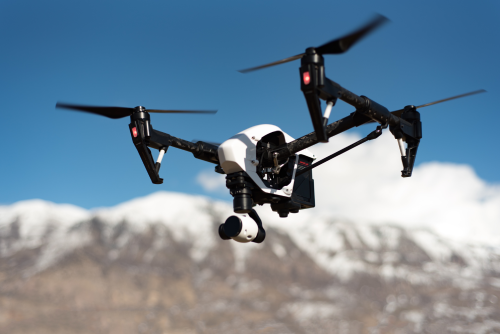
Northrop Grumman Fire Scout (MQ-8C) is an active military VTOL unmanned helicopter built for organizations that need vertical takeoff capability, hover performance, and far longer reach than a typical commercial drone. Based on the supplied data, its headline figures are 12 hours of endurance, 2,272 km of range, and 250 km/h top speed. That makes it relevant less as a retail buying option and more as a high-end reference point for defense, aerospace, and unmanned-systems comparisons.
Unlike the drones most buyers encounter online, the MQ-8C is not designed around ease of transport, fast battery swaps, social-media footage, or casual enterprise deployment. It belongs to a category where the aircraft is only one part of a broader operational system that may include trained operators, maintainers, mission planners, support contracts, approved payloads, and tightly controlled procurement pathways. In other words, it is a platform evaluated through mission effectiveness and sustainment planning, not just checklist specs.
That distinction matters. Plenty of drone comparisons flatten the market into one broad “best drone” conversation, but the Fire Scout sits far outside that usual buying logic. It is not trying to compete with consumer quadcopters, inspection drones, mapping aircraft, or even many standard enterprise VTOL systems. It is a military unmanned helicopter, and its importance comes from what that form factor allows: runway-independent operations, stable hover, persistent presence over an area, and the ability to operate in roles where a short-flight electric drone would be unusable or economically inefficient.
The supplied data also makes the MQ-8C a useful benchmark. Even when buyers cannot directly procure it, analysts, journalists, and institutional researchers may still look to it as a reference point for what a modern unmanned rotorcraft program aims to deliver. In that sense, the Fire Scout is often more valuable as a category-defining comparison tool than as a conventional “product page” purchase candidate.
Quick Summary Box
- Drone Name: Northrop Grumman Fire Scout (MQ-8C)
- Brand: Northrop Grumman
- Model: Fire Scout (MQ-8C)
- Category: military/VTOL
- Best For: Defense and government users needing a large VTOL unmanned helicopter for long-endurance missions
- Price Range: Not publicly confirmed in supplied data
- Launch Year: Not publicly confirmed in supplied data
- Availability: Restricted procurement; public retail availability not publicly confirmed in supplied data
- Current Status: Active
- Overall Rating: Not rated due to limited confirmed data
- Our Verdict: A serious military VTOL platform with strong published endurance, range, and speed figures, but not a normal retail drone and not well suited to public price-led shopping comparisons
Introduction
The Fire Scout (MQ-8C) is a Northrop Grumman military VTOL drone in the unmanned helicopter class. It serves the defense side of the market rather than consumer, creator, or standard enterprise buyers, and its value is tied to runway-independent operations, persistence, and mission flexibility. Readers should care about it because it represents a very different category of drone from small electric multirotors: larger scale, contract-driven support, and performance shaped by defense requirements rather than hobby or camera-first use.
That difference is more than cosmetic. A small commercial drone is often judged by camera quality, simplicity of operation, portability, app polish, and sticker price. A military VTOL platform like the MQ-8C is judged by how reliably it can support missions over time, how well it integrates into command-and-control frameworks, how effectively it can carry and power mission payloads, and how manageable it is across training, logistics, maintenance, and sustainment cycles. Even when open-source information is limited, those priorities help explain why this aircraft matters.
The Fire Scout also sits in an interesting middle ground within the unmanned-aircraft world. Fixed-wing drones often dominate conversations about range and endurance, while multirotors dominate discussions about hover and access to tight spaces. A helicopter-type unmanned aircraft combines some of the operational strengths of both categories: it can take off and land vertically without a runway, yet it also offers performance characteristics that go well beyond the short mission windows of many small vertical-lift drones. That makes it highly relevant for defense users who need persistent presence without relying on conventional airfields.
Another reason to pay attention to the MQ-8C is that it illustrates how different “drone” can mean depending on context. The same word covers toy quadcopters, cinema platforms, crop-spraying aircraft, mapping systems, autonomous cargo vehicles, and military unmanned helicopters. The Fire Scout reminds readers that any serious comparison must begin with mission class. Without that, it is too easy to compare fundamentally different platforms as if they were interchangeable.
Because the supplied data does not publicly confirm every detail, this article keeps its claims conservative. Where facts are not confirmed, they are treated as unknown rather than guessed. That approach is especially important in the defense sector, where public information may be partial, configuration-specific, or restricted.
Overview
What kind of drone is it?
The Fire Scout (MQ-8C) is a helicopter-type unmanned aircraft in the military/VTOL segment. Unlike fixed-wing drones, a helicopter airframe can take off and land vertically and hold a hover, which is useful when runway access is limited. Compared with consumer quadcopters, it sits in a much larger and more specialized class.
This means the aircraft should not be thought of as “a bigger camera drone.” It belongs to a distinct operational category with different design assumptions. A helicopter-style unmanned aircraft is built to perform tasks that reward vertical access, stable station-keeping, and flexible launch-and-recovery options. That can make it especially useful in locations where infrastructure is constrained, where missions may start from nontraditional operating areas, or where the ability to hover is itself mission-critical.
It is also important to distinguish this class from small electric VTOL drones that combine wings and rotors for enterprise mapping or survey work. The Fire Scout is not positioned as a lightweight hybrid aircraft for civil workflow efficiency. It is a military rotorcraft platform, and its role is better understood through ISR, wide-area observation, operational flexibility, and defense mission support.
From a market perspective, the MQ-8C occupies an area that most public buyers never enter. Its existence is relevant to analysts and institutional readers precisely because it shows what large-scale unmanned rotorcraft can look like when designed around government and defense requirements rather than commercial convenience.
Who should buy it?
This is not a consumer purchase. The most realistic audience includes:
- Defense and government procurement teams
- Aerospace and autonomy researchers
- Journalists covering military drone programs
- Analysts comparing unmanned rotorcraft platforms
- Institutions studying VTOL ISR and long-endurance unmanned aviation
Even within that audience, “buy” may not always be the right verb. In many cases, the more relevant activities are evaluation, procurement planning, fleet comparison, doctrine development, or research analysis rather than direct shopping. A defense agency or government program office may be assessing how the MQ-8C fits into a broader unmanned systems strategy. An academic lab may be using it as a case study in autonomous rotorcraft design. A journalist may need to understand where it sits relative to fixed-wing ISR systems or smaller VTOL options.
The key point is that the Fire Scout is aimed at organizations with formal acquisition pathways, mission requirements, and support capacity. If a user does not have access to structured training, maintenance frameworks, operational approval, and long-term sustainment planning, this platform is outside the realistic buying universe.
What makes it different?
What stands out from the supplied data is the combination of:
- Helicopter-style VTOL capability
- 12-hour endurance
- 2,272 km stated range
- 250 km/h maximum speed
- Active program status
- Backing from a major U.S. defense manufacturer
That mix suggests a platform built for persistence and reach, not just short-range hovering.
The most important difference is not any single number in isolation, but the way the numbers work together. A helicopter aircraft can hover, take off vertically, and avoid runway dependence. Endurance extends how long it can remain useful without recovery. Range speaks to operating scale and transit potential. Speed affects how quickly it can reposition or respond to changing mission needs. Put together, those characteristics suggest a platform designed for real operational flexibility rather than niche demonstration capability.
Another differentiator is that it remains active. In military aerospace, “active” matters because it implies that the aircraft is more than a historical reference or a canceled concept. It indicates continuing relevance in discussions about unmanned VTOL capability, even if program specifics vary by operator and configuration.
Finally, Northrop Grumman’s role matters. A major defense manufacturer brings program-management depth, system-integration experience, and long-term support expectations that are very different from those of small drone startups or commodity commercial brands. For institutional buyers, that can weigh heavily in any assessment of program credibility and sustainment confidence.
Key Features
- Helicopter airframe for vertical takeoff, landing, and hover
- Military VTOL platform positioning
- Active status rather than discontinued or prototype-only status
- Up to 12 hours endurance based on supplied data
- Up to 2,272 km range based on supplied data
- Up to 250 km/h top speed based on supplied data
- Built by Northrop Grumman, a major U.S. aerospace and defense company
- Likely suited to runway-independent missions where persistent airborne presence matters
- Payload, sensor, and software details are not publicly confirmed in the supplied data
Those bullet points cover the high-level picture, but each one has operational meaning.
A helicopter airframe changes deployment possibilities. Unlike fixed-wing aircraft that need launch systems, runways, or recovery equipment, a rotorcraft can work from more constrained operating sites. That makes mission planning more flexible, especially in environments where infrastructure is limited or contested.
The 12-hour endurance figure is particularly notable because vertical-lift aircraft typically face tradeoffs in efficiency. Long endurance combined with VTOL suggests a platform intended to stay useful across lengthy mission windows rather than merely arrive on station, hover briefly, and recover.
The 2,272 km range figure indicates a scale of operation far beyond local-area commercial drone missions. Even if actual usable mission radius depends on payloads, control architecture, and safety margins, the published figure signals a system designed for substantial reach.
The 250 km/h maximum speed matters because range alone does not guarantee responsiveness. Speed affects how rapidly the aircraft can reposition, how efficiently it can cover distance before entering a holding pattern, and how much mission time is lost to transit.
The fact that payload, sensor, and software details are not publicly confirmed is also itself a key feature of how this platform must be evaluated. In military systems, the airframe may be highly capable, but mission value is closely tied to what it carries, how it communicates, and how it is integrated into larger operational workflows. That means open-source comparisons should remain cautious.
Full Specifications Table
| Specification | Details |
|---|---|
| Brand | Northrop Grumman |
| Model | Fire Scout (MQ-8C) |
| Drone Type | Military VTOL unmanned helicopter |
| Country of Origin | USA |
| Manufacturer | Northrop Grumman |
| Year Introduced | Not publicly confirmed in supplied data |
| Status | Active |
| Use Case | Military VTOL / defense observation |
| Weight | Not publicly confirmed in supplied data |
| Dimensions (folded/unfolded) | Not publicly confirmed in supplied data |
| Max Takeoff Weight | Not publicly confirmed in supplied data |
| Battery Type | Not publicly confirmed in supplied data |
| Battery Capacity | Not publicly confirmed in supplied data |
| Flight Time | 12 hr |
| Charging Time | Not publicly confirmed in supplied data |
| Max Range | 2,272 km |
| Transmission System | Not publicly confirmed in supplied data |
| Top Speed | 250 km/h |
| Wind Resistance | Not publicly confirmed in supplied data |
| Navigation System | Not publicly confirmed in supplied data |
| Obstacle Avoidance | Not publicly confirmed in supplied data |
| Camera Resolution | Not publicly confirmed in supplied data |
| Video Resolution | Not publicly confirmed in supplied data |
| Frame Rates | Not publicly confirmed in supplied data |
| Sensor Size | Not publicly confirmed in supplied data |
| Gimbal | Not publicly confirmed in supplied data |
| Zoom | Not publicly confirmed in supplied data |
| Storage | Not publicly confirmed in supplied data |
| Controller Type | Not publicly confirmed in supplied data |
| App Support | Not publicly confirmed in supplied data |
| Autonomous Modes | Not publicly confirmed in supplied data |
| Payload Capacity | Not publicly confirmed in supplied data |
| Operating Temperature | Not publicly confirmed in supplied data |
| Water Resistance | Not publicly confirmed in supplied data |
| Noise Level | Not publicly confirmed in supplied data |
| Remote ID Support | Not publicly confirmed in supplied data |
| Geo-fencing | Not publicly confirmed in supplied data |
| Certifications | Not publicly confirmed in supplied data |
| MSRP / Launch Price | Not publicly confirmed in supplied data |
| Current Price | Not publicly confirmed in supplied data |
The table above is intentionally conservative. For readers used to consumer drone spec sheets, it may seem unusually sparse, but that reflects the reality of evaluating military aircraft from limited public data. In this class, missing information is not unusual, and it does not automatically imply weakness. It simply means that open-source reviewers should avoid overstating certainty.
The most useful way to read this table is to separate confirmed high-level performance figures from unknown configuration details. Endurance, range, speed, category, and status provide a meaningful top-line profile. By contrast, details such as payload fit, avionics, navigation architecture, weather tolerance, and software ecosystem require official documentation or authorized program-level data.
For analysts, that distinction is important because many real-world comparisons fail when they mix confirmed public numbers from one system with estimated or rumored figures from another. The result is often misleading. With the MQ-8C, a disciplined reading of the data is the better approach: use the known figures to define the aircraft’s class and mission intent, then treat unconfirmed specifics as open questions.
Design and Build Quality
The Fire Scout (MQ-8C) should be understood as a mission aircraft, not a portable gadget drone. Because it uses a helicopter-type airframe, the design priorities are likely vertical recovery, hover stability, service access, and sustained outdoor operation rather than foldability or hand-carry convenience.
From a build-quality perspective, platforms in this class are usually judged by field readiness and maintainability, not by pocketability or creator-focused ergonomics. A military VTOL helicopter also implies a more complex mechanical layout than a simple electric quadcopter, with stronger emphasis on trained maintenance, scheduled servicing, and support infrastructure. The exact materials, landing gear design, service intervals, and transport dimensions are not publicly confirmed in the supplied data.
That context changes what “quality” means. In consumer drones, build quality often refers to finish, fit and feel, portability, and resistance to minor travel abuse. In military unmanned aircraft, build quality is more about operational durability, supportability, systems integration, and the ability to keep the platform mission-capable under structured maintenance regimes. It is less about how refined the shell looks and more about whether the aircraft can repeatedly deliver in harsh real-world conditions.
The helicopter configuration likely brings a heavier emphasis on mechanical reliability and inspection discipline. Rotor systems, drive elements, vibration management, and field support all tend to matter more in rotorcraft than in simple multirotors. That does not make the aircraft fragile; it means the maintenance model is more formal and the system is expected to be handled by trained teams rather than casual operators.
There is also an infrastructure dimension to design. A platform like this is rarely just an aircraft stored in a backpack or vehicle trunk. It is part of a broader operating setup that may include transport arrangements, spares, support tools, mission equipment, and crew procedures. When procurement teams assess design quality, they are often assessing the entire support concept, not just the airframe itself.
In short, the Fire Scout’s design should be judged by aerospace and defense standards: mission suitability, serviceability, and operational integration. That is a very different lens from the one used for retail drones, and it is the correct one here.
Flight Performance
On headline numbers alone, the Fire Scout (MQ-8C) looks like a high-end endurance platform. A stated 12-hour endurance is strong for a VTOL aircraft, while 250 km/h top speed suggests faster repositioning than most small multirotors. The listed 2,272 km range also points to a platform built for large-area missions rather than local short-hop flights.
As analysis rather than newly claimed fact, a helicopter configuration generally brings a few practical flight traits:
- Vertical takeoff and landing without runway dependence
- Hover capability for persistent observation
- Better suitability for outdoor missions than small hobby drones
- Less relevance for indoor flying or casual recreational use
Exact wind handling, service ceiling, control-link architecture, and real-world mission radius are not publicly confirmed in the supplied data. In practice, actual usable range will depend on payload fit, fuel or power management, mission profile, safety margins, and the communications setup authorized for the operator.
These numbers matter because flight performance in this class is not just about impressive statistics. It shapes what missions are possible. A 12-hour endurance figure implies the ability to maintain presence over time without constant rotation of aircraft. That reduces operational churn and may simplify mission scheduling. If a system can stay aloft longer, the organization may need fewer launch-and-recovery cycles to cover a given window of interest.
The 250 km/h top speed adds another layer of usefulness. A platform that can move quickly is not only better at transit; it can also adapt faster to updated tasking. In real operations, being able to shift to a new area promptly can matter almost as much as endurance once on station. Speed helps preserve useful mission time because less of the sortie may be spent simply getting into position.
The 2,272 km range figure is perhaps the most misunderstood type of spec in public comparisons. Range is not always the same thing as practical mission radius. It may depend on route profile, payload, reserve planning, communications architecture, and other constraints. Still, even with those caveats, the number indicates a platform designed around significant reach rather than localized operation.
Hover capability also deserves emphasis. Fixed-wing drones may offer excellent efficiency, but they cannot simply pause in space over an area of interest. A helicopter-type aircraft can. That can be valuable for observation, target monitoring, maritime watch, and any role where holding a precise position or limited area matters. The tradeoff is that vertical-lift aircraft often face efficiency challenges compared with pure fixed-wing platforms, which makes long endurance even more notable here.
Because many detailed flight-envelope characteristics are not publicly confirmed, buyers and analysts should be careful about over-interpreting the headline metrics. The Fire Scout clearly belongs to a serious operational class, but exact performance under specific payload, climate, and mission conditions requires official information.
Camera / Payload Performance
The supplied data does not publicly confirm the Fire Scout (MQ-8C) camera system or payload package. That matters, because for a military VTOL drone the payload often determines the mission value just as much as the airframe does.
What can be said responsibly is this:
- The airframe is positioned for mission payload work rather than consumer photography
- Hover capability can be valuable for observation-oriented roles
- Long endurance increases the usefulness of whatever sensor package is fitted
- Buyers should not assume a specific EO/IR, radar, laser, or multi-sensor configuration from this page alone
For researchers and comparison shoppers in the defense sector, the key takeaway is that the MQ-8C appears to be a capable carrier platform, but the exact surveillance, imaging, or sensing performance depends on configuration details not confirmed here.
This is one of the most important limitations in any public review of a military UAS. A consumer drone can often be assessed fairly well from its integrated camera, gimbal, codec, and obstacle-sensing system because those are fixed and central to its value. A military aircraft may instead be valuable because it can host different payloads for different missions. In that context, the airframe is only part of the story.
The ability to remain airborne for a long period can dramatically increase the usefulness of a sensor, regardless of whether that sensor is optical, infrared, radar-based, or multi-mode. A modest sensor on a persistent aircraft may be more operationally valuable than a stronger sensor on a short-endurance platform that must frequently recover. Endurance, therefore, is not just an airframe metric; it affects payload effectiveness.
Hover performance can also enhance payload utility. Stable loiter over a point or area can support closer inspection, repeated observation angles, and mission flexibility that fixed-wing or faster-pass platforms may struggle to match. For surveillance and observation roles, that can be a practical advantage.
Still, without confirmed payload data, this article should not be read as a statement about exact imaging quality, tracking ability, target identification range, or sensor fusion performance. Those questions are central to real-world value, but they cannot be answered confidently from the supplied information alone.
Smart Features and Software
Specific software features are not publicly confirmed in the supplied data. That includes items such as:
- Return to home
- Waypoint mission lists
- AI tracking
- Mapping workflows
- SDK or API access
- Mobile app support
- Fleet cloud tools
- Obstacle avoidance logic
- Consumer-style flight modes
In this class, it is more realistic to expect ground-control and mission-management systems than smartphone-centered flying apps, but the exact software environment should be verified through official program documentation. Readers should also avoid assuming consumer features like geofencing or Remote ID support, since those details are not confirmed here and military systems often sit under different operational frameworks.
This section can be easy to underestimate because retail drone marketing trains buyers to focus on visible software features: one-tap modes, automated editing, follow-me tracking, and app usability. Military systems are typically evaluated very differently. The relevant software questions are more likely to involve command and control, mission planning, redundancy, data handling, operator workload, integration with authorized networks, and support for specific operational procedures.
That does not mean the Fire Scout lacks advanced software. It means public-facing consumer terminology may not be the right framework. A military unmanned aircraft may include robust autonomy, mission scripting, sensor-tasking support, and sophisticated control interfaces without presenting any of that in the familiar language of consumer apps.
It is also worth noting that software maturity in this class is inseparable from support. A feature is only as useful as its reliability, documentation, training pathway, and sustainment plan. For institutional users, software is part of a lifecycle commitment, not just a launch-day capability list.
Because the exact software environment is not publicly confirmed in the supplied data, the responsible conclusion is simple: treat the MQ-8C as a platform likely supported by dedicated mission-management tools, but do not assume consumer-style functionality, mobile ecosystem compatibility, or open developer access without official confirmation.
Use Cases
The most realistic use cases for the Fire Scout (MQ-8C) are tied to its military VTOL role and long-endurance profile.
- Defense observation and ISR missions where vertical takeoff and landing are important
- Long-duration monitoring over wide operating areas
- Operations from constrained launch and recovery locations without runways
- Government or defense test, evaluation, and training environments for unmanned rotorcraft
- Fleet and program analysis by institutions comparing larger VTOL unmanned systems
- Mission sets where hover capability matters more than fixed-wing-only cruise efficiency
These use cases are best understood through capability fit rather than broad “best drone for X” language. If a mission values persistent airborne presence and does not guarantee runway infrastructure, the MQ-8C class becomes much more compelling. If the mission instead values low cost, portability, or simplified civil workflows, it becomes much less relevant.
Long-duration observation is one of the clearest conceptual fits. A platform that can remain airborne for extended periods can reduce the frequency of launch-and-recovery turnover and may provide more stable coverage of an area over time. Hover capability supports closer inspection or persistent watch over fixed points of interest.
Constrained operating environments are another logical match. Vertical takeoff and landing can matter when launch space is limited or where conventional fixed-wing infrastructure is not available. Even without getting into specific doctrines or deployment patterns, that kind of flexibility is central to why unmanned helicopters exist.
The Fire Scout is also meaningful as a test and evaluation reference. Institutions studying unmanned rotorcraft can look at it as an example of how endurance, VTOL, and speed are balanced in a defense-grade system. That research value exists even when the reader is not a direct buyer.
Finally, the aircraft can serve as a comparative benchmark in broader unmanned-system planning. Program managers often need to understand not only what they intend to buy, but what capability band they are comparing against. In that role, the MQ-8C functions as a useful anchor point in the larger discussion about military VTOL UAS.
Pros and Cons
Pros
- Helicopter-style VTOL architecture removes the need for a conventional runway
- 12-hour endurance is a strong published figure for a VTOL platform
- 2,272 km stated range suggests large-area mission potential
- 250 km/h top speed supports faster transit than many smaller drone classes
- Active program status is more reassuring than purely legacy or prototype-only platforms
- Built by Northrop Grumman, a major aerospace and defense manufacturer
These advantages are not abstract. They directly influence mission utility. VTOL reduces dependence on infrastructure. Endurance reduces mission turnover. Range expands operational possibilities. Speed improves responsiveness. Active program status indicates continuing relevance. Major-manufacturer backing increases confidence in industrial capability and long-term support potential.
Taken together, the advantages point to a system designed for organizations that prioritize mission persistence and operational flexibility over simplicity or low acquisition friction.
Cons
- Many important specs are not publicly confirmed in the supplied data
- Camera and payload details are not confirmed, limiting direct mission comparison
- Price is not publicly confirmed, so budgeting is difficult from open sources alone
- Not a consumer or standard commercial retail drone
- Support, repair, and procurement are likely contract-driven rather than open-market
- Far less transparent to compare than mainstream enterprise drones
These drawbacks are significant for public-facing comparison purposes. The biggest issue is not necessarily that the aircraft lacks capability, but that many details needed for side-by-side evaluation are not openly available. That makes it harder for journalists, analysts, and prospective institutional buyers to make clean public comparisons.
The absence of publicly confirmed price information also changes how the aircraft should be discussed. A consumer drone can often be ranked quickly by value for money. A defense platform cannot. System cost may depend on mission packages, training, sustainment, support stock, and procurement structure, all of which can dwarf the simple cost of the air vehicle.
In short, the Fire Scout’s cons are mostly about accessibility and transparency rather than obvious weakness in the role it is built to fill.
Comparison With Other Models
| Model | Price | Flight Time | Camera or Payload | Range | Weight | Best For | Winner |
|---|---|---|---|---|---|---|---|
| Fire Scout (MQ-8C) | Not publicly confirmed | 12 hr | Mission-configurable military payloads; exact fit not confirmed here | 2,272 km | Not publicly confirmed | Large-scale VTOL endurance and higher-speed transit | Best when VTOL plus long persistence are the main priorities |
| Schiebel Camcopter S-100 | Not publicly confirmed | Public figures are generally lower than MQ-8C; verify exact configuration | ISR-oriented payload class | Not publicly confirmed here | Smaller class than MQ-8C | More compact VTOL observation missions | Better if smaller footprint matters more than maximum scale |
| Boeing ScanEagle | Not publicly confirmed | Long-endurance fixed-wing alternative; verify exact configuration | Fixed-wing ISR payload class | Not publicly confirmed here | Lighter fixed-wing class | Efficient observation where hover is not required | Better if fixed-wing efficiency matters more than VTOL |
| Fire Scout (MQ-8B) | Not publicly confirmed | Public reporting generally places it below MQ-8C endurance | Earlier Fire Scout mission payload options | Not publicly confirmed here | Smaller earlier Fire Scout class | Legacy Fire Scout comparisons and historical fleets | MQ-8C is generally the stronger modern reference point |
The table helps frame the MQ-8C, but it should be read as a conceptual comparison rather than a full procurement matrix. Military unmanned systems vary by payload, support package, mission integration, and operator-specific configuration. That means one platform may look better on an open-source table while another fits the mission more effectively in practice.
Fire Scout (MQ-8C) vs a close competitor
Against a platform like the Schiebel Camcopter S-100, the MQ-8C appears positioned as the larger and more endurance-focused option. A smaller competitor may suit users who value compact deployment and lighter logistics, while the Fire Scout (MQ-8C) is the more relevant benchmark when mission scale and persistence are the main concern.
This is a classic scale tradeoff. Smaller VTOL systems can be easier to deploy, transport, and support, but larger systems may offer stronger persistence, speed, or payload flexibility. For organizations operating in constrained environments with tighter logistics, a smaller aircraft may be preferable even if it gives up some endurance. For organizations prioritizing time on station and broader mission scope, the MQ-8C category looks more compelling.
Fire Scout (MQ-8C) vs an alternative in the same segment
Compared with a fixed-wing ISR platform such as Boeing ScanEagle, the biggest structural difference is VTOL and hover capability. If a user needs runway-independent launch and stable hover, the MQ-8C class has a clear conceptual advantage. If hover is not essential, fixed-wing systems can make sense for efficiency-focused missions.
This comparison is especially useful because it highlights the central design question in unmanned aviation: what matters more, vertical access or aerodynamic efficiency? Fixed-wing aircraft are often attractive for persistence and transit efficiency, but they typically cannot stop and hold position in the way a helicopter can. The Fire Scout becomes more attractive as soon as hover and flexible recovery are operationally important.
Fire Scout (MQ-8C) vs an older or previous-generation option
Within the Fire Scout family, the MQ-8C is generally treated as the more capable evolution of the concept. Readers comparing it with the MQ-8B should verify configuration, support status, and mission-system details at the operator level, because fleet realities can vary.
This internal family comparison matters because it shows how unmanned programs evolve. A newer platform is not just “the same aircraft with better numbers.” It may reflect changes in endurance goals, mission expectations, support models, and operator preferences. For analysts, the MQ-8C serves as the more modern reference point when discussing the Fire Scout line, but specific fleet and sustainment realities still need verification.
Manufacturer Details
Northrop Grumman is a major U.S. aerospace and defense company with headquarters in the USA. The modern company was formed through the merger of Northrop and Grumman in 1994, and it is widely known for military aircraft, autonomous systems, mission systems, sensors, and space-related programs.
In this case, the brand and the manufacturer are the same: Northrop Grumman. That simplifies identification for buyers and researchers, since there is no separate retail sub-brand involved. In the drone market, Northrop Grumman is best known in the defense and advanced autonomy space rather than the consumer or creator drone segment.
That identity shapes expectations. When a consumer brand launches a drone, the questions often focus on app reliability, camera tuning, and dealer support. When a defense manufacturer offers a platform, the questions shift toward systems integration, sustainment capacity, mission assurance, certification pathways within authorized frameworks, and long-term program viability.
For institutional readers, manufacturer reputation can matter almost as much as airframe performance. A major defense contractor may offer established processes around documentation, training, sustainment, and integration that smaller firms cannot match. That does not automatically make one aircraft superior, but it can affect procurement confidence.
Northrop Grumman’s presence also reinforces the point that the Fire Scout belongs to a defense-industrial ecosystem, not a retail drone shelf. Even readers who never intend to procure the MQ-8C can learn a lot from where it sits in that ecosystem.
Support and Service Providers
Support for a platform like the Fire Scout (MQ-8C) is unlikely to look anything like consumer drone support. Buyers should expect official manufacturer channels, contracted sustainment providers, and program-specific maintenance arrangements rather than open mail-in repair centers.
Key points to verify before any procurement decision include:
- Official manufacturer support scope
- Regional service and depot availability
- Spare-parts supply chain access
- Training and certification pathways for crews and maintainers
- Software, mission-system, and payload support coverage
- Long-term sustainment obligations
Warranty terms are not publicly confirmed in the supplied data. Community help is also likely to be far more limited than for mainstream commercial drones.
Support can be the deciding factor in whether a platform is truly usable. A strong aircraft with weak sustainment is a risky acquisition. In military and government aviation, serviceability, parts availability, and training pipelines are often as important as pure flight performance. An organization may be less interested in maximum brochure numbers than in whether it can keep the system operational across months or years.
Readers coming from the commercial drone world should also remember that support in this class is rarely informal. There is unlikely to be a large enthusiast community sharing tips, printable accessories, and unofficial fixes. Instead, support is more likely to flow through authorized channels, formal documentation, and contracted relationships.
That has two implications. First, prospective users need to think in lifecycle terms. Second, comparisons based solely on aircraft capability are incomplete without support considerations. For a platform like the MQ-8C, sustainment is part of the product.
Where to Buy
The Fire Scout (MQ-8C) is not a normal retail drone. Public online storefront listings should not be expected.
Any acquisition path would most likely involve:
- Direct manufacturer engagement
- Authorized defense procurement channels
- Government-approved contracting routes
- Region-specific distributors or integrators where permitted
- Export-controlled and end-user-approved sales processes
Availability is likely restricted by procurement policy, export rules, and national authorization requirements. Civilian hobby buyers should treat it as a program-driven system, not a marketplace purchase.
This is one of the clearest dividing lines between the MQ-8C and standard drones. You are not comparing checkout options, coupon codes, accessory bundles, or dealer promotions. Acquisition is likely to be governed by formal eligibility, approvals, documentation, and legal constraints.
That restricted pathway also means availability is not just a matter of stock. A system can be “available” in principle while being inaccessible to most users because acquisition depends on government frameworks, contracting authority, export conditions, and end-user approvals.
For researchers and journalists, the practical takeaway is simple: the Fire Scout should be approached as an institutional program platform, not as something any ordinary buyer can order.
Price and Cost Breakdown
The launch price and current price are not publicly confirmed in the supplied data. That is common for defense platforms, where costs may be wrapped into broader program structures rather than listed like commercial MSRP.
Before budgeting, buyers should verify whether quoted costs include:
- Air vehicle only or full system package
- Ground control equipment
- Mission payloads
- Operator and maintainer training
- Spare parts and support stock
- Software and mission-system integration
- Long-term sustainment and service contracts
- Transport, storage, and deployment infrastructure
For a system in this class, ownership cost is usually shaped more by support and lifecycle requirements than by simple accessory pricing.
That last point deserves emphasis. In consumer drone buying, the aircraft price often dominates the decision. In defense procurement, total cost of ownership can be much more important than the sticker value of the air vehicle. Training, spare stock, tooling, software maintenance, payload support, and contracted services may all influence the true cost profile.
This is why public price comparisons for military platforms are often misleading. One quoted number may refer only to the aircraft. Another may include ground systems and training. Another may be part of a larger package with integration services. Without context, the figures are not directly comparable.
For institutional buyers, the right question is not “What does it cost?” but “What does it cost to field, support, and operate effectively over time?” The Fire Scout should be assessed with that broader lens.
Regulations and Compliance
Any platform in the Fire Scout (MQ-8C) class should be treated as operating under far stricter legal and operational frameworks than hobby drones. That includes airspace approval, registration rules, operator qualifications, privacy obligations, and any national-security restrictions tied to acquisition or use.
Practical points to keep in mind:
- Civil-airspace operations would typically require explicit authorization from the relevant aviation authority
- Registration and operating approval requirements are likely to be substantial due to platform class and mission type
- Remote ID support is not publicly confirmed in the supplied data and should not be assumed
- Export control and end-user restrictions may apply
- Military or government ownership does not automatically translate to broad civilian use permission
- Any imaging or sensing use may trigger data-protection and privacy rules depending on jurisdiction
Always verify local aviation law, defense procurement rules, and airspace restrictions before assuming legality or availability.
Compliance is not a side issue for an aircraft like this. It is central. The larger the platform, the more capable the sensing, and the more complex the mission, the less useful generic drone rules become. National aviation regulation, defense authorization, spectrum use, security procedures, and privacy considerations may all come into play.
This matters for public discussions because it prevents simplistic assumptions. A technically capable aircraft is not automatically legally deployable in a given environment. Even authorized operators may face narrow operational envelopes or specialized approvals.
For analysts, regulations also shape the comparison landscape. A platform that looks ideal on paper may be harder to field in practice than a less ambitious system with easier approvals and integration. Operational reality is always larger than the aircraft spec sheet.
Who Should Buy This Drone?
Best for
- Defense and government users needing a large VTOL unmanned helicopter
- Organizations prioritizing endurance, range, and hover capability
- Program managers comparing active military rotorcraft UAS options
- Researchers and journalists tracking high-end unmanned aviation programs
- Users with access to formal training, maintenance, and contract support
The common thread here is institutional capability. The right user is not simply someone who wants the best performance; it is someone who can actually support, authorize, and integrate a platform in this class. That usually means formal procurement authority and structured operational capacity.
Not ideal for
- Consumers, hobbyists, and FPV pilots
- Standard commercial drone operators looking for off-the-shelf workflow tools
- Buyers who need transparent public pricing and complete open specs
- Small teams seeking lightweight, portable, battery-powered systems
- Creators focused on easy camera workflows or retail ecosystem support
This list is just as important as the “best for” section. Many readers searching for drones are really looking for an accessible tool: portable, affordable, easy to operate, and clearly documented. The Fire Scout is almost the opposite of that. It is specialized, restricted, and support-intensive.
So who should buy it? In the narrow literal sense, only organizations with the right mission need and procurement pathway. In the broader analytical sense, many more people should study it than buy it. It is a meaningful platform to understand, even if it is not a realistic purchase for most readers.
Final Verdict
The Northrop Grumman Fire Scout (MQ-8C) is best viewed as a procurement-driven military VTOL platform, not a retail drone in the usual sense. Its biggest strengths are clear from the supplied data: active status, helicopter-style VTOL flexibility, 12-hour endurance, 2,272 km range, and 250 km/h top speed. Its biggest weakness for public comparison is the lack of openly confirmed detail on payloads, dimensions, support terms, and price.
For authorized defense or government users, the Fire Scout (MQ-8C) is a serious reference point in the unmanned helicopter category. It appears to offer the kind of persistence and operational flexibility that make unmanned rotorcraft valuable where runways are impractical and hover matters. Those qualities alone make it a notable platform in discussions of military VTOL UAS capability.
For everyone else, its value is primarily analytical. It shows what a large unmanned helicopter can prioritize: endurance, reach, speed, and runway independence. It also highlights how misleading normal drone-shopping frameworks can be when applied to defense aircraft. You do not assess the MQ-8C by creator features, retail discounts, or app convenience. You assess it by mission fit, supportability, and institutional operating context.
So the most accurate conclusion is this: the Fire Scout (MQ-8C) is not a practical shopping candidate for the public, but it is a very important benchmark in the world of military unmanned aviation. If your mission requires a large VTOL unmanned helicopter and you operate inside the right procurement framework, it deserves serious attention. If not, it remains valuable as a high-end reference point for understanding where unmanned rotorcraft capability stands today.
