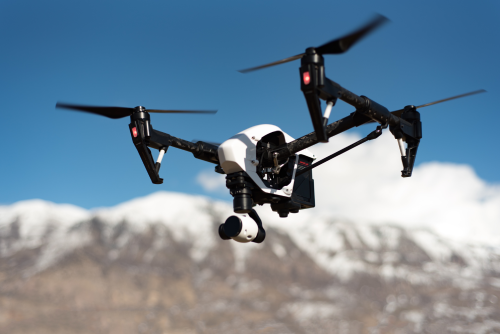
Skydio X10 is an active U.S.-built enterprise multirotor from Skydio, aimed at inspection, public safety, security, infrastructure, and government-facing users rather than casual hobby pilots. It matters because Skydio’s name is closely tied to autonomy and obstacle-aware flight, which makes the X10 especially relevant for teams operating around structures, assets, or other complex environments. If you are comparing enterprise drones in 2026, the X10 is best viewed as a procurement-driven professional platform, not a consumer camera drone.
Unlike mainstream camera drones that are often judged by headline video specs, retail price, or travel convenience, the X10 belongs to a category where operational reliability, workflow fit, policy compliance, and support availability can outweigh almost everything else. For many organizations, the real question is not simply whether the drone flies well, but whether it can be deployed repeatedly by trained teams, integrated into reporting systems, maintained with predictable service, and approved within internal procurement or security rules.
That distinction matters. Enterprise drone decisions are usually made by departments, committees, procurement teams, or fleet managers rather than a single pilot buying for personal use. In that environment, factors such as country of origin, software subscriptions, training requirements, data handling, and service contracts can be just as important as the aircraft itself. The Skydio X10 therefore deserves to be evaluated as a full professional system, not as a standalone gadget.
Quick Summary Box
- Drone Name: Skydio X10
- Brand: Skydio
- Model: X10
- Category: Enterprise / defense multirotor
- Best For: Public safety, inspection, utilities, infrastructure, security, and government buyers seeking a U.S.-origin enterprise drone
- Price Range: Not publicly confirmed in supplied data
- Launch Year: 2024
- Availability: Active via enterprise procurement and authorized channels; regional availability should be verified
- Current Status: Active
- Overall Rating: Not rated due to limited confirmed data
- Our Verdict: A serious autonomy-first enterprise drone with strong strategic appeal, but buyers should verify the exact sensor package, software bundle, and final pricing before committing
Introduction
The Skydio X10 sits in the enterprise/defense side of the drone market, where workflow reliability, autonomy, and procurement fit usually matter more than pure headline specs. Built by U.S. manufacturer Skydio and still listed as active, it is aimed at professional operators who need a compact multirotor for inspection, public-safety documentation, infrastructure work, and government use. For most buyers, interest in the X10 will come down to three factors: autonomy, sensor usefulness, and whether the support ecosystem matches organizational needs.
That framing is important because drones in this class are rarely purchased on impulse. A fire department, utility team, inspection contractor, or public agency is likely to ask different questions from those of a hobby pilot or a travel videographer. They may want to know how easily the aircraft can be deployed from a vehicle, how consistently it can navigate near structures, what kind of evidence or reporting workflow it supports, and what happens if it requires repair during an active operating season. Those are not secondary concerns in enterprise aviation; they are often the deciding factors.
The X10 also enters a market that has become more strategically sensitive. For some buyers, especially in government, public safety, and regulated industries, U.S.-origin status can carry real weight in procurement reviews. That does not automatically make the X10 the best choice for every team, but it does mean the aircraft occupies a meaningful position in discussions where supply chain trust, policy alignment, and vendor risk matter.
At the same time, buyers should resist the temptation to assume that brand reputation alone settles the case. Skydio’s autonomy heritage gives the X10 immediate credibility, but a serious evaluation still requires confirmation of the exact payload package, software entitlements, service level, training path, and operating costs. In other words, the X10 may be compelling on paper, but enterprise buyers still need a quote, a demo, and a deployment plan.
Overview
What kind of drone is it?
The Skydio X10 is a multirotor enterprise drone from an American manufacturer best known for AI-assisted navigation and obstacle avoidance. It is not positioned as a toy, racing drone, or creator-first camera platform. Instead, it belongs in the professional small-UAS category used by agencies, utilities, inspection contractors, and other mission-driven teams.
That category brings a different set of priorities. Consumer drones are usually designed around a simple promise: good image quality, easy flying, and a relatively accessible price. Enterprise drones, by contrast, are built for repeatable tasks performed under procedure. They may need to support pre-flight checklists, maintenance logs, formal pilot training, equipment accountability, mission documentation, and software-managed data workflows. The X10 should be understood through that lens.
In practical terms, the aircraft is best thought of as a field operations tool. Its value likely comes not from recreational flying enjoyment but from helping a team accomplish a defined job more safely, more quickly, or with better documentation than traditional methods. That could mean inspecting elevated assets without placing personnel in risky positions, gaining situational awareness during a public-safety event, or documenting a site in a way that supports later review and reporting.
Who should buy it?
The best fit is an organization that wants a current Skydio platform for structured operations rather than casual flying. Typical buyers include public-safety departments, industrial inspectors, utility operators, security teams, and government programs evaluating U.S.-origin drone options. Smaller creator users may still be interested, but this is clearly not the simplest or most budget-friendly route to aerial imaging.
A good candidate buyer usually has at least some of the following characteristics:
- A recurring operational need rather than occasional curiosity
- Personnel who can be trained and scheduled for flight operations
- A budget process that can support enterprise hardware and software
- Internal interest in autonomy, repeatability, or safer close-proximity flight
- A reason to care about support, documentation, and service continuity
- A preference or requirement for policy-conscious procurement
This is especially relevant for departments that operate in cluttered or infrastructure-heavy environments. Bridges, substations, rooftops, facades, industrial plants, and emergency scenes are all locations where spatial awareness matters. A platform associated with autonomous navigation and obstacle-aware behavior naturally becomes more attractive there than in wide-open field work, where simpler aircraft may already do the job.
On the other hand, the wrong buyer is just as easy to identify. If a user mainly wants a drone for occasional scenic footage, vacation travel, social media clips, or low-cost photography, the X10 is likely overkill both operationally and financially. It may also be less convenient than consumer alternatives that are designed for direct retail purchase and low-friction setup.
What makes it different?
What makes the X10 stand out is less about lifestyle marketing and more about Skydio’s autonomy reputation. Skydio has long been associated with obstacle-aware flight and navigation in difficult spaces, and the X10 is broadly positioned as a modern enterprise platform built around that strength. Official product positioning also centers on mission sensing and professional workflows, which is a different value proposition from a consumer drone that mainly sells on video quality and low price.
In the enterprise market, that difference is meaningful. Many drones can capture aerial imagery. Fewer are specifically chosen because teams believe they may reduce pilot workload in complex environments, improve confidence near structures, or support repeatable inspections with less manual precision required from the operator. If the X10 performs well in those areas, that is a strong differentiator.
Another point of distinction is how the drone is likely acquired and deployed. Consumer aircraft are often purchased one unit at a time through retail channels. The X10 is more likely to be purchased through a sales process that includes consultation, package configuration, support planning, and possibly software or training commitments. That changes the ownership experience from day one.
Finally, the X10 carries strategic appeal beyond pure performance. For organizations comparing enterprise drones in policy-sensitive settings, the combination of U.S. manufacturer identity and enterprise focus may influence shortlist decisions before a spec sheet is even opened.
Key Features
-
Enterprise-focused multirotor platform from Skydio
Built for professional operations rather than leisure use, with positioning centered on worksite, agency, and inspection applications. -
U.S.-origin product from a U.S. manufacturer
This may matter for public-sector procurement, internal policy review, or organizations prioritizing domestic supply chain considerations. -
Active current-generation model rather than a discontinued legacy aircraft
Buyers looking for current support and roadmap visibility will generally prefer an active platform over one already moving into legacy support status. -
Skydio’s brand reputation for autonomy and obstacle-aware flight
The company’s strongest public association remains intelligent navigation in complex environments, which is one of the main reasons the X10 attracts enterprise attention. -
Designed for professional use cases such as inspection, public safety, infrastructure, and security
The use-case fit appears operational rather than recreational, with attention on practical mission value. -
Officially positioned around mission-relevant sensing rather than consumer-only imaging
This suggests the X10 should be judged by how useful its sensing package is for real work, not by cinematic marketing alone. -
Likely best evaluated as part of a full hardware-plus-software workflow
For enterprise buyers, the aircraft may only be one part of the system; software, fleet tools, support, and deployment processes are equally important. -
Procurement-led purchase model, not purely retail-led consumer sales
Expect dealer engagement, package quotes, and potentially service or licensing decisions rather than a simple add-to-cart experience. -
Public product messaging highlights operation in complex environments; exact limits should be verified from current official documentation
That emphasis aligns with Skydio’s broader brand identity, but mission planners should still validate environment-specific claims before use. -
Exact endurance, range, speed, and many hardware figures should be checked against the current official technical sheet or sales quote
Procurement decisions should rely on current official data, not assumptions carried over from earlier Skydio models or general brand reputation.
Full Specifications Table
| Specification | Details |
|---|---|
| Brand | Skydio |
| Model | X10 |
| Drone Type | Multirotor |
| Country of Origin | USA |
| Manufacturer | Skydio |
| Year Introduced | 2024 |
| Status | Active |
| Use Case | Enterprise / defense / inspection / public safety / infrastructure |
| Weight | Not publicly confirmed in supplied data |
| Dimensions (folded/unfolded) | Not publicly confirmed in supplied data |
| Max Takeoff Weight | Not publicly confirmed in supplied data |
| Battery Type | Not publicly confirmed in supplied data |
| Battery Capacity | Not publicly confirmed in supplied data |
| Flight Time | Not publicly confirmed in supplied data |
| Charging Time | Not publicly confirmed in supplied data |
| Max Range | Not publicly confirmed in supplied data |
| Transmission System | Not publicly confirmed in supplied data |
| Top Speed | Not publicly confirmed in supplied data |
| Wind Resistance | Not publicly confirmed in supplied data |
| Navigation System | Skydio autonomy-focused navigation is part of the brand’s public positioning; exact X10 navigation stack not fully confirmed in supplied data |
| Obstacle Avoidance | Publicly associated with Skydio’s autonomy heritage; exact sensor coverage and limits not publicly confirmed in supplied data |
| Camera Resolution | Not publicly confirmed in supplied data |
| Video Resolution | Not publicly confirmed in supplied data |
| Frame Rates | Not publicly confirmed in supplied data |
| Sensor Size | Not publicly confirmed in supplied data |
| Gimbal | Not publicly confirmed in supplied data |
| Zoom | Not publicly confirmed in supplied data |
| Storage | Not publicly confirmed in supplied data |
| Controller Type | Not publicly confirmed in supplied data |
| App Support | Skydio enterprise software ecosystem likely applies; exact app and feature set not publicly confirmed in supplied data |
| Autonomous Modes | Not publicly confirmed in supplied data |
| Payload Capacity | Not publicly confirmed in supplied data |
| Operating Temperature | Not publicly confirmed in supplied data |
| Water Resistance | Not publicly confirmed in supplied data |
| Noise Level | Not publicly confirmed in supplied data |
| Remote ID Support | Not publicly confirmed in supplied data |
| Geo-fencing | Not publicly confirmed in supplied data |
| Certifications | Not publicly confirmed in supplied data |
| MSRP / Launch Price | Not publicly confirmed in supplied data |
| Current Price | Not publicly confirmed in supplied data |
Design and Build Quality
The Skydio X10 should be judged as a field tool first and a gadget second. As an enterprise multirotor, its design priorities are likely deployability, professional sensor integration, controlled flight around assets, and repeatable operation by trained teams. That already sets it apart from lightweight consumer camera drones that are optimized mainly for portability and casual photography.
In enterprise equipment, design quality is not just about how polished the aircraft looks. It is about how efficiently the platform fits into real operations. A drone used by a utility crew, a public-safety team, or an inspection contractor may need to be unpacked in poor weather, launched from uneven ground, handled with gloves, packed into a vehicle after a long shift, and redeployed multiple times in a day. Build quality therefore includes practical durability, handling confidence, and the ability to tolerate repeated operational cycles without becoming fragile or inconvenient.
Because the supplied record does not include dimensions, weight, folding geometry, or ingress rating, a full build-quality score would be speculative. Even so, buyers in this class should pay close attention to practical details such as arm locking confidence, propeller replacement time, battery insertion, landing stability, controller ergonomics, transport case quality, and how quickly the aircraft can be made flight-ready in the field.
A few questions are especially important during a live demo or procurement review:
- How many steps are required from case-open to takeoff?
- Can a trained operator prepare the drone quickly under pressure?
- Are the propellers, arms, and battery mechanisms confidence-inspiring?
- Does the landing gear or body geometry work well on rough surfaces?
- Is the controller practical for prolonged use in bright light or cold conditions?
- Are connectors, covers, and ports easy to use without feeling delicate?
- How cleanly does the system pack down for transport?
For enterprise fleets, serviceability matters almost as much as the airframe itself. A drone can look rugged in marketing imagery, but what matters in practice is parts availability, repair turnaround, and how well the aircraft handles repeated deployment cycles. That is especially important if the X10 is being considered for inspection, public safety, or agency use where downtime has real operational cost.
Transport considerations also deserve more attention than they get in many reviews. A drone that performs well in the air can still create friction if its batteries require awkward storage, if its case is poorly organized, or if the charging system is impractical for vehicle-based teams. Enterprise users should consider whether the X10 can be integrated into existing fleet vehicles, response kits, or field workflows without creating avoidable overhead.
In short, the X10’s design should be evaluated less like a premium gadget and more like a professional instrument. The right question is not merely whether it feels well made, but whether it helps a trained team operate efficiently, safely, and repeatedly.
Flight Performance
The supplied record does not include confirmed figures for endurance, range, top speed, or ceiling, so any hard performance ranking should be treated cautiously. What can be said with more confidence is that the X10 is aimed at stable, controlled, mission-oriented flight rather than speed-driven flying. In the enterprise market, predictable hover behavior, confidence near structures, and repeatable route execution are usually more valuable than raw top speed.
That distinction matters because enterprise flight performance is multidimensional. A public-safety unit may care about how quickly the drone can be airborne and how stable it remains while observing a scene. An inspector may care more about holding position near a structure, smooth controllability at low speed, and the ability to maintain framing while navigating constrained spaces. A security team may prioritize consistent patrol patterns and dependable return behavior. None of those outcomes is captured by top speed alone.
From a buyer perspective, the most important performance question is probably not “How fast is it?” but “How well does it behave around obstacles, structures, and partial GPS conditions?” That is where Skydio products have traditionally drawn attention. As analysis rather than a newly claimed spec, the X10 is likely most attractive in scenarios where navigation confidence and spatial awareness matter more than long-range open-field cruising.
The practical areas to evaluate include:
- Hover precision: Does the drone stay composed when gathering detailed imagery or conducting close observation?
- Low-speed controllability: Can the operator make small positioning adjustments without the aircraft feeling twitchy?
- Obstacle-rich flight behavior: How well does the system handle trees, poles, facades, steel structures, and uneven geometry?
- Signal resilience: What happens when line of sight is partially interrupted or the operating environment becomes more challenging?
- Takeoff and landing behavior: Is deployment smooth and predictable in realistic field conditions?
- Mission repeatability: Can operators execute similar flights consistently enough to support before-and-after comparisons?
Indoor or GPS-challenged use is another area many readers will associate with Skydio. That should still be validated carefully. Lighting, texture, environmental clutter, and site policy all affect results, and no autonomy system removes the need for trained operators and conservative mission planning.
It is also worth remembering that autonomy is not the same as invulnerability. Complex navigation aids can reduce workload and improve confidence, but they do not eliminate environmental risk, regulatory constraints, or the possibility of human error. Enterprise operators should build procedures around the X10 that include site assessment, airspace awareness, lost-link planning, battery margins, and emergency action steps.
Wind performance is another field reality that procurement teams should verify directly. Infrastructure and public-safety work often takes place in less-than-ideal conditions, and urban or industrial sites can create turbulence around structures. Even without confirmed figures in the supplied data, this is an area that should be tested through manufacturer documentation or live demonstration.
Ultimately, flight performance on the X10 should be judged by a professional standard: not how exciting it feels, but how predictably it helps crews perform actual missions.
Camera / Payload Performance
The X10 appears to be a mission-sensor platform first, not a lifestyle filmmaking drone. Official market positioning around the X10 family has centered on professional imaging and sensing for work such as inspections, public safety, and infrastructure observation. That makes the camera discussion less about cinematic color profiles and more about whether the aircraft can capture useful visual and thermal information for decisions, documentation, and reporting.
This is one of the most important mindset shifts for prospective buyers. In the consumer world, camera talk often revolves around dynamic range, social-media-ready footage, and creative shooting modes. In enterprise operations, the key questions are usually different:
- Can the operator identify a defect, hotspot, hazard, or point of interest?
- Can the imagery support documentation that stands up in a workflow or report?
- Is the payload configuration appropriate for the job the team actually performs?
- Can the data be reviewed, exported, stored, and shared in a controlled way?
Because the supplied data does not confirm the exact camera resolutions, zoom figures, frame rates, thermal specifications, or gimbal details, buyers should avoid assuming all X10 packages are identical. In enterprise procurement, the exact configuration matters. A team buying for utility inspection may prioritize zoom reach and thermal utility, while a public-safety team may care more about situational clarity, low-light performance, and evidence-friendly capture workflows.
The practical takeaway is simple: if the X10 is on your shortlist, ask for sample output from the exact configuration being quoted. In this segment, payload relevance is more important than headline resolution alone.
A strong evaluation process should include:
-
Sample imagery from your use case
Ask for footage or stills resembling your real operating environment: rooftops, substations, facades, accident scenes, industrial equipment, or search areas. -
Zoom and target identification testing
If detail at distance matters, do not rely on a brochure. Verify whether the payload can capture the information your team needs without unsafe proximity. -
Thermal workflow review
If thermal sensing is part of the package, evaluate not just the image itself but how useful it is in your reporting, decision-making, or mission chain. -
Low-light performance assessment
Public-safety and security users in particular should confirm how the system behaves in dusk, night, or mixed-light environments where visual interpretation becomes more demanding. -
Stabilization and framing behavior
Even a strong sensor becomes less useful if the drone cannot hold stable framing during inspection or observation.
There is also a broader procurement lesson here: mission success usually depends more on “appropriate sensor plus usable workflow” than on “best advertised resolution.” A payload that integrates well into the operator’s process will often outperform a technically stronger payload that is harder to use or harder to manage after capture.
Smart Features and Software
Software is a major part of the Skydio value proposition. The brand is widely associated with autonomy-led flight, obstacle handling, and mission assistance, so the X10 should be evaluated as a hardware-plus-software system rather than as an airframe in isolation.
In fact, for many enterprise buyers, software can be the deciding factor. Two drones may appear similarly capable in the air, yet differ dramatically in how they support planning, execution, data review, fleet oversight, user permissions, and long-term maintainability. A platform that saves time in mission preparation or simplifies post-flight documentation can deliver more operational value than a platform with slightly better raw specifications but weaker workflow integration.
That said, the supplied record does not fully confirm the current X10 software stack, available autonomous modes, API access, cloud tools, mapping workflows, or subscription structure. Buyers should therefore verify:
- Current autonomous flight modes
- Return-to-home and loss-link behavior
- Inspection and repeatability tools
- Fleet management and media workflow options
- Offline capability and data-handling controls
- Controller and mobile-device compatibility
- Licensing or subscription requirements
Each of those items has direct operational consequences.
Autonomous flight modes matter because they determine how much pilot workload can realistically be reduced during repetitive or structure-heavy missions. A useful autonomy feature is not one that looks impressive in a demo; it is one that reliably saves time or reduces risk in the field.
Return-to-home and loss-link behavior should be reviewed carefully in any environment with structures, changing terrain, or possible signal obstruction. Enterprise teams need to know how the aircraft is expected to react and whether that logic fits their operating area.
Inspection repeatability tools can be especially valuable for infrastructure and industrial work. If a team needs to capture comparable imagery over time, software-assisted route consistency may be more valuable than almost any single airframe specification.
Fleet management and media workflow become critical as soon as more than one aircraft, operator, or department is involved. Questions worth asking include: How are files organized? Can flights be logged systematically? Are user roles manageable? Can administrators track aircraft status and software versions?
Offline capability and data handling are increasingly important in both public safety and sensitive industry. Some organizations cannot rely on always-on cloud workflows and may need local control over media and mission data.
Controller and device compatibility may sound minor, but they affect everything from training standardization to replacement planning. If the system depends on specific hardware, that should be understood early.
Licensing and subscriptions influence total cost of ownership. A drone that looks affordable at purchase can become expensive if the useful workflow features sit behind recurring fees.
For enterprise users, these points often decide the purchase more than the aircraft itself. A drone with strong autonomy but a weak support or software plan can become costly over time.
When evaluating the X10, buyers should request not just a flight demo but a workflow demo. Watch how missions are planned, how media is stored, how reports are created, how updates are managed, and how administrators maintain the system. Those everyday realities often determine whether a drone becomes a dependable tool or an underused capital expense.
Use Cases
The most realistic use cases for the Skydio X10 are professional and workflow-driven:
-
Infrastructure inspection
Bridges, towers, facades, transportation assets, and other built structures often require close visual review. A drone associated with obstacle-aware flight may be especially appealing where geometry is complex. -
Utility and energy asset inspection
Utility operators frequently work around poles, lines, substations, and elevated hardware. Sensor relevance and controlled positioning matter more here than cinematic image quality. -
Building, roof, and facade documentation
Property assessment, insurance-related review, condition documentation, and construction checks can all benefit from repeatable aerial access. -
Public safety scene awareness and documentation
Fire, law enforcement, rescue, and incident management teams may value rapid deployment and the ability to gather actionable visual information without exposing personnel unnecessarily. -
Search support and situational assessment within legal operating limits
In time-sensitive situations, aerial observation can improve awareness of terrain, access points, hazards, or movement patterns, subject to applicable regulations and local procedures. -
Industrial site inspection
Factories, processing facilities, storage yards, and other industrial environments create cluttered spaces where navigation confidence can be a practical advantage. -
Construction progress monitoring
Construction teams may use drones for periodic documentation, site review, and communication with stakeholders, especially when repeatability matters. -
Security and facility observation
Campuses, industrial sites, and sensitive facilities may evaluate drones as part of broader monitoring or response workflows. -
Government training and evaluation programs
Agencies assessing U.S.-origin drone platforms may view the X10 as a candidate for operational testing or standardized deployment. -
Defense-adjacent observation and facility documentation under applicable law and policy
Where policy and mission fit align, the X10’s positioning may attract organizations looking beyond mainstream commercial options.
The common thread across these use cases is that the X10 appears strongest where a drone must do more than merely fly and record. It needs to work as part of a process. An inspection team may need repeatable imagery and safe stand-off distance. A public-safety team may need fast deployment and usable incident documentation. A security operator may need reliable observation of constrained areas. In each case, the value proposition is operational, not recreational.
Teams should also think in terms of mission maturity. If a department has no training program, no standard operating procedures, and no clear downstream workflow for the data it collects, even a capable drone can end up underused. The X10 is likely best suited to organizations that either already have those structures or are willing to build them.
Pros and Cons
Pros
-
Active current Skydio platform, not a discontinued legacy model
That matters for roadmap confidence, training investment, and long-term support planning. -
U.S. manufacturer and U.S.-origin positioning may matter for procurement and policy-sensitive buyers
This can be a real differentiator in certain public-sector and regulated environments. -
Strong brand association with autonomy and obstacle-aware flight
Skydio’s reputation in this area is one of the biggest reasons enterprise buyers consider the X10. -
Clearly aimed at enterprise and government users, not diluted by toy-market compromises
The platform appears designed around mission utility rather than broad consumer appeal. -
Likely well suited to inspection and public-safety style workflows
Those are the environments where autonomy, close-structure navigation, and mission-oriented sensing can matter most. -
Strategic alternative for buyers who want something other than the standard consumer-led drone ecosystem
Some organizations want diversity in vendor options for policy, security, or operational reasons.
Cons
-
Many core specs in the supplied record are not confirmed, so buyers need direct verification
Serious evaluation requires current documentation, demos, and formal quoting. -
Price is not publicly confirmed in supplied data and is likely quote-driven
That makes quick side-by-side budgeting harder than with retail drones. -
Probably excessive for hobby, creator, or casual photography buyers
The X10 is not the obvious choice for users seeking low-cost aerial imaging. -
Software, training, and support costs may materially raise total ownership cost
Enterprise capability often carries enterprise overhead. -
Procurement, regional availability, and policy eligibility can be more complex than with consumer drones
This is not always a fast, one-click purchase. -
Exact payload configuration matters, so comparing “X10” to other drones without a full quote can be misleading
The real comparison is package versus package, not name versus name.
Comparison With Other Models
| Model | Price | Flight Time | Camera or Payload | Range | Weight | Best For | Winner |
|---|---|---|---|---|---|---|---|
| Skydio X10 | Not publicly confirmed in supplied data | Not publicly confirmed in supplied data | Enterprise mission-sensor platform; exact configuration should be verified | Not publicly confirmed in supplied data | Not publicly confirmed in supplied data | U.S.-origin autonomy-first enterprise buyers | Winner for autonomy-focused U.S. procurement priorities |
| DJI Matrice 30T | Varies by dealer and package | Publicly listed by manufacturer; verify current figure | Mature integrated visual and thermal enterprise payload ecosystem | Publicly listed by manufacturer; verify current figure | Publicly listed by manufacturer; verify current figure | Teams prioritizing a broad and well-known enterprise ecosystem | Winner for ecosystem breadth |
| Parrot ANAFI USA | Availability and pricing vary by channel | Public product literature exists; verify current figure | Compact visual/thermal public-safety style payload | Public product literature exists; verify current figure | Public product literature exists; verify current figure | Teams prioritizing portability and lighter deployment | Winner for portability |
| Skydio X2E / X2D | Older-platform availability varies | Archived specifications; verify support | Earlier-generation Skydio enterprise payload family | Archived specifications; verify | Archived specifications; verify | Existing legacy Skydio fleet continuity | Winner only for organizations already tied to older X2 workflows |
Skydio X10 vs a close competitor
Against the DJI Matrice 30T, the X10’s likely appeal is autonomy plus U.S.-origin positioning. DJI typically counters with a broad accessory ecosystem, global familiarity, and a very mature enterprise install base. Buyers should compare sensor capability, software workflow, procurement policy fit, and support commitments side by side.
This comparison often becomes less about one aircraft being universally better and more about institutional priorities. If a team wants a widely known ecosystem with extensive market familiarity, a mature accessory environment, and broad third-party recognition, DJI tends to enter the conversation strongly. If a team places higher value on domestic origin, policy alignment, and autonomy-centric brand identity, the X10 becomes more attractive.
A useful procurement approach is to build a weighted matrix rather than a simple pros-and-cons list. Categories might include:
- Procurement eligibility
- Autonomy confidence in obstacle-rich areas
- Sensor relevance to the mission
- Software and fleet tools
- Training demands
- Support responsiveness
- Total ownership cost over multiple years
- Internal stakeholder comfort with the vendor
On that kind of matrix, the winner can change depending on who is doing the buying and why.
Skydio X10 vs an alternative in the same segment
Against Parrot ANAFI USA, the X10 appears positioned as the more autonomy-centric platform. ANAFI USA is easier to think of as a compact deployable tool, while the X10 is more likely to be purchased as part of a deeper enterprise system. Support status and roadmap matter here, not just the aircraft.
This is an important distinction. Some teams need the lightest possible deployment footprint and may prioritize portability, rapid unpacking, and minimal complexity. Others are willing to accept a more involved procurement or workflow environment if it improves mission capability around structures or gives them a stronger long-term operational stack. The X10 likely speaks more to the second group.
The comparison also depends on organizational maturity. A smaller department with occasional drone use may prefer the simplest platform that meets requirements. A larger agency or industrial operator may prefer the platform that fits a managed program with software, training, and repeatable mission profiles.
Skydio X10 vs an older or previous-generation option
Compared with the older Skydio X2 family, the X10 is the newer platform to watch. Existing Skydio operators should compare migration cost, training burden, battery compatibility, controller workflow, and software continuity before assuming an upgrade path is straightforward.
This is a common enterprise mistake: assuming that staying within the same brand makes transition easy by default. In reality, new platforms may introduce changes in accessories, batteries, software entitlements, flight behavior, or administrative tools. Any fleet manager considering the X10 as a successor to earlier Skydio hardware should request a structured migration conversation, not just a new unit quote.
Questions worth asking include:
- Can existing pilots transition quickly?
- Are any accessories or support tools reusable?
- Will reporting or media workflows stay familiar?
- How much retraining is required?
- Are older aircraft still supportable during overlap periods?
- Does the new platform solve a meaningful problem, or simply refresh hardware?
For organizations with an established legacy Skydio fleet, the X10 may be compelling, but the total transition path matters as much as the aircraft itself.
Manufacturer Details
Skydio is an American drone manufacturer and brand, with headquarters in the United States. The company is best known for autonomy-heavy small drones and built its reputation on AI-assisted navigation and obstacle avoidance rather than purely on camera specs or low pricing. Over time, Skydio’s focus shifted strongly toward enterprise, public safety, and government customers.
That history matters because it helps explain why the X10 is positioned the way it is. Skydio’s market identity has not centered on being the cheapest option or the most entertainment-oriented brand. Instead, it has leaned into intelligent flight, complex environment navigation, and use cases where autonomous assistance offers practical value. For buyers evaluating the X10, that brand direction provides useful context: the aircraft is part of a broader strategic emphasis, not an isolated product experiment.
In this case, the brand and manufacturer are the same: Skydio. That simplifies branding, but buyers should still distinguish between the aircraft itself, the software stack, and any bundled services offered through enterprise sales.
A well-run procurement review should therefore evaluate Skydio at three levels:
- Hardware maker — Does the aircraft meet the mission need?
- Software provider — Does the platform support the workflow and data environment?
- Enterprise vendor — Does the company provide the support, roadmap visibility, and service model the buyer requires?
Those three layers together determine whether the X10 is merely interesting or genuinely suitable.
Support and Service Providers
Support is a major consideration for any enterprise drone, and especially for one used in inspection, public safety, or government work. Buyers should verify the following through official Skydio channels or authorized partners:
- Official support access and response model
- Repair or replacement process
- Regional service availability
- Spare battery and propeller availability
- Training options for teams and departments
- Warranty terms
- Software support lifecycle
- Dealer or integrator responsibilities after purchase
If you are outside a major enterprise market, confirm local service coverage before buying. For professional fleets, fast repair and predictable replacement support can be just as important as the aircraft’s flight features.
This is one area where enterprise buyers should be especially disciplined. A drone program can stall not because the aircraft is poor, but because the support plan is vague. If a mission-critical unit goes down, how long is the expected turnaround? Is there an advance replacement option? Are repairs handled directly by the manufacturer or through a partner? Are consumables and common replacement parts easy to source?
Training support also deserves closer attention. Even a platform known for autonomy still requires trained operators, administrators, and decision-makers. Some organizations need not only pilot training, but also program setup guidance, operational policy assistance, and refresh training for new personnel. If those services are available, they can materially improve adoption and reduce misuse.
For larger fleets, support should also be evaluated at the administrative level. Can the vendor help with software onboarding, account structure, update management, and fleet-wide consistency? Those elements may not appear on a marketing sheet, but they strongly influence long-term success.
Where to Buy
The Skydio X10 is best understood as an enterprise-procurement product rather than a casual consumer retail drone. Buyers should look at:
- Official brand sales channels
- Authorized enterprise drone dealers
- Government or public-sector procurement partners
- Regional distributors approved by the manufacturer
- Specialized public-safety or industrial integrators
Availability may vary by region, customer type, and program requirements. Before purchasing, verify whether the quoted package includes the aircraft only or a full operational kit with controller, batteries, charger, carrying solution, training, and software.
This matters because enterprise purchases are often package-based. Two quotes for “the same drone” may represent very different outcomes depending on what is included. One may cover training, software, extra batteries, and service support; another may be closer to an airframe-only starting point. Without itemized comparison, a buyer can easily misread value.
Public-sector buyers should also confirm whether the seller is familiar with applicable procurement pathways. Some organizations need approved vendor status, contract vehicle eligibility, or compliance documentation as part of the purchase process. A seller experienced in enterprise and government transactions can reduce friction significantly.
Price and Cost Breakdown
No confirmed launch price or current price was provided in the supplied data, so budgeting should start with a direct quote rather than an assumption. That matters because enterprise drone pricing is often package-based, not airframe-only.
Before approving a budget, verify the cost of:
- Aircraft and sensor configuration
- Controller and display hardware
- Batteries and charging equipment
- Carry case or deployment kit
- Spare props and maintenance items
- Training and onboarding
- Software licenses or recurring subscriptions
- Repair coverage or service plans
- Insurance
- Compliance and registration costs
In this segment, total ownership cost often matters more than the sticker price. A cheaper quote can become more expensive if batteries, software, or service are priced separately.
A realistic cost review should break spending into three categories:
1. Initial acquisition cost
This includes the aircraft, payload, controller, chargers, batteries, cases, and any required accessories. It may also include first-year software access or onboarding.
2. Operational cost
This includes replacement batteries, props, charging logistics, software renewals, pilot recurrent training, travel for training, repairs, and downtime exposure.
3. Program cost
This broader category includes insurance, policy development, administrative oversight, compliance processes, documentation systems, and potentially dedicated staff time.
For many organizations, this wider view changes the buying decision. A platform that looks more expensive initially may actually cost less over time if it reduces training burden, improves mission repeatability, or comes with stronger support. Conversely, a seemingly attractive entry price may hide recurring software fees or accessory requirements that make the long-term program more expensive than expected.
When requesting a quote for the X10, buyers should ask for:
- A complete line-item package breakdown
- Subscription details and renewal timing
- Warranty and optional service-plan costs
- Estimated lead times
- Training options and pricing
- Recommended spares for the first year
- Any required accessories for regulatory compliance
That level of detail helps prevent budget surprises after approval.
Regulations and Compliance
Regulatory fit depends on where and how the X10 will be used. In the United States, operators should review FAA registration rules, Part 107 requirements for commercial work, airspace authorization requirements, and any applicable Remote ID obligations. Because the supplied record does not confirm weight or Remote ID support, those details should be checked directly before deployment.
Professional users should also consider:
- Local privacy and surveillance rules
- Night operation requirements
- Operations near people or critical infrastructure
- Agency-specific evidence handling policies
- Data retention and storage rules
- Procurement restrictions for public-sector buyers
- Export or regional sales limitations where applicable
No drone is universally compliant everywhere. Always confirm the rules for the exact jurisdiction and mission profile.
Compliance in enterprise settings is broader than flight law alone. A public-safety department may need policies for evidence retention and public-records handling. A utility may need internal approvals for operating near energized assets. A contractor may need client permission, insurance documentation, and site-specific safety planning. A government program may need procurement documentation and vendor review beyond normal aviation requirements.
That is why organizations should not ask only, “Is the X10 legal to fly?” but also, “Can our organization legally, procedurally, and administratively use this platform for the missions we intend?” Those are different questions, and both matter.
Who Should Buy This Drone?
Best for
- Public-safety organizations
- Infrastructure and utility inspection teams
- Industrial operators needing autonomy around structures
- Government buyers preferring U.S.-origin drone options
- Enterprise fleets that value software workflow and supportability
- Organizations willing to evaluate the full system, not just the airframe
These buyers are most likely to benefit from what makes the X10 distinctive. They are also the most likely to have the organizational structure needed to support a successful deployment: trained personnel, recurring missions, procurement discipline, and interest in software-backed operations.
Not ideal for
- Casual hobby flyers
- Budget-conscious aerial photo buyers
- FPV and racing pilots
- Users who need simple retail pricing with minimal procurement steps
- Buyers who only need a basic camera drone for occasional use
- Organizations that cannot support training, software management, and enterprise maintenance overhead
For these users, the X10 may offer more complexity and cost than value. Enterprise drones make sense when the mission justifies them. Without that context, a simpler and more accessible platform is often the better choice.
Final Verdict
The Skydio X10 looks like a serious, current-generation enterprise drone built for buyers who care about autonomy, workflow, and procurement fit more than consumer-style spec-sheet bragging. Its biggest strengths are Skydio’s autonomy reputation, its U.S.-origin positioning, and its relevance to inspection, public safety, and government use. Its biggest drawbacks are equally clear: many critical details still need direct verification, pricing is not openly established in the supplied data, and this is almost certainly not a low-friction purchase for casual users.
For agencies, utilities, inspectors, and policy-sensitive organizations, the X10 deserves real consideration. It appears especially relevant where close-structure flight, mission-oriented sensing, software-backed operations, and support planning are central to the job. In those contexts, the aircraft’s appeal goes well beyond a traditional camera-drone checklist.
For everyone else, especially hobby or creator buyers, it is probably too specialized and too procurement-driven to make sense. If this model is on your shortlist, the smartest next step is a formal quote, a live demo, and a written breakdown of the exact hardware, software, support, and compliance package being offered. That is the right way to evaluate the Skydio X10: not as a generic drone, but as a complete enterprise system.
