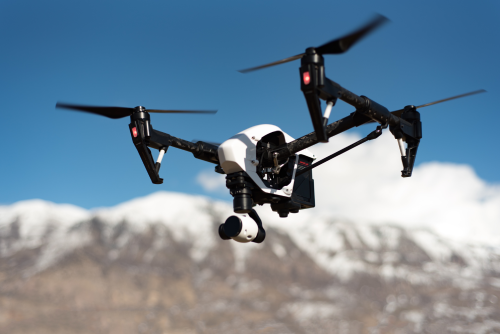
Skydio X10D is a defense-oriented multirotor from Skydio, presented as the defense version of the X10 platform. It is aimed at government, defense-adjacent, and mission-driven institutional buyers that need a current U.S.-origin drone option rather than a consumer-focused aircraft. The model matters because it sits in a procurement-sensitive part of the market where platform lineage, supportability, configuration control, and organizational fit can matter as much as raw flight specs.
In other words, the X10D is not important simply because it is another small drone. It is important because it appears in a segment where decision-makers may care as much about sourcing, security posture, lifecycle support, approved acquisition channels, and long-term fleet planning as they do about camera resolution or headline speed. That makes it a different kind of product to evaluate. Buyers are not just asking, “How well does it fly?” They are also asking, “Can we buy it under our rules, maintain it under our procedures, train personnel on it consistently, and support it for years?”
Quick Summary Box
- Drone Name: Skydio X10D
- Brand: Skydio
- Model: X10D
- Category: enterprise/defense
- Best For: Government and defense-related organizations seeking a current Skydio multirotor platform
- Price Range: Not publicly confirmed in supplied data
- Launch Year: Not publicly confirmed in supplied data
- Availability: Not publicly confirmed in supplied data
- Current Status: Active
- Overall Rating: Not rated due to limited confirmed data
- Our Verdict: A potentially important U.S.-origin defense variant of the X10 family, but buyers should treat it as a procurement-led platform and verify all technical, regulatory, software, payload, and support details directly with Skydio or authorized channels.
Introduction
The Skydio X10D is an active enterprise/defense drone from U.S. manufacturer Skydio. Based on the supplied manufacturer-backed record, it is best understood as the defense version of the X10, which places it in a more specialized category than a standard commercial drone. Readers should care about it if they are comparing U.S.-sourced drone platforms, evaluating defense-friendly procurement options, or trying to understand where Skydio’s current mission-oriented lineup fits in the broader small-UAS market.
That distinction matters. Many drone reviews can focus almost entirely on visible specs: battery life, camera performance, portability, and app experience. The X10D belongs to a class where those factors still matter, but they do not tell the whole story. The key questions are often broader:
- Is the system suitable for controlled institutional deployment?
- Can it be procured through approved channels?
- Is the platform current and supportable?
- Does its software, data handling, and update model align with organizational policy?
- Is it a practical successor or complement to other fleet assets?
Because the supplied data for the X10D is high-level rather than exhaustive, this article should be read as a structured market and procurement overview, not as a substitute for formal technical documentation. The aim is to explain what the X10D appears to be, where it fits, who should care, and what information serious buyers still need to confirm before making a purchasing decision.
Overview
The X10D sits in a market segment where reliability, support pathways, and institutional fit often matter more than retail-friendly spec sheets. Unlike a hobby or creator drone, this is a platform that will usually be judged by procurement teams, program managers, training leads, technical evaluators, compliance staff, and operational stakeholders.
That has two implications. First, even limited confirmed information can still tell us a lot about the drone’s role. Second, public-facing comparisons with consumer aircraft are usually not very useful. A defense-positioned multirotor is rarely chosen because it is the cheapest or most cinematic option. It is chosen because it fits a mission framework, purchasing environment, and operational doctrine.
What kind of drone is it?
The Skydio X10D is a multirotor drone in the enterprise/defense segment. That means it belongs to the vertical-takeoff-and-landing class of aircraft that can hover, launch from tight spaces, and reposition precisely, which is useful for observation, assessment, and controlled-area deployment. The supplied data confirms that it is active and that it is specifically the defense version of the X10.
The “defense version” label is the most significant part of that description. It suggests that the X10D is not merely another naming variant, but a version intended for buyers whose acquisition rules, security expectations, or deployment models differ from those of mainstream enterprise customers. That does not automatically tell us the exact hardware or software differences, but it does tell us how the product should be approached: as a specialized institutional platform, not as an off-the-shelf commercial camera drone with a different badge.
Who should buy it?
This model is most relevant for:
- Defense and government buyers
- Public-sector programs evaluating U.S.-origin systems
- Organizations that need a mission-oriented multirotor rather than a consumer camera drone
- Fleet planners comparing Skydio’s current-generation platform options
- Teams replacing or supplementing older institutional drone fleets
- Buyers who need to align aircraft selection with internal procurement, security, and support requirements
It is much less relevant for casual users, first-time buyers, or anyone looking for a low-cost off-the-shelf photography drone.
A good way to think about the X10D is that it is likely purchased through a decision process, not an impulse purchase. If your organization is drafting requirements, validating vendors, planning training pipelines, and comparing total support models, this aircraft belongs in that conversation. If you want a compact drone for weekend filming, it does not.
What makes it different?
What sets the X10D apart is not a fully public consumer-style feature list, but its positioning. It is part of the X10 family while being specifically designated as the defense version, which suggests that procurement profile, configuration, support channel, software/security posture, or system packaging may differ from the standard X10. The exact differences are not publicly confirmed in the supplied data, so serious buyers should treat the X10D as a specialized program platform rather than assume it is just a renamed commercial model.
That distinction is especially important in institutional markets, where two products that look similar at first glance can be very different in practical terms. Differences may exist in areas such as:
- Acquisition route and sales channel
- Firmware control or update path
- Documentation access
- Security and data-management options
- Approved accessory combinations
- Support entitlements
- Training packages
- Contracting and lifecycle commitments
Even if the airframe shares lineage with the standard X10, those surrounding factors can materially affect suitability for a mission program.
Key Features
- Defense version of the Skydio X10 platform
- U.S.-origin drone from Skydio
- Multirotor airframe for vertical takeoff, landing, and hover capability
- Active current-status model in the manufacturer-backed record
- Positioned for enterprise/defense use rather than mainstream consumer retail
- Likely suited to fast deployment in confined launch areas, as is typical of multirotor platforms
- Part of a Skydio product family associated with autonomy-focused drone development, though exact X10D software features are not publicly confirmed in supplied data
- Potential relevance for organizations prioritizing procurement lineage and supportability over consumer-facing features
- Likely to be evaluated as part of a broader system package that may include training, software, accessories, and service support
- Detailed payload, endurance, range, compliance, and integration features should be verified directly through official procurement channels
These “features” should be read carefully. In the X10D’s case, some of the most meaningful attributes are positional rather than numerical. Being an active U.S.-origin defense-positioned multirotor from a recognized domestic manufacturer can itself be a major differentiator in certain purchasing environments. That does not replace the need for technical detail, but it does explain why the platform is worth attention even when public data is limited.
Full Specifications Table
| Field | Value |
|---|---|
| Brand | Skydio |
| Model | X10D |
| Drone Type | Multirotor |
| Country of Origin | USA |
| Manufacturer | Skydio |
| Year Introduced | Not publicly confirmed in supplied data |
| Status | Active |
| Use Case | enterprise/defense |
| Weight | Not publicly confirmed in supplied data |
| Dimensions (folded/unfolded) | Not publicly confirmed in supplied data |
| Max Takeoff Weight | Not publicly confirmed in supplied data |
| Battery Type | Not publicly confirmed in supplied data |
| Battery Capacity | Not publicly confirmed in supplied data |
| Flight Time | Not publicly confirmed in supplied data |
| Charging Time | Not publicly confirmed in supplied data |
| Max Range | Not publicly confirmed in supplied data |
| Transmission System | Not publicly confirmed in supplied data |
| Top Speed | Not publicly confirmed in supplied data |
| Wind Resistance | Not publicly confirmed in supplied data |
| Navigation System | Not publicly confirmed in supplied data |
| Obstacle Avoidance | Not publicly confirmed in supplied data |
| Camera Resolution | Not publicly confirmed in supplied data |
| Video Resolution | Not publicly confirmed in supplied data |
| Frame Rates | Not publicly confirmed in supplied data |
| Sensor Size | Not publicly confirmed in supplied data |
| Gimbal | Not publicly confirmed in supplied data |
| Zoom | Not publicly confirmed in supplied data |
| Storage | Not publicly confirmed in supplied data |
| Controller Type | Not publicly confirmed in supplied data |
| App Support | Not publicly confirmed in supplied data |
| Autonomous Modes | Not publicly confirmed in supplied data |
| Payload Capacity | Not publicly confirmed in supplied data |
| Operating Temperature | Not publicly confirmed in supplied data |
| Water Resistance | Not publicly confirmed in supplied data |
| Noise Level | Not publicly confirmed in supplied data |
| Remote ID Support | Not publicly confirmed in supplied data |
| Geo-fencing | Not publicly confirmed in supplied data |
| Certifications | Not publicly confirmed in supplied data |
| MSRP / Launch Price | Not publicly confirmed in supplied data |
| Current Price | Not publicly confirmed in supplied data |
The table above makes one thing clear: public confirmation for the exact X10D configuration is currently limited in the supplied source material. For consumer buyers, that would often be a disqualifier. For institutional buyers, it is not unusual. Some products in this segment are evaluated through formal engagement with the manufacturer or an approved representative rather than through a retail-style public listing.
Still, this lack of published detail changes how the X10D should be assessed. It is better viewed as a candidate platform requiring direct validation than as a self-explanatory off-the-shelf product.
Design and Build Quality
Because the X10D is confirmed only at a high level in the supplied record, the safest description is that it is a mission-oriented multirotor rather than a consumer lifestyle drone. That usually points to a design philosophy centered on rapid setup, stable hover, controlled deployment, and operation from constrained spaces instead of long-runway or long-endurance flight.
Exact information on materials, frame size, foldability, ingress protection, landing gear layout, propeller design, and field-serviceability is not publicly confirmed in the supplied data. Even so, the market segment tells us something important: buyers in enterprise and defense roles usually care about repeatable deployment, controlled maintenance, spare-parts availability, and transport practicality. For the X10D, those are all questions worth asking during procurement, especially if the aircraft will be used in structured fleet operations.
A multirotor layout also generally favors:
- Controlled vertical takeoff and landing
- Precise hovering for observation or inspection-style tasks
- Easier deployment in urban, roadside, or facility environments
- Simpler launch logistics than fixed-wing alternatives
- Better suitability for short-duration, high-value point missions
- Reduced dependence on open launch areas
Those benefits explain why multirotors remain dominant in many institutional drone programs. They are rarely the most efficient aircraft for covering very large distances, but they are often the most practical for fast-response, close-control operations.
From a build-quality perspective, institutional buyers should think beyond whether the drone “feels premium.” More useful questions include:
- How quickly can it be unpacked and launched?
- How well does it fit in vehicles, response kits, or field cases?
- Are arms, props, batteries, and landing components straightforward to inspect?
- Can common wear items be replaced at the unit level?
- What is the expected maintenance interval?
- How easy is it to standardize equipment across multiple teams?
What cannot be confirmed here is how rugged the X10D is in weather, how compact it is in transit, or how modular its components are for field replacement. That matters because design quality in this class is as much about sustainment as it is about appearance. A drone that performs well in a demo but is awkward to store, difficult to maintain, or slow to reconfigure can become a weak fleet asset over time.
Flight Performance
The supplied data does not confirm endurance, range, top speed, or ceiling, so any performance judgment has to stay conservative. On paper, the X10D’s most important confirmed flight characteristic is its multirotor format, which strongly suggests a platform optimized for hover, controlled low-speed repositioning, and point-specific work rather than pure distance coverage.
As analysis rather than confirmed specification, buyers can reasonably expect a flight profile that prioritizes:
- Stable close-to-mid-range mission work
- Controlled launch and recovery
- Precision positioning around structures or defined areas
- Quick response deployment compared with larger fixed-wing systems
- Hover-centric task execution
- Repeatable performance for procedural use
That profile can be highly valuable in defense-adjacent and public-sector workflows. Many institutional missions are not about flying as far as possible. They are about putting the aircraft exactly where it is needed, keeping it there safely, and gathering useful information with predictable handling.
What still needs verification from official channels includes:
- Actual flight time per battery
- Real-world operational range and link reliability
- Wind performance
- Takeoff weight and how payloads affect endurance
- Indoor suitability, if relevant
- Recovery behavior and return-to-home logic
- Performance degradation in heat, cold, altitude, or poor visibility
- Battery swap speed and field charging options
For enterprise and defense buyers, that missing information matters. A current-status platform can still be hard to compare if the manufacturer has not publicly published the operating envelope for the exact X10D configuration.
It is also worth separating brochure performance from operational performance. In this class, teams often care more about what the aircraft can do after repeated cycles, partial battery depletion, accessory loading, and real weather exposure than about ideal-condition maximums. During evaluation, buyers should ask for:
- Standard mission-duration assumptions
- Best-case versus mission-typical endurance
- Wind thresholds for stable sensor use
- Performance under encrypted or constrained communications environments, if relevant
- Battery lifecycle expectations
- Whether autonomy or obstacle features materially affect flight time
Those details often determine whether a drone is merely capable on paper or genuinely useful in a repeatable field program.
Camera / Payload Performance
The X10D should be viewed as a payload-relevant drone first and a generic camera drone second. In the enterprise/defense category, the value of the platform usually depends on the sensor package, stabilization quality, data handling, and how well the payload supports the intended workflow.
However, the supplied data does not publicly confirm:
- The exact camera configuration
- Whether thermal imaging is included
- Zoom capability
- Visible-light resolution
- Video formats
- Gimbal type
- Payload modularity
- Swappable sensor options
- Geotagging specifics
- Onboard storage or export pathways
That means buyers should not assume the X10D has the same payload stack as any other X10-family or Skydio platform without direct confirmation.
From a workflow perspective, the questions that matter most are:
- Is the payload fixed or modular?
- Is it optimized for observation, documentation, or analysis?
- How strong is low-light performance?
- What stabilization is available?
- What data export and retention options exist?
- Are there security or procurement-specific differences from the non-defense X10?
- Can the aircraft support the exact imagery standards required by the program?
- Is there a difference between live-view performance and recorded-file quality?
These are not minor details. In institutional programs, sensor performance can matter more than the airframe. A drone that flies beautifully but does not deliver the right visual, thermal, zoom, or evidence-quality output may be operationally unsuitable.
Buyers should also think in mission terms rather than camera terms. Instead of asking only, “What resolution is the camera?” it is often more useful to ask:
- Can operators identify relevant details at operationally useful distances?
- Can the gimbal hold a stable view while hovering in typical wind?
- Is sensor switching intuitive under time pressure?
- How well does the payload perform against glare, smoke, dusk, or low-contrast backgrounds?
- Are media files easy to ingest into downstream analysis systems?
- Can evidentiary, archival, or chain-of-custody requirements be supported?
Until those answers are confirmed through official channels, the X10D remains better described as a defense-positioned airframe family member than as a fully transparent camera spec leader. That is not a criticism so much as a reminder that this model likely lives in a buyer-managed evaluation process rather than a retail comparison chart.
Smart Features and Software
Software is a major part of the Skydio story as a brand, especially because the company is widely associated with autonomous flight and computer-vision-led navigation. That context makes software one of the most important areas to verify on the X10D.
That said, the supplied data does not confirm specific X10D software features such as:
- Waypoint automation
- Subject or vehicle tracking
- Mapping workflows
- SDK or API access
- Fleet management tools
- Offline mission planning
- Obstacle-aware autonomy modes
- Return-to-home behavior
- Secure data or cloud options
- Role-based access control
- Local-only deployment modes
- Audit logging or administrative controls
The safest reading is this: the X10D is likely to be evaluated heavily on software and autonomy, but the exact stack should be confirmed directly with Skydio because defense-linked variants often differ in configuration, access, or deployment model.
For buyers, the practical questions are:
- What automation is included out of the box?
- What features require subscription or add-on licensing?
- Are updates managed differently than on commercial models?
- What security controls are offered?
- Is the drone intended for connected cloud workflows, local workflows, or both?
- Can mission data be retained entirely within organizational control if required?
- How are software updates validated and deployed?
- What happens if a unit is kept offline for extended periods?
This section is especially important because software can define the real value of a modern drone platform. Two aircraft with similar airframes and payloads may feel completely different in the field depending on their autonomy, navigation assistance, user interface, and fleet administration capabilities.
For institutional operators, software evaluation usually spans four layers:
- Pilot workload: Does the system reduce operator burden or increase it?
- Mission execution: Can the software support repeatable workflows, route planning, inspection logic, or observation tasks?
- Data management: How are media, metadata, logs, and mission records handled?
- Administrative control: Can the organization manage users, updates, configurations, and device policies effectively?
A drone with strong software can improve safety, shorten training time, reduce failed missions, and make multi-unit fleet management easier. A drone with weak or poorly aligned software can create hidden friction even if the hardware is excellent. Because Skydio’s brand identity is closely associated with autonomy, prospective X10D buyers should spend serious effort validating software behavior, deployment options, and access controls before purchase.
Use Cases
Given its positioning, the most realistic use cases for the Skydio X10D are institutional rather than consumer-focused.
- Defense and government aerial observation in controlled and lawful contexts
- Facility, site, or perimeter visual awareness
- Rapid post-incident visual assessment
- Program evaluation for organizations seeking a U.S.-origin small multirotor
- Fleet standardization within mission-driven public-sector environments
- Training, familiarization, and procedural development for approved organizations
- Documentation and assessment tasks where hover precision matters more than long-range transit
- Cross-team coordination between technical, procurement, and oversight stakeholders
- Short-notice deployment from vehicles or limited-space staging points
- Structured pilot training in an enterprise or government fleet environment
Because detailed payload and software features are not publicly confirmed in supplied data, each use case should be validated against the exact purchased configuration.
It is also helpful to divide likely use cases into three categories.
1. Operational deployment
This includes tasks where the drone is used as a live tool in active field operations. In those cases, teams will care about launch speed, situational awareness, control reliability, sensor usability, and debrief-quality data.
2. Institutional standardization
Some organizations evaluate a drone not just for one mission but as part of a broader platform strategy. Here, the X10D may matter because it is a current Skydio defense-positioned option. Even before exact specs are compared, that can make it relevant to organizations seeking consistency across procurement, training, support, and doctrine.
3. Capability development
A platform like the X10D may also be used in pilot programs, familiarization efforts, policy development, or interdepartmental evaluation. In that role, the goal is not merely to fly but to establish how the system fits into a larger operational framework.
The common thread across those use cases is that the aircraft is likely to be judged on repeatability and organizational fit, not on entertainment value.
Pros and Cons
Pros
- Clearly positioned as a defense version of the X10 platform
- Built by Skydio, a recognized U.S. drone manufacturer
- Multirotor format is practical for hover, vertical takeoff, and deployment in tight spaces
- Active current status suggests it is part of a present rather than legacy lineup
- Potentially attractive for buyers who prioritize U.S.-origin procurement pathways
- Likely more relevant to institutional users than repurposed consumer drones
- May align well with organizations that value platform lineage and current supportability
- Fits buyers who need a mission-oriented system rather than a general retail drone
Cons
- Many core specifications are not publicly confirmed in supplied data
- Price and availability are not publicly confirmed in supplied data
- Payload and camera configuration are not publicly confirmed in supplied data
- Software, autonomy, and compliance details need direct verification
- Likely less accessible than a standard retail drone
- Procurement-led buying process may be slower and more restrictive than commercial off-the-shelf purchasing
- Comparison shopping is harder without a fully public technical sheet
- Total cost of ownership may be difficult to estimate before formal engagement
The pros and cons here are less about flight excitement and more about buying confidence. The X10D’s strongest visible advantages are its positioning and manufacturer context. Its biggest drawback is uncertainty around specifics. For the right buyer, that may be acceptable. For the wrong buyer, it will be a deal-breaker.
Comparison With Other Models
Because the X10D’s public spec sheet is limited in the supplied data, the most useful comparison is by market role rather than raw numbers alone. That is not ideal for shoppers who want a direct spec battle, but it is realistic for a procurement-oriented product whose exact configuration may be validated through official channels rather than public retail listings.
Skydio X10D vs a close competitor
| Model | Price | Flight Time | Camera or Payload | Range | Weight | Best For | Winner |
|---|---|---|---|---|---|---|---|
| Skydio X10D | Not publicly confirmed in supplied data | Not publicly confirmed in supplied data | Defense version of the X10; exact payload not publicly confirmed in supplied data | Not publicly confirmed in supplied data | Not publicly confirmed in supplied data | Defense and government buyers seeking a current Skydio family platform | Best if defense-specific Skydio procurement fit is the priority |
| Skydio X10 | Not publicly confirmed in supplied data | Not publicly confirmed in supplied data | Enterprise/public-safety X10-family positioning | Not publicly confirmed in supplied data | Not publicly confirmed in supplied data | Enterprise, public safety, and inspection buyers | Best if you need the X10 family without the defense-specific positioning |
| DJI Matrice 30T | Not publicly confirmed in supplied data | Not publicly confirmed in supplied data | Enterprise integrated payload class | Not publicly confirmed in supplied data | Not publicly confirmed in supplied data | Teams comparing against a well-known enterprise alternative | Best alternative where procurement rules permit and ecosystem maturity is the focus |
| Skydio X2D | Not publicly confirmed in supplied data | Not publicly confirmed in supplied data | Older Skydio defense-family option | Not publicly confirmed in supplied data | Not publicly confirmed in supplied data | Organizations comparing current vs legacy Skydio defense options | Best only if legacy fleet continuity matters |
The table above should be read as positional guidance, not a final technical shootout. There is simply not enough confirmed public data here to crown an absolute winner by numbers.
Skydio X10D vs an alternative in the same segment
Against a non-Skydio enterprise alternative such as the DJI Matrice 30T, the X10D’s biggest appeal is likely organizational fit rather than headline specs. If a buyer needs a U.S.-origin platform, defense-oriented procurement handling, or a Skydio-aligned software philosophy, X10D becomes more compelling. If the requirement is simply a mature enterprise multirotor with widely understood workflows, some buyers may look at alternatives first, subject to policy and sourcing rules.
This kind of comparison often breaks down into priorities:
- If procurement origin is critical: the X10D may have a structural advantage.
- If broad market familiarity is critical: some alternative enterprise platforms may seem easier to benchmark.
- If internal stakeholders prioritize supportable domestic sourcing: the X10D becomes more strategically interesting.
- If the organization already has procedures around another ecosystem: switching costs may outweigh platform curiosity.
In practice, many institutional drone selections are not made on performance alone. A platform can lose despite strong capabilities if it fails internal policy tests or if support arrangements are less attractive than those of a competing vendor.
Skydio X10D vs the standard Skydio X10
The most natural comparison is probably with the standard X10. The key issue is not necessarily whether the aircraft flies differently, but whether the defense-specific positioning changes the system package in a way that matters to the buyer.
Questions to ask include:
- Are there configuration differences?
- Is the sales route different?
- Are software options or update controls different?
- Does the defense variant include a different support entitlement?
- Are there differences in documentation, training, or integration pathways?
- Does one version align better with your organization’s policy environment?
For some buyers, the standard X10 may be sufficient. For others, the X10D may be the correct route because the procurement and program context matters more than the visible hardware overlap.
Skydio X10D vs an older or previous-generation option
Compared with an older Skydio defense-family option such as the X2D, the X10D appears more attractive on paper simply because it belongs to the newer X10 line and is marked active in the supplied record. That does not automatically mean it is better for every fleet. Legacy accessories, training, approved documentation, and existing support agreements can still make an older platform relevant in some organizations.
This is a classic fleet-management dilemma. Newer usually means better long-term support prospects, but older may mean lower transition cost. Buyers should weigh:
- Accessory compatibility
- Existing pilot familiarity
- Spare-part holdings
- Approved standard operating procedures
- Training and certification overhead
- Existing maintenance workflows
- Contractual support already in place
A new platform can be operationally superior and still be the wrong short-term choice if the migration burden is too high. Conversely, delaying modernization can increase long-term support risk.
Manufacturer Details
Skydio is both the brand and the manufacturer in this case. It is a U.S. drone company known for emphasizing autonomous flight, computer-vision-led navigation, and mission-capable unmanned aircraft rather than low-cost hobby models. The company is widely recognized in the drone market for moving from earlier consumer visibility toward stronger enterprise, public safety, and defense focus.
In practical market terms, Skydio’s reputation rests on three main areas:
- Autonomy-focused drone development
- U.S.-based company identity
- Enterprise and public-sector relevance
Because the brand and manufacturer are the same, there is no separate parent branding story a buyer needs to decode at the product-page level here. For the X10D, that simplifies the message: this is a Skydio-built, Skydio-branded defense-positioned drone.
That brand identity matters because institutional buyers often evaluate vendors, not just products. They may ask:
- Does the manufacturer have a clear commitment to this market?
- Is the company investing in current-generation systems?
- Does it support fleet customers seriously?
- Can it deliver updates, training, and service over time?
- Does the vendor’s broader strategy align with public-sector and mission-oriented buyers?
Skydio’s relevance in autonomy and enterprise UAS gives the X10D a degree of market significance even where exact specs remain unconfirmed in the supplied material.
Support and Service Providers
For a model like the X10D, support quality may matter as much as aircraft capability. The supplied data does not publicly confirm the exact repair network, warranty terms, turnaround times, or spare-parts logistics for this model.
What buyers should verify directly includes:
- Official manufacturer support channels
- Regional service availability
- Repair and replacement procedures
- Spare battery and propeller availability
- Training options
- Software update policy
- Documentation access
- Approved dealer or integrator support
- Escalation path for mission-critical issues
- Service-level expectations for fleet customers
Because this is a defense-linked platform, service may be more controlled than with consumer drones. Buyers should confirm whether support is handled directly by Skydio, through authorized enterprise partners, through defense-specific channels, or through a combination of those routes.
Support questions are especially important in fleet environments. A drone is not just purchased once; it has to remain useful over time. Before committing, organizations should understand:
- How quickly replacement units or parts can be obtained
- Whether advanced replacement is available
- How batteries are managed over lifecycle
- Whether training can be delivered on-site or remotely
- What documentation is accessible to administrators versus operators
- How software incidents are handled
- What level of account management exists for institutional buyers
Strong support can justify a higher purchase cost. Weak support can erase the value of a promising platform very quickly.
Where to Buy
The X10D should be treated as a procurement-led platform, not a typical consumer retail drone. Availability is not publicly confirmed in the supplied data, and this kind of model may be sold through official enterprise or defense sales channels rather than broad e-commerce listings.
Likely buying paths to verify include:
- Official Skydio enterprise or defense sales channels
- Authorized dealer networks
- Approved systems integrators
- Government or institutional procurement partners
- Region-specific distributors where applicable
Before budgeting, buyers should confirm whether the aircraft is available in their country, whether end-user restrictions apply, and whether any approval or qualification steps are required before purchase.
It is also worth confirming what “buying” actually includes. In this segment, acquisition may involve more than the aircraft itself. A quote may bundle:
- Controllers
- Batteries and chargers
- Training
- Service plans
- Software licenses
- Cases and field kits
- Payload configuration options
- Documentation and onboarding support
That means price comparisons between systems can be misleading unless the package contents are normalized.
Price and Cost Breakdown
The launch price and current price of the Skydio X10D are not publicly confirmed in supplied data. That means any real budgeting exercise should be based on a formal quote, not on assumptions drawn from other drones.
For total ownership cost, buyers should check:
- Airframe package price
- Controller and display hardware
- Number of included batteries
- Charger and power accessories
- Spare propellers and field spares
- Cases and transport kits
- Payload or sensor options
- Software licenses or recurring subscriptions
- Training costs
- Repair or service-plan costs
- Insurance or institutional risk coverage
- Replacement battery budget over lifecycle
- Administrative overhead for procurement and compliance
In procurement-heavy categories, the cheapest airframe price is often not the most important number. Ongoing support, software, training, and parts availability can have a larger impact on long-term cost than the initial purchase itself.
A smart evaluation should separate cost into at least four buckets:
- Acquisition cost: aircraft, accessories, controller, payloads
- Enablement cost: training, setup, documentation, internal approval effort
- Operating cost: batteries, maintenance, subscriptions, repairs
- Transition cost: migration from older fleets, retraining, revised procedures
This matters because a platform with a higher sticker price can still be the better value if it reduces training load, support delays, integration friction, or downtime.
Regulations and Compliance
Any buyer considering the X10D should verify regulations in the country and airspace where the drone will be used. Because the exact weight, compliance package, and feature set are not publicly confirmed in supplied data, you should not assume a specific operational category from this page alone.
Key checks include:
- Drone registration requirements
- Pilot qualification rules
- Commercial or institutional operating permissions
- Airspace authorization requirements
- Privacy and surveillance law
- Data-handling and retention policy
- Remote ID obligations where applicable
- Import, export, and end-use restrictions for defense-linked equipment
- Organizational approval policies beyond national aviation law
- Media storage and evidence-handling requirements, if applicable
In the U.S., civil and commercial use may involve FAA registration and operational rules such as Part 107, while some government users may operate under different frameworks. Remote ID support is not publicly confirmed in the supplied data, so that point should be verified for the exact purchased configuration.
Because this is a defense-oriented model, procurement and compliance may also extend beyond aviation law into security, documentation, and end-user eligibility requirements.
This is a section where buyers should be especially disciplined. It is easy to assume that if a drone is built for institutional use, it will automatically fit all institutional requirements. In reality, compliance can involve several overlapping domains:
- Aviation compliance: registration, pilot authorization, airspace rules
- Procurement compliance: approved vendor status, contracting rules, sourcing restrictions
- Security compliance: data handling, network use, software update controls
- Operational compliance: internal SOPs, training records, mission approvals
- Legal compliance: privacy, surveillance, retention, evidentiary rules
The X10D may be compelling precisely because it appears designed for a sensitive market segment, but that is also why buyers should insist on precise documentation rather than assumptions.
Who Should Buy This Drone?
Best for
- Government and defense-related buyers evaluating current U.S.-origin multirotors
- Organizations that want a Skydio platform in a defense-positioned configuration
- Teams that value hover capability and rapid local deployment
- Procurement groups comparing mission-oriented platforms rather than consumer drones
- Existing Skydio-aligned organizations exploring current-generation options
- Buyers who are comfortable validating specifications directly through formal channels
- Programs that care about platform lineage, supportability, and controlled deployment
Not ideal for
- Hobbyists and recreational pilots
- Buyers who need a fully transparent public spec sheet before shortlisting
- Price-sensitive users shopping in mainstream retail channels
- Content creators looking primarily for photography value
- Long-range fixed-wing mission profiles where hover is less important than transit efficiency
- Casual buyers who want simple online ordering and immediate self-service support
The dividing line is straightforward: if your decision process is operational and institutional, the X10D may be relevant. If your decision process is consumer-driven, it probably is not.
Final Verdict
The Skydio X10D is best understood as a current, defense-positioned member of the Skydio X10 family rather than a mass-market drone with a fully public retail-style data sheet. Its biggest strengths are its U.S. origin, active status, multirotor practicality, and relevance to organizations that care about procurement fit, supportability, and platform lineage. Its biggest drawback is simple: too many of the details that serious buyers need most, including price, endurance, payload, software configuration, and compliance specifics, are not publicly confirmed in the supplied data.
That does not make the X10D unimportant. It makes it specialized. The aircraft appears to matter less as a spec-sheet object and more as a program candidate for organizations that need a current Skydio defense-oriented multirotor. In that role, it could be highly relevant. A current platform from a recognized U.S. manufacturer can carry real strategic value in procurement-sensitive environments.
The practical conclusion is this:
- If you are a qualified institutional buyer already evaluating Skydio or comparing current U.S.-sourced defense-capable multirotors, the X10D deserves a place on your shortlist.
- If you need transparent published numbers before investing time, you will need direct vendor engagement to move further.
- If you want easy retail buying or consumer-style value, this is almost certainly the wrong tool.
In short, the Skydio X10D looks less like a broadly marketed drone and more like a purpose-positioned system that should be evaluated through formal procurement, technical review, and operational validation. For the right buyer, that can be exactly what makes it worth serious consideration.
