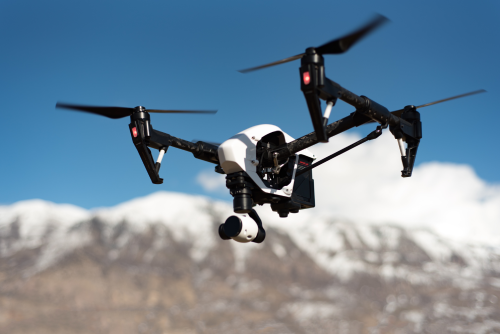
The Autel EVO II Pro V3 is an active, foldable consumer camera drone from Autel Robotics aimed at buyers who want higher-end imaging without moving into a full enterprise airframe. It matters because it pairs a 1-inch camera sensor with long claimed endurance, a mature EVO-series platform, and obstacle sensing in a format that still fits the advanced hobbyist and prosumer market. For photographers, videographers, and serious drone shoppers comparing premium foldables, it remains a relevant model to evaluate.
In a market where many premium consumer drone conversations quickly default to DJI models, the EVO II Pro V3 stands out simply because it gives buyers another established route into serious aerial imaging. That alone makes it important. Some users want an alternative ecosystem, some already own Autel accessories, and others prefer to compare several mature platforms before investing in a more expensive drone. The EVO II Pro V3 is not the lightest or most casual option in its class, but it is one of the more notable image-first foldable drones for people who want a substantial aircraft with strong paper specs and a camera setup that goes beyond entry-level hardware.
Quick Summary Box
- Drone Name: Autel EVO II Pro V3
- Brand: Autel
- Model: EVO II Pro V3
- Category: Consumer
- Best For: Aerial photography, videography, advanced hobby flying, and prosumer imaging work
- Price Range: Not publicly confirmed in supplied data
- Launch Year: Not publicly confirmed in supplied data
- Availability: Not publicly confirmed in supplied data
- Current Status: Active
- Overall Rating: Not rated due to limited confirmed data
- Our Verdict: A serious image-first foldable drone for buyers who want a 1-inch sensor, 6K capture, and the Autel ecosystem, but bundle contents, pricing, and regional support should be verified before purchase.
Introduction
The EVO II Pro V3 sits in Autel Robotics’ premium consumer camera-drone lineup and is positioned as a more advanced option than entry-level or travel-light models. Under the Autel brand, it targets creators, enthusiasts, and small professional users who care more about image quality and flight capability than ultra-light portability. Readers should care because this is one of the better-known non-DJI foldable drones in the high-end consumer segment, making it a common comparison choice for buyers looking beyond the most dominant ecosystem.
That broader context matters. The premium foldable drone segment is highly competitive, but it is also increasingly shaped by ecosystem lock-in, firmware support, accessory availability, and local regulation. A drone is not just a camera in the air anymore; it is part of a wider ownership experience that includes batteries, controller options, mobile apps, service support, firmware updates, and compliance. The EVO II Pro V3 enters that discussion as a serious, image-focused aircraft with clear strengths on paper. It is most attractive to buyers who already know why a larger sensor and adjustable aperture matter, and who are willing to carry a heavier drone in exchange for more robust capability than the smallest travel models usually provide.
For shoppers doing careful research, this drone is worth examining not only for what it offers directly, but for what it represents in the current market: a premium consumer/prosumer camera platform that tries to balance portability with stronger imaging hardware and longer endurance. It is not a toy, not an ultra-light convenience drone, and not a purpose-built enterprise inspection machine. It sits in the middle ground where many serious creators actually shop.
Overview
What kind of drone is it?
This is a multirotor, foldable camera drone designed primarily for aerial imaging. In practical terms, it is a consumer/prosumer platform rather than a toy, FPV racer, or heavy industrial aircraft. The official product positioning centers on image quality, intelligent flight assistance, and long-range transmission.
That classification is important because it tells you what tradeoffs Autel made. The EVO II Pro V3 is built around integrated camera performance, stable hovering, GPS-assisted operation, and cinematic capture rather than speed-focused manual acrobatics or payload flexibility. Buyers should think of it as a flying camera with premium consumer features, not as a customizable work drone meant to carry changing sensors or attachments. If your priority is repeatable aerial photography and smooth video capture, that is exactly the right design philosophy. If your priority is racing, ultra-light travel, or industrial mapping payloads, it is not.
Who should buy it?
The EVO II Pro V3 makes the most sense for advanced hobbyists, travel creators who can accept a larger drone, real-estate shooters, independent filmmakers, and small teams that want a capable aerial camera without stepping into a dedicated enterprise workflow. It can also appeal to existing Autel users who prefer staying inside the EVO controller and battery ecosystem.
A good way to think about the target buyer is this: someone who has moved beyond the “first drone” stage and now cares about output quality, consistency, and workflow. That buyer may be shooting commercial property videos, scenic social media content, tourism material, independent documentary footage, or high-end hobby travel imagery. They may also want a drone that feels more substantial in the air than tiny consumer aircraft. The EVO II Pro V3 is less about convenience-first flying and more about controlled, deliberate image-making.
What makes it different?
Its main differentiators are the 1-inch camera sensor, up to 6K video capture, foldable airframe, and the EVO II family’s relatively substantial, confidence-oriented design. Compared with smaller consumer drones, it leans more toward image-first performance than minimum carry weight. Compared with some rivals, it stands out as an Autel alternative for buyers who want premium camera-drone features outside the most common mainstream platform.
There is also a psychological difference in how it positions itself. Some drones are sold on being small enough to carry everywhere. Others are sold on being professional enough to justify their size. The EVO II Pro V3 leans toward the second idea while still staying foldable. That makes it appealing to buyers who equate a somewhat larger airframe with better outdoor confidence, more serious hardware, and less compromise around camera ambition.
Key Features
- 1-inch CMOS camera sensor for stronger image quality than smaller-sensor consumer drones, especially in dynamic scenes and more difficult light
- 20 MP still image capability, suitable for detailed aerial photography and general commercial content creation
- Up to 6K video recording, giving editors more room for cropping, stabilization, reframing, and high-quality 4K delivery
- Adjustable aperture lens, useful for exposure control in bright conditions and a major practical feature for video shooters
- 3-axis stabilized gimbal for smoother video capture and more reliable horizon control during normal operations
- Up to 40 minutes quoted flight time, which is strong on paper for a foldable camera drone in this size class
- SkyLink 2.0 transmission system with up to 15 km claimed range under favorable conditions, signaling a premium-tier control and video link
- Omnidirectional obstacle sensing/avoidance for safer general flying and added confidence during slow, careful camera moves
- Foldable multirotor design for transport and storage, despite being larger than compact travel drones
- Approx. 1.15 kg class airframe, signaling a larger and potentially steadier platform than ultra-compact consumer aircraft
- Internal storage plus microSD expansion, useful for backup recording and flexible media management
- GPS-class satellite navigation support for positioning, return-to-home behavior, and basic flight stability assistance
Full Specifications Table
| Field | Specification |
|---|---|
| Brand | Autel |
| Model | EVO II Pro V3 |
| Drone Type | Foldable multirotor camera drone |
| Country of Origin | China |
| Manufacturer | Autel Robotics |
| Year Introduced | Not publicly confirmed in supplied data |
| Status | Active |
| Use Case | Aerial photography, videography, advanced hobby and prosumer imaging |
| Weight | Approx. 1,150 g |
| Dimensions (folded/unfolded) | Approx. 228 × 133 × 110 mm folded; 457 × 558 × 108 mm unfolded |
| Max Takeoff Weight | Not publicly confirmed in supplied data |
| Battery Type | Li-ion polymer battery |
| Battery Capacity | Approx. 7,100 mAh |
| Flight Time | Up to 40 minutes |
| Charging Time | Not publicly confirmed in supplied data |
| Max Range | Up to 15 km, depending on region and conditions |
| Transmission System | Autel SkyLink 2.0 |
| Top Speed | Up to 72 km/h |
| Wind Resistance | Approx. 17 m/s |
| Navigation System | GPS / GLONASS / Galileo |
| Obstacle Avoidance | Omnidirectional obstacle sensing/avoidance |
| Camera Resolution | 20 MP |
| Video Resolution | Up to 6K |
| Frame Rates | Up to 6K at 30 fps; up to 4K at 60 fps |
| Sensor Size | 1-inch CMOS |
| Gimbal | 3-axis mechanical gimbal |
| Zoom | Digital zoom supported; exact limits are mode-dependent and should be verified |
| Storage | Internal storage plus microSD expansion |
| Controller Type | Bundle-dependent; standard remote and smart-controller options should be verified before purchase |
| App Support | Autel controller/app ecosystem; exact package varies by bundle and region |
| Autonomous Modes | Intelligent flight features are associated with the platform, but the exact current mode list should be verified |
| Payload Capacity | Not publicly confirmed in supplied data |
| Operating Temperature | Approx. -10°C to 40°C |
| Water Resistance | Not publicly confirmed in supplied data |
| Noise Level | Not publicly confirmed in supplied data |
| Remote ID Support | Not publicly confirmed in supplied data |
| Geo-fencing | Not publicly confirmed in supplied data |
| Certifications | Not publicly confirmed in supplied data |
| MSRP / Launch Price | Not publicly confirmed in supplied data |
| Current Price | Not publicly confirmed in supplied data |
Design and Build Quality
The EVO II Pro V3 follows the established foldable camera-drone formula, but it is not a tiny travel drone. With a roughly 1.15 kg-class airframe, it sits in a more substantial size and weight bracket than ultra-light consumer models, which usually translates into a more planted feel in outdoor flying but less convenience in casual carry. The EVO family is also known for a high-visibility industrial-orange style, which many pilots like for line-of-sight visibility.
That visibility advantage is not trivial. A bright airframe can make pre-landing orientation, line-of-sight tracking, and visual spotting easier in some lighting conditions than darker gray aircraft. It does not replace a spotter or proper safe operating practices, but it can help the pilot keep better visual awareness at moderate distance. For creators filming over varied terrain such as forest edges, fields, coastlines, or construction areas, strong visual contrast can be useful.
From a build perspective, the design appears oriented toward practical field use: folding arms for transport, a stabilized front camera, and a body shape intended for repeated setup and pack-down rather than one-off novelty use. Because it is a consumer/prosumer multirotor, buyers should think of it as durable enough for normal camera-drone work, not as a waterproof or heavy-ruggedized inspection platform unless that is specifically confirmed by the seller.
Its size class also changes how ownership feels in practice. This is the kind of drone you plan around a little more. It takes up more bag space, requires more deliberate launch areas, and usually invites more careful battery and propeller management than a small grab-and-go aircraft. In exchange, many pilots prefer the feeling of flying something that looks and behaves like a serious camera platform rather than a lightweight travel gadget.
The foldable design is still an advantage. Compared with rigid professional rigs, the EVO II Pro V3 remains much easier to transport, store, and deploy in the field. That means it can still fit the workflow of solo operators, car-based location shoots, and creators who want one premium drone rather than a full production kit. It occupies an in-between space: more substantial than a compact travel drone, far less cumbersome than a non-folding professional aircraft.
Flight Performance
On paper, the flight performance is one of the EVO II Pro V3’s stronger selling points. A quoted flight time of up to 40 minutes is competitive for a camera-led foldable drone, and the claimed top speed of 72 km/h suggests it has enough pace for repositioning, wind penetration, and general outdoor work. The official 15 km transmission claim also places it in the long-range premium consumer class, though real-world range will always be much lower depending on regulations, interference, terrain, and local line-of-sight rules.
The most important real-world note is that manufacturer flight-time figures are almost always best-case numbers. Actual endurance depends on wind, temperature, speed, ascent rate, camera use, return-to-home reserve, and how conservative the pilot is with battery management. In normal shooting conditions, especially when making multiple climbs, hovering for framing, and flying in mixed wind, buyers should expect less than the headline maximum. That does not weaken the spec; it just means pilots should treat 40 minutes as a ceiling, not a guaranteed mission result.
Its size and weight class suggest a steadier outdoor character than pocket drones, especially when filming in open areas. The quoted wind resistance figure is also respectable for this segment. As analysis rather than firsthand test data, the likely tradeoff is clear: the EVO II Pro V3 should feel more confidence-inspiring outdoors than very small drones, but it will be less convenient in tight indoor spaces and less forgiving of cramped takeoff zones.
This matters most for the kind of user who regularly shoots in coastal areas, elevated terrain, or broad open landscapes where small drones can begin to feel busy or overworked. A larger foldable aircraft often holds its line more convincingly and can inspire greater confidence during slow cinematic moves. That said, no consumer drone is immune to wind, and obstacle avoidance does not eliminate the need for manual judgment. Pilots still need to read conditions carefully, especially when flying near trees, ridgelines, structures, or changing gusts.
Transmission performance is another spec that is best understood as a quality indicator rather than an invitation to extreme-distance flight. A strong transmission system matters because it can improve signal reliability, video feed confidence, and general control feel even at normal visual-line-of-sight ranges. For most legal and responsible users, the benefit is not about flying absurdly far. It is about having a more dependable connection while working in environments with moderate RF complexity or when framing carefully at regular operating distances.
Top speed is similarly practical. A faster drone is not just about sport. It helps the aircraft reposition between shots, return more quickly when weather changes, and resist drift more effectively in some situations. For filmmakers, this can save time. For general pilots, it can simply make the aircraft feel more capable and less strained.
Camera / Payload Performance
The camera is the core reason most buyers will look at the EVO II Pro V3. A 1-inch CMOS sensor and 20 MP stills place it above basic consumer camera drones in imaging ambition, while up to 6K video recording gives editors more room for cropping, reframing, and downsampling to 4K. The adjustable aperture is another important advantage because it gives pilots more direct exposure control than fixed-aperture alternatives.
That adjustable aperture deserves special attention because it changes the workflow in a meaningful way. In bright daylight, drone videographers often want to keep shutter speed within a more cinematic range, especially if they are following common frame-rate and motion-blur practices. A variable aperture can help manage exposure without relying only on ISO changes or ND filters. It does not replace filters entirely, but it gives the pilot more flexibility and can make field shooting more efficient when light changes quickly.
In practical buyer terms, this setup should appeal most to landscape shooters, real-estate creators, travel filmmakers, and anyone who wants stronger daylight dynamic range and better low-light potential than smaller sensors usually provide. The 3-axis gimbal is also important because it keeps the drone useful as a stabilized aerial camera rather than just a flying action camera. There is no confirmed public data in the supplied record showing this model as a modular payload carrier, so it should be treated primarily as an integrated camera drone, not a general-purpose payload platform.
For still photography, a 20 MP camera is generally sufficient for web delivery, commercial marketing use, property listings, travel work, and many moderate-size print needs. More importantly, the quality of those pixels matters at least as much as the raw count. A larger sensor can improve tonal roll-off, highlight retention, and the overall flexibility of files in editing. For photographers who regularly recover shadows, balance bright skies against darker foregrounds, or shoot at the edges of daylight, sensor size can make a noticeable difference.
For video, 6K capture offers practical editing headroom. Even if the final output is 4K or 1080p, higher-resolution acquisition can make stabilization, subtle crops, and reframing easier without immediately degrading final quality. That is particularly useful for solo operators who may not get multiple takes from the same aerial path. It gives the editor more options later, which is often one of the most valuable benefits of a higher-end camera drone.
Low-light expectations should still remain realistic. A 1-inch sensor is better than a smaller consumer sensor, but it is not a miracle solution for night work. Noise, motion blur, and dynamic limitations still exist, especially on a moving aerial platform. Buyers should view the EVO II Pro V3 as stronger than basic consumer drones in challenging light, not as a replacement for a larger ground camera system.
Smart Features and Software
The official platform messaging around the EVO II Pro V3 highlights transmission and obstacle sensing as major parts of the experience. SkyLink 2.0 is intended to provide more robust link performance and long-distance control/video transmission in supported regions. For buyers, that matters less as a literal long-range invitation and more as a sign of a higher-tier connection system for cleaner live view and more confidence in challenging RF environments.
Smart flight assistance is also a normal expectation in this class. Return-to-home behavior, obstacle sensing, and intelligent capture functions are all relevant parts of how a premium consumer drone is judged. That said, exact software features can change with controller choice, firmware, and app version, so buyers should verify the current feature list for the specific bundle they are considering rather than assuming every advertised mode ships in every package.
Obstacle sensing is especially valuable for slow, deliberate camera work, but it should be understood as an aid, not a guarantee. Detection systems can be limited by lighting, surface texture, thin branches, power lines, speed, and the direction of travel. Premium drones reduce certain risks, but they do not make risky flying safe. Buyers who treat omnidirectional sensing as a backup layer rather than an autopilot replacement will get more realistic value from it.
The software side of ownership is often underrated during purchase research. A drone with good hardware can still feel frustrating if its app support, firmware communication, controller interface, or update process does not fit the user’s workflow. Because bundle and regional variation matter, potential buyers should check current app compatibility, controller type, and any recent support notes before buying. This is especially true for working creators who cannot afford downtime caused by surprise compatibility issues.
Users interested in autonomous capture should also verify the current state of tracking, waypoint, and intelligent shot tools if those functions are central to their workflow. Some buyers need only stable manual flying and return-to-home. Others rely heavily on subject tracking, route planning, or repeatable cinematic automation. The difference matters.
Use Cases
The most realistic use cases for the EVO II Pro V3 are image-led and advanced hobby workflows:
-
Aerial photography for landscapes, coastlines, and city overviews
The 1-inch sensor and stabilized platform make the drone a sensible choice for scenic work where detail, tonal range, and composition matter. -
Video production for travel, tourism, and independent filmmaking
The 6K capability and adjustable aperture support more flexible post-production and better exposure management during changing outdoor conditions. -
Real-estate marketing and property overview footage
A premium foldable drone like this can provide polished establishing shots, site context, and high-end exterior visuals for listings and commercial presentation. -
Social content and branded video work where 6K capture is valuable
Higher-resolution footage gives content creators more flexibility to repurpose clips for vertical, horizontal, and cropped formats. -
Outdoor hobby flying for pilots who want a premium camera platform
Not every buyer is operating commercially. Some simply want a more serious drone for recreational aerial imaging and skill development. -
Training progression for users stepping up from smaller camera drones
Pilots moving beyond entry-level platforms may appreciate the extra capability, stronger wind handling, and more advanced imaging tools. -
Basic visual inspection or site-overview tasks where a stabilized high-quality camera matters more than specialized sensors
While it is not an enterprise modular platform, it may still be useful for broad visual observation, site documentation, or general review work.
These use cases are strongest when the operator needs a balance of portability and serious output. If your work demands thermal imaging, interchangeable payloads, protected airframe design, or advanced industrial mission software, this is not the right category. But for visual-first jobs, especially those done by a solo creator or small team, it can be a strong fit.
Pros and Cons
Pros
- 1-inch sensor is a real advantage over smaller-sensor consumer drones for buyers who prioritize image quality over absolute portability
- Up to 6K video gives good creative headroom for editing, cropping, stabilization, and high-quality 4K delivery
- Adjustable aperture improves exposure flexibility in changing light and makes the camera system more practical for serious video work
- Up to 40 minutes claimed endurance is strong for a foldable camera drone and may reduce battery stress on location shoots
- Long claimed transmission range with SkyLink 2.0 suggests a premium-class control and video link
- Omnidirectional obstacle sensing improves general safety and pilot confidence during slower, more careful flight
- Foldable design remains more portable than non-folding professional rigs while still feeling more substantial than compact travel drones
- Active status makes it more relevant than clearly discontinued legacy options, especially for buyers concerned about firmware and accessory support
- Larger airframe may appeal to pilots who prefer a steadier outdoor platform rather than an ultra-light travel-first drone
- Autel ecosystem gives buyers a credible alternative to the most dominant consumer drone brand
Cons
- Larger and heavier than many newer travel-oriented consumer drones, making it less appealing for minimal-bag creators
- Not a sub-250 g aircraft, so regulation burden is higher in many markets and may affect where and how it can be flown
- Price and bundle contents are not publicly confirmed in the supplied data, which makes value comparisons harder
- Launch year and some ecosystem details are not clearly established in the supplied data, so buyers should verify current package specifics
- Water resistance and Remote ID support should be verified rather than assumed, especially for regulated markets
- Some buyers may prefer lighter rivals with stronger current-market software ecosystems or more widely discussed creator support
- Payload flexibility is not publicly confirmed, limiting its appeal for modular mission work
- Its size may be overkill for casual users who only need occasional travel footage or simple social clips
- Real-world endurance will be lower than headline numbers, as with any drone in this category
Comparison With Other Models
| Model | Price | Flight Time | Camera or Payload | Range | Weight | Best For | Winner |
|---|---|---|---|---|---|---|---|
| Autel EVO II Pro V3 | Varies by bundle and region | Up to 40 min | 1-inch 20 MP camera, up to 6K video | Up to 15 km | Approx. 1,150 g | Buyers who want premium Autel imaging and a larger foldable platform | Best for Autel ecosystem users |
| DJI Mavic 3 Classic | Varies by bundle and region | Up to 46 min | 4/3 camera, up to 5.1K video | Up to 15 km | Approx. 895 g | Creators prioritizing sensor size and lighter carry weight | Best for image quality and portability balance |
| Autel EVO Lite+ | Varies by bundle and region | Up to 40 min | 1-inch 20 MP camera, up to 6K video | Up to 12 km | Approx. 835 g | Buyers who want Autel image quality in a lighter package | Best for lower carry weight and travel convenience |
Street pricing changes frequently, and bundle content can dramatically affect value, so the table above should be read as a capability comparison rather than a live price chart.
EVO II Pro V3 vs a close competitor
Against the DJI Mavic 3 Classic, the EVO II Pro V3 competes more on ecosystem choice and platform preference than on sheer compactness. The DJI option generally looks stronger if you want a lighter aircraft and the benefit of a larger 4/3 sensor. The Autel option still has appeal if you specifically want the EVO form factor, 6K recording, or prefer Autel’s platform.
In practical buying terms, this comparison often comes down to philosophy. The Mavic 3 Classic is likely to attract users who want a polished, relatively compact premium imaging tool with strong brand visibility and a larger sensor. The EVO II Pro V3 may appeal more to buyers who value Autel as an alternative ecosystem, prefer the EVO design language, or want the specific combination of 1-inch sensor plus 6K capture. Neither is a universal winner; the choice depends on what matters more to you: ecosystem familiarity, sensor size, flight feel, controller preference, and total package pricing.
EVO II Pro V3 vs an alternative in the same segment
Compared with the Autel EVO Lite+, the EVO II Pro V3 is the more substantial aircraft. That usually means less travel convenience but a more serious feel in the air and, on paper, stronger obstacle coverage and transmission performance. The Lite+ is easier to carry; the Pro V3 is the more “full-size premium foldable” choice.
For many buyers, that difference is more important than the spec sheet alone suggests. The Lite+ is the easier recommendation for travelers, hikers, and users who prioritize reduced bag weight. The Pro V3 is the stronger recommendation for someone who wants a more planted platform and is comfortable with a larger aircraft. If you already know that your flying is mostly vehicle-based, location-based, or project-based rather than everyday carry, the Pro V3 may make more sense than its weight suggests.
EVO II Pro V3 vs an older or previous-generation option
If you are comparing the V3 against earlier EVO II Pro variants on the used or old-stock market, the V3 is the safer current-platform pick because the supplied data lists it as active. Older units may cost less, but buyers should be much more careful about battery age, controller compatibility, firmware state, and service support.
This is especially relevant in premium drones because old stock can look like a bargain until one missing accessory, aging battery, or incompatible controller creates a costly ownership problem. If you are tempted by a cheaper earlier version, make sure the savings are meaningful enough to justify the extra uncertainty. In many cases, current support status is worth paying for.
Manufacturer Details
Autel Robotics is the manufacturer, and Autel is the brand name most consumers see on the product itself. In this case, the brand and manufacturer are effectively the same organization, with “Autel” functioning as the shorter market-facing label and “Autel Robotics” as the company identity behind the product line. The company is associated with China and is known in the drone market for the EVO series as well as enterprise-oriented aircraft and imaging platforms.
In market terms, Autel is one of the better-known alternatives to the dominant consumer drone brands. Its reputation has generally been built around camera-focused multirotors, bright visual design, and a product mix that spans from mainstream consumer flying to more specialized professional systems.
That reputation matters because brand choice influences much more than the aircraft itself. It affects accessory supply, app support, firmware trust, community knowledge, resale value, and repair options. Buyers considering Autel are often doing so intentionally rather than by accident. They may want more brand diversity in the market, may already trust Autel hardware, or may prefer certain design and ecosystem choices over the more common mainstream path.
Support and Service Providers
Support quality matters a lot on premium drones, especially for batteries, controllers, gimbals, and firmware-related issues. Buyers considering the EVO II Pro V3 should look first for official support channels, official documentation, and seller-confirmed repair routes. If possible, buy from a source that can clearly state regional warranty handling, spare-parts availability, and controller/app compatibility.
Spare batteries, propellers, charging accessories, and carrying solutions are especially important ownership items in this class. Community forums and creator groups can also be helpful for setup advice and troubleshooting, but they should not replace official guidance for repairs, battery safety, or firmware decisions. If regional service coverage is unclear, verify it before buying rather than after a problem appears.
A good support check before purchase should include more than warranty length. Ask where repairs are processed, how long turnaround times usually take, whether replacement batteries are readily available, and what happens if the included controller develops a fault. Premium drones are long-term tools. The quality of ownership often depends less on first-day specs and more on what happens six months later when you need a battery, cable, propeller set, or service answer quickly.
Where to Buy
The safest buying routes are the official brand store, authorized dealers, and established drone retailers with clear after-sales support. Marketplace listings can sometimes offer lower pricing, but premium drones are not ideal products for support-light purchasing, especially when controller type and accessory bundles vary.
Before checkout, confirm:
- Which controller is included
- Whether batteries are genuine and fresh stock
- Whether the drone is region-compatible
- Whether the seller handles warranty claims directly
- Whether firmware and app support are current for your market
For buyers outside major drone-retail regions, local distributor availability may vary, so a confirmed support path matters as much as the headline drone spec sheet.
If you are considering used or refurbished stock, add a few more checks: battery cycle count if available, propeller and arm condition, gimbal health, included charger type, and proof that the drone has not been abandoned by a previous owner with unresolved support issues. Used premium drones can offer good value, but only if the package is complete and the condition is honestly represented.
Price and Cost Breakdown
The supplied data does not publicly confirm launch price or current price, so buyers should treat every listing as bundle-specific. This matters more than usual because premium camera drones can vary significantly in cost depending on whether the package includes a standard controller, a smart controller, extra batteries, a multi-charger, filters, a case, or other accessories.
When budgeting, verify the total ownership picture, not just the base drone price:
- Drone and controller bundle price
- Extra flight batteries
- Spare propellers
- Fast or multi-battery charging accessories
- High-quality microSD cards
- Protective case or travel bag
- ND filters for video work
- Repair coverage, insurance, or care plans if available
- Registration and compliance-related costs in your region
A lower upfront listing may not be the better deal if it excludes the controller or battery setup you actually need.
This category in particular punishes incomplete budgeting. A creator who buys only the basic kit may quickly discover that one battery is not enough for a location shoot, that a proper case is needed for safe transport, or that better media cards are necessary for high-bitrate recording. In other words, the real cost of ownership is usually meaningfully higher than the base listing price. That does not make the drone poor value; it just means serious buyers should budget like serious buyers.
Regulations and Compliance
Because this is a roughly 1.15 kg-class drone, it will usually fall well outside the ultra-light category in many jurisdictions. That means registration requirements are likely in a large number of countries, and commercial use may require additional licensing, operational approvals, or pilot qualifications depending on local law.
Buyers should also verify:
- Whether Remote ID support is available or required in their region
- Whether the included firmware is suitable for local compliance rules
- Whether night flying, urban flying, or commercial filming needs extra authorization
- Whether privacy and data-protection rules affect where and how the camera can be used
Do not assume that a drone marketed internationally is automatically compliant everywhere. Always check national and local aviation rules before flight.
The weight class has practical consequences beyond paperwork. Heavier drones may face stricter operating limitations near people, in built-up areas, or in certain airspace categories. Insurance expectations may also change if the aircraft is used commercially. Even recreational pilots should check whether training, registration labels, or online competency requirements apply. This is one reason the EVO II Pro V3 makes more sense for informed buyers than for casual impulse shoppers.
Who Should Buy This Drone?
Best for
- Advanced hobbyists who want a serious camera drone rather than a starter model
- Aerial photographers who value a 1-inch sensor and stabilized footage
- Videographers who want up to 6K capture and adjustable aperture control
- Existing Autel users who want to stay within the EVO ecosystem
- Buyers who prefer a larger, more confidence-oriented foldable drone
These buyers are likely to appreciate what the EVO II Pro V3 is trying to do. They are not just looking for “a drone.” They are looking for a capable aerial imaging tool with enough endurance, enough stability, and enough camera quality to justify the step up from basic consumer models. They are also more likely to understand the compromises involved, especially around size, regulation, and carrying convenience.
Not ideal for
- Beginners looking for the cheapest or simplest first drone
- Buyers who specifically need a sub-250 g aircraft
- Travelers who prioritize minimal bag weight above all else
- Users who need a waterproof, industrial, or modular payload platform
- Shoppers unwilling to verify support coverage, firmware status, and bundle details before purchase
For these users, the EVO II Pro V3 may be too much drone in some ways and not enough in others. If your top priority is easy everyday carry, a smaller model will likely make you happier. If your top priority is industrial capability, you should look at a different class entirely. And if you do not want to think about registration, bundle verification, or support channels, this is probably not the right purchase tier.
Final Verdict
The Autel EVO II Pro V3 remains a credible premium foldable camera drone because it combines the things serious buyers actually care about: a 1-inch sensor, up to 6K video, long quoted endurance, solid transmission claims, and comprehensive obstacle sensing. Its biggest strengths are imaging ambition and a mature, substantial airframe; its biggest drawbacks are its heavier form factor, the higher regulatory burden that comes with that size class, and the need to verify bundle contents, pricing, and regional support carefully.
Its appeal is clearest when you understand what kind of drone you are buying. This is not a minimalist travel accessory or a casual weekend toy. It is a premium consumer/prosumer imaging platform meant for users who value camera performance, stable outdoor flying, and a more serious feature set than entry-level aircraft provide. For that audience, the EVO II Pro V3 still makes sense.
If you want the smallest or cheapest drone, this is not the right pick. But if you want an active Autel camera platform with stronger-than-basic imaging potential and you are comfortable buying in the premium consumer/prosumer tier, the EVO II Pro V3 is still a model worth serious consideration. The smartest purchase approach is simple: compare the exact bundle against current rivals, confirm controller and support details before paying, and buy only when the full ownership package—not just the headline spec sheet—works for your needs.
