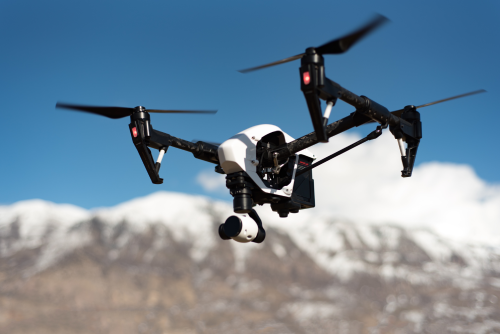
The Autel EVO Max 4T is an active enterprise/industrial multirotor from Autel Robotics, aimed at teams that need thermal imaging, situational awareness, and more robust field capability than a typical consumer camera drone. It matters because this class of aircraft is bought for jobs like inspection, public safety, and incident assessment, where workflow reliability can be as important as image quality. Based on official manufacturer positioning, the EVO Max 4T is a professional mission platform, not a casual hobby model.
In other words, this is the kind of drone that tends to be evaluated by operations managers, procurement teams, inspectors, emergency coordinators, and technical pilots rather than first-time recreational buyers. The value proposition is not just “can it capture good footage?” but “can it help a team make better decisions in the field, under time pressure, in difficult conditions, with fewer blind spots?” That is a very different buying question, and it is the right lens through which to assess the EVO Max 4T.
Quick Summary Box
- Drone Name: Autel EVO Max 4T
- Brand: Autel
- Model: EVO Max 4T
- Category: Enterprise/industrial multirotor
- Best For: Thermal inspection, public safety, industrial situational awareness, infrastructure work
- Price Range: Not publicly confirmed in supplied data
- Launch Year: Not publicly confirmed in supplied data
- Availability: Not publicly confirmed in supplied data
- Current Status: Active
- Overall Rating: Not rated due to limited confirmed data
- Our Verdict: A serious enterprise thermal platform with strong mission-oriented positioning, but buyers should verify package details, pricing, support coverage, and region-specific compliance before procurement.
For most organizations, the main takeaway is straightforward: this looks like a capable professional tool, but it should be purchased like a system, not like a gadget. Aircraft, controller, batteries, software workflow, training, and service support all matter.
Introduction
The EVO Max 4T sits in Autel Robotics’ enterprise lineup and is positioned for professional operators rather than recreational flyers. As an active China-made industrial multirotor under the Autel brand, it is most relevant to inspection teams, emergency-response organizations, infrastructure operators, and businesses that need a thermal-capable aerial tool.
For readers comparing platforms, the key question is not just whether the aircraft can fly, but whether its payload, support model, autonomy features, and procurement path match real operational needs. That is where the EVO Max 4T becomes interesting.
Enterprise drone buying is usually less emotional than consumer drone buying. A hobbyist may care most about image quality, price, portability, or fun flight characteristics. A professional buyer is usually trying to solve a workflow problem: reduce inspection risk, shorten survey time, improve response awareness, document incidents, or expand visual coverage without sending staff into dangerous locations. In that context, thermal imaging and mission reliability can be worth far more than headline camera specs alone.
The EVO Max 4T enters that kind of conversation as a purpose-built operational platform. Its appeal is tied to the practical idea that one aircraft may support multiple field tasks: visual observation, heat-based anomaly detection, remote assessment, and general aerial overwatch. That can be especially valuable in industries where sending a person onto a roof, near energized infrastructure, or into a hazardous area is expensive, slow, or unsafe.
It also matters that this is not a legacy or discontinued product in the supplied record. Active product status can influence replacement planning, firmware confidence, battery sourcing, and internal justification for procurement. Even if two drones look similar on paper, the one with clearer current support often becomes the safer enterprise decision.
Overview
What kind of drone is it?
The Autel EVO Max 4T is an enterprise/industrial multirotor. Official product positioning places it in the professional mission-drone category, where integrated sensing, thermal capability, stability, and operational workflow matter more than cinematic content creation or low-cost hobby flying.
That category distinction is important. Enterprise multirotors are usually evaluated as working tools, much like rugged tablets, handheld thermal cameras, or specialized field sensors. They are expected to launch quickly, provide a stable live feed, support repeatable missions, and integrate into documentation or response processes. They are not judged primarily on social-media-ready footage or manual flying excitement.
The “4T” naming also strongly signals a thermal-oriented role within a broader multi-sensor package. While exact component details should be confirmed from official current documentation, the model identity alone tells buyers this is not just a visible-light camera drone with a premium label attached.
Who should buy it?
This model is best suited to organizations and professionals that need a deployable aerial system for thermal-aware observation and inspection tasks. Typical buyers would include public-safety teams, industrial inspectors, utility operators, facilities managers, and service providers handling site assessment or incident documentation.
It is especially relevant where the mission demands more than one kind of visibility. A visible-light image may show structural condition, scene layout, or contextual detail, while thermal data may reveal hotspots, insulation issues, unusual heat signatures, or emerging equipment problems. Teams that benefit from both types of awareness are the natural audience.
Organizations likely to find the EVO Max 4T attractive include:
- fire and rescue units needing aerial heat awareness
- infrastructure owners performing recurring visual and thermal checks
- industrial sites that monitor equipment condition
- security teams wanting broad stand-off observation capability
- engineering service firms delivering inspection reporting to clients
- government or municipal departments with mixed operational needs
What makes it different?
What separates the EVO Max 4T from a basic camera drone is its enterprise focus. The official model identity and product positioning indicate a multi-sensor mission payload with thermal capability, plus a stronger emphasis on navigation, obstacle awareness, and operational resilience in demanding environments.
That difference affects everything from pilot expectations to procurement logic. A typical consumer drone may be excellent for aerial photos, but it may not be the right answer for repeat inspections, incident command support, or thermal anomaly detection. The EVO Max 4T is positioned as something more operationally specific: a field-ready aircraft intended to support professional decisions, not just capture attractive images.
It is also notable as part of Autel’s enterprise strategy. For buyers who do not want to default automatically to the most dominant brand in the market, the EVO Max 4T represents a meaningful alternative platform to evaluate on its own merits.
Key Features
- Enterprise/industrial multirotor platform from Autel Robotics, aimed at professional rather than recreational use
- Active product status, which is important for current procurement, fleet planning, and support confidence
- Thermal mission focus, indicated by the 4T model positioning and overall enterprise role
- Integrated multi-sensor workflow orientation, aimed at inspection and situational-awareness tasks rather than casual filming
- Official emphasis on advanced navigation and obstacle awareness, suitable for complex professional environments where structures, terrain, and operational pressure are common
- Professional use-case fit for public safety, industrial inspection, utilities, facilities, and infrastructure oversight
- Portable field-deployable format, based on official product imagery and market positioning, which can matter when teams need quick setup in vehicles or on-site kits
- Alternative to more dominant enterprise brands, especially for buyers evaluating Autel’s ecosystem, procurement diversification, or platform preferences
- Mission-first aircraft identity, meaning the value is likely tied to reliability, sensing, and operational support more than consumer-style media features
- Shortlist-worthy for thermal buyers, provided exact package contents, software capabilities, and support conditions are verified before purchase
Full Specifications Table
| Field | Specification |
|---|---|
| Brand | Autel |
| Model | EVO Max 4T |
| Drone Type | Multirotor |
| Country of Origin | China |
| Manufacturer | Autel Robotics |
| Year Introduced | Not publicly confirmed in supplied data |
| Status | Active |
| Use Case | Enterprise/industrial; thermal inspection, public safety, industrial situational awareness |
| Weight | Not publicly confirmed in supplied data |
| Dimensions (folded/unfolded) | Not publicly confirmed in supplied data |
| Max Takeoff Weight | Not publicly confirmed in supplied data |
| Battery Type | Not publicly confirmed in supplied data |
| Battery Capacity | Not publicly confirmed in supplied data |
| Flight Time | Not publicly confirmed in supplied data |
| Charging Time | Not publicly confirmed in supplied data |
| Max Range | Not publicly confirmed in supplied data |
| Transmission System | Official positioning indicates an enterprise long-range transmission system, but the exact system name/spec is not publicly confirmed in supplied data |
| Top Speed | Not publicly confirmed in supplied data |
| Wind Resistance | Not publicly confirmed in supplied data |
| Navigation System | Official positioning emphasizes advanced navigation in complex environments; exact sensor stack not publicly confirmed in supplied data |
| Obstacle Avoidance | Official positioning emphasizes advanced obstacle sensing; exact all-direction sensor details not publicly confirmed in supplied data |
| Camera Resolution | Not publicly confirmed in supplied data |
| Video Resolution | Not publicly confirmed in supplied data |
| Frame Rates | Not publicly confirmed in supplied data |
| Sensor Size | Not publicly confirmed in supplied data |
| Gimbal | Integrated stabilized mission payload indicated by official product positioning; exact configuration not publicly confirmed in supplied data |
| Zoom | Official product positioning suggests zoom-capable mission imaging; exact optical/digital figures not publicly confirmed in supplied data |
| Storage | Not publicly confirmed in supplied data |
| Controller Type | Not publicly confirmed in supplied data |
| App Support | Official enterprise control software is expected; exact app/platform names not publicly confirmed in supplied data |
| Autonomous Modes | Official positioning emphasizes autonomous and assisted mission features; exact mode list not publicly confirmed in supplied data |
| Payload Capacity | Not publicly confirmed in supplied data |
| Operating Temperature | Not publicly confirmed in supplied data |
| Water Resistance | Not publicly confirmed in supplied data |
| Noise Level | Not publicly confirmed in supplied data |
| Remote ID Support | Not publicly confirmed in supplied data |
| Geo-fencing | Not publicly confirmed in supplied data |
| Certifications | Not publicly confirmed in supplied data |
| MSRP / Launch Price | Not publicly confirmed in supplied data |
| Current Price | Not publicly confirmed in supplied data |
Because many exact figures are not confirmed in the supplied data, this table should be treated as a procurement checklist rather than a finalized specification sheet. For enterprise buyers, that is still useful. It highlights the areas that require formal verification before you write an internal proposal, submit a tender response, or commit to a fleet purchase.
When requesting quotes, it is worth asking sellers to provide an official datasheet, current accessory list, software compatibility details, and any region-specific notes. That saves time later, especially if compliance, operating temperature, transmission standards, or bundled battery counts affect your intended deployment.
Design and Build Quality
Based on official product imagery and the aircraft’s market segment, the EVO Max 4T appears to follow the modern portable-enterprise multirotor formula rather than the larger, boxier heavy-lift style used by some industrial platforms. That matters because many real field teams value fast deployment, smaller transport cases, and quick battery swaps more than maximum payload modularity.
In this class, design quality is less about appearance and more about field-readiness. Buyers should care about arm rigidity, propeller durability, landing stability, controller ergonomics, battery latch confidence, and how easily the aircraft can be packed, transported, and returned to service after routine wear. Official positioning suggests the EVO Max 4T is designed for work sites and operational use, not just occasional demonstration flights.
Serviceability is another practical concern. Before purchase, professional operators should confirm the availability of spare propellers, batteries, chargers, landing components, transport cases, and authorized repair channels in their region. A strong airframe on paper means much less if downtime becomes a procurement problem.
There are also several human-factors questions that matter more in enterprise use than many buyers initially expect. How easy is the aircraft to unfold under time pressure? Can a pilot wearing gloves operate the controller comfortably? Is the screen readable in bright daylight? Can the payload cover be removed and stored without hassle? Does the carrying solution support actual field movement, or only ideal showroom handling? These details can have real operational impact over months of repeated use.
For thermal and inspection workflows, physical confidence in the aircraft matters because missions are often deliberate and close to structures. Operators may need to hold position near roofs, facades, utility assets, or incident scenes. That puts more emphasis on stable landing gear, predictable handling, and a body design that inspires confidence during takeoff, landing, and low-speed maneuvering.
Another point buyers should not overlook is accessory logistics. A drone may seem well designed, but the ownership experience changes dramatically depending on whether spare batteries, charging options, cases, and replacement props are easy to source locally. For an enterprise platform, supportable design is often more valuable than merely sleek design.
Flight Performance
Without a full confirmed spec sheet in the supplied data, the safest conclusion is that the EVO Max 4T is designed for stable, controlled mission flying rather than aggressive manual performance. That is normal for an enterprise thermal platform. In real operations, smooth hovering, predictable low-speed maneuvering, and reliable sensor alignment usually matter more than sport-oriented speed.
Official product positioning also suggests stronger emphasis on navigation confidence and obstacle awareness than on pure pilot skill. That can be valuable for inspectors and emergency teams working around structures, trees, or complex terrain. Still, buyers should verify the exact endurance, link range, top speed, and wind-resistance figures directly from current official documentation before using the aircraft in planning or tender documents.
As analysis rather than a newly claimed spec, the likely flight character is this: controlled, stable, and mission-first. It should be viewed as an outdoor professional platform first, with any indoor or degraded-GNSS usage requiring site-specific testing, training, and procedural discipline rather than assumptions.
That distinction matters because enterprise missions are often constrained by real-world operational needs. A roof inspection may require slow passes and careful framing. A public-safety scene may require rapid launch followed by disciplined hovering and evidence-oriented observation. A utility inspection may require stand-off viewing in wind, with stable sensor pointing more important than quick directional changes. In each of these cases, the aircraft’s usefulness depends less on raw speed and more on composure.
Flight performance also needs to be understood in context of payload purpose. Thermal imaging often benefits from slower, steadier flight to avoid missing details or creating unusable imagery. If the goal is anomaly detection rather than cinematic motion, the aircraft must support repeatable paths, easy repositioning, and clear situational control. That is where enterprise navigation systems and obstacle awareness can contribute meaningfully.
Buyers should also test or verify how the platform handles the operational basics:
- hover stability around buildings
- controller responsiveness under stress
- confidence during automated return behavior
- link reliability in cluttered environments
- battery swap speed between missions
- performance consistency after repeated sorties
Those practical checks often reveal more than headline performance numbers alone. A drone that flies farther on paper is not automatically the better field tool if the interface is slower, the batteries are harder to manage, or the aircraft is less predictable around real work sites.
Camera / Payload Performance
The core appeal of the EVO Max 4T is its mission payload, especially its thermal role. This is not primarily a creator drone for lifestyle video. It is more appropriately evaluated as an airborne sensor platform for seeing heat patterns, identifying anomalies, checking structures, and giving operators more context during inspections or incidents.
A thermal-capable enterprise drone can provide real value in jobs such as:
- locating hotspots or heat leakage
- checking rooftops and building envelopes
- inspecting utility assets
- supporting incident response with additional visibility
- monitoring industrial sites where heat signatures matter
Official positioning also indicates a broader visible-light mission payload around the thermal function, likely to provide context imagery and stand-off observation utility. However, exact details such as thermal resolution, radiometric capability, zoom level, visible-light sensor specs, and measurement tools are not publicly confirmed in the supplied data and should be verified before any professional purchase decision.
For serious buyers, this section is where diligence matters most. Thermal quality is not just about having a heat camera. The exact sensor, lens, temperature-measurement workflow, reporting tools, and image export process can materially change whether the drone is useful for your industry.
That is especially true because thermal imaging can mean different things in different workflows. For some teams, thermal is mainly a situational-awareness layer used to spot people, hotspots, or general heat differences. For others, it is part of a more technical inspection process where relative temperature readings, image consistency, and report-ready outputs matter. Those are not the same operational requirement.
Before procurement, buyers should ideally confirm:
- whether the thermal data is suitable for qualitative viewing, quantitative measurement, or both
- whether stills and video preserve the level of thermal detail required for analysis
- whether the system supports useful temperature spot checks or area measurements
- whether visible and thermal views can be compared efficiently during flight
- whether zoom capability is good enough for safe stand-off inspection distances
- how easy it is to export imagery into the organization’s reporting workflow
A strong payload is not just about sensor hardware. It is also about how quickly an operator can move from detection to interpretation. If a hot area is spotted on a roof, can the user easily frame it, zoom it, tag it, and deliver that information to a client or commander? If a public-safety team identifies a potential hotspot, can it switch views and communicate the finding clearly? Those workflow questions are often what separate a merely capable camera from a truly useful enterprise payload.
Smart Features and Software
Autel’s official positioning for the EVO Max line points toward an enterprise-grade smart-flight stack rather than a manual-only aircraft. That typically means a focus on mission assistance, route confidence, obstacle awareness, and controlled return behavior.
What appears most relevant here is the platform’s emphasis on navigation and operational intelligence. In professional work, that matters because the aircraft needs to do more than simply stay airborne. It has to support repeatable tasks, reduce pilot workload, and help the operator collect usable imagery efficiently.
That said, buyers should not assume every enterprise feature is present in every package or region. Before procurement, verify the current status of:
- automated mission planning
- waypoint or repeat-route tools
- return-to-home behavior
- firmware management
- fleet or cloud workflow options
- SDK or API support
- any thermal analysis or reporting software
- controller and app compatibility
For organizations integrating drones into larger workflows, software clarity matters almost as much as the aircraft itself.
This is where many enterprise buying decisions are won or lost. Hardware may be impressive, but software determines whether the platform fits daily operations. If your team needs recurring inspections, route repeatability can be a major advantage. If your work involves multiple pilots and supervisors, account management, media handling, and firmware governance become important. If you want to integrate the aircraft into custom asset-management or incident-response systems, API and SDK access may matter more than raw camera specs.
Enterprise operators should also ask practical software questions:
- Can missions be planned simply enough for real field use?
- Is the interface intuitive for staff who are not drone enthusiasts?
- Can data be exported cleanly to existing reporting systems?
- Is there a cloud dependency, and if so, can it be managed under internal IT policy?
- Are updates controlled and documented in a way that suits regulated or risk-sensitive operations?
For some organizations, cybersecurity and data governance will be as important as flight automation. Public agencies, utilities, and critical-infrastructure operators may need clarity on account structure, storage paths, firmware processes, and whether internet connectivity is required for certain functions. Those details should be confirmed directly during evaluation rather than assumed from marketing language.
Use Cases
The EVO Max 4T makes the most sense in professional scenarios where thermal and visual awareness are both useful.
- Public safety observation and incident support
- Search support and area scanning
- Fire scene assessment and hotspot awareness
- Utility and energy infrastructure inspection
- Solar, rooftop, and building-envelope thermal checks
- Industrial facility monitoring
- Construction-site assessment
- Security and perimeter observation
- Infrastructure inspection where stand-off viewing is useful
- General industrial situational awareness and documentation
These use cases share a common theme: the aircraft is most valuable when it helps a team see something they could not easily, safely, or quickly confirm from the ground. In public safety, that may mean understanding scene layout or identifying heat-related risk areas. In utilities, it may mean spotting anomalies without exposing personnel to unnecessary hazard. In construction and facilities work, it may mean adding rapid aerial context to maintenance and documentation.
Not every use case places equal weight on thermal imaging. Some teams will use thermal constantly; others may rely on it occasionally but still consider it essential when needed. That is one reason multi-sensor enterprise drones remain attractive: they can support both routine documentation and higher-value diagnostic tasks in one platform.
Pros and Cons
Pros
- Active enterprise/industrial model from an established drone manufacturer
- Officially positioned for professional thermal and mission-based work
- Likely better suited to inspection and public-safety workflows than a standard camera drone
- Strong enterprise differentiation versus casual consumer multirotors
- Autel offers a meaningful alternative brand in a market often dominated by a small number of major players
- Portable multirotor format is likely easier to deploy than larger industrial systems
- Appears well aligned with buyers who need integrated sensing rather than ad hoc payload improvisation
- Potentially attractive for organizations seeking a mission-first aircraft without stepping into much larger platform classes
Cons
- Many headline specs are not publicly confirmed in the supplied data
- Current pricing, bundle structure, and regional availability need direct verification
- Enterprise drones have higher ownership complexity than hobby or creator models
- Support coverage and repair turnaround can vary significantly by country and dealer
- Thermal usefulness depends heavily on exact sensor and software details, which should be confirmed before purchase
- Not the right fit for budget buyers or casual recreational flying
- Software, firmware, and integration details may matter enough to change the purchasing decision
- Procurement without local dealer clarity could create avoidable risk around service and accessories
Comparison With Other Models
| Model | Price | Flight Time | Camera or Payload | Range | Weight | Best For | Winner |
|---|---|---|---|---|---|---|---|
| Autel EVO Max 4T | Premium enterprise; verify dealer quote | Enterprise endurance class; verify official figure | Integrated thermal-focused multi-sensor mission payload | Enterprise long-range class; verify official figure | Portable enterprise multirotor; verify official spec | Public safety, industrial inspection, thermal situational awareness | Best if you want Autel’s enterprise platform and workflow direction |
| DJI Matrice 30T | Premium enterprise | Established enterprise class | Integrated thermal + zoom public-safety payload | Strong enterprise link class | Mid-size enterprise airframe | Mature inspection and public-safety fleets | Best ecosystem maturity |
| DJI Mavic 3 Thermal | Premium, often below larger enterprise rigs | Compact enterprise class | Thermal + visual payload in a smaller package | Strong compact enterprise link class | More portable class | Fast deployment and lighter field kits | Best portability |
| Autel EVO II Dual 640T V3 | Often lower than newer flagship class | Older enterprise class | Older-generation thermal/visible payload | Older enterprise transmission class | Legacy enterprise format | Cost-sensitive buyers already in Autel | Best if heavily discounted and support is confirmed |
The comparison table is most useful as a shortlist guide rather than a definitive ranking. Enterprise drone decisions are rarely made on one column alone. Buyers typically weigh payload relevance, training burden, repair access, software familiarity, and procurement comfort together. A technically strong platform can still be the wrong choice if it does not fit internal support expectations.
EVO Max 4T vs a close competitor
The most obvious close competitor is the DJI Matrice 30T. The DJI option is often favored for ecosystem depth, accessories, and broad market familiarity, while the EVO Max 4T is more compelling for buyers who specifically want Autel’s enterprise approach or are comparing procurement options outside DJI-heavy deployments. The right choice will usually come down to support coverage, software fit, and dealer confidence rather than brand name alone.
This is an important comparison because many enterprise buyers are not choosing between “drone” and “no drone.” They are choosing between two or three serious professional systems. In that situation, questions like service turnaround, pilot retraining, software workflow, and organizational procurement policy can outweigh small differences in top-line specs.
EVO Max 4T vs an alternative in the same segment
Against the DJI Mavic 3 Thermal, the EVO Max 4T appears aimed at a more purpose-built enterprise role. The Mavic 3 Thermal is attractive when portability and quick setup are top priorities. The EVO Max 4T is the better shortlist candidate if your team prioritizes a stronger enterprise-aircraft identity and a workflow built around industrial or public-safety use rather than compact convenience.
That does not automatically make one better than the other. Some teams genuinely benefit more from the smallest practical kit. Others want a platform that feels more explicitly designed for field operations and command-oriented work. The right answer depends on whether your missions reward maximum portability or a more dedicated enterprise posture.
EVO Max 4T vs an older or previous-generation option
Compared with the older Autel EVO II Dual 640T V3, the EVO Max 4T represents newer enterprise positioning. For existing Autel users, the older platform may still have value if it is well-supported and sharply priced. For new buyers, the EVO Max 4T is the more forward-looking option, but only if regional support, pricing, and fleet compatibility check out.
A discounted older platform can be appealing, especially for smaller organizations. But buying into an older generation only makes sense if batteries, repairs, firmware support, and operator familiarity are all still dependable. Otherwise, a lower purchase price can lead to higher operational friction later.
Manufacturer Details
Autel Robotics is the manufacturer behind the Autel brand. In this case, the brand and manufacturer are closely aligned: “Autel” is the market-facing name most buyers recognize, while Autel Robotics is the company producing the aircraft.
According to the supplied record, the company origin is China. Autel is widely known in the drone market for multirotor products that span both consumer/prosumer and enterprise use cases. Its reputation is strongest as an alternative to the most dominant drone brands, particularly for buyers who want another option in camera and industrial multirotors.
Within the market, Autel’s product identity has generally centered on integrated aircraft systems rather than open heavy-lift customization. For enterprise buyers, that usually means the decision comes down to workflow fit, service access, and confidence in long-term support.
That positioning can be appealing to organizations that want a packaged operational system rather than a highly customized aviation project. Many real-world teams do not want to assemble separate sensors, airframes, and control environments. They want a complete aircraft solution that can be trained, documented, insured, and deployed with manageable complexity. Autel’s enterprise appeal often sits in that space.
Buyers should still evaluate the manufacturer at the ecosystem level, not just the product level. Consider dealer network strength, accessory continuity, firmware cadence, training resources, and the company’s track record in supporting professional users over time. In enterprise procurement, brand capability is not just about innovation; it is also about stability and responsiveness.
Support and Service Providers
Support is a major part of the buying decision for any enterprise drone, and it matters even more for thermal models. Buyers should verify the current official support portal, firmware-update process, repair intake procedure, spare-part availability, and warranty terms in their own region.
For the EVO Max 4T specifically, ask dealers or official channels about:
- repair turnaround times
- local or regional service centers
- battery replacement availability
- spare propellers and accessories
- controller replacement process
- enterprise onboarding or training options
- firmware support lifecycle
- any calibration or inspection requirements for thermal workflows
Community help can be useful, but enterprise buyers should not rely on forums alone. If your organization needs guaranteed uptime, confirm whether an authorized dealer, service partner, or enterprise integrator can provide fast support and a clear escalation path.
This section deserves extra weight because thermal drones are often bought for time-sensitive work. A public-safety team may not be able to tolerate a long repair queue. A contractor may miss project deadlines if a damaged aircraft sits idle waiting for parts. A utility program may need predictable maintenance windows and battery replacement planning. Good support is not a nice extra in those settings; it is part of operational readiness.
If possible, buyers should ask prospective suppliers for specifics rather than general reassurance. Useful questions include:
- Do you keep local stock of consumables and common replacements?
- Can you provide loan units or fast replacement options?
- What is the normal turnaround for minor and major repairs?
- Who handles support escalation if software issues affect field operations?
- Is training included, optional, or outsourced?
- Can you assist with setup, compliance onboarding, or fleet rollout?
The quality of answers to those questions will often tell you more about real ownership risk than a polished product brochure.
Where to Buy
The EVO Max 4T should be treated as a professional procurement product first, not necessarily as a simple consumer add-to-cart drone in every region. Depending on market availability, it may be sold through the official brand channel, authorized enterprise dealers, industrial resellers, public-safety suppliers, or regional distributors.
Before purchasing, confirm:
- whether the aircraft is sold directly or quote-based
- what is included in the package
- whether batteries and charging gear are bundled
- local support coverage
- firmware and compliance support
- return and repair logistics
- whether training is available with purchase
For enterprise buyers, local authorized dealers are often the best path because they can clarify package contents, regional rules, and after-sales service more effectively than a generic marketplace listing.
There is also a strategic reason to prefer reputable enterprise channels. Professional dealers may be able to arrange demos, explain software workflows, validate accessory compatibility, and help match the drone to actual mission needs rather than just selling a box. That can prevent expensive mismatches, especially when multiple departments or stakeholders are involved.
If your organization uses formal procurement, request a full written quote that separates hardware, accessories, training, and support. That makes it easier to compare offers and to justify the purchase internally.
Price and Cost Breakdown
Price is not publicly confirmed in the supplied data, so the safest approach is to budget for the entire operational package rather than the aircraft alone. For enterprise thermal drones, the sticker price is only one part of the actual ownership cost.
Key cost items to verify include:
- aircraft and controller package
- number of included batteries
- charger or charging hub
- spare propellers
- carrying case or transport kit
- thermal software or analysis tools, if applicable
- pilot training and internal operating procedures
- insurance or incident cover
- repair contingency and downtime planning
- any dealer support plan or service contract
If you are collecting quotes, ask each seller to separate the airframe cost from the ready-to-work package cost. A cheaper quote can end up being less useful if it excludes batteries, support, or the accessories needed for real field deployment.
This matters because enterprise buyers often underestimate recurring and support costs. Batteries age. Props get replaced. Staff need training refreshers. Firmware may require test-and-approval procedures before operational rollout. Thermal images may need storage and reporting workflows. Over time, the total cost of ownership is shaped by these operational realities at least as much as by the initial purchase.
A more complete budgeting view should include:
- initial hardware package
- spare energy capacity for a real workday
- maintenance and consumables
- training and currency management
- software or data-management costs
- replacement reserves
- downtime risk and backup planning
For teams that expect heavy use, it may make sense to price two aircraft or a backup access plan from the start. In professional operations, resilience often matters more than getting the lowest first quote.
Regulations and Compliance
As an enterprise multirotor, the EVO Max 4T will usually fall into a regulated operating category rather than a casual toy-like exemption. In many jurisdictions, that means registration, pilot credentialing, and commercial flight compliance will apply.
Buyers should verify:
- aircraft registration requirements
- commercial pilot or operator licensing rules
- Remote ID requirements in their country
- local airspace authorization rules
- restrictions around flights near people, roads, or critical infrastructure
- thermal imaging privacy and data-handling obligations
- night-operation rules
- emergency-scene access restrictions
- any sector-specific rules for utilities, public safety, or industrial inspection
Do not assume universal compliance simply because the drone is marketed professionally. Regulations vary widely by country and sometimes by region or mission type. If your workflow involves thermal observation, critical sites, or advanced operations, legal review is worth doing before deployment.
This section becomes even more important in enterprise settings because the consequences of getting it wrong are broader than a single pilot receiving a warning. A compliance mistake can affect organizational liability, evidence usability, contract eligibility, insurance standing, or public trust. That is particularly relevant for public agencies, security operations, and contractors working on sensitive sites.
Thermal work may also create additional privacy and policy considerations. Even when legally permitted, organizations should think about how thermal imagery is stored, who can access it, how long it is retained, and whether internal policy should limit certain forms of observation. Good governance is part of professional operation.
A sound rollout plan usually includes not just flight legality, but internal SOPs covering:
- authorized mission types
- pilot qualifications
- checklist and maintenance procedures
- media handling and storage rules
- incident reporting
- escalation paths for abnormal operations
Who Should Buy This Drone?
Best for
- Public-safety organizations needing a thermal-capable aerial tool
- Inspection teams working on utilities, facilities, energy, or infrastructure
- Industrial operators who value situational awareness over consumer-style filming features
- Organizations already evaluating or using the Autel ecosystem
- Buyers who want an enterprise-focused multirotor rather than a casual camera drone
These buyers are likely to appreciate the EVO Max 4T most if they already understand that mission output matters more than entertainment value. If your goal is to improve field awareness, reduce manual inspection exposure, or add thermal visibility to existing workflows, this platform’s positioning makes sense.
Not ideal for
- Hobbyists and recreational pilots
- Travel creators or general aerial photography users
- Buyers on a tight budget
- Organizations that need fully transparent retail-style pricing before shortlisting
- Teams without a support plan, training process, or clear enterprise workflow
It is also not ideal for buyers who expect a professional drone to succeed on hardware alone. Enterprise aircraft perform best when supported by procedures, training, and clear internal use cases. Without that structure, even a capable platform can end up underused.
Final Verdict
The Autel EVO Max 4T looks like a serious thermal enterprise drone built for work, not play. Its biggest strengths are its professional positioning, likely multi-sensor thermal value, and clear fit for inspection, industrial, and public-safety roles. Its biggest drawback, based on the supplied data, is that buyers still need to verify many critical details directly, including exact specifications, package contents, regional availability, compliance support, and after-sales service.
If you are a professional operator or organization looking for an active Autel enterprise platform, the EVO Max 4T deserves a place on your shortlist. If you want a low-cost drone, a casual creator aircraft, or a purchase decision based only on publicly summarized specs, this is probably too specialized. For the right buyer with the right dealer support, though, it has the profile of a capable mission-first platform.
The clearest way to think about it is this: the EVO Max 4T is promising not because it tries to be everything, but because it appears designed around the needs of teams that value thermal awareness, dependable field deployment, and enterprise-oriented operation. That alone makes it relevant. Whether it becomes the right purchase depends on the less glamorous but decisive details—software fit, service access, accessory availability, regulatory alignment, and total cost of ownership.
So the practical conclusion is not blind enthusiasm or dismissal. It is disciplined interest. Put it on the shortlist, request current official documentation, compare full deployment packages rather than bare aircraft pricing, and judge it as a complete operational system. For organizations that do that homework, the EVO Max 4T has the profile of a genuinely useful professional tool.
