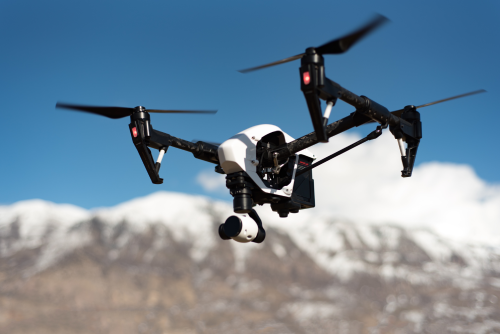
DJI Agras T50 is a current DJI agricultural multirotor aimed at professional crop-spraying work, not hobby or creator flying. It matters to farm operators, agricultural service companies, and enterprise buyers because platform choice in this category affects field workflow, uptime, maintenance, and compliance as much as raw flight performance. Based on the supplied manufacturer-backed record, the Agras T50 is an active, China-made agricultural spray drone in DJI’s lineup.
Quick Summary Box
- Drone Name: DJI Agras T50
- Brand: DJI
- Model: Agras T50
- Category: Agricultural
- Best For: Professional crop-spraying operations, farm service providers, and enterprise agricultural buyers
- Price Range: Not publicly confirmed in supplied data
- Launch Year: Not publicly confirmed in supplied data
- Availability: Not publicly confirmed in supplied data
- Current Status: Active
- Overall Rating: Not rated due to limited confirmed data
- Our Verdict: A purpose-built agricultural spray drone from a major manufacturer, best considered by serious farm operators who can verify local support, pricing, batteries, and mission-specific performance before purchase
- Key Buying Caution: Treat this as an operational system, not just an aircraft. Dealer support, training, spare parts, battery turnaround, and local compliance may matter more than brochure-level headline claims.
Introduction
The DJI Agras T50 sits in DJI’s agricultural segment, which means it should be judged as a workflow tool rather than a camera drone. As a multirotor platform, it is built around vertical takeoff and landing convenience for field deployment, making it more practical for farm operations than fixed-wing systems in tight or improvised launch areas.
That distinction matters. In the consumer drone world, buyers often focus on image quality, portability, obstacle avoidance, and price. In the agricultural world, those are not the central questions. Instead, operators care about whether the aircraft can be staged efficiently at the field edge, whether batteries can be cycled fast enough to keep the day moving, whether refill procedures are safe and repeatable, and whether the system can stay productive during narrow weather windows. A drone that looks impressive on paper but is difficult to maintain or hard to support locally can become a liability during the season.
Readers should care about this model because agricultural drones are usually purchased on total operational value: spraying accuracy, downtime, service network, battery logistics, training, and regulatory fit. For many buyers, the drone itself is only one part of a larger package that may include charging equipment, transport setups, spare consumables, software, pilot training, and dealer onboarding. As of March 2026, the supplied data identifies the DJI Agras T50 as an active product from DJI, with its core role clearly described as agricultural spraying.
That active status is meaningful. In enterprise categories, current products often benefit from better dealer attention, clearer software support expectations, stronger spare-parts planning, and more confidence around fleet standardization. None of that guarantees the T50 is the right platform for every buyer, but it does make it more relevant than a legacy model if long-term support continuity is part of the purchasing decision.
Overview
What kind of drone is it?
The DJI Agras T50 is an agricultural multirotor drone designed for spray missions. That immediately places it in the professional enterprise category rather than the consumer, prosumer, FPV, or cinematic market.
Because it is a multirotor, it likely prioritizes precise low-altitude control, repeatable path flying, and launch flexibility from farm staging areas. Unlike camera-led drones, its value depends more on field productivity and supportability than on photo or video specs.
This category is fundamentally about applied work. A dedicated agricultural aircraft is expected to serve as a tool within a broader farm or contractor workflow. That means it may be transported with chemicals, water, batteries, charging hardware, PPE, and support vehicles. It may be operated under time pressure when crop conditions are right. It may also need to fit into formal recordkeeping and compliance processes. In other words, it is less like buying a gadget and more like procuring a piece of working equipment.
Multirotor architecture also makes sense for many agricultural environments because farms do not always offer ideal takeoff surfaces or runway-style launch areas. A vertical-lift aircraft can be staged from more compact spots, repositioned more easily between plots, and operated in locations where fixed-wing systems are less convenient. The tradeoff, in general terms, is that multirotors are typically judged by practical coverage efficiency rather than by long-endurance cruising in the way some fixed-wing systems are.
Who should buy it?
This model is most relevant for:
- Farms evaluating dedicated aerial spraying equipment
- Agricultural contractors running commercial application services
- Enterprise buyers comparing current DJI agriculture platforms
- Operators who want a purpose-built drone rather than adapting a general camera drone for farm work
It is much less relevant for casual users, photographers, or people simply looking for a general aerial platform.
A useful way to think about the T50 is as a shortlist candidate for organizations already committed to professional operations. That includes buyers who understand that agricultural drone use may require operator training, maintenance schedules, battery management discipline, and regulatory review before a first mission even happens. If a buyer is still at the stage of asking whether one drone can handle hobby flying, inspection, filming, and spraying all at once, this is probably the wrong category.
On the other hand, if the buyer is asking questions like “How many battery sets do we need for a productive day?” or “How fast can local service replace a damaged spray component during peak season?” then the T50 becomes a much more sensible product to evaluate.
What makes it different?
What makes the Agras T50 different is its mission focus. It is not trying to be an all-purpose drone. It is built for agricultural spraying, which changes the buying criteria completely.
Compared with mainstream drones, the important questions become:
- How well it fits a farm workflow
- How easy it is to service in the field
- Whether local dealers can support batteries, repairs, and training
- Whether it meets local aviation and agricultural rules
That specialization is its main strength, but it also makes it a niche purchase.
The advantage of a niche tool is that it can be better aligned to the task. The downside is that it may have little value outside that task. A farm operator may see this as a positive, because specialization often means better ergonomics, better mission suitability, and clearer support channels. A general drone buyer may see it as limiting, because the product is not aimed at flexible everyday use.
The T50 also sits in a segment where ecosystem quality often matters as much as aircraft quality. A strong platform with poor local dealer backing may underperform a slightly less impressive competitor with excellent training, quick spare-parts delivery, and reliable battery support. That is one reason agricultural drone purchasing tends to be more relationship-driven than consumer drone shopping.
Key Features
- Purpose-built agricultural spray drone rather than a general camera platform
- Multirotor airframe for vertical takeoff and landing in field environments
- Active current-status model in DJI’s agricultural lineup
- Designed for professional and enterprise use, not casual flying
- Likely optimized for repeatable, low-altitude work over crops rather than long-range exploration
- Better suited to structured farm operations than hobby or creator workflows
- Backed by a major global drone manufacturer with established enterprise market recognition
- Likely to be sold and supported through commercial-style channels rather than ordinary consumer retail alone
- Best evaluated as part of a broader operating system that includes batteries, charging, maintenance, training, and compliance
- Exact headline specs such as flight time, payload capacity, top speed, range, and obstacle sensing are not publicly confirmed in supplied data
These points underline an important reality: the “feature set” of an agricultural drone is not just what is built into the aircraft. Its real feature set includes everything that helps convert flights into productive field work. That means uptime, turnaround speed, supportability, and mission consistency are part of the value proposition, even if they do not appear in a simple spec list.
Full Specifications Table
| Field | Specification |
|---|---|
| Brand | DJI |
| Model | Agras T50 |
| Drone Type | Agricultural multirotor |
| Country of Origin | China |
| Manufacturer | DJI |
| Year Introduced | Not publicly confirmed in supplied data |
| Status | Active |
| Use Case | Agricultural spraying |
| Weight | Not publicly confirmed in supplied data |
| Dimensions (folded/unfolded) | Not publicly confirmed in supplied data |
| Max Takeoff Weight | Not publicly confirmed in supplied data |
| Battery Type | Not publicly confirmed in supplied data |
| Battery Capacity | Not publicly confirmed in supplied data |
| Flight Time | Not publicly confirmed in supplied data |
| Charging Time | Not publicly confirmed in supplied data |
| Max Range | Not publicly confirmed in supplied data |
| Transmission System | Not publicly confirmed in supplied data |
| Top Speed | Not publicly confirmed in supplied data |
| Wind Resistance | Not publicly confirmed in supplied data |
| Navigation System | Not publicly confirmed in supplied data |
| Obstacle Avoidance | Not publicly confirmed in supplied data |
| Camera Resolution | Not publicly confirmed in supplied data |
| Video Resolution | Not publicly confirmed in supplied data |
| Frame Rates | Not publicly confirmed in supplied data |
| Sensor Size | Not publicly confirmed in supplied data |
| Gimbal | Not publicly confirmed in supplied data |
| Zoom | Not publicly confirmed in supplied data |
| Storage | Not publicly confirmed in supplied data |
| Controller Type | Not publicly confirmed in supplied data |
| App Support | Not publicly confirmed in supplied data |
| Autonomous Modes | Not publicly confirmed in supplied data |
| Payload Capacity | Not publicly confirmed in supplied data |
| Operating Temperature | Not publicly confirmed in supplied data |
| Water Resistance | Not publicly confirmed in supplied data |
| Noise Level | Not publicly confirmed in supplied data |
| Remote ID Support | Not publicly confirmed in supplied data |
| Geo-fencing | Not publicly confirmed in supplied data |
| Certifications | Not publicly confirmed in supplied data |
| MSRP / Launch Price | Not publicly confirmed in supplied data |
| Current Price | Not publicly confirmed in supplied data |
The table above is intentionally conservative. In enterprise and agricultural buying, using only verified information is better than repeating speculative figures pulled from reseller listings, forum posts, or region-specific brochures that may not apply in your market. If the T50 is under serious consideration, the next step should be to obtain official regional documentation or a dealer quotation package that includes the actual aircraft configuration being sold.
Design and Build Quality
The supplied data confirms that the Agras T50 is a multirotor agricultural drone, which already suggests a field-first design philosophy. In this segment, portability usually matters less than durability, service access, landing stability, and safe handling around repeated refills and outdoor staging conditions.
Exact dimensions, rotor span, materials, and weight are not publicly confirmed in the supplied data, so buyers should not assume a particular portability class. Even so, agricultural multirotors are typically designed with practical landing gear, strong arm structures, and enough clearance to operate from uneven farm terrain. That would be consistent with the T50’s intended use, but the exact airframe details should be confirmed in official product documentation.
From a build-quality standpoint, the most important real-world questions are:
- How easy it is to clean after spraying work
- How quickly key wear items can be replaced
- Whether arms or props are simple to inspect and service
- How well the frame handles repeated field transport
Those are more important here than premium cosmetic finish or compact travel convenience.
For agricultural operators, build quality also has a contamination and reliability dimension. Spray work can expose hardware to moisture, residues, and repeated washdown routines. That means the practical design quality of an aircraft often shows up not in how sleek it looks, but in how well it tolerates repeated operational cycles. A drone that is awkward to rinse, difficult to inspect, or frustrating to service may create hidden labor costs over time.
Another issue is field handling. Agricultural drones may be set up and packed down multiple times per day, loaded into support vehicles, and operated from temporary staging points. That puts pressure on hinges, arms, landing structures, connectors, and payload-related fittings. Buyers should inspect these details during a demo if possible. Even when a drone is intended to be robust, the difference between “usable” and “operator-friendly” can have a major impact on daily productivity.
Ergonomics matter too. Refill access, battery swap simplicity, controller usability while wearing work gloves, and the physical stability of the aircraft on rough ground all affect real operations. These are the kinds of details that do not always show up in marketing materials but strongly influence whether crews like using a platform across an entire season.
Flight Performance
For an agricultural drone, flight performance is less about aggressive speed and more about predictable, repeatable coverage over working areas. The DJI Agras T50’s exact endurance, speed, range, ceiling, and wind resistance are not publicly confirmed in the supplied data, so any unofficial numbers should be treated cautiously.
What can be said responsibly is that a multirotor agricultural platform is generally chosen for:
- Stable low-altitude flight
- Precise takeoff and landing
- Controlled passes over irregular field shapes
- Better access to fields where runway-based aircraft are impractical
That means the likely flight character is practical rather than sporty. Precision, path repeatability, and confidence near crops matter more than fast cruising.
This is also an outdoor-only type of platform in normal use. Agricultural spray drones are built around field operations, so indoor use would not be the intended environment. Buyers should focus less on headline top speed and more on verified acreage or hectare productivity, battery turnaround, and mission repeatability.
In agricultural operations, raw flight time by itself can be a misleading metric. A platform might have a respectable endurance figure in ideal conditions, yet still perform poorly in real work if refill cycles are slow, batteries take too long to turn around, or route execution is inconsistent. The more relevant question is usually something like: “How much treated area can this system cover in a normal day with the support equipment we actually plan to use?”
Environmental sensitivity also matters. Wind, temperature, humidity, terrain, field shape, and crop height can all affect operational performance. So can pilot skill and mission planning quality. This is one reason serious buyers often request a live field demonstration rather than relying on standardized spec-sheet claims. The goal is not just to watch the aircraft fly, but to understand how the full system behaves in realistic conditions.
Another factor is launch and recovery repeatability. In commercial spraying, safe and consistent operation during repetitive cycles is more valuable than dramatic performance. A drone that starts, flies, returns, lands, reloads, and relaunches cleanly over and over can create far more value than one that has stronger headline numbers but less dependable workflow performance.
Camera / Payload Performance
The Agras T50 is payload-led, not camera-led. Its core value is agricultural spraying, so the most important payload questions are not image quality but application capability, refill efficiency, system reliability, and how consistently it can deliver its mission.
The supplied data does not publicly confirm payload capacity, tank size, spray flow characteristics, nozzle details, or supported application options. Those are critical buying factors and should be verified directly through official product material or an authorized agriculture dealer before purchase.
Camera specifications are also not publicly confirmed in the supplied data. If the aircraft includes onboard visual sensors or cameras, they are likely there primarily for navigation, awareness, or operational assistance rather than cinematic content creation. For most buyers, that means the T50 should be evaluated as a farm tool first and an imaging platform second.
In practical terms, buyers should verify:
- Payload capacity
- Spray-system configuration
- Refill workflow
- Consumable parts availability
- Any supported navigation or sensing payloads tied to mission safety
For a platform like this, payload performance is about consistency and quality of application. Operators should ask how easy it is to calibrate and maintain the spray system, how often key parts wear, and what routine inspections are required. Even small inefficiencies can scale into major cost or timing problems during high-demand periods.
Buyers should also think about mission suitability at the crop and operation level. The right aircraft for one farm is not automatically right for another. Variables such as field size, plot shape, refill logistics, and staffing model can all influence whether a spray drone fits the intended workflow. A contractor servicing multiple customers may need different priorities than a single large farm standardizing one in-house system.
It is also worth separating “can carry a payload” from “can deliver reliable application results.” The former is easy to market; the latter is what actually matters. Consistent distribution, manageable drift risk, practical refill procedures, and dependable hardware performance are what define real value in this category.
Smart Features and Software
Modern agricultural drones often depend heavily on software, but the exact software stack for the DJI Agras T50 is not publicly confirmed in the supplied data. That means buyers should verify the actual controller, app environment, mission-planning tools, and automation functions rather than assuming feature parity with other DJI products.
The kinds of software features that matter most in this segment include:
- Route planning for field coverage
- Repeatable automated spraying paths
- Return-to-home and failsafe behaviors
- Battery and maintenance monitoring
- Mission logging and operational records
Those capabilities are highly relevant to agricultural use, but this profile cannot confirm which of them are present on the T50 without official model-specific documentation.
Cloud platforms, SDK access, API integrations, and fleet-management tools are also not publicly confirmed in supplied data. If your operation depends on farm-management software, multi-aircraft coordination, or internal data systems, verify compatibility before committing.
Software matters in agriculture because it can either streamline or complicate the workday. A well-designed planning environment can reduce setup time, improve route consistency, and create cleaner operational records. A weak or poorly localized software environment can create bottlenecks even if the aircraft hardware is strong. That is why enterprise buyers should not treat app quality as a minor issue.
Mission logging is especially important in commercial agriculture. Depending on local rules and internal business practices, operators may need to document flight records, treatment areas, dates, times, operators, equipment used, and maintenance events. If software makes that process easier, it contributes directly to operational value. If it requires manual workarounds, that can become a hidden administrative burden.
User management may matter as well. Larger farm businesses and contractors often have more than one pilot, more than one field crew, and sometimes more than one aircraft. In that environment, the ability to maintain consistent procedures, monitor equipment status, and preserve records cleanly becomes more important than flashy “smart” features. Buyers should ask whether the software supports disciplined fleet use, not just individual operation.
Use Cases
The DJI Agras T50 makes the most sense in structured agricultural workflows such as these:
- Crop spraying for commercial farming operations
- Aerial application services for agricultural contractors
- Treatment of fields where ground vehicles are less efficient or less practical
- Farm businesses modernizing from manual or vehicle-based spray workflows
- Multi-plot agricultural operations that benefit from vertical takeoff and landing flexibility
- Professional agricultural drone fleets standardizing around an active DJI model
These use cases are strongest when the organization already has a plan for how the drone will fit into daily operations. For example, a farm may use an aircraft like this to reduce delays in hard-to-access areas, to supplement ground equipment during tight treatment windows, or to introduce more flexible application capability across multiple plots. A contractor may use it to expand service offerings while maintaining a standardized equipment ecosystem.
The T50 may also be relevant where terrain, access limitations, or operational timing make conventional methods less attractive. That does not mean a drone replaces every existing method. In many real operations, drone spraying is one component of a broader treatment strategy rather than a complete substitute for all other equipment.
Another important use case is standardization. If an organization wants to build processes around an active DJI agricultural platform, the T50 can function as a reference point in purchasing discussions. Even if a buyer ultimately selects another model in the same family or a competing ecosystem, evaluating the T50 helps define what “current professional agricultural drone” means in the market.
Pros and Cons
Pros
- Clearly positioned as a purpose-built agricultural spray drone
- Multirotor layout supports runway-free field deployment
- Active model status is generally preferable to buying older legacy hardware
- Built by DJI, a well-known manufacturer in the drone market
- Better aligned with professional farm workflows than consumer camera drones
- Suitable for buyers who need a specialized agricultural platform rather than a general aerial tool
- Likely easier to evaluate through commercial sales channels with dealer input than through generic retail listings alone
Cons
- Many critical specifications are not publicly confirmed in supplied data
- Payload capacity, endurance, range, and speed still need direct verification
- Not suitable for casual hobby, travel, or creator use
- Agricultural drone ownership brings extra training, service, and compliance burdens
- Regional support, parts, and procurement can vary significantly
- True operating cost may be far higher than the airframe alone suggests
- Purchase decisions in this category are hard to make confidently without demo flights, written quotations, and local support validation
The pros and cons here are less about whether the T50 is “good” in the abstract and more about how specialized the product is. For the right buyer, that specialization is the whole point. For the wrong buyer, it immediately rules the product out.
Comparison With Other Models
| Model | Price | Flight Time | Camera or Payload | Range | Weight | Best For | Winner |
|---|---|---|---|---|---|---|---|
| DJI Agras T50 | Not publicly confirmed in supplied data | Not publicly confirmed in supplied data | Agricultural spray payload; exact capacity not publicly confirmed | Not publicly confirmed in supplied data | Not publicly confirmed in supplied data | Buyers wanting a current DJI agricultural spray platform | Best if you want the current-model DJI reference point |
| XAG P100 Pro | Not publicly confirmed in supplied data | Not publicly confirmed in supplied data | Agricultural payload platform; exact details not confirmed here | Not publicly confirmed in supplied data | Not publicly confirmed in supplied data | Buyers comparing major agriculture-drone ecosystems | Best if local XAG dealer and service coverage are stronger |
| DJI Agras T25 | Not publicly confirmed in supplied data | Not publicly confirmed in supplied data | Agricultural platform in the same family; exact specs not confirmed here | Not publicly confirmed in supplied data | Not publicly confirmed in supplied data | Buyers considering a potentially more compact DJI alternative | Best for smaller-scale needs if verified specs fit |
| DJI Agras T40 | Varies by market and stock | Not publicly confirmed in supplied data | Older DJI agricultural spray platform | Not publicly confirmed in supplied data | Not publicly confirmed in supplied data | Buyers considering previous-generation DJI hardware | Best only if pricing is significantly better and support is still acceptable |
The table is best read as a buying framework, not as a definitive ranking. Agricultural drone selection is usually ecosystem-driven, and that ecosystem includes dealer quality, training, financing, spare stock, and after-sales support. A spec comparison without those variables can be misleading.
DJI Agras T50 vs a close competitor
A likely cross-shop comparison is the Agras T50 versus a current XAG agricultural platform such as the P100 Pro. In real purchasing decisions, the winner is often determined less by marketing claims and more by local service, battery availability, repair turnaround, training, and how well the dealer supports farm operators after the sale.
Because the supplied data does not confirm side-by-side numbers, buyers should ask for official demonstrations, written specifications, and local support commitments before choosing between ecosystems.
In many regions, the decisive factor is not which brand has the stronger global reputation, but which dealer can keep the machine working when the season is underway. Buyers should ask direct questions: How long do common repairs take? Are key consumables stocked locally? What is the escalation path if the aircraft is grounded during peak demand? Does the dealer provide setup help and pilot training? These questions often reveal more than general product brochures.
DJI Agras T50 vs an alternative in the same segment
Within DJI’s own agriculture family, the Agras T25 is a logical alternative to consider. Buyers who value a potentially smaller-class option or who operate on a different farm scale may prefer that route, while the T50 is the model to shortlist if you are evaluating DJI’s current higher-duty agricultural positioning.
Exact differences should be confirmed through official model literature rather than assumed from model names alone.
The advantage of comparing within the same family is that you may be choosing between similar ecosystem assumptions: same manufacturer, potentially similar support channels, and a more consistent software or training environment. That can simplify procurement. But it still does not remove the need to confirm mission fit. The better product is the one that matches the farm’s operational scale, staffing, support plan, and treatment workflow.
DJI Agras T50 vs an older or previous-generation option
Against the older Agras T40, the T50’s biggest practical advantage is current-model status in the supplied data. Even when older hardware looks cheaper, active products usually have the edge in support continuity, battery availability, spare parts planning, and long-term software confidence.
For commercial operators, that support factor can matter more than headline purchase savings.
A discounted legacy model can still be attractive in some circumstances, especially if a business already has compatible batteries, trained personnel, and an established maintenance routine. But new buyers should be careful not to confuse lower upfront cost with lower operational risk. In enterprise aviation equipment, older platforms can become expensive if parts become slower to source or if dealer attention shifts decisively toward newer models.
Manufacturer Details
DJI is both the brand and the manufacturer of the Agras T50. The company is headquartered in China and is widely recognized as one of the most influential drone makers in the civilian and commercial UAV market.
DJI, formally known as Da-Jiang Innovations, was founded in Shenzhen in 2006 and grew from stabilization and flight-control roots into a dominant force across multiple categories. Its major product lines include consumer camera drones, enterprise aircraft, handheld imaging systems, and specialized platforms for industrial and agricultural work.
In the case of the Agras T50, there is no brand-manufacturer split to explain: both are DJI.
For buyers, manufacturer strength matters for more than brand recognition. In enterprise categories, it can affect software maturity, accessory availability, training resources, documentation quality, and confidence that the platform sits within a broader product strategy rather than as an isolated experiment. That does not replace the need for strong local support, but it does provide useful context.
DJI’s relevance in agriculture also means that many buyers will encounter the T50 in a market where brand familiarity is already high. That can be an advantage for organizations seeking a widely recognized supplier, especially when internal procurement teams prefer established names over lesser-known specialist brands. Still, recognition should be a starting point, not the final reason to buy.
Support and Service Providers
Support matters more in agriculture than in many other drone categories because downtime has direct operational and seasonal costs. A buyer evaluating the Agras T50 should look beyond the aircraft itself and confirm the local support chain around it.
Typical support channels to verify include:
- Official DJI support resources
- Authorized repair providers
- Regional enterprise or agricultural dealers
- Spare parts availability
- Battery service and replacement pathways
- Operator training options
- Firmware and software support coverage
Warranty terms, repair turnaround, and field-service depth are not publicly confirmed in the supplied data. Readers should verify official support channels and regional service availability before purchasing, especially if the drone will be used commercially during narrow seasonal windows.
A strong support chain can change the economics of ownership. If a dealer provides setup assistance, maintenance guidance, priority repairs, and fast access to common wear parts, the platform becomes much easier to operate reliably. If support is weak or distant, even a capable aircraft can create risk.
Training deserves special attention. Agricultural drones are not ideal for learning by trial and error. A proper onboarding process should cover not only flight basics but also safe handling, maintenance checks, battery routines, spraying procedures, emergency responses, and compliance expectations. Buyers should find out whether training is included, optional, or left entirely to the customer.
Battery support is another major factor. In many enterprise drone programs, batteries are treated as managed assets with finite useful life, not as simple accessories. Buyers should ask how battery health is monitored, what replacement lead times look like, and whether the dealer can support high-cycle seasonal use.
Where to Buy
The DJI Agras T50 is best approached as an enterprise or agricultural procurement product rather than a casual retail purchase. Depending on region, buying options may include:
- Official DJI commercial or agricultural sales channels
- Authorized enterprise drone dealers
- Regional agricultural technology distributors
- Specialized farm-equipment or drone-service partners
Availability through ordinary consumer retail channels is not publicly confirmed in supplied data. In many markets, agricultural drones are sold through quote-based channels with setup, training, and after-sales support rather than simple click-to-buy checkout.
That procurement model is usually a good thing. It gives buyers a chance to clarify package contents, service expectations, battery counts, charging infrastructure, and onboarding support before money changes hands. It also makes it easier to compare total system cost rather than just airframe price.
When possible, buyers should ask for:
- A written quotation with package contents
- A clear list of included and optional accessories
- Battery and charger details
- Training and support commitments
- Estimated lead times
- Warranty terms
- Recommended spare-parts kits
- A live demonstration or dealer reference customers
For professional buyers, the best place to buy is usually the place that will still be useful after the sale.
Price and Cost Breakdown
Launch price and current price are not publicly confirmed in supplied data. That is important, because agricultural drone pricing is often more complex than consumer drone pricing and may depend on package structure, batteries, chargers, dealer setup, and training.
Before budgeting for a DJI Agras T50, buyers should verify:
- Aircraft package price
- Number of included batteries
- Charging or power equipment
- Controller and software entitlements
- Spare propellers and maintenance parts
- Spray-system wear parts
- Repair and support costs
- Insurance requirements
- Training or onboarding costs
- Transport and storage equipment
For enterprise agricultural drones, total cost of ownership can matter more than the headline purchase figure. A cheaper quote is not always the better deal if it comes with weaker service coverage or limited parts access.
This is one of the most important sections for serious buyers, because the visible purchase cost is rarely the full story. Agricultural drone ownership often includes a mixture of capital expenses and operating expenses that grow over time. Those may include replacement batteries, charging infrastructure, field power solutions, maintenance labor, consumables, insurance, software subscriptions if applicable, and downtime-related costs.
A practical budget review should include at least four layers:
-
Initial system acquisition
The aircraft, controller, core accessories, and whatever package elements are needed to begin operating. -
Operational enablement
Training, setup, storage, transport, safety gear, and any infrastructure needed to support field deployment. -
Ongoing wear and maintenance
Props, spray-system components, battery replacement planning, inspection routines, and expected repair events. -
Compliance and business overhead
Licensing, insurance, internal training time, documentation, and any local regulatory costs.
Some buyers also underestimate the cost of keeping the system productive all day. If a farm needs multiple batteries, rapid charging capability, or a dedicated support vehicle to move water and equipment efficiently, those costs belong in the buying decision. So does labor. If the drone requires two or three people to run effectively in the field, the staffing model matters almost as much as the hardware itself.
The best quote is therefore not necessarily the lowest. The best quote is the one that gives the clearest path to reliable operation.
Regulations and Compliance
Agricultural drones sit at the intersection of aviation rules and agricultural application rules. That means buyers should assume they will need to verify more than standard recreational drone requirements.
Key points to check include:
- Aircraft registration requirements in your country
- Commercial operating permissions or pilot certification rules
- Weight-class obligations based on the final configured aircraft
- Remote ID requirements, if applicable
- Airspace restrictions over farms, villages, roads, or sensitive sites
- Chemical application laws, licensing, and recordkeeping requirements
- Environmental and worker-safety rules tied to spraying operations
- Insurance obligations for commercial flight activity
Remote ID support, certifications, and geo-fencing details are not publicly confirmed in supplied data. Do not assume universal global compliance. Always verify local aviation law, agricultural chemical rules, and any regional restrictions before operating.
This category deserves extra caution because compliance is not just about the drone. It can also involve the substance being applied, the qualifications of the operator, where the flight takes place, weather conditions during treatment, record retention, and proximity to roads, homes, workers, or environmentally sensitive areas. In some jurisdictions, aerial application itself may trigger separate requirements beyond ordinary commercial drone operation.
Businesses should also think about internal compliance systems. That may include preflight checklists, maintenance records, battery logs, treatment logs, incident reporting procedures, and documented training. A good aircraft cannot compensate for weak operational discipline, especially in a category where both aviation risk and agricultural risk are present.
If you are buying for commercial use, it is wise to involve both aviation and agricultural compliance stakeholders early. A procurement that looks simple from a hardware standpoint can become much more complex once application law, insurance, and local operating restrictions are considered.
Who Should Buy This Drone?
Best for
- Commercial farms evaluating dedicated crop-spraying aircraft
- Agricultural contractors needing a purpose-built aerial application platform
- Enterprise buyers who prioritize professional workflow over hobby features
- Operators already comparing serious agricultural drone ecosystems
- Teams that can support training, maintenance, and compliance properly
These buyers are most likely to benefit because they are judging the T50 on the right criteria. They understand that uptime, workflow fit, after-sales support, and regulatory readiness are central to value. They are also more likely to have the staffing and organizational maturity needed to run a specialized platform effectively.
Not ideal for
- Hobby pilots looking for a general flying drone
- Aerial photographers or video creators
- Buyers who need confirmed specs before even shortlisting a product
- Users without access to local dealer support or service
- Small casual users who are not prepared for enterprise-style ownership costs and regulations
These users are likely to be mismatched with the product category. Even if they are attracted to the DJI brand or curious about professional hardware, the T50 is not designed around casual ownership. Without a real agricultural use case and proper support environment, it would be difficult to justify.
A simple rule helps here: if your main reason for buying is farming workflow, the T50 may be worth evaluating. If your main reason is flying interest, photography, or general utility, it is not the right tool.
Final Verdict
The DJI Agras T50 stands out because its role is clear: it is a specialized agricultural spray drone from one of the most established names in the UAV industry. Its biggest strengths are that professional focus, current active status, multirotor practicality, and the credibility that comes with DJI as the manufacturer.
Its biggest drawback in this profile is the lack of publicly confirmed core specifications in the supplied data. That means serious buyers still need to verify payload, endurance, speed, battery system, pricing, software functions, and local support before making a purchase decision.
Even with that limitation, the T50 is easy to place conceptually. It is not meant to compete with general-purpose drones, and it should not be judged by consumer-drone logic. It should be judged by whether it can support a reliable, compliant, economically sensible spraying operation. That includes the aircraft, but also the batteries, parts pipeline, training, software, service support, and operational procedures surrounding it.
For farms and contractors, the most sensible next step is not to search for isolated online specs but to request a dealer conversation, a full quotation package, and ideally a live demonstration. That process should answer the questions that matter most: can the system do the job you need, can it keep doing it through the season, and can your organization support it properly?
Bottom line: the Agras T50 deserves attention from farms, contractors, and enterprise operators who want a current DJI agricultural platform, but it should be bought only after a full dealer-level review of mission fit, compliance, and long-term service support.
