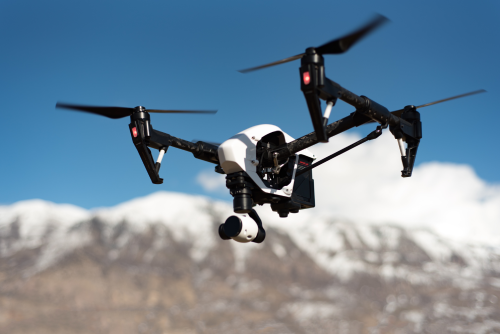
DJI Avata 2 is DJI’s current consumer FPV multirotor for pilots who want immersive flying without jumping straight into a fully self-built racing quad. As the successor to the original Avata, it matters because it combines a protected-prop FPV layout with DJI’s integrated camera, goggles, and controller ecosystem. For buyers, the real appeal is simple: it aims to make cinematic FPV more approachable while still feeling faster and more involving than a standard camera drone.
In other words, the Avata 2 sits in a very specific sweet spot. It is not trying to be the cheapest entry into FPV, and it is not trying to beat specialized racing or freestyle builds at their own game. Instead, it is designed for people who want the sensation of flying through a scene, around structures, and along dynamic paths while still benefiting from a consumer-grade setup experience. That combination is exactly why the Avata line continues to attract interest from creators, hobbyists, and DJI owners who want something more immersive than a typical photo drone.
Quick Summary Box
- Drone Name: DJI Avata 2
- Brand: DJI
- Model: Avata 2
- Category: Consumer FPV drone
- Best For: Turnkey FPV flying, immersive video capture, creator use, hobby pilots entering digital FPV
- Price Range: Bundle-dependent; not publicly confirmed in supplied data
- Launch Year: 2024
- Availability: Active, with regional availability and bundle options to be verified
- Current Status: Active
- Overall Rating: Not rated due to limited confirmed data
- Our Verdict: A strong all-in-one FPV option for pilots who want DJI convenience, protected props, and modern video quality, but it is not the cheapest path into FPV and it is less open than a custom build.
For most mainstream buyers, the biggest decision is not whether the Avata 2 is “good” in isolation. It is whether its premium for convenience, safety-oriented design, and ecosystem integration is worth paying compared with used DJI gear or a more open DIY route. If you already know you want a ready-to-fly FPV system from a major brand, the Avata 2 is a much easier recommendation than if you mainly care about repairability, tuning freedom, or rock-bottom cost.
Introduction
The DJI Avata 2 is an active DJI model from China in the consumer/FPV segment. It is built for users who want an immersive first-person-view flying experience with a more polished, ready-to-fly workflow than a typical DIY FPV platform. That makes it relevant to hobbyists, content creators, and buyers comparing safe-ish cinewhoop-style designs against faster but less forgiving FPV alternatives.
The reason it stands out in today’s market is that consumer FPV remains a relatively narrow category. Standard camera drones are easier for aerial photography, while self-built FPV quads offer more freedom and often better performance-per-dollar for experienced pilots. The Avata 2 sits between those worlds. It tries to lower the skill and setup barriers without removing the excitement that makes FPV attractive in the first place.
That middle-ground positioning matters. Many people are interested in FPV because they have seen smooth fly-through videos, action-sports chase footage, travel reels, and interior cinematic passes that conventional drones struggle to capture with the same energy. At the same time, many of those same buyers are not interested in soldering components, tuning flight controllers, learning analog signal troubleshooting, or repeatedly rebuilding a frame after hard crashes. The Avata 2 exists for that buyer.
Overview
What kind of drone is it?
The Avata 2 is a multirotor FPV drone with an integrated, guarded-prop airframe. In practical terms, it sits closer to a consumer-friendly cinewhoop than to a pure racing quad, meaning it is designed to capture dramatic forward-moving video while reducing some of the setup friction that comes with custom FPV builds.
That distinction is important because “FPV drone” can mean very different things depending on the context. A racing quad prioritizes speed, lightness, rapid acceleration, and raw agility. A freestyle quad focuses on power, responsiveness, and acrobatic capability. A cinewhoop-style platform, by contrast, is usually built to fly closer to people, structures, and controlled environments with a greater emphasis on usable footage and prop protection. The Avata 2 clearly leans into that third category, though with DJI’s consumer polish layered on top.
Who should buy it?
It is aimed at:
- Newer FPV pilots who want a branded, integrated system
- Existing DJI users who want to add immersive FPV flying to their kit
- Creators who value stabilized FPV footage over raw racing performance
- Hobbyists who prefer official support, cleaner setup, and a more guided learning curve
It also suits buyers who are comfortable paying more upfront to save time and reduce complexity later. If you would rather open a box, update firmware, charge batteries, and start learning than research motors, ESCs, antennas, frame geometry, VTX standards, and flight-controller firmware, this is the kind of product designed for you.
What makes it different?
What sets the Avata 2 apart is the combination of:
- A protected-prop FPV design
- DJI’s digital video and control ecosystem
- A camera-first approach instead of a race-first approach
- A successor position in DJI’s FPV line, suggesting refinement over the earlier Avata concept
It is best understood as a hybrid between a camera drone and an FPV drone, not a direct substitute for either extreme.
That hybrid identity is one of its strongest selling points and one of its clearest limitations. Camera-drone users may find it more thrilling and creative. Hardcore FPV pilots may find it more constrained, less repairable, and less customizable than a typical custom rig. The Avata 2 makes the most sense when you judge it by what it is trying to be, not by what specialized platforms do better.
Key Features
- Consumer FPV multirotor from DJI
- Successor to the original DJI Avata
- Integrated propeller guards for a cinewhoop-style layout
- Active current model as of March 2026
- Approximate manufacturer-listed takeoff weight around 377 g
- Official maximum flight time up to 23 minutes
- Official maximum top speed up to 97.2 km/h in the highest-performance mode
- Official maximum range figures up to about 13 km under ideal conditions, depending on region and test standard
- 1/1.3-inch image sensor aimed at immersive video capture
- Up to 4K video recording
- DJI O4 transmission system
- Built-in internal storage
- DJI goggles-and-controller ecosystem for an all-in-one FPV workflow
- Protected design better suited to close-proximity cinematic flying than open-prop FPV platforms
- Not intended for heavy payloads, interchangeable sensors, or enterprise mission equipment
A spec list only tells part of the story, so it is worth interpreting those features in practical terms:
- The protected frame matters for confidence and use-case more than aesthetics. It supports cinematic proximity flying in a way that feels less exposed than open props.
- The 23-minute headline flight time is significant for an FPV-oriented craft, even if real-world aggressive use will be lower.
- The O4 transmission system points to one of DJI’s biggest advantages: strong digital video performance within a consumer-friendly ecosystem.
- The 1/1.3-inch sensor places the Avata 2 in a more creator-focused class than older or more basic FPV camera systems.
- Built-in storage is a convenience feature many buyers underrate until they use it. It makes capture and backup workflows simpler, especially for casual or travel users.
Full Specifications Table
| Field | Details |
|---|---|
| Brand | DJI |
| Model | DJI Avata 2 |
| Drone Type | Consumer FPV multirotor |
| Country of Origin | China |
| Manufacturer | DJI |
| Year Introduced | 2024 |
| Status | Active |
| Use Case | FPV flying, immersive video capture, hobby and creator use |
| Weight | Approx. 377 g |
| Dimensions (folded/unfolded) | Approx. 185 × 212 × 64 mm; non-folding protected-prop airframe |
| Max Takeoff Weight | Not publicly confirmed separately from listed takeoff weight in supplied data |
| Battery Type | Intelligent lithium-ion flight battery |
| Battery Capacity | Approx. 2,150 mAh |
| Flight Time | Up to 23 minutes |
| Charging Time | Not publicly confirmed in supplied data |
| Max Range | Up to about 13 km under official ideal-condition figures; practical range varies by region, environment, and regulation |
| Transmission System | DJI O4 |
| Top Speed | Up to 97.2 km/h |
| Wind Resistance | Approx. 10.7 m/s |
| Navigation System | GNSS support; publicly reported as GPS, Galileo, and BeiDou |
| Obstacle Avoidance | Positioning and safety sensing are present, but full omnidirectional obstacle avoidance is not publicly confirmed in supplied data |
| Camera Resolution | Approx. 12 MP effective |
| Video Resolution | Up to 4K |
| Frame Rates | Up to 4K/100 fps |
| Sensor Size | 1/1.3-inch |
| Gimbal | Single-axis mechanical tilt with electronic stabilization workflow |
| Zoom | Not publicly confirmed in supplied data |
| Storage | Approx. 46 GB internal storage |
| Controller Type | DJI FPV ecosystem with goggles-based control; motion controller and FPV remote options are publicly associated with the platform |
| App Support | DJI Fly ecosystem |
| Autonomous Modes | Return-to-home and assisted FPV features are publicly associated with the platform; waypoint-style automation is not publicly confirmed in supplied data |
| Payload Capacity | Not intended as a payload carrier |
| Operating Temperature | Approx. -10°C to 40°C |
| Water Resistance | Not publicly confirmed in supplied data |
| Noise Level | Not publicly confirmed in supplied data |
| Remote ID Support | Region-, firmware-, and rule-dependent; buyers should verify local official documentation |
| Geo-fencing | DJI geospatial restrictions or warnings may apply depending on region and firmware |
| Certifications | Not publicly confirmed in supplied data |
| MSRP / Launch Price | Bundle-dependent; not publicly confirmed in supplied data |
| Current Price | Varies by bundle, retailer, taxes, and region |
The table above is useful, but some fields deserve context:
- Flight time is always a headline metric that overstates real aggressive use. Treat it as a best-case ceiling rather than a normal FPV session result.
- Range is similarly theoretical. Radio conditions, local regulations, interference, and terrain will reduce practical distance.
- Controller type matters because some bundles and accessories shape the learning experience significantly. One input method may feel more approachable to beginners, while another may offer finer manual control.
- Obstacle avoidance should not be assumed to match DJI’s camera-drone lines. FPV flying still demands active pilot judgment.
Design and Build Quality
The Avata 2’s design philosophy is easy to understand: protect the props, keep the airframe compact, and make FPV less intimidating for mainstream buyers. Unlike foldable camera drones, this is a purpose-shaped FPV platform with an integrated frame and ducted propeller layout. That gives it a more planted, enclosed look than open-prop freestyle quads.
For buyer use, the biggest practical advantage is the guarded-prop structure. It can reduce the consequence of light contact compared with exposed props, and it makes the aircraft more suitable for close-in cinematic work than a bare racing frame. That does not make it crash-proof, but it does make the aircraft conceptually friendlier for newer pilots.
This matters especially for the kind of shots people actually want from an FPV drone: flying through gaps, along hallways, near vehicles, between trees, around architectural features, or close to textured foreground objects. In those scenarios, even skilled pilots occasionally make contact. A guarded design does not eliminate risk, but it can make the drone feel less fragile and less intimidating than an open-prop craft.
Build quality in DJI products is usually more polished and consumer-finished than the DIY FPV market, and the Avata 2 appears to follow that template. The trade-off is serviceability. A custom FPV quad is often easier to repair piece by piece, while an integrated consumer aircraft can be cleaner to own but less modular to rebuild after hard impacts.
That trade-off deserves emphasis. A DIY FPV pilot often expects maintenance as part of ownership. Frames crack, motors get replaced, antennas get swapped, and tuning changes are normal. DJI buyers often expect appliance-like convenience. The Avata 2 sits in the middle: easier to start, potentially less pleasant to fully rebuild. For some owners that is perfectly acceptable, because they value reliability and polish over hardware-level freedom. For others, especially frequent crashers or aggressive freestylers, it may become a meaningful downside.
Because the airframe is non-folding, portability is good rather than ultra-compact. It is easier to pack than larger FPV systems, but it still travels more like a purpose-built FPV craft than a pocket drone.
That means buyers should think in terms of transport workflow, not just size on paper. If you want something that slips casually into a small everyday bag the way a mini foldable camera drone can, this is not ideal. If you are already expecting to carry goggles, controller, batteries, and charging gear, then the Avata 2’s size is much more reasonable.
Flight Performance
On paper, the Avata 2 looks strong for its class. An official maximum speed around 97.2 km/h gives it real pace, and an official maximum flight time of up to 23 minutes is notably attractive in the FPV category, where real-world sessions often feel shorter than with standard camera drones.
In practice, buyer expectations should stay realistic. Aggressive FPV flying, repeated acceleration, rapid climbs, and manual-style inputs will reduce actual airtime well below headline endurance figures. That is normal for this segment. The official number is best treated as a ceiling under favorable conditions, not the time you should expect in hard flying.
A useful way to think about Avata 2 performance is that it is designed to feel exciting without being as punishing as a full custom performance quad. For many users, that is a positive. There is enough speed to feel immersed, enough responsiveness to make the aircraft engaging, and enough structure around the experience to make learning feel more manageable. That can be a much better experience for newer pilots than jumping directly into a highly sensitive freestyle setup.
Its protected-prop format suggests a flight character aimed more at controlled immersive movement than at pure racing. That usually means:
- Better confidence for cinematic lines
- More forgiveness near structures than open-prop FPV craft
- Less raw agility than stripped-down freestyle or racing builds
- Stronger appeal for hobby and creator pilots than for competitive racers
There is also a difference between feeling fast and being competition fast. Through goggles, even moderate speed can feel extremely dramatic because of the perspective and low-altitude movement. The Avata 2 benefits from that psychological effect. It can deliver a thrilling flight experience for most users without needing to behave like a dedicated race build.
Wind handling should be decent for its size based on the published resistance figure, but lighter FPV aircraft still feel environmental changes more than larger prosumer camera drones. Indoors, the ducted layout is appealing, but indoor FPV still requires care, space awareness, and skill. Outdoors, the platform should be more at home in open or semi-open environments where signal quality, GPS availability, and recovery options are better.
That last point is important for beginners. A lot of people see cinewhoop-style drones and assume they are automatically “safe indoors.” In reality, indoor FPV can be harder than it looks because of confined space, poor recovery options, and the pressure of flying close to walls, ceilings, people, or furniture. The Avata 2 can be more suitable than an exposed-prop quad for this type of work, but that does not mean casual indoor flight is effortless.
Another practical factor is battery discipline. FPV-style flying encourages repeated punch-outs, aggressive turns, and fast transitions. Those maneuvers consume power quickly. Buyers planning long filming days should think less about the advertised maximum duration of a single battery and more about how many packs they will realistically want to carry.
Camera / Payload Performance
The Avata 2 is primarily a camera drone in FPV form, not a payload platform. Its official 1/1.3-inch sensor and up-to-4K recording place it firmly in the creator-oriented FPV class, where the goal is immersive video rather than interchangeable optics or industrial sensors.
That matters because many FPV buyers are not actually chasing racing performance. They want:
- Dynamic fly-through shots
- Action-sports style footage
- Travel and social content
- Smooth forward-motion clips with strong immersion
The single-axis gimbal plus electronic stabilization approach is a practical fit for FPV. It is not trying to mimic a three-axis photography drone; instead, it aims to keep the footage watchable and energetic while preserving the FPV feel. Compared with older and smaller-sensor FPV systems, the 1/1.3-inch sensor should offer a better balance of detail, dynamic range, and low-light flexibility, though it still will not replace larger-sensor camera drones when pure image quality is the top priority.
That distinction is worth understanding before purchase. If your benchmark is a dedicated photography drone with a larger sensor and a fully stabilized three-axis gimbal, the Avata 2 will not replace it for classic landscape, tripod-style, or orbit-heavy camera work. If your benchmark is what a typical FPV system can capture with minimal setup, the Avata 2 is much more compelling.
The real strength of the camera system is not just resolution. It is the combination of:
- Sufficient sensor size for strong consumer-level image quality
- High frame-rate capture for smoother motion or slow-motion use
- Stabilization that supports aggressive movement without making footage unusable
- Tight integration with the rest of the aircraft and ecosystem
That makes the Avata 2 especially attractive for creators who care about usable output speed. You can capture an immersive shot, offload it quickly, and work within a familiar consumer editing workflow. For travel creators, social-first video makers, and action-sports users, that convenience matters almost as much as pure image quality.
Low-light performance should be viewed with moderation. The sensor is better positioned than older or smaller FPV setups, but FPV motion puts its own demands on exposure and noise control. Fast movement in dim conditions is harder to render cleanly than slow, carefully framed camera-drone footage. Buyers who plan to shoot at dusk, indoors, or in mixed lighting should keep expectations realistic even if the sensor spec is promising.
If you need interchangeable payloads, thermal imaging, mapping sensors, zoom optics, or heavy-lift attachments, this is the wrong class of aircraft.
Smart Features and Software
A major part of the Avata 2’s appeal is software integration. DJI’s value proposition in FPV has usually been less about raw customizability and more about making the workflow cleaner: aircraft, transmission, goggles, controller options, and app support are all designed to work as one branded system.
Publicly associated platform benefits include:
- DJI digital FPV transmission
- Goggles-based immersive viewing
- Assisted setup and firmware workflow
- Return-to-home safety behavior
- Internal recording and storage workflow
- Beginner-friendlier FPV control paths through compatible controllers
The Avata 2 is also widely positioned as more approachable than a traditional self-built FPV quad. That likely matters more than any single spec. Buyers who dislike soldering, firmware tuning, part matching, and analog-video troubleshooting will see the appeal immediately.
Software polish often makes the difference between a drone that feels exciting and one that feels exhausting to own. In DJI’s case, integration typically means:
- Setup is more guided
- Firmware management is more centralized
- Component compatibility is clearer
- Recording and transfer workflows are easier to understand
- Safety features are more visible to non-expert users
For first-time FPV buyers, this can substantially shorten the road from purchase to first successful flight. That does not remove the need to learn FPV fundamentals, but it does reduce many of the technical distractions that stop people from progressing.
The limitation is openness. Compared with a custom FPV build, the Avata 2 is less about deep component-level tweaking and more about buying into DJI’s ecosystem. For many users, that is a benefit. For hardcore tinkerers, it may feel restrictive.
That ecosystem dependence affects more than customization. It can influence:
- Which goggles and controllers are compatible
- Which firmware versions are required
- Which replacement parts are easy to source
- How repairs are handled
- Whether future accessory upgrades remain inside the same brand family
For buyers who love convenience, that is an acceptable trade. For buyers who want to mix brands, swap components freely, or fine-tune every part of the flight stack, it can feel limiting very quickly.
Use Cases
The most realistic use cases for the DJI Avata 2 are centered on immersive flying and dynamic video rather than heavy-duty commercial workflows.
- FPV hobby flying
- Cinematic fly-through video
- Travel and adventure content creation
- Action-sports follow and scene-establishing shots
- Learning digital FPV in a more turnkey ecosystem
- Indoor or close-proximity cinematic work with careful planning
- Social media and short-form motion content
- Recreational flying for pilots who want a stronger sense of speed than a standard camera drone offers
These use cases highlight the Avata 2’s real identity: it is a creative motion tool as much as it is a drone. People buy aircraft like this because they want perspective, momentum, and immersion. They want the camera to move with purpose, not simply hover and pan.
For example:
- A travel creator might use it for low-altitude coastline passes, path reveals, or dramatic arrival shots.
- A sports user might capture trail runs, biking segments, or scenic motion sequences around a subject.
- A real estate or venue shooter might use it carefully for selected interior fly-throughs where the FPV perspective adds energy.
- A hobbyist may simply enjoy the visceral experience of flying with goggles in a more approachable format.
Less realistic uses include:
- Survey-grade mapping
- Agricultural spraying
- Heavy-lift delivery
- Industrial payload carriage
- Thermal inspection missions
- Enterprise fleet deployment at scale
It is also worth noting that “close-proximity cinematic work” sounds easier than it is. The Avata 2 can support that type of flying more naturally than many other consumer drones, but good results still require rehearsal, line planning, awareness of prop wash, and respect for safety margins. The drone can help make the category more accessible, but it does not replace piloting skill.
Pros and Cons
Pros
- Strong turnkey FPV concept for buyers who do not want a DIY build
- Protected-prop airframe is better suited to cinematic close-range flying than open-prop FPV designs
- Official camera and transmission package is modern and creator-friendly
- Official maximum flight time is strong for the FPV segment
- Active DJI model with ongoing product relevance as of March 2026
- Integrated ecosystem can reduce setup friction for newer FPV users
A few of these advantages deserve added emphasis. The biggest is not any one specification but the combined ownership experience. The Avata 2 is appealing because it turns FPV from a hardware hobby into a more accessible flying-and-filming product. That changes who can realistically enjoy the format.
Cons
- Bundle and ecosystem cost can be high compared with piecemeal or used alternatives
- Less modular and less repair-friendly than many custom FPV quads
- Approximate 377 g weight puts it above under-250 g thresholds used in some markets
- Not a true racing quad and not a replacement for a freestyle-focused custom build
- Real-world aggressive FPV endurance will be much shorter than the headline maximum
- Buyers must verify exact regional compatibility, regulatory requirements, and support coverage
The main caution is that this drone can be expensive in ways buyers do not always calculate upfront. The aircraft alone is only part of the budget. Goggles, controllers, extra batteries, charging accessories, and possible protection plans can significantly raise the real cost of entry.
Comparison With Other Models
| Model | Price | Flight Time | Camera or Payload | Range | Weight | Best For | Winner |
|---|---|---|---|---|---|---|---|
| DJI Avata 2 | Bundle-dependent; verify current retail | Up to 23 min | 1/1.3-inch FPV camera, up to 4K | Up to about 13 km | Approx. 377 g | Most buyers wanting a current, integrated consumer FPV system | Best overall balance |
| DJI Avata | New-old-stock or used pricing varies | Up to 18 min | 1/1.7-inch FPV camera, up to 4K | Up to about 10 km | Approx. 410 g | Budget-conscious buyers entering DJI FPV via the previous generation | Value only if meaningfully cheaper |
| DJI FPV | New-old-stock or used pricing varies | Up to 20 min | 1/2.3-inch camera, up to 4K | Up to about 10 km | Approx. 795 g | Pilots who want more open-air speed and a less ducted flight feel | Speed-focused niche winner |
The comparison table shows where the Avata 2 fits best: as the most rounded current choice for mainstream buyers who want cinematic FPV without leaving DJI’s ecosystem.
DJI Avata 2 vs a close competitor
The closest practical competitor for many buyers is the original DJI Avata, especially on the used market. Avata 2 looks stronger on paper in endurance, transmission, and camera class, so the older model makes the most sense only if the price gap is large.
That price gap matters because the original Avata may still appeal to value-focused shoppers who are comfortable buying previous-generation gear. If the older model comes with goggles, batteries, and controller in a well-priced used bundle, it can still be a sensible way into DJI FPV. But if the savings are modest, the newer model is easier to justify because buyer satisfaction often comes from a combination of better transmission, better camera specs, and longer-lasting platform relevance.
DJI Avata 2 vs an alternative in the same segment
Inside DJI’s own ecosystem, DJI FPV is the main alternative for buyers who want a more speed-biased feel. The trade-off is that DJI FPV is larger, heavier, and less naturally suited to the guarded cinewhoop-style use case that makes the Avata line distinctive.
In simple terms:
- Choose DJI FPV if you care more about open-air speed sensation and less about protected close-proximity flying.
- Choose Avata 2 if you want the product to feel more purpose-built for cinematic FPV, tighter spaces, and a creator-oriented workflow.
For many current buyers, the Avata 2 is the more balanced recommendation because it better matches what non-racing users actually want.
DJI Avata 2 vs an older or previous-generation option
Against the first Avata, the Avata 2 is the more current and generally safer recommendation for new buyers. The original still matters if you are shopping used, but the newer model is the one that better fits a fresh purchase decision in 2026.
A broader comparison worth keeping in mind is Avata 2 versus a custom digital FPV cinewhoop. A custom setup may offer better repairability, greater tuning freedom, and potentially lower component replacement costs. But it also asks more from the owner: more setup time, more troubleshooting, more parts knowledge, and more comfort with maintenance. That gap is exactly why a product like Avata 2 exists.
Manufacturer Details
DJI is both the brand and the manufacturer here. The company is based in China and is widely known for building consumer, prosumer, and enterprise drones, along with gimbals, imaging systems, and related software tools. DJI is generally regarded as one of the most influential drone makers in the global market, particularly in camera drones and integrated flight ecosystems.
The company’s major drone product families have included consumer camera platforms, FPV systems, and enterprise aircraft. In this case, there is no meaningful separation between brand and manufacturer identity: DJI markets the Avata 2 under its own name and also manufactures the aircraft.
For buyers, that matters in several ways. DJI’s scale and brand presence usually mean:
- Broad global recognition
- Established software workflows
- Strong accessory ecosystems
- Large user communities
- More accessible tutorials and setup content than niche FPV brands
At the same time, DJI’s ecosystem approach means the company exerts more control over the total experience than the open DIY FPV world typically does. That is not inherently good or bad. It simply means buyers should understand they are choosing a managed platform rather than a fully open one.
Support and Service Providers
For a mainstream DJI product, support typically begins with the official brand store and official support portal. Buyers should expect to verify the following in their own region:
- Official warranty terms
- Authorized repair coverage
- Spare propeller and battery availability
- Regional shipping and replacement policies
- Firmware support lifecycle
- Optional protection plans, if offered locally
One advantage of a major brand platform is the surrounding ecosystem. DJI products usually benefit from broad community discussion, setup guides, and accessory availability. That said, service quality and turnaround times can vary by country, so buyers should confirm local repair channels before purchase rather than assume uniform global support.
This is especially important for FPV ownership because crashes are more likely than with conservative camera-drone flying. Even a protected platform can suffer damage from ground strikes, wall impacts, branch hits, or awkward landings. Support quality therefore matters not just in theory but as part of realistic ownership planning.
Buyers should also check whether local dealers stock consumables and replacement items. In practice, quick access to:
- spare propellers,
- additional batteries,
- chargers or hubs,
- and compatible controllers or goggles
can make ownership much more enjoyable. A drone with good specs but weak local support can become frustrating fast.
Where to Buy
The most reliable places to buy the Avata 2 are typically:
- The official DJI store
- Authorized DJI dealers
- Major camera and consumer electronics retailers
- Established drone specialists in your region
Because FPV products often sell in bundles, buyers should check exactly what is included. A lower sticker price can be misleading if goggles, controller, extra batteries, or a charging hub are not part of the package. Marketplace listings and used deals can be attractive, but they require extra caution around condition, battery health, included accessories, and activation status.
When comparing retailers, pay attention to more than price:
- Is the seller authorized?
- Is local warranty support valid?
- Are batteries original and within normal age expectations?
- Is the bundle actually ready to fly, or will you still need major accessories?
- Are return policies clear if compatibility or activation issues arise?
For used purchases, these questions become even more important. A seemingly cheap package can become expensive if batteries are degraded, accessories are missing, or controller compatibility is not what you assumed.
Price and Cost Breakdown
Exact launch and current pricing are not publicly confirmed in the supplied data, and DJI FPV bundles can vary by market. For that reason, the Avata 2 is best budgeted as a system purchase, not just an aircraft purchase.
Key cost areas to verify before buying:
- Aircraft-only or combo pricing
- Included goggles
- Included controller type
- Number of batteries in the bundle
- Charging hub inclusion
- Spare propeller cost
- Carry case or travel storage cost
- Optional protection or repair-plan cost
For many buyers, the biggest price difference is not the drone itself but the ecosystem entry cost. If you need the full set of goggles, controller, batteries, and chargers, ownership cost rises quickly. If you already own compatible equipment, the total budget may be lower, but compatibility should be checked carefully against the current official product listings.
A smart way to budget for the Avata 2 is to divide costs into three layers:
1. Entry Cost
This is the minimum you need to get airborne. It may include the drone, goggles, one controller option, and at least one battery.
2. Practical Ownership Cost
This is what most people actually need to enjoy the drone properly. It usually means extra batteries, better transport storage, spare props, and a charging solution that supports multiple packs.
3. Protection and Downtime Cost
This is the part many first-time buyers ignore. FPV-style flying increases the chance of impact damage, so repair plans, spare parts access, and replacement turnaround all deserve consideration.
The cheapest sticker price is not always the cheapest ownership path. A complete, supported bundle from a reputable seller may be a better value than a bare or questionable discount option.
Regulations and Compliance
Regulation matters more than many first-time FPV buyers expect. At approximately 377 g, the Avata 2 is above the under-250 g threshold used in some jurisdictions, so registration and operating restrictions may apply.
Buyers should verify:
- Whether drone registration is required
- Whether recreational or commercial licensing rules apply
- Whether FPV flying requires a visual observer or spotter
- Whether Remote ID or equivalent electronic identification rules apply
- Whether local airspace authorization is needed before flight
- Whether privacy, filming, and property-use laws affect your operation
FPV flying can also trigger different practical obligations than standard line-of-sight drone use. In some regions, immersive goggle flight is not treated the same as looking directly at the aircraft. Do not assume global compliance based on one country’s rules. Always verify local law, current firmware behavior, and current DJI documentation before flying.
This is one of the biggest real-world differences between buying an FPV drone and buying a small casual camera drone. The Avata 2 may be consumer-friendly in design, but the way you fly it can still create legal or operational complexity. Common issues include:
- the need for a spotter,
- restrictions around urban or crowded spaces,
- limits on flying near people or moving vehicles,
- and additional requirements when capturing footage for business use.
Because the aircraft is above common micro-drone thresholds, some buyers may lose the regulatory simplicity they enjoy with lighter models. That does not make the Avata 2 impractical, but it does mean compliance should be part of the purchase decision rather than an afterthought.
Who Should Buy This Drone?
Best for
- Buyers who want a ready-to-fly FPV experience without building a quad
- Content creators who want immersive, dynamic video
- DJI users who prefer a familiar software and support ecosystem
- Hobby pilots moving from standard camera drones into FPV
- Pilots who value protected props and cleaner setup over maximum customization
A good test is this: if you are excited by FPV footage but not excited by FPV hardware management, the Avata 2 is probably aimed at you.
Not ideal for
- Pure racing pilots
- DIY FPV builders who want total tuning freedom
- Buyers who need an under-250 g drone for regulatory simplicity
- Survey, inspection, thermal, or mapping professionals
- Shoppers looking for the lowest-cost way into FPV
- Users unwilling to learn FPV safety and control basics
It is also not ideal for people who expect it to behave like a normal hovering camera drone while delivering full FPV drama with no learning curve. The Avata 2 makes FPV easier to access, but it does not erase the need for practice, spatial awareness, and responsible operation.
Final Verdict
The DJI Avata 2 looks like one of the most practical turnkey FPV drones for mainstream buyers who want immersive flying and creator-friendly video without the full complexity of a custom build. Its biggest strengths are the protected-prop design, integrated DJI ecosystem, modern camera class, and solid official endurance for the segment. Its biggest drawbacks are cost, ecosystem lock-in, above-250 g regulatory implications, and the fact that it is not a true replacement for a fully custom freestyle or racing quad.
What makes the Avata 2 compelling is not just that it flies in first person or records 4K video. It is that it packages the FPV experience into something more approachable, more polished, and more realistic for non-specialist buyers. That is a meaningful achievement in a category that can otherwise feel fragmented, technical, and intimidating.
If your goal is a polished, current, consumer FPV drone from a major brand, the Avata 2 is one of the strongest options to seriously consider. If your priorities are ultra-low cost, deep repairability, or maximum tuning freedom, you should look harder at older or custom FPV alternatives before committing.
For the right buyer, the Avata 2 is not merely an FPV drone. It is a bridge into FPV flying that preserves much of the excitement while reducing much of the friction. And that, more than any single specification, is why it remains relevant.
