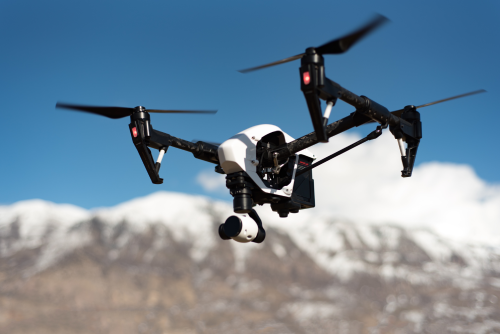
DJI Matrice 4E is an active DJI enterprise mapping drone aimed at survey teams, GIS professionals, construction stakeholders, and other commercial operators that need structured aerial data capture rather than casual flying. As a multirotor platform, it matters because this type of aircraft can take off vertically, work from tighter sites, and usually fit repeatable mapping workflows better than larger fixed-wing systems in confined environments. The confirmed public data supplied here is limited, so this page focuses on what is known, what can be responsibly inferred, and what buyers should verify before making a purchase decision.
That limitation is important. In the enterprise drone market, buyers are often tempted to fill in missing details with assumptions based on brand reputation, naming conventions, or adjacent DJI products. That can lead to expensive procurement mistakes. A mapping aircraft is not just a flying camera; it is part of a data system that includes field planning, image consistency, positioning, processing software, training, maintenance, and support. Because the supplied record does not confirm the full Matrice 4E specification sheet, this article deliberately stays cautious. The goal is to help you understand where the Matrice 4E appears to fit, why it may be relevant, and which questions should be answered before the aircraft moves from shortlist to purchase order.
For organizations building or upgrading an aerial mapping workflow, that approach is usually more useful than an overconfident spec recap. If a drone is going to support survey operations, construction progress records, corridor documentation, land development planning, or GIS collection, the decision should be based on mission fit and ecosystem reliability just as much as on headline numbers.
Quick Summary Box
- Drone Name: DJI Matrice 4E
- Brand: DJI
- Model: Matrice 4E
- Category: enterprise mapping
- Best For: Professional mapping, surveying, and geospatial field teams
- Price Range: Not publicly confirmed in supplied data
- Launch Year: Not publicly confirmed in supplied data
- Availability: Listed as a current enterprise platform on official DJI regional channels; regional availability should be verified
- Current Status: Active
- Overall Rating: Not rated due to limited confirmed data
- Our Verdict: A potentially strong current DJI mapping platform, but buyers should verify the exact camera, endurance, software, accessories, and pricing package before committing
Introduction
The DJI Matrice 4E sits in DJI’s enterprise lineup and is positioned for mapping-focused work rather than consumer photography or recreational flying. That makes it relevant to organizations that care about repeatable missions, field efficiency, and supportability more than lifestyle features. Because DJI remains one of the most important names in the global drone market, any active mapping model in its portfolio is automatically worth attention from professional buyers.
That attention comes from more than brand recognition alone. In commercial drone operations, active-platform status matters. Enterprises typically prefer aircraft that are still supported, still sold, and still aligned with current software and accessory ecosystems. Even if a legacy drone remains technically capable, support gaps can become a serious issue over time. Batteries age out, repairs take longer, accessories disappear, and staff training starts to drift across multiple hardware generations. A current aircraft can help reduce those headaches, especially for teams trying to standardize procedures across multiple crews or offices.
The Matrice 4E also matters because it appears to sit in a practical middle ground that many organizations want. Fixed-wing mapping drones can be very efficient over large areas, but they often need more space, different pilot habits, and mission conditions that are not always available near active construction zones, utility corridors, roadside launch points, or industrial facilities. Consumer drones, on the other hand, may be easy to deploy but may not feel like long-term enterprise procurement choices for every organization. A mapping-focused multirotor from a major enterprise vendor often appeals precisely because it aims at operational reliability rather than recreational convenience.
At the same time, buyers should avoid assuming that “enterprise” automatically equals “best for every professional use case.” Enterprise mapping teams still need to check whether the aircraft’s payload, software compatibility, positioning workflow, and support model fit their specific deliverables. A drone that works well for visual site records may not be the ideal choice for high-accuracy survey support. A platform that seems attractive for in-house deployment may be less compelling if you already have established processing tools or procurement rules that favor a different system. So while the Matrice 4E deserves attention, it deserves disciplined evaluation rather than automatic approval.
Overview
What kind of drone is it?
Based on the supplied master record, the DJI Matrice 4E is a Chinese-made DJI multirotor in the enterprise mapping segment, and it is currently active. In simple terms, that means it is a professional drone intended for structured data collection tasks such as surveying, site documentation, and map-grade imaging workflows, not for freestyle flying or entry-level recreation.
That distinction affects nearly every part of how the aircraft should be judged. A mapping drone is usually evaluated on consistency, workflow efficiency, and mission repeatability. The most important question is not whether it can produce dramatic footage for social media, but whether it can help generate dependable data products under real field conditions. Enterprise teams typically care about whether a platform can be deployed quickly, flown repeatedly over the same area, handled by trained crews, and integrated into a larger chain of software and reporting tools.
The multirotor format is also central to its role. Vertical takeoff and landing means the aircraft can operate from compact sites without runway requirements. Hovering capability makes point capture, close alignment, and precise maneuvering easier in many situations. For mapping missions, multirotors also tend to be more approachable for crews that need repeatable launch and recovery procedures across varied job sites. None of that proves superiority in every scenario, but it does explain why multirotors remain so attractive for commercial teams working in constrained environments.
Who should buy it?
The most likely buyers are:
- Survey and GIS teams
- Construction and engineering firms
- Infrastructure owners and inspection contractors
- Utility, mining, and land-management organizations
- Enterprise drone service providers comparing current DJI platforms
Those categories deserve a bit more context. Survey and GIS teams may be interested because an active mapping platform can support regular data collection for orthomosaics, terrain models, and record updates, assuming the payload and positioning workflow meet project requirements. Construction and engineering firms may see value in repeat site documentation, progress tracking, and communication support across stakeholders. Infrastructure owners and contractors may want a mapping-oriented aircraft that can produce consistent visual datasets across multiple sites over time. Utilities, mining operators, and land-management groups often need periodic area capture that is more structured than ad hoc aerial photography. Drone service providers, meanwhile, may simply want to understand whether the Matrice 4E is a better future-facing fleet option than older aircraft still in circulation.
What makes it different?
What makes the Matrice 4E notable is less about any single confirmed specification in the supplied record and more about its market positioning. It is a current DJI enterprise mapping platform, which matters because active-product status usually translates into better long-term relevance than legacy or discontinued aircraft. For many commercial buyers, that can be more important than a flashy spec number.
It is also notable because the Matrice label generally signals a more professional operating context than casual consumer lines. Even without a full specification sheet in the supplied data, the naming and segment placement suggest an aircraft intended to serve business workflows rather than occasional flying. For procurement teams, that can mean better alignment with training, maintenance planning, dealer support, and broader enterprise integration expectations.
Another differentiator is timing. In enterprise procurement, buying into the current generation often means less friction when scaling later. If an organization is training pilots, building SOPs, validating deliverables, and budgeting for accessories, it often makes sense to do that on a platform that is likely to remain relevant rather than one already entering the late stage of its lifecycle.
Key Features
With limited confirmed spec-sheet data available in the supplied record, the clearest strengths of the DJI Matrice 4E are its positioning and platform type:
- Enterprise mapping focus rather than consumer photography focus
- Multirotor airframe for vertical takeoff and landing in tighter operating areas
- Active current-status model in DJI’s enterprise portfolio
- Designed for professional field use cases where repeatability and workflow matter more than acrobatics
- Likely suited to structured data-capture missions such as orthomosaics, site progress records, and survey support, based on its segment
- Benefits from DJI’s strong market presence and broad enterprise familiarity
- Exact payload, camera, transmission, obstacle-sensing, flight-time, and speed details are not publicly confirmed in the supplied data and should be verified before purchase
Those points may sound basic, but in enterprise buying they are not minor. Many disappointing drone purchases happen because teams focus too heavily on isolated specifications while underestimating deployment reality. A current, mapping-oriented multirotor from a major enterprise vendor can be attractive because it may reduce operational friction: easier launch from constrained spaces, more familiarity among training providers and resellers, and a stronger chance of fitting standard commercial workflows.
The final bullet is just as important as the strengths. In a survey or mapping procurement, unverified details are not administrative footnotes. They are decision-critical. Camera geometry, shutter type, onboard positioning options, controller and software compatibility, and endurance all directly affect the quality and economics of the work. So while the Matrice 4E’s segment positioning is promising, a serious buyer should still treat it as a due-diligence product until the exact regional package is confirmed.
Full Specifications Table
| Specification | Details |
|---|---|
| Brand | DJI |
| Model | Matrice 4E |
| Drone Type | Multirotor |
| Country of Origin | China |
| Manufacturer | DJI |
| Year Introduced | Not publicly confirmed in supplied data |
| Status | Active |
| Use Case | Enterprise mapping |
| Weight | Not publicly confirmed in supplied data |
| Dimensions (folded/unfolded) | Not publicly confirmed in supplied data |
| Max Takeoff Weight | Not publicly confirmed in supplied data |
| Battery Type | Not publicly confirmed in supplied data |
| Battery Capacity | Not publicly confirmed in supplied data |
| Flight Time | Not publicly confirmed in supplied data |
| Charging Time | Not publicly confirmed in supplied data |
| Max Range | Not publicly confirmed in supplied data |
| Transmission System | Not publicly confirmed in supplied data |
| Top Speed | Not publicly confirmed in supplied data |
| Wind Resistance | Not publicly confirmed in supplied data |
| Navigation System | Not publicly confirmed in supplied data |
| Obstacle Avoidance | Not publicly confirmed in supplied data |
| Camera Resolution | Not publicly confirmed in supplied data |
| Video Resolution | Not publicly confirmed in supplied data |
| Frame Rates | Not publicly confirmed in supplied data |
| Sensor Size | Not publicly confirmed in supplied data |
| Gimbal | Not publicly confirmed in supplied data |
| Zoom | Not publicly confirmed in supplied data |
| Storage | Not publicly confirmed in supplied data |
| Controller Type | Not publicly confirmed in supplied data |
| App Support | Not publicly confirmed in supplied data |
| Autonomous Modes | Not publicly confirmed in supplied data |
| Payload Capacity | Not publicly confirmed in supplied data |
| Operating Temperature | Not publicly confirmed in supplied data |
| Water Resistance | Not publicly confirmed in supplied data |
| Noise Level | Not publicly confirmed in supplied data |
| Remote ID Support | Not publicly confirmed in supplied data |
| Geo-fencing | Not publicly confirmed in supplied data |
| Certifications | Not publicly confirmed in supplied data |
| MSRP / Launch Price | Not publicly confirmed in supplied data |
| Current Price | Not publicly confirmed in supplied data |
Because the table above is intentionally conservative, it should be read as a procurement checklist as much as a spec chart. Every “not publicly confirmed” item is something a professional buyer should chase down through official DJI materials, regional dealers, or written quotations before approval. In practice, that means asking for the exact bundle contents, the camera and positioning configuration, supported applications, warranty terms, battery details, and region-specific compliance features.
Design and Build Quality
The supplied data confirms that the Matrice 4E is a multirotor enterprise platform, which already tells us a lot about its likely design priorities. Drones in this class are usually built around practical field deployment, stable hovering, and predictable repeat missions rather than the smallest possible size or cinematic styling.
For enterprise teams, design quality is not just about how solid the aircraft feels in the hand. It is about whether the airframe supports a reliable workday. A good commercial mapping drone should be easy to unpack, simple to inspect, quick to arm, and straightforward to relaunch repeatedly with minimal confusion between sorties. Even small design choices matter in the field: how accessible the battery is, how visible status indicators are in daylight, how securely props lock, how easily the landing gear handles uneven ground, and how much confidence the crew has when operating around vehicles, soil piles, gravel, grass, or light debris.
Because official folded size, rotor span, weight, and materials are not included in the supplied record, portability cannot be judged precisely here. Buyers should verify:
- How quickly it packs and deploys
- Whether the frame is foldable or rigid
- The transport-case footprint
- Propeller and arm durability
- Landing-gear clearance for rougher ground
- Spare-part and field-service availability
It is also worth asking how the aircraft fits the crew structure. Some enterprise drones are manageable by a single trained operator for routine work, while others feel better suited to a two-person workflow that includes a pilot and payload or visual observer support. Even when regulations do not require extra crew, practical operations often benefit from it. Construction and infrastructure teams should think about whether the Matrice 4E appears to align with the staffing model they actually use in the field, not just the model shown in marketing material.
From a workflow standpoint, multirotors are often attractive for mapping teams that need to launch from roadside pull-offs, compact construction sites, or industrial facilities where runway-style operations are impractical. If that is your operating environment, the Matrice 4E’s basic airframe category is already a meaningful advantage.
Another aspect of build quality is maintenance behavior over time. Enterprise buyers should ask not only whether the aircraft is durable on day one, but whether it remains easy to keep serviceable after months of regular use. How often do props need replacement? How expensive are batteries? How quickly can damaged arms or landing components be repaired? Are maintenance intervals clear and documented? Those questions are often ignored during initial excitement, but they strongly influence long-term ownership satisfaction.
Flight Performance
No confirmed flight time, speed, range, wind resistance, or service ceiling figures were supplied in the master record, so this section has to stay conservative.
What can be said responsibly is this: a mapping-oriented multirotor is usually judged less by burst speed and more by stable, repeatable flight behavior. For survey work, the priorities are typically:
- Predictable route following
- Consistent overlap during grid missions
- Hover stability for point captures
- Reliable takeoff and landing in constrained spaces
- Good signal confidence over practical work sites
That list is more important than it may first appear. In mapping operations, usable flight performance is really about mission reliability. A drone can have an impressive top-speed number and still be a poor data-capture tool if it struggles with smooth path tracking, wind consistency, or repeatability. Survey crews want an aircraft that flies the same job the same way, with minimal drama, and returns with a dependable dataset.
As analysis rather than confirmed specification, the DJI Matrice 4E is likely intended to feel methodical rather than sporty. That would make sense for corridor capture, site documentation, and repeat inspection-style flights. However, buyers should not assume any particular endurance or coverage rate until the official DJI spec sheet for their region is checked directly.
The practical reason endurance matters is not simply “more minutes is better.” Flight time affects coverage rate, battery rotation planning, crew downtime, and how many takeoffs are needed to finish a site. For example, on a medium-size construction project, a few extra useful minutes per battery cycle can reduce the number of interruptions and simplify daily scheduling. On the other hand, if the drone’s workflow is efficient and batteries recharge quickly, a slightly lower endurance figure may be perfectly acceptable for teams working close to vehicles or field charging systems.
Wind handling deserves similar caution. Mapping missions depend on image consistency and clean track lines. Even if a drone can technically stay airborne in stronger conditions, that does not mean the resulting imagery will be ideal for the intended output. Buyers should ask what operating envelope produces not just safe flight, but acceptable data quality. There is a difference between “the aircraft can fly” and “the aircraft can map effectively.”
Indoor suitability is also unconfirmed. Most mapping work is outdoor work, and indoor flight should only be considered if the exact navigation and obstacle-sensing configuration supports it safely. Even then, indoor mapping usually introduces extra complexity around lighting, GNSS availability, collision risk, and mission design. Unless the intended use case specifically demands interior work, the Matrice 4E should primarily be evaluated as an outdoor aerial data platform.
Camera / Payload Performance
For a mapping drone, payload quality is usually the single most important buying factor. That includes more than just megapixels. Professional buyers normally care about:
- Sensor size
- Lens quality
- Shutter type
- Geotagging accuracy
- Stabilization quality
- Calibration workflow
- Low-light behavior
- Data consistency across repeat missions
The problem is that the supplied record does not publicly confirm the Matrice 4E’s exact camera or payload configuration. That means it would be irresponsible to claim a specific resolution, zoom range, sensor format, or photogrammetry accuracy here.
Still, its mapping positioning suggests the aircraft is intended to create usable geospatial data products rather than just attractive aerial footage. If you are evaluating it for survey or mapping work, verify these points before purchase:
- Whether the camera is optimized for photogrammetry
- Whether image capture supports fast area mapping efficiently
- Whether the payload is fixed or modular
- Whether it supports the exact deliverables you need, such as orthomosaics, 3D models, stockpile measurements, or progress records
- Whether the system integrates cleanly with your existing processing software
For enterprise teams, those answers matter far more than marketing language.
A few deeper questions are worth adding to that checklist. Ask how the system handles image timing and capture reliability during automated missions. Ask whether the lens profile and distortion characteristics are documented in a way that supports accurate processing. Ask whether exposure control is consistent enough for large-area mapping across changing light conditions. Ask how metadata is embedded and whether export workflows are straightforward for your photogrammetry platform of choice. These details tend to separate pleasant demos from production-ready systems.
If your team needs survey-grade or near-survey-grade outputs, positioning workflow becomes especially important. Depending on your standards, you may need to confirm support for onboard geotag quality, correction methods, or ground control practices that align with your accuracy targets. A drone can be “for mapping” in a broad sense and still not be ideal for your specific tolerance requirements. Construction visualization, engineering communication, and topographic support do not always demand the same rigor, so your purchase criteria should reflect the actual deliverables your organization bills for or signs off on.
It is also useful to distinguish between mapping capacity and inspection capacity. Some payloads are designed to create broad, consistent scene coverage for processing into maps or models. Others are better optimized for flexible visual review, zoomed observation, or mixed-sensor inspections. Those are not always the same thing. The Matrice 4E’s name and positioning suggest a mapping orientation, which is promising if your core need is structured area capture, but buyers should still confirm that the payload truly matches their workflow.
Smart Features and Software
DJI’s enterprise appeal usually depends heavily on software workflow, not just aircraft hardware. For the Matrice 4E specifically, the supplied record does not confirm the exact app stack, autonomous modes, SDK support, or cloud services.
That means buyers should directly verify the following before procurement:
- Waypoint and route-planning support
- Repeat-mission capability
- Mapping mission templates
- Data export workflow
- Compatibility with official DJI enterprise apps
- Fleet-management or cloud options, if your team needs them
- API or SDK support for custom enterprise integration
- Correction-data or positioning workflow support, if your accuracy requirements depend on it
Even without a confirmed feature list, it is fair to say that software maturity is likely to be a major part of the Matrice 4E’s value proposition. In enterprise mapping, a decent aircraft with a good workflow often beats a technically stronger aircraft with clumsy data handling.
Why does this matter so much? Because the aircraft only solves one part of the problem. The real operational question is whether your team can go from mission planning to field execution to deliverable creation without unnecessary friction. If route planning is awkward, crews waste time in the field. If repeat missions are hard to recreate, time-series site comparisons become less trustworthy. If exports are messy or metadata handling is inconsistent, office processing slows down. Good software does not just make flying easier; it protects the quality and repeatability of the whole data chain.
Repeatability is especially valuable for construction, asset management, and infrastructure monitoring. If the same mission can be flown at weekly or monthly intervals with comparable settings, stakeholders can compare progress more confidently. This matters for cut-and-fill tracking, stockpile monitoring, documentation of completed works, and routine site communication. Even when the deliverable is not formal survey output, repeat mission quality can still create real business value.
Organizations with mature drone programs should also think about integration. If your company already uses asset databases, GIS platforms, project management systems, or internal reporting tools, the drone workflow should fit into that environment with as little manual rework as possible. SDK or API access may matter if you plan to connect flight data or imagery to a broader enterprise system. Smaller teams may not care, but larger organizations often do.
Use Cases
Given its confirmed enterprise mapping role, the most realistic uses for the DJI Matrice 4E are professional data-collection jobs rather than general entertainment flying.
- Survey support and aerial mapping — Useful where teams need current overhead imagery and structured capture for mapping workflows.
- Construction-site progress documentation — Well suited to repeated site overviews that help owners, contractors, and consultants track changes over time.
- Land development and planning records — Helpful for documenting site conditions, boundaries, access paths, and project evolution.
- Infrastructure documentation — Can support visual records for roads, facilities, industrial compounds, and related built assets.
- Mining and quarry visual survey work — Relevant for periodic area capture, stockpile observation, and broader site records, subject to exact payload suitability.
- Utilities and asset record capture — Useful where teams need organized visual datasets for network or property documentation.
- Agricultural land documentation where visual mapping is required — Potentially suitable for general visual record creation, though buyers should verify whether a more specialized platform would serve better.
- GIS and geospatial data collection — Relevant for organizations building or updating spatial records through routine aerial capture.
- Contractor and service-provider mapping missions — A possible option for businesses offering drone-based site documentation or mapping services to third parties.
- Repeat site overviews for project tracking — Strong fit for stakeholders who prioritize consistency and comparability over one-off flights.
What ties these use cases together is the need for organized, repeatable capture rather than spontaneous flying. That is the main lens through which the Matrice 4E should be evaluated. If your goal is to generate dependable records on a schedule, it may be very relevant. If your goal is creative footage, thermal diagnostics, or highly specialized sensor work, you may need to compare it more carefully against other aircraft.
Pros and Cons
Pros
- Active DJI enterprise model rather than a clearly retired platform
- Mapping-focused positioning makes it relevant to professional data-capture teams
- Multirotor layout should be practical for constrained launch and landing areas
- DJI has strong global recognition in enterprise drones
- Likely easier to deploy on tight work sites than many fixed-wing mapping alternatives
- Potentially attractive for organizations standardizing on current DJI-supported equipment
- May benefit from better long-term workflow relevance than legacy mapping drones
Cons
- Core specifications are not publicly confirmed in the supplied data
- Camera and payload details need verification before any serious photogrammetry purchase decision
- Price is not publicly confirmed, and enterprise packages can vary widely
- Regional availability, support terms, and bundles may differ by market
- Multirotors generally trade some large-area coverage efficiency against fixed-wing mapping aircraft
- Procurement value depends heavily on software and support details that still need confirmation
- Buyers with strict survey accuracy needs should verify positioning workflow rather than assuming fit
The pros and cons here reflect the current evidence rather than hypothetical performance claims. In other words, the Matrice 4E looks promising because of where it sits in the market, not because every technical advantage has been established in the supplied data. That is an important distinction for professional buyers.
Comparison With Other Models
Because the supplied record does not include a confirmed full Matrice 4E spec sheet, the comparison below is mainly positioning-based rather than number-driven.
| Model | Price | Flight Time | Camera or Payload | Range | Weight | Best For | Winner |
|---|---|---|---|---|---|---|---|
| DJI Matrice 4E | Not publicly confirmed in supplied data | Not publicly confirmed in supplied data | Mapping-oriented payload; exact details not publicly confirmed in supplied data | Not publicly confirmed in supplied data | Not publicly confirmed in supplied data | Current DJI enterprise mapping buyers | Best if you want the newer mapping-focused Matrice positioning |
| DJI Matrice 4T | Not publicly confirmed in supplied data | Not publicly confirmed in supplied data | Thermal and multi-sensor-oriented positioning | Not publicly confirmed in supplied data | Not publicly confirmed in supplied data | Public safety, inspection, and thermal missions | Better if thermal capability matters more than mapping focus |
| DJI Mavic 3E | Not publicly confirmed in supplied data | Not publicly confirmed in supplied data | Compact enterprise mapping camera | Not publicly confirmed in supplied data | Not publicly confirmed in supplied data | Teams prioritizing portability and simpler deployment | Better if compact size and lower system complexity are the priority |
| DJI Phantom 4 RTK | Not publicly confirmed in supplied data | Not publicly confirmed in supplied data | Older mapping-oriented payload | Not publicly confirmed in supplied data | Not publicly confirmed in supplied data | Legacy mapping fleets and older survey workflows | Better only if you are maintaining existing older-platform workflows |
DJI Matrice 4E vs a close competitor
The closest internal comparison is the DJI Matrice 4T. In practical buying terms, the choice likely comes down to mission type. If your work is mainly map production, survey support, and structured daytime data capture, the Matrice 4E is the more relevant name to investigate. If your missions center on thermal inspection, public safety, or mixed visual-plus-thermal jobs, the Matrice 4T is probably the better fit.
This distinction matters because many organizations buy too much sensor complexity for the work they actually do. If thermal output is central to your contracts, then a thermal-capable platform may justify its cost and operational complexity. But if your main business value comes from visual mapping, site updates, and geospatial deliverables, a mapping-oriented model often makes more sense than a multipurpose inspection platform.
DJI Matrice 4E vs an alternative in the same segment
Against the DJI Mavic 3E, the Matrice 4E likely represents the more current enterprise-platform direction, while the Mavic 3E remains attractive for buyers who value compactness, easier transport, and lower operational complexity. Small teams or consultants may prefer the simpler footprint of a Mavic-class system, while larger organizations may be more interested in the Matrice line if workflow depth and platform longevity are the bigger concerns.
In other words, the comparison is not just about technical performance. It is also about operating style. A compact aircraft can be ideal for rapid deployment, minimal kit load, and frequent travel between sites. A larger or more formal enterprise platform may appeal more to organizations that want a stronger sense of standardization, serviceability, and long-term fleet planning. Your team structure, project size, and asset-management habits may matter as much as any camera specification.
DJI Matrice 4E vs an older or previous-generation option
Compared with legacy mapping options such as the DJI Phantom 4 RTK, the Matrice 4E is the more modern-looking purchase path simply because it is an active current platform. That matters for support planning, accessories, training continuity, and fleet standardization. Organizations still running older mapping drones should compare not just specs, but also battery age, repairability, and long-term software compatibility.
This is often where current platforms win, even if legacy aircraft still deliver acceptable output. Over time, total ownership value depends on parts access, staff familiarity, software updates, and procurement confidence. A newer platform may reduce uncertainty even if the raw imaging differences are not dramatic on paper.
Manufacturer Details
DJI is the brand and manufacturer here, so there is no separate consumer-facing brand layer to untangle. The company is formally known as SZ DJI Technology Co., Ltd. and is headquartered in Shenzhen, China. It was founded in 2006 and has grown into one of the most influential drone manufacturers in the world.
DJI’s major product families span consumer drones, FPV products, camera stabilizers, imaging gear, agricultural systems, dock solutions, and enterprise platforms. In the drone market, DJI is widely known for combining aircraft hardware, controllers, apps, and ecosystem tools into a relatively unified stack. That broad reputation is one reason an active DJI enterprise platform like the Matrice 4E gets immediate buyer attention even before every detail is confirmed.
For enterprise buyers, DJI’s importance is practical as much as reputational. A major vendor can mean more reseller familiarity, more training resources, better aftermarket accessory awareness, and easier talent acquisition because more pilots have experience with the ecosystem. That does not remove the need for due diligence, but it does lower the risk that your team is adopting an obscure platform with thin support channels.
That said, some organizations will also weigh manufacturer-related factors beyond pure capability, such as procurement policy, data governance, or internal IT review. Those issues vary by country and by customer type. Public-sector buyers, regulated industries, or large corporations may need additional internal approvals before adopting any drone platform, regardless of its technical appeal. The Matrice 4E should therefore be evaluated not only as hardware, but also as part of the vendor relationship your organization is comfortable maintaining.
Support and Service Providers
One of DJI’s usual advantages is the existence of official support channels and a wide network of enterprise dealers and service partners in many markets. That said, support quality and service speed can still vary by country and by reseller.
Prospective Matrice 4E buyers should verify:
- Official warranty terms in their region
- Authorized repair center access
- Battery and propeller replacement availability
- Spare-part lead times
- Enterprise reseller onboarding and training support
- Software support for the intended workflow
- Whether local integrators can help with setup, maintenance, and staff training
Community support is also relevant. DJI platforms usually benefit from large user communities, third-party educators, and industry discussion groups, which can reduce the learning curve. But enterprise buyers should still prioritize official channels and authorized service coverage over forum advice.
For businesses running time-sensitive jobs, service responsiveness can matter as much as flight performance. If an aircraft goes down during a critical project, the key question becomes: how quickly can you get back in the air? Some buyers should ask their reseller about loaner programs, replacement-part stocking, and escalation paths for urgent support cases. Others may decide that buying spare batteries, backup props, or even a second aircraft is the only practical way to protect project continuity.
Training support is another major differentiator. A good reseller or integrator can help shorten the path from purchase to productive field use, especially when mapping workflows, processing tools, and regulatory procedures all need to be aligned. That can be especially valuable for construction firms, survey offices, or utilities adding drone capability in-house for the first time.
Where to Buy
The DJI Matrice 4E is best treated as an enterprise procurement product rather than a casual consumer shelf item. In practice, that usually means buyers should look at:
- Official DJI enterprise sales channels
- Authorized enterprise drone dealers
- Survey-equipment and geospatial system resellers
- Industrial drone distributors
- Regional commercial UAV integrators
Depending on country and package type, some purchases may be quote-led rather than simple add-to-cart retail transactions. Regional availability should be verified before budgeting, especially if your organization has import, data-security, or procurement-policy requirements.
Buying through an enterprise channel often brings advantages beyond the hardware itself. You may get bundle clarity, onboarding help, region-specific compliance guidance, software advice, or access to training resources that general retail channels do not provide. For organizations with formal procurement processes, written quotations and documented support terms are often more valuable than marginal savings from less specialized sellers.
It is also wise to request a detailed package breakdown. Ask exactly what is included: controller, batteries, charger, case, care plan options, software trial periods, and any mapping or cloud-service entitlements. Enterprise packages can differ more than consumer bundles, and misunderstandings here can distort budget expectations quickly.
Price and Cost Breakdown
No confirmed launch price or current price was supplied in the master record, so budget planning should not rely on assumptions.
For enterprise buyers, the aircraft price is only part of the total cost. Before approving a purchase, verify the cost of:
- Aircraft and controller package
- Additional batteries for full-day field work
- Charging equipment and power accessories
- Spare propellers and routine consumables
- Carrying case or transport solution
- Optional software subscriptions
- Data-processing software, if separate from the aircraft package
- Training and onboarding
- Insurance or commercial liability coverage
- Repair turnaround and replacement-part costs
If your workflow depends on high-accuracy positioning, custom integration, or managed fleet operations, there may also be recurring service costs outside the drone hardware itself. Those should be included in any serious enterprise ROI calculation.
A more realistic enterprise budget often includes labor and downtime considerations as well. How long will staff training take? How much office time is needed for image processing and QA/QC? Will crews need a dedicated vehicle setup for charging and transport? Is there a need for backup aircraft to protect client schedules? These are not small details. They shape the true cost of operating a mapping platform.
ROI should also be tied to the actual job mix. A drone that seems expensive on paper may be cost-effective if it reduces subcontracting, accelerates site reporting, or improves communication enough to avoid rework. Conversely, a cheaper aircraft may be the wrong choice if it introduces processing inefficiencies, support delays, or inconsistent deliverables. The Matrice 4E should therefore be priced not only against other drones, but against the business value of the workflow it enables.
Regulations and Compliance
The Matrice 4E is an enterprise drone, so regulatory planning matters as much as hardware selection.
Before flying, buyers should verify:
- Whether the aircraft must be registered in the intended jurisdiction
- Whether the operator needs a commercial or advanced drone credential
- Whether local airspace authorization is required for the planned sites
- Whether Remote ID or equivalent digital identification rules apply
- Whether the drone’s weight places it in a stricter operating category
- Whether privacy, data-protection, or site-permission rules affect mapping operations
- Whether geofencing or manufacturer flight restrictions may affect your area
- Whether company policies or public-sector procurement rules impose extra restrictions
Because the exact weight and Remote ID support are not publicly confirmed in the supplied data, do not assume the Matrice 4E automatically fits any particular compliance bucket. Always verify local law and the exact regional product version.
For mapping teams, compliance extends beyond airspace. Site permissions, land-access rules, privacy expectations, and data retention policies can all become part of normal operations. Construction firms may need owner approval. Utilities may need internal safety procedures. Consultants working for public agencies may need documented chain-of-custody practices for imagery and outputs. In some organizations, the drone program must also align with broader safety-management systems, pilot competency tracking, and preflight risk assessment procedures.
That may sound administrative, but it can directly affect whether the aircraft is practical for your business. A strong mapping platform that does not fit your compliance environment may still be the wrong purchase. Buyers should therefore include operations, legal, and safety stakeholders early in the evaluation process rather than treating regulation as an afterthought.
Who Should Buy This Drone?
Best for
- Surveyors and GIS teams that want a current DJI mapping platform
- Construction and engineering firms documenting sites over time
- Infrastructure owners building repeatable aerial data workflows
- Enterprise drone programs that prioritize active-platform support
- Commercial service providers comparing new mapping fleet options
These buyers are likely to care about repeatability, deployment speed, software fit, and support continuity. They may not all need the same level of geospatial rigor, but they share a preference for dependable field operation over recreational features.
Not ideal for
- Casual hobby flyers
- FPV pilots looking for speed or freestyle handling
- Buyers who need a fully published, fixed-cost package before even shortlisting
- Operators whose core mission is thermal or multi-sensor inspection rather than mapping
- Organizations that mainly cover very large areas where fixed-wing efficiency may be more suitable
There is also a middle category: organizations that are interested, but should proceed carefully. If your team has strict accuracy obligations, highly specialized deliverables, or a heavily customized software environment, the Matrice 4E may still be a strong candidate, but it should be validated through formal demos, workflow testing, and written confirmation of supported features rather than purchased on positioning alone.
Final Verdict
The DJI Matrice 4E looks important because it is an active DJI enterprise mapping multirotor, and that alone makes it relevant to serious commercial buyers. Its biggest strengths are its positioning, likely field practicality, and the weight of the DJI ecosystem behind it. Its biggest drawback, based on the supplied data, is simple: too many key purchase details still need direct verification.
So the right conclusion is not blind enthusiasm or dismissal. The Matrice 4E should be on the shortlist for survey, GIS, construction, and infrastructure teams that want a current DJI mapping platform. But it should only move from shortlist to purchase after you confirm the exact camera package, flight endurance, software workflow, support coverage, regulatory fit, and total ownership cost for your region and mission profile.
That is especially true for buyers making fleet decisions rather than one-off purchases. Standardizing on a mapping drone is not just about choosing an aircraft; it is about choosing a training path, support relationship, software chain, spare-parts plan, and operational model. If the Matrice 4E checks those boxes in your market, it could be a very practical and strategically sensible option. If any of those elements remain unclear, the safest path is to request formal documentation, reseller confirmation, and ideally a mission-based demonstration before committing capital.
In short, the Matrice 4E appears promising for the exact audience that values current DJI enterprise support and structured aerial data capture. Just make sure the final decision is driven by verified workflow fit, not by assumptions.
