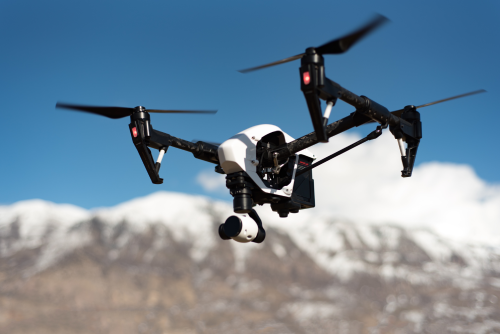
The DJI Matrice 4T is an active DJI enterprise/public safety multirotor built around a thermal-focused mission role. It is aimed at agencies, inspectors, utilities, emergency teams, and professional operators who need more than a standard camera drone. For buyers comparing current thermal platforms, it matters because it sits in DJI’s enterprise lineup rather than in the hobby market.
That distinction is important. Enterprise drones are usually evaluated less like gadgets and more like tools: Can they be deployed quickly? Do they fit into agency procedures? Are replacement parts easy to get? Does the software support reporting, evidence handling, inspection documentation, or fleet management? With the Matrice 4T, those questions matter at least as much as image quality.
This article should therefore be read as a buyer-oriented overview rather than a conventional spec-heavy review. The supplied data confirms the product category, active status, manufacturer, use case positioning, and thermal focus, but it does not publicly confirm many of the exact technical details serious buyers will want. That limits what can be responsibly claimed, but it does not make the drone irrelevant. In many procurement scenarios, understanding where a product sits in the market is the first step before requesting quotations, demos, or official documentation.
Quick Summary Box
- Drone Name: DJI Matrice 4T
- Brand: DJI
- Model: Matrice 4T
- Category: Enterprise / Public Safety
- Best For: Thermal inspection, public safety awareness, industrial fieldwork, enterprise fleet use
- Price Range: Not publicly confirmed in supplied data
- Launch Year: Not publicly confirmed in supplied data
- Availability: Not publicly confirmed in supplied data
- Current Status: Active
- Overall Rating: Not rated due to limited confirmed data
- Our Verdict: A serious DJI thermal work drone for professional users, but buyers should verify the exact payload stack, endurance, software package, and pricing before making a procurement decision.
Introduction
The DJI Matrice 4T is a current DJI platform positioned in the enterprise/public safety segment, with the supplied data identifying it specifically as the thermal variant. That puts it in a very different class from casual camera drones: the priority here is mission utility, not recreational flying. Readers should care about this model if they are comparing thermal-ready drones for inspection, search support, infrastructure review, or professional fleet deployment.
Thermal drones occupy a specialized but increasingly important place in commercial and public-sector operations. A standard visible-light camera can document surfaces, structures, and scenes in ordinary daylight conditions, but thermal imaging can reveal heat differences that are invisible to the eye. That matters in practical ways: identifying possible electrical faults, checking roofs and building envelopes, scanning solar installations for anomalies, supporting responders in low-light environments, or helping teams establish situational awareness when smoke, darkness, or distance complicates normal observation.
The Matrice 4T should therefore be understood as a work platform first. An agency or company evaluating it is not typically asking, “Will this shoot attractive vacation footage?” Instead, the more relevant questions are:
- Will the aircraft produce reliable thermal information?
- Can operators deploy it quickly from a vehicle or field site?
- Does it fit existing DJI enterprise workflows?
- Is it a better long-term procurement choice than an older thermal platform?
- How does it compare with smaller integrated thermal drones for portability and cost?
Because the supplied data is limited, this draft cannot responsibly claim exact endurance, camera resolution, weather rating, or software features. But even with those limits, the Matrice 4T remains notable because it appears to represent a current, active DJI thermal option within a recognized enterprise family. For many organizations, active status alone is strategically meaningful: it can affect parts availability, dealer support, firmware attention, training investment, and the confidence to build procedures around a platform.
Overview
What kind of drone is it?
The Matrice 4T is a multirotor drone from DJI, a China-based manufacturer with a strong presence in the global drone market. Based on the supplied record, it is an active enterprise/public safety model and the current thermal variant in its line. In practical terms, that means it is designed for vertical takeoff and landing, close-range operational flexibility, and sensor-led work rather than long-runway operations or hobby use.
A multirotor layout is especially useful for the jobs thermal drones tend to perform. Inspection teams often need to pause precisely near a structure, move slowly around an asset, or maintain a stable hover over a point of interest. Public safety units may need to launch from roadsides, parking lots, command posts, rooftops, or temporary staging zones. Those are tasks where VTOL convenience and stationary hover performance matter more than covering very long distances in a single pass.
The Matrice name also matters in a broader DJI context. DJI’s enterprise products are usually separated from its consumer lines not just by payloads but by workflow expectations. Enterprise users often need mission repeatability, stronger fleet administration, better integration with operational procedures, and more formal support. Even when the exact feature set must still be verified, the product family alone signals a more professional use case than a leisure-focused quadcopter.
Who should buy it?
This model is most relevant to:
- Public safety organizations
- Industrial inspection teams
- Utilities and energy operators
- Infrastructure managers
- Enterprise drone service providers
- Municipal and field-response teams
- Buyers standardizing around DJI enterprise hardware
It is less relevant to casual users who simply want an easy aerial photography drone.
To add more practical context, each of those buyer groups typically has different priorities:
- Public safety organizations may care most about rapid launch, thermal situational awareness, evidence workflow, and operational reliability.
- Industrial inspection teams often care about sensor usefulness, repeatable routes, documentation quality, and maintenance planning.
- Utilities and energy operators may focus on anomaly detection, geotagged records, field deployment efficiency, and fleet support.
- Infrastructure managers often need a tool that can document conditions over time and fit into a predictable inspection schedule.
- Enterprise drone service providers may evaluate not just capability but billing efficiency, service turnaround, spare parts, and cross-client versatility.
- Municipal teams may care about procurement simplicity, training burden, and whether the system aligns with public accountability requirements.
- DJI-standardized buyers may value common control logic, familiar workflows, and easier internal training across multiple teams or aircraft types.
What makes it different?
Its biggest differentiator is its thermal mission focus. A thermal-oriented enterprise drone can do jobs that a normal RGB-only drone cannot, including heat anomaly detection, low-visibility awareness, and certain types of inspection work where temperature contrast matters. The Matrice 4T also benefits from being a current active DJI platform, which is important for organizations thinking about support, procurement continuity, and fleet longevity.
Another differentiator is strategic fit. Some organizations are not simply buying “a thermal drone”; they are investing in a fleet standard. In that context, a current Matrice-series thermal aircraft may be more attractive than an older platform or a smaller compact option if it offers better long-term continuity, a stronger accessories roadmap, or easier training alignment with other enterprise DJI systems. Even when detailed specs are still pending confirmation, platform position within a manufacturer’s ecosystem can meaningfully shape the purchase decision.
Key Features
- Thermal-focused enterprise/public safety positioning
- Multirotor airframe for vertical takeoff and landing
- Active DJI model rather than a discontinued legacy platform
- Designed for professional workflows rather than recreational flying
- Suitable in principle for inspection, incident documentation, and search-related support roles
- Likely intended for mixed daylight and thermal situational awareness, though the exact sensor stack should be verified
- Backed by DJI’s enterprise market presence, which may matter for support and service planning
- Likely relevant to organizations prioritizing fleet standardization, training consistency, and long-term deployment planning
- Better aligned with field operations than consumer photo/video expectations
- Exact endurance, top speed, max range, controller package, obstacle sensing suite, and weather resistance are not publicly confirmed in the supplied data
Full Specifications Table
| Field | Details |
|---|---|
| Brand | DJI |
| Model | Matrice 4T |
| Drone Type | Multirotor |
| Country of Origin | China |
| Manufacturer | DJI |
| Year Introduced | Not publicly confirmed in supplied data |
| Status | Active |
| Use Case | Enterprise / Public Safety |
| Weight | Not publicly confirmed in supplied data |
| Dimensions (folded/unfolded) | Not publicly confirmed in supplied data |
| Max Takeoff Weight | Not publicly confirmed in supplied data |
| Battery Type | Not publicly confirmed in supplied data |
| Battery Capacity | Not publicly confirmed in supplied data |
| Flight Time | Not publicly confirmed in supplied data |
| Charging Time | Not publicly confirmed in supplied data |
| Max Range | Not publicly confirmed in supplied data |
| Transmission System | Not publicly confirmed in supplied data |
| Top Speed | Not publicly confirmed in supplied data |
| Wind Resistance | Not publicly confirmed in supplied data |
| Navigation System | Not publicly confirmed in supplied data |
| Obstacle Avoidance | Not publicly confirmed in supplied data |
| Camera Resolution | Not publicly confirmed in supplied data |
| Video Resolution | Not publicly confirmed in supplied data |
| Frame Rates | Not publicly confirmed in supplied data |
| Sensor Size | Not publicly confirmed in supplied data |
| Gimbal | Not publicly confirmed in supplied data |
| Zoom | Not publicly confirmed in supplied data |
| Storage | Not publicly confirmed in supplied data |
| Controller Type | Not publicly confirmed in supplied data |
| App Support | Not publicly confirmed in supplied data |
| Autonomous Modes | Not publicly confirmed in supplied data |
| Payload Capacity | Not publicly confirmed in supplied data |
| Operating Temperature | Not publicly confirmed in supplied data |
| Water Resistance | Not publicly confirmed in supplied data |
| Noise Level | Not publicly confirmed in supplied data |
| Remote ID Support | Not publicly confirmed in supplied data |
| Geo-fencing | Not publicly confirmed in supplied data |
| Certifications | Not publicly confirmed in supplied data |
| MSRP / Launch Price | Not publicly confirmed in supplied data |
| Current Price | Not publicly confirmed in supplied data |
The lack of confirmed figures in the available record does not mean these specifications do not exist; it simply means they should be checked against official product literature, dealer briefings, or procurement documentation before relying on them in a business case. For enterprise buyers, that step is not optional. Specifications determine not just performance but legal operating category, battery logistics, staffing needs, vehicle storage needs, and sometimes whether a platform can be approved internally at all.
Design and Build Quality
The supplied data confirms that the Matrice 4T is a multirotor in DJI’s enterprise/public safety segment, which already tells you a lot about its likely design priorities. This type of aircraft is usually built for fast deployment, repeatable setup, controlled hovering, and sensor protection in the field rather than for pocket portability or freestyle handling.
Because the record does not confirm dimensions, weight, foldability, or ingress protection, it would be wrong to guess at its exact physical class. What can be said responsibly is that enterprise buyers should pay close attention to:
- How quickly the drone can be unpacked and launched
- How securely the batteries and propellers are mounted
- Whether the airframe is practical for vehicle-based deployment
- How easy it is to inspect and replace wear items
- Whether the payload area is well protected during transport
DJI generally has a strong reputation for clean industrial design and refined hardware integration, but field-readiness should still be verified model by model. For public safety and industrial use, transport case quality, propeller replacement speed, landing stability, and battery-swap workflow often matter as much as the airframe itself.
There are also several build-quality questions buyers should ask in a live demo or pre-purchase evaluation:
- Does the aircraft feel like a rugged field tool or a delicate electronic device?
- Can one operator set it up confidently while wearing gloves or working from a vehicle tailgate?
- Are critical latches, connectors, and hinges intuitive and firm?
- Is the payload housing protected well enough for repeated transportation?
- How easy is it to clean the drone after dusty, wet, or smoky operations?
- How visible are status lights, battery indicators, and safety warnings in daylight?
These points sound minor until the aircraft is being used in real conditions. A drone that is theoretically capable but awkward to deploy can lose value quickly in professional operations. Search teams, inspectors, and infrastructure crews often work under time pressure, in poor weather, or in environments where setup discipline matters. Small ergonomic advantages can produce significant operational benefits over months of use.
Another important design consideration is lifecycle wear. Enterprise aircraft may fly more frequently than consumer models and are often transported in trucks, utility vehicles, emergency response vehicles, or field trailers. The best enterprise designs support repeated handling without turning routine maintenance into a burden. Buyers should inspect landing gear stability, arm locking confidence, battery release mechanisms, and how well the platform tolerates repeated packing and unpacking.
Flight Performance
Without confirmed figures for speed, range, ceiling, or endurance in the supplied data, the safest approach is to discuss likely flight behavior rather than claim exact performance. As an enterprise thermal multirotor, the Matrice 4T is most likely tuned for stable hover, smooth positioning, predictable route-following, and controlled observation passes rather than aggressive high-speed flight.
That makes sense for its market. Thermal and inspection work typically value:
- Stable hovering near a point of interest
- Slow, deliberate positioning
- Reliable short takeoff and landing footprints
- Repeatable passes for documentation
- Strong signal confidence in cluttered field environments
A multirotor platform is also naturally useful in tight launch areas where runway-free deployment matters, such as roadsides, rooftops, industrial yards, and emergency staging points.
Indoor use should not be assumed. Many enterprise drones can perform well in outdoor GNSS-supported workflows, but indoor suitability depends heavily on obstacle sensing, vision systems, lighting, and control tuning. Since those details are not publicly confirmed in the supplied data, buyers with indoor or close-structure requirements should verify them directly.
From a mission-planning perspective, flight performance on a thermal drone is less about outright speed and more about useful endurance under realistic conditions. A buyer should ask not only for quoted flight time, but also for expected operational time when flying in wind, carrying the standard thermal payload, pausing to observe points of interest, and keeping reserve battery for a safe return. Published endurance numbers can be optimistic if they are measured under ideal test conditions, so a serious procurement decision should consider real mission profiles.
Teams should also think about how the aircraft behaves in the kinds of environments where thermal work actually happens:
- Industrial sites may have metal structures, electromagnetic interference, and confined airspace.
- Urban incidents may involve signal reflections, obstacles, and limited launch areas.
- Rural utility work may require repeated short hops from vehicle to vehicle rather than a single long continuous flight.
- Emergency scenes may demand confident hovering while the operator simultaneously monitors thermal imagery and communicates with ground crews.
These are practical performance questions, not marketing ones. An aircraft that remains predictable under measured, controlled movement is usually more valuable for thermal operations than one optimized primarily for speed. The operator needs to frame, assess, and document—not race.
Wind handling is another point buyers should verify carefully. Thermal imagery can still be useful in motion, but inspection quality often improves when the drone can maintain a steady viewpoint. A drone that struggles to hold position in common field conditions may force repeated passes, increasing battery consumption and reducing mission efficiency. Since the supplied data does not confirm wind resistance, that should be tested or validated through official documentation.
Camera / Payload Performance
The most important confirmed payload clue is the model identity itself: the Matrice 4T is the thermal-focused version of the Matrice 4 platform. That immediately makes it more relevant to professional users who need heat-based visibility than to buyers interested only in standard aerial photography.
In enterprise terms, thermal value usually shows up in tasks like:
- Detecting heat anomalies on assets
- Supporting low-light or low-visibility awareness
- Documenting temperature-related issues
- Adding a second layer of visual information beyond normal daylight imaging
What is not publicly confirmed in the supplied data are the exact thermal resolution, thermal frame rate, visible-light camera configuration, zoom capability, gimbal details, video specs, or storage options. Those are critical buying factors, especially for agencies comparing this model against other thermal aircraft.
For this reason, the Matrice 4T should be judged less like a creator camera drone and more like a professional information-gathering platform. The real question is not whether the footage looks cinematic, but whether the payload produces usable, timely, mission-relevant information.
That distinction becomes especially important in procurement. A thermal payload can vary widely in practical value depending on factors such as:
- Whether the thermal sensor is intended mainly for qualitative viewing or more detailed analysis
- Whether temperature readings can be trusted for measurement-oriented workflows
- Whether the operator can align thermal and visible imagery efficiently
- Whether the daylight camera offers enough context to interpret what the thermal image is showing
- Whether zoom, palette controls, and capture tools are fast enough for field use
- Whether files export cleanly into a reporting or evidence workflow
None of those points should be assumed from the model name alone, but all of them are central to whether a thermal aircraft actually improves an operation.
Buyers should also evaluate sensor usefulness by mission type. For example:
- A public safety team may need fast thermal scene scanning and clear visual context more than precision measurement features.
- A solar inspection provider may care more about repeatability, anomaly visibility, and report-ready documentation.
- A building-envelope consultant may prioritize thermal detail, capture consistency, and a workflow for labeling images.
- A utility operator may care about identifying probable hotspots quickly enough to trigger further inspection with other tools.
In other words, “good thermal” is not one thing. It depends on what the drone is being asked to prove, detect, or document.
If possible, buyers should request sample imagery from real missions rather than studio demos. Thermal performance is easiest to judge when looking at field examples relevant to the intended job: roofs at dawn, substations under load, roadside search scenarios, industrial assets in mixed lighting, or post-incident scene review. Official specs matter, but sample outputs often reveal more about real utility than a single sensor resolution figure.
Smart Features and Software
DJI enterprise aircraft are often judged as much by software and workflow support as by airframe hardware. The supplied data, however, does not confirm the exact controller, app environment, mission automation package, SDK support, AI-assisted tools, or cloud services tied to the Matrice 4T.
That means buyers should verify the following before purchase:
- Official controller and display package
- Flight planning or waypoint support
- Return-to-home and fail-safe behavior
- Thermal viewing palettes and analysis tools
- Media management and reporting workflow
- Fleet administration or cloud integration options
- Third-party software compatibility
- SDK or API access for custom enterprise workflows
- Remote ID behavior in the intended market
It is reasonable to expect a current DJI enterprise model to fit into a broader professional software workflow, but the exact workflow capabilities should be confirmed from official product documentation or an authorized enterprise dealer.
For enterprise users, software is often where a drone becomes either a productive system or a management burden. A strong airframe with weak workflow support can create downstream friction in reporting, training, archiving, or cross-team coordination. Before purchase, organizations should think through the full digital workflow:
- How is a mission created?
- How is it flown and supervised?
- How is thermal media reviewed in the field?
- How are files exported, labeled, and stored?
- Can findings be turned into reports quickly?
- Can multiple pilots or departments use the same system consistently?
For public safety teams, there may be additional software requirements around evidence handling, audit trails, offline operation, and media retention policies. For industrial teams, the focus may be on repeat missions, organized asset folders, GIS compatibility, or integration with inspection platforms. For service providers, the key issue may be whether results can be delivered to clients quickly without cumbersome post-processing.
Another useful pre-purchase question is how dependent the aircraft is on connected services. Some organizations prefer cloud-linked fleet tools; others require locally controlled workflows for policy or security reasons. That is not unique to DJI, but it is an important enterprise consideration. Buyers should verify account requirements, firmware management procedures, offline operation options, and any software subscriptions that affect long-term cost.
Use Cases
The Matrice 4T makes the most sense in professional roles where thermal data adds clear value.
- Public safety situational awareness: Quickly checking a scene from above, especially when visibility, distance, or terrain make ground observation harder.
- Search and rescue support: Assisting teams in scanning broad areas for heat signatures or movement cues, subject to training, conditions, and legal operating limits.
- Fireground and hotspot observation at a high level: Supporting command awareness by identifying heat patterns or monitoring areas of concern from a safer standoff position.
- Industrial inspection: Looking for heat anomalies on equipment, structures, or facilities where thermal contrast may indicate maintenance needs.
- Utility and energy asset review: Supporting inspections of electrical infrastructure, transmission assets, or field installations where overheating can matter.
- Roof, facade, and building-envelope inspections: Adding thermal context to structural or moisture-related review work where temperature differences reveal patterns not visible in RGB imagery.
- Solar and power-system anomaly checks: Helping identify likely irregularities across installations where heat signatures can indicate panels or components worth closer examination.
- Infrastructure monitoring: Supporting bridges, municipal sites, transportation assets, and other critical systems with a combination of aerial perspective and thermal awareness.
- Municipal field assessment: Useful for city departments, facilities teams, and emergency planners who need rapid overhead visibility in varied operating environments.
- Security and perimeter observation within lawful policy limits: Thermal can support awareness around large sites, remote facilities, or low-light conditions, but privacy and compliance policies are essential.
- Insurance, incident, and condition documentation: Providing an additional information layer for documenting the condition of a site after an event or during an evaluation.
- Enterprise pilot training on thermal workflows: A current active platform can be a useful training anchor for teams building internal SOPs around thermal operations.
What ties these use cases together is not just the presence of a thermal camera, but the operational value of having one on a deployable multirotor. The drone becomes most useful when thermal observation shortens a decision cycle: confirm a suspected hotspot, narrow a search area, identify a likely fault, document a condition, or guide ground crews toward a closer inspection. That practical decision-support role is where enterprise thermal drones typically justify their cost.
Pros and Cons
Pros
- Current active DJI enterprise model
- Thermal-focused positioning makes it more useful than a standard RGB-only drone for many professional tasks
- Multirotor layout supports flexible takeoff and landing from confined areas
- Strong relevance for inspection and public safety buyers
- DJI brand recognition may help with procurement confidence and service planning
- Better strategic appeal than adopting a discontinued thermal platform
- Likely easier to justify in organizations that already understand DJI enterprise workflows
- Useful for buyers who need a field tool rather than a content-creation drone
Cons
- Many key buyer-facing specifications are not publicly confirmed in the supplied data
- Pricing is not publicly confirmed in the supplied data, which makes budget planning harder
- Enterprise thermal drones usually require more training, process control, and policy oversight than consumer models
- Regulatory and privacy expectations are higher for thermal-equipped commercial aircraft
- Actual software features, payload details, and support bundles must be verified before commitment
- Likely overkill for hobbyists or casual aerial photography users
- Total ownership cost may be meaningfully higher than the aircraft price alone once batteries, training, support, and accessories are included
Comparison With Other Models
| Model | Price | Flight Time | Camera or Payload | Range | Weight | Best For | Winner |
|---|---|---|---|---|---|---|---|
| DJI Matrice 4T | Not publicly confirmed in supplied data | Not publicly confirmed in supplied data | Thermal-oriented enterprise payload | Not publicly confirmed in supplied data | Not publicly confirmed in supplied data | Public safety, thermal inspection, enterprise fieldwork | Best choice if you want a current active DJI thermal platform |
| DJI Matrice 4E | Not publicly confirmed in supplied data | Not publicly confirmed in supplied data | Enterprise imaging platform without the 4T’s thermal focus | Not publicly confirmed in supplied data | Not publicly confirmed in supplied data | Mapping and visual inspection buyers who do not need thermal | 4E wins if thermal is unnecessary |
| DJI Mavic 3 Thermal | Not publicly confirmed in supplied data | Not publicly confirmed in supplied data | Compact thermal enterprise payload | Not publicly confirmed in supplied data | Not publicly confirmed in supplied data | Teams prioritizing portability and lighter field kits | Mavic 3 Thermal wins for compactness |
| DJI Matrice 30T | Not publicly confirmed in supplied data | Not publicly confirmed in supplied data | Older integrated thermal enterprise platform | Not publicly confirmed in supplied data | Not publicly confirmed in supplied data | Existing fleets comparing old and new options | 4T likely wins for buyers prioritizing a current platform |
When comparing thermal enterprise drones, many organizations make the mistake of focusing only on one headline figure such as flight time or sensor resolution. In reality, the better comparison framework includes at least six variables:
- Mission type
- Deployment speed
- Portability
- Data workflow
- Fleet supportability
- Total system cost
A platform can be technically impressive and still be the wrong fit if it does not align with how a team actually works.
DJI Matrice 4T vs a close competitor
The closest internal comparison is the DJI Matrice 4E. If your work is mostly mapping, documentation, or visual inspection without a real need for thermal data, the 4E may be the cleaner fit. If thermal imaging is central to the mission, the 4T is the more logical pick.
The decision between the two is not just about “do you want thermal?” but about workflow emphasis. Teams focused on surveying, photogrammetry, or high-volume daylight inspection may prefer a payload stack optimized for that purpose. Teams that routinely need to identify heat patterns, detect probable faults, or work in reduced-visibility situations will almost certainly see greater value in the 4T. For mixed fleets, some organizations may even view the 4E and 4T as complementary rather than directly competing.
DJI Matrice 4T vs an alternative in the same segment
Against a smaller platform such as the DJI Mavic 3 Thermal, the Matrice 4T will mainly be judged on workflow fit rather than brand familiarity. Buyers who want a compact thermal tool may lean toward the smaller option, while buyers standardizing on a newer Matrice-branded enterprise platform may prefer the 4T. Exact tradeoffs in endurance, controller package, and price should be verified directly.
This comparison is especially relevant for smaller departments and independent operators. A compact thermal drone can be attractive because it is easier to carry, easier to store in a vehicle, and sometimes easier to deploy casually. But portability is only one axis of value. A larger or more enterprise-oriented platform may offer better operational ergonomics, a more suitable controller environment, or stronger long-term fleet logic. The right choice depends on whether the buyer wants the lightest possible thermal kit or a more structured professional platform.
DJI Matrice 4T vs an older or previous-generation option
Compared with an older platform such as the DJI Matrice 30T, the Matrice 4T has the strategic advantage of being a current active model. That matters for support planning and new procurement. However, organizations already invested in older batteries, accessories, and pilot familiarity may still compare the two closely before switching.
That is a common enterprise dilemma. Newer platforms can offer procurement confidence, current support status, and better long-term lifecycle planning, but existing fleets create inertia. If a team already owns accessories, cases, spare batteries, and trained operators for an older platform, the upgrade case has to be strong enough to justify transition costs. Buyers should therefore compare not only aircraft capability but also change-management cost: retraining, accessory replacement, revised SOPs, and temporary loss of standardization during migration.
Manufacturer Details
DJI is both the brand and the manufacturer in this case. The company, formally known as Da-Jiang Innovations, is headquartered in Shenzhen, China and is widely regarded as one of the most influential drone manufacturers in the world.
DJI’s portfolio spans multiple categories, including:
- Consumer camera drones
- FPV drones
- Enterprise inspection and public safety platforms
- Agricultural systems
- Stabilization and imaging products
Its reputation in the drone market is built on strong hardware integration, mature flight control systems, and a broad dealer and service ecosystem. For many enterprise buyers, DJI is the benchmark brand against which other multirotor vendors are compared.
That market position matters because enterprise drone purchases are rarely made in a vacuum. Many organizations already know DJI from other aircraft, handheld imaging tools, or prior pilot experience. Familiarity can reduce training friction and speed adoption. At the same time, larger buyers may apply additional review around procurement policy, data governance, approved vendor lists, or deployment restrictions. Those considerations vary by country, industry, and agency policy, so brand familiarity alone does not resolve them.
Still, from a market perspective, DJI’s enterprise relevance is clear: a current DJI thermal platform is automatically part of the conversation for many buyers who need a proven manufacturer with a recognizable support channel and a large installed user base.
Support and Service Providers
Support matters more with enterprise drones than with casual consumer aircraft. Buyers considering the Matrice 4T should look beyond the aircraft itself and verify the surrounding support structure, including:
- Official support portal access
- Regional authorized repair centers
- Spare battery and propeller availability
- Enterprise dealer setup assistance
- Training and onboarding support
- Repair turnaround expectations
- Replacement-part continuity for active fleets
Because the supplied data does not confirm warranty terms or exact service coverage, readers should verify official support channels and regional repair availability before purchase. This is especially important for public safety users, utilities, and service providers who cannot tolerate long downtime.
A good enterprise dealer can add real value here. In many cases, the best purchase path is not the cheapest listing but the supplier that can help with:
- Initial setup and activation
- Firmware planning
- Pilot familiarization
- Accessory selection
- Spare-parts stocking
- Documentation for procurement or insurance
- Troubleshooting after deployment
- Advice on real-world workflow fit
Organizations should also think in terms of uptime rather than ownership. If the aircraft is mission-critical, ask:
- What happens if it goes down during a busy operational period?
- Is there a loaner or replacement option?
- Can the dealer support batch purchases for teams?
- Are batteries and propellers stocked locally?
- How long do repairs typically take?
Those questions often matter more than small differences in purchase price.
Where to Buy
The Matrice 4T is best approached as an enterprise procurement product rather than an impulse retail purchase. Typical purchase paths may include:
- Official DJI enterprise sales channels
- Authorized enterprise dealers
- Regional drone distributors
- Public safety and industrial systems integrators
- Professional aerial surveying or inspection resellers
Availability may vary by country, sector, and procurement policy. Some buyers will be able to source it through standard dealer channels, while others may need formal quotation, training options, or compliance paperwork as part of the buying process.
For larger organizations, it may also make sense to request a product demo or short evaluation period before final approval. Thermal drones are highly workflow-dependent, and a live demonstration can answer questions that a brochure cannot. Buyers should consider asking resellers for:
- Sample imagery from comparable use cases
- A field demo under realistic operating conditions
- Clarification on software licensing and updates
- A list of included accessories and recommended spares
- Training packages or onboarding support
- Repair and turnaround commitments
- Battery stock availability and charger options
For public-sector buyers, formal procurement channels may also require multiple quotes, vendor registration, security review, or compatibility with internal asset-management systems.
Price and Cost Breakdown
Launch price and current price are not publicly confirmed in the supplied data, so buyers should not build a budget around assumptions. With enterprise thermal drones, the aircraft price is only part of the real ownership cost.
Before approving a purchase, verify the cost of:
- Aircraft package or bundle
- Extra batteries
- Charger or charging hub
- Propellers and routine spares
- Carry case or vehicle kit
- Training and certification time
- Repair coverage or service plan
- Insurance
- Software subscriptions, if any
- Regional taxes, shipping, or import fees
For agencies and industrial operators, the useful budgeting question is not just “What does the drone cost?” but “What does a deployable working kit cost over the first year?”
That broader cost picture often includes items buyers overlook at first:
- Staff time for SOP development
- Time spent on pilot checkouts and recurrent training
- Data storage and archiving
- Replacement batteries over the lifecycle
- Accessories for vehicle charging or field power
- Travel cases for multiple teams
- Time lost to downtime if no backup aircraft is purchased
- Software renewals or analysis tools
- Documentation and compliance overhead
For service providers, there is another angle: return on use. If the thermal payload helps identify faults faster, reduce climb-based inspections, shorten search times, or improve reporting quality, it may justify a higher upfront cost through operational savings or better service revenue. But that business case should be calculated explicitly, not assumed.
Regulations and Compliance
Enterprise and public safety drones usually operate under stricter oversight than recreational aircraft. Even without confirmed weight and compliance details in the supplied data, most buyers should assume that registration, pilot qualification, and operational rules will apply.
Important checks include:
- National drone registration rules
- Commercial operator licensing requirements
- Airspace authorization procedures
- Remote ID obligations in the operating region
- Thermal imaging privacy and data-handling expectations
- Public-sector procurement rules
- Site-specific permissions for industrial or municipal work
- Internal agency policy for evidence, documentation, or reporting
Remote ID support, geo-fencing behavior, and certifications are not publicly confirmed in the supplied data, so those should be validated directly with official documentation. Never assume universal compliance across countries or mission types.
Thermal capability can also raise operational and policy questions beyond normal flight rules. A thermal camera is not inherently problematic, but it can trigger additional expectations around privacy, data retention, and acceptable use. Agencies should have clear policies on when thermal observation is permitted, how media is stored, and who is allowed to access it. Commercial operators may need client agreements that explain the scope of data capture and how findings should be interpreted.
For regulated industries, compliance can also intersect with site access, worker safety rules, and documentation standards. A drone may be legally flyable under aviation rules but still require additional approval from the facility owner, local authority, or internal compliance office. That is why enterprise adoption is rarely just about the aircraft; it is about fitting the aircraft into a lawful, documented operating system.
Who Should Buy This Drone?
Best for
- Public safety teams needing a current thermal-capable DJI platform
- Industrial and utility inspection programs
- Enterprise operators building a professional thermal workflow
- Organizations that value active product status and support planning
- Buyers who need more than a standard visual camera drone
This drone is especially compelling for organizations that already know why they need thermal. If your workflows already involve hotspot checks, low-visibility scene awareness, anomaly detection, or inspection tasks where temperature contrast matters, the Matrice 4T is positioned in the right category. It may also suit teams trying to future-proof a fleet around currently supported hardware rather than extending the life of an aging platform.
Not ideal for
- Casual hobbyists
- Budget-first buyers looking for the cheapest possible thermal option
- Pure content creators focused mainly on cinematic video
- Operators who need fully confirmed open integration details before purchase
- Organizations restricted by internal procurement or data-governance rules
It is also not ideal for buyers who are still defining their use case. Thermal drones deliver the most value when integrated into a real process. If a team does not yet know how thermal data will be interpreted, reported, or acted on, a purchase may be premature regardless of platform quality. In those cases, a pilot project, rental evaluation, or workflow workshop may be the better first step.
Final Verdict
The DJI Matrice 4T looks most compelling as a current DJI thermal work drone for enterprise and public safety users, not as a mass-market camera drone. Its biggest strengths are its thermal mission focus, active status, and relevance to inspection and response-driven workflows. Its biggest drawbacks are the lack of publicly confirmed core specs in the supplied data and the fact that enterprise buying decisions depend heavily on software, accessories, support, and regulatory fit.
If you are a professional buyer who needs a thermal-ready DJI platform for real field work, the Matrice 4T deserves serious consideration. Just make sure you verify the exact payload configuration, endurance, software stack, compliance details, and total ownership cost before signing off.
The best way to think about this aircraft is as part of a complete operational system. The drone itself may be capable, but its real value depends on the surrounding package: batteries, controller, software workflow, training, dealer support, spare parts, internal policy approval, and mission fit. Buyers who approach it with that systems mindset are far more likely to make a good decision than those who focus only on the headline idea of “a thermal drone.”
In short: the Matrice 4T appears to be a serious professional platform in a category where seriousness matters. For the right user, that can make it much more valuable than a cheaper or more compact alternative. For the wrong user, it may simply be too specialized. Verify the details, match them to the mission, and judge the platform by operational outcomes rather than marketing labels.
