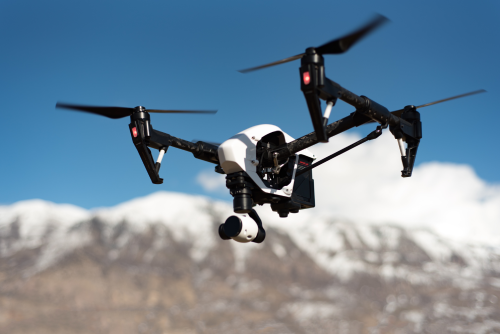
DJI Mavic 3 Pro is an active prosumer multirotor from DJI that sits near the top of the brand’s foldable camera-drone lineup. It is built for serious hobbyists, travel filmmakers, commercial creators, and buyers who want more framing flexibility than a single-camera drone can offer. What makes it important is its triple-camera setup, which gives wide, medium-tele, and tele perspectives in one portable aircraft.
That positioning matters because the Mavic 3 Pro is not trying to be the cheapest drone, the lightest drone, or the simplest drone. It is trying to be one of the most creatively capable foldable drones you can carry without stepping into a much larger cinema or enterprise system. For many buyers, that makes it less of an impulse upgrade and more of a deliberate long-term tool purchase.
Quick Summary Box
- Drone Name: DJI Mavic 3 Pro
- Brand: DJI
- Model: Mavic 3 Pro
- Category: Prosumer multirotor camera drone
- Best For: Aerial photography, cinematic video, travel creators, and advanced hobbyists wanting multiple focal lengths
- Price Range: Premium prosumer pricing; exact current pricing varies by bundle and region
- Launch Year: 2023
- Availability: Officially listed as active; regional stock and bundle options should be verified
- Current Status: Active
- Overall Rating: Not rated due to limited confirmed data
- Our Verdict: A highly versatile foldable camera drone for buyers who value image quality and lens flexibility more than entry-level pricing or lightweight regulations
Introduction
The DJI Mavic 3 Pro is a DJI-branded, China-made prosumer drone aimed at creators who need strong image quality and more than one viewing angle without moving to a much larger enterprise aircraft. In DJI’s lineup, it stands out as a flagship-style foldable multirotor with a triple-camera system.
For readers comparing drones, that matters because most portable camera drones still force a tradeoff between image quality, reach, and portability. The Mavic 3 Pro’s appeal is that it tries to combine those strengths in one platform while remaining travel-friendly enough for regular field use.
It also arrives in a market where many buyers already understand the basic value of drones but want more cinematic control than entry-level models provide. A smaller, cheaper drone can absolutely capture good aerial footage, but once you start caring about lens compression, refined perspective, lower-light performance, and repeatable shooting workflows, the conversation changes. That is where the Mavic 3 Pro becomes relevant.
In practical terms, this drone sits in a sweet spot between enthusiast simplicity and professional ambition. It is not an enterprise inspection platform, not a mapping-first RTK machine, and not a heavy-lift cinema rig. Instead, it is a premium creative aircraft for people who want higher-end aerial imaging without giving up the convenience of a foldable design.
Overview
What kind of drone is it?
This is a foldable multirotor camera drone designed for advanced consumer and prosumer use. It is not a toy, not an FPV racer, and not a heavy industrial platform. Its role is premium aerial imaging first, with software-assisted flight features that help solo creators work faster and more safely.
The word prosumer is especially important here. That usually means a product aimed at users who expect professional-style results but are still operating in a more portable, self-managed, and cost-conscious environment than a full studio or industrial team. The Mavic 3 Pro fits that definition well. It can serve a one-person production workflow, a small creative agency, or an enthusiast with a serious photography budget.
It is also very clearly a camera drone rather than a general-purpose aerial robot. The gimbal, sensor stack, transmission system, obstacle sensing, and flight software are all built around one goal: helping the user capture stable, polished aerial visuals with minimal setup friction.
Who should buy it?
The best fit is buyers who already know they want a serious camera drone and can benefit from multiple focal lengths. That includes filmmakers, social content teams, real estate shooters, travel creators, landscape photographers, and advanced hobbyists upgrading from smaller DJI models.
It is especially attractive to users who have outgrown the “one wide lens does everything” stage. If you routinely find yourself wishing for a more compressed landscape shot, a safer standoff distance, or a more flattering perspective on architecture and property work, the Mavic 3 Pro starts to make a lot of sense.
It can also be a strong choice for creators who travel often and need one compact kit rather than multiple aircraft. Instead of packing a drone and accepting a single look, the Mavic 3 Pro gives a wider creative envelope from the same bag.
What makes it different?
The main differentiator is the triple-camera system. Instead of relying on one wide camera or a simple wide-plus-tele pairing, the Mavic 3 Pro gives three distinct perspectives in one aircraft, which is unusually flexible for a foldable prosumer drone. That can reduce the need to reposition the aircraft constantly just to change framing.
That difference matters more than it may sound on paper. In aerial work, changing the aircraft position is not always quick, legal, safe, or visually ideal. Trees, roads, water, people, wind, and airspace constraints all limit where you can fly. Being able to switch perspective from a wide environmental establishing shot to a tighter, more cinematic medium tele shot without dramatically relocating the aircraft is a real operational benefit.
It also makes the drone more useful across different kinds of assignments. A travel vlogger, a resort marketer, a wedding filmmaker, and a real estate creator may all want different framing styles. The Mavic 3 Pro’s lens spread helps one aircraft cover more of those needs.
Key Features
- Triple-camera imaging system with one main wide camera and two telephoto options
- 4/3 CMOS Hasselblad main camera for higher-end image quality than typical smaller-sensor drones
- Foldable prosumer airframe for easier transport than larger cinema or enterprise platforms
- Manufacturer-quoted flight time of up to 43 minutes
- DJI O3+ transmission system for long-range HD video link capability, subject to regional limits
- Omnidirectional obstacle sensing for better situational awareness in normal flight
- APAS 5.0 obstacle avoidance assistance
- Waypoint Flight and Cruise Control for repeatable or lower-workload flight paths
- FocusTrack-style subject tools and automated creative modes in the DJI ecosystem
- 3-axis mechanical gimbal for stabilized video capture
- Internal onboard storage plus microSD support
- Bundle-dependent controller options, including screen-equipped DJI remotes
- Variable aperture on the main camera for more direct exposure control
- Active product status on DJI’s official lineup
These features are important not only as spec-sheet highlights but as workflow advantages. The triple-camera system changes how you compose. The larger main sensor affects how much flexibility you have in post. The transmission and sensing systems influence how confidently you can operate in complex outdoor locations. And the foldable design determines whether the drone actually travels with you often enough to justify owning it.
Full Specifications Table
| Field | Details |
|---|---|
| Brand | DJI |
| Model | Mavic 3 Pro |
| Drone Type | Foldable multirotor prosumer camera drone |
| Country of Origin | China |
| Manufacturer | DJI |
| Year Introduced | 2023 |
| Status | Active |
| Use Case | Aerial photography, video production, creator work, advanced hobby flying |
| Weight | 958 g |
| Dimensions (folded/unfolded) | Folded: 231.1 × 98 × 95.4 mm; Unfolded: 347.5 × 290.8 × 107.7 mm |
| Max Takeoff Weight | Not publicly confirmed in supplied data |
| Battery Type | Intelligent Flight Battery, 4-cell lithium battery |
| Battery Capacity | 5000 mAh |
| Flight Time | Up to 43 minutes, manufacturer-quoted |
| Charging Time | Not publicly confirmed in supplied data |
| Max Range | Up to 15 km transmission range in FCC regions; regional limits vary |
| Transmission System | DJI O3+ |
| Top Speed | Up to 21 m/s, about 75.6 km/h |
| Wind Resistance | Up to 12 m/s |
| Navigation System | GNSS: GPS, Galileo, BeiDou |
| Obstacle Avoidance | Omnidirectional sensing with APAS 5.0 |
| Camera Resolution | Triple-camera system: 20 MP wide, 48 MP medium tele, 12 MP tele |
| Video Resolution | Up to 5.1K on the main camera; tele cameras support up to 4K, mode-dependent |
| Frame Rates | Vary by lens and mode; main camera supports high-frame-rate options, tele cameras up to 4K/60 in supported modes |
| Sensor Size | 4/3 CMOS + 1/1.3-inch CMOS + 1/2-inch CMOS |
| Gimbal | 3-axis mechanical gimbal |
| Zoom | Lens-based multi-focal setup with additional digital or hybrid zoom depending on mode |
| Storage | 8 GB internal storage plus microSD support |
| Controller Type | Depends on bundle; DJI RC-N1, DJI RC, or DJI RC Pro |
| App Support | DJI Fly |
| Autonomous Modes | Return to Home, Waypoint Flight, Cruise Control, FocusTrack, QuickShots, MasterShots, Panorama, Hyperlapse |
| Payload Capacity | Not designed for external payload carriage |
| Operating Temperature | 0° to 40°C |
| Water Resistance | Not rated for rain or water exposure |
| Noise Level | Not publicly confirmed in supplied data |
| Remote ID Support | Region-dependent; verify local firmware and legal requirements |
| Geo-fencing | DJI geospatial or flight-zone awareness tools, region-dependent |
| Certifications | Not publicly confirmed in supplied data |
| MSRP / Launch Price | Not publicly confirmed in supplied data |
| Current Price | Not publicly confirmed in supplied data |
The specification sheet tells an important story. The Mavic 3 Pro is large enough to support a stronger camera system and stable outdoor performance, but still compact enough to remain realistic for travel and day-to-day creator use. The weight, battery size, and wind rating all point to a more serious aircraft than sub-250 g and entry-level drones, while the foldable body and DJI Fly support keep it far more approachable than industrial hardware.
Design and Build Quality
The Mavic 3 Pro follows DJI’s established premium foldable design language. Its arms fold inward for transport, making it much easier to pack than larger professional rigs. At 958 g, it is still substantial enough to feel like a serious aircraft rather than a lightweight travel toy, but it remains portable for car, backpack, and carry-on use.
From a usability standpoint, the airframe is clearly built around aerial imaging. The front camera assembly and gimbal are central to the design, and the aircraft shape prioritizes efficient forward flight, sensor placement, and stable camera presentation. Like most DJI camera drones in this class, it is optimized for clean integration rather than DIY serviceability.
That clean integration is one of the reasons DJI drones tend to feel refined. The battery system, folding arms, controller pairing, app experience, and camera stabilization all work as part of one unified ecosystem. For many owners, this means less setup friction and fewer compatibility questions than with a more modular platform.
The size is also worth discussing honestly. While the Mavic 3 Pro is portable, it is not tiny. It is the kind of drone you intentionally pack, protect, and carry, not the kind you forget is in your bag. That has both advantages and disadvantages. The advantage is a more capable airframe, better wind behavior, and room for a more advanced camera system. The downside is that it attracts more regulatory attention, takes up more space, and feels more like dedicated equipment than a casual travel accessory.
Build quality should generally feel premium by consumer drone standards, but buyers should not confuse premium finish with rugged, all-weather durability. This is not a weather-sealed industrial drone. It is best treated as a refined portable camera platform: robust for normal transport and field use, but not something you want to expose to rain, dust-heavy rotor wash, sea spray, or hard landings if you can avoid it.
In ownership terms, careful handling matters. The gimbal assembly is a precision component, and the triple-camera front end is one of the drone’s most valuable assets. Using the gimbal protector during transport, avoiding rough launches from debris-heavy ground, and storing the aircraft properly are simple habits that help protect an expensive tool.
Flight Performance
On paper, the Mavic 3 Pro offers strong flight performance for a foldable prosumer drone. DJI quotes up to 43 minutes of flight time, a top speed of up to 21 m/s, and wind resistance up to 12 m/s. In practical terms, that positions it as a capable outdoor platform for travel, cinematic passes, and location work where smaller drones may feel more limited.
The aircraft’s likely real strength is not raw speed but controlled, confidence-inspiring flight. DJI’s mature GPS-assisted stabilization, O3+ transmission system, and omnidirectional sensing should make it feel composed in the air when flown within legal and environmental limits. As with any manufacturer quote, real-world endurance will usually be lower than the headline number once you add wind, repeated climbs, aggressive movement, and battery reserve margins.
This distinction is important for buyers coming from spec-sheet comparisons. A difference of a few quoted minutes between drones does not always matter as much as flight confidence, camera stability, and efficient shooting. In actual use, many creators care more about how predictably the drone hovers, how smoothly it tracks, how stable the video feed remains, and how quickly they can set up a shot than about absolute top speed.
The Mavic 3 Pro is primarily an outdoor drone. Its size, prop wash, and speed make it less suitable for casual indoor flying than a smaller beginner platform. Indoors, GNSS reception may be limited and obstacle sensing behavior can become less forgiving depending on space and surface conditions. Outdoors, however, the aircraft is much more in its element.
For travel and landscape work, the weight can actually be a benefit. Heavier foldable drones often feel calmer in wind than very small models, especially when filming broad scenery or coastal environments where gusts are common. That does not mean the Mavic 3 Pro is immune to wind, only that it is better positioned than many lightweight alternatives to handle typical outdoor conditions.
The flight time claim of up to 43 minutes should be treated as a best-case benchmark rather than a daily expectation. A more realistic session may involve ascending to working altitude, repositioning several times, recording multiple clips, and landing with a battery safety margin still intact. If you plan to use the drone professionally or on travel shoots, extra batteries are not optional luxuries; they are basic workflow tools.
Another practical point is transmission confidence. The O3+ system is one of the reasons higher-end DJI drones remain attractive for field work. Stronger link quality can reduce stress during line-of-sight operations and make composition easier in bright outdoor environments. Regional transmission limits still matter, and legal limits matter even more, but a dependable live feed is part of what makes a premium camera drone feel premium.
Even so, technology does not remove pilot responsibility. Obstacle sensing is helpful, not magical. Thin branches, wires, low-contrast surfaces, high-speed movement, and unusual lighting can still create risk. The drone’s overall flight behavior may inspire confidence, but disciplined takeoff and landing technique, route planning, weather awareness, and battery management still separate safe operation from avoidable accidents.
Camera / Payload Performance
The camera system is the reason most buyers look at the Mavic 3 Pro in the first place. DJI’s headline advantage here is the triple-camera arrangement: a large-sensor main camera for image quality, a medium-tele camera for more cinematic compression, and a longer tele camera for reach.
The main camera is the most important one for quality-focused work. Its 4/3 CMOS sensor and Hasselblad branding place it well above the small-sensor baseline common in cheaper drones. In practical terms, that usually means stronger dynamic range, better low-light behavior, and more flexibility for serious photo and video work. The variable aperture on the main lens is also useful for exposure control, which can be especially helpful for video shooters trying to manage shutter speed and brightness in changing daylight.
For still photography, the main camera is the one most likely to satisfy buyers who care about landscapes, sunrise and sunset scenes, or high-contrast environments. Larger sensors generally cope better when bright skies and dark ground share the same frame, and they usually provide more forgiving files for color grading and highlight recovery. If your workflow includes editing RAW stills or grading footage, the main camera is the heart of the system.
The medium-tele camera is arguably the most creative addition. A 70 mm equivalent field of view is often ideal for portraits, layered landscapes, architecture, and shots where a wide drone perspective can feel too distant or too exaggerated. This lens alone can make footage look more intentional and less generic.
That creative benefit deserves emphasis. Wide-angle drone shots are common, and while they can be beautiful, they can also become visually predictable. A medium tele focal length lets you isolate subjects, flatten distance, emphasize mountain layers, compress city blocks, and make roads or coastlines feel more graphic. For real estate work, it can help structures look more proportionate and flattering than an ultra-wide aerial view. For travel filmmaking, it often produces the “cinematic drone look” people actually want.
The long tele camera adds standoff framing, but it comes with the usual smaller-sensor tradeoffs. It is useful when you need compression, distance, or safer framing from farther away, but buyers should expect the main camera to remain the quality leader, especially in difficult light. The tele lens is best understood as a situational creative tool rather than the primary reason to buy the drone.
That distinction helps set realistic expectations. The Mavic 3 Pro’s three cameras are not equal in image quality, and they do not all perform the same in low light, high-contrast conditions, or demanding professional post workflows. The main camera is the premium imaging tool. The medium tele is highly useful and often creatively rewarding. The long tele is convenient and sometimes uniquely valuable, but more constrained.
There is also a workflow advantage to this camera system beyond simple flexibility: fewer aircraft moves. If your wide establishing shot is already perfect, you can often switch to a tighter lens for a second angle rather than physically bringing the drone closer. That can reduce risk near subjects, preserve a calmer airspace footprint, and save battery time.
For video creators, the drone’s appeal is not only resolution but shot variety. A single location can yield dramatically different images depending on which lens you use. That matters for storytelling. Wide shots establish place. Medium tele shots create intimacy and structure. Longer tele shots add compression, distance, and visual surprise. Having those options in one foldable aircraft can make edit timelines feel far less repetitive.
There are limitations too. Color and tonal matching across multiple cameras may still require attention in post. The smaller-sensor secondary cameras will generally be less forgiving in low light or when pushing footage heavily in grading. And as noted in the draft, this is not a modular payload carrier. If you need thermal, multispectral, LiDAR, loudspeakers, spotlights, spraying systems, or swappable industrial sensors, you are in the wrong product category.
Smart Features and Software
The Mavic 3 Pro benefits from DJI’s mature consumer and prosumer software ecosystem. In normal use, that means a polished flight app experience, return-to-home functions, obstacle sensing, intelligent subject tools, and automated creative modes that reduce pilot workload.
Confirmed or widely associated features for this model family include:
- Return to Home
- Waypoint Flight
- Cruise Control
- FocusTrack-style functions such as ActiveTrack, Spotlight, and Point of Interest
- QuickShots
- MasterShots
- Panorama
- Hyperlapse
- APAS-assisted obstacle bypass behavior
For buyers, the main value is workflow efficiency. You can repeat paths more easily, keep tracking behavior simpler for solo shooting, and reduce the number of manual stick corrections needed for smooth footage. What you should not assume, however, is enterprise-style software openness, mapping certification, or payload-specific automation unless you verify those needs separately.
Waypoint Flight is particularly valuable for users who revisit locations. If you shoot the same property multiple times, return to the same landscape through different seasons, or need consistent reveal shots for commercial work, waypoint support can help standardize your captures. That repeatability can be more important than many buyers realize.
Cruise Control and smoother assisted flight options can also reduce pilot fatigue on longer sessions. Not every aerial shot is dramatic. A lot of useful footage involves holding a clean line, maintaining speed, and letting the camera do the storytelling. Features that support that style of shooting make the drone easier to use as a production tool rather than just a gadget.
Subject tracking and FocusTrack-style functions are helpful, but they should be used with common sense. They work best in clearer environments with well-defined subjects and enough open space. Trees, wires, fast-moving vehicles, reflective water, and crowded public areas still demand caution. Intelligent flight modes assist the pilot; they do not replace good judgment.
Another major benefit of DJI’s software maturity is familiarity. Many pilots already know the DJI Fly workflow, menu structure, update process, and controller logic. That reduces onboarding time for users upgrading within the DJI ecosystem. It also means that tutorials, troubleshooting guides, and community knowledge are widely available.
Use Cases
The most realistic use cases for the DJI Mavic 3 Pro are camera-led and creator-led rather than industrial heavy-duty work.
-
Aerial photography for landscapes, travel, and cityscapes
The main camera is well suited to scenic work, while the medium tele helps isolate landmarks, mountain layers, and urban geometry. -
Cinematic video production for creators and small commercial teams
The triple-camera setup gives more visual variety from a single launch, which is useful when producing edited sequences rather than just standalone shots. -
Real estate and property marketing
Wide shots can establish property context, while the 70 mm-style view can present the structure itself in a more flattering and less exaggerated way. -
Tourism, hospitality, and destination content
Resorts, hotels, coastlines, and attractions benefit from both sweeping establishing shots and tighter detail views. -
Outdoor adventure filming with multiple focal-length options
Hiking, road-trip, and mountain content often looks stronger when not every aerial shot is ultra-wide. -
Social media and brand content production
The ability to collect several different perspectives quickly is valuable when shooting short-form content under time pressure. -
Wedding and event establishing shots where local rules permit
A premium camera drone can capture venue reveals and scenic context, though event operations demand extra legal and safety care. -
Visual site documentation and non-contact roof or facade observation
While not an industrial inspection platform, it can still be useful for simple visual checks and documentation when thermal or specialized sensors are not required. -
Advanced hobby flying focused on image quality rather than racing
Enthusiasts who enjoy refined aerial composition rather than speed or acrobatics are a natural audience. -
Wildlife observation from a respectful distance where legal and ethical
The tele options may allow more standoff, but wildlife laws, park rules, and ethical disturbance concerns must always come first.
The key theme across these use cases is perspective control. The Mavic 3 Pro is strongest when the assignment benefits from being able to switch visual language without changing aircraft platforms.
Pros and Cons
Pros
- Triple-camera system gives unusual framing flexibility in a foldable drone
- 4/3 main camera is a major strength for image quality
- Medium-tele lens is especially useful for more cinematic compositions
- Strong manufacturer-quoted flight time for a premium camera platform
- Omnidirectional obstacle sensing improves overall confidence in flight
- Foldable design keeps a flagship-style imaging drone reasonably portable
- DJI ecosystem is mature and familiar to many buyers
- Useful for creators who want more shot variety per battery
Cons
- Premium pricing means it is not an easy impulse buy
- At 958 g, it sits well above lightweight regulatory thresholds in many countries
- Not weather sealed, so field conditions still need to be managed carefully
- Tele cameras are useful, but smaller sensors mean image quality is not equal across all lenses
- Not meant for external payloads, thermal work, or serious industrial sensor swapping
- Current bundle contents, controller options, and regional availability must be verified before purchase
- Real-world flight time will be lower than headline figures in wind or aggressive use
- Total ownership cost rises quickly once batteries, filters, cards, and protection plans are added
The short version is simple: the Mavic 3 Pro is appealing because it gives you more visual possibilities than most foldable drones, but you pay for that flexibility in money, regulation burden, and some added complexity.
Comparison With Other Models
| Model | Price | Flight Time | Camera or Payload | Range | Weight | Best For | Winner |
|---|---|---|---|---|---|---|---|
| DJI Mavic 3 Pro | Premium | Up to 43 min | Triple-camera: 4/3 wide + medium tele + tele | Up to 15 km, region-dependent | 958 g | Buyers wanting maximum lens flexibility in a foldable DJI drone | Best overall versatility |
| DJI Air 3 | Lower than Mavic 3 Pro | Up to 46 min | Dual-camera wide + medium tele | Manufacturer-quoted long-range system, verify by region | About 720 g | Value-focused creators and travel users | Best value |
| DJI Mavic 3 Classic | Lower than Mavic 3 Pro | Up to 46 min | Single 4/3 main camera | Up to 15 km, region-dependent | About 895 g | Buyers who want Mavic image quality with less cost and complexity | Best image-value balance |
| DJI Mavic 3 | Varies by seller and market | Up to 46 min | Dual-camera wide + tele | Up to 15 km, region-dependent | About 895 g | Shoppers considering older flagship hardware | Best older-generation option if priced well |
DJI Mavic 3 Pro vs a close competitor
Against the DJI Air 3, the Mavic 3 Pro wins on camera ambition and overall premium feel. The Air 3 remains attractive if you want a more affordable, lighter, and still very capable creator drone, but the Mavic 3 Pro is the stronger choice for buyers who care most about the main camera and broader lens coverage.
This is one of the most practical comparisons because many buyers do not actually need the Mavic 3 Pro. The Air 3 covers a lot of modern creator needs at a lower cost and with a lighter airframe. If budget sensitivity, travel simplicity, and strong general-purpose content creation matter more than maximum image quality, the Air 3 can be the smarter pick.
But if you already know that camera quality is the point of the upgrade, the Mavic 3 Pro justifies itself more clearly. The larger main sensor and extra tele option push it toward a more premium creative tool rather than a value-focused all-rounder.
DJI Mavic 3 Pro vs an alternative in the same segment
The closest internal alternative is the DJI Mavic 3 Classic. If you mainly want the high-quality 4/3 main camera and do not need the extra lenses, the Classic can be the smarter buy. If you regularly shoot real estate, travel films, or commercial work where changing perspective matters, the Mavic 3 Pro earns its place more easily.
This is arguably the most important buying decision in the whole Mavic family. The Mavic 3 Classic may deliver much of the image-quality experience many buyers actually care about, while keeping cost and complexity down. If your edit style depends mostly on wide, high-quality aerial footage, the Classic can be the more rational purchase.
The Pro becomes easier to justify when the secondary cameras are not just “nice to have” but genuinely useful. If you already know the 70 mm-style view would improve your work, or if clients expect more varied aerial framing, the Mavic 3 Pro offers real operational value rather than just extra specs.
DJI Mavic 3 Pro vs an older or previous-generation option
Compared with the earlier DJI Mavic 3, the Pro version is more appealing for creators who want a better-balanced multi-camera setup. The original Mavic 3 can still make sense if found at the right price, but the Pro model is the more complete creator-focused package.
For second-hand or discounted buyers, the older Mavic 3 may still be worth considering if price is the deciding factor. But product-family maturity, bundle availability, firmware support expectations, and overall usability should be part of the equation. In general, the Mavic 3 Pro feels like the more intentional solution for creators who actively want multiple useful lenses rather than simply accepting a secondary tele camera as a bonus.
Manufacturer Details
DJI is both the brand and the manufacturer here, so there is no separate branding company to distinguish from the hardware maker. The company is headquartered in China, with Shenzhen widely recognized as its home base.
Founded in 2006, DJI became the dominant name in consumer and prosumer drones by building strong flight control systems, stabilized camera platforms, and a broad product lineup that spans Mini, Air, Mavic, Avata, Inspire, Matrice, and Agras families. In the market, DJI’s reputation is typically associated with polished hardware, mature software, and deep ecosystem integration, especially in camera-led drones.
For buyers, DJI’s market position has practical effects. First, accessories, user guides, tutorials, and third-party support are easier to find than with many smaller brands. Second, the company’s software and hardware ecosystem tends to feel more unified than lower-volume competitors. Third, because DJI is so dominant, many comparisons in the drone space are really comparisons within DJI’s own lineup rather than between totally different manufacturers.
That dominance does not remove the need for due diligence. Regional regulations, availability, firmware policies, and support experiences can vary. But from a brand-recognition standpoint, DJI remains the benchmark many shoppers start with when looking at premium foldable camera drones.
Support and Service Providers
DJI generally offers support through its official support portal, firmware tools, documentation, and region-specific repair channels. Authorized dealers and approved repair partners may also provide service, depending on the country.
Typical support considerations for a drone like this include:
- Firmware updates through the official DJI software ecosystem
- Replacement propellers, batteries, and charging accessories
- Gimbal and airframe repair through official or authorized service routes
- Protection-plan availability in some regions
- Community troubleshooting through large user forums and creator groups
Because support coverage varies by region, buyers should still verify repair turnaround, spare-parts availability, and protection-plan eligibility before purchase.
This is especially important for a premium drone because ownership risk is not theoretical. Camera-gimbal assemblies, obstacle-sensor damage, bent arms, and battery issues can turn a great tool into downtime if support access is poor. Before buying, it is worth checking whether your country has official repair logistics, local dealer support, or a realistic mail-in process.
It is also a good idea to understand basic maintenance habits. Firmware should be kept current when appropriate, batteries should be stored and transported correctly, and propellers should be inspected regularly. A premium drone still benefits from basic pilot discipline.
Where to Buy
As an active DJI model, the Mavic 3 Pro may be available through the official brand store, authorized drone dealers, major camera retailers, and selected online marketplaces. Availability can differ by country, especially when bundle versions and controller combinations are involved.
Before buying, verify:
- Which controller is included
- Whether extra batteries or Fly More-style bundles are part of the package
- Whether the listing is for the standard version or a higher-spec Cine-oriented bundle
- Local warranty and after-sales service coverage
- Return policy and regional legal compatibility
If possible, buying from an authorized seller is usually safer than chasing the lowest marketplace listing. With a product in this price class, warranty clarity, return policy, and after-sales support are part of the value. Gray-market imports or unclear region-specific stock can create headaches later, especially if a repair, activation issue, or firmware support question arises.
For international buyers, battery shipping restrictions and local import rules can also affect delivery and replacement convenience. That is another reason bundle planning matters at purchase time.
Price and Cost Breakdown
Exact launch pricing and exact current pricing are not publicly confirmed in the supplied data, and real-world cost can vary significantly by bundle, region, taxes, and controller choice. Buyers should treat this as a premium prosumer purchase rather than a budget upgrade.
Your real ownership budget should also include more than the aircraft itself:
- Extra batteries
- Charging hub and compatible power adapter
- High-speed microSD cards
- Spare propellers
- ND filters for video work
- Carry case or travel bag
- Optional protection plan or insurance
- Potential repair cost for the multi-camera gimbal assembly
If you are comparing it against cheaper alternatives, remember that the total system cost matters more than just the base box price.
This point is easy to underestimate. A buyer may compare the Mavic 3 Pro’s base cost to a lower-priced drone and assume the gap is manageable, but the gap often grows once you add the accessories needed for serious use. Two or three extra batteries, a charging solution, storage media, and basic filter coverage can materially change the total investment.
For video-oriented buyers, ND filters are particularly relevant because they help manage shutter speed in bright daylight. For travel users, a better case or organized backpack insert may be essential. For commercial operators, insurance or a protection plan may be worth considering even if it increases the upfront cost.
There is also a less visible cost category: time. More advanced drones reward users who learn their settings, color workflow, battery management habits, and lens behavior. That is not a flaw, but it means the Mavic 3 Pro makes the most sense when you intend to use its capabilities rather than just occasionally launch it on weekends.
Regulations and Compliance
At 958 g, the Mavic 3 Pro falls into a weight class that triggers registration and operational rules in many jurisdictions. In plain terms, this is not a “lightweight exception” drone in most markets. Buyers should expect to check registration, pilot competency, remote identification, and local airspace restrictions before flying.
A few practical reminders:
- Verify national and local registration rules
- Confirm whether Remote ID or equivalent electronic identification is required in your region
- Follow privacy, filming, and property-access laws
- Stay within visual line of sight unless specifically authorized otherwise
- Check protected-area, airport, and geofenced restrictions before launch
- Commercial use may require additional licensing or operational approval
Do not assume that one country’s rules apply elsewhere, and do not rely on software geofencing alone as your legal check.
This weight category matters in real buying decisions. If you want the least regulatory friction possible, the Mavic 3 Pro is not the obvious answer. In many countries, drones of this size can trigger more formal obligations than smaller recreational models. That may include registration, operator IDs, online tests, insurance requirements, or stricter distance rules around people and structures.
Travelers should be especially careful. A drone that is legal and straightforward to fly in one country may face very different rules in another. Some locations restrict import, some require prior authorization, and some limit flying in tourist areas even when airspace itself appears clear. The Mavic 3 Pro is portable enough for travel, but travel legality must be checked separately.
Battery transport rules also matter when flying commercially or internationally. Airline carry-on requirements for lithium batteries are not the same as drone flight rules, but they are still part of the practical compliance picture.
In short, ownership of a near-1 kg premium drone comes with responsibility. Buyers who are comfortable learning and following those rules will likely be fine. Buyers who specifically want a low-burden, spontaneous, casual travel drone should think carefully before choosing this category.
Who Should Buy This Drone?
Best for
- Advanced hobbyists upgrading from smaller camera drones
- Travel filmmakers who want more than one focal length
- Real estate and property media creators
- Commercial content teams shooting outdoor promotional work
- Landscape photographers and cinematic videographers
- Buyers who prefer one premium drone instead of multiple lower-end models
These users are likely to benefit from what the Mavic 3 Pro does best: combining high-quality wide-angle imaging with more creative perspective options in one compact system. If your work improves when you can choose between environmental, compressed, and long-reach views without changing aircraft, the value proposition is easy to understand.
It is also a strong choice for people who already know they will fly enough to justify the cost. Premium drones make the most sense when they become regular tools rather than occasional novelty devices.
Not ideal for
- First-time buyers on a strict budget
- Pilots who need a very small, low-regulation travel drone
- FPV racers or freestyle pilots
- Operators needing weatherproof industrial hardware
- Survey teams needing RTK-first mapping workflows
- Users needing thermal, multispectral, or swappable payload support
For these users, the Mavic 3 Pro can be the wrong kind of premium. It may be too expensive, too regulated, too camera-specific, or simply too specialized for aerial imaging rather than industrial tasks. In those situations, a smaller DJI model, a mapping-focused platform, or an enterprise drone may be a better fit.
Final Verdict
The DJI Mavic 3 Pro is one of the most compelling foldable camera drones in the prosumer class because it solves a real creative problem: perspective. Its triple-camera system, strong main sensor, mature DJI software environment, and portable design make it highly attractive for serious photo and video work.
Its drawbacks are just as clear. It is a premium purchase, it sits in a more regulated weight class than smaller drones, and it is still a camera drone rather than an industrial all-weather platform. If your priority is top-tier image flexibility in a portable DJI aircraft, the Mavic 3 Pro is easy to take seriously. If your priority is budget, minimal regulation burden, or specialized payload work, you should look elsewhere.
The most sensible way to judge it is not by asking whether it is “good” in isolation, but by asking whether you will actually use what makes it special. If you mainly want a great wide-angle aerial camera, a cheaper model in DJI’s range may already cover your needs. If you want a lightweight travel drone with less regulatory friction, there are better options. If you need thermal or mapping-first capability, this is not your platform.
But if you are the kind of buyer who values shot variety, lens choice, more cinematic compression, and one-drone convenience, the Mavic 3 Pro stands out. It is a serious creator drone for people who know why focal length matters and want that flexibility in the air without giving up the convenience of a foldable design. In that role, it remains one of the most interesting and capable options in DJI’s active lineup.
