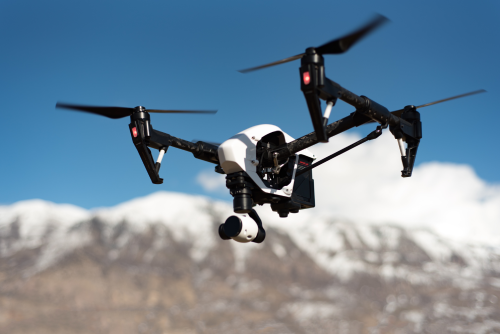
The DJI Mini 5 Pro is an active DJI consumer/prosumer multirotor that sits in the part of the market most readers care about: portable camera drones that are easy to carry, easy to fly, and serious enough for content creation. It matters because the Mini line has long been one of DJI’s most important product families for hobbyists, travelers, and small-scale commercial shooters who want quality without carrying a large aircraft. Based on the supplied record, this is an officially grounded model page rather than a rumor-only listing, but many of the hard specifications still need to be verified directly from DJI before making a final buying decision.
That distinction is important. A lot of drone coverage online gets ahead of itself and turns model names into assumed feature sets. This article does not do that. The Mini 5 Pro may end up being a major upgrade, a modest refinement, or simply the latest iteration in a very successful compact-drone series. Until DJI’s official detailed specifications are clearly confirmed, the most useful way to approach this drone is as a high-interest model with strong buying relevance, but incomplete benchmark certainty.
Quick Summary Box
- Drone Name: DJI Mini 5 Pro
- Brand: DJI
- Model: Mini 5 Pro
- Category: Consumer/prosumer multirotor
- Best For: Buyers looking for an active DJI compact camera-drone platform and willing to verify final specs before purchase
- Price Range: Not publicly confirmed in supplied data
- Launch Year: Not publicly confirmed in supplied data
- Availability: Appears active via official manufacturer presence; exact regional availability not publicly confirmed in supplied data
- Current Status: Active
- Overall Rating: Not rated due to limited confirmed data
- Our Verdict: A potentially very important DJI Mini-series option, but key figures such as weight, camera specs, flight time, range, and pricing should be confirmed before treating it as a clear upgrade over established alternatives
Introduction
The DJI Mini 5 Pro is listed here as an active DJI model in the consumer/prosumer segment, with the official manufacturer site as the source basis. That positioning alone makes it relevant to buyers who want a compact, mainstream drone rather than an FPV, industrial, or enterprise aircraft. For readers comparing DJI’s small-format lineup, the big question is not whether the model matters, but how much it improves on older Mini-series options once the full official spec sheet is confirmed.
This is exactly the kind of drone that can influence a large part of the market. The Mini family has historically appealed to first-time pilots, travel creators, photographers who want a packable second drone, and professionals who need a lightweight aircraft for quick reconnaissance or supplemental footage. In other words, the Mini line is not a niche category inside DJI’s portfolio. It is one of the company’s most visible entry points for everyday buyers.
At the same time, the gap between a “must-buy upgrade” and a “wait for discounts on the older model” can come down to a handful of crucial details. A slightly better camera is not the same thing as a substantially better camera. Better obstacle sensing on paper may or may not matter depending on your flying style. A newer transmission system can be a major quality-of-life improvement, but only if your use case actually benefits from it. And in the Mini class especially, weight can have major regulatory implications that affect real-world convenience more than small performance gains do.
So while the DJI Mini 5 Pro clearly deserves attention, it also deserves a cautious, evidence-based evaluation. This article keeps that balance: it treats the model as important, but it does not overclaim what is not yet publicly confirmed in the supplied data.
Overview
The Mini line has historically been where DJI reaches the widest audience: travelers, casual flyers, social creators, and professionals who want a lightweight second drone. The Mini 5 Pro appears to continue that high-interest formula, but the supplied data confirms only the basics of brand, segment, country of origin, airframe type, and active status.
That still tells us something meaningful. It confirms that this is not being framed as a specialty craft for racing, inspection, surveying, payload work, or public-safety missions. It belongs in the mainstream camera-drone conversation, where buyers usually care most about four things:
- portability
- camera quality
- flight confidence
- value for money
If a drone lands in the Mini series with a Pro badge, expectations immediately go up in all four areas. Buyers will reasonably assume that DJI intends it to sit near the top of its compact non-enterprise range. The challenge, again, is that expectations are not the same as verified specifications.
What kind of drone is it?
It is a DJI-branded multirotor drone aimed at the consumer/prosumer market. In practical terms, that means it is positioned more like a compact camera platform than a heavy-lift tool, racing quad, or specialist industrial aircraft.
“Consumer/prosumer” is a useful label here because it describes both ease of use and intended seriousness. A purely entry-level drone may focus on simplicity above all else. A prosumer drone, by contrast, usually aims to satisfy newer pilots while still offering enough imaging and control capability to matter for more demanding users. That is why the Mini series attracts such a wide audience: it typically lives in the space between “easy enough for beginners” and “good enough for real creative work.”
Who should buy it?
Readers who typically shop for a portable DJI drone for photography, video, travel, and general-purpose flying should have this model on their shortlist. It is also relevant to existing DJI owners deciding whether to wait for the newest Mini-series option or buy a proven earlier-generation model.
More specifically, the Mini 5 Pro is likely to interest:
- travelers who care about space and weight in their bag
- creators who want fast setup for spontaneous shooting
- hobbyists who prefer GPS-stabilized camera drones over FPV flying
- users upgrading from older, less capable consumer drones
- DJI ecosystem buyers who want continuity in app workflow, batteries, accessories, or controller familiarity
It may also attract cautious first-time buyers who have heard the Mini line recommended repeatedly and want the newest active version rather than starting with an older release.
What makes it different?
Right now, what makes the DJI Mini 5 Pro different is its positioning as an active DJI Mini-series “Pro” model rather than any one published specification in the supplied data. The “Pro” naming strongly suggests a camera-first, premium-leaning Mini variant, but exact differentiators over previous models are not publicly confirmed here. That means the model is important, but its real competitive edge still depends on official detailed specs.
In the drone market, naming matters because it signals product intent. A Mini-branded model usually emphasizes low-bulk portability. A Pro-branded DJI consumer drone usually suggests that DJI wants advanced users to take it seriously, not just treat it as a beginner toy. If those two things are both true here, the Mini 5 Pro should occupy one of the most commercially interesting positions in DJI’s entire consumer range.
Key Features
- Active DJI model in the consumer/prosumer segment
- Multirotor airframe, which generally favors stable hovering and camera-friendly control
- Mini-series naming suggests a compact, portability-focused design philosophy, though exact dimensions and weight are not publicly confirmed in supplied data
- “Pro” branding suggests a higher-tier configuration within the Mini family, likely aimed at more demanding photo and video users
- Backed by DJI, one of the most established drone manufacturers in the civilian drone market
- Likely intended for aerial imaging, travel use, and hobby/prosumer workflows rather than heavy payload or industrial sensor operations
- Official manufacturer-site basis gives it more credibility than rumor-only or leak-only product mentions
- Exact camera system, flight time, range, top speed, obstacle sensing, controller options, and software features are not publicly confirmed in supplied data
Those points may sound basic, but they are not trivial. In drone buying, “who made it” and “what category it belongs to” often narrow the field quickly. A DJI compact multirotor with Pro branding already tells buyers that this is likely to be a polished mainstream aerial-imaging product. The open questions are not about whether it belongs in the category; they are about how competitive it is inside that category.
A second useful way to read the feature picture is to divide it into what is known versus what still matters most:
What is meaningfully known
- It is a real, active DJI consumer/prosumer drone listing rather than a pure leak.
- It is part of the compact camera-drone conversation.
- It should matter to a large section of buyers.
What still needs confirmation
- Whether it remains in a particularly favorable regulatory weight class
- How strong the actual camera upgrade is
- How much flight time and wind performance it offers in real use
- What controller, transmission, and sensing options are included
- Whether the price makes it clearly better than a Mini 4 Pro or simply newer
That split explains why the Mini 5 Pro is worth watching closely even before every specification is verified.
Full Specifications Table
| Field | Details |
|---|---|
| Brand | DJI |
| Model | DJI Mini 5 Pro |
| Drone Type | Consumer/prosumer multirotor |
| Country of Origin | China |
| Manufacturer | DJI |
| Year Introduced | Not publicly confirmed in supplied data |
| Status | Active |
| Use Case | Consumer/prosumer aerial imaging, hobby flying, travel content, light creative work |
| Weight | Not publicly confirmed in supplied data |
| Dimensions (folded/unfolded) | Not publicly confirmed in supplied data |
| Max Takeoff Weight | Not publicly confirmed in supplied data |
| Battery Type | Not publicly confirmed in supplied data |
| Battery Capacity | Not publicly confirmed in supplied data |
| Flight Time | Not publicly confirmed in supplied data |
| Charging Time | Not publicly confirmed in supplied data |
| Max Range | Not publicly confirmed in supplied data |
| Transmission System | Not publicly confirmed in supplied data |
| Top Speed | Not publicly confirmed in supplied data |
| Wind Resistance | Not publicly confirmed in supplied data |
| Navigation System | Not publicly confirmed in supplied data |
| Obstacle Avoidance | Not publicly confirmed in supplied data |
| Camera Resolution | Not publicly confirmed in supplied data |
| Video Resolution | Not publicly confirmed in supplied data |
| Frame Rates | Not publicly confirmed in supplied data |
| Sensor Size | Not publicly confirmed in supplied data |
| Gimbal | Not publicly confirmed in supplied data |
| Zoom | Not publicly confirmed in supplied data |
| Storage | Not publicly confirmed in supplied data |
| Controller Type | Not publicly confirmed in supplied data |
| App Support | Not publicly confirmed in supplied data |
| Autonomous Modes | Not publicly confirmed in supplied data |
| Payload Capacity | Not publicly confirmed in supplied data |
| Operating Temperature | Not publicly confirmed in supplied data |
| Water Resistance | Not publicly confirmed in supplied data |
| Noise Level | Not publicly confirmed in supplied data |
| Remote ID Support | Not publicly confirmed in supplied data |
| Geo-fencing | Not publicly confirmed in supplied data |
| Certifications | Not publicly confirmed in supplied data |
| MSRP / Launch Price | Not publicly confirmed in supplied data |
| Current Price | Not publicly confirmed in supplied data |
The table above looks sparse, but that sparseness is itself informative. It shows exactly why caution is warranted. Buyers usually make a drone decision from a handful of headline metrics: weight, camera, battery life, sensing, controller, and price. Until those are confirmed, the best use of the Mini 5 Pro listing is as a watchlist product, not yet as an unquestioned recommendation.
If you are actively shopping, this table can still help. Treat it as a checklist for the questions you need answered before purchase. Once DJI publishes or confirms those missing fields, the value picture becomes much clearer very quickly.
Design and Build Quality
The confirmed facts tell us this is a consumer/prosumer multirotor from DJI, which already points toward a lightweight, camera-oriented airframe rather than a rugged industrial chassis. In DJI’s product logic, a Mini-series drone would usually emphasize portability, travel friendliness, and low setup friction. That is analysis based on the family positioning, not a confirmed claim about this exact model’s dimensions, folding arms, or materials.
If the Mini 5 Pro follows DJI’s usual compact-drone design language, buyers should expect a streamlined body, integrated camera gimbal, and a field-ready form factor that fits small bags or jacket-pocket-style travel kits better than larger prosumer aircraft. Still, the supplied data does not confirm folded size, landing gear design, propeller geometry, shell materials, or repairability. Buyers who care about crash resilience, arm stiffness, gimbal protection, or propeller swap convenience should verify official photos and service documentation.
Design quality in a drone is not just about how modern it looks. It affects the entire ownership experience:
- how fast you can deploy it on location
- how securely it packs into a travel bag
- how exposed the gimbal is during transport
- how easy it is to swap batteries and propellers
- how likely small knocks are to become expensive repairs
For casual buyers, these details often seem secondary until after purchase. For frequent travelers and working creators, they matter immediately. A drone that is “portable” in marketing language but awkward in real packing can become a burden. A drone that is easy to unfold, start, and fly in under a minute is much more likely to be used regularly.
Another practical build question is durability versus weight optimization. Compact drones often live in a design tradeoff: keep them light for convenience and possibly favorable regulation, but strong enough to survive everyday use. Without confirmed materials or structural design details, it is not possible to judge where the Mini 5 Pro lands on that balance. Buyers who routinely fly in rocky outdoor environments, from boats, or while hiking should pay particular attention to real-world reviews once available.
For most readers, the key takeaway is simple: this is very likely a portability-first design, but the exact build advantages remain unconfirmed in the supplied data.
Flight Performance
Without confirmed figures for endurance, range, ceiling, speed, or wind resistance, any performance judgment has to stay conservative. The safest analysis is that a DJI consumer/prosumer multirotor is usually tuned for stable, predictable, GPS-assisted flight rather than aggressive manual handling. That makes it more likely to appeal to photographers and mainstream buyers than to acro or racing pilots.
If Mini-series logic still applies here, the DJI Mini 5 Pro will probably be most attractive for: – steady hovering – smooth cinematic movement – easy takeoff and landing – quick deployment for travel and casual shoots
The main unknown is how strong the airframe is in wind and how far DJI has pushed battery efficiency. Small drones can be excellent for convenience, but they are also the first to show limitations in stronger outdoor conditions. Until official specs are confirmed, readers should not assume a major improvement in flight time, top speed, or signal range over older Mini models.
This section matters more than many buyers realize. A small drone’s raw camera quality can be excellent, but if the aircraft struggles to hold position confidently in typical outdoor conditions, your footage suffers anyway. Flight performance is what turns camera potential into usable results. Stable braking, smooth yaw behavior, good hover precision, reliable return-to-home behavior, and sensible battery management all matter as much as headline flight-time numbers.
A few real-world factors to think about when evaluating the Mini 5 Pro once full specs are available:
Wind behavior
Compact drones are often limited less by calm-weather capability and more by how they handle moderate gusts. Wind resistance determines whether coastal shoots, mountain overlooks, open fields, and elevated urban vantage points remain practical. A tiny aircraft that performs well in still conditions can become frustrating if it constantly fights drift or burns battery rapidly in wind.
Endurance in realistic use
Manufacturer flight times are usually measured in idealized conditions. Real flight time depends on wind, speed, temperature, ascent behavior, and how much reserve battery you keep for safe return. Even if DJI eventually publishes a strong endurance figure, buyers should still compare likely real-world usable time, not only lab-style maximums.
Signal confidence
Range claims are often misunderstood. In many countries, legal visual-line-of-sight rules mean you should not be using the full claimed transmission distance anyway. What matters more for many users is stable image transmission, controller responsiveness, and reliable operation in noisy radio environments.
Beginner-friendly control
DJI has built much of its reputation on making camera drones approachable. If the Mini 5 Pro continues that pattern, it could be attractive to newer pilots who want a drone that feels cooperative rather than demanding. Smooth automated takeoff, precise hovering, and forgiving control tuning can significantly reduce the learning curve.
Indoor use should also be treated carefully. Even a stable consumer drone can be risky indoors if GPS quality drops, space is limited, or obstacle sensing coverage is incomplete. Since the sensing and navigation systems are not publicly confirmed in the supplied data, buyers should assume outdoor line-of-sight flying is the primary use case unless DJI states otherwise.
Camera / Payload Performance
The DJI Mini 5 Pro appears to be a camera-led product rather than a payload-carrying utility drone. That conclusion comes from its consumer/prosumer positioning and the “Pro” naming, both of which strongly suggest imaging is central to the product. However, the critical details that creators actually need—sensor size, photo resolution, video resolution, frame rates, bitrate behavior, color profiles, and low-light performance—are not publicly confirmed in the supplied data.
That means content creators should be careful not to assume: – a specific sensor class – vertical shooting support – advanced slow motion modes – log or flat color recording – meaningful zoom capability – improved night performance
This is one of the most important caution zones for buyers. Camera marketing language in drones can be misleading if you do not look at the full imaging chain. A higher resolution number alone does not tell you about dynamic range. A bigger sensor claim does not automatically guarantee better processing. Slow-motion modes may involve crop or quality tradeoffs. Better low-light claims may still come with visible noise or reduced detail. In compact drones especially, tuning and processing can matter nearly as much as sensor hardware.
If DJI has positioned this model as the top Mini-tier choice, it could be very appealing for travel videos, scenic photography, social content, and lightweight commercial shoots. But until the official camera spec sheet is confirmed, it is impossible to say whether the Mini 5 Pro is a mild refresh or a meaningful imaging upgrade.
When full information becomes available, serious buyers should look beyond the headline “camera resolution” line and check:
- sensor size
- aperture characteristics, if applicable
- lens field of view or equivalent focal length
- maximum video resolution and frame rates
- HDR support
- color profile options for grading
- photo format options such as RAW support
- low-light behavior
- gimbal stabilization capability
- whether any vertical or social-first shooting mode exists
Those features define whether the drone is best for quick vacation clips, polished YouTube travel work, client-facing real estate footage, or more serious post-production workflows.
On payload utility, the story is simpler: there is no confirmed payload capacity in the supplied data, and this segment is generally not built for interchangeable industrial payloads. Buyers needing thermal, multispectral, mapping-specific, or inspection-grade sensor options should look to enterprise platforms instead.
Smart Features and Software
DJI is known for polished flight software and beginner-friendly setup flows, which is one reason Mini-series models are so popular. Even so, the supplied data does not confirm this model’s app support, transmission system, autonomous modes, obstacle avoidance suite, or controller compatibility.
Features buyers should verify directly before purchasing include: – return-to-home behavior – subject tracking – waypoint support – quick-shot or automated cinematic modes – follow-me functions – geofencing behavior – Remote ID implementation where required – controller screen vs phone-based control options – firmware update path – app compatibility across iOS and Android
It is reasonable to expect some level of DJI ecosystem integration because the brand and manufacturer are DJI, but the exact software stack for the Mini 5 Pro should not be assumed from older models alone.
Software is one of DJI’s strongest competitive advantages, so this area deserves more than a quick mention. For many buyers, smart features are not gimmicks; they are what make a drone practical. A creator filming solo may depend heavily on automated subject tracking. A beginner may rely on return-to-home confidence and clear warning prompts. A travel shooter may want quick-shot modes that produce usable clips with minimal effort. A more advanced user may care about waypoint-style repeatability for consistent scene coverage.
Controller choice also matters more than it first appears. An integrated-screen controller can simplify setup and improve convenience, but it may increase bundle cost. A phone-based controller can reduce price, but some users dislike relying on their phone battery, cable connections, and app interruptions. Without confirmed bundle details, buyers should not assume which control experience they are getting.
Software support after launch matters too. Firmware maturity, bug fixes, geofencing workflows, and long-term app support can all affect ownership satisfaction. DJI usually has an advantage here through scale, but the exact path for the Mini 5 Pro still needs specific confirmation.
Use Cases
Based on its confirmed segment and likely product positioning, these are the most realistic use cases for the DJI Mini 5 Pro:
- Travel aerial photography
- Casual and enthusiast drone flying
- Scenic video capture
- Social media content creation
- Vacation and outdoor adventure footage
- Light prosumer video work
- Real estate overview shots, where local rules allow
- Learning modern DJI camera-drone workflows
- Backup or secondary drone use for creators who already own a larger aircraft
Less realistic use cases include heavy industrial inspection, advanced mapping payload work, agricultural spraying, cargo delivery, or any mission requiring specialized interchangeable sensors.
What makes the Mini class attractive is not that it does everything. It is that it covers a very large percentage of normal aerial-imaging needs with less friction than bigger drones. For many buyers, the best drone is not the most powerful one; it is the one they actually bring with them. That is where compact drones shine.
A few scenario-based examples help clarify where the Mini 5 Pro could fit:
Great fit
- A traveler who wants sunrise landscape shots without carrying a heavy case
- A hiker who needs a lightweight drone for scenic clips
- A vlogger or social creator filming destination content
- A homeowner or hobbyist who wants aerial perspectives for personal projects
- A creator who already owns a larger drone but wants something easier to deploy quickly
Less ideal fit
- A surveyor who needs repeatable mapping accuracy and specialized software workflow
- A public-safety team that needs thermal sensors
- A commercial operator who flies in rough weather regularly
- A pilot who wants acrobatic manual flying rather than stabilized imaging
- A buyer whose main goal is maximum durability over portability
Pros and Cons
Pros
- Active model status supported by official manufacturer-site basis
- Made by DJI, a highly established brand in the civilian drone market
- Consumer/prosumer positioning suggests broad usability for hobbyists and creators
- Multirotor format is well suited to hover stability and controlled camera movement
- Mini-series and Pro naming suggest a compact premium focus
- Likely relevant for travel and everyday content capture rather than niche specialist use
- Easier to shortlist than rumor-only drones because this page is based on an official-source-backed record
Cons
- Core buying specs are not publicly confirmed in supplied data
- Weight is unconfirmed, so regulatory class and registration implications are unclear
- No confirmed flight time, range, speed, or wind-resistance figures yet
- No confirmed camera sensor, video resolution, or frame-rate data yet
- No confirmed price or bundle structure, making value comparison difficult
- Exact software features and controller compatibility remain unclear
- Hard to judge whether it truly outperforms Mini 4 Pro or older alternatives without official detail
The pros here are mainly about credibility and category relevance, not yet about performance leadership. That is important to understand. The Mini 5 Pro already looks like a product worth taking seriously because it is an active DJI entry in one of the market’s most important drone classes. The cons, however, are all tied to purchase confidence. Buyers do not just need to know that a drone exists; they need to know whether it is worth their money compared with widely documented alternatives.
Comparison With Other Models
Because the supplied data for the DJI Mini 5 Pro is still thin, the table below is best read as a buyer-orientation tool rather than a final spec-sheet verdict.
| Model | Price | Flight Time | Camera or Payload | Range | Weight | Best For | Winner |
|---|---|---|---|---|---|---|---|
| DJI Mini 5 Pro | Not publicly confirmed in supplied data | Not publicly confirmed in supplied data | Not publicly confirmed in supplied data | Not publicly confirmed in supplied data | Not publicly confirmed in supplied data | Buyers wanting the newest active Mini-series option and willing to verify details | Pending official full-spec confirmation |
| DJI Mini 4 Pro | Premium compact consumer drone pricing; varies by bundle and region | Widely published as up to 34 min with standard battery | Widely published 1/1.3-inch class camera with 4K video focus | Widely published long-range digital transmission capability; legal flight distance still depends on local rules | Widely published as under 249 g in standard form | Buyers who want a mature, well-documented sub-250g DJI platform | Winner on certainty today |
| Autel EVO Nano+ | Premium compact competitor pricing; varies by region | Widely published as up to 28 min | Widely published 1/1.28-inch class camera with 4K video | Widely published compact-consumer transmission range figures | Widely published as under 249 g | Buyers wanting a non-DJI compact alternative | Winner for ecosystem preference if avoiding DJI |
| DJI Mini 3 Pro | Often lower than newer flagships, depending on stock and bundle | Widely published as up to 34 min with standard battery | Widely published 1/1.3-inch class camera with 4K video focus | Widely published lower transmission capability than Mini 4 Pro generation | Widely published as under 249 g in standard form | Value-focused buyers wanting an older but proven Mini | Winner on older-generation value |
DJI Mini 5 Pro vs a close competitor
The closest internal benchmark is the DJI Mini 4 Pro. For many buyers, that is the real decision point: wait for or verify the Mini 5 Pro, or buy the proven Mini 4 Pro now. Until DJI’s full Mini 5 Pro spec sheet is confirmed, the Mini 4 Pro remains the easier model to recommend on evidence.
That does not mean the Mini 5 Pro will lose the comparison. It means the Mini 4 Pro currently wins on certainty. Buyers can already assess its flight time, camera behavior, weight class, and ecosystem support with much more confidence. If you need a drone right now, certainty has real value.
DJI Mini 5 Pro vs an alternative in the same segment
Against compact rivals such as the Autel EVO Nano+, the Mini 5 Pro will likely compete on ecosystem polish, controller experience, app maturity, and camera quality per gram. But without confirmed Mini 5 Pro specs, the safer comparison today is brand trust and support expectations rather than raw numbers.
For some buyers, especially those avoiding DJI for ecosystem or policy reasons, alternatives may remain attractive regardless of what the Mini 5 Pro offers. For others, DJI’s software maturity and accessory ecosystem are strong enough to keep the Mini 5 Pro automatically relevant.
DJI Mini 5 Pro vs an older or previous-generation option
Compared with the DJI Mini 3 Pro, the Mini 5 Pro should theoretically represent a newer-generation choice. The problem is that “newer” does not automatically mean “better for every buyer” unless the improvements are clear. If price matters more than having the newest model, an older Mini can still be the smarter buy.
This is especially true in the consumer drone market, where prior-generation models often remain highly capable long after replacement. Once the Mini 5 Pro’s actual price is known, the buying logic becomes much easier: – if the price premium is small and the upgrades are meaningful, the new model may win – if the premium is large and the gains are modest, older Mini models may remain better value
Manufacturer Details
DJI is both the brand and the manufacturer here, so there is no separation between badge name and producing company in this case. The company is widely known as SZ DJI Technology Co., Ltd., headquartered in China, and it has been one of the most influential names in civilian drones since the mid-2000s.
DJI’s broader product lineup has included: – consumer camera drones – FPV models – enterprise and public-safety platforms – agricultural systems – handheld stabilization products – imaging accessories and ecosystem tools
In the drone market, DJI’s reputation is built on strong flight control software, easy onboarding, broad accessory ecosystems, and category-defining consumer models. For buyers, that usually translates into better mainstream familiarity and better community knowledge than with many smaller brands.
That reputation does not automatically make every new model the best option, but it does affect risk. Buying from an established manufacturer usually means: – more available tutorials and setup help – easier access to user communities – better third-party accessory support – more predictable firmware and app ecosystem development – clearer resale interest compared with obscure brands
For many mainstream buyers, that brand confidence is a real part of the value equation.
Support and Service Providers
A major advantage of buying a DJI product is the likelihood of structured post-sale support. DJI typically offers official customer support channels, firmware updates, repair intake options, and spare accessory availability for mainstream models. However, the supplied data does not confirm the exact support package, warranty terms, or repair network details for the DJI Mini 5 Pro specifically.
Buyers should verify: – official support availability in their country – regional repair turnaround times – battery and propeller availability – whether official care or replacement plans are offered for this model – controller and battery compatibility across bundles – availability of authorized service centers
Community support is also likely to be strong simply because DJI products attract large user bases. That usually means easier troubleshooting, more tutorials, and faster accessory-market growth than for obscure brands.
Support matters more with drones than with many other electronics because damage risk is inherently higher. Gimbals can be delicate, propellers are consumables, batteries age, and even minor crashes may require inspection. A drone that looks affordable at checkout can become frustrating if parts are difficult to source or service is slow.
If you travel frequently, it is also worth checking how support works internationally. Warranty and service terms can vary by region, and gray-market imports can complicate repair options. The safest ownership path is usually to buy from an official or clearly authorized channel with documented local support.
Where to Buy
The safest places to buy the DJI Mini 5 Pro are typically: – the official DJI store – DJI-authorized dealers – major camera retailers – well-known electronics sellers – established regional drone shops
Marketplace listings may also appear, but buyers should be careful with: – region-locked versions – incomplete bundles – missing warranty eligibility – gray-market imports – used batteries or damaged gimbals in secondhand offers
Because the supplied data does not confirm exact retail availability by region, shoppers should check official store listings and authorized dealer stock before planning a purchase.
It is also worth watching bundle composition closely. Drone pricing can look deceptively similar across retailers while including very different extras. One package may include a more capable controller, extra batteries, or a charging hub; another may appear cheaper but require major add-on spending afterward. During early availability, some regions may also see limited stock or staggered rollout, so patience may save money and hassle.
Price and Cost Breakdown
The launch price and current price of the DJI Mini 5 Pro are not publicly confirmed in the supplied data. That means any firm statement about value would be premature.
Before budgeting, buyers should verify these cost layers:
- Base drone bundle price
- Controller type included in the box
- Number of batteries included
- Cost of extra batteries
- Multi-battery charger or charging hub cost
- Spare propeller cost
- Carry case or travel bag cost
- ND filter set cost, if relevant for video creators
- Memory/storage accessories, if required
- Insurance or care-plan pricing, if offered
- Repair costs for gimbal, arm, or shell damage
For many DJI buyers, the true ownership cost is meaningfully higher than the entry bundle alone. Even without a confirmed price, that is an important practical point.
This is especially true for creators. If your use case involves travel video or paid work, you may realistically need: – at least one or two extra batteries – a better controller bundle, if available – neutral density filters – a decent case – spare props – storage accessories – a care plan or insurance
That can shift the real cost far above the headline entry price. So when the Mini 5 Pro’s pricing becomes public, compare not just base bundle to base bundle, but complete working kit to complete working kit. That is the only fair way to judge whether it is good value against the Mini 4 Pro, Mini 3 Pro, or competing compact drones.
Regulations and Compliance
Drone regulations depend on country, region, and use case, so no buyer should assume universal compliance. The biggest missing detail here is weight. Even though “Mini” branding often suggests a lightweight class, the actual weight of the DJI Mini 5 Pro is not publicly confirmed in the supplied data, so buyers should not assume registration exemptions apply.
Key checks before flying include: – registration requirements in your country – Remote ID or equivalent broadcast rules – maximum altitude limits – visual line-of-sight requirements – no-fly zone and controlled-airspace restrictions – privacy and filming rules – commercial licensing or certification for paid work
If you intend to use the drone for paid photography, real estate work, inspections, or client projects, you may need additional authorization depending on local law. Also verify whether DJI’s geofencing or unlocking workflow applies to your region and this exact model.
Weight matters because it can change not just paperwork, but practical freedom. In some regions, crossing a certain threshold affects registration, training, permitted environments, and travel convenience. That is one reason Mini-series drones have historically been so appealing. But until the Mini 5 Pro’s exact weight is confirmed, no one should assume it fits the same regulatory sweet spot as earlier models.
Travelers should also remember that airline battery rules, cross-border drone import policies, and local tourist-area restrictions may affect how useful a compact drone really is. A small drone is easier to pack, but legal use still depends entirely on where and how you fly.
Who Should Buy This Drone?
Best for
- Buyers who prefer DJI over smaller brands
- Travelers wanting a likely compact camera-drone option
- Hobbyists looking at current-generation consumer/prosumer multirotors
- Content creators waiting for DJI’s newest Mini-tier model details
- Existing DJI users comparing an upgrade path from older Mini models
Not ideal for
- Buyers who need complete confirmed specs before purchase
- Users needing heavy payload capacity or industrial sensors
- Pilots focused on FPV racing or acrobatic flight
- Operators who need rugged all-weather field hardware
- Budget buyers who may get better value from proven older Mini models
- Enterprise teams needing mapping, thermal, or inspection-specific payload workflows
A simple way to think about it is this:
- If you want the newest compact DJI option and do not mind waiting for confirmed details, the Mini 5 Pro deserves a place on your shortlist.
- If you need a purchase decision today based on established evidence, a documented existing model may be easier to justify.
- If your mission is specialized rather than creative, this is probably the wrong class of drone altogether.
Final Verdict
The DJI Mini 5 Pro looks important because it is not being treated here as a rumor-only drone; it is an active DJI model anchored to official manufacturer presence in the supplied record. That alone puts it on the radar for hobbyists, travelers, and creators who want the newest compact DJI option.
The problem is simple: the most important buying details are still unconfirmed in the supplied data. Weight, camera system, flight time, range, obstacle sensing, controller options, and price are exactly the things that determine whether this drone is a breakthrough or just a refresh.
So the strongest verdict right now is this: the DJI Mini 5 Pro is a high-interest, high-potential DJI consumer/prosumer multirotor, but not yet a fully benchmarkable one from the information provided here. If you want certainty today, a well-documented alternative like the Mini 4 Pro is easier to judge. If you want DJI’s newest active Mini-series model, the Mini 5 Pro is worth serious attention—but only after you verify the official final specs, bundle contents, regional support, and pricing.
That is not a weak conclusion. It is the correct one. In a market where small differences in weight, camera performance, sensing, and price can dramatically alter the best-buy answer, responsible advice means waiting for confirmation where confirmation is still missing. The Mini 5 Pro has the right branding, the right category, and the right level of market significance to become a major consumer drone. Whether it becomes the best choice in its class depends on the details DJI ultimately puts behind the name.
