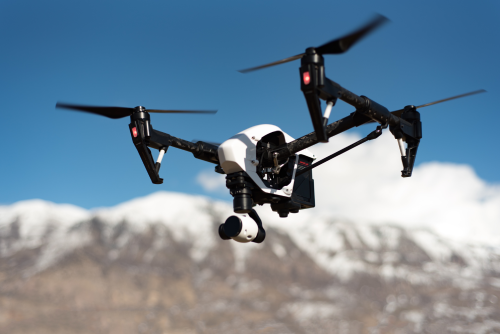
DJI Phantom 3 Professional is a legacy prosumer camera drone from DJI’s Phantom line, aimed at hobbyists, creators, and buyers looking at older but still capable aerial platforms. It matters because it helped define mainstream 4K consumer drone flying, combining a stabilized camera, GPS-assisted flight, and a more serious control link than many budget drones of its era. Today, it is best understood as a discontinued used-market option rather than a current retail recommendation.
What makes this model worth revisiting is not that it competes head-to-head with today’s best consumer drones, because it generally does not. Its relevance comes from history, value, and familiarity. For many pilots, the Phantom 3 Professional was one of the first drones that felt like a real aerial camera system rather than a novelty aircraft. It brought together stable hovering, usable 4K recording, and a relatively polished control ecosystem in a way that helped move drones into the mainstream.
If you are researching it in 2026, you are probably in one of a few camps: you already own Phantom gear and want a replacement unit, you are a budget-conscious buyer browsing the used market, or you are comparing older DJI aircraft to see whether a legacy Phantom still offers enough value. In all three cases, the answer depends less on the original spec sheet and more on condition, batteries, software practicality, and whether the aircraft still fits current legal requirements where you fly.
Quick Summary Box
- Drone Name: DJI Phantom 3 Professional
- Brand: DJI
- Model: Phantom 3 Professional
- Category: Consumer/prosumer multirotor
- Best For: Legacy 4K aerial photography, hobby flying, and buyers comparing older Phantom-series drones
- Price Range: Discontinued; used-market pricing varies and is not publicly confirmed in supplied data
- Launch Year: 2015
- Availability: Legacy/discontinued; mainly secondary-market availability
- Current Status: Legacy/discontinued
- Overall Rating: Not rated due to limited confirmed data
- Our Verdict: A historically important 4K Phantom with solid core flight and camera basics, but age, battery health, support limits, and missing modern safety features make it a careful used-buy only
Introduction
The Phantom 3 Professional sits in DJI’s consumer/prosumer segment and represents an important stage in the evolution of camera drones. As a discontinued DJI model from China, it is no longer a mainstream buy for most new users, but it still attracts interest from legacy DJI owners, budget-minded used buyers, and readers comparing older drones against newer foldable models. If you are considering one in 2026, the main question is not just capability, but whether the condition, supportability, and compliance fit still make sense.
Back in its prime, this drone stood at the point where consumer drones started feeling genuinely useful for photography and video instead of merely experimental. Earlier generations had already proven that stabilized aerial cameras were possible, but the Phantom 3 Professional made that experience more accessible. It offered sharper video, a more mature app workflow, stronger positioning support, and a transmission system that felt substantially more dependable than the entry-level Wi‑Fi setups common on cheaper drones of that period.
That historical importance matters today for two reasons. First, it explains why the model still has name recognition long after discontinuation. Second, it helps set realistic expectations. The Phantom 3 Professional is not “bad” simply because it is old; it is old because the market moved on. Modern drones are safer, smaller, quieter, and easier to travel with. Yet this Phantom can still provide enjoyable flying and respectable daylight footage if you approach it with the right mindset and buy carefully.
Overview
What kind of drone is it?
The DJI Phantom 3 Professional is a camera-focused multirotor quadcopter built around stabilized aerial imaging rather than racing, heavy lifting, or industrial payload work. It belongs to the older fixed-body Phantom family, with integrated landing gear, a suspended 3-axis gimbal camera, and a dedicated remote controller.
In practical terms, that means it was designed first as an aerial tripod with motors. Its priorities are stable hover, predictable movement, and an operator-friendly camera platform. This is not a freestyle drone, a tiny travel drone, or a modular enterprise aircraft. It is a self-contained flying camera system from the period when consumer drones were becoming reliable enough for enthusiast creators, hobby videographers, and small-budget professional users.
The body style also reflects a different design era. Unlike foldable modern drones that emphasize portability, the Phantom 3 Professional uses a full-size fixed frame. That makes it easier to identify, easier to handle on the ground, and often easier to inspect visually, but much less convenient to pack.
Who should buy it?
It makes the most sense for:
- Buyers who specifically want a legacy DJI Phantom platform
- Hobbyists shopping the used market for stabilized 4K flight
- Students learning older camera-drone workflows
- Existing Phantom 3 owners looking for replacement airframes or parts-compatible units
It can also make sense for collectors and long-time DJI users who value the Phantom line specifically. Some pilots simply prefer the larger, more visible, more planted feel of a classic Phantom over today’s compact folding designs. For those users, the appeal is partly practical and partly nostalgic.
It makes less sense for buyers who want modern obstacle sensing, compact folding design, stronger app support, or up-to-date compliance features. It is also a less sensible choice for anyone who wants the simplest possible first-drone experience. A beginner can technically learn on it, but the size, weight, and lack of obstacle avoidance raise the stakes compared with newer entry-level camera drones.
What makes it different?
What made the Phantom 3 Professional stand out was its combination of 4K video capture, a stabilized gimbal, and DJI’s Lightbridge transmission system in a consumer/prosumer package. In its time, that gave it a more serious imaging and control feel than lower-end drones using basic Wi‑Fi links. In 2026, its real differentiator is mostly historical: it offers classic Phantom flight behavior and legacy DJI camera-drone experience, but without the refinements of newer platforms.
The Lightbridge element is especially important in understanding why this drone earned such a strong reputation. For many pilots in its era, a stable live view and a more confidence-inspiring link were transformative. It made framing easier, increased trust in the aircraft, and narrowed the gap between hobby flying and more serious camera work.
Today, the main distinction is no longer raw specification but character. The Phantom 3 Professional feels like a product from the period when consumer drones were becoming credible tools. That gives it a certain appeal, but it also means buyers have to accept the trade-offs of older technology.
Key Features
- 4K-capable integrated camera for higher-resolution aerial footage than many older hobby drones
- 3-axis stabilized gimbal for smoother video and more controlled still-image capture
- DJI Lightbridge video transmission system for a stronger control and live-view experience than many basic Wi‑Fi-era competitors
- GPS and GLONASS satellite positioning to support hover stability and navigation consistency
- Up to 23 minutes of flight time under ideal legacy spec conditions
- Up to 5 km transmission range under ideal conditions, depending on region and regulatory limits
- Top speed up to 57.6 km/h, giving it enough pace for general outdoor flying and repositioning
- Intelligent flight functions such as Return to Home and waypoint-style automated modes
- Fixed Phantom airframe with integrated landing gear, recognizable and practical for camera clearance
- No obstacle avoidance sensors, meaning the pilot must actively manage space and collision risk
- Non-foldable body, larger to transport than modern compact drones
- Legacy platform status, meaning buyers should verify battery condition, app compatibility, and parts access before purchase
A few of these features deserve extra context. The 3-axis gimbal was a major reason the Phantom 3 Professional mattered; smooth video from a stable aerial platform was no longer reserved for much more expensive setups. The GPS + GLONASS support helped make position hold feel more dependable outdoors, which was important for both safety and framing. And while the quoted range figure should never be treated as a practical target for routine flying, the underlying transmission system was one of the platform’s biggest strengths relative to many same-era alternatives.
Full Specifications Table
| Field | Specification |
|---|---|
| Brand | DJI |
| Model | Phantom 3 Professional |
| Drone Type | Consumer/prosumer multirotor quadcopter |
| Country of Origin | China |
| Manufacturer | DJI |
| Year Introduced | 2015 |
| Status | Legacy/discontinued |
| Use Case | Aerial photography, hobby flying, prosumer video capture |
| Weight | 1.28 kg |
| Dimensions (folded/unfolded) | Not foldable; official legacy specs commonly list a 350 mm diagonal wheelbase |
| Max Takeoff Weight | Not publicly confirmed in supplied data |
| Battery Type | 4S LiPo Intelligent Flight Battery |
| Battery Capacity | 4480 mAh |
| Flight Time | Up to 23 minutes |
| Charging Time | Not publicly confirmed in supplied data |
| Max Range | Up to 5 km under ideal conditions, region dependent |
| Transmission System | DJI Lightbridge |
| Top Speed | Up to 57.6 km/h |
| Wind Resistance | Not publicly confirmed in supplied data |
| Navigation System | GPS + GLONASS |
| Obstacle Avoidance | None |
| Camera Resolution | 12.4 MP stills |
| Video Resolution | Up to 4K / UHD, including Cinema 4K modes |
| Frame Rates | Up to 30 fps at 4K, up to 60 fps at 1080p |
| Sensor Size | 1/2.3-inch |
| Gimbal | 3-axis stabilized gimbal |
| Zoom | No optical zoom |
| Storage | microSD |
| Controller Type | Dedicated DJI remote controller with mobile device support |
| App Support | DJI GO |
| Autonomous Modes | Return to Home, Waypoints, Point of Interest, Follow Me, Course Lock, Home Lock |
| Payload Capacity | Not publicly confirmed in supplied data |
| Operating Temperature | 0°C to 40°C |
| Water Resistance | None; not water-resistant |
| Noise Level | Not publicly confirmed in supplied data |
| Remote ID Support | Not publicly confirmed in supplied data |
| Geo-fencing | DJI geofencing / no-fly-zone features varied by firmware, app version, and region |
| Certifications | Not publicly confirmed in supplied data |
| MSRP / Launch Price | Not publicly confirmed in supplied data |
| Current Price | Discontinued; used-market pricing varies |
Note: These are legacy-era specifications and should be treated as reference numbers, not guarantees of 2026 real-world performance. Used-market condition, firmware status, battery age, and regional legal restrictions can have a major effect on actual usability.
Design and Build Quality
The Phantom 3 Professional uses DJI’s classic Phantom airframe formula: a rigid white shell, fixed landing gear, four motor arms, and an underslung camera gimbal. That design is not compact by modern standards, but it is straightforward, recognizable, and generally well suited to stable camera flying.
One of the benefits of the Phantom layout is visual clarity. On the ground, it is obvious where the props go, where the battery sits, and how the landing gear protects the camera. In the air, the larger silhouette can be easier to maintain line of sight with than a smaller folding drone, especially for hobby pilots who prefer aircraft that feel substantial rather than pocketable.
Compared with later foldable drones, the body is bulkier to store and transport. The upside is that the fixed layout gives the aircraft a planted, purpose-built feel, and the landing gear helps keep the camera clear of the ground during takeoff and landing. For field use, it is more “carry as a dedicated case drone” than “drop in a small backpack and go.” That difference affects how often many people actually use it. A foldable drone invites spontaneous flights; a Phantom tends to feel like a dedicated outing.
The airframe also reflects a period when drone design was still relatively open and easy to understand. Many users consider older Phantom models more approachable for basic inspection and maintenance than highly integrated compact drones. You can more easily see shell condition, motor condition, gimbal mounting, landing gear integrity, and accessory completeness at a glance.
Build quality on surviving units now depends heavily on condition. Because this is a legacy/discontinued platform, buyers should pay close attention to:
- Shell cracks or repaired impact damage
- Motor smoothness and bearing noise
- Gimbal vibration or horizon issues
- Battery age and health
- Charger and controller condition
- Availability of genuine or high-quality replacement props and parts
It is also worth checking less obvious details such as the state of the gimbal dampers, condition of ribbon cables, USB or mobile-device connection reliability on the controller, and whether the battery locks securely into the body. Cosmetic wear is not necessarily a major problem on an old drone, but signs of repeated hard landings or sloppy repairs should lower confidence.
In short, the original design remains solid for its class, but 2026 buying risk is more about age than about the original engineering. A clean, lightly used Phantom 3 Professional can still feel impressively well built for its era. A neglected example can quickly become a project rather than a practical aircraft.
Flight Performance
The Phantom 3 Professional was designed for stable, camera-first outdoor flight rather than aggressive sport handling. In practical terms, that usually means predictable hovering, smooth position hold, and a flight character that suits video capture and general recreational flying.
Official legacy specs commonly cite:
- Up to 23 minutes of flight time
- Up to 57.6 km/h top speed
- Up to 5 km transmission range in ideal conditions
Those numbers should be treated as ideal-spec references, not guaranteed real-world results. Actual performance depends heavily on battery age, wind, temperature, interference, and local legal flight limits.
In likely real-world use:
- Hover stability should still be a strong point if the aircraft is healthy
- Outdoor daylight flying is the natural fit
- Wind handling is decent for a non-mini drone, though not state-of-the-art by current standards
- Signal confidence was a major strength of the platform in its era thanks to Lightbridge
- Takeoff and landing are simple thanks to the wide gear stance and camera clearance
The overall flying feel is one of the Phantom 3 Professional’s enduring strengths. It was built to hold position confidently, respond in a controlled way, and give the pilot enough compositional stability to line up shots without fighting the aircraft. For recreational flight, that often translates to a sense of calm. The drone is not tiny, twitchy, or overly reactive. It tends to feel like a camera platform first and a speed machine second.
At the same time, buyers should not confuse “stable” with “forgiving.” The biggest flight-performance caveat is safety tech. There is no obstacle avoidance, so the pilot has to manage spacing, braking, and situational awareness manually. Trees, wires, poles, roofs, and backward flight all demand more discipline than they would on newer models with forward, rear, downward, or omnidirectional sensing. That is a major practical difference, especially for newer pilots used to the idea that the drone will help stop itself.
Battery age changes the conversation further. A Phantom 3 Professional with original or heavily used batteries may not come close to factory-era flight times. Voltage sag, cell imbalance, and reduced confidence margins are real concerns on older intelligent flight packs. Even if a battery still powers on and flies, that does not automatically make it trustworthy for longer flights or flights over water, people, or inaccessible terrain.
Indoors, the size, prop wash, and lack of obstacle sensing make it a poor choice except in very controlled conditions. The aircraft is much more at home in open outdoor areas where its GPS-assisted stability and larger footprint are advantages rather than liabilities.
For an experienced pilot, the flight performance can still be satisfying. For a casual first-time buyer comparing it to current compact drones, it is important to remember that the Phantom 3 Professional belongs to a different generation of risk management and pilot workload.
Camera / Payload Performance
This is primarily a camera drone, not a payload carrier. The integrated camera and 3-axis gimbal are the heart of the platform.
The main strengths are:
- Up to 4K video capture
- 12.4 MP still images
- Mechanical stabilization from the 3-axis gimbal
- A proven setup for smooth daylight aerial video
For legacy hobby and prosumer work, that still makes the Phantom 3 Professional relevant as a budget used option. It can produce respectable footage in good light, especially for basic landscape work, travel-style overhead shots, and general aerial videography. If your expectations are realistic and your shooting conditions are favorable, the results can still look clean and useful, especially for web delivery, casual client previews, training content, or personal projects.
The camera’s biggest advantage is not just resolution but stabilization. The gimbal does the heavy lifting in creating footage that looks intentional rather than shaky. Even by current standards, mechanical stabilization remains one of the strongest foundations of usable aerial video. Smooth pans, gentle reveals, and slow forward flight can still look attractive when flown carefully.
The limitations are equally important:
- The 1/2.3-inch sensor is small by current standards
- Low-light performance is limited
- Dynamic range is behind modern drones with larger sensors or newer image processing
- There is no optical zoom
- It is not meant to carry interchangeable mission payloads
That means this drone performs best in bright, even light. Midday landscapes, coastal scenes, parks, farmland, rooftops, and broad establishing shots are all more suitable than dusk cityscapes or high-contrast scenes requiring substantial highlight and shadow recovery. When lighting conditions become difficult, the age of the imaging system becomes much more obvious.
It is also worth remembering that video quality is about more than headline resolution. A 4K label on a 2015 consumer drone does not equal the image quality of a modern drone with a larger sensor, more advanced color science, better processing, and stronger compression efficiency. The Phantom 3 Professional’s output can still be pleasant, but it should be viewed as legacy 4K, not modern premium 4K.
For still photography, the drone remains capable for casual overhead images, real-estate context shots, and wide scenic compositions. Its stills are usable, but photographers accustomed to newer aerial platforms may notice more limitations in tonal flexibility and fine-detail handling.
As for payloads, this is not the right platform if you want modular attachments or enterprise accessories. The aircraft is built around its own camera. It is best understood as a closed aerial imaging platform rather than a base for alternate mission equipment.
So while the camera was a big deal for its generation, buyers in 2026 should expect “legacy but usable,” not “modern premium image quality.” Good technique, good light, and a healthy gimbal matter more here than trying to compare it directly with today’s higher-end camera drones.
Smart Features and Software
The Phantom 3 Professional supported a more advanced software experience than many older hobby drones, especially through DJI GO and the broader DJI ecosystem of its era.
Commonly associated smart functions include:
- Return to Home
- GPS-assisted hovering
- Waypoints
- Point of Interest
- Follow Me
- Course Lock and Home Lock
These modes make the aircraft more approachable for hobby and video users, but they should not be confused with the more mature automation, subject recognition, obstacle-assisted pathing, or AI workflows seen on newer drones. In other words, the Phantom 3 Professional has meaningful smart features, but they are first-generation compared with what current users may expect.
Return to Home remains one of the most practically useful features, especially on a larger legacy drone. GPS-supported hover and automatic return behavior were major confidence boosters when the model launched, and they still matter today. Waypoints and Point of Interest modes can also be useful for practice, repeatable flight paths, and simple cinematic movements, assuming the app environment still works properly on your device.
Software is one of the biggest legacy risks. Buyers should verify:
- Current app compatibility with their mobile device
- Whether firmware and account setup are still practical in their region
- Whether maps, geofencing behavior, and login requirements still align with their use case
- Whether live view and recording workflows function properly on modern phones or tablets
This point is easy to underestimate. Many older drones fail not because the aircraft itself no longer flies, but because the surrounding software experience becomes inconvenient. Operating system updates, app support changes, cable issues, login requirements, or firmware mismatches can turn a theoretically capable drone into an unnecessarily frustrating one.
Prospective buyers should ideally test the complete workflow before money changes hands:
- Power on aircraft, controller, and mobile device.
- Confirm live camera view appears properly.
- Check that camera settings are accessible.
- Verify GPS lock and status reporting.
- Test gimbal movement and recording.
- Review whether maps, warnings, and flight information display normally.
The aircraft can still be attractive for older DJI users who already understand the ecosystem, but first-time buyers should not assume seamless 2026 plug-and-play support. In many cases, owning this drone comfortably may involve using a compatible older phone or tablet dedicated to flying.
Use Cases
The most realistic use cases for the Phantom 3 Professional today are legacy, hobby, and light creator tasks rather than modern professional fleet deployment.
-
Daylight aerial photography
Good for scenic overheads, open landscapes, and simple composition practice in favorable light. -
Hobbyist 4K video capture
Still useful for recreational filming, travel memories, and personal video projects if you value stabilized footage more than top-tier modern image quality. -
Learning basic camera-drone flight and framing
A helpful platform for understanding yaw control, reveal shots, orbit-style moves, and general aerial composition, especially for students comparing drone generations. -
Replacing or supporting an existing Phantom 3 setup
Particularly relevant for owners who already have compatible batteries, props, chargers, or field experience with the platform. -
Real-estate overview footage where regulations allow
Suitable for broad property context shots, though not ideal if you need modern compliance confidence or highly polished client-facing workflows. -
Travel and landscape shooting from a legacy platform
More realistic for driving trips than minimalist travel because of the size of the airframe and accessories. -
Education or comparison testing of older DJI systems
Useful in training environments, product history analysis, or side-by-side comparisons with later foldable drones. -
Collector interest in milestone consumer drones
The Phantom 3 Professional is historically significant enough to matter to enthusiasts who track the evolution of civilian aerial imaging.
It is less suitable for serious enterprise mapping, inspection, or commercial operations that depend on strong current support, modern compliance features, or advanced obstacle sensing. Even where the raw flight capability might seem adequate, the surrounding ecosystem usually makes newer aircraft a safer and more efficient choice.
Pros and Cons
Pros
- Proven legacy DJI Phantom platform with strong brand recognition
- 4K-capable camera remains usable for daylight hobby footage
- 3-axis gimbal helps produce smoother video than toy-grade drones
- Lightbridge transmission was a serious strength in its class
- GPS and GLONASS support improve hover stability and positioning
- Intelligent flight modes add convenience for older automated shots
- Large user community and broad legacy knowledge base
- Often easier to understand and repair than ultra-miniaturized modern designs
A key advantage not captured by raw specs alone is user familiarity. There is a large installed base of Phantom pilots, archived tutorials, forum discussions, repair guides, and setup videos. For legacy gear, that community knowledge matters. It can make troubleshooting and parts hunting more manageable than with obscure discontinued models.
Cons
- Discontinued platform with aging hardware and shrinking official support relevance
- No obstacle avoidance
- Bulkier and less portable than modern foldable drones
- Battery condition is a major used-market risk
- App and device compatibility can be more troublesome in 2026
- Imaging quality is behind newer drones with larger sensors and newer processing
- Native Remote ID or current compliance support should not be assumed
- Used examples may have hidden crash history, gimbal wear, or non-genuine replacement parts
The largest drawback is not one single missing feature but the cumulative effect of age. Any one issue might be manageable on its own. The problem is that an older drone can combine several at once: older batteries, uncertain compliance status, app friction, transport bulk, and limited repair confidence. That combination is why the Phantom 3 Professional is now a selective recommendation rather than an easy one.
Comparison With Other Models
| Model | Price | Flight Time | Camera or Payload | Range | Weight | Best For | Winner |
|---|---|---|---|---|---|---|---|
| DJI Phantom 3 Professional | Discontinued; used-market pricing varies | Up to 23 min | 12.4 MP, up to 4K, 3-axis gimbal | Up to 5 km | 1.28 kg | Buyers wanting legacy 4K Phantom value | Baseline |
| DJI Phantom 3 Advanced | Discontinued; used-market pricing varies | Up to 23 min | 12 MP, up to 2.7K, 3-axis gimbal | Up to 5 km | 1.28 kg | Buyers who want a similar Phantom for potentially less money | Phantom 3 Professional for higher video spec |
| DJI Phantom 4 | Discontinued in original form; pricing varies by condition | Up to 28 min | 12 MP, 4K, 3-axis gimbal, obstacle sensing | Up to 5 km | 1.38 kg | Buyers wanting a later, safer Phantom | Phantom 4 overall |
| DJI Phantom 2 Vision+ | Discontinued; collector/used pricing varies | Not publicly confirmed in supplied data | Integrated stabilized camera, lower video capability than Phantom 3 Professional | Not publicly confirmed in supplied data | Not publicly confirmed in supplied data | Collectors or very budget legacy buyers | Phantom 3 Professional by a wide margin |
Phantom 3 Professional vs a close competitor
Against the Phantom 3 Advanced, the Phantom 3 Professional is the more appealing model for buyers who specifically want the stronger video specification. The airframe, general handling, and overall user experience are very similar, so the decision often comes down to price and whether 4K matters to you.
If the price difference is small, the Professional is usually the more attractive choice because it preserves the higher-end positioning of the Phantom 3 line. If the price difference is significant and your output is mostly 1080p or casual hobby footage, the Advanced may be enough. In other words, the comparison is less about flying and more about capture preference.
Phantom 3 Professional vs an alternative in the same segment
Against the Phantom 4, the Phantom 3 Professional looks older in all the ways that matter: safety, polish, and endurance. The Phantom 4 is generally the better buy if you want a later Phantom and can find one in good condition, while the Phantom 3 Professional mainly wins on potentially lower used-market entry cost.
This is an important comparison because many buyers shopping legacy DJI drones are really deciding between “older and cheaper” and “newer and more complete.” The Phantom 4’s obstacle sensing, more refined flight behavior, and longer endurance give it a broader safety and usability margin. If your budget allows and supportability is similar, the Phantom 4 is usually easier to recommend.
Phantom 3 Professional vs an older or previous-generation option
Compared with the Phantom 2 Vision+ generation, the Phantom 3 Professional is a much more capable camera drone. The jump in transmission quality, video capability, and overall flying confidence is substantial, which is why the Phantom 3 Professional still gets attention long after discontinuation.
For anyone looking at very old budget DJI hardware, this comparison matters. The Phantom 3 Professional still feels recognizably modern in some core areas, while earlier generations can feel much more dated in both control experience and camera output.
How it compares with modern foldable drones
Although not listed in the table above, many real buyers are also comparing this drone with newer compact models from DJI’s Mini, Air, or Mavic-style design philosophy. In most of those matchups, the modern foldable drone wins on portability, software polish, battery freshness, safety systems, and ease of ownership. The Phantom 3 Professional only really wins if you are specifically seeking a Phantom, prioritizing used-market value, or working within a legacy setup you already own.
Manufacturer Details
DJI is the manufacturer and brand behind the Phantom 3 Professional, so there is no separate brand/manufacturer distinction here. DJI is headquartered in China and is widely recognized as one of the most influential companies in the civilian drone market.
The company built its reputation through products spanning:
- Consumer camera drones
- Prosumer drones
- FPV products
- Enterprise platforms
- Agricultural drones
- Handheld camera stabilization systems
Major DJI product families have included Phantom, Mavic, Mini, Air, Inspire, Matrice, and Agras. The Phantom line in particular was foundational in making aerial photography accessible to mainstream buyers, and the Phantom 3 Professional remains part of that legacy.
Historically, the Phantom series helped establish the visual identity of the consumer drone boom: white molded bodies, integrated cameras, app-connected controllers, and a clear focus on stabilized aerial video. Before folding designs took over, the Phantom family was one of the most recognizable product lines in the entire drone market. The Phantom 3 Professional sits in that lineage as one of the models that normalized 4K aerial capture for non-enterprise users.
That historical context does not automatically make it the right purchase today, but it does explain why so many pilots still speak of it with respect. It was one of the products that made DJI synonymous with consumer camera drones.
Support and Service Providers
Support for a legacy/discontinued drone is very different from support for a current model.
What buyers should expect:
- Official manuals and archived product information may still be available through DJI’s support ecosystem
- Current repair availability should be verified before purchase
- Warranty coverage is unlikely to be relevant for most units in circulation
- Spare parts may be available through third-party sellers, repair shops, and used-part channels
- Community forums and legacy DJI user groups can still be helpful for troubleshooting
What buyers should verify in advance:
- Regional repair support for older Phantom models
- Battery availability from reputable sources
- Compatibility of chargers, props, and controllers
- Whether app and firmware workflows are still practical on their devices
- Whether local technicians still service Phantom-series aircraft
For a legacy platform like this, practical after-sales support often depends more on the third-party repair ecosystem than on current factory-backed service. That is not necessarily a deal-breaker, but it changes the ownership model. You are buying into an aging hardware ecosystem that may require more self-sufficiency.
Battery sourcing deserves special attention. A Phantom 3 Professional with tired batteries is far less appealing, and replacement batteries for older aircraft can vary widely in quality. Reputable sourcing matters more than chasing the lowest price. Similarly, replacement props, chargers, and gimbal parts should be verified carefully because poor-quality components can affect both performance and safety.
It is also wise to ask whether you are comfortable troubleshooting minor issues yourself. On a legacy drone, small problems like calibration quirks, cable faults, app recognition issues, or gimbal behavior may not have a simple official service path. Some buyers enjoy that level of involvement; others want a product that simply works with minimal effort.
Where to Buy
The Phantom 3 Professional is no longer a normal current-retail purchase. Most buyers will be looking at:
- Used drone marketplaces
- Local classified listings
- Refurbished electronics sellers
- Specialty legacy drone resellers
- Occasional old dealer stock, if any still exists
Before buying, it is worth checking:
- Battery count and health
- Gimbal condition and camera feed quality
- Signs of crashes or repaired shell damage
- Controller, charger, and cable completeness
- Firmware state and app connection behavior
- Whether the seller includes original accessories such as the gimbal clamp and props
For most buyers in 2026, the question is less “where is it sold?” and more “can I find a healthy, complete, supportable used unit?” That is the core challenge.
If you are buying remotely, ask for more than just static photos. Request:
- A power-on video
- A short live-view demonstration
- Confirmation that recording works
- Photos of each battery’s condition or status
- Close-up images of the gimbal, shell arms, and landing gear
- Evidence of included accessories
If you are buying locally, a brief test session can save a lot of trouble. Ideally, verify controller connection, GPS lock, gimbal calibration behavior, and camera recording before payment. Even a short hover test can reveal obvious problems such as excessive vibration, unstable hovering, compass errors, or poor battery confidence.
A complete package is usually worth more than a bare airframe, even if the sticker price looks higher. Legacy drone ownership becomes more difficult when you have to source missing chargers, cables, batteries, or controller components separately.
Price and Cost Breakdown
Exact launch pricing is not publicly confirmed in supplied data, and current market pricing varies significantly because this is a discontinued model. In practice, used value depends on condition more than on the original list price.
Key cost factors to verify:
- Number and condition of included batteries
- Whether the charger and controller are included
- Camera and gimbal health
- Propeller condition
- Need for replacement landing gear, shell parts, or ribbon cables
- Case, storage, and transport accessories
- microSD card if not included
A cheap airframe can become expensive quickly if it needs:
- Fresh batteries
- Gimbal repair
- Motor or ESC work
- Controller replacement
- App/device troubleshooting time
- Compliance-related add-ons depending on your jurisdiction
The safest budgeting approach is to treat the purchase price as only part of the ownership cost. For a legacy drone, supportability and battery health matter at least as much as the sticker number.
It also helps to think in terms of replacement risk. With a modern current-production drone, you may be paying more upfront but getting fresher batteries, more reliable app support, and easier accessory sourcing. With the Phantom 3 Professional, you may save money initially yet spend that savings on repairs, new batteries, transport solutions, or simply the time needed to keep the system working smoothly.
A sensible buying mindset is this: do not chase the lowest listing; chase the healthiest package. A fully functional aircraft with multiple trustworthy batteries, a clean gimbal, a working controller, and clear proof of operation is usually a better value than a bargain listing with unknown history.
Regulations and Compliance
Because the Phantom 3 Professional weighs about 1.28 kg, it falls well above the ultra-light threshold used in many countries. That means registration, pilot competency rules, and operating restrictions are likely to apply in many jurisdictions.
Buyers should verify:
- Local registration requirements
- Whether recreational or commercial pilot certification is needed
- Airspace restrictions and no-fly zones
- Visual line of sight rules
- Privacy and filming laws
- Any altitude, distance, or flight-over-people limits
Remote ID is a major point to check. Do not assume the Phantom 3 Professional has native compliance with current Remote ID rules in your country. Requirements differ by region, and legacy aircraft may need additional steps, may be restricted, or may simply be impractical for legal use in some areas.
Also note:
- Legacy geofencing should not be treated as a substitute for legal responsibility
- A discontinued drone may not align neatly with modern digital compliance expectations
- Commercial operators should verify licensing and insurance obligations before relying on it for paid work
Weight matters here for more than paperwork. A 1.28 kg drone carries different risk implications than a lightweight mini drone. Regulators tend to treat that difference seriously, especially around populated areas, operations near infrastructure, and flights for commercial purposes. Even if the Phantom 3 Professional still flies well, the legal framework around it may be less forgiving than that applied to smaller, newer recreational drones.
Potential buyers should also think about practical compliance, not just formal legality. For example:
- Is the aircraft easy to register in your jurisdiction?
- Can you meet Remote ID requirements if applicable?
- Will your intended flying environment allow a larger non-mini drone?
- Are you comfortable with the visibility and noise profile of a Phantom in public spaces?
Commercial use raises the bar further. If you plan to use the drone for paid work, even occasional gigs, compliance confidence matters a lot. Clients, insurers, and regulators may expect documentation and operational reliability that are easier to satisfy with a current model.
Who Should Buy This Drone?
Best for
- Buyers who specifically want a DJI Phantom-series drone
- Hobbyists comfortable with used legacy gear
- Budget-conscious users seeking stabilized 4K video from an older platform
- Existing Phantom 3 owners looking for a backup or replacement unit
- Drone enthusiasts interested in an important model in DJI history
The best buyer for this drone is someone who knows exactly why they want it. That could be a long-time DJI fan, a tinkering hobbyist, a legacy-system owner, or a careful used-market shopper who values core flight stability more than new features. If you appreciate older camera drones and are willing to inspect condition carefully, the Phantom 3 Professional can still make sense.
Not ideal for
- First-time buyers who want the easiest modern experience
- Travelers who need a compact foldable drone
- Operators who rely on obstacle avoidance
- Buyers who need strong official support and easy spare-part sourcing
- Commercial users who need current compliance confidence
- Anyone unwilling to inspect used hardware condition carefully
If your goal is a simple recommendation for today’s average consumer drone needs, this is not it. A first-time buyer can easily underestimate how much smoother the ownership experience tends to be with a newer aircraft. The Phantom 3 Professional is better approached as a specific-purpose legacy option than as a general answer to “What drone should I buy?”
Final Verdict
The DJI Phantom 3 Professional remains an important legacy drone because it brought serious 4K aerial imaging and strong transmission performance into the consumer/prosumer space. Its biggest strengths are stable GPS-based flight, a still-usable 3-axis stabilized camera system, and the classic Phantom flying experience that made DJI dominant in this category.
Its biggest drawbacks are equally clear in 2026: it is discontinued, bulky, missing obstacle avoidance, dependent on aging batteries, and no longer a simple recommendation for buyers who want modern support and compliance. If you specifically want a Phantom 3 Professional and can verify condition, battery health, software practicality, and legal fit, it can still be a satisfying legacy buy. For most new buyers, though, it is better viewed as a careful used-market niche option than a general-purpose drone recommendation.
The best way to think about it is this: the Phantom 3 Professional is no longer a forward-looking purchase, but it can still be a worthwhile one for the right person. It offers a meaningful piece of drone history, a recognizable and capable airframe, and enough real-world performance to remain enjoyable in open-air daytime flying. Just do not buy it for what it once represented at launch. Buy it only for what the specific used unit in front of you can reliably deliver now.
