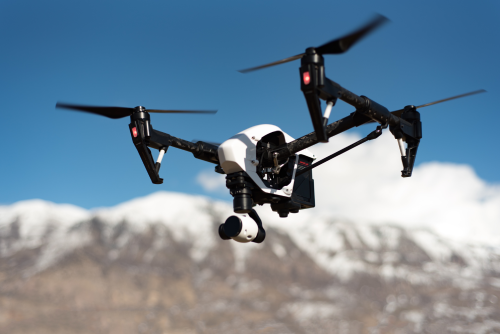
The JOUAV CW-25E is an active enterprise VTOL fixed-wing drone positioned for mapping and survey work. It is aimed at professional users who need a runway-free aircraft format that can still benefit from the area-coverage advantages of fixed-wing flight. Based on the confirmed data available, the CW-25E matters most to survey teams and organizations evaluating industrial drone platforms rather than casual camera-drone buyers.
Quick Summary Box
- Drone Name: JOUAV CW-25E
- Brand: JOUAV
- Model: CW-25E
- Category: Mapping/survey
- Best For: Enterprise mapping and survey teams needing a VTOL fixed-wing platform
- Price Range: Not publicly confirmed in supplied data
- Launch Year: Not publicly confirmed in supplied data
- Availability: Not publicly confirmed in supplied data
- Current Status: Active
- Overall Rating: Not rated due to limited confirmed data
- Our Verdict: A potentially strong enterprise survey platform on paper, but buyers should request full configuration, payload, and support details before making a decision.
Introduction
The CW-25E sits in JOUAV’s professional drone lineup as a mapping/survey aircraft built around a VTOL fixed-wing airframe. That combination usually appeals to organizations that need easier takeoff and landing than a conventional fixed-wing drone, while still wanting better route efficiency than a small multirotor can often provide. For buyers comparing industrial UAVs, the main interest here is not consumer-style convenience but mission workflow, payload fit, support coverage, and total operating cost.
That distinction is important. In the consumer market, buyers often compare drones on headline features such as video resolution, obstacle avoidance, portability, or beginner-friendliness. In the enterprise survey market, those criteria are secondary. A professional buyer is more likely to ask different questions: How much area can it cover in one mission? Which payloads are supported? Can it integrate into RTK or PPK workflows? How quickly can batteries be swapped in the field? How reliable is after-sales support? Does the platform fit procurement, training, compliance, and maintenance requirements?
Viewed through that lens, the CW-25E is interesting because it belongs to a class of aircraft that exists specifically to solve real field problems. Survey teams often work in locations where runways are unavailable, hand-launching may be impractical, and multirotors may be too endurance-limited for efficient wide-area coverage. VTOL fixed-wing aircraft address those constraints by combining vertical lift for takeoff and landing with wing-borne cruise for more efficient forward flight. That does not automatically make every aircraft in the class a great choice, but it does make the CW-25E relevant to serious operational users.
The challenge, based on the supplied information, is that many of the metrics that usually decide enterprise purchases are not publicly confirmed here. So the CW-25E should be treated as a platform worth evaluating, not as an automatic recommendation. It may be an excellent fit for the right organization, but buyers need a verified quote package and detailed technical documentation before drawing conclusions.
Overview
What kind of drone is it?
The JOUAV CW-25E is an enterprise drone from China designed for mapping and survey use. Its confirmed airframe type is VTOL fixed-wing, meaning it combines vertical takeoff and landing capability with wing-based forward flight. In practical terms, that usually makes it more suitable for professional outdoor site work than for hobby flying or indoor use.
This classification tells you a lot about the product even before individual specifications are confirmed. A VTOL fixed-wing drone is generally designed to solve missions that involve distance, area coverage, or repeated pre-planned routes. Unlike a conventional fixed-wing platform, it does not depend on a runway, launcher, or large clear recovery area. Unlike a multirotor, it is typically chosen for more efficient cruise over larger zones. That places the CW-25E firmly in the industrial operations category rather than the consumer gadget category.
It is also useful to think of the CW-25E as part of a workflow rather than as a standalone flying camera. In enterprise settings, the aircraft is only one piece of a larger system that may include flight planning software, survey payloads, positioning workflows, spare batteries, processing software, field cases, operator training, and maintenance procedures. A platform can look attractive in a brochure but still be a weak operational fit if the wider system around it is immature or difficult to support.
Who should buy it?
The most likely buyers are:
- Survey and geospatial teams
- Engineering and infrastructure firms
- Construction and mining operators
- Enterprise drone departments
- Government or institutional users performing land and asset mapping
It is not positioned like a general consumer camera drone, and nothing in the supplied data suggests it is aimed at beginners.
More specifically, the CW-25E is most relevant to teams that already understand why they want a fixed-wing-like mission profile but cannot or do not want to manage runway-dependent operations. For example, a survey contractor working across multiple active construction sites may value VTOL deployment because launch conditions change from site to site. A utility or corridor-mapping team may appreciate the ability to stage from roadside or constrained areas. A mining operator may want faster area coverage than a multirotor can usually offer, while still preserving flexible recovery in rough terrain.
By contrast, a hobby user, travel content creator, or new pilot looking for an easy all-purpose drone would likely be shopping in the wrong category entirely. Enterprise survey aircraft demand planning, procedures, and operational discipline. They are usually not designed around recreational ease of use.
What makes it different?
What stands out most is the platform class. A VTOL fixed-wing mapping drone occupies a specific niche: it can launch and recover in tighter areas than a traditional runway-style fixed-wing aircraft, while still aiming for efficient cruise over larger sites. That makes the CW-25E more relevant for operational mapping programs than for short-range filming or casual aerial photography.
That niche matters because it solves a tradeoff that many field teams face. Traditional fixed-wing platforms can be highly efficient but may require more launch and recovery planning. Multirotors can be simple to deploy but may be less time-efficient over broad sites. VTOL fixed-wing aircraft sit between those two categories, trying to capture much of the deployment flexibility of one and the coverage efficiency of the other.
The CW-25E also stands out because JOUAV is an industrial UAV brand rather than a consumer drone brand trying to stretch into enterprise marketing. For procurement teams, that matters. Enterprise buyers typically care less about lifestyle branding and more about whether the manufacturer understands documentation, service procedures, accessories, software ecosystems, and mission-specific support.
Key Features
-
VTOL fixed-wing airframe for vertical launch and landing with fixed-wing cruise efficiency
This is the defining trait of the CW-25E and the main reason professional teams would shortlist it. The launch-and-recover flexibility can be especially valuable at sites with restricted access or uneven terrain. -
Enterprise positioning rather than consumer or hobby focus
The drone is clearly framed around industrial work, which typically means buyers should think in terms of workflow, support, and integration rather than entertainment value. -
Designed for mapping and survey missions according to the supplied product classification
That intended role shapes how the drone should be evaluated. Payload accuracy, route reliability, and data quality matter more here than cinematic features. -
Active model status in the current product record
Active status is an important signal for buyers who want to avoid buying into a platform that may already be effectively retired or unsupported. -
Manufacturer-backed product identity from JOUAV, a recognized industrial UAV brand
Brand maturity can matter in enterprise procurement because it often affects training availability, accessories, documentation quality, and service pathways. -
Likely better suited to larger outdoor mission areas than a small multirotor, although endurance and range are not publicly confirmed in supplied data
The airframe class strongly suggests efficiency-oriented field work, even if exact numbers still need verification. -
Runway-free deployment potential, which is one of the main reasons teams choose VTOL survey aircraft
This reduces dependence on launchers, catapults, hand-launches, or long recovery strips. -
Potential relevance for repeatable industrial workflows such as topography, corridor mapping, land documentation, and site progress capture
Enterprise aircraft gain value when they fit recurring operational needs rather than one-off flights. -
Important missing buyer details remain unconfirmed, including exact payload options, endurance, range, and pricing
This is not a minor gap. In enterprise buying, these details often determine whether a platform is practical, economical, and compliant.
A key takeaway from the feature set is that the CW-25E looks strategically interesting because of its category, but tactical buying decisions still depend on the unconfirmed details. That means it belongs on a professional buyer’s research list, not on an impulse shortlist.
Full Specifications Table
| Specification | Details |
|---|---|
| Brand | JOUAV |
| Model | CW-25E |
| Drone Type | VTOL fixed-wing |
| Country of Origin | China |
| Manufacturer | JOUAV |
| Year Introduced | Not publicly confirmed in supplied data |
| Status | Active |
| Use Case | Mapping/survey |
| Weight | Not publicly confirmed in supplied data |
| Dimensions (folded/unfolded) | Not publicly confirmed in supplied data |
| Max Takeoff Weight | Not publicly confirmed in supplied data |
| Battery Type | Not publicly confirmed in supplied data |
| Battery Capacity | Not publicly confirmed in supplied data |
| Flight Time | Not publicly confirmed in supplied data |
| Charging Time | Not publicly confirmed in supplied data |
| Max Range | Not publicly confirmed in supplied data |
| Transmission System | Not publicly confirmed in supplied data |
| Top Speed | Not publicly confirmed in supplied data |
| Wind Resistance | Not publicly confirmed in supplied data |
| Navigation System | Not publicly confirmed in supplied data |
| Obstacle Avoidance | Not publicly confirmed in supplied data |
| Camera Resolution | Not publicly confirmed in supplied data |
| Video Resolution | Not publicly confirmed in supplied data |
| Frame Rates | Not publicly confirmed in supplied data |
| Sensor Size | Not publicly confirmed in supplied data |
| Gimbal | Not publicly confirmed in supplied data |
| Zoom | Not publicly confirmed in supplied data |
| Storage | Not publicly confirmed in supplied data |
| Controller Type | Not publicly confirmed in supplied data |
| App Support | Not publicly confirmed in supplied data |
| Autonomous Modes | Not publicly confirmed in supplied data |
| Payload Capacity | Not publicly confirmed in supplied data |
| Operating Temperature | Not publicly confirmed in supplied data |
| Water Resistance | Not publicly confirmed in supplied data |
| Noise Level | Not publicly confirmed in supplied data |
| Remote ID Support | Not publicly confirmed in supplied data |
| Geo-fencing | Not publicly confirmed in supplied data |
| Certifications | Not publicly confirmed in supplied data |
| MSRP / Launch Price | Not publicly confirmed in supplied data |
| Current Price | Not publicly confirmed in supplied data |
The table above makes one thing very clear: the CW-25E should be approached as a quote-and-documentation purchase, not as a spec-sheet impulse buy. For a consumer drone, missing public specifications might simply be inconvenient. For an enterprise aircraft, they are central to procurement. Buyers should request an official technical datasheet, payload list, software notes, maintenance schedule, and support terms before treating the platform as a serious candidate.
Design and Build Quality
Based on the confirmed category and airframe type, the CW-25E should be viewed as a field-deployable industrial aircraft rather than a compact fold-and-fly consumer drone. VTOL fixed-wing designs typically use a winged fuselage for efficient forward travel, plus vertically oriented lift motors for takeoff and landing. That architecture is usually chosen for mission efficiency, area coverage, and deployment flexibility rather than pure portability.
In practical enterprise use, design quality is about far more than appearance. A good industrial aircraft needs to be manageable under field conditions, not just impressive in product images. Operators may be assembling the aircraft in wind, dust, heat, or roadside staging areas. They may need to change batteries quickly between sorties. They may need to inspect motors, props, wiring, and mounts after repetitive operations. If an airframe is awkward to transport or difficult to service, those issues can matter more over time than small differences in headline performance.
Because the supplied data does not confirm dimensions, folded size, weight, or materials, it would be risky to make claims about how easy the CW-25E is to transport or how rugged its airframe is. Those details matter a lot in real-world survey work. Buyers should specifically verify:
- Wing attachment and assembly time
- Propeller and motor serviceability
- Landing method and landing gear protection
- Transport case size
- Battery swap process
- Field repair procedures
- Spare-parts lead times
It is also worth asking whether the aircraft is optimized for repeated deployment by a small field team or whether it assumes a more formal launch crew and support kit. Some enterprise drones are technically portable but operationally cumbersome. Others are well engineered for fast setup and teardown. That difference can shape labor cost and mission tempo over months of use.
Another major design question is how well the platform protects its payload and airframe during VTOL phases. Vertical takeoff and landing reduce runway dependence, but they also introduce more components than a simple fixed-wing aircraft. More motors and more structural complexity can mean more inspection points. That does not make the design undesirable; it simply means maintenance discipline matters. Buyers should ask how often key components are expected to be replaced, what routine inspections are required, and whether service can be done in-house or must go back through a dealer.
For mapping teams, build quality is not just about finish or appearance. It is about whether the aircraft can be assembled, launched, recovered, maintained, and packed repeatedly in remote job-site conditions. That is why procurement teams should treat transportability, field ergonomics, and maintainability as core design features, not secondary concerns.
Flight Performance
With a VTOL fixed-wing configuration, the CW-25E is best understood as an outdoor mission aircraft intended for route efficiency and area coverage. In analysis terms, platforms in this class are usually less about agile manual flying and more about stable automated flight over survey blocks, corridors, or repeated inspection routes.
Vertical takeoff and landing is especially useful when operators do not have a clean runway, catapult, or hand-launch area. That can simplify deployment from construction zones, roadside staging points, or uneven field locations. Once transitioned into forward flight, a fixed-wing aircraft generally offers more efficient travel than a multirotor, which is one reason this airframe type is popular in mapping.
That said, the critical performance figures buyers normally use to compare platforms—endurance, speed, range, ceiling, wind resistance, and max takeoff weight—are not publicly confirmed in the supplied data. So while the flight character can be discussed broadly, procurement decisions should wait for verified figures from JOUAV or an authorized channel.
Even without exact numbers, there are several practical performance questions enterprise buyers should ask:
- How much area can the aircraft realistically map per battery under a given payload configuration?
- How does endurance change with different sensors?
- What is the recommended operational wind limit for safe VTOL phases and for stable mapping lines?
- How much cruise efficiency is retained when carrying heavier survey payloads?
- Is transition between vertical and forward flight automated, and how robust is that process?
- What return-to-home or failsafe behaviors are supported?
- Does the system support mission resumption after interruption?
These questions matter because headline endurance alone can be misleading. A drone might quote strong flight time under ideal conditions, but actual mapping productivity depends on payload weight, weather, airspace restrictions, climb profile, reserve margins, and mission design. Buyers should seek realistic mission-performance estimates, not just maximum figures.
The CW-25E is also unlikely to be an indoor drone. Even without exact specifications, a VTOL fixed-wing enterprise aircraft is generally intended for outdoor professional work in controlled operating plans. That means operators should expect to manage preflight planning, weather review, airspace checks, emergency procedures, and site coordination as standard practice.
One more point often overlooked in enterprise flight performance discussions is operator workload. A platform that performs well aerodynamically but requires awkward setup, slow alignment, or fragile handling can reduce its real productivity. Ideally, the CW-25E should be evaluated not only by how long it can stay airborne but also by how quickly it can move from transport case to ready-to-launch status, how consistently it executes missions, and how efficiently a trained crew can cycle through repeat sorties in a workday.
Camera / Payload Performance
For the CW-25E, payload value matters more than lifestyle camera features. This is a mapping/survey platform, so the real question is not whether it shoots cinematic video for creators, but what sensor options it supports and how those sensors fit into professional data-collection workflows.
The supplied data does not publicly confirm the standard payload, camera resolution, video specs, gimbal type, zoom ability, or payload capacity. That is a major gap for serious buyers, because industrial survey aircraft are often judged by:
- RGB mapping camera support
- Oblique imaging capability
- LiDAR compatibility
- Thermal payload options
- Multispectral support
- Swappable versus fixed payload architecture
- Geo-tagging precision
- RTK or PPK workflow compatibility
If the CW-25E is being considered for photogrammetry, the most important questions are whether its sensor integration supports accurate image overlap, reliable position tagging, and repeatable mission planning. If it is being considered for more specialized work, payload power, mounting, and data pipeline support become equally important.
This section is where many enterprise drone purchases are won or lost. Airframe choice matters, but payload choice often matters more. A strong aircraft paired with the wrong sensor ecosystem can become an expensive mismatch. For example, some teams only need standard RGB orthomosaic and topographic capture. Others require corridor data collection, multispectral analysis, or LiDAR support. Some need frequent payload swaps between projects. Others want a standardized sensor package across multiple crews. The CW-25E may fit some of these needs very well, but that can only be confirmed through documented payload compatibility.
Buyers should also ask about calibration and data integrity. In survey work, it is not enough for a camera to simply capture clear images. Teams need confidence in geo-referencing, triggering consistency, overlap control, and metadata quality. If there is RTK or PPK support, they should understand what hardware is required, how the workflow is implemented, and which software tools are supported after flight.
Another key issue is whether the payload architecture is modular or fixed. A modular system can extend the aircraft’s useful life across multiple mission types, but it may also add cost and operational complexity. A fixed package can be simpler and more stable if the use case is narrow and repeatable. Buyers should decide whether they need versatility or standardization.
In short, the airframe class is promising for survey work, but the mission value depends heavily on payload configuration, and that is not publicly confirmed in the supplied data. For many organizations, the correct next step is not to ask, “Is the CW-25E a good drone?” but rather, “Can the CW-25E support the exact sensors, accuracy workflow, and data outputs our projects require?”
Smart Features and Software
Enterprise mapping drones often rely heavily on software rather than manual stick flying. Typical buyer questions include waypoint planning, automated grid missions, corridor mapping, return-to-home behavior, telemetry logging, mission resumption, cloud synchronization, and compatibility with photogrammetry workflows.
For the CW-25E specifically, those software capabilities are not publicly confirmed in the supplied data. That means buyers should not assume the presence of any specific feature set, app ecosystem, SDK, API, cloud platform, or autonomy package without checking official product materials or regional integrator documentation.
The most important software questions to verify are:
- Does it support automated survey mission planning?
- Is waypoint or grid flight available?
- Are terrain-following or corridor tools supported?
- Is there RTK or PPK workflow support?
- What export formats are available for mapping projects?
- Is there a fleet-management or cloud dashboard?
- Are firmware updates handled directly by JOUAV or by distributors?
- What controller and ground-station options are offered?
For enterprise users, software maturity can matter as much as raw flight performance. A well-supported mission-planning environment can save hours per job, reduce training burden, and improve consistency across crews. Weak software, by contrast, can create hidden costs in the form of manual workarounds, data-format headaches, repeated site visits, and operator frustration.
There are several areas where software quality becomes especially important:
-
Mission planning and repeatability
Survey teams often need consistent overlap, clean flight lines, repeat visits, and predictable outputs. Planning software should support those needs with minimal friction. -
Field execution
A strong field interface should help operators confirm aircraft status, battery condition, positioning quality, geofence or airspace setup, and mission readiness before launch. -
Post-flight data handling
Enterprise users should understand how flight logs, image metadata, geotag data, and sensor outputs are stored and exported. -
Operational visibility
Larger organizations may want centralized records for fleet status, maintenance tracking, firmware versions, and pilot activity. -
Integration with existing tools
A good aircraft can still be a poor fit if it does not integrate well with the photogrammetry, GIS, asset-management, or documentation tools the team already uses.
Another practical issue is update and support control. In consumer drones, frequent app updates may be seen as normal. In enterprise operations, unplanned software changes can disrupt workflows or create certification issues. Buyers should ask how stable the software environment is, how updates are tested, and whether version control is possible for production fleets.
Use Cases
The CW-25E makes the most sense in professional field operations where coverage efficiency and runway-free deployment are important.
- Large-area aerial mapping
- Land surveying and topographic data capture
- Construction progress monitoring
- Mining and quarry measurement workflows
- Infrastructure corridor mapping
- Utility and asset documentation
- Environmental and land-management surveys
- Institutional or government geospatial projects
These categories are broad, but each points to a practical advantage of VTOL fixed-wing operations. In large-area mapping, the appeal is usually mission efficiency and broad coverage. In construction and mining, the benefit may be rapid site deployment without needing ideal launch conditions. In corridor or utility work, the aircraft class can make repeated linear missions more practical from constrained staging points.
The CW-25E may also be useful where teams are trying to standardize enterprise workflows across multiple sites. For example, a regional engineering group might want one aircraft type that can be deployed from uneven terrain, support repeatable map capture, and work as part of a formal surveying process. Similarly, institutional users may value a platform that can serve recurring land-management or infrastructure documentation needs rather than one-off image capture.
That said, not every mapping project automatically calls for a VTOL fixed-wing aircraft. Smaller sites, tighter urban work, or jobs requiring hovering detail capture may still favor multirotors. The CW-25E makes the most sense where the mission profile rewards forward-flight efficiency and where the site constraints still make runway-free deployment desirable.
Pros and Cons
Pros
-
VTOL fixed-wing design is well matched to survey work that needs flexible launch and efficient cruise
This is the platform’s strongest conceptual advantage and the main reason enterprise users would consider it. -
Enterprise focus makes it more relevant to professional workflows than to casual flying
Buyers looking for industrial capability may prefer a system built for operational use rather than adapted from consumer priorities. -
Mapping/survey positioning is clear, which helps narrow the target buyer
The aircraft is not trying to be everything to everyone, and that can be a positive for procurement teams. -
Active status suggests it remains part of the current product conversation rather than being purely legacy
This is important when evaluating long-term support and parts viability. -
JOUAV is an established industrial drone brand, which matters more in enterprise procurement than flashy marketing
Industrial buyers often care about service structure, documentation, and mission support more than public visibility. -
Potentially useful for larger sites than a typical small multirotor, depending on confirmed mission specs
The airframe category strongly suggests wider-area efficiency benefits. -
Could support operational flexibility in constrained launch environments
VTOL capability is often valuable where sites do not offer convenient launch or recovery space.
Cons
-
Many key specifications are not publicly confirmed in the supplied data, including endurance, range, speed, and dimensions
That makes direct platform evaluation difficult. -
Payload and camera details are not publicly confirmed, which is a major issue for mapping buyers
Payload fit is central to survey value, so this is not a small omission. -
Pricing is not publicly confirmed, so budget planning is difficult without a quote
Enterprise buyers will need direct vendor engagement to estimate total cost. -
Support, repair, and dealer coverage may vary by region, and that should be checked before purchase
An aircraft is only as useful as the support network behind it. -
Likely not suitable for hobbyists or beginners
This is a specialized professional system, not a training drone for casual users. -
Regulatory classification cannot be judged confidently without confirmed weight and equipment details
Compliance planning should happen only after full documentation is available.
The balance of pros and cons leads to a simple conclusion: the CW-25E is appealing in concept and category, but still needs documentation-backed validation before it can be confidently recommended for procurement.
Comparison With Other Models
Reliable one-to-one comparison is limited because many CW-25E specifications are not publicly confirmed in the supplied data. The table below is best used as a buyer-orientation tool rather than a strict spec shootout.
| Model | Price | Flight Time | Camera or Payload | Range | Weight | Best For | Winner |
|---|---|---|---|---|---|---|---|
| JOUAV CW-25E | Not publicly confirmed in supplied data | Not publicly confirmed in supplied data | Not publicly confirmed in supplied data | Not publicly confirmed in supplied data | Not publicly confirmed in supplied data | Buyers evaluating JOUAV for enterprise VTOL mapping | Best if JOUAV’s final package, support, and payload options fit your workflow |
| WingtraOne GEN II | Enterprise-level, dealer-quoted | Verify current official specifications | Survey camera ecosystem; verify configuration | Verify current official specifications | Verify current official specifications | High-accuracy photogrammetry programs | Winner for broader public-market visibility |
| Quantum Systems Trinity Pro | Enterprise-level, dealer-quoted | Verify current official specifications | Mapping payload configurations; verify package | Verify current official specifications | Verify current official specifications | Professional mapping and corridor work | Winner as a well-known same-segment alternative |
| senseFly eBee X | Enterprise-level, dealer-quoted | Verify current official specifications | Mapping sensor options; verify package | Verify current official specifications | Verify current official specifications | Conventional fixed-wing survey operations | Winner if non-VTOL fixed-wing simplicity is acceptable |
CW-25E vs a close competitor
Against WingtraOne GEN II, the CW-25E competes in the same broad professional survey space: a premium mapping aircraft intended for organizations, not impulse buyers. The deciding factors are likely to be payload compatibility, workflow integration, accuracy stack, field support, and total project cost rather than marketing headlines alone.
Wingtra has relatively strong market visibility in professional photogrammetry discussions, so one challenge for the CW-25E may simply be buyer confidence and ecosystem familiarity. That does not necessarily mean Wingtra is better for every customer. It means JOUAV would need to demonstrate why its package, support model, or mission profile is the better fit. In an enterprise purchase, confidence in implementation can matter as much as core hardware capability.
CW-25E vs an alternative in the same segment
Compared with Quantum Systems Trinity Pro, the CW-25E should be evaluated as another enterprise VTOL fixed-wing option for survey and mapping missions. If you are comparing these platforms, ask for the same information from both vendors: payload list, endurance by configuration, software workflow, RTK/PPK support, training options, spare parts, and local maintenance coverage.
This kind of comparison is particularly useful because both platforms sit in a similar operational logic: runway-free deployment plus efficient forward flight. At that point, the decision often comes down to the details around the aircraft rather than the airframe concept itself. Which vendor can support your region? Which one offers better training? Which one integrates more smoothly with your existing software pipeline? Which one is easier to keep flying with local parts and service?
CW-25E vs an older or previous-generation option
The senseFly eBee X is not a direct generational predecessor to the CW-25E, but it represents an older and more conventional fixed-wing mapping choice. That makes it useful as a reference point: if your team values VTOL deployment from tighter sites, the CW-25E’s airframe class is the more relevant direction; if you prioritize established fixed-wing survey processes and your launch/recovery environment allows it, older non-VTOL options may still be competitive.
This comparison helps clarify the real buying question. Many teams are not deciding between brands alone; they are deciding between operational philosophies. A conventional fixed-wing aircraft may offer simplicity in some respects, but it asks more of the launch and recovery environment. A VTOL fixed-wing system offers deployment flexibility, but may introduce more mechanical complexity and potentially different maintenance needs. The right answer depends on the missions, crew experience, and field conditions.
More broadly, enterprise buyers should avoid “spec race” comparisons in isolation. The best aircraft is not always the one with the highest quoted endurance or the most impressive brochure. The best aircraft is the one that can deliver accurate data reliably, repeatedly, and economically within the buyer’s actual operating environment.
Manufacturer Details
JOUAV is a Chinese drone manufacturer and, in this case, the brand and manufacturer are the same. The company is associated with enterprise UAV products rather than consumer selfie drones or recreational FPV aircraft. Its market presence is most relevant to professional users looking at industrial workflows such as mapping, inspection, and other mission-led applications.
Because the CW-25E is categorized here as a mapping/survey platform, it fits the part of JOUAV’s portfolio aimed at organizations that care about operational capability, sensor integration, and field deployment. In enterprise markets, manufacturer reputation is not just about product design; it also includes documentation quality, training, serviceability, and how well the company supports customers after delivery.
That is especially relevant when evaluating a platform with limited public retail-style information. In enterprise procurement, buyers often depend on the manufacturer or local integrator to supply detailed technical material, installation guidance, compliance information, and after-sales support. So the practical value of the brand is not only whether it makes capable aircraft, but whether it can support a professional customer over the life of the system.
Support and Service Providers
For a drone like the CW-25E, support quality can be as important as the aircraft itself. Enterprise buyers should expect support to come through some mix of official manufacturer channels, authorized distributors, and regional system integrators.
Before buying, verify:
- Official technical support availability in your region
- Repair and maintenance process
- Spare-parts stock and shipping times
- Battery replacement availability
- Firmware and software update process
- Payload calibration support
- Pilot training or onboarding options
- Warranty terms, which are not publicly confirmed in supplied data
If regional support is unclear, treat that as a procurement risk. A capable mapping aircraft is far less useful if downtime, service turnaround, or parts access are weak.
It is also smart to ask who will actually solve problems when something goes wrong. Will support come directly from JOUAV, or through a reseller? Are first-line troubleshooting and repairs handled locally? Can your team be trained to perform routine maintenance in-house? If a sensor has to be recalibrated or replaced, what is the turnaround process? These questions often matter more in practice than headline performance.
For organizations operating on project deadlines, downtime has real financial cost. A delayed part shipment or unclear support path can interrupt surveys, delay deliverables, and undermine client confidence. That is why enterprise drone procurement should include a service conversation from day one, not as an afterthought.
Where to Buy
The CW-25E appears to be an enterprise-oriented product rather than a standard consumer retail drone. That usually means procurement happens through:
- Official manufacturer sales channels
- Authorized enterprise drone dealers
- Regional distributors
- System integrators serving surveying, engineering, or infrastructure customers
Do not assume broad retail availability. In many enterprise cases, pricing, payload choice, training, and local compliance support are handled through quote-based sales rather than checkout-cart retail.
Regional availability is not publicly confirmed in the supplied data, so buyers should confirm whether the model is actively offered in their country and whether local after-sales support is included.
For many buyers, the best purchasing route is the one that includes not only the airframe but also configuration advice, onboarding, support contact points, and local compliance guidance. In other words, the “where” matters less than the completeness of the package being offered.
Price and Cost Breakdown
No launch price or current price is publicly confirmed in the supplied data, so the CW-25E should be treated as a quote-based enterprise purchase until verified otherwise.
That means budgeting should include more than the aircraft alone. Buyers should ask for a full cost breakdown covering:
- Airframe package
- Payload or sensor package
- Batteries and chargers
- Ground controller or base station
- Mission-planning software
- Mapping or photogrammetry software licenses
- Training and onboarding
- Spare props, motors, and field parts
- Carrying case and transport accessories
- Repair coverage and service plans
- Insurance, if applicable
- Import, shipping, and local taxes
For survey teams, the real cost question is total workflow cost, not just airframe cost. A cheaper aircraft can become more expensive overall if it needs third-party tools, has slower service turnaround, or lacks payload flexibility.
This is where enterprise buyers should go beyond the quote and model the full ownership cycle. Consider:
- How many batteries are required for a full workday?
- Are extra chargers needed for multi-crew operations?
- Are annual software fees separate from the hardware package?
- Does the vendor include training, or is it billed separately?
- What routine maintenance should be expected?
- What are the typical wear items and replacement intervals?
- Is there a service contract or extended warranty option?
A strong procurement process also compares cost against mission value. If the CW-25E allows one crew to map more area per day than a multirotor-based workflow, it may justify a higher upfront cost. If it reduces site setup issues because it does not need a runway, that operational flexibility may also have economic value. On the other hand, if a team only maps smaller sites where multirotors are already sufficient, a VTOL fixed-wing investment may be harder to justify.
Regulations and Compliance
The CW-25E is an enterprise mapping drone, so regulatory review should happen before purchase, not after delivery. Because its confirmed takeoff weight and equipment list are not publicly available in the supplied data, you should not assume what category it falls into under your local rules.
Key compliance points to verify include:
- Drone registration requirements
- Commercial pilot or operator licensing
- Weight-class restrictions
- Remote ID obligations
- Airspace authorization process
- Privacy and land-survey permissions
- Insurance requirements
- Operational restrictions near people, roads, or controlled areas
- Additional approvals for beyond visual line of sight operations, if relevant
Remote ID support is not publicly confirmed in supplied data, so that must be checked directly. The same applies to geo-fencing and any country-specific certifications.
For mapping work, privacy and data handling can matter as much as flight law. Survey teams should confirm whether project sites, infrastructure, or customer contracts impose additional limits on aerial capture and data storage.
Enterprise users should also think about compliance at the operational level, not only at the aircraft level. Questions worth asking include:
- Can your pilots legally fly this type of aircraft in the environments where you work?
- Are there additional permissions required for industrial sites, utilities, mines, or public infrastructure?
- Will the aircraft’s weight, speed, or flight profile trigger stricter rules?
- If the system supports advanced operations, are those operations actually permitted under your approvals?
Because the CW-25E is likely to be used in professional contexts, documentation matters. Buyers should request any available declarations, compliance notes, or regional approvals from the vendor or distributor. Regulatory uncertainty is manageable if it is identified early; it becomes expensive when discovered after the purchase.
Who Should Buy This Drone?
Best for
- Professional surveying firms
- Engineering and geospatial teams
- Construction and mining operations
- Organizations that need VTOL deployment without a runway
- Buyers already evaluating JOUAV as an enterprise supplier
- Programs where workflow, payload fit, and support are more important than consumer-style simplicity
The ideal buyer is not just someone who needs a drone, but someone who needs a system that can fit structured field operations. Teams with repeat mapping requirements, trained operators, and defined data workflows are the best match. The CW-25E may be especially appealing where site access is inconsistent and runway-free deployment is a real operational advantage.
Not ideal for
- Hobby pilots
- Beginners learning to fly
- Travelers wanting a lightweight foldable camera drone
- Content creators focused mainly on cinematic video
- Buyers who need transparent retail pricing right away
- Teams that cannot verify local support, spare parts, or payload integration before purchase
It is also a weak fit for organizations that want “plug-and-play” simplicity without committing to enterprise processes. A survey aircraft only pays off when the buyer is ready to manage planning, training, maintenance, compliance, and data handling in a disciplined way.
Final Verdict
The JOUAV CW-25E is best understood as an active, enterprise-focused VTOL fixed-wing drone for mapping and survey missions. Its biggest strength is the platform concept itself: vertical takeoff and landing for operational flexibility, combined with the mission efficiency that makes fixed-wing aircraft attractive for larger-area work.
Its biggest drawback, based on the supplied data, is the lack of publicly confirmed detail on the figures that serious buyers care about most—endurance, range, payload options, dimensions, and price. That does not make it a weak product, but it does make it a procurement-led product rather than a simple off-the-shelf recommendation.
In other words, the CW-25E looks relevant, potentially capable, and well aligned with professional surveying needs at a category level. What remains missing is the verified documentation required to judge whether it is competitive on execution. For one organization, it may turn out to be an excellent fit because of payload options, service support, and workflow compatibility. For another, a more publicly documented competitor may be easier to justify.
If you are a professional operator, survey firm, or enterprise buyer comparing industrial VTOL mapping aircraft, the CW-25E is worth a closer look. Just make sure the decision is based on a verified quote package, confirmed payload compatibility, software workflow fit, support coverage, and regulatory suitability—not assumptions. In this segment, the smartest purchase is rarely the one with the most interesting airframe on paper. It is the one that can deliver dependable data, manageable operating costs, and long-term support in the field.
