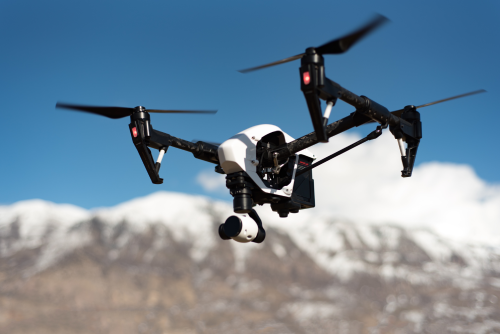
Ryze Tello is a tiny multirotor drone built for casual flying, first-time pilots, and education-focused users who want something less intimidating than a full-size camera drone. Sold under the Ryze brand and made by Ryze Tech in China, it matters because it blends simple app-based flying with real drone concepts like stabilized hovering and coding-friendly learning. For buyers comparing beginner drones, the Tello stands out less as a serious camera platform and more as a compact, low-stress entry point.
Quick Summary Box
- Drone Name: Ryze Tello
- Brand: Ryze
- Model: Tello
- Category: consumer/education
- Best For: Indoor beginners, STEM learning, casual micro flying
- Price Range: Not publicly confirmed in supplied data
- Launch Year: Not publicly confirmed in supplied data
- Availability: Active status is listed in supplied data; regional retail availability should be verified
- Current Status: active
- Overall Rating: Not rated due to limited confirmed data
- Our Verdict: A still-useful micro quadcopter for learning and light fun, but dated if your priority is modern camera quality or outdoor performance
Introduction
The Tello is a consumer/education drone from Ryze Tech, marketed under the Ryze brand and listed as active in the supplied data. It is a very small quadcopter aimed at approachable flying, entry-level creativity, and classroom-friendly experimentation rather than advanced aerial imaging. Readers should care because it occupies a niche that many larger beginner drones do not: low-risk practice, indoor use, and simple educational value.
That niche is more important than it might first appear. A lot of people shopping for a “beginner drone” are not actually looking for the same thing. Some want a lightweight travel camera drone. Some want a safe first aircraft for a child or teen. Some want a classroom tool that can introduce programming logic and basic robotics ideas without demanding a huge budget or a lot of setup time. The Tello sits squarely in that last group while also being friendly enough for casual home use.
In a market where many entry-level drones now advertise 4K cameras, long range, GPS, and advanced automated shooting, the Tello can look outdated on paper. But that misses its real value proposition. Its appeal is not about chasing bigger numbers. It is about making the first steps into drone flight feel manageable. A smaller aircraft can reduce fear, reduce consequence in minor mistakes, and create an environment where users focus on orientation, hovering, takeoff, landing, and control confidence.
That is why the Tello remains relevant even as more sophisticated sub-250 g drones have become available. It is not the best option for every buyer, but it is one of the clearest examples of a drone that exists to teach as much as entertain.
Overview
What kind of drone is it?
The Ryze Tello is a micro multirotor quadcopter in the consumer/education segment. In practical terms, that means it is designed to be small, relatively approachable, and easy to deploy without the bulk, cost, or operational complexity of a larger camera drone.
It is not an enterprise aircraft, not a racing quad, and not a foldable travel drone in the DJI Mini sense. It sits closer to the “learn, play, and experiment” end of the market.
That distinction matters because buyer expectations can easily drift in the wrong direction. If someone sees “drone with camera” and assumes all drones fill roughly the same role, the Tello may disappoint. It is much closer to a micro flying platform with a camera than a camera platform that happens to fly. Its mission is short sessions, light practice, and accessible control rather than polished content capture or serious outdoor exploration.
Its education positioning also separates it from many ultra-cheap toy drones. A toy drone may be fun for a few flights and then forgotten. The Tello’s staying power comes from being slightly more structured and intentional. It introduces real concepts like controlled hovering, mobile app-based piloting, battery management, and, in many users’ experience, coding-related experimentation.
Who should buy it?
The Tello makes the most sense for:
- First-time pilots
- Parents buying a supervised starter drone
- Teachers and clubs introducing students to flight basics
- Hobbyists who want a tiny indoor flyer
- Buyers who care more about simplicity than image quality
It makes less sense for buyers whose main goal is cinematic footage, long-range flying, wind resistance, or professional work.
A useful way to think about the Tello is by asking a simple question: do you want to learn drone basics comfortably, or do you want to capture good-looking aerial footage right away? If the answer is the first one, the Tello becomes much more compelling. If the answer is the second, a more modern camera-focused drone is usually a better fit.
The Tello is also a strong candidate for people who are hesitant about jumping straight into a more expensive platform. A larger drone can feel like an investment that demands caution from the start. The Tello feels more like a practice environment. That lower-pressure experience is one of its biggest strengths.
What makes it different?
What separates the Tello from many cheap toy drones is that it is positioned as more than just a disposable novelty. Its main differentiators are its compact size, stabilized beginner-friendly behavior, smartphone-based control, and education-oriented identity.
In other words, the Tello is interesting because it tries to teach and entertain at the same time.
It also lives in a useful middle ground. It is more serious than many impulse-buy toy quads, but less demanding than even lightweight camera drones. That middle ground can be ideal for buyers who do not want to go all the way from zero experience to a travel camera drone with longer range, more regulatory questions, and more financial risk.
Key Features
- Ultra-compact micro quadcopter layout
- Consumer/education positioning rather than pure toy marketing
- Approximate aircraft weight of about 80 g
- Up to 13 minutes of claimed flight time
- Wi-Fi-based control through a mobile device
- 5 MP still photo capability
- 720p HD video recording
- Electronic image stabilization instead of a mechanical gimbal
- Vision-positioning assistance for steadier low-altitude hovering over suitable surfaces
- Simple automated features such as easy takeoff/landing and quick-shot style functions
- Replaceable battery and propellers
- Education-friendly ecosystem, with coding support commonly associated with the Tello platform
On paper, that feature set looks modest by current standards, but the combination still tells a clear story. The Tello is built around accessibility. Almost every key feature supports that goal: it is light, simple to transport, easy to launch, controlled through a familiar mobile device, and designed to lower the friction that often discourages beginners.
The education angle is especially worth highlighting. Many beginner drones promise “easy flying,” but relatively few are remembered for learning value beyond the first few batteries. The Tello has retained attention because it can be used both as a recreational quadcopter and as a bridge into coding, structured activities, and beginner robotics concepts.
Full Specifications Table
| Specification | Details |
|---|---|
| Brand | Ryze |
| Model | Tello |
| Drone Type | Multirotor micro quadcopter |
| Country of Origin | China |
| Manufacturer | Ryze Tech |
| Year Introduced | Not publicly confirmed in supplied data |
| Status | active |
| Use Case | consumer/education |
| Weight | Approx. 80 g |
| Dimensions (folded/unfolded) | Non-folding; approx. 98 × 92.5 × 41 mm |
| Max Takeoff Weight | Not publicly confirmed in supplied data |
| Battery Type | LiPo battery |
| Battery Capacity | 1100 mAh, 3.8 V, 4.18 Wh |
| Flight Time | Up to 13 minutes |
| Charging Time | Approx. 1.5 hours |
| Max Range | Up to 0.1 km (100 m) |
| Transmission System | Wi-Fi |
| Top Speed | Up to 28.8 km/h |
| Wind Resistance | Not publicly confirmed in supplied data |
| Navigation System | Vision positioning system |
| Obstacle Avoidance | No dedicated obstacle avoidance publicly confirmed |
| Camera Resolution | 5 MP stills |
| Video Resolution | 720p HD |
| Frame Rates | Up to 30 fps at 720p |
| Sensor Size | Not publicly confirmed in supplied data |
| Gimbal | No mechanical gimbal; electronic image stabilization |
| Zoom | Not publicly confirmed in supplied data |
| Storage | Media is commonly stored on the connected mobile device; onboard removable storage is not publicly confirmed in supplied data |
| Controller Type | Smartphone app; optional compatible game controller support is commonly associated with this model |
| App Support | Tello app |
| Autonomous Modes | Easy takeoff/landing, quick-shot style modes, flips; exact mode availability should be verified for the current app version |
| Payload Capacity | Not publicly confirmed in supplied data |
| Operating Temperature | 0°C to 40°C |
| Water Resistance | Not publicly confirmed in supplied data |
| Noise Level | Not publicly confirmed in supplied data |
| Remote ID Support | Not publicly confirmed in supplied data |
| Geo-fencing | Not publicly confirmed in supplied data |
| Certifications | Not publicly confirmed in supplied data |
| MSRP / Launch Price | Not publicly confirmed in supplied data |
| Current Price | Not publicly confirmed in supplied data |
The specification sheet makes one thing clear: this is a stripped-down, purpose-built beginner platform. You get the essentials needed for stable micro-flight and casual imaging, but not the premium equipment associated with current camera drones. That is not automatically a weakness; it is part of the Tello’s identity. The key is whether those essentials match your intended use.
Design and Build Quality
The Tello’s design is one of its biggest selling points. It is tiny, light, and visually simple, which helps reduce the intimidation factor for beginners. This is the kind of drone you can toss into a small bag without treating it like delicate camera equipment.
Its fixed-arm, non-folding layout is typical of a small quadcopter in this class. That matters because it keeps the structure straightforward and likely easier to live with than a more mechanically complex folding design. The tradeoff is that it does not collapse down further for transport.
The dimensions reinforce its identity as a true micro drone. At roughly palm size, it feels closer to a gadget or training tool than a field-ready aerial camera system. That can be a major psychological advantage for new users. Larger drones often make beginners nervous before the first takeoff. The Tello’s size suggests low stakes and easy experimentation, which can make the first flights more comfortable.
Build quality should be viewed through the lens of its role. This is not a rugged industrial airframe and not something intended for harsh field work. It is best understood as a lightweight plastic-bodied micro drone built for casual handling, indoor sessions, and calm-condition use. The low mass helps reduce crash severity, but it does not make the drone indestructible.
In practical use, that low weight changes the ownership experience in two ways. First, minor bumps are often less dramatic than they would be with heavier aircraft. Second, the drone itself is more vulnerable to being pushed around by airflow, ceiling fans, open windows, and outdoor gusts. So while the Tello feels forgiving in one sense, it also rewards thoughtful flying conditions.
From a serviceability perspective, the Tello is appealing because batteries and propellers are easy items to replace. Buyers should still verify what is included in the box, especially items like spare props or prop guards, because package contents can vary by seller and region.
That replaceability matters more than it might seem. With beginner drones, ownership costs and frustration often come from small consumable items rather than from the aircraft itself. A model that supports straightforward battery swaps and basic prop replacement is easier to keep in use over time, especially in classrooms or family settings where multiple people may fly it.
Another practical consideration is storage and transport. Since the Tello is non-folding, it does not shrink further, but it also does not introduce hinge mechanisms that can wear or loosen. For a drone this small, fixed arms are a reasonable design decision. You are unlikely to resent the lack of folding because the aircraft is already compact enough to fit almost anywhere.
Flight Performance
For a micro drone, the Tello’s published performance figures are sensible. A claimed top speed of up to 28.8 km/h and range of up to 100 m put it well below modern outdoor camera drones, but that is not really the point of this model. Its role is short-range, low-stress flying rather than ambitious airspace coverage.
The most realistic reading of the Tello’s flight character is this:
- It should feel approachable
- It should be best in calm air
- It should be more comfortable indoors or in very light outdoor conditions
- It should not be treated like a wind-tolerant outdoor photography drone
Because the aircraft is so light, wind is likely the biggest real-world limiter. Even without a confirmed wind-resistance rating in the supplied data, micro quadcopters of this size generally lose confidence outdoors quickly when conditions get gusty. That is analysis, not a newly claimed manufacturer spec, but it is a practical buying consideration.
This is one of the most important points in the entire buying decision. Many disappointing first-drone experiences come from using a small aircraft outside in conditions that look harmless from ground level. A light breeze that barely moves tree branches can still be enough to make a micro drone feel unstable or constantly in correction mode. For that reason, the Tello is best treated as an indoor-first drone with optional outdoor use only when conditions are very calm.
The vision-positioning system is important here. For beginner users, it can help the drone hover more steadily over suitable, well-lit surfaces. But buyers should not confuse that with full GPS-class positioning, advanced navigation, or the kind of recovery behavior found on larger drones.
Surface quality matters with vision-based stabilization. Smooth, well-lit areas with visible texture are generally more helpful than dark, reflective, or visually uniform ground. In real life, that means the Tello may behave more confidently over some floors or patios than others. Users who understand that limitation are less likely to interpret all hover variation as a malfunction.
Takeoff and landing behavior is one of the Tello’s strengths. It is built around easy operation, which is exactly what entry-level users and classrooms tend to need.
That ease of use also affects training value. A beginner does not need to spend the first several sessions learning how to arm motors and manage complex controller inputs just to get airborne. Instead, the Tello allows users to focus on orientation, directional control, altitude awareness, and stable stopping. Those are foundational skills that transfer to larger drones later.
Battery expectations should also be kept realistic. A claimed flight time of up to 13 minutes is respectable for a micro drone, but real-world endurance typically depends on how aggressively it is flown, whether video is being captured, and how conservatively the battery is managed. For most buyers, one battery is enough for a short demo session, but not enough for a satisfying extended practice block. That is why bundles with extra batteries can dramatically improve ownership satisfaction.
Control method matters too. App-based control is simple and accessible, but some users will find on-screen joysticks less precise than physical sticks. That is not unique to the Tello; it is a common tradeoff with smartphone-controlled drones. Buyers who care about tighter control feel may want to verify compatible controller options before purchasing.
Camera / Payload Performance
The Tello includes a small onboard camera, but this is not a camera-first drone by 2026 standards. Its 5 MP still photos and 720p video are enough for casual clips, simple social sharing, and learning the basics of framing and aerial perspective. They are not enough to compete with modern 2.7K or 4K beginner drones.
The lack of a mechanical gimbal is a major limitation for buyers focused on video quality. Electronic image stabilization helps, but it is not a full substitute for true gimbal stabilization, especially once motion gets more aggressive or light gets worse.
In practical terms, the camera is best for:
- Fun snapshots
- Casual indoor or backyard clips
- Learning how drone cameras behave
- Basic classroom demonstrations
It is not the right platform for:
- Professional content creation
- Real-estate work
- Travel cinematography
- Low-light shooting
- Precision visual documentation
The right mindset is to treat the Tello camera as a learning tool and a bonus, not as the core reason to buy the drone. It gives you a live sense of aerial perspective, helps new pilots understand framing from above, and allows simple recording of flights. That can be genuinely valuable for beginners. But it is not the kind of camera that will satisfy users who already expect crisp detail, better dynamic range, or polished stabilized footage.
Another subtle limitation is that camera performance and transmission quality are tied to a lightweight, Wi-Fi-based design philosophy. For casual use, that may be perfectly adequate. For anyone expecting smooth, dependable imaging under a wide range of conditions, it will feel basic. This is especially true if the drone is pushed beyond the calm, close-range situations it was built for.
No external payload capability is publicly confirmed in the supplied data, so this should not be treated as a payload-carrying platform.
That is an important line for education buyers as well. The Tello may be useful for coding and introductory robotics thinking, but it is not the same thing as a modular research platform designed for external sensors, custom payloads, or specialized attachments. Its educational value is mainly in software interaction and beginner flight, not payload experimentation.
Smart Features and Software
The Tello’s software story is part of why it remains relevant. Rather than trying to be a high-end autonomy platform, it focuses on simple, accessible features that reduce the learning curve.
Commonly associated capabilities for the Tello platform include:
- Mobile app control
- One-tap takeoff and landing
- Simple trick functions such as flips
- Basic quick-shot style capture modes
- Education-oriented coding support
The coding angle is particularly important. The Tello family is widely associated with programming education, and that has helped it remain popular in schools and clubs. Buyers should still verify exact current support for mobile devices, app versions, and coding tools, because software compatibility can change over time.
That educational software value is one of the clearest reasons the Tello has had staying power. For a teacher or club leader, the drone can serve as more than a flying object. It can become a way to introduce sequencing, commands, logic, testing, iteration, and simple problem-solving. Even if students only start with prebuilt routines or basic flight commands, they are still engaging with concepts that go beyond play.
The app-first control model is also part of the product’s accessibility. Most people already understand smartphones, touch interfaces, and installing apps. That reduces the barrier to entry. Instead of learning an unfamiliar dedicated radio controller on day one, users can start in a familiar digital environment. The tradeoff, as noted earlier, is that touch controls may not feel as precise or comfortable as physical sticks for everyone.
What you should not assume:
- Advanced waypoint missions
- Mapping workflows
- Enterprise fleet tools
- Full obstacle avoidance
- Long-range transmission systems
- Satellite-based return-to-home behavior
Those are not the reasons to buy a Tello.
Another software-related consideration is longevity. Because the Tello is an older design in a fast-moving market, compatibility matters. Prospective buyers should confirm that the app still works smoothly on their current phone or tablet, that login or activation requirements are clear if applicable, and that firmware support has not become awkward in their region. A drone can still be physically good while becoming less convenient if app support ages poorly.
Use Cases
The most realistic use cases for the Ryze Tello are straightforward and beginner-friendly:
- Learning basic drone controls and orientation
- Indoor recreational flying
- Supervised first-drone experience for younger users
- STEM classes and coding introductions
- Robotics clubs and after-school programs
- Practicing takeoff, landing, and hover control
- Casual social clips in calm environments
- Low-risk familiarization before moving up to a larger drone
These use cases all share a common pattern: they prioritize learning, convenience, and low operational pressure over production-quality results.
For first-time pilots, the Tello works well as a confidence builder. Hovering in place, turning the aircraft, flying simple box patterns, and practicing gentle landings are all more approachable when the drone is small and the environment is controlled. A larger drone may offer better features, but it can also make beginners feel that every mistake is expensive.
For families, supervised indoor use can be one of the Tello’s strongest scenarios. It offers a more structured experience than a throwaway toy drone while still remaining accessible. Parents should still treat it as a real flying device rather than a toy to be used carelessly, but the lower mass and smaller footprint make it easier to justify as a first step.
For schools and clubs, the Tello’s appeal is obvious. It can function as a hands-on tool for introducing flight physics, basic robotics thinking, and coding concepts. Even simple exercises—such as launching, hovering to a target point, or following a programmed routine—can create a stronger learning experience than a purely screen-based activity.
For hobbyists who already own larger drones, the Tello can still make sense as a low-effort indoor flyer. Sometimes a user does not want to pack a larger kit, check weather carefully, and commit to an outdoor flight session. A tiny drone that can be used for a quick practice session or casual flying at home fills a different role.
Pros and Cons
Pros
- Very small, light, and easy to carry
- Less intimidating for new pilots than a larger camera drone
- Consumer/education focus gives it broader appeal than a basic toy quad
- Up to 13 minutes of claimed flight time is respectable for a micro model
- Smartphone-based control keeps setup simple
- Vision positioning should help with approachable hovering behavior
- Educational and coding-friendly identity adds value beyond casual fun
- Lower consequence in minor mishaps than heavier drones
Cons
- 720p video is dated by current standards
- No mechanical gimbal, so video quality is limited
- Very short range compared with modern beginner camera drones
- Small size usually means weak wind tolerance outdoors
- No dedicated obstacle avoidance publicly confirmed
- Not suited for serious aerial photography or commercial imaging
- Price and current bundle value should be verified before purchase
- App compatibility and long-term accessory availability deserve checking before buying
The biggest strength here is not any one spec. It is the overall ownership experience. The Tello lowers the emotional and practical barriers to getting started. Its biggest weakness is equally clear: once a buyer’s expectations move toward better footage, outdoor reliability, or more advanced features, the Tello starts to feel narrow and dated.
That does not make the pros and cons equal for every buyer. For the right user, the “cons” may barely matter. A teacher running coding exercises may not care about 720p video at all. A casual adult looking for a fun indoor drone may not mind short range. But for a travel creator or someone shopping primarily for aerial imaging, those same weaknesses are deal-breakers.
Comparison With Other Models
These are not perfect apples-to-apples comparisons, because the Tello is more education-oriented and much smaller than many modern beginner drones. Still, they are the models most buyers are likely to consider around this kind of entry point.
| Model | Price | Flight Time | Camera or Payload | Range | Weight | Best For | Winner |
|---|---|---|---|---|---|---|---|
| Ryze Tello | Budget micro-drone pricing should be verified | Up to 13 min | 5 MP / 720p | Up to 100 m | 80 g | Indoor beginners, STEM, casual practice | Best for low-stress learning |
| DJI Neo | Higher than Tello; verify current retail | Up to 18 min | 12 MP / 4K | Much longer than Tello with supported controller setup | 135 g | Casual creators, modern beginner content capture | Best modern micro upgrade |
| DJI Mini 4K | Significantly higher than Tello; verify current retail | Up to 31 min | 4K camera on 3-axis gimbal | Up to 10 km | 246 g | Outdoor beginner photography and travel use | Best outdoor value |
| DJI Spark | Used-market dependent | Up to 16 min | 12 MP / 1080p on gimbal-stabilized camera system | Up to 2 km | 300 g | Older compact camera-drone buyers shopping used | Best only if found cheaply and in good condition |
Tello vs a close competitor
The closest modern spirit-level alternative is the DJI Neo. Neo is more expensive and more feature-rich, but it is also far better for video quality, social content creation, and modern ease-of-use features. The Tello still wins if your priority is the smallest possible learning platform with a stronger education angle.
Another way to frame this comparison is that Neo is for people who want a current-generation entry drone, while Tello is for people who want an accessible micro-training tool. If you are mainly choosing between “basic flying and learning” versus “better footage and broader use,” that comparison becomes much easier.
Tello vs an alternative in the same segment
Against something like the DJI Mini 4K, the Tello loses decisively on camera quality, range, endurance, and outdoor usefulness. But that is because the Mini 4K is really a lightweight camera drone, while the Tello is more of a micro trainer and classroom-friendly flyer.
This distinction is worth stressing because many buyers get stuck comparing specs across product categories. In pure value-per-feature terms, a modern sub-250 g camera drone can look dramatically better. But it also asks more from the pilot in terms of environment, caution, setup, and overall expectations. The Tello is not competing to be the better camera drone. It is competing to be the easier first step.
Tello vs an older or previous-generation option
On the used market, the DJI Spark is an interesting older compact alternative. It offers better imaging and a more camera-drone-like experience, but it is heavier, older, and more exposed to battery-age and support risk. The Tello is simpler and often easier to justify if you just want an approachable micro quadcopter.
Used-market comparisons always bring hidden costs. An older, more capable drone can become less attractive if its batteries are degraded, accessories are harder to find, or app support is uncertain. In that context, the Tello’s simplicity can be an advantage even if it is technically less capable.
Manufacturer Details
Ryze Tech is the manufacturer behind the Tello, while Ryze is the consumer-facing brand name used on the product. In this case, the brand and manufacturer are closely tied, so most buyers will treat them as effectively the same identity.
The company is based in China and is best known for the Tello line rather than for a broad portfolio of industrial or enterprise aircraft. Its reputation in the drone market is centered on accessibility, education friendliness, and beginner appeal.
That matters because a Tello buyer is not really buying into a heavy-duty commercial ecosystem. They are buying into a smaller, simpler product family with a specific purpose: making drone flying easier to enter.
For many buyers, that is perfectly fine. In fact, it may be ideal. A focused brand identity can be a positive when the product has a clear role. But it also means buyers should not expect the kind of broad accessory ecosystem, large product ladder, or enterprise support pathways that bigger drone companies may offer.
Support and Service Providers
Support for the Tello should be checked through the official Ryze support portal and official app channels. Buyers should verify:
- Current app availability for their phone or tablet
- Firmware update support
- Battery and charger compatibility
- Spare propeller availability
- Regional repair or replacement options
Because this is a small, older micro drone design, long-term support details matter more than they do for a brand-new flagship model. Even if the drone is still active, accessory inventory can fluctuate.
Community support is one of the Tello’s practical strengths. There is broad beginner familiarity with the model, and education users often share setup tips, controller advice, and classroom workflows. That said, community help is not a substitute for official support policies, so readers should confirm warranty and service coverage in their own region.
This is especially important if you are buying for a school or organization rather than for personal use. Institutional buyers should care about more than just whether the drone works today. They should care about whether replacement batteries will be easy to source, whether the app can be deployed on managed devices, and whether the platform still fits local IT policies and curriculum plans.
For individual buyers, the most important support issue is usually app compatibility. A drone with outdated mobile support can become frustrating quickly, even if the hardware itself is fine. Before purchasing, it is smart to confirm that your specific phone or tablet model can still run the app reliably.
Where to Buy
The Tello may be available through:
- The official brand store
- Authorized drone or electronics retailers
- Large online marketplaces
- Hobby stores
- Education suppliers
- The used market
Because availability can vary by region and by package type, it is wise to confirm exactly what is included before purchasing. Different listings may bundle extra batteries, prop guards, chargers, or controller accessories, and those extras can meaningfully affect value.
If buying used or older stock, pay special attention to battery condition and app compatibility.
That used-versus-new decision deserves a little more thought with a product like the Tello. Older inventory can still be perfectly usable, but lithium batteries age whether they are heavily used or not. A bargain listing stops being a bargain if the included battery has poor health or if replacement batteries are hard to source at a reasonable price.
For schools and clubs, education suppliers may offer more appropriate package options than general marketplaces. Even if the sticker price is slightly higher, the value can be better if the bundle includes spares, chargers, or materials tailored to classroom deployment.
Price and Cost Breakdown
A confirmed launch MSRP and current official price were not provided in the supplied data, so buyers should verify current retail pricing before budgeting. That is important with the Tello because its value depends heavily on the bundle.
Costs to think about beyond the drone itself include:
- Extra batteries
- Charging hub or multi-battery charger
- Spare propellers
- Prop guards
- Carry case
- Optional compatible controller or gamepad
- Replacement battery after aging or wear
The good news is that the Tello is generally a lower-stakes ownership proposition than a full-size camera drone. The less-good news is that micro drones can feel less economical if you buy too many accessories separately instead of in a better-value bundle.
For classroom use, also verify whether any education-specific materials or coding accessories are needed.
Bundle math matters a lot here. A low-priced base package may seem attractive, but if it includes only one battery and no useful extras, the real ownership cost may rise quickly. On the other hand, a more complete bundle with multiple batteries and propellers may make the Tello far more enjoyable from day one.
A simple practical rule is this: if you want to use the Tello for more than occasional five- to ten-minute novelty sessions, plan around battery needs early. Flight time on paper and usable session time are not the same thing. For teaching, family use, or repeat practice, extra batteries can be close to essential.
Regulations and Compliance
At roughly 80 g, the Tello sits well below the common 250 g threshold used in many drone regulations. That can reduce regulatory friction in some countries, but it does not automatically remove all legal responsibilities.
Buyers should still verify:
- Whether registration is required locally
- Whether Remote ID rules apply in their jurisdiction
- Whether commercial use needs licensing or pilot certification
- Whether school, park, or indoor facility rules restrict operation
- Whether local privacy laws affect camera use
Remote ID support is not publicly confirmed in the supplied data, so do not assume compliance with any specific national requirement.
Also remember that small drones still carry privacy and safety responsibilities. The Tello’s size makes it easier to fly casually, but users should still avoid people, private windows, roads, and restricted areas unless local law clearly allows the operation.
Indoor use deserves a quick note as well. People sometimes assume indoor flight means “no rules,” but property rules still apply. Schools, gyms, offices, and event spaces may have their own restrictions, insurance requirements, or supervision standards. The Tello may be easier to manage in those spaces than a larger aircraft, but permission and safety planning still matter.
Because the drone has a camera, privacy expectations should not be ignored just because the aircraft is tiny. The social acceptability of flying a micro drone can create false confidence. Responsible flying behavior is still essential.
Who Should Buy This Drone?
Best for
- First-time drone users
- Indoor hobby flyers
- Parents seeking a supervised beginner drone
- Teachers, clubs, and STEM programs
- Buyers who value simplicity over image quality
- Pilots who want a compact practice platform before moving up
These buyers share one thing: they are looking for a drone that feels approachable and useful without demanding a major financial or technical commitment. For them, the Tello can still be one of the better answers on the market.
Not ideal for
- Buyers who want 4K video
- Outdoor flyers dealing with regular wind
- Travel creators wanting polished footage
- Users needing long range or strong signal confidence
- Commercial operators
- Mapping, inspection, or survey work
- Anyone expecting modern obstacle sensing or advanced autonomy
If your main shopping criteria revolve around camera quality, transmission confidence, and outdoor capability, the Tello is probably the wrong tool. It is better to think of it as a specialist in beginner comfort and educational utility rather than a general-purpose drone that happens to be inexpensive.
Final Verdict
The Ryze Tello still makes sense in 2026 if you judge it for what it is: a tiny, approachable, education-friendly quadcopter rather than a modern camera drone. Its biggest strengths are its compact size, beginner-friendly nature, and genuine usefulness as a learning platform. Its biggest drawbacks are its dated 720p camera, short range, limited outdoor capability, and the need to verify current pricing, app compatibility, and support details before buying.
If you want an affordable micro drone for indoor fun, first-flight practice, or classroom use, the Tello remains easy to recommend. It offers a type of value that spec sheets do not always capture well: reduced intimidation, simpler ownership, and a lower-pressure way to build real flying confidence.
That said, buyers should be honest about their end goal. If you want serious aerial video, wind tolerance, or up-to-date smart features, you should skip it and move straight to a newer sub-250 g camera drone. The Tello is not a bargain substitute for those products. It is a different kind of product entirely.
Seen in the right light, that is exactly why it still matters. The Ryze Tello remains one of the clearest entry points into drone flight for people who want to learn first, play second, and upgrade later only if they outgrow it.
