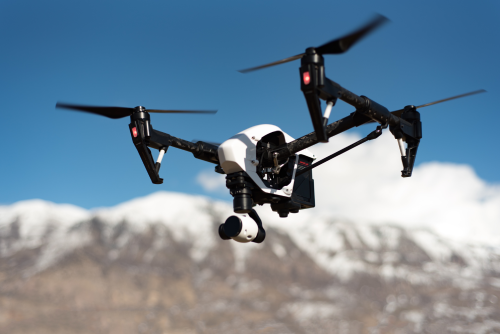
Yuneec H850 is an enterprise-focused multirotor drone aimed at commercial and industrial operators rather than casual flyers. It matters because the H850 sits in the class of aircraft typically chosen for inspection, surveying, site documentation, and other work that benefits from hover stability and vertical takeoff capability. Based on the supplied manufacturer-backed record, it is an active Yuneec platform, but many headline specifications still need to be verified directly with the brand or an authorized dealer before purchase.
That limited public confirmation changes how the H850 should be evaluated. Instead of treating it like a consumer camera drone where most features are advertised upfront, buyers should approach it as a business tool that may be sold through enterprise channels, configuration-specific bundles, and region-dependent support arrangements. In other words, the H850 may be less about flashy marketing specifications and more about whether the complete package—aircraft, payload, controller, software, batteries, support, and training—fits a real operational need.
Quick Summary Box
- Drone Name: Yuneec H850
- Brand: Yuneec
- Model: H850
- Category: Enterprise/industrial multirotor
- Best For: Inspection, surveying, site documentation, and industrial teams evaluating a Yuneec commercial drone platform
- Price Range: Not publicly confirmed in supplied data
- Launch Year: Not publicly confirmed in supplied data
- Availability: Not publicly confirmed in supplied data
- Current Status: Active
- Overall Rating: Not rated due to limited confirmed data
- Our Verdict: A potentially capable industrial multirotor from Yuneec, but buyers should verify payload support, endurance, software tools, compliance features, and regional service before committing.
Introduction
The Yuneec H850 is a Yuneec-branded enterprise/industrial multirotor listed as active in the supplied data. That alone makes it relevant to organizations comparing commercial drone platforms for repeatable field work, especially where hover accuracy and controlled low-speed flight matter more than portability or creator-focused features.
For readers researching industrial drone options, the H850 is most interesting as a work platform rather than a lifestyle product. That distinction is important. Enterprise aircraft are not judged mainly by cinematic presets, social-media convenience, or how easily they fit into a backpack. They are judged by whether they can support a mission reliably, hold position near structures, integrate with inspection workflows, and remain supportable over time. A drone that looks impressive on paper but is difficult to maintain, hard to source, or poorly supported in the field can quickly become a weak investment.
The challenge is that many hard specs are not confirmed in the supplied record, so this page focuses on what is known, what the platform likely represents in the market, and what buyers should verify before procurement. That means this article is less a spec-sheet recap and more a decision guide. If you are shopping for an industrial UAV, the H850 may belong on your shortlist—but only after direct validation of the details that actually affect mission success.
Overview
What kind of drone is it?
The H850 is an enterprise/industrial multirotor from Yuneec, a manufacturer associated with both consumer and commercial UAV systems. In practical terms, that places it in the category of drones typically used for job-site operations, inspection work, visual documentation, and sensor-driven workflows rather than travel photography or recreational flying.
The multirotor format matters here. Unlike fixed-wing aircraft, multirotors are built around vertical takeoff and landing, stationary hover, precise low-speed maneuvering, and operation in tighter spaces. Those qualities make them especially useful for examining assets from multiple angles, capturing repeatable images over a site, and operating from locations where runway-style launch and recovery are unrealistic. For infrastructure, utilities, construction, and industrial maintenance teams, those strengths often matter more than maximum cruise efficiency.
This also suggests the H850 should be evaluated through the lens of operational practicality. Questions such as setup time, transport case footprint, battery handling, and mission repeatability often matter more in this class than raw speed alone. Even without a full public spec list, its enterprise categorization tells prospective buyers that the intended use is professional fieldwork, not casual leisure flying.
Who should buy it?
The most likely buyers are:
- Enterprise drone teams
- Survey and inspection contractors
- Utilities and infrastructure operators
- Construction and asset-management teams
- Public-sector departments evaluating non-consumer drone platforms
- Existing Yuneec users wanting to stay within the same brand ecosystem
More specifically, the H850 is most relevant to buyers who already think in terms of fleet operations, standard operating procedures, maintenance schedules, pilot training, and procurement approval rather than impulse purchase decisions. Organizations that already understand the difference between buying a drone and deploying an aerial system will likely appreciate the questions this model raises: What payloads are supported? What software is required? What are the service terms? How quickly can it return to operation if a component fails?
It may also appeal to teams that want alternatives to the most dominant enterprise drone vendors. Some organizations maintain approved-vendor lists, internal data policies, or regional purchasing preferences that make brand diversity important. In those cases, an active Yuneec industrial platform can be worth serious evaluation if local support and workflow compatibility are strong.
What makes it different?
What makes the H850 notable is its positioning: it is not presented as a toy or entry-level camera drone, but as a purpose-built industrial aircraft. The supplied record confirms its active status and industrial segment, which suggests a workflow-first design philosophy. However, because the supplied data does not confirm the exact payload package, software stack, or flight metrics, the H850 should be treated as a platform to investigate carefully rather than a drone to buy on headline marketing alone.
That cautious framing is not a weakness; it is simply how enterprise procurement works. In commercial drone buying, the aircraft itself is only part of the system. The real differentiators are often things like sensor compatibility, data handling, reliability under workload, training needs, and long-term support. A platform can be very attractive on paper but still lose to a competitor if its batteries are hard to source, its repair path is slow, or its software does not integrate with the customer’s reporting process.
So what makes the H850 different is less about a single confirmed feature and more about where it sits in the market: a Yuneec-branded active industrial multirotor that may fit organizations seeking a hover-capable work aircraft, provided the supporting ecosystem checks out.
Key Features
-
Enterprise/industrial positioning rather than consumer orientation
The H850 is aimed at work missions, not casual flying. That shifts the buying criteria toward reliability, support, and operational usefulness. -
Multirotor airframe for vertical takeoff, landing, and hover-based work
This makes it suitable in principle for inspections, close observation, and site documentation where stationary flight is essential. -
Active product status in the supplied manufacturer-backed record
Active status is important for buyers trying to avoid unsupported or clearly discontinued platforms. -
Yuneec-branded platform from a recognized China/Hong Kong drone maker
Brand familiarity can matter for procurement, especially for organizations already aware of Yuneec’s presence in the UAV market. -
Likely suited to inspection, site documentation, and commercial field operations
Even without fully confirmed payload details, the aircraft’s category suggests alignment with typical enterprise aerial tasks. -
Better matched to controlled mission flying than casual aerial content creation
Buyers looking for a business tool may find this more relevant than creator-focused drones with consumer-centered feature sets. -
Procurement is likely more enterprise-led than impulse retail-led
This matters because the final decision may depend on quotes, demos, support agreements, and bundle configurations rather than shelf price alone. -
Potential value for organizations already operating within a Yuneec ecosystem
Existing users may benefit from shared familiarity, training continuity, or established dealer relationships. -
Exact payload, camera, endurance, range, and speed details are not publicly confirmed in the supplied data
These gaps are too important to ignore and should be resolved before any purchase decision. -
Software, autonomy, and compliance features should be verified with official sales or support channels before purchase
In enterprise operations, software maturity and regional compliance can matter as much as flight hardware.
Full Specifications Table
| Specification | Details |
|---|---|
| Brand | Yuneec |
| Model | H850 |
| Drone Type | Multirotor |
| Country of Origin | China/Hong Kong |
| Manufacturer | Yuneec |
| Year Introduced | Not publicly confirmed in supplied data |
| Status | Active |
| Use Case | Enterprise/industrial |
| Weight | Not publicly confirmed in supplied data |
| Dimensions (folded/unfolded) | Not publicly confirmed in supplied data |
| Max Takeoff Weight | Not publicly confirmed in supplied data |
| Battery Type | Not publicly confirmed in supplied data |
| Battery Capacity | Not publicly confirmed in supplied data |
| Flight Time | Not publicly confirmed in supplied data |
| Charging Time | Not publicly confirmed in supplied data |
| Max Range | Not publicly confirmed in supplied data |
| Transmission System | Not publicly confirmed in supplied data |
| Top Speed | Not publicly confirmed in supplied data |
| Wind Resistance | Not publicly confirmed in supplied data |
| Navigation System | Not publicly confirmed in supplied data |
| Obstacle Avoidance | Not publicly confirmed in supplied data |
| Camera Resolution | Not publicly confirmed in supplied data |
| Video Resolution | Not publicly confirmed in supplied data |
| Frame Rates | Not publicly confirmed in supplied data |
| Sensor Size | Not publicly confirmed in supplied data |
| Gimbal | Not publicly confirmed in supplied data |
| Zoom | Not publicly confirmed in supplied data |
| Storage | Not publicly confirmed in supplied data |
| Controller Type | Not publicly confirmed in supplied data |
| App Support | Not publicly confirmed in supplied data |
| Autonomous Modes | Not publicly confirmed in supplied data |
| Payload Capacity | Not publicly confirmed in supplied data |
| Operating Temperature | Not publicly confirmed in supplied data |
| Water Resistance | Not publicly confirmed in supplied data |
| Noise Level | Not publicly confirmed in supplied data |
| Remote ID Support | Not publicly confirmed in supplied data |
| Geo-fencing | Not publicly confirmed in supplied data |
| Certifications | Not publicly confirmed in supplied data |
| MSRP / Launch Price | Not publicly confirmed in supplied data |
| Current Price | Not publicly confirmed in supplied data |
The table above reflects the current limitation of the supplied record rather than a judgment on the aircraft itself. For enterprise buyers, these unknowns are not minor omissions. Weight can affect regulation, battery type affects field logistics, payload compatibility determines mission value, and software support can influence years of operating cost. That is why the H850 should be treated as a platform requiring direct confirmation, not a purchase to be decided from incomplete public data alone.
Design and Build Quality
Because the supplied record confirms only that the H850 is an active enterprise multirotor, design analysis has to stay conservative. What can be said with confidence is that industrial multirotors are usually evaluated less like travel gadgets and more like field tools. Buyers in this category typically care about transport cases, propeller replacement, payload mounting, service access, landing clearance, and repeatable setup time.
As a multirotor in the enterprise/industrial segment, the H850 is likely intended for stable hovering and close-proximity work over fixed assets, job sites, or survey areas. That generally favors a more purposeful airframe than a compact fold-up consumer drone. The overall form factor in this category often prioritizes durability, visibility, and mission utility over sleekness. Even if the aircraft is relatively transportable, ease of deployment matters more than aesthetic minimalism.
If portability is a major priority, buyers should verify actual dimensions, packed footprint, and whether the aircraft can be deployed by one operator or benefits from a larger field team. In practice, many industrial systems are not difficult to move, but they are less spontaneous than small consumer drones. A buyer planning to use the H850 across multiple locations in a single day should ask not only about airframe size, but also about how many batteries, chargers, spare props, and cases are realistically needed for a normal shift.
Build quality questions worth checking directly with Yuneec or a dealer include:
- Airframe materials and weather tolerance
- Propeller and motor serviceability
- Landing gear clearance for gimbal or sensor payloads
- Field-replaceable components
- Battery access and swap speed
- Transport case and charging logistics
There are also some practical fit-and-finish questions that matter in industrial deployment:
- How robust are the arms, joints, and mounting points over repeated transport cycles?
- Can the aircraft be assembled or unfolded quickly without introducing setup errors?
- Are connectors and payload mounts protected from dust, vibration, and field wear?
- How easy is it for technicians to inspect for damage after a hard landing or rough transport?
- Does the system appear designed for repeated business use, or does it feel closer to a consumer platform with enterprise branding?
In short, the H850 should be judged as a work platform first. Until full physical specifications are confirmed, portability and ruggedness remain procurement questions rather than settled strengths. The right way to evaluate design in this class is not by photos alone, but by a demo flight, handling session, and maintenance discussion with a qualified seller.
Flight Performance
The supplied data does not publicly confirm endurance, range, top speed, ceiling, or weight, so any flight-performance discussion must be treated as analysis rather than confirmed measurement.
Based on its class, the H850 is likely more about controlled, mission-oriented flying than about fast point-to-point travel. That usually means the real value is in hover stability, low-speed precision, and predictable behavior during inspection or documentation tasks. Industrial multirotors generally appeal to teams that need to stop, frame, inspect, and repeat rather than simply cover long distances.
That distinction matters because “performance” in enterprise aviation is different from performance in consumer drone marketing. A hobby buyer may ask, “How fast is it?” A commercial operator is more likely to ask:
- How steady is the aircraft in moderate wind?
- How much endurance remains with the intended payload installed?
- How consistent is battery performance over a working day?
- How precisely can the drone hold position near vertical structures?
- How reliable is the control and video link in interference-heavy environments?
- How easy is it to repeat the same flight pattern for before-and-after documentation?
Likely performance characteristics to verify before purchase include:
- Real-world flight time with the actual payload you plan to use
- Wind handling with a camera or sensor attached
- Link reliability in industrial RF environments
- Hover precision near structures
- Takeoff and landing footprint requirements
- Battery turnaround time between missions
A few additional performance issues deserve attention:
- Payload-dependent endurance: A published maximum flight time, if one exists, may only apply to a minimal configuration. Inspection and mapping payloads can meaningfully change usable mission time.
- Environmental tolerance: Industrial work often happens in less-than-ideal conditions. Even if the drone is not intended for severe weather, buyers should verify acceptable operating temperatures and recommended wind limits.
- Mission efficiency: A drone with average endurance but fast battery swaps, stable hover behavior, and reliable controls can be more useful than one with better headline numbers but weaker real-world workflow.
- Return-to-home behavior: Enterprises should ask how the system handles signal loss, low battery thresholds, and GPS-compromised environments.
- Operator workload: Control precision is important, but so is pilot fatigue. An aircraft that is technically capable but mentally tiring to manage over repeated sorties can reduce team efficiency.
For indoor work, caution is especially important. Even if a multirotor can technically fly in large indoor spaces, industrial drones are often best used outdoors or in highly controlled interior environments by trained pilots. Without confirmed obstacle sensing, weight, and positioning details, buyers should not assume indoor suitability. Warehouses, factory spaces, and under-roof inspections can be high-risk environments if navigation aids are limited or if GPS-denied performance has not been validated.
Camera / Payload Performance
The H850 appears to be better understood as a payload carrier than as an all-in-one creator drone. That matters because in industrial aviation, the aircraft itself is often only part of the value proposition. The real question is what sensor or gimbal system it can carry, how well that payload integrates, and how efficiently the output enters the customer’s workflow.
The supplied data does not publicly confirm:
- Included camera
- Interchangeable payloads
- Thermal capability
- Zoom capability
- Mapping sensor support
- Gimbal stabilization details
- Payload capacity
That means buyers should treat payload verification as a top priority. For industrial use, the H850 may be attractive only if the available payload options match the mission. For example:
- Inspection teams may need optical zoom or thermal imaging
- Survey users may need mapping-grade trigger support and geospatial workflow compatibility
- Public-safety users may need rapid scene awareness tools
- Construction users may simply need dependable visual documentation
Payload discussion should go beyond “does it carry a camera?” In enterprise work, buyers should ask:
- Is the payload fixed or interchangeable?
- Can the same airframe support multiple mission types?
- Is there a stabilized gimbal for inspection imagery?
- Are images and video properly geotagged?
- Is there support for stills, video, thermal, or multisensor capture?
- How is calibration handled, if required?
- Are there regional restrictions on payload availability?
- Are replacement payload units available without long delays?
If payload options are limited in your region, the drone’s airframe quality alone may not justify adoption. In this segment, payload ecosystem often matters as much as the aircraft. An excellent airframe with weak sensor support can be less useful than a slightly less impressive aircraft backed by strong optical, thermal, zoom, and mapping options.
There is also the question of data quality. Different industries need different outputs:
- Inspection: Clear stabilized imagery, zoom detail, and repeatable framing matter more than cinematic color.
- Thermal work: Temperature interpretation, radiometric handling, and inspection software compatibility may be crucial.
- Surveying and mapping: Trigger consistency, overlap planning, geotag reliability, and processing compatibility are often more important than pure video capability.
- Construction documentation: Teams may prioritize straightforward visual records, frequent flights, and easy export to project-management systems.
A buyer considering the H850 should therefore ask not only what payloads are available, but whether those payloads produce usable outputs for the intended end client. A drone that captures data no one can easily process is not a successful enterprise solution.
Smart Features and Software
Software is often the deciding factor in enterprise drone purchases, and this is one of the biggest unknowns for the H850 from the supplied record. The data does not publicly confirm the controller system, planning app, waypoint support, fleet tools, SDK availability, cloud workflow, or third-party processing integrations.
That does not mean the drone lacks these features. It simply means buyers should verify them directly before purchase.
Important software questions to ask include:
- Does the H850 support mission planning or waypoints?
- Are there inspection-oriented flight tools?
- Is there mapping workflow support?
- What mobile or desktop apps are used?
- Are there fleet-management or log-management features?
- Is there SDK or API access for enterprise integration?
- How are firmware updates delivered and supported?
- What happens if a payload, controller, or app version changes mid-contract?
For enterprise buyers, software maturity can matter more than raw flight specs. A drone that flies well but does not fit your planning, reporting, or maintenance process can become expensive to operate. A few specific software issues are worth deeper attention:
Mission Planning and Repeatability
Inspection, site documentation, and surveying often benefit from repeatable missions. If the H850 supports waypoint routes, orbit tools, corridor mapping, or standardized inspection patterns, that can reduce pilot workload and improve consistency over time. If it does not, then repeatability may depend more heavily on pilot skill and may be less efficient at scale.
Data Management
Enterprise teams often need flight logs, image organization, export tools, and maintainable records. Ask whether the system supports easy file transfer, metadata retention, and integration with the software already used by your organization. The best drone output is the one that arrives in the right place, in the right format, without manual chaos.
Security and IT Compatibility
Commercial buyers increasingly care about where data is stored, how firmware updates are handled, whether cloud dependence is optional, and whether devices can operate within corporate IT policies. If your organization has cybersecurity or procurement rules, software architecture may become a deciding factor.
Long-Term Stability
Many drone purchases fail not because the aircraft is poor, but because the software ecosystem changes unpredictably. Before choosing the H850, ask about version support, firmware rollback options, and the practical history of software maintenance. For a business operating under contract, reliability over the next two to four years may matter more than any single launch-day feature.
Use Cases
The most realistic use cases for the Yuneec H850 are tied to commercial operations and should always be matched to the confirmed payload package.
-
Infrastructure inspection
Bridges, towers, roofs, facades, industrial structures, and similar assets often benefit from a hover-capable drone that can maintain viewing angles and approach with care. -
Utility and energy site documentation
Energy operators may use drones to review equipment condition, document remote sites, or support routine visual inspections where ground access is limited or slow. -
Construction progress monitoring
Repeated flights over a project can create visual records, stakeholder updates, and site-awareness material, assuming the payload and software support the required outputs. -
Industrial asset observation
Facilities, plants, storage yards, and heavy equipment areas may use an enterprise multirotor for observation, recordkeeping, and maintenance planning. -
Survey support, if compatible payloads and workflow tools are available
This depends heavily on camera, trigger, geospatial, and software support, so it should not be assumed without confirmation. -
General enterprise aerial imaging
Many organizations simply need dependable overhead and oblique imaging without consumer-oriented extras. -
Public-sector documentation and scene overview
Government departments or municipal teams may find value in an aircraft that can document assets, worksites, or events from the air. -
Internal pilot training for organizations standardizing on Yuneec systems
If the H850 shares operational logic with other Yuneec products in the same organization, it may contribute to fleet consistency.
The key to all these use cases is mission matching. The H850 is not automatically the right tool just because it belongs to the industrial segment. It becomes the right tool only if its confirmed payloads, controls, support, and cost structure align with the actual task.
Pros and Cons
Pros
-
Confirmed enterprise/industrial positioning makes it more relevant to work missions than to casual flying
Buyers looking for a professional platform will likely view this as a more serious starting point than a consumer drone adapted for occasional business use. -
Multirotor format is naturally suited to hovering, vertical takeoff, and close inspection tasks
That makes it fundamentally appropriate for many industrial workflows. -
Active status suggests it is not merely a legacy or discontinued listing
This is valuable for organizations trying to avoid dead-end hardware. -
Backed by an established drone brand with known presence in both consumer and commercial UAV markets
Brand recognition does not guarantee fit, but it is better than evaluating an unknown manufacturer with unclear support history. -
Likely a better fit for controlled site operations than fixed-wing alternatives
For teams focused on close work rather than long linear coverage, multirotor behavior is often more practical. -
Potentially attractive to organizations already invested in Yuneec equipment or support channels
Existing relationships can reduce friction in training, procurement, and ongoing service.
Cons
-
Many core specs are not publicly confirmed in the supplied data
This makes early comparison shopping harder and increases the need for direct vendor engagement. -
Payload and camera options are not confirmed here, which is critical for industrial buyers
Without clear sensor information, mission suitability remains uncertain. -
Price is not publicly confirmed, making budgeting difficult without a formal quote
Enterprise buyers can work with quotes, but public-sector and smaller teams may prefer more transparent pricing. -
Software ecosystem details are not confirmed in the supplied record
This is a major issue because software often drives real operational efficiency. -
Regional support, repair, and parts availability must be checked before procurement
A good aircraft can become a bad investment if downtime is prolonged by weak service coverage. -
Probably excessive for hobby users and overkill for buyers who only need a simple camera drone
This is a specialized platform category, not a general-purpose recreational purchase.
Comparison With Other Models
Reliable apples-to-apples comparison is limited here because industrial drones are often sold in different bundles, with different payloads, batteries, and service terms. Still, these are the most relevant comparison directions for H850 shoppers.
| Model | Price | Flight Time | Camera or Payload | Range | Weight | Best For | Winner |
|---|---|---|---|---|---|---|---|
| Yuneec H850 | Not publicly confirmed in supplied data | Not publicly confirmed in supplied data | Payload options not publicly confirmed in supplied data | Not publicly confirmed in supplied data | Not publicly confirmed in supplied data | Buyers evaluating a Yuneec industrial multirotor platform | Best if Yuneec workflow and dealer support fit your operation |
| DJI Matrice 350 RTK | Enterprise-priced, varies by package | Configuration-dependent | Broad industrial payload ecosystem | Enterprise long-range system class | Heavy industrial class | Teams prioritizing ecosystem depth and wide market support | Likely better ecosystem choice for many buyers |
| Yuneec H520E | Enterprise-priced, varies by package | Configuration-dependent | Smaller enterprise payload class | Enterprise multirotor class | Smaller than heavy industrial platforms | Teams wanting a more compact Yuneec commercial drone | Likely better for smaller Yuneec deployments |
| Yuneec H520 | Legacy enterprise pricing varied by market | Configuration-dependent | Older enterprise payload generation | Older enterprise system class | Enterprise multirotor class | Existing operators maintaining older Yuneec fleets | Usually only if you already own the ecosystem |
H850 vs a close competitor
Against DJI’s Matrice 350 RTK, the H850 would typically need to win on either price, specific workflow fit, or regional support relationships. DJI usually enters the conversation because of its broad payload ecosystem and strong market adoption. If your organization values a larger dealer network and widely recognized accessory support, DJI often has the easier procurement story. If you already prefer Yuneec or need a non-DJI shortlist, H850 becomes more relevant.
The larger strategic point is that enterprise buyers are not comparing drones in isolation. They are comparing:
- payload availability
- mission software
- parts logistics
- training burden
- compliance readiness
- internal approval friction
- long-term support risk
If the H850 is competitive in those areas, it can still be a rational choice even against a market leader. If not, the bigger ecosystem will usually win.
H850 vs an alternative in the same segment
Within Yuneec’s own lineup, the H520E is the more obvious alternative for buyers who want an enterprise multirotor but may not need a larger or more specialized industrial platform. The decision would likely come down to payload needs, transportability, and budget. If your missions are lighter-duty, a smaller Yuneec airframe may be the more efficient choice.
This is especially relevant for organizations that conduct short inspections, routine site photos, or localized documentation rather than heavier industrial sensing. A larger platform is not automatically better. Bigger aircraft can mean more setup, more transport effort, and potentially more regulatory overhead. The H850 therefore makes the most sense when its extra capability—once confirmed—actually solves a real operational problem.
H850 vs an older or previous-generation option
Compared with older Yuneec enterprise platforms such as the H520, the H850 should be considered the more modern strategic option if it meets your mission requirements and is actively supported in your region. Older systems may still be viable for existing owners, but new buyers should be cautious about support life, battery sourcing, and long-term software compatibility.
That is often where procurement decisions become clearer. Legacy platforms can sometimes look attractive on price, but they may create hidden costs through aging batteries, reduced app support, or hard-to-source payload components. For a new fleet standard, buyers usually benefit from choosing the model with the healthiest current support path rather than the lowest short-term acquisition number.
Manufacturer Details
Yuneec is both the brand and the manufacturer in this case, so there is no meaningful separation between branding and production identity here. The company is associated with China/Hong Kong and is known in the drone market for a mix of consumer and enterprise aircraft.
In broader market terms, Yuneec has been recognized as a drone maker with roots in electric aviation and multirotor systems. Its product reputation has often centered on being an alternative to the biggest mass-market drone vendors, with lines spanning recreational camera drones and more specialized commercial platforms.
For enterprise buyers, Yuneec’s reputation matters less in abstract and more in practical terms:
- Is the model still supported in your country?
- Are batteries and payloads stocked locally?
- Is there certified repair?
- Are software updates consistent?
- Can you train new staff on the system efficiently?
Those are the questions that turn brand reputation into operational value.
It is also worth noting that in enterprise aviation, manufacturer reputation is not only about product quality. It is about communication, documentation, service responsiveness, and the ability to support fleets after the sale. A brand may produce capable hardware, but if business customers struggle to get answers, spares, or reliable timelines, trust erodes quickly. Any organization considering the H850 should evaluate Yuneec not just as a name, but as a support partner.
Support and Service Providers
Support is a major purchase criterion for any industrial drone, and it should be verified before adoption. The safest assumption is that buyers should look first to official Yuneec support channels, then to authorized regional dealers and commercial service partners.
Before buying, verify:
- Official repair process
- Regional warranty terms
- Spare battery availability
- Propeller and airframe parts availability
- Payload repair or calibration options
- Turnaround times for enterprise service cases
- Firmware and app support lifecycle
- Availability of local training or onboarding partners
Support questions should also include operational realities:
- Is there a loaner or replacement path if the aircraft is grounded during a live project?
- Are service centers local, national, or international?
- Who handles first-line troubleshooting—the dealer or the manufacturer?
- Are there paid service plans for fleet customers?
- How are accident inspections, maintenance records, and component replacements documented?
If your region does not have a strong Yuneec dealer or service presence, that may affect long-term ownership more than any single technical specification. Industrial operators cannot afford extended downtime because a battery, motor, or payload mount is delayed for weeks. For many businesses, the quality of support determines whether a drone is useful after the first year.
Where to Buy
The H850 is best approached as an enterprise purchase rather than a typical consumer checkout item. Depending on region, it may be available through:
- Official brand sales channels
- Authorized enterprise drone dealers
- Industrial UAV integrators
- Local distributors
- Public-sector or commercial procurement partners
Because the supplied data does not publicly confirm retail availability, buyers should expect regional differences. In some markets, the H850 may be easier to source through quote-based business sales than through a standard online storefront.
That purchasing model is common in the enterprise drone world and often makes sense. A dealer or integrator can help determine:
- which payload bundle fits the mission
- how many batteries are required for a workday
- whether training is included
- what software licenses are needed
- how warranty and repair support are handled
- whether the package meets local compliance expectations
If possible, buyers should request a live demo or a remote product walkthrough before committing. For industrial drones, a short demonstration can reveal practical truths that spec sheets cannot: setup speed, controller usability, image workflow, motor noise, payload switching time, and overall ease of operation.
Price and Cost Breakdown
Price is not publicly confirmed in the supplied data, so no responsible fixed number should be presented here. That said, industrial drone budgeting should never stop at the airframe.
Before approving an H850 purchase, verify the total package cost for:
- Aircraft
- Controller
- Batteries
- Charger or charging hub
- Camera or sensor payload
- Carrying case
- Spare propellers and wear parts
- Maintenance plan
- Pilot training
- Insurance
- Mapping, inspection, or reporting software
- Any subscription-based fleet or cloud tools
For enterprise drones, payloads, extra batteries, and support contracts can change the real cost of ownership dramatically. A seemingly competitive airframe can become expensive if accessories, downtime, or service access are weak.
A more realistic budgeting approach is to think in terms of total cost of ownership, not purchase price. That includes:
- initial acquisition
- battery replacement over time
- software renewals
- repair costs
- staff training and recurrency
- downtime risk
- accessories needed for redundancy
- travel and logistics for field deployment
For example, a drone package that costs less up front may still be the more expensive option if it requires more staff time, has weaker battery endurance, or depends on slower service. Conversely, a higher-priced package may save money if it reduces repeat visits, improves mission completion rates, or integrates better with client reporting.
For procurement teams, the most useful question is often not “How much does it cost?” but “What does one completed mission cost over the next two years?” That is the level on which enterprise drone decisions usually make sense.
Regulations and Compliance
Commercial drone operations are heavily dependent on local law, and buyers should not assume that a drone sold in one market automatically meets requirements in another. Because the H850’s exact weight and compliance features are not publicly confirmed in the supplied data, operators should verify the following directly:
- Registration requirements
- Pilot licensing or certification rules
- Commercial operating permissions
- Airspace authorization process
- Remote ID requirements
- Data protection and privacy obligations
- Rules for flying near people, infrastructure, or sensitive locations
- Any restrictions tied to thermal, zoom, or mapping payloads
Heavier industrial multirotors often face stricter operating requirements than smaller consumer drones. If you plan to use the H850 for paid work, compliance planning should happen before procurement, not after delivery.
There are also operational documents and processes that may be required depending on jurisdiction and mission type:
- risk assessments
- operations manuals
- maintenance logs
- pilot competency records
- emergency procedures
- permission or waiver applications for specific scenarios
This matters because compliance can alter the real value of a drone. A platform that looks attractive technically may be harder to deploy if its weight, feature set, or operating profile pushes it into a more demanding regulatory category for your region. Likewise, some organizations need Remote ID support, specific data-handling practices, or documented maintenance procedures before a system can be approved internally.
For enterprise teams, regulatory readiness is part of product readiness. The H850 should therefore be assessed not only as an aircraft, but as a system that must fit within legal, safety, and organizational rules.
Who Should Buy This Drone?
Best for
- Enterprise teams that want a Yuneec industrial multirotor
- Buyers who prefer hover-capable aircraft for inspection work
- Organizations that already use Yuneec systems or have local Yuneec support
- Procurement-led buyers comparing commercial drone platforms, not casual gadgets
- Operators willing to verify payload and software details before purchase
This drone is most suitable for buyers who are comfortable asking detailed pre-sale questions and evaluating a full operational package. If your team already has pilots, standard procedures, and a need for structured aerial work, the H850 could be a relevant candidate.
Not ideal for
- Casual hobbyists
- Travel-focused content creators wanting a compact camera drone
- Buyers who need transparent public specs before starting vendor discussions
- Teams without access to regional enterprise support
- Organizations that depend on a very broad third-party payload ecosystem and want that confirmed upfront
In other words, the H850 is unlikely to be a “buy now and figure it out later” product. It is better suited to organizations that can assess it professionally and verify whether the surrounding ecosystem is strong enough for real deployment.
Final Verdict
The Yuneec H850 looks most compelling as a serious industrial multirotor for organizations that already understand enterprise drone procurement. Its biggest strengths are its confirmed enterprise/industrial positioning, active status, and likely suitability for hover-centric commercial missions. Those characteristics alone make it worth attention from inspection teams, infrastructure operators, site-documentation users, and businesses already considering Yuneec as a fleet supplier.
Its biggest drawbacks are equally clear: many important specs are not publicly confirmed in the supplied data, and buyers need hard answers on payloads, endurance, software, compliance features, and support before making a decision. In the enterprise drone market, those unknowns are not minor details—they are the details that determine whether a drone becomes a productive tool or an expensive procurement mistake.
If you are building a shortlist for inspection, surveying, or industrial aerial operations and you want to consider Yuneec, the H850 deserves a closer look. But that closer look should include dealer conversations, payload verification, support checks, software review, and an honest assessment of regional service availability. If you need a simple, transparent, consumer-style buying experience with fully public specifications, this is not that kind of drone.
For the right enterprise buyer, it may be a strong fit. For everyone else, verification is essential before commitment.
