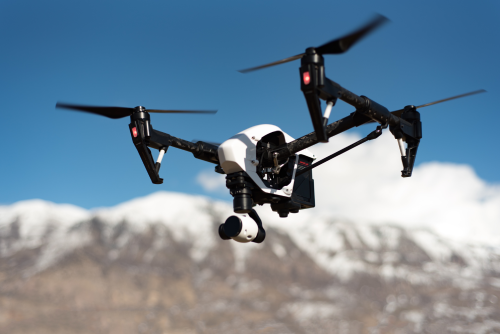
The Airbus Tanan 300 is a prototype military VTOL drone built around a helicopter-style airframe, aimed at operators that need vertical takeoff and landing without giving up long endurance. It matters because the published headline numbers point to a much more aircraft-like unmanned platform than a typical commercial drone, with a 350 kg maximum takeoff weight and up to 12 hours of endurance. Publicly confirmed information is still limited, so this page focuses on what is known, what can be reasonably inferred, and what buyers still need to verify directly.
Quick Summary Box
- Drone Name: Airbus Tanan 300
- Brand: Airbus
- Model: Tanan 300
- Category: Military / VTOL helicopter UAV
- Best For: Defense, government, and institutional teams evaluating long-endurance runway-independent unmanned rotorcraft
- Price Range: Not publicly confirmed in supplied data
- Launch Year: Not publicly confirmed in supplied data
- Availability: Not publicly confirmed in supplied data
- Current Status: Prototype
- Overall Rating: Not rated due to limited confirmed data
- Our Verdict: A potentially capable long-endurance VTOL platform on paper, but still a prototype with limited public detail on payloads, software, price, and supportability.
Introduction
The Airbus Tanan 300 sits in the military/VTOL segment rather than the consumer or prosumer drone market. In plain terms, it is a helicopter-type unmanned aircraft designed for missions that benefit from vertical takeoff and landing, hovering capability, and longer time on station than most multirotor systems can offer. Because its status is listed as prototype, readers should treat it as a program-stage platform rather than a fully transparent off-the-shelf product.
That distinction matters. A prototype in this class is not just an early gadget or a pre-release camera drone. It may represent a broader aerospace program, with evolving mission systems, test configurations, and customer-specific options that are still being shaped through trials and demonstrations. The aircraft may exist physically, may have flown, and may already be meaningful to procurement teams, yet still not have the kind of stable retail specification sheet that commercial drone buyers expect.
The Tanan 300 is also interesting because it occupies a part of the market where operators often face a difficult trade-off. Fixed-wing UAVs can offer long endurance, but they usually need launch and recovery infrastructure or at least more operating space. Multirotors are easy to deploy vertically, but their endurance drops sharply as payload and mission duration requirements rise. Helicopter UAVs try to sit between those worlds: runway independence on one side, useful persistence on the other. If the published figures are representative of real operational capability, the Tanan 300 is intended to answer exactly that requirement.
At the same time, caution is necessary. Large unmanned rotorcraft are highly sensitive to configuration. Endurance can change with payload, weather, altitude, and fuel or energy setup. Range can mean datalink reach, control radius, or a mission planning envelope rather than simple point-to-point distance. Service ceiling does not automatically mean all payloads and all weather conditions are equally supported at that altitude. So while the platform looks promising, serious evaluation has to go beyond headline numbers.
Overview
What kind of drone is it?
The Tanan 300 is a French-origin Airbus unmanned helicopter in the military/VTOL category. Its confirmed published figures include a 350 kg maximum takeoff weight, 12-hour endurance, 180 km range, 150 km/h maximum speed, 4,000 m ceiling, 6.3 m rotor span, and 5.2 m length. That places it well above the scale of typical enterprise multirotors and firmly into the aircraft-class unmanned systems category.
A useful way to think about it is not as a “bigger drone” in the consumer sense, but as a compact unmanned aircraft with rotorcraft behavior. Its dimensions and mass suggest a platform that would normally be planned, maintained, and operated with aviation discipline rather than with the fast-turn deployment style common in small commercial UAS teams. Even before payloads are considered, this is the kind of system that may involve formal launch procedures, preflight checks, maintenance intervals, and trained operating personnel.
The helicopter configuration is central to its identity. Unlike a standard quadcopter, a single-main-rotor helicopter layout is often chosen when designers want more efficient long-duration flight than a multirotor can usually provide, while preserving the ability to hover and take off vertically. Compared with small electric drones, this category often aims for longer range, heavier mission equipment, and more sustained operation.
Who should buy it?
This is not a casual retail drone. The realistic audience includes:
- Defense and government program teams
- Institutional buyers evaluating VTOL surveillance platforms
- Research organizations studying larger unmanned rotorcraft
- System integrators looking at payload or mission-system development
- Journalists and analysts comparing unmanned helicopter programs
It may also be relevant to naval and border-security evaluators, though those use cases depend heavily on configuration details that are not fully public. Any buyer looking at the Tanan 300 should already be comfortable with aerospace-style procurement processes, test evaluation cycles, and the fact that some details may only become available under direct engagement.
In practical terms, this means the platform is most suitable for organizations that can ask structured questions and accept structured answers. A private individual or small business typically wants published pricing, immediate availability, a complete accessory list, and predictable support channels. A defense or institutional buyer is more likely to request technical documentation, qualification status, mission payload integration options, sustainment planning, operator training, and compliance information. The Tanan 300 belongs squarely in that second environment.
What makes it different?
What stands out most is the combination of VTOL helicopter layout and 12-hour endurance. Many smaller VTOL drones offer runway independence, but not many publicly listed rotorcraft in this class combine that with this level of stated persistence. The trade-off is that public detail remains thin: payloads, autonomy stack, support arrangements, and pricing are not clearly disclosed in the supplied data.
There is also an important strategic difference between a platform like this and a lot of smaller commercial UAS products. Commercial drones are often sold on ease of use, imaging performance, and software polish. The Tanan 300, by contrast, is more likely to be judged on mission endurance, payload flexibility, integration potential, logistics burden, and whether it can fit into a customer’s operational doctrine. In other words, its value proposition is probably less about convenience and more about capability.
Key Features
- Helicopter-style VTOL airframe for vertical takeoff and landing without runway infrastructure
- Prototype military unmanned platform rather than a consumer or creator drone
- Up to 12 hours of endurance, which is the strongest published headline spec
- 180 km stated range, suggesting use beyond short local flights
- 150 km/h maximum speed, faster than most inspection or camera multirotors
- 4,000 m ceiling, indicating a broader operating envelope than low-altitude-only drones
- 350 kg maximum takeoff weight, placing it in a serious mission-aircraft class
- Approx. 6.3 m rotor span and 5.2 m length, showing it is a substantial platform
- Airbus backing, which adds institutional credibility even though the product itself remains a prototype
- Payload, camera, autonomy, controller, and software details not publicly confirmed in the supplied data
Those bullets summarize the basics, but they are worth interpreting carefully.
First, endurance is the figure most likely to drive attention. Twelve hours is far beyond what buyers expect from mainstream multirotor systems and suggests a platform intended for persistent observation, relay, or other missions where staying overhead matters more than doing a short task quickly.
Second, the 350 kg MTOW tells you the Tanan 300 is in a very different operational class from enterprise drones used for mapping, inspection, or public-safety imaging. This is not just a larger camera ship. It is closer to a small unmanned aircraft program.
Third, Airbus involvement gives the aircraft institutional weight, but it should not be confused with guaranteed maturity. A respected aerospace manufacturer can absolutely field serious prototypes, yet prototype status still means some aspects of availability, configuration control, and support may remain fluid.
Full Specifications Table
| Specification | Details |
|---|---|
| Brand | Airbus |
| Model | Tanan 300 |
| Drone Type | Helicopter VTOL unmanned aircraft |
| Country of Origin | France |
| Manufacturer | Airbus |
| Year Introduced | Not publicly confirmed in supplied data |
| Status | Prototype |
| Use Case | Military / VTOL missions |
| Weight | Not publicly confirmed in supplied data |
| Dimensions (folded/unfolded) | Approx. length 5.2 m; rotor span 6.3 m; folded dimensions not publicly confirmed in supplied data |
| Max Takeoff Weight | 350 kg |
| Battery Type | Not publicly confirmed in supplied data |
| Battery Capacity | Not publicly confirmed in supplied data |
| Flight Time | 12 hr |
| Charging Time | Not publicly confirmed in supplied data |
| Max Range | 180 km |
| Transmission System | Not publicly confirmed in supplied data |
| Top Speed | 150 km/h |
| Wind Resistance | Not publicly confirmed in supplied data |
| Navigation System | Not publicly confirmed in supplied data |
| Obstacle Avoidance | Not publicly confirmed in supplied data |
| Camera Resolution | Not publicly confirmed in supplied data |
| Video Resolution | Not publicly confirmed in supplied data |
| Frame Rates | Not publicly confirmed in supplied data |
| Sensor Size | Not publicly confirmed in supplied data |
| Gimbal | Not publicly confirmed in supplied data |
| Zoom | Not publicly confirmed in supplied data |
| Storage | Not publicly confirmed in supplied data |
| Controller Type | Not publicly confirmed in supplied data |
| App Support | Not publicly confirmed in supplied data |
| Autonomous Modes | Not publicly confirmed in supplied data |
| Payload Capacity | Not publicly confirmed in supplied data |
| Operating Temperature | Not publicly confirmed in supplied data |
| Water Resistance | Not publicly confirmed in supplied data |
| Noise Level | Not publicly confirmed in supplied data |
| Remote ID Support | Not publicly confirmed in supplied data |
| Geo-fencing | Not publicly confirmed in supplied data |
| Certifications | Not publicly confirmed in supplied data |
| MSRP / Launch Price | Not publicly confirmed in supplied data |
| Current Price | Not publicly confirmed in supplied data |
| Service Ceiling | 4,000 m |
| Length | 5.2 m |
| Rotor Span | 6.3 m |
| Source Basis | Publicly listed structured database values |
The table above is intentionally conservative. For a prototype platform, the absence of detail is often as important as the presence of headline numbers. Missing information here does not mean the aircraft lacks those capabilities; it means they are not confirmed in the supplied public record. For institutional buyers, that difference is crucial.
It is also worth noting that some common drone-spec fields may not cleanly apply to this type of aircraft. For example, “battery type” and “charging time” are standard consumer-drone fields, but a larger helicopter UAV may use a very different energy architecture. Since the propulsion arrangement is not confirmed in the supplied data, buyers should avoid making assumptions based on how small drones are normally specified.
Design and Build Quality
From the confirmed size and weight class alone, the Tanan 300 is clearly not a portable fold-up drone. A 350 kg MTOW aircraft with a 6.3 m rotor span belongs to the same conversation as larger institutional unmanned systems, not field-backpack multirotors. That suggests transport, setup, recovery, and maintenance processes more like a crewed aviation workflow than a hobby drone workflow.
The helicopter configuration matters. Compared with fixed-wing UAVs, a rotorcraft layout usually brings the operational advantage of vertical takeoff and landing plus hovering capability. That can reduce dependence on launch equipment or runway-like recovery space. The downside, in general, is more mechanical complexity than a simple quadcopter, and potentially more maintenance sensitivity than very small electric drones.
For design evaluation, there are several unanswered questions that matter more in this class than they would in a consumer drone review:
- Is the aircraft optimized for land-only operations, or can it support maritime or shipboard use?
- Are rotor blades removable or foldable for transport?
- How quickly can it be assembled after transport?
- What is the landing gear arrangement and how tolerant is it of rough-field recovery?
- How modular are the avionics and payload bays?
- What line-replaceable units are accessible in field conditions?
- What does the scheduled maintenance concept look like?
None of those points are fully answered in the supplied data, but they are central to real-world usability. A large UAV can look impressive in a brochure and still prove cumbersome if setup time is high, maintenance tooling is specialized, or repair turnaround depends on factory support.
Build quality also needs to be separated into engineering credibility and proven field durability. Airbus gives the Tanan 300 credibility as an aerospace-backed development effort. That is not the same thing as a long, public operational record. Since the aircraft is still identified as a prototype, it is safer to say the design appears serious rather than to claim it is already proven under sustained operational stress.
Another practical point: size changes everything. Storage, hangaring, transport clearance, rotor safety zones, and launch site selection all become more demanding as the platform grows. A small quadcopter can be deployed from a roadside shoulder or a rooftop. A helicopter UAV of this scale needs more careful ground handling, more separation from personnel, and more disciplined procedures around startup and shutdown.
Flight Performance
On paper, the Tanan 300 looks optimized for persistence first, speed second. Its 12-hour endurance is the standout figure, while 150 km/h top speed is respectable for a rotorcraft UAV but not the defining story. In practical terms, that points toward missions where staying airborne for a long period is more important than sprint performance.
The 180 km range also suggests a platform intended for more than short local operations, although the supplied data does not specify whether that figure refers to datalink reach, mission radius, or another range definition. Buyers should verify exactly how Airbus defines the published range before using it for planning or procurement comparisons.
That point deserves emphasis. If a platform is advertised with 12 hours of endurance and 150 km/h top speed, a simple multiplication would imply far more than 180 km of total travel. That means the published “range” almost certainly reflects a specific operational definition rather than raw theoretical distance flown over time. It may describe the control link envelope, a representative mission radius, or another constrained figure. Without that definition, range comparisons can be misleading.
Because it is a helicopter-type VTOL platform, it is reasonable to expect hover capability and vertical launch/recovery behavior. That is an airframe-based inference, not a separately confirmed feature list. The 4,000 m ceiling adds useful context too, indicating a broader operating envelope than low-altitude commercial camera drones.
Performance in real use will likely depend heavily on configuration. Payload mass, fuel or energy load, reserve requirements, weather margins, and loiter profile can all materially affect what “12 hours” means in practice. For example:
- A light surveillance load may support maximum endurance claims.
- A heavier sensor turret or relay payload may shorten station time.
- Hot-and-high conditions can reduce rotorcraft performance.
- Hover-heavy missions generally consume more energy than efficient transit or loiter profiles.
- Maritime winds or gusting inland weather may impose restrictions that are not visible in headline specs.
Indoor use is effectively irrelevant here. This is an outdoor, managed-operation aircraft class platform that would normally require trained crews, controlled procedures, and formal airspace approvals.
One more performance angle matters: mission tempo. A long-endurance rotorcraft can reduce the number of launches needed to cover a period of interest. That has practical benefits beyond simple flight time. Fewer launch and recovery cycles can lower exposure during critical phases of flight, reduce crew workload over a surveillance window, and simplify coordination when operating under constrained permissions. For some institutional operators, that can matter as much as the raw endurance number itself.
Camera / Payload Performance
The Tanan 300 should be thought of as a mission-payload platform, not a creator-camera drone. Publicly confirmed details about its actual payload capacity, sensor options, gimbal type, stabilization system, and onboard imaging hardware are not available in the supplied data.
That said, the platform’s 350 kg MTOW and 12-hour endurance imply a much more serious payload class than a standard enterprise quadcopter. In analysis terms, that usually points toward meaningful sensor integration potential, such as surveillance, observation, relay, or specialized mission equipment. However, the exact payload envelope can vary dramatically depending on propulsion system, fuel or battery arrangement, avionics package, and mission configuration.
For buyers, the practical takeaway is simple:
- Do not assume a camera package is included
- Do not assume a specific EO/IR, zoom, radar, or relay payload
- Do not assume payload weight or power budget without official documentation
- Verify integration limits, stabilization options, and supported sensors directly
This is an area where prototype ambiguity can create procurement mistakes. A large airframe often leads observers to assume “high payload” automatically. In reality, usable payload depends on more than MTOW. It depends on available power, center-of-gravity limits, vibration environment, cooling, data interfaces, and whether the aircraft’s endurance claim was measured with or without mission equipment.
For institutional buyers, payload questions should be framed in operational terms rather than marketing terms. Examples include:
- What payload mass can be carried at maximum endurance?
- What payload mass can be carried at maximum speed?
- What electrical power is available to mission equipment?
- What data interfaces are supported?
- Is there a standardized payload bay or customer-specific integration only?
- Can multiple payloads be installed simultaneously?
- What is the stabilization quality in hover and forward flight?
- Are payload swaps field-level tasks or depot-level tasks?
If the platform is being considered for ISR, border observation, maritime watch, or relay work, payload maturity may ultimately matter more than the airframe itself. A long-endurance aircraft without a mature, supported mission payload concept is much less useful than its numbers suggest.
Smart Features and Software
This is one of the biggest unknown areas for the Tanan 300. The supplied data does not publicly confirm:
- Return-to-home behavior
- Waypoint or route automation
- Autonomous takeoff and landing
- AI tracking
- Obstacle avoidance
- Ground control software environment
- SDK or API support
- Cloud fleet tools
- App ecosystem
- Controller or station architecture
In this class of aircraft, automated mission planning, health monitoring, and safety logic are common in the broader market. But those are category expectations, not Tanan 300-specific confirmed features. If software workflow is important, buyers should request direct clarification on mission planning tools, data links, operator interface, payload control, log export, and maintenance diagnostics.
Software is often underappreciated in large-UAS procurement. Small-drone users tend to think in terms of obvious features like follow-me, orbit, or obstacle sensing. Institutional buyers usually care more about whether the aircraft can be integrated into a command workflow, whether routes can be planned with geographic and airspace constraints, how payload data is distributed, and how failures are handled. For a platform like the Tanan 300, the unseen software stack may determine whether it is merely interesting or genuinely operationally useful.
Important due-diligence questions include:
- Does the ground control station support multi-vehicle operations?
- What backup control methods are available if the primary link degrades?
- How are lost-link procedures defined and validated?
- Can mission plans be imported or exported in standard formats?
- What cybersecurity controls exist for the control station and data links?
- Are software updates field-installable, and how are they certified or approved?
- Is there a digital maintenance log and health trend monitoring?
- How are payload operators separated from aircraft operators, if at all?
Because no public confirmation is provided in the supplied data, buyers should avoid projecting modern commercial-drone expectations onto this aircraft. It may have strong autonomy and mission-management functions, but the only responsible position from public information alone is that this area remains unclear.
Use Cases
Given its published specs and segment, the most realistic use cases are institutional and mission-driven rather than consumer-focused.
-
Long-endurance aerial observation in defense or government contexts
Useful where a customer wants extended time over an area without depending on a runway or catapult launch system. -
VTOL surveillance missions where runway independence is valuable
Particularly relevant for dispersed operating sites, temporary forward positions, or locations with limited aviation infrastructure. -
Research and evaluation of unmanned helicopter concepts
Appropriate for agencies, labs, or academic-defense collaborations studying autonomy, flight controls, or rotary-wing unmanned operations at larger scale. -
Sensor integration and payload testing programs
The aircraft may appeal to integrators that need a rotorcraft testbed for ISR sensors, communications packages, or other airborne systems. -
Persistent area monitoring in authorized official operations
Long endurance can support border monitoring, site security, coastal watch, or other legally authorized observation tasks. -
Communications or systems-relay experimentation, if configured for that role
Endurance and altitude can make larger UAVs useful as temporary airborne nodes, though this depends entirely on payload setup. -
Training and doctrine development for larger UAS teams
Even prototype platforms can matter if the goal is to build experience around larger rotary-wing UAS operations. -
Demonstration and procurement assessment programs
Many organizations may be interested in the Tanan 300 less as an immediate fleet purchase and more as a benchmark during capability studies.
Just as important are the use cases it does not fit well. It is not optimized for quick one-person deployment, casual imaging, social media content creation, or low-cost utility inspection. It may also be a poor fit for organizations that need a highly standardized, immediately purchasable product with broad commercial support and abundant third-party accessories.
Pros and Cons
Pros
- Strong published endurance for a VTOL rotorcraft at 12 hours
- Helicopter airframe supports runway-independent operations
- Serious aircraft-class size and MTOW suggest meaningful mission capability
- 150 km/h top speed is useful for repositioning and area coverage
- 4,000 m ceiling expands environmental and altitude flexibility
- Airbus branding adds credibility for institutional buyers
These advantages make the Tanan 300 particularly compelling on paper for organizations that value persistence and operational flexibility. In many real missions, the ability to launch vertically and then remain on station for extended periods is exactly what drives platform selection.
Cons
- Prototype status raises adoption and support risk
- Payload and sensor details are not publicly confirmed
- Price is not publicly confirmed, making procurement planning harder
- Launch year and availability are not publicly confirmed
- Software, autonomy, and control-system details are unclear
- Support, spare parts, and service network may be program-specific rather than retail-accessible
These drawbacks are not minor. For many institutional buyers, uncertainty around support, software, and payload integration can outweigh attractive airframe specs. A platform can be technically impressive and still be difficult to operationalize if sustainment and integration are immature.
Comparison With Other Models
Public apples-to-apples comparison is limited because the Tanan 300 remains a prototype with sparse public payload and commercial data. The table below is directional, using well-known rotary-wing VTOL alternatives in the broader institutional UAS segment. Public figures for competing systems can vary by source and configuration, so treat this as a category-level comparison rather than a strict procurement matrix.
| Model | Price | Flight Time | Camera or Payload | Range | Weight | Best For | Winner |
|---|---|---|---|---|---|---|---|
| Airbus Tanan 300 | Not publicly confirmed in supplied data | 12 hr | Not publicly confirmed in supplied data | 180 km | 350 kg MTOW | Long-endurance VTOL evaluation and mission programs | Endurance |
| Schiebel Camcopter S-100 | Not publicly confirmed in supplied data | Publicly cited at over 6 hr | Publicly associated with multi-sensor mission payloads | Publicly cited around 200 km | About 200 kg MTOW | More mature smaller rotary-wing mission platform | Maturity |
| Saab Skeldar V-200 | Not publicly confirmed in supplied data | Publicly cited around 5 hr | Publicly associated with multi-sensor mission payloads | Not publicly confirmed in supplied data | About 235 kg MTOW | Institutional VTOL observation missions | Mission-dependent |
The broad read is that the Tanan 300 looks strong on published endurance and overall size class, while better-known alternatives may still have the advantage in public documentation, field history, and ecosystem clarity.
Tanan 300 vs a close competitor
Against the Schiebel Camcopter S-100, the Tanan 300 appears larger and notably stronger on stated endurance. The S-100, however, benefits from being a more established reference point in the unmanned helicopter market. If a buyer values transparency, operational track record, and documented payload integrations, the S-100 may be easier to evaluate. If the priority is endurance potential in a larger platform, the Tanan 300 looks compelling on paper.
There is also a maturity question here. A smaller but operationally established platform can be lower-risk than a larger prototype with better headline figures. Procurement teams often have to decide whether they want more capability potential or more evidence of current supportability. The Tanan 300 leans toward the first category unless Airbus can provide strong private documentation.
Tanan 300 vs an alternative in the same segment
Compared with the Saab Skeldar V-200, the Tanan 300 appears to push higher in endurance and MTOW. That could make it more attractive for buyers prioritizing persistence and larger mission-system potential. The trade-off is that the Tanan 300’s prototype status and limited public detail make it harder to assess from a procurement-risk standpoint.
This comparison also highlights something broader about the segment: endurance alone does not settle platform choice. Some operators need maritime integration, some need a specific sensor payload already qualified, some need low logistics burden, and some need a system with existing training and support pipelines. The “best” aircraft depends heavily on the rest of the mission package.
Tanan 300 vs an older or previous-generation option
A clearly documented older or previous-generation Airbus predecessor is not publicly confirmed in the supplied data. So, instead of assuming a neat family upgrade path, buyers should compare the Tanan 300 against legacy rotary-wing UAVs on three practical factors: supportability, payload integration openness, and program maturity.
If Airbus can demonstrate that the Tanan 300 fits into a broader sustainment and upgrade roadmap, that would strengthen the platform’s case significantly. Without that context, the aircraft is best understood as an interesting standalone program rather than a transparent evolution of a well-known product line.
Manufacturer Details
Airbus is the listed manufacturer and brand for the Tanan 300. Airbus is a major European aerospace and defense group with major operations in France and across Europe, and it is widely known for commercial aircraft, helicopters, defense systems, and space products.
In this case, the brand and manufacturer are the same name: Airbus. That means there is no separate consumer-facing sub-brand in the supplied record. For readers used to consumer drone brands, Airbus operates in a very different part of the market: institutional, aerospace, and defense-oriented rather than mass-retail hobby or creator segments.
Its reputation in unmanned aviation is therefore less about app polish or influencer visibility and more about aerospace engineering credibility, larger-system integration, and program-level work. That can be a substantial advantage for buyers who care about disciplined engineering processes, systems integration, and long-term support frameworks.
However, buyers should not treat manufacturer prestige as a substitute for program-specific evidence. Even large aerospace firms run demonstration platforms, internal technology programs, and evolving prototypes. The right question is not simply “Who built it?” but “What exactly is being offered, in what configuration, with what support commitments, and at what maturity level?”
Support and Service Providers
Official support for a platform like the Tanan 300 would most likely come through Airbus institutional support channels, approved program partners, or regional aerospace service arrangements rather than a normal retail drone support portal. Because the aircraft is listed as a prototype, support expectations should be especially conservative.
Buyers should verify:
- Whether the platform is actually available beyond demonstration status
- Regional maintenance and repair capability
- Spare parts availability, especially rotor and drivetrain components
- Ground control station support and software update process
- Operator training availability
- Payload integration support
- Export, import, and end-user restrictions
Community help is also likely to be limited compared with mainstream commercial drones. This is not the kind of platform with a large hobbyist forum ecosystem.
Supportability is especially important for helicopter UAVs because rotary-wing systems typically involve more moving parts and more maintenance-sensitive components than simple multirotors. Even if the aircraft is capable, the real question is whether buyers can keep it mission-ready over time. That depends on turnaround times, component life limits, training for maintainers, and whether the manufacturer can support deployed operations rather than just factory-level servicing.
Procurement teams should also ask about:
- Recommended spare package levels
- Depot versus field maintenance split
- Scheduled inspection intervals
- Software support lifecycle
- Failure reporting and engineering-response process
- Availability of simulation or trainer systems
- On-site technical representative options
For a prototype or pre-production platform, these answers may still be evolving. That is not necessarily a deal-breaker, but it does mean buyers should budget extra time for clarification and risk assessment.
Where to Buy
The Tanan 300 does not appear to be a normal consumer or prosumer retail product. For most readers, that means direct procurement through Airbus or approved institutional channels is the only realistic route, assuming the platform is being offered at all in the buyer’s region.
Expect purchasing to be:
- Procurement-led rather than add-to-cart retail
- Region-specific
- Potentially restricted by export controls or end-user screening
- Dependent on payload, training, and support package selection
- More likely to involve formal quotation and program review than marketplace ordering
Do not expect broad availability through hobby stores or general online marketplaces.
The buying process for a platform like this may also include demonstration flights, requirements discussions, technical data exchange, and customer-specific configuration work. That can significantly lengthen the evaluation cycle compared with commercial drone purchases, but it is normal for the segment. In some cases, the “product” being acquired may really be a solution package: aircraft, control station, payloads, training, sustainment plan, documentation, and integration services.
Price and Cost Breakdown
Launch price and current price are not publicly confirmed in the supplied data. That alone makes the Tanan 300 hard to budget for as a standard product purchase.
For a platform in this class, buyers should not think only in terms of airframe price. Total ownership cost may include:
- Air vehicle itself
- Ground control station
- Mission payloads or sensor packages
- Operator and maintainer training
- Spare parts and consumables
- Transport and storage equipment
- Maintenance tooling
- Software or mission-system licensing, if applicable
- Repair agreements and service contracts
- Insurance and compliance costs
- Integration work for communications or data systems
The propulsion architecture is not publicly confirmed in the supplied data, so energy-system ownership costs also need direct clarification.
For serious budgeting, it helps to divide cost into three layers:
-
Acquisition cost
Air vehicle, control systems, payloads, and initial spares. -
Activation cost
Training, certification, documentation, infrastructure changes, launch/recovery support equipment, and integration into existing workflows. -
Sustainment cost
Maintenance labor, scheduled replacements, software support, repairs, upgrades, transport, storage, and mission consumables.
Large UAS programs often become expensive not because the aircraft is unaffordable in isolation, but because support and mission equipment add substantial overhead. If the Tanan 300 is being considered seriously, buyers should request a lifecycle cost view rather than a simple unit price.
Regulations and Compliance
A 350 kg prototype military VTOL aircraft sits far outside normal recreational drone use. In most jurisdictions, operation would likely require some combination of registration, operator qualification, airspace authorization, operating approvals, and site-specific risk controls.
Readers should assume the following until officially verified:
- This is not a casual fly-anywhere platform
- Commercial or institutional operation would likely need formal permissions
- Privacy and data-handling rules still apply to any imaging or sensing payload
- Cross-border transfer may be subject to export control or defense-related restrictions
- Prototype operation may involve additional testing or airworthiness conditions
- Remote ID support is not publicly confirmed in supplied data
- Geo-fencing and certification claims are not publicly confirmed in supplied data
Always verify national aviation rules, defense procurement restrictions, and local privacy law before planning any acquisition or use.
A platform of this size may also trigger a more aviation-like regulatory treatment than many operators in the drone world are used to. That can include airworthiness reviews, segregated airspace requirements, dedicated safety cases, and restrictions tied to operating over populated areas or near critical infrastructure. If the aircraft is intended for governmental or defense missions, additional rules may apply depending on who is operating it and under what legal authority.
For cross-border programs, export compliance deserves special attention. Even if the air vehicle itself is available, payloads, communications systems, encryption modules, or technical documentation may be controlled differently by jurisdiction. That can affect delivery timelines, approved users, and support arrangements.
Who Should Buy This Drone?
Best for
-
Defense and government organizations evaluating long-endurance VTOL UAS
Especially those that need runway independence without dropping to very short endurance profiles. -
Research institutions studying unmanned helicopter platforms
Useful for organizations focused on rotary-wing autonomy, larger-UAS operations, or mission-system integration. -
System integrators assessing larger mission-payload carriers
Potentially relevant where the airframe is secondary and the real goal is carrying and validating mission equipment. -
Program managers comparing aircraft-class unmanned rotorcraft
A sensible candidate for benchmark analysis if persistence is a key selection criterion. -
Analysts and journalists tracking aerospace drone development
Worth watching because it represents a category where endurance and VTOL are both strategically attractive.
Not ideal for
- Hobby pilots
- FPV flyers
- Content creators looking for camera specs and video tools
- Small inspection teams needing low-cost turnkey deployment
- Buyers who need transparent retail pricing and immediate availability
- Operators who require a fully mature, broadly supported production platform today
A simple rule of thumb is this: if your organization is looking for a ready-to-order drone with clear public specs, a known sensor package, and a short buying cycle, the Tanan 300 is probably not the right fit today. If your organization is comfortable evaluating emerging aerospace platforms through direct manufacturer engagement, it becomes much more relevant.
Final Verdict
The Airbus Tanan 300 is most interesting for one reason: on paper, it combines helicopter-style VTOL flexibility with a serious 12-hour endurance figure in a 350 kg aircraft-class platform. Add a 150 km/h top speed, 180 km range, and 4,000 m ceiling, and it clearly belongs in the conversation around larger institutional unmanned rotorcraft.
Its biggest drawback is equally clear: public information is still too limited. Payloads, autonomy, support structure, price, launch timing, and real-world availability are not well established in the supplied data, and its prototype status increases adoption risk.
That combination makes the Tanan 300 a high-interest, low-transparency platform. It is easy to understand why institutional buyers would pay attention. Long-endurance VTOL remains a valuable capability gap in many operating environments, and a rotorcraft that can stay airborne for extended periods without runway support is immediately relevant to surveillance, relay, and mission-payload concepts. But interest should not be mistaken for procurement readiness.
The smart way to view the Tanan 300 is as a promising aerospace program that may offer meaningful capability if the underlying payload, software, and sustainment picture is strong. Buyers who can engage Airbus directly should focus less on the headline brochure numbers and more on the operational details: configuration definitions, endurance with mission payloads, link architecture, training, maintenance concept, exportability, and support commitments.
So the Tanan 300 is not a broad-market recommendation. It is a niche, procurement-driven platform that may be worth serious attention from institutional buyers who can engage Airbus directly and verify the full program picture. For everyone else, it is best viewed as a promising but still opaque VTOL drone program rather than a ready-made product purchase.
