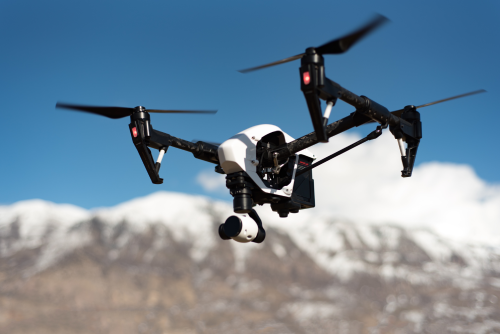
The Delair UX11 is a French fixed-wing drone aimed at professional mapping and survey work. It sits in the commercial data-collection class, where area coverage, mission efficiency, and workflow reliability matter more than consumer-style camera features. For readers comparing enterprise UAV platforms, the UX11 is relevant because it remains an active Delair model, even though many public-facing specs are not confirmed in the supplied data.
Quick Summary Box
- Drone Name: Delair UX11
- Brand: Delair
- Model: UX11
- Category: mapping/survey
- Best For: Professional mapping, surveying, and wide-area site documentation
- Price Range: Not publicly confirmed in supplied data
- Launch Year: Not publicly confirmed in supplied data
- Availability: Not publicly confirmed in supplied data
- Current Status: Active
- Overall Rating: Not rated due to limited confirmed data
- Our Verdict: A serious fixed-wing survey platform from an established French manufacturer, but buyers should verify payload, endurance, software, support, and pricing directly before committing.
Introduction
The Delair UX11 is a fixed-wing commercial survey drone from Delair, a France-based manufacturer focused on professional UAV applications. In the supplied record, it is positioned squarely in the mapping/survey segment and is listed as active. That makes it most interesting to survey firms, engineering teams, infrastructure operators, utilities, environmental programs, and organizations that need repeatable aerial data collection rather than casual flying or content creation.
That distinction matters. The market for enterprise mapping drones is very different from the market for consumer quadcopters. A consumer drone is often judged by portability, hover stability, obstacle sensing, ease of use, and video output. A survey drone is judged more by coverage efficiency, data repeatability, workflow integration, geospatial accuracy potential, support infrastructure, and the practical cost of running missions at scale. In other words, the aircraft itself is only part of the value. The rest comes from how well it fits into a real surveying operation.
The UX11 therefore belongs in a category where buyers tend to think in terms of deliverables rather than flying experience. They want orthomosaics, terrain models, stockpile measurements, progress maps, corridor datasets, or site records that can be used by engineers and planners. They also want predictable field performance, maintainable workflows, and a vendor that understands professional procurement, training, servicing, and compliance requirements.
Because the available data for this article is limited, the UX11 cannot be evaluated here with the same hard-spec confidence as a platform with fully published performance details. Still, it remains worth examining because the overall product type, manufacturer background, and active status all place it in an important part of the professional UAV market.
Overview
The UX11 belongs to a class of drones built for geospatial work, not general-purpose consumer use. In practical terms, that usually means mission efficiency, field deployment, and data-quality workflow matter more than hover precision, folding convenience, or creator-friendly video features.
What kind of drone is it?
The UX11 is a fixed-wing drone designed for commercial mapping and survey missions. Fixed-wing aircraft are commonly chosen when users want to cover larger areas efficiently, especially compared with multirotor drones that excel more in hovering and close-range inspection.
This airframe type immediately tells you a lot about the intended use. Fixed-wing platforms generally fly forward efficiently and can be better suited to broad-area capture than a traditional quadcopter. That makes them especially attractive for long linear sites, open land, mines, agricultural plots, road networks, rail corridors, utility routes, and large industrial zones. If your operating model involves mapping tens or hundreds of hectares in a disciplined, repeatable way, fixed-wing aircraft often enter the conversation quickly.
The tradeoff is equally important. Fixed-wing drones usually ask more from the operator in terms of launch planning, recovery planning, airspace awareness, and site suitability. They are less forgiving in confined areas and generally less versatile for stationary observation. That means the UX11 is likely best understood as a specialized tool rather than a do-everything UAV.
Who should buy it?
The most likely buyers are:
- Survey and geospatial teams
- Construction and civil engineering firms
- Mining, quarry, and land management operators
- Infrastructure planners and corridor-mapping teams
- Environmental and forestry programs
- Enterprise UAV programs that prefer established commercial vendors
It is much less likely to suit casual hobbyists or buyers looking for a small, easy retail camera drone.
A more practical way to think about the target buyer is this: the UX11 will appeal to organizations that already know what they need from aerial mapping. These are not usually impulse purchasers. They are teams with defined deliverables, internal stakeholders, workflow requirements, safety procedures, and often a budget process that includes training, software, maintenance, and field support. They care about whether the platform can reliably produce usable data in their environment and whether the manufacturer can support long-term operations.
It may also suit organizations moving beyond small multirotor mapping workflows. A team that started with quadcopters for topographic snapshots may eventually hit limits in area coverage and field efficiency. At that point, a fixed-wing platform like the UX11 can become attractive if mission scale, repeatability, and productivity matter more than hovering convenience.
What makes it different?
What stands out most is the platform type and market focus. The UX11 is not presented as a consumer quadcopter; it is an enterprise fixed-wing aircraft from Delair, a manufacturer known for professional drone systems. The fixed-wing format alone suggests a mission-first approach to coverage and efficiency, although the supplied data does not confirm detailed performance numbers such as flight time, range, or speed.
Just as important is the procurement context. A drone like this is not usually compared to a consumer model on entertainment value or simple out-of-box fun. It is compared on operational economics. How much ground can it document per mission? How easy is field setup? How smoothly does the mission planning software work? What level of training is required? How quickly can teams turn raw captures into deliverables? What happens when a battery, airframe part, or payload component needs service?
That professional context is where the UX11 appears to differentiate itself. Even with incomplete public specifications, it clearly sits in the category of aircraft designed to serve surveying and mapping workflows first. For the right customer, that matters far more than whether it can shoot cinematic footage or pack into a very small bag.
Key Features
- Fixed-wing airframe designed for mapping/survey use
- Commercial survey positioning rather than consumer or hobby focus
- Built by Delair, a French enterprise drone manufacturer
- Active model status in the supplied data
- Likely suited to larger outdoor coverage tasks where fixed-wing efficiency is valuable
- Better aligned with planned survey missions than manual creative flying
- Enterprise procurement profile rather than mass-retail consumer positioning
- Exact camera, endurance, range, payload, and autonomy details are not publicly confirmed in the supplied data
Those headline characteristics may sound simple, but they point to a very specific operating philosophy. The UX11 is best thought of as a workflow component, not just an aircraft. In real field use, that means the value proposition probably depends on how well it supports pre-planned mapping missions, how consistently it captures the imagery or survey data required, and how efficiently that information can be processed after flight.
It also means buyers should resist consumer-style assumptions. A drone in this segment is not necessarily trying to impress with flashy autonomous gimmicks or broad media features. Its real strengths, if it fits the mission, are more likely to show up in disciplined operations: repeat missions over the same site, predictable route execution, efficient large-area collection, and compatibility with geospatial outputs that matter to business and engineering teams.
Full Specifications Table
The table below reflects only details confirmed by the supplied source material. Where information is not verified, it is marked accordingly rather than guessed.
| Field | Specification |
|---|---|
| Brand | Delair |
| Model | UX11 |
| Drone Type | fixed-wing |
| Country of Origin | France |
| Manufacturer | Delair |
| Year Introduced | Not publicly confirmed in supplied data |
| Status | active |
| Use Case | mapping/survey |
| Weight | Not publicly confirmed in supplied data |
| Dimensions (folded/unfolded) | Not publicly confirmed in supplied data |
| Max Takeoff Weight | Not publicly confirmed in supplied data |
| Battery Type | Not publicly confirmed in supplied data |
| Battery Capacity | Not publicly confirmed in supplied data |
| Flight Time | Not publicly confirmed in supplied data |
| Charging Time | Not publicly confirmed in supplied data |
| Max Range | Not publicly confirmed in supplied data |
| Transmission System | Not publicly confirmed in supplied data |
| Top Speed | Not publicly confirmed in supplied data |
| Wind Resistance | Not publicly confirmed in supplied data |
| Navigation System | Not publicly confirmed in supplied data |
| Obstacle Avoidance | Not publicly confirmed in supplied data |
| Camera Resolution | Not publicly confirmed in supplied data |
| Video Resolution | Not publicly confirmed in supplied data |
| Frame Rates | Not publicly confirmed in supplied data |
| Sensor Size | Not publicly confirmed in supplied data |
| Gimbal | Not publicly confirmed in supplied data |
| Zoom | Not publicly confirmed in supplied data |
| Storage | Not publicly confirmed in supplied data |
| Controller Type | Not publicly confirmed in supplied data |
| App Support | Not publicly confirmed in supplied data |
| Autonomous Modes | Not publicly confirmed in supplied data |
| Payload Capacity | Not publicly confirmed in supplied data |
| Operating Temperature | Not publicly confirmed in supplied data |
| Water Resistance | Not publicly confirmed in supplied data |
| Noise Level | Not publicly confirmed in supplied data |
| Remote ID Support | Not publicly confirmed in supplied data |
| Geo-fencing | Not publicly confirmed in supplied data |
| Certifications | Not publicly confirmed in supplied data |
| MSRP / Launch Price | Not publicly confirmed in supplied data |
| Current Price | Not publicly confirmed in supplied data |
The large number of unconfirmed fields does not automatically make the UX11 weak; it simply means public-facing spec transparency is limited in the data used for this article. In enterprise drone buying, that is not unheard of. Some manufacturers sell mainly through direct channels, integrators, or configured quotes, so the public spec sheet may not tell the whole story. Even so, buyers should treat missing information as a due-diligence requirement, not as a minor detail.
Design and Build Quality
The confirmed design fact is that the UX11 is a fixed-wing aircraft. That matters because fixed-wing survey drones are typically optimized for aerodynamic efficiency and broader area coverage, not compact hover-anywhere convenience.
From a buyer perspective, that usually implies several things:
- The airframe is likely intended for outdoor mission deployment rather than casual transport-in-a-backpack use
- Field handling, launch/recovery planning, and transport case practicality are more important than foldability
- Build priorities are likely tied to repeatable survey operations instead of cinematic camera movements
That difference in priorities can be significant. In consumer drones, “design” often means how compact the body folds, how premium the finish looks, or how convenient the controller feels for quick flights. In a survey platform, design quality is more about field practicality. Operators want an aircraft that can be assembled or deployed without confusion, packed securely for site transport, checked quickly before launch, and maintained without excessive downtime. Robustness matters not because the drone is expected to crash, but because industrial work exposes equipment to dust, repeated travel, hard ground, changing weather, and long workdays.
For a fixed-wing mapping platform, launch and recovery design are especially important. Even if the supplied data does not confirm the exact method, buyers should understand that a fixed-wing aircraft may demand more site preparation than a multirotor. Launch technique, belly landing or other recovery behavior, required clear space, and tolerance for uneven terrain can all materially affect day-to-day usability. A drone that looks efficient on paper can become operationally awkward if local sites offer limited takeoff and landing options.
However, the supplied data does not confirm material construction, folding design, landing gear arrangement, service panels, repairability, or water/dust resistance. Buyers should therefore verify:
- Launch and recovery method
- Airframe durability in routine survey operations
- Spare part availability
- Ease of field repair
- Transport footprint and case size
- Component replacement procedure
- Weather tolerance for the regions where it will be used
Another practical issue is maintainability. Enterprise buyers should ask whether the UX11 is designed around replaceable field components, how quickly damaged parts can be sourced, and whether the system is straightforward enough for operators to manage routine upkeep internally. In a commercial setting, a drone that cannot be repaired or returned to service quickly can cost far more in downtime than in hardware replacement.
Flight Performance
Hard performance claims would be unreliable here because endurance, range, top speed, ceiling, and max takeoff weight are not publicly confirmed in the supplied data.
What can be said with reasonable confidence is analytical rather than factual: fixed-wing mapping drones are usually selected because they can cover ground more efficiently than multirotors on broad-area missions. That generally makes them attractive for corridor work, land survey, and large-site data collection.
Likely flight-character implications include:
- Better mission efficiency over larger outdoor areas than a typical quadcopter
- Less flexibility for stationary hovering or close-in repositioning
- Greater dependence on proper launch/recovery space and site planning
- Little to no relevance for indoor flying
For professional mapping, raw speed is rarely the most useful metric by itself. What matters more is productivity per sortie. How much area can be captured at the required overlap and altitude? How many battery changes are needed in a full field day? How much repositioning time is lost between launch and the start of useful data capture? How often do weather conditions ground the aircraft? A fixed-wing platform can offer major efficiency gains when the mission profile fits its strengths, but those gains only matter if the operating environment supports them.
Wind performance is another key issue for aircraft in this category. Large-area mapping often happens in exposed terrain: farmland, open industrial areas, road corridors, coastal zones, or upland sites. Fixed-wing aircraft can be very capable tools in the field, but their actual usefulness depends on how consistently they can execute routes in real-world wind, gust, and temperature conditions. Since the available record does not verify wind limits or handling characteristics, this is one of the most important points to confirm directly.
Mission profile also matters. If a team mainly maps open land, a fixed-wing aircraft can be a strong fit. If the same team frequently needs to stop, inspect vertical structures, maneuver under tight airspace constraints, or launch beside obstacles, a multirotor or VTOL design may prove more practical. The UX11 therefore makes the most sense when the flight environment rewards forward efficiency rather than hover agility.
Operational buyers should also verify how the aircraft behaves at the practical level:
- How automated is takeoff and recovery?
- What is the minimum safe launch area?
- What sort of recovery zone is required?
- How does the system handle mission interruption or loss of link?
- How much pilot workload is involved during nominal mapping operations?
- What telemetry is available during flight?
- How are battery health and mission margins communicated to the operator?
Without those answers, it is difficult to judge true field productivity. A fixed-wing drone may promise efficient coverage, but the broader mission cycle includes setup, checks, launch, route execution, recovery, data management, and readiness for the next flight.
Camera / Payload Performance
The UX11 is best understood as a mission payload platform for survey work, not as a general photography drone. In this category, payload value is usually judged by mapping output quality, data consistency, and workflow compatibility rather than by social-media-style video specs.
That said, the supplied data does not confirm:
- Built-in camera type
- Sensor resolution
- Sensor size
- Video capability
- Interchangeable payload support
- Payload capacity
- Stabilization method
- Multispectral or specialty sensor options
For real buying decisions, the key questions are likely to be:
- What sensor configuration is available for the exact UX11 package?
- Is it intended for RGB mapping only, or other survey payload types as well?
- How are images geotagged and processed?
- What level of survey-grade accuracy is supported in the broader workflow?
Those questions are central because mapping payload quality is about much more than megapixels. In aerial surveying, buyers care about shutter behavior, image overlap consistency, lens characteristics, radiometric stability where relevant, geotag precision, and how easily the output can be processed into usable deliverables. A platform with a technically decent camera can still disappoint if the workflow around it is weak, the geolocation process is cumbersome, or the capture quality is inconsistent under routine field conditions.
This is also where enterprise drone buying can become more nuanced than consumer buying. A creative user may ask whether a drone shoots sharp video. A survey team asks different questions:
- Can it deliver reliable orthomosaics?
- Can it support terrain or surface model generation?
- What ground sample distance is realistic at the intended altitude?
- How well does the camera configuration support repeat surveys over time?
- Are the images suitable for stockpile analysis, cut-and-fill measurement, or corridor reconstruction?
- Does the platform support workflows that reduce ground-control burden?
The supplied data does not confirm whether the UX11 supports RTK, PPK, direct georeferencing, or other accuracy-enhancing methods, so those should not be assumed. But for the kind of customer likely considering this aircraft, they are exactly the kind of questions that need direct answers. Accuracy claims in mapping are rarely meaningful without understanding the entire chain: aircraft navigation, payload timing, geotagging method, processing software, use of ground control points, operator discipline, and environmental conditions.
If specialty sensing matters to your operation, the due diligence becomes even more important. Environmental teams may want multispectral or vegetation analysis options. Mining or construction programs may care primarily about high-quality RGB mapping. Utilities may need corridor-friendly workflows. Infrastructure operators may want consistency more than modularity. The UX11 may or may not fit those needs depending on its actual configuration and software ecosystem, which should be checked through Delair or an authorized supplier.
Until those details are verified directly, it is safest to treat the UX11 as a commercial mapping aircraft with unconfirmed payload specifics. That is enough to justify interest, but not enough to justify a purchase decision on payload capability alone.
Smart Features and Software
Survey drones in this class often depend heavily on software, but the supplied record does not confirm the UX11’s exact software stack or autonomous feature set.
Features buyers should verify directly include:
- Mission planning software
- Waypoint or grid-flight automation
- Corridor mapping tools
- Return-to-home behavior
- Geotagging workflow
- Data export compatibility with photogrammetry software
- Cloud management or fleet tools
- SDK or API support
- User roles, logs, and enterprise fleet controls
Because this is a mapping/survey platform, software quality may matter just as much as hardware. Even if the airframe is capable, procurement teams should confirm the entire operating workflow, including planning, capture, processing, support, and updates.
In fact, for many commercial UAV deployments, software is what determines whether a platform feels mature. Operators do not just need a drone that can fly. They need a system that makes routine work efficient and repeatable. Can they build a survey grid quickly? Can they save templates for recurring sites? Can they manage different users and permissions? Can they export logs for compliance? Can they monitor mission progress in a way that supports safe field decisions? Can collected data move smoothly into the organization’s existing photogrammetry or GIS stack?
If those software questions are overlooked, a hardware purchase can become a workflow burden. Teams may end up manually converting files, rebuilding missions from scratch, or relying on fragile workarounds. Over time, that costs money and reduces trust in the UAV program. This is why experienced enterprise buyers often rank software maturity nearly as high as airframe capability.
For a mapping system like the UX11, there are a few especially important software areas to investigate:
Mission planning and automation
A professional platform should make it straightforward to define the area of interest, flight altitude, overlap requirements, corridor paths, and other mission parameters. Ease of planning matters because it affects field speed and error rates. If mission design is clumsy or overly manual, teams lose time before the aircraft even launches.
Geospatial workflow compatibility
Buyers should confirm how the UX11 fits into their preferred processing environment. Some organizations work primarily with photogrammetry software for orthomosaics and 3D models. Others use GIS-heavy workflows, engineering platforms, or project-specific systems. The more direct the export path, the easier it is to operationalize the drone.
Enterprise controls and auditability
Larger organizations may need flight logs, user management, mission history, maintenance tracking, and other administrative controls. A drone program used by one pilot in a small consultancy has different needs from a fleet operated across multiple sites. If the UX11 is being considered for structured enterprise use, those management features should be part of the evaluation.
Update policy and platform continuity
Software support is not just about what features exist today. It is also about how the vendor handles updates, compatibility, documentation, and long-term platform stability. Enterprise buyers should ask whether software changes are predictable, whether training materials are available, and whether existing missions or datasets remain compatible over time.
Because none of these points are fully confirmed by the provided record, they should be treated as purchase-stage questions rather than assumptions.
Use Cases
The Delair UX11 makes the most sense in professional geospatial and asset-documentation workflows.
- Land surveying: Useful where teams need broad-area aerial capture to support terrain models, planning documents, or site understanding.
- Topographic mapping: A natural fit for organizations generating elevation-related outputs over larger outdoor areas.
- Construction site progress mapping: Helpful for recurring site documentation where managers want updated visual and measurable records over time.
- Corridor mapping for roads, rail, utilities, or pipelines: Fixed-wing efficiency can be especially valuable when the site stretches over long distances.
- Mining and quarry documentation: Relevant for pit evolution tracking, stockpile visualization, and broader site monitoring.
- Environmental monitoring and land management: Suitable for repeat observations of land use, habitat conditions, or restoration areas.
- Forestry mapping: Potentially useful where coverage efficiency matters more than close-range hovering.
- Large-site aerial data capture for engineering and planning: Appropriate for industrial facilities, development zones, and major infrastructure footprints.
- Enterprise UAV programs needing fixed-wing coverage efficiency: Makes sense for organizations standardizing on a professional mapping workflow rather than ad hoc drone usage.
What ties these use cases together is scale. The UX11 appears most relevant when the task is too large, too repetitive, or too workflow-sensitive for a casual drone approach. A small site can often be documented with many different aircraft. A large site that must be mapped repeatedly, safely, and efficiently starts to favor more specialized tools.
It is also important to distinguish mapping from inspection. Many infrastructure owners use drones for both, but the aircraft requirements differ. Mapping platforms are built to collect consistent area coverage. Inspection platforms often need hover ability, precise positioning near structures, and flexible viewing angles. The UX11 seems aligned far more with the former than the latter.
Pros and Cons
Pros
- Fixed-wing configuration is well suited to large-area mapping and survey work
- Active status suggests it remains relevant within Delair’s lineup
- Made by an established French enterprise drone manufacturer
- Commercial positioning fits professional workflows better than consumer drone expectations
- Likely more efficient for wide-area coverage than many multirotor alternatives
- Relevant for organizations evaluating non-consumer UAV ecosystems
- May appeal to buyers who prioritize workflow discipline and vendor support over retail-style convenience
Cons
- Many key buying specs are not publicly confirmed in the supplied data
- Price information is not publicly confirmed in the supplied data
- Camera and payload details are not publicly confirmed in the supplied data
- Fixed-wing aircraft are generally less flexible than multirotors for hovering and tight-space work
- Launch and recovery method is not confirmed, which matters operationally
- Support, software specifics, and regional availability should be verified before purchase
- Public-spec comparison shoppers may find competing platforms easier to evaluate at a glance
The balance here is fairly clear. At a concept level, the UX11 looks credible and relevant. At a procurement level, it still demands direct verification. For some enterprise buyers, that is normal. For others, especially teams trying to shortlist products quickly from public information alone, it may be frustrating.
Comparison With Other Models
Because the supplied UX11 record is sparse on public specs, the comparison below is more useful for operating concept than for strict spec-sheet ranking.
| Model | Airframe | Price | Flight Time | Camera or Payload | Range | Weight | Best For | Winner |
|---|---|---|---|---|---|---|---|---|
| Delair UX11 | Fixed-wing | Not publicly confirmed in supplied data | Not publicly confirmed in supplied data | Not publicly confirmed in supplied data | Not publicly confirmed in supplied data | Not publicly confirmed in supplied data | Buyers evaluating Delair-led survey workflows | Best only after direct vendor confirmation |
| senseFly eBee X | Fixed-wing | Enterprise quote / configuration dependent | Publicly marketed in the long-endurance survey class | Modular mapping payload ecosystem | Depends on radio setup and local regulation | Lightweight survey fixed-wing class | Teams wanting a widely documented fixed-wing mapping option | Better for public-spec comparison shoppers |
| WingtraOne GEN II | VTOL fixed-wing | Enterprise quote / configuration dependent | Publicly marketed in the long-endurance VTOL mapping class | Interchangeable survey payload options | Depends on radio setup and local regulation | VTOL survey aircraft class | Teams needing vertical takeoff and landing | Better where launch and recovery space is limited |
UX11 vs a close competitor
A natural reference point is the senseFly eBee X, since both sit in the fixed-wing survey category. The main issue for the UX11 is not necessarily capability, but public transparency: with the supplied UX11 data, important details like flight time, payload options, and pricing still require direct confirmation.
That matters because fixed-wing survey buyers often compare platforms based on highly practical metrics. They want to know how much area each system can cover, how portable it is, what payloads are available, how mature the mission software is, and what the support network looks like. A platform with strong public documentation can be easier to shortlist even before the first vendor call. In that specific respect, the UX11 may be at a disadvantage for buyers doing initial research from public sources alone.
On the other hand, public visibility is not the same thing as field suitability. If an organization already has a relationship with Delair, operates in a region where Delair support is strong, or values its enterprise workflow approach, the UX11 could remain very competitive. In real procurement, vendor responsiveness, training, integration support, and post-sale service can outweigh a cleaner public spec sheet.
UX11 vs an alternative in the same segment
WingtraOne GEN II represents a different operational philosophy. It targets mapping too, but does so with a VTOL fixed-wing setup. If your sites are tight, uneven, or launch-space constrained, a VTOL alternative may be easier to operate. If your organization already prefers Delair workflows or support channels, the UX11 may still deserve a serious look.
This distinction is especially important for mixed-field environments. A conventional fixed-wing aircraft can be highly efficient once airborne, but it may require more thought around launch and recovery. A VTOL mapping platform can remove some of those site constraints, which may increase practical deployment speed even if pure cruise efficiency differs. So the right choice is not always the one with the best theoretical area coverage. It is the one that works most reliably across the sites you actually service.
That is why buyers should compare platforms at the workflow level, not just the flight level:
- How much operator training is needed?
- How easy is field deployment at constrained sites?
- How robust is the software?
- What is the expected maintenance burden?
- How quickly can data be processed into deliverables?
- Which vendor offers better local support?
For many organizations, those factors decide the winner more than raw aircraft architecture.
UX11 vs an older or previous-generation option
The supplied data does not clearly identify a directly preceding UX11 generation suitable for a reliable public comparison. If you are upgrading from an older Delair survey aircraft, verify software continuity, battery compatibility, payload reuse, and training implications before deciding.
That upgrade path question is important because the cost of changing drone platforms is often underestimated. Switching systems can require new pilot training, revised standard operating procedures, different spare part inventories, changed processing workflows, and updated regulatory documentation. If the UX11 offers continuity with an existing Delair environment, that could materially improve its value for current Delair customers even if a competing aircraft looks attractive in isolation.
How to compare the UX11 realistically
For buyers deciding between the UX11 and competing mapping aircraft, a realistic evaluation process should include more than a brochure comparison. Consider asking each vendor for:
- A live mission-planning demo
- A full workflow walkthrough from planning to processed output
- Clarification of launch and recovery requirements
- Example deliverables from missions similar to yours
- Training and support details
- Spare parts and repair process information
- Software licensing structure
- A detailed quote with ownership costs beyond the base aircraft
That kind of comparison will tell you far more than a simple table ever can.
Manufacturer Details
Delair is both the brand and the manufacturer here, so there is no separation between marketing label and production company in this case. Delair is a French drone company headquartered in France and is known in the market for professional UAV systems rather than consumer selfie drones or toy aircraft.
In market terms, Delair is associated with:
- Enterprise and industrial drone solutions
- Survey and mapping applications
- Professional data-collection workflows
- European commercial UAV positioning
That reputation matters because buyers in this segment often care as much about vendor continuity, support quality, and workflow maturity as they do about the aircraft itself.
A professional drone platform is rarely a one-time purchase. It is closer to a program decision. Buyers want confidence that the manufacturer understands commercial use cases, documentation requirements, software maintenance, and support expectations. Delair’s positioning as an enterprise-focused company is therefore meaningful even where individual UX11 specifications remain unconfirmed in the available data.
For some organizations, the manufacturer’s identity may also matter strategically. European sourcing, enterprise-facing support, and commercial-sector experience can influence procurement decisions, especially for public-sector bodies, regulated industries, or organizations that want to reduce reliance on purely consumer-oriented vendors.
Support and Service Providers
For a platform like the UX11, support quality is a major buying factor. Buyers should expect to evaluate more than just the airframe.
Important support areas to verify include:
- Official manufacturer technical support
- Regional authorized service providers
- Repair turnaround times
- Spare parts availability
- Battery and consumable support
- Training options for flight and workflow onboarding
- Software support and update policy
- Warranty terms for your region
Because the supplied data does not confirm the exact service network, readers should verify official support channels and regional service availability before purchase.
This is one area where enterprise buyers should be especially demanding. Survey programs often operate on project timelines, and downtime can be expensive. If an aircraft is grounded during a construction phase, a mine survey window, or a corridor project, the real cost is not just the repair invoice. It is the delay to deliverables, site remobilization, operator idle time, and potential knock-on impact to planning decisions.
Questions worth asking before purchase include:
- Is there regional repair capability or must units be shipped internationally?
- Are common wear items kept in stock?
- Can operators perform certain repairs themselves?
- What training is offered for new teams?
- Is software support included or billed separately?
- How are batteries handled under warranty?
- What are the expected response times for technical tickets?
Training deserves particular attention. A mapping drone is only as useful as the team operating it. Good vendor onboarding can shorten the time from purchase to productive use and reduce mistakes in the field. For organizations new to fixed-wing operations, training may be especially important because the operating logic can differ significantly from multirotor workflows.
Where to Buy
The UX11 appears to fit enterprise procurement better than standard consumer retail. That usually means buying through:
- The official Delair sales channel
- Authorized enterprise drone dealers
- Regional distributors
- Survey or geospatial solution integrators
If you are expecting a simple consumer checkout flow, this model may not be sold that way. Availability can be region-specific, quote-driven, and dependent on configuration, training, or support package requirements.
In practice, that can be a positive for serious buyers. Enterprise sales processes often allow more tailored discussions about payload options, software access, training, maintenance packages, and workflow compatibility. Rather than buying a generic box, the customer may be able to assemble a more suitable system package.
The tradeoff is a less transparent browsing experience. Buyers who prefer immediate public pricing and one-click ordering may find this style of procurement slower or less convenient. But for professional survey systems, direct engagement is often the best way to clarify what is actually included and what the ongoing operating costs will be.
Price and Cost Breakdown
Launch price and current price are not publicly confirmed in the supplied data. For that reason, buyers should assume the real cost depends on configuration and procurement channel.
Before budgeting, verify the total ownership package, including:
- Aircraft package price
- Payload or camera package price
- Extra batteries and chargers
- Cases, ground equipment, and field accessories
- Software licenses or annual subscriptions
- Training and onboarding costs
- Spare parts and routine repairs
- Insurance
- Data processing and storage costs
- Service or maintenance contracts
For enterprise survey drones, the cheapest airframe is not always the cheapest system to own. Workflow efficiency, support responsiveness, and software licensing can significantly affect long-term cost.
This is especially true in professional mapping because the hardware often represents only part of the budget. If a more expensive system reduces field hours, shortens processing time, lowers error rates, or minimizes remobilization, it can be cheaper in operational terms than a lower-cost alternative. Conversely, a seemingly attractive aircraft can become expensive if it requires specialized training, difficult logistics, frequent repair shipping, or costly software subscriptions.
A useful way to think about UX11 pricing is through total cost of ownership over a realistic period, such as two to four years. During that window, buyers should estimate:
- Number of missions per month
- Number of operators requiring training
- Expected battery replacement needs
- Software renewal frequency
- Service and spare part consumption
- Insurance and compliance costs
- Internal labor tied to processing and reporting
If the UX11 is being purchased for revenue-generating survey work, it is also worth calculating utilization. An aircraft that enables more billable area capture per day may justify a higher purchase cost. A system that reduces field friction can improve margins even if its upfront quote is higher.
Without published pricing in the source material, no value verdict can be made here. The right approach is to request a detailed quote, then compare it against at least one fixed-wing alternative and one VTOL mapping alternative on a full-system basis.
Regulations and Compliance
Commercial survey drones almost always involve more regulatory planning than recreational drones. The exact legal requirements for the UX11 depend on country, mission type, configured weight, and how the aircraft is flown.
Key points to verify:
- Drone registration requirements
- Operator licensing or certification for commercial use
- Airspace authorization rules
- Site permission and landowner consent
- Privacy and data-protection obligations
- Any local restrictions on fixed-wing UAV operations
- Remote ID rules in your jurisdiction
- Insurance requirements for professional operations
The supplied data does not confirm Remote ID support, certifications, or specific compliance frameworks. Do not assume universal legal compliance across all countries. Always verify local rules before operating.
Fixed-wing aircraft can raise some special operational considerations depending on the jurisdiction. Launch and recovery profile, operating area size, visual line of sight requirements, observer needs, and mission distance can all affect legal planning. A mapping mission that seems straightforward technically may still require careful airspace coordination if the site is near controlled airspace, infrastructure, public roads, or sensitive land.
Commercial operators should also think beyond flight legality. Data handling can matter just as much. Survey and mapping outputs may involve sensitive facilities, private property, or regulated infrastructure. That means privacy rules, contract obligations, and client-specific data security expectations can become part of compliance planning, especially for public works, utilities, and industrial programs.
Before adopting the UX11, buyers should ideally confirm:
- Whether its configuration fits the operational category they intend to use
- Whether any required identification or broadcast features are supported
- Whether mission logging and recordkeeping meet internal compliance needs
- Whether software or cloud workflows align with data governance requirements
- Whether insurance providers have any special conditions for fixed-wing UAV use
These are not minor details. In professional operations, a platform that is technically capable but awkward to certify, document, or insure can create friction that undermines its value.
Who Should Buy This Drone?
Best for
- Professional survey and mapping companies
- Engineering and construction teams documenting larger sites
- Organizations comparing enterprise fixed-wing UAV options
- Buyers who prefer established commercial vendors over consumer brands
- Operators willing to engage directly with the manufacturer or authorized dealers for configuration details
- Teams that prioritize coverage efficiency and workflow discipline over hover flexibility
Not ideal for
- Casual hobbyists
- First-time drone buyers wanting an easy consumer setup
- Creators focused on cinematic video rather than mapping output
- Operators who mainly need hovering, close inspection, or tight-space maneuvering
- Buyers who require fully published retail specs and transparent public pricing before shortlisting
- Teams operating primarily in confined launch environments unless site suitability is confirmed
The best UX11 buyer is not someone shopping casually. It is someone with defined surveying needs, a professional workflow, and enough technical discipline to evaluate configuration, software, and support before purchase. If that describes your team, the UX11 may be worth serious consideration.
By contrast, if you need a drone that can pivot between inspection, casual imaging, and easy everyday use, a fixed-wing mapping aircraft is probably the wrong tool. The UX11 appears specialized, and specialization only pays off when the mission matches it.
Final Verdict
The Delair UX11 looks like a purpose-built fixed-wing survey drone from a credible French enterprise manufacturer, and that alone makes it worth attention in the mapping/survey category. Its biggest strengths are clear at a high level: professional market focus, fixed-wing efficiency, enterprise positioning, and active status. Those factors make it relevant to organizations that care more about large-area data collection and workflow reliability than about consumer-style convenience.
Its biggest drawbacks are also clear: too many critical buying details remain unconfirmed in the supplied public data, including payload specifics, endurance, pricing, launch/recovery specifics, software details, and several operational features. That lack of readily available information does not mean the aircraft is weak. It does mean procurement teams should not rely on assumptions.
If you are a professional buyer building or expanding a geospatial workflow, the UX11 is worth shortlisting. If you need full public transparency, consumer-style simplicity, or a hover-capable platform, it is probably not the best fit. Buyers should evaluate it not just as an aircraft, but as a complete survey system: hardware, payload, mission planning, support, training, service network, compliance fit, and total cost of ownership.
In short, the UX11 appears promising as a serious commercial survey aircraft, but it should be purchased only after a direct, configuration-specific review with Delair or an authorized provider. For the right organization, that extra diligence may be entirely normal. For everyone else, the lack of public detail may be reason enough to compare more openly documented alternatives before moving forward.
