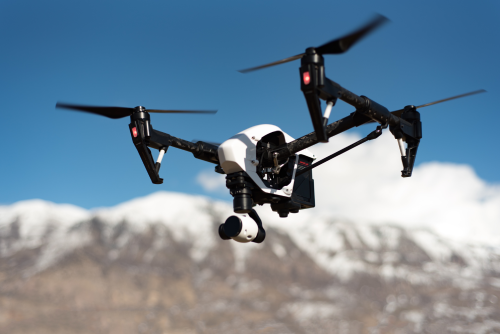
Parrot ANAFI Thermal is a thermal commercial drone from French manufacturer Parrot, aimed at users who need airborne heat detection in a portable multirotor platform. It sits in the consumer/professional crossover space, which makes it relevant to inspectors, facility teams, utility users, technical operators, and organizations that need more than a standard camera drone. Its importance comes from combining thermal mission utility with a more deployable format than many larger industrial systems.
In a market where many thermal solutions are either expensive, bulky, or tied to heavy enterprise workflows, that positioning matters. A compact thermal drone can change how quickly a team responds to a fault, how safely it inspects a roof or electrical asset, and how easily it documents conditions from the air without bringing in a larger aircraft system. That does not automatically make the ANAFI Thermal the best option for every professional buyer, but it does make it a meaningful model for anyone comparing portable thermal drones rather than full-size industrial rigs.
Quick Summary Box
- Drone Name: Parrot ANAFI Thermal
- Brand: Parrot
- Model: ANAFI Thermal
- Category: Consumer/professional thermal multirotor
- Best For: Portable thermal inspection, diagnostics, and commercial observation work
- Price Range: Not publicly confirmed in supplied data
- Launch Year: Not publicly confirmed in supplied data
- Availability: Not publicly confirmed in supplied data
- Current Status: Active
- Overall Rating: Not rated due to limited confirmed data
- Our Verdict: A niche but potentially very useful thermal drone for buyers who want Parrot’s ecosystem and a compact professional workflow, but key specs and current bundle details should be verified before purchase.
Introduction
The Parrot ANAFI Thermal is an active multirotor drone in Parrot’s consumer/professional lineup, positioned around thermal commercial use. For readers comparing thermal drones, that matters because this is not just a hobby aircraft with a standard camera bolted on; it is a mission-led platform intended for heat-based observation, inspection, and diagnostic tasks.
Thermal drones occupy a special place in the wider drone market. A normal camera drone helps users see what is physically there from above. A thermal drone helps users see what is happening. Heat signatures can reveal failing electrical components, insulation gaps, overheating machinery, solar panel irregularities, moisture patterns, and other hidden issues that are difficult to detect from the ground or with standard imaging alone. That makes thermal capability less of a visual upgrade and more of an operational tool.
Buyers should care about the ANAFI Thermal if they want a more portable alternative to larger enterprise rigs, especially for close-range site work where hovering, fast deployment, and thermal visibility are more important than heavy payload capacity. In many real-world jobs, the best drone is not the most powerful aircraft on paper. It is the one that can be carried in the vehicle every day, launched by a single operator, and used quickly enough to become part of normal maintenance or inspection practice.
That is the core appeal here. The ANAFI Thermal is relevant because it appears to target the practical middle ground: more mission-focused than a casual aerial camera drone, but potentially less burdensome than the larger and more expensive platforms used for high-end industrial programs. For small inspection firms, municipal teams, in-house facilities groups, and technical consultants, that balance can be very attractive.
Overview
What kind of drone is it?
ANAFI Thermal is a multirotor thermal commercial drone from Parrot, a French drone maker with experience in both consumer and professional markets. In practical terms, that places it in the crossover category between easy-to-carry camera drones and more specialized enterprise inspection aircraft.
That “crossover” positioning is important. It usually implies a design philosophy focused on portability, lower deployment friction, and simpler field use, while still offering a payload or workflow that goes beyond recreational flying. In other words, it is the kind of drone a professional might actually keep in a working kit bag instead of storing as a dedicated specialist asset that only comes out for major projects.
At the same time, crossover products often involve tradeoffs. Buyers should not automatically expect the same ruggedization, payload flexibility, weather tolerance, or fleet-management depth found in larger enterprise systems. The value proposition is usually mobility and accessibility rather than maximum industrial robustness.
Who should buy it?
This model makes the most sense for inspectors, maintenance teams, energy and utility users, building diagnostics specialists, technical consultants, and public-safety support users who need thermal awareness from the air. It may also interest researchers and institutions looking for a compact thermal platform from a well-known European manufacturer.
More specifically, the ANAFI Thermal is likely a good fit for users whose jobs involve short, targeted inspection missions rather than long-duration operations. Think of a roof surveyor checking for heat loss patterns, an electrical contractor scanning for hotspots on installed equipment, a solar maintenance team reviewing panel anomalies, or a facilities manager trying to quickly assess a large building envelope. These are often jobs where the aircraft needs to be transported easily, deployed fast, and operated by one person or a very small team.
It may also appeal to organizations that value vendor diversity. Not every buyer wants to be locked into the most dominant drone ecosystem, especially when procurement rules, data handling concerns, regional support preferences, or internal policy considerations matter.
What makes it different?
Its defining point is the thermal mission role. Many drones can capture standard video, but fewer are built around thermal utility for commercial work. The ANAFI Thermal stands out most when compared with visual-only drones, especially for jobs such as hotspot spotting, roof checks, solar diagnostics, and facility troubleshooting.
Another point of differentiation is the likely portability-first approach. Large enterprise thermal platforms can be excellent, but they often bring extra cost, extra setup, and a workflow that makes less sense for quick-response field teams. A portable thermal drone, by contrast, is valuable when a crew needs to move quickly between sites, keep equipment load light, and complete repeatable short inspections without a large operational footprint.
For some buyers, Parrot itself is also part of the difference. Brand origin, ecosystem preference, procurement comfort, and support relationships all influence purchasing decisions in the commercial drone market. The ANAFI Thermal therefore competes not only on hardware, but also on workflow style and vendor fit.
Key Features
- Thermal commercial drone positioning: Designed around heat-based observation rather than general-purpose visual capture alone.
- Multirotor airframe suited to hovering and close-range inspection: Particularly useful for jobs that require careful positioning around structures, rooftops, equipment yards, or utility assets.
- Consumer/professional crossover appeal: Likely easier to transport and deploy than larger industrial drones, while still offering mission-specific value.
- Active model status in the supplied record: Relevant for buyers who want a current platform rather than an obviously retired one.
- Parrot-branded platform from France: A potentially important factor for buyers comparing manufacturers by region, procurement policy, or ecosystem preference.
- Likely optimized for field deployment and observation rather than heavy-lift payload work: Best viewed as an inspection tool, not a modular industrial carrier.
- Best matched to inspection and diagnostic tasks where thermal data matters more than cinematic output: Ideal use depends on finding hidden heat-related issues, not producing premium visual media.
- Potentially strong fit for short, targeted sorties: Especially where quick setup and rapid problem identification matter.
- Exact camera, endurance, range, speed, and autonomy details should be verified before procurement: The purchase decision should be based on current official technical documentation, not assumptions.
Full Specifications Table
| Specification | Details |
|---|---|
| Brand | Parrot |
| Model | ANAFI Thermal |
| Drone Type | Multirotor |
| Country of Origin | France |
| Manufacturer | Parrot |
| Year Introduced | Not publicly confirmed in supplied data |
| Status | Active |
| Use Case | Thermal inspection, diagnostics, and commercial observation |
| Weight | Not publicly confirmed in supplied data |
| Dimensions (folded/unfolded) | Not publicly confirmed in supplied data |
| Max Takeoff Weight | Not publicly confirmed in supplied data |
| Battery Type | Not publicly confirmed in supplied data |
| Battery Capacity | Not publicly confirmed in supplied data |
| Flight Time | Not publicly confirmed in supplied data |
| Charging Time | Not publicly confirmed in supplied data |
| Max Range | Not publicly confirmed in supplied data |
| Transmission System | Not publicly confirmed in supplied data |
| Top Speed | Not publicly confirmed in supplied data |
| Wind Resistance | Not publicly confirmed in supplied data |
| Navigation System | Not publicly confirmed in supplied data |
| Obstacle Avoidance | Not publicly confirmed in supplied data |
| Camera Resolution | Thermal imaging payload is implied by model identity; exact resolution not publicly confirmed in supplied data |
| Video Resolution | Not publicly confirmed in supplied data |
| Frame Rates | Not publicly confirmed in supplied data |
| Sensor Size | Not publicly confirmed in supplied data |
| Gimbal | Not publicly confirmed in supplied data |
| Zoom | Not publicly confirmed in supplied data |
| Storage | Not publicly confirmed in supplied data |
| Controller Type | Not publicly confirmed in supplied data |
| App Support | Not publicly confirmed in supplied data |
| Autonomous Modes | Not publicly confirmed in supplied data |
| Payload Capacity | Not publicly confirmed in supplied data |
| Operating Temperature | Not publicly confirmed in supplied data |
| Water Resistance | Not publicly confirmed in supplied data |
| Noise Level | Not publicly confirmed in supplied data |
| Remote ID Support | Not publicly confirmed in supplied data |
| Geo-fencing | Not publicly confirmed in supplied data |
| Certifications | Not publicly confirmed in supplied data |
| MSRP / Launch Price | Not publicly confirmed in supplied data |
| Current Price | Not publicly confirmed in supplied data |
The table above makes one thing very clear: this is a model whose role is easier to confirm than many of its fine technical details in the current source record. That does not mean the aircraft lacks those specifications; it means serious buyers should use official documentation, an authorized dealer, or a current product sheet to validate the exact package they are considering.
The most important missing details to verify are usually these:
- Thermal sensor resolution and whether the thermal output is radiometric
- Flight time with the standard mission payload
- Wind resistance for rooftop and exposed-site use
- Controller and app compatibility
- Obstacle sensing and return-to-home behavior
- Export formats for thermal imagery and reporting
- Current region-specific availability and support
For professional procurement, those questions matter more than many headline marketing claims.
Design and Build Quality
The supplied data confirms that the ANAFI Thermal is a multirotor in the consumer/professional segment, which already tells buyers quite a bit about the design philosophy. Multirotors are favored for hover precision, low-speed control, and close visual inspection work. That is exactly the kind of flying profile that suits thermal diagnostics.
The likely design priority here is field mobility. A compact thermal drone makes the most sense when it can be transported easily, set up quickly, and launched without a long operational checklist. For many buyers, that is not a small convenience. It is the reason the aircraft gets used regularly rather than occasionally. A larger industrial platform may offer more capability on paper, but a more portable system can win in practice if teams can deploy it at short notice across multiple locations in a day.
Parrot’s ANAFI family has historically been associated with portable field use, so it is reasonable to view the ANAFI Thermal as a mobility-focused platform rather than a bulky industrial aircraft. That said, the supplied data does not confirm folded dimensions, exact weight, or ruggedization details, so buyers should not assume true all-weather durability or heavy-site toughness without checking official documentation.
Build quality for a thermal drone should be judged a little differently than for a leisure camera drone. Durability still matters, but so do practical workflow details:
- How quickly can it be unfolded and made ready for flight?
- How protected is the camera assembly during transport?
- How easily can batteries be swapped in the field?
- Does the controller feel suitable for repeated professional use?
- Can the aircraft be launched in confined but safe areas common to inspection jobs?
- How manageable is the whole kit for one operator wearing site PPE?
These questions directly affect ownership experience.
For real-world ownership, the most important build questions are likely to be transport convenience, propeller robustness, battery swap speed, controller ergonomics, and how easily the platform fits into an inspection workflow. If your team works around rooftops, substations, solar sites, or facility assets, field readiness matters as much as raw sensor capability.
It is also worth considering the less glamorous side of build quality: serviceability. A thermal drone used commercially may see frequent transport, frequent battery cycling, and repeated launch/land cycles on imperfect ground conditions. Buyers should ask whether spare props, batteries, chargers, cases, and repair parts are easy to source. An aircraft can be excellent in the air and still be frustrating to own if routine parts support is slow or inconsistent.
Flight Performance
A full numeric flight performance review is not possible from the supplied record because endurance, range, top speed, ceiling, and wind resistance are not publicly confirmed there. Still, the intended mission profile gives a useful clue: this is best understood as a stable observation and inspection drone, not a racing machine or heavy-lift utility aircraft.
In analysis terms, a thermal multirotor like this should be judged on hover confidence, predictable control, framing stability, and how quickly it can be launched for short diagnostic sorties. Those traits matter more than headline speed for most thermal jobs.
A useful way to think about flight performance is to match it to likely missions. Most thermal inspections are not long cinematic flights. They are often short, purposeful sorties that involve:
- Takeoff near a target area
- Climb to a safe inspection height
- Hold position while scanning surfaces or assets
- Reposition slowly for alternate viewing angles
- Capture images or video of anomalies
- Return and land with enough reserve for safety
That workflow places a premium on stability, control smoothness, and confidence in the aircraft’s position-holding behavior.
Wind handling is especially important for thermal work because unstable positioning can reduce image usefulness and slow down inspections. Since no wind specification is confirmed in the supplied data, buyers should assume that actual site conditions need careful verification before adopting it for exposed rooftops, industrial yards, or coastal environments. Even if a drone can technically remain airborne in stronger wind, it may not produce thermal imagery that is steady enough for efficient review.
Battery endurance also matters in a different way for inspection platforms than for leisure drones. A thermal operator may not need one long scenic flight; they may need several short, focused flights with quick turnaround. That means buyers should care not only about nominal endurance, but also about battery charging logistics, swap speed, and how many flight cycles a standard field kit can support before the crew must stop.
Range is often overemphasized in consumer marketing. For most legitimate thermal inspection work, long-distance operations are less important than reliable link quality at moderate range, especially around structures, interference sources, or complex sites. A shorter but stable and professional-feeling connection can be more valuable than a huge advertised maximum range that has little relevance to compliant line-of-sight operation.
Indoor use may be possible in some professional scenarios, but that depends heavily on navigation aids, GPS behavior, obstacle sensing, and control precision, none of which are confirmed in the supplied data. Outdoor close-range work remains the safest assumption until the full official feature set is verified.
One more operational point: thermal inspections can sometimes involve flying near surfaces that influence airflow or temperature behavior. Roof edges, warm exhaust outlets, metal façades, and electrical infrastructure can create challenging micro-conditions for both control and interpretation. A drone used for this work does not need extreme speed, but it does need to feel trustworthy in slow, deliberate movement.
Camera / Payload Performance
The key reason to look at the ANAFI Thermal is the thermal payload role. A thermal drone can help identify heat leaks, overheated equipment, solar irregularities, roof moisture patterns, and other temperature-based anomalies that are difficult or slow to detect from the ground.
This is where buyer expectations need to be especially clear. Thermal capability can mean different things depending on the sensor and software stack. For some users, “thermal” simply means seeing warmer and cooler zones clearly enough to locate a problem area. For others, it means collecting reliable temperature-linked data that supports a formal inspection report, maintenance decision, or engineering diagnosis. Those are not the same level of requirement.
The supplied data does not confirm the exact thermal sensor specification, visible-light camera specification, temperature measurement capability, zoom behavior, stabilization details, or export formats. Those omissions matter. A buyer doing general hotspot awareness has different needs from a buyer doing formal thermography, insurance documentation, or engineering-grade reporting.
In practical terms, the payload value here is workflow efficiency. A portable thermal drone can reduce the need for ladders, minimize manual spot-check time, and help teams prioritize where an in-person inspection is actually needed. That can be a strong return on investment even if the airframe itself is smaller than a traditional enterprise platform.
Thermal imaging also has limits, and professional buyers should understand them before investing. Heat signatures can be influenced by:
- Time of day
- Sun exposure
- Wind and ambient temperature
- Surface material and emissivity
- Reflections from nearby objects
- Moisture and recent weather conditions
- Distance to target and viewing angle
That means a drone with a thermal camera is not a magic truth machine. It is a diagnostic aid whose usefulness depends on sensor quality, environmental conditions, operator skill, and the ability to interpret what the image is showing.
For example, a roof that appears to show temperature variation might indicate trapped moisture, insulation issues, or simply uneven solar loading. A warm-looking electrical component might indicate actual overheating, but it could also be affected by material reflectivity or angle of observation. This is why trained interpretation matters, especially in professional reporting.
If your workflow depends on calibrated thermal readings, report-ready outputs, or detailed thermal mapping, verify the exact thermal sensor class, radiometric support, image processing tools, and post-flight reporting options before purchase.
Before buying, ask very specific payload questions such as:
- Is the thermal output radiometric or primarily visual?
- What is the thermal sensor resolution?
- What temperature range and accuracy are supported?
- Is there a visible-light camera alongside the thermal feed?
- Can images be fused, overlaid, or compared side by side?
- Are geotagged thermal stills supported?
- What export formats are available for reports and archives?
- Is there support for spot measurements, palettes, isotherms, or temperature alarms?
- How well does the payload perform in low-light or dawn/dusk inspection conditions?
Those answers determine whether the ANAFI Thermal is merely useful or truly suitable for your intended workflow.
Smart Features and Software
The supplied record does not publicly confirm the current software stack, autonomy features, app support, or controller ecosystem for ANAFI Thermal. That means buyers should treat software verification as a core part of the buying process, not an afterthought.
For a thermal commercial drone, software matters almost as much as hardware. The biggest questions are usually not just how the drone flies, but how the data is captured, reviewed, exported, and turned into a usable inspection outcome.
This is where many purchase decisions are won or lost. A good drone with weak software can become a frustrating tool because teams spend too much time transferring files, organizing images, explaining outputs, or manually recreating findings in other systems. By contrast, a slightly less impressive aircraft with a smooth software workflow may deliver better real-world value because it fits how technicians actually work.
For thermal operations, software depth can influence:
- Mission repeatability for periodic inspections
- Thermal and visual image comparison
- Annotation and issue marking
- Report generation
- Team sharing and data storage
- Asset management integration
- Compliance and audit documentation
- Firmware maintenance across a fleet
Repeatable route support is especially valuable for commercial inspection. If a facility wants to compare the same rooftop, panel row, or equipment bank over time, the ability to capture similar angles and similar flight patterns can improve consistency. That kind of repeatability can turn a drone from a one-off scouting tool into a real maintenance asset.
Before buying, verify the following:
- Return-to-home behavior and failsafe settings
- Mission planning or repeatable route support
- Thermal overlay and image review tools
- Mobile app and controller compatibility
- Firmware support horizon
- SDK or API access if fleet integration matters
- Inspection reporting, export, or mapping workflows
- Any account, cloud, or subscription requirements tied to professional use
You should also ask how usable the software is in the field. Can the operator quickly identify an issue on-site? Can they tag and export the relevant image without a complex desktop process? Can supervisors review findings the same day? For professional users, those details matter more than flashy app design.
In short, software often determines whether a thermal drone feels like a serious inspection tool or a specialized gadget.
Use Cases
The most realistic use cases for the Parrot ANAFI Thermal are jobs where portable thermal visibility creates a clear efficiency or safety advantage.
- Building and roof inspections: Helpful for detecting heat loss patterns, moisture-related anomalies, and problem areas that may justify closer manual inspection.
- HVAC and facility diagnostics: Useful for reviewing rooftop units, ventilation zones, and thermal irregularities across large buildings without repeated ladder access.
- Solar panel and energy system checks: Can help identify abnormal heating patterns that may indicate underperforming or damaged components.
- Electrical hotspot spotting: Valuable for identifying suspect areas in electrical infrastructure, switchgear surroundings, or external equipment where overheating may signal a maintenance issue.
- Utility and infrastructure inspection support: Suitable for targeted observation tasks where teams need a rapid thermal overview rather than a heavy enterprise aircraft deployment.
- Maintenance triage for industrial sites: Useful for prioritizing which assets need immediate attention and which can wait for planned service.
- Public-safety support observation in non-tactical contexts: May assist in certain assessment and situational-awareness tasks where thermal visibility improves understanding, subject to local rules and agency policy.
- Research, teaching, and technical field documentation: A practical platform for institutions exploring thermal imaging workflows, field diagnostics, or applied engineering studies.
The common theme is that the ANAFI Thermal seems best suited to inspection and assessment rather than broad cinematic use or heavy payload missions.
Pros and Cons
Pros
- Clear thermal commercial mission focus
- Multirotor layout is well suited to hovering and close inspection work
- Parrot is an established drone manufacturer with recognizable market credibility
- French origin may appeal to buyers comparing global vendor options
- Consumer/professional positioning suggests lower deployment friction than larger enterprise rigs
- Active status in the supplied data supports current relevance
- Likely attractive for single-operator or small-team field use
- Potentially useful for organizations that want thermal capability without moving to a large industrial platform
Cons
- Many core specifications are not publicly confirmed in the supplied data
- Exact thermal sensor capability needs verification before serious procurement
- Current pricing, bundles, and availability are not publicly confirmed here
- Ruggedness, weather resistance, and industrial durability are not confirmed
- Software workflow depth must be checked directly with official sources or dealers
- May not suit operators who need heavy payloads or fully rugged enterprise airframes
- Could be a less obvious choice for buyers who prioritize the largest enterprise ecosystem over portability or brand preference
Comparison With Other Models
| Model | Price | Flight Time | Camera or Payload | Range | Weight | Best For | Winner |
|---|---|---|---|---|---|---|---|
| Parrot ANAFI Thermal | Not publicly confirmed in supplied data | Not publicly confirmed in supplied data | Thermal commercial imaging payload | Not publicly confirmed in supplied data | Not publicly confirmed in supplied data | Portable thermal inspection and crossover professional use | Best if you want a compact Parrot thermal platform |
| DJI Mavic 2 Enterprise Advanced | Verify current dealer pricing | Verify official current spec | Dual visible/thermal enterprise payload | Verify official current spec | Compact enterprise class | Buyers prioritizing a widely known enterprise ecosystem | Best for ecosystem depth if locally supported |
| Autel EVO II Dual 640T | Verify current dealer pricing | Verify official current spec | Dual visible/thermal payload in a more enterprise-heavy class | Verify official current spec | Enterprise-portable class | Users seeking a higher-end thermal alternative | Best if sensor class matters more than compactness |
| Parrot ANAFI (standard) | Typically lower than thermal-class drones, but verify current market pricing | Verify official current spec | Visual camera only | Verify official current spec | Lightweight portable class | Users who do not need thermal | Best only if thermal imaging is unnecessary |
Reliable apples-to-apples comparison is limited because current bundles, regional dealer support, and firmware ecosystems can differ significantly.
When comparing thermal drones, buyers should avoid focusing on a single number. The better framework is to compare across five categories:
- Thermal usefulness: Is the payload suitable for detection, measurement, or formal reporting?
- Portability: Will the drone actually get used regularly in the field?
- Software: Can it turn captured data into a practical maintenance or inspection output?
- Support: Are service, batteries, and accessories available in your region?
- Organizational fit: Does the brand align with your procurement, compliance, and policy requirements?
ANAFI Thermal vs a close competitor
The DJI Mavic 2 Enterprise Advanced is the most obvious close-category comparison. Both target portable thermal work rather than heavy industrial lifting. The DJI option may appeal to buyers who want a very familiar enterprise ecosystem, while the ANAFI Thermal is more interesting for buyers who want Parrot’s platform or prefer a French manufacturer.
In practical buying terms, the DJI route may feel safer to organizations that value broad dealer familiarity, widespread training resources, and a very recognizable enterprise environment. The ANAFI Thermal may be more compelling for buyers who want a compact thermal solution but prefer a different vendor relationship, a different software philosophy, or a non-default procurement path.
ANAFI Thermal vs an alternative in the same segment
The Autel EVO II Dual 640T is a stronger alternative when the buyer is prioritizing thermal platform class and enterprise hardware options over compact simplicity. If your priority is a light, deployable thermal drone, ANAFI Thermal stays relevant. If your priority is stepping up toward a more feature-heavy enterprise package, Autel may be the more natural shortlist item.
This is a classic portability-versus-depth decision. Some teams genuinely need the highest-end thermal package they can justify. Others mostly need fast airborne heat detection in a system that does not create operational overhead. The right answer depends on how formal your workflow is and how often the drone will be used.
ANAFI Thermal vs an older or previous-generation option
Compared with the standard Parrot ANAFI, the ANAFI Thermal makes sense only when thermal imaging is truly required. If you only need visual footage or general aerial documentation, a visual-only platform can be cheaper and simpler. But for heat-based diagnostics, the standard ANAFI is not a substitute.
That distinction matters because some buyers overestimate how much they need thermal, while others underestimate it. If thermal detection will change decisions, save climbing time, improve safety, or shorten fault isolation, then a thermal model can justify itself quickly. If it is only a “nice to have,” the cost and complexity may not pay off.
Manufacturer Details
Parrot is both the brand and the manufacturer in this case. The company is based in France and is one of the better-known European names in the drone market. Parrot has historically been recognized for compact drones, connected hardware, and professional drone solutions that bridge consumer accessibility and commercial workflows.
That brand-manufacturer alignment is useful for buyers because there is no separate private-label relationship to untangle here. When you buy a Parrot drone, the branding and the actual manufacturing identity are the same. In market terms, Parrot’s reputation is strongest among buyers looking for alternatives to the biggest mass-market drone ecosystems while still wanting an established name.
For some organizations, manufacturer identity matters beyond brand familiarity. It can influence procurement approvals, data handling comfort, service expectations, and long-term vendor strategy. European origin may be especially relevant to public-sector buyers, infrastructure operators, educational institutions, or businesses that prefer sourcing diversification.
Parrot’s broader significance in the drone market is that it has long occupied a middle space between casual consumer products and more formal professional systems. That heritage makes the ANAFI Thermal easier to understand: it is not trying to be everything for everyone. It is part of a product philosophy that emphasizes portability, connected workflows, and practical use in the field.
Support and Service Providers
Support quality matters more with thermal drones than with casual camera drones because buyers often need help with workflow setup, firmware, accessories, reporting, and interpretation of image output. Start with Parrot’s official support channels for manuals, firmware, parts information, and repair guidance.
You should also verify:
- Regional repair availability
- Spare battery availability
- Propeller and controller replacement access
- Warranty terms for your country or dealer
- Thermal workflow training, if offered
- Dealer onboarding for professional users
- Expected repair turnaround times
If local support coverage is unclear, confirm official support channels and authorized regional service options before purchasing.
Commercial buyers should go one step further and ask service-related questions that hobby users often ignore:
- Are loan units or rapid replacement options available?
- Is battery stock held locally?
- Can the dealer advise on thermal best practices, not just hardware sales?
- Are there service-level expectations for enterprise customers?
- Is training available for both pilots and inspection staff?
- Will the seller help with initial setup, firmware updates, and app configuration?
Thermal drones are often bought to save time and reduce field risk. Those benefits can disappear quickly if a failed battery, damaged propeller, or software problem leaves the aircraft grounded for weeks. Good support is not just a convenience; it is part of the real total value of ownership.
Where to Buy
The most reliable buying paths are the official brand store when listed, authorized dealers, and professional drone resellers that handle commercial imaging products. Depending on region, thermal drones may be sold more through enterprise channels than casual retail shelves.
Before buying from any seller, confirm:
- That the unit is intended for your region
- Current stock status
- Battery and spare parts availability
- Firmware and app support status
- Return policy for enterprise equipment
- Whether the package includes controller, charger, and thermal software components
If your use case is institutional or professional, an authorized dealer is often a better route than a generic marketplace listing.
That is particularly true for thermal models because bundle contents can matter a lot. A listing might show the aircraft but not clearly explain whether a controller, extra batteries, protective case, or certain software capabilities are included. Professional resellers are also more likely to help you understand compatibility, region-specific rules, and after-sales support.
Used-market purchases deserve extra caution. With a thermal drone, the risk is not only cosmetic wear. You also need to think about battery age, accessory completeness, firmware support, prior handling, and whether the thermal workflow is still fully functional. Unless the cost difference is compelling and the seller is trustworthy, many commercial buyers are better served by buying through an authorized channel.
Price and Cost Breakdown
Price is not publicly confirmed in the supplied data, so this article should not be used as a budgeting source for the exact purchase amount. Buyers should request a current quote or verify official current pricing directly.
What you should budget for goes beyond the aircraft itself:
- Base drone package
- Controller and display device, if not included
- Spare batteries
- Charging accessories
- Propellers and protective case
- Thermal analysis or reporting software, if required
- Insurance or commercial liability cover
- Repair and downtime contingency
- Staff training and operational setup
As a general rule, thermal drones cost meaningfully more than visually similar non-thermal drones because the payload drives much of the value. That makes total ownership cost an important part of the decision, not just headline purchase price.
A sensible commercial budget should also account for soft costs that buyers sometimes overlook:
- Pilot training time
- Internal procedures and risk assessments
- Data storage and backup
- Site access planning
- Ongoing firmware management
- Replacement batteries over the platform’s service life
- Time spent interpreting and reporting findings
The good news is that thermal drones can deliver value in ways that do not always show up on the invoice. If the aircraft helps reduce manual climbing, speeds up fault isolation, prevents a larger failure, or lets a team prioritize maintenance efficiently, it may justify itself quite quickly. For some operations, the return is less about revenue and more about safety, downtime reduction, and faster decision-making.
In other words, the real financial question is not “How much does it cost?” but “What expensive or risky work does it help us avoid?”
Regulations and Compliance
Drone rules vary by country, region, and mission type, so buyers must verify local law before flying. Since the supplied data does not confirm the aircraft’s weight, do not assume a specific registration class or exemption.
Key compliance points to check:
- Aircraft registration requirements
- Commercial licensing or operator certification
- Remote ID rules in your jurisdiction
- Airspace permissions near cities, infrastructure, or controlled zones
- Privacy law related to thermal and visual imaging
- Restrictions on flying over people, roads, or private property
- Any site-specific rules for utilities, industrial facilities, or public assets
Remote ID support is not publicly confirmed in the supplied data here, so that should be verified directly before use in markets where it is mandatory. Thermal imaging also does not remove privacy obligations; in some places it may increase scrutiny depending on what is being observed.
For commercial users, compliance goes beyond aviation rules. Industrial sites, government facilities, utilities, and campuses may have their own policies covering:
- Vendor approval
- Pilot authorization
- Data retention
- Security review
- Insurance minimums
- Incident reporting procedures
Thermal inspections can also create interpretation and privacy questions. Even if the drone is being flown lawfully, teams should have a clear policy on what is being recorded, why it is being recorded, who can access the data, and how long the material is retained. This is especially important in residential, public-sector, or mixed-use environments.
Buyers should also remember that thermal capability does not bypass good inspection practice. If a finding could drive a safety, maintenance, or insurance decision, you may need documented procedures, trained operators, and a review workflow that stands up to scrutiny.
Who Should Buy This Drone?
Best for
- Inspectors who need thermal visibility in a portable drone
- Building, roof, HVAC, and facility diagnostics teams
- Solar and electrical maintenance users
- Professional operators who want a compact Parrot-based workflow
- Organizations comparing non-mainstream thermal drone vendors
- Small teams that value fast deployment over industrial bulk
- Institutions that want a recognizable European drone option
This drone is most appealing when portability, thermal utility, and operational simplicity matter more than enterprise-scale expansion. If your team wants a field-ready heat-detection tool rather than a large platform to build a full aerial program around, the ANAFI Thermal becomes more attractive.
Not ideal for
- Pure hobby buyers who do not need thermal capability
- Cinematic creators focused mainly on visual image quality
- Heavy industrial operators needing larger payload capacity
- Teams requiring confirmed rugged all-weather performance
- Buyers who need fully published specs before entering procurement
- Organizations that depend on the deepest possible enterprise software ecosystem without compromise
In short, this is not the right choice for every professional operator. It appears to fit best as a compact thermal workhorse, not as a do-everything industrial flagship.
Final Verdict
The Parrot ANAFI Thermal is most compelling as a portable thermal observation and inspection drone for professional users who want a lighter-deployment alternative to larger enterprise systems. Its biggest strengths are its thermal mission focus, multirotor inspection suitability, Parrot brand backing, and appeal as a French-made option in a market where vendor choice matters.
Its likely real-world value comes from speed and practicality. A drone that can be transported easily, launched quickly, and used for short thermal assessment missions can solve genuine field problems even if it does not match the scale or published feature depth of a heavier enterprise platform. That is why the ANAFI Thermal remains relevant: thermal utility in a compact form is still a meaningful proposition.
Its biggest drawback is uncertainty: too many key buyer questions in the supplied data remain unconfirmed, including exact flight performance, payload detail, software scope, and price. That does not make it a weak product, but it does mean serious buyers should treat direct specification verification as mandatory.
The smartest way to evaluate the ANAFI Thermal is not to ask whether it is the most advanced thermal drone available. Instead, ask whether it fits your actual workflow better than a larger, more expensive, or more complex alternative. If your work centers on portable inspections, fast triage, and practical thermal awareness, the answer may well be yes. If your operation demands published ruggedization, advanced enterprise automation, or highly documented thermography capability, then you should proceed only after a careful technical review.
If you need a compact thermal drone for inspection, diagnostics, or technical fieldwork and you are comfortable confirming the exact current package with Parrot or an authorized dealer, the ANAFI Thermal deserves a spot on your shortlist. If you need fully published ruggedized enterprise specs, buy only after a careful dealer-level technical review.
