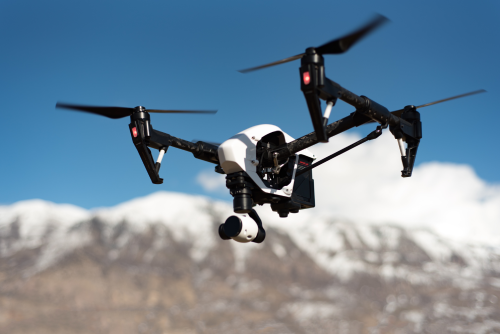
Parrot AR.Drone 2.0 is a legacy consumer quadcopter that helped make app-controlled flying popular outside the traditional RC hobby. It was built for casual users, hobbyists, and early FPV-curious pilots who wanted a camera-equipped multirotor controlled from a phone or tablet. In 2026, it matters less as a mainstream buy and more as a historical, collectible, or educational reference point in the evolution of consumer drones.
Quick Summary Box
- Drone Name: Parrot AR.Drone 2.0
- Brand: Parrot
- Model: AR.Drone 2.0
- Category: Consumer multirotor quadcopter
- Best For: Collectors, hobbyists interested in early app-controlled drones, light recreational flying
- Price Range: Used market only; exact range varies widely by condition and included accessories
- Launch Year: 2012
- Availability: Discontinued; typically found only on the secondary market
- Current Status: legacy/discontinued
- Overall Rating: Not rated due to limited confirmed data and large condition differences between used units
- Our Verdict: A historically important consumer drone with real nostalgia value, but a niche purchase today due to age, limited support, and dated flight and camera performance
Introduction
The Parrot AR.Drone 2.0 is a French-made consumer multirotor from Parrot, a brand that played a major role in early smartphone-based drone flying. Unlike many modern camera drones, this model belongs to an earlier phase of the market, when Wi-Fi control, onboard video, and app-based piloting were themselves headline features. Because it is now a legacy and discontinued platform, most readers will care about it for comparison, collecting, education, or low-cost experimentation rather than as a primary modern drone purchase.
That distinction matters. In 2026, most people shopping for a drone are comparing stabilized 4K camera platforms, long-range digital links, GPS-heavy flight stacks, obstacle sensing, automated return-to-home behavior, and modern compliance features. The AR.Drone 2.0 comes from a time before those expectations became standard in the consumer space. Its appeal is not that it can outperform current entry-level drones. It cannot. Its appeal is that it represents one of the most visible moments when drones shifted from specialist RC equipment toward mainstream consumer electronics.
For many buyers, the AR.Drone 2.0 is best understood as a milestone product. It helped introduce a broader audience to the idea that a drone could be easy, visual, app-driven, and fun. It lowered the intimidation factor. You did not need to be deeply invested in radio transmitters, soldering, or traditional hobby culture to understand what it was trying to do. That broad accessibility was part of its significance.
At the same time, historical significance does not equal practical value today. A buyer in 2026 needs to think about battery age, app compatibility, parts availability, safety, regulatory fit, and whether a used unit still functions predictably. This review approaches the AR.Drone 2.0 from that reality-first perspective: not as a competitive modern recommendation, but as a legacy platform worth understanding.
Overview
What kind of drone is it?
The AR.Drone 2.0 is a consumer quadcopter designed for recreational use. It is best known as an early app-controlled flying camera platform, combining a lightweight multirotor airframe with live video and smartphone or tablet control over Wi-Fi.
In practical terms, that puts it in a very different category from both classic RC helicopters and today’s travel-friendly camera drones. It was intended to feel approachable, gadget-like, and immediately understandable to people who already lived on smartphones and tablets. That made it a crossover product: part toy, part tech demo, part early consumer UAV.
It is also important to understand what it is not. It is not a modern foldable camera drone, not a professional survey tool, not a reliable commercial workhorse, and not an ideal training platform for regulated operations. Its strengths are historical relevance, experimentation, and simple recreational flying within its limitations.
Who should buy it?
Today, this drone mainly makes sense for:
- Collectors of landmark consumer drones
- Hobbyists curious about the history of FPV-style consumer flying
- Tinkerers comfortable buying discontinued hardware
- Educators discussing how consumer UAVs evolved
- Enthusiasts who specifically want to revisit early smartphone-controlled flight
That last point is more important than it may seem. Many legacy products are remembered fondly, but only a few capture a specific technological turning point. The AR.Drone 2.0 did. If someone wants to experience a pre-modern, app-first flying platform in a way that still feels representative of a major market shift, this model remains interesting.
It is much less attractive for buyers who want a dependable everyday drone for photography, travel, training, or regulated commercial work. It also makes little sense for anyone who values current manufacturer support, seamless app updates, contemporary safety systems, or plug-and-play compatibility with new phones.
What makes it different?
What made the AR.Drone 2.0 stand out was its mainstream, app-first approach. It lowered the barrier to entry for people who did not want a traditional RC setup, and it helped normalize the idea that a phone could act as a drone controller. That was a big deal in its era, even if those same features now look basic by modern standards.
It also stood out by framing drone use as visual and interactive rather than purely piloting-oriented. The live-view concept helped shift expectations. Flying was no longer just about maneuvering a remote aircraft; it was also about seeing through it, recording from it, and controlling it through software. In that sense, the AR.Drone 2.0 belongs to the early lineage of products that made FPV-style consumer experiences feel mainstream.
In 2026, those differences no longer make it technologically advanced, but they do make it historically distinctive.
Key Features
- Legacy consumer quadcopter from Parrot
- Smartphone and tablet control over Wi-Fi
- Integrated front HD video camera
- Live-view, FPV-style flying concept aimed at casual users
- Sensor-assisted stabilization typical of early consumer drones
- App-based takeoff and landing workflow
- Lightweight airframe intended for recreational use
- Design language associated with beginner-friendly and indoor-capable flying concepts
- Historically significant in the shift toward app-controlled drones
- No modern obstacle avoidance publicly confirmed
- No modern built-in Remote ID support publicly confirmed
- No indication of current-generation imaging tools such as advanced stabilization or cinematic automation
- Discontinued platform with secondary-market buying risk
- Better suited to nostalgia, collecting, education, and light hobby use than serious modern imaging
- Ownership experience now depends heavily on used-unit condition, battery health, and software compatibility
Full Specifications Table
Because this is a legacy product, some specifications vary across old listings, accessory bundles, and surviving documentation. Where modern, easily verified official data is not available in the supplied source material, that is noted below.
| Specification | Details |
|---|---|
| Brand | Parrot |
| Model | AR.Drone 2.0 |
| Drone Type | Consumer multirotor quadcopter |
| Country of Origin | France |
| Manufacturer | Parrot |
| Year Introduced | 2012 |
| Status | Legacy / discontinued |
| Use Case | Recreational flying, casual video, early app-based FPV-style use |
| Weight | Not publicly confirmed in supplied data |
| Dimensions (folded/unfolded) | Not publicly confirmed in supplied data |
| Max Takeoff Weight | Not publicly confirmed in supplied data |
| Airframe Style | Lightweight non-folding quadcopter |
| Battery Type | Rechargeable LiPo battery |
| Battery Capacity | Not publicly confirmed in supplied data |
| Flight Time | Widely reported around 12 minutes, but battery condition now matters heavily |
| Charging Time | Not publicly confirmed in supplied data |
| Max Range | Wi-Fi controlled; exact range not publicly confirmed in supplied data |
| Transmission System | Wi-Fi |
| Top Speed | Not publicly confirmed in supplied data |
| Wind Resistance | Not publicly confirmed in supplied data |
| Navigation System | Sensor-assisted stabilization; full navigation stack not publicly confirmed in supplied data |
| Position Hold | Not publicly confirmed in supplied data as comparable to modern GPS hold |
| Obstacle Avoidance | None publicly confirmed |
| Camera Resolution | HD-class front camera |
| Video Resolution | 1280 × 720 |
| Frame Rates | 30 fps widely associated with the model |
| Sensor Size | Not publicly confirmed in supplied data |
| Gimbal | No mechanical gimbal publicly confirmed |
| Zoom | Not publicly confirmed in supplied data |
| Storage | Not publicly confirmed in supplied data |
| Controller Type | Smartphone/tablet app control over Wi-Fi |
| App Support | Parrot mobile app support was associated with the platform; current device compatibility should be verified |
| Live View | Yes, via app-based Wi-Fi concept |
| Autonomous Modes | Assisted takeoff and landing; advanced autonomy not publicly confirmed |
| Payload Capacity | Not publicly confirmed in supplied data |
| Operating Temperature | Not publicly confirmed in supplied data |
| Water Resistance | None publicly confirmed |
| Noise Level | Not publicly confirmed in supplied data |
| Remote ID Support | No public indication of built-in modern Remote ID support |
| Geo-fencing | Not publicly confirmed in supplied data |
| Certifications | Not publicly confirmed in supplied data |
| MSRP / Launch Price | Not publicly confirmed in supplied data |
| Current Price | Secondary market only; varies widely by condition, battery health, and completeness |
Design and Build Quality
The AR.Drone 2.0 comes from an earlier consumer-drone era, and its design reflects that. Instead of a compact folding travel form, it uses a lightweight quadcopter layout built around visibility, low weight, and easy recreational use.
A few practical design points stand out:
- It is not a modern foldable drone, so portability is more awkward than current travel-oriented models.
- The AR.Drone family is widely associated with protective hull and guard-style elements that made indoor or beginner-friendly flying more approachable.
- The airframe concept is light and playful rather than rugged, weather-hardened, or professional.
- As a discontinued platform, build quality in 2026 depends as much on the condition of the specific used unit as on the original factory design.
From a design-history standpoint, the drone looks like a product from a period when companies were still figuring out how consumer multirotors should present themselves. Modern drones often aim for sleek compactness, premium materials, and folded convenience. The AR.Drone 2.0 instead feels more experimental and visibly “flying gadget” in character. That is part of its charm. It wears its purpose openly rather than trying to disappear into a refined travel form factor.
That said, historical charm does not erase practical concerns. A used AR.Drone 2.0 may show age in several areas:
- plastics or structural elements that have become brittle
- foam protective parts that are worn, cracked, or missing
- motors that have many unknown hours
- props that are chipped, mismatched, or poorly balanced
- battery compartments and connectors with wear
- cosmetic damage from repeated beginner crashes
For collectors, cosmetic completeness may matter almost as much as flight condition. A fully intact unit with original guards, charger, packaging, and a visibly clean shell may command a premium because many examples have been used hard. For hobbyists who plan to fly it, mechanical honesty matters more: straight motor outputs, clean board condition, secure battery fitment, and a stable connection to a supported mobile device.
One advantage of older drones like this is that they can sometimes be conceptually simpler than current compact camera drones. There is less mystery around foldable gimbal assemblies, precision hinge systems, and miniaturized integrated architecture. That can make them psychologically less intimidating to inspect or lightly repair. But simplicity should not be confused with guaranteed maintainability. Once a platform is discontinued, even basic repairs become harder if the exact spare part is uncommon or if replacement batteries are unreliable.
Overall, the AR.Drone 2.0 feels more like an early-access consumer flying machine than a mature modern travel drone. Its design remains memorable, but its age is impossible to ignore.
Flight Performance
The AR.Drone 2.0 was designed to make quadcopter flying feel approachable, especially for users coming from phones and tablets rather than RC transmitters. That alone made it important in the consumer market.
In practical terms, the likely flight character is:
- Stable enough for casual hovering and basic maneuvering in suitable conditions
- More limited in range confidence than modern drones because Wi-Fi control is inherently older and less robust than current dedicated control and video systems
- Better suited to short-range recreational flying than long-distance exploration
- Best treated as a calm-weather aircraft by modern expectations
The core experience was about lowering friction. A traditional RC pilot might have accepted more setup complexity in exchange for better control feel or more range. The AR.Drone 2.0 aimed in the opposite direction: easier access, simpler control, less specialized equipment. That tradeoff was a major reason for its popularity, and also a major reason it feels dated now.
Indoor versus outdoor use is an important part of how this model should be understood. Based on the product family and its protective design language, indoor use was part of the appeal, especially for beginner experimentation. In a large, safe indoor space, that makes sense as a historical use case because environmental variables are lower and crashes are less punishing than with heavier aircraft. Outdoors, performance is likely much more sensitive to wind than current GPS-stabilized camera drones. That is analysis rather than a newly claimed factory spec, but it is a reasonable expectation for a lightweight legacy Wi-Fi quadcopter.
Modern buyers should set expectations carefully:
- Do not expect current-level link stability.
- Do not expect modern long-range confidence.
- Do not expect aggressive wind authority.
- Do not expect autonomous recoveries comparable to today’s consumer drones.
A lot also depends on battery condition. A “12-minute class” legacy drone in 2026 may not deliver anything close to original endurance if the included battery has aged poorly or the replacement pack is low quality. Voltage sag, inconsistent power delivery, or brief hover times can make flight feel worse than the model’s original reputation would suggest.
Motor health matters too. Many used drones appear fine on a listing photo but reveal problems under load: drifting, uneven lift, vibration, or unstable response. That is why any buyer who intends to fly rather than display should value a tested hover video more than a clean cosmetic description.
Takeoff and landing were part of the app-driven ease-of-use concept, which helped make the drone accessible. Still, any used unit in 2026 should be judged on motor condition, battery age, propeller wear, firmware state, and mobile-device compatibility before trusting its flight behavior.
A sensible modern approach is to treat the AR.Drone 2.0 as a short-session flyer. Think cautious, line-of-sight, low-altitude, low-wind, open-area use with conservative expectations. Under those conditions, it can still be enjoyable. Outside them, its age becomes obvious quickly.
Camera / Payload Performance
The AR.Drone 2.0 is primarily a camera-equipped recreational drone, not a payload carrier. Its value lies in early integrated video flying rather than in professional imaging or modular mission equipment.
What to expect from the camera side:
- A front HD camera was a major consumer feature for its time
- The platform is suitable for basic legacy video capture and FPV-style viewing
- There is no public indication of a modern mechanical gimbal
- Footage quality will be far behind current beginner camera drones, especially in stabilization, dynamic range, and low-light handling
To appreciate the AR.Drone 2.0 properly, it helps to judge the camera in historical context. In 2012, an integrated 720p-class camera with a live-view flying concept helped move drones toward a more self-contained consumer experience. You did not have to build your own FPV setup or mount a separate action camera just to experiment with aerial video. That convenience was part of the product’s identity.
In 2026, however, “HD camera” means something very different from what buyers now expect. Today, even affordable drones are judged on stabilized 4K or higher video, image profiles, stronger exposure control, better low-light behavior, and smoother motion. The AR.Drone 2.0 belongs to a much earlier stage. Its camera is good enough to demonstrate the concept, revisit the era, or enjoy as a novelty. It is not a serious imaging tool by current standards.
Because no mechanical gimbal is publicly confirmed here, stabilization expectations should remain modest. Aircraft movement, vibration, and wind effects are more likely to show in the footage than on a modern camera drone designed around stabilized content creation. As a result, the AR.Drone 2.0 is not a good fit for users who want cinematic material, social-media-ready travel video, or dependable property and landscape shots.
For modern buyers, that means the camera is best viewed as historically interesting rather than creatively competitive. If your goal is polished aerial footage, smooth cinematic motion, or dependable creator workflows, the AR.Drone 2.0 is outdated. If your goal is to understand how early integrated consumer drone video worked, it remains relevant.
No serious payload capability is publicly confirmed, so this is not a practical inspection, mapping, delivery, or sensor-carrying platform. Even if a hobbyist could physically improvise something lightweight, the aircraft should not be treated as a modern modular test bed for meaningful payload work. Weight margins, stability, and legacy electronics all make that a poor default use case.
Where the camera still has value is educational. It helps demonstrate how quickly the consumer drone industry evolved. A viewer who flies the AR.Drone 2.0 and then flies a current entry-level camera drone immediately understands what changed: stabilization, image quality, control confidence, software polish, and all-around integration.
Smart Features and Software
The software story is one of the AR.Drone 2.0’s most important traits. Parrot helped popularize the idea that a drone could be piloted through a mobile app rather than a conventional RC controller.
Known or strongly associated software traits include:
- Mobile app control
- Live-view style flying experience
- Assisted takeoff and landing
- Consumer-friendly interface aimed at accessibility
What is not safely established from the supplied data:
- Modern AI subject tracking
- Mature waypoint mission planning
- Obstacle avoidance automation
- Current cloud fleet tools
- Present-day SDK relevance for active developers
This section is where the AR.Drone 2.0 shifts from interesting to potentially frustrating for modern buyers. Historically, app-based control was one of its biggest selling points. In 2026, that same strength can become a weakness if the original apps are difficult to install, no longer updated, or inconsistent on current operating systems.
Compatibility is the central issue. A drone may be electrically functional and still be impractical to use if:
- the original app is no longer supported on your phone or tablet
- device permissions or Wi-Fi behavior conflict with legacy software expectations
- firmware updating is difficult or risky
- account systems, downloads, or archival support materials are harder to access than they once were
For that reason, the software condition of an AR.Drone 2.0 is almost as important as its physical condition. Buyers should verify not just that it powers on, but that it pairs, streams, and responds correctly with a device they can realistically keep using.
There is also a broader historical significance here. The AR.Drone line helped change how users thought about UAV interfaces. It made software the front door. Today that seems obvious, but at the time it was part of a larger shift from “remote-controlled model aircraft” toward “smart connected flying device.” That matters because it influenced the expectations that later drones had to meet.
The model also had appeal beyond casual flyers. Early app-centric drones often attracted researchers, students, and tinkerers because they sat at the intersection of robotics, networking, and consumer electronics. Anyone pursuing that angle in 2026 should still verify documentation, community support, and tooling availability first. A platform can be historically hackable without being practically convenient today.
The biggest software caution in 2026 is compatibility. Even if the original app ecosystem was a major strength, buyers must verify whether current phones, tablets, and operating systems still support the drone reliably. For a discontinued product, software can become a bigger obstacle than hardware.
Use Cases
For a legacy consumer drone, the most realistic use cases are narrow but still valid.
- Collecting a historically important consumer quadcopter
- Learning about early smartphone-controlled drone design
- Casual backyard or indoor recreational flying, where legal and safe
- Introductory experimentation with basic FPV-style live view
- Educational demonstrations about how consumer drones evolved
- Light tinkering and hobby restoration projects
- Nostalgia flying for longtime Parrot or drone enthusiasts
Those use cases are strongest when the buyer understands what the drone is for. This is not a platform to maximize footage quality, flight time, or reliability. It is a platform to revisit a moment in drone history.
A few realistic examples:
- Collector display piece: A clean, complete AR.Drone 2.0 with original accessories works well as part of a tech or drone history collection.
- STEM or classroom demonstration: It can help students see how early consumer robotics interfaces worked, especially compared with current systems.
- Legacy flight experience: Hobbyists may enjoy flying it simply to understand what early app-controlled drones felt like.
- Restoration project: A used but incomplete unit may appeal to someone who enjoys bringing old consumer electronics back to life.
- Benchmark for industry evolution: Reviewers, educators, or enthusiasts can use it as a comparison point when discussing how far consumer drones have progressed.
Less realistic use cases include professional photography, mapping, inspections, public safety, surveying, or any work that depends on modern compliance and support. It is also a poor fit for travel users who need compact storage, fast deployment, and reliable operation in varied conditions.
Another use-case question worth asking is whether the experience itself is the goal. For many owners, the value of the AR.Drone 2.0 is not the result of the flight but the act of flying something historically important. That is a valid reason to own legacy tech, but it should be intentional.
Pros and Cons
Pros
- Historically significant model in the consumer drone market
- Helped popularize app-based flying and live video for mainstream users
- Lightweight recreational design is approachable for hobbyists
- Integrated HD video was notable for its era
- Strong nostalgia and collector appeal
- Simpler concept than many modern drones, which can appeal to tinkerers
- Useful as an educational reference point for the evolution of consumer UAVs
- Distinctive enough to stand out in a collection of older drones and smart devices
Cons
- Discontinued platform with aging hardware and uncertain parts supply
- App and mobile OS compatibility may be a major problem in 2026
- Camera quality is outdated for modern photo or video expectations
- Wi-Fi control is dated compared with modern radio and video links
- No modern obstacle avoidance publicly confirmed
- No built-in modern Remote ID support publicly confirmed
- Battery health and replacement quality can strongly affect real-world performance
- Poor fit for commercial, regulated, or mission-critical use
- Non-folding design is less convenient to store and transport than current compact drones
- Practical value is often lower than nostalgia value
Comparison With Other Models
| Model | Price | Flight Time | Camera or Payload | Range | Weight | Best For | Winner |
|---|---|---|---|---|---|---|---|
| Parrot AR.Drone 2.0 | Used market only | Around 12-minute class, battery dependent | Integrated 720p-class front camera | Short Wi-Fi-class consumer range | Light consumer class | Collectors, nostalgia buyers, casual app-based flying | Best only for historical appeal |
| DJI Phantom 1 | Used market only | Roughly similar early-consumer endurance class | Typically more action-camera-oriented than integrated-camera-first | More traditional RC-style control approach | Heavier hobby class | Classic hobby flying and mod-friendly setups | Phantom 1 for expandable hobby use |
| Parrot Bebop | Used market only | Similar light-consumer endurance class | More mature later-generation integrated camera concept | More modern-feeling Parrot consumer workflow | Light consumer class | Casual aerial video on a newer Parrot platform | Bebop for most practical buyers |
| Parrot AR.Drone 1.0 | Used market only | Earlier-generation performance | Earlier, lower-spec camera concept | Early Wi-Fi-class link | Light consumer class | Collectors of first-generation consumer drones | AR.Drone 2.0 |
AR.Drone 2.0 vs a close competitor
Against the DJI Phantom 1, the AR.Drone 2.0 looks more casual and app-driven, while the Phantom 1 looks more like a traditional RC hobby aircraft. Buyers who want the historical smartphone-flying experience will find the Parrot more distinctive. Buyers who want a more classic hobby platform would usually lean Phantom.
That difference is deeper than surface design. The Phantom lineage helped normalize a more familiar controller-based camera-drone pathway, while the AR.Drone represented a software-led, phone-native interpretation of personal flight. If your interest is in how drones became mainstream gadgets, the Parrot tells a different story than the Phantom.
AR.Drone 2.0 vs an alternative in the same segment
Against the Parrot Bebop, the AR.Drone 2.0 mostly loses on practical modern value. The Bebop is a better fit for buyers who want a later-generation Parrot camera drone rather than a museum-piece-era reference platform. The AR.Drone 2.0 only really wins on early-consumer-drone nostalgia.
In other words, if you actually want to fly a used Parrot for fun in 2026, the Bebop is generally the more sensible place to start. If you want to own a milestone product from the beginning of app-led consumer drone culture, the AR.Drone 2.0 is the more iconic choice.
AR.Drone 2.0 vs an older or previous-generation option
Compared with the original AR.Drone, the AR.Drone 2.0 is generally the more sensible collector pick. It is the more mature version of the idea and the one most people remember when discussing Parrot’s early mainstream breakthrough in consumer drones.
For collectors, the original model may still have “first-generation” prestige. But for anyone who wants the clearer expression of the concept, the 2.0 version usually makes more sense. It better represents the stage at which Parrot’s approach became a recognizable consumer product rather than an early experiment.
Compared with modern entry-level drones
This is the least flattering comparison for the AR.Drone 2.0, but it is the most important for buyers tempted by a cheap used listing. Against even modest current drones, it is usually outclassed in image quality, stability, range confidence, flight automation, portability, and software support. If practical use is your priority, modern hardware wins easily.
That is why the AR.Drone 2.0 should be purchased for what it is, not for what a low price might make it seem to be.
Manufacturer Details
Parrot is a French technology company and the manufacturer behind the AR.Drone 2.0. The brand and the manufacturer are the same in this case: Parrot marketed the drone under its own name rather than through a separate sub-brand.
Parrot became widely known for helping push drones into the mainstream consumer conversation. Over time, the company’s drone reputation expanded beyond early recreational products into more advanced consumer and professional systems. In the market, Parrot is generally remembered as one of the brands that helped bridge the gap between gadget buyers and serious drone users.
That legacy matters when evaluating the AR.Drone 2.0. This was not an obscure one-off novelty from a company with no impact. It came from a manufacturer that genuinely helped shape how people thought about personal drones. In the early consumer era, Parrot’s name carried a different kind of recognition than brands rooted purely in traditional RC. It represented accessibility and connected-device thinking.
The company’s broader significance also helps explain why the AR.Drone 2.0 still appears in discussions of drone history. It was part of a period when Parrot helped define the mainstream imagination of what a drone could be: a camera, a flying gadget, a software-controlled experience, and a personal piece of tech rather than a niche hobby machine.
Support and Service Providers
Support is one of the biggest caution points for the AR.Drone 2.0.
For this model, buyers should assume:
- Official support may be limited, archival, or no longer active in the way it once was
- Warranty coverage is unlikely to be meaningful for most used units
- Spare parts availability may depend on third-party sellers, hobby stock, or donor units
- Battery replacements need extra scrutiny because age, storage conditions, and cell quality matter a lot
Community support may still exist through hobby forums, collector groups, and second-hand parts sellers, but that is not the same as an active factory-backed support network. If you are considering a purchase, verify current app access, charger compatibility, firmware behavior, and repair-part availability before spending money.
A few service realities are worth emphasizing:
- Battery quality is now a major risk. Old LiPo packs may be weak, swollen, unsafe, or far below original performance.
- “Powers on” is not enough. A seller can honestly say the drone powers on even if the motors are inconsistent or the Wi-Fi link is unreliable.
- Parts may be improvised rather than ideal. Props, guards, chargers, or shells may come from mixed sources, and quality can vary.
- Documentation can be fragmented. Some setup instructions may survive only in archived manuals, old videos, or community posts.
If you are not comfortable troubleshooting discontinued electronics, the ownership experience can quickly become frustrating. If you are comfortable with legacy devices, on the other hand, that challenge may be part of the attraction.
Where to Buy
Because the AR.Drone 2.0 is discontinued, most buyers will not find it as a normal current model in an official brand store. In practice, it is usually a secondary-market product.
Common buying channels may include:
- Used electronics marketplaces
- Collector listings
- Hobby forums and enthusiast communities
- General resale platforms
- Local second-hand sellers
Before buying, check:
- Battery condition and charge behavior
- Whether the charger is included
- Propeller and motor condition
- Hull, guard, and airframe completeness
- Whether the drone still connects to a supported mobile device
- Return policy or as-is sale terms
If possible, ask the seller for proof beyond still photos. Useful evidence includes:
- a short video showing the drone powering on
- app connection or live-view confirmation
- a hover test in a controlled environment
- photos of the battery label and physical condition
- close-ups of props, motor mounts, and connectors
- confirmation of included accessories and spare parts
For collectors, originality can affect desirability. A complete package with original accessories, clean cosmetic condition, and documented functionality is more attractive than a bare airframe with unknown history. For flyers, tested function matters more than packaging.
One practical tip: a slightly more expensive complete bundle can be a better value than a cheap incomplete one. Legacy drones often become expensive through missing basics like chargers, batteries, protective parts, or the need to buy an older compatible device.
Price and Cost Breakdown
The AR.Drone 2.0 does not have a stable modern retail price because it is no longer an active current-generation consumer product. The supplied data does not confirm launch MSRP, and current pricing varies heavily on the used market.
What affects ownership cost most in 2026:
- Battery replacement or battery failure risk
- Missing charger or accessories
- Replacement props, guards, or cosmetic parts
- Possible motor or board repair on an aging airframe
- The need for an older compatible phone or tablet if current devices do not work well
- The risk of buying a unit that powers on but does not fly reliably
For budgeting purposes, buyers should not only ask what the drone costs, but what it will cost to make it usable. On a legacy platform, a cheap listing can become expensive if batteries, connectivity, and parts all need work.
The most common cost scenarios look something like this:
- Collector buy: You pay extra for completeness and appearance, but may not need to spend much beyond the initial purchase.
- Usable flyer buy: You find a working unit, then spend more on batteries, props, or compatibility solutions.
- Restoration buy: You buy cheap, then discover the real cost lies in parts, time, and troubleshooting.
- False bargain: You buy a low-priced listing and realize the drone cannot be used easily with your available devices.
In many cases, the smart question is not “How cheap can I get one?” but “What is the cheapest fully functional example I can get?” Those are different things. A tested, complete, slightly higher-priced example may be far less frustrating than a bargain unit missing essentials.
Also consider opportunity cost. If your real goal is simply to fly a low-cost drone for fun, a current basic model may provide a dramatically better experience for not much more money. The AR.Drone 2.0 only makes financial sense when its historical or hobby value is part of the purchase decision.
Regulations and Compliance
Even though the AR.Drone 2.0 is an older recreational platform, modern drone laws still apply.
Key points to verify locally:
- Whether the drone must be registered based on its actual flying weight
- Whether Remote ID rules apply in your country or flight area
- Whether recreational or commercial pilot requirements differ
- Whether flying in parks, neighborhoods, or near people is allowed
- Whether onboard video raises privacy obligations in your area
Because this is a legacy model, do not assume it meets current compliance expectations by default. There is no public indication of built-in modern Remote ID support, so that may be a major limitation in some regions. Also, since published weight can vary by configuration, owners should confirm the real takeoff setup rather than assuming it falls below any registration threshold.
A few practical regulatory points matter especially for older drones:
- Remote ID: In some jurisdictions, a legacy drone without built-in Remote ID may require an external compliance path or may only be practical in limited circumstances.
- Registration thresholds: Do not guess. Weigh the actual aircraft with the battery and configuration you intend to fly.
- Airspace rules: Even a small recreational quadcopter can be restricted near airports, heliports, or controlled airspace.
- Privacy expectations: Flying an onboard camera over homes, yards, or public gathering areas may create legal or social issues even if the drone itself is old.
- Line-of-sight rules: A live-view feed does not replace local legal obligations to maintain visual awareness where required.
Always verify current local aviation, privacy, and land-use rules before flight. Legacy status does not grant regulatory exemption.
Who Should Buy This Drone?
Best for
- Collectors of historically important consumer drones
- Parrot fans who want a landmark model from the brand’s early era
- Hobbyists interested in restoring or experimenting with discontinued drones
- Educators discussing the evolution of consumer UAVs
- Buyers who specifically want the early smartphone-controlled drone experience
These buyers are most likely to appreciate the AR.Drone 2.0 for what it really offers: context, nostalgia, and hands-on insight into a formative moment in consumer drone history. If the experience of owning and understanding the platform matters as much as raw performance, it can still be rewarding.
Not ideal for
- Beginners who want dependable support and easy current-device compatibility
- Content creators seeking stabilized modern aerial footage
- Commercial operators
- Buyers who need strong range, wind handling, or modern safety systems
- Anyone who wants a practical everyday drone rather than a legacy novelty
This is especially important for first-time buyers. A discontinued drone can look appealing because the used price seems low, but low acquisition cost is not the same as good value. Beginners are usually better served by a current supported model with easier setup, modern safety features, and active software support.
Final Verdict
The Parrot AR.Drone 2.0 is an important drone historically, but a highly selective purchase practically. Its biggest strengths are its place in consumer drone history, its accessible app-first concept, and its enduring appeal to collectors and hobbyists who want to revisit an early milestone in FPV-style recreational flying. Its biggest drawbacks are equally clear: it is discontinued, its support situation is uncertain, its camera and control system are outdated, and it lacks the modern features buyers now expect.
If you want a usable modern drone, this is not the smart default choice in 2026. If you want a piece of consumer drone history, a restoration project, or a nostalgic Parrot quadcopter that helped define an era, the AR.Drone 2.0 is still worth serious consideration.
The best way to think about it is this: the AR.Drone 2.0 is no longer a value pick in the normal consumer sense. It is a context pick. You buy it because it represents a turning point, because you enjoy legacy technology, or because you want to experience the moment when phone-controlled flying first felt accessible to ordinary users.
Viewed through that lens, it remains meaningful. Viewed as a direct alternative to modern drones, it is mostly outmatched. That balance is what defines the AR.Drone 2.0 in 2026: not an everyday recommendation, but a memorable and still relevant artifact from the era that helped consumer drones become consumer products at all.
