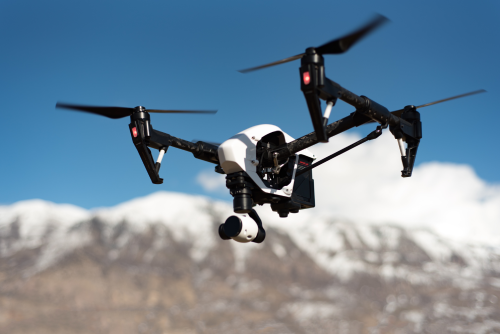
Aircraft Traders Belgium GuardianEye is a Belgian fixed-wing commercial/utility drone with a standout listed endurance of 10 hours. It appears aimed at organizations that care more about long-duration area coverage than hovering, close-up inspection, or consumer camera features. What makes it noteworthy is that the headline numbers are interesting, but the public record is very thin, so buyers need to separate confirmed facts from assumptions before treating it as a serious procurement candidate.
That tension is really the core of the GuardianEye story. On one side, a fixed-wing drone with a listed 10-hour endurance is immediately worth attention because endurance is one of the hardest performance traits to achieve in practical UAV design. On the other side, endurance alone does not make a platform usable, supportable, or cost-effective. A professional buyer needs to know how the aircraft launches, what payloads it can actually carry, how missions are planned, what control link is used, what the recovery method looks like, how repairable the airframe is, and whether the manufacturer or dealer network can support the platform in service.
So the GuardianEye is best approached as a potentially interesting endurance-oriented UAV that sits behind a wall of missing context. It may be a capable niche system. It may be a specialized platform built for a narrow mission set. It may also be a database listing that omits the details needed to judge whether the drone is still active, commercially available, or suitable for modern regulatory and software requirements. That does not make it bad, but it does mean caution is essential.
Quick Summary Box
- Drone Name: Aircraft Traders Belgium GuardianEye
- Brand: Aircraft Traders Belgium
- Model: GuardianEye
- Category: Commercial/utility fixed-wing drone
- Best For: Long-duration utility observation and open-area missions, subject to payload and support verification
- Price Range: Not publicly confirmed in supplied data
- Launch Year: Not publicly confirmed in supplied data
- Availability: Not publicly confirmed in supplied data
- Current Status: Unknown
- Overall Rating: Not rated due to limited confirmed data
- Our Verdict: Interesting on paper for endurance-focused fixed-wing work, but too lightly documented for a strong buying recommendation without direct supplier confirmation
Introduction
The GuardianEye is listed as a fixed-wing drone from Aircraft Traders Belgium, a Belgian brand/manufacturer associated here with the commercial/utility segment. Based on the supplied record, the most important confirmed figures are a 10-hour endurance, 4 km range, and 65 km/h maximum speed.
That combination makes the GuardianEye relevant to readers comparing long-duration UAV platforms, especially for monitoring, observation, and other open-area tasks where fixed-wing efficiency matters. At the same time, its current status is unknown, and the supplied public information appears limited to a database-style snippet rather than a full specification sheet, so careful verification is essential.
For that reason, this article should be read less like a conventional hands-on product review and more like an informed procurement-oriented profile. With mainstream drones, you can usually compare polished spec sheets, dealer listings, manuals, software screenshots, and a healthy amount of independent coverage. Here, the opposite is true. The small number of published data points are intriguing, but the surrounding evidence is limited. A smart buyer therefore has to think like a technical evaluator: what is confirmed, what is likely, what is unclear, and what information would be required before a purchase could move from curiosity to serious consideration?
That approach matters because fixed-wing drones occupy a very different role from consumer multirotors. They are often selected for mission economics rather than convenience. If the GuardianEye really can stay airborne for prolonged periods, then it may make sense for persistent surveillance, environmental observation, perimeter awareness, or utility-sector oversight where loiter time matters more than cinematic imaging. But if the support ecosystem, payload stack, or field procedures are weak, the headline endurance number could end up being less useful in practice than it appears on paper.
Overview
What kind of drone is it?
The GuardianEye is a fixed-wing utility drone. In practical terms, that means it belongs to the class of aircraft designed for efficient forward flight and sustained coverage rather than stationary hover.
Fixed-wing drones are usually chosen when operators need:
- More endurance than a comparable multirotor
- Better energy efficiency over distance or time
- Coverage of open land, corridors, or broad operating zones
Those general advantages come with tradeoffs. A fixed-wing aircraft cannot simply stop in the air and hold a position like a quadcopter, so it is a weaker fit for close visual inspection of towers, roofs, facades, bridges, or confined infrastructure sites. It also usually requires more forethought around launch and recovery, especially if the aircraft does not have VTOL capability. In return, it can often deliver better time-on-station, more efficient cruising, and broader area coverage per flight.
That makes the GuardianEye conceptually easy to place within the UAV market even though the public details are sparse. It is not a lifestyle drone, not a consumer camera platform, and not the obvious choice for tight-space operations. It belongs to the mission-first side of the drone world, where buyers care about persistence, airframe efficiency, and operational planning.
Who should buy it?
On the limited confirmed data, the GuardianEye looks most relevant to:
- Enterprise or research teams evaluating endurance-focused UAVs
- Utility operators working in open outdoor environments
- Buyers comparing niche European fixed-wing platforms
- Organizations comfortable with validation-heavy procurement rather than retail-style buying
It is much less likely to suit casual buyers, content creators, or users who need a well-documented off-the-shelf camera drone.
There is an important mindset difference here. A buyer considering something like the GuardianEye should already understand that the acquisition process may involve direct technical discussions, test flights, support questions, documentation review, and perhaps custom integration work. This is not the same shopping experience as buying a popular drone from a known reseller with clear replacement parts, published firmware notes, and a large user community.
What makes it different?
The main differentiator is the listed 10-hour endurance. That is a very large figure for a small drone listing and immediately makes the GuardianEye unusual on paper.
The second notable point is that the listed 4 km range is far shorter than what many readers would expect from a long-endurance fixed-wing aircraft. That does not automatically mean the record is wrong, but it does mean the range figure needs clarification before anyone uses it for mission planning or procurement comparisons.
Those two numbers together are what make the GuardianEye interesting. A long-endurance aircraft usually invites assumptions about long-distance missions, broad corridor coverage, or remote-area operation. A 4 km listed range points in a different direction: local-area loiter, controlled perimeter observation, or a record where “range” may refer to something narrower than full operational capability. Until clarified, the GuardianEye remains a platform whose key selling point and key caution point sit right next to each other.
Key Features
- Fixed-wing airframe, which typically favors efficient cruise flight and area coverage
- Listed endurance of up to 10 hours
- Listed maximum speed of 65 km/h
- Listed range of 4 km in the supplied data
- Positioned in the commercial/utility segment rather than consumer photography
- Belgian origin under the Aircraft Traders Belgium brand/manufacturer name
- Current status not publicly confirmed
- Payload, camera, autonomy stack, and support ecosystem not publicly confirmed in the supplied data
Beyond those headline items, the most important “feature” may actually be the aircraft’s apparent role. The GuardianEye seems designed around staying in the air rather than impressing with marketing-friendly imaging specifications. In practical enterprise use, that can be a real advantage. Many professional missions do not require ultra-high-resolution cinematic footage; they require persistent observation, repeatable coverage, and predictable operation over open terrain. If the GuardianEye was built around that use philosophy, it could make sense for a narrow but serious set of operators.
At the same time, the missing details matter just as much as the listed ones. On professional UAV systems, buyers normally want to know things like payload interface standardization, telemetry architecture, autopilot redundancy, maintenance intervals, battery logistics, mission planning software, and training requirements. None of those are publicly established here, which is why the GuardianEye currently reads more like a promising outline than a fully transparent product offering.
Full Specifications Table
| Specification | Details |
|---|---|
| Brand | Aircraft Traders Belgium |
| Model | GuardianEye |
| Drone Type | Fixed-wing |
| Country of Origin | Belgium |
| Manufacturer | Aircraft Traders Belgium |
| Year Introduced | Not publicly confirmed in supplied data |
| Status | Unknown |
| Use Case | Commercial/utility |
| Weight | Not publicly confirmed in supplied data |
| Dimensions (folded/unfolded) | Not publicly confirmed in supplied data |
| Max Takeoff Weight | Not publicly confirmed in supplied data |
| Battery Type | Not publicly confirmed in supplied data |
| Battery Capacity | Not publicly confirmed in supplied data |
| Flight Time | 10 hr |
| Charging Time | Not publicly confirmed in supplied data |
| Max Range | 4 km |
| Transmission System | Not publicly confirmed in supplied data |
| Top Speed | 65 km/h |
| Wind Resistance | Not publicly confirmed in supplied data |
| Navigation System | Not publicly confirmed in supplied data |
| Obstacle Avoidance | Not publicly confirmed in supplied data |
| Camera Resolution | Not publicly confirmed in supplied data |
| Video Resolution | Not publicly confirmed in supplied data |
| Frame Rates | Not publicly confirmed in supplied data |
| Sensor Size | Not publicly confirmed in supplied data |
| Gimbal | Not publicly confirmed in supplied data |
| Zoom | Not publicly confirmed in supplied data |
| Storage | Not publicly confirmed in supplied data |
| Controller Type | Not publicly confirmed in supplied data |
| App Support | Not publicly confirmed in supplied data |
| Autonomous Modes | Not publicly confirmed in supplied data |
| Payload Capacity | Not publicly confirmed in supplied data |
| Operating Temperature | Not publicly confirmed in supplied data |
| Water Resistance | Not publicly confirmed in supplied data |
| Noise Level | Not publicly confirmed in supplied data |
| Remote ID Support | Not publicly confirmed in supplied data |
| Geo-fencing | Not publicly confirmed in supplied data |
| Certifications | Not publicly confirmed in supplied data |
| MSRP / Launch Price | Not publicly confirmed in supplied data |
| Current Price | Not publicly confirmed in supplied data |
This table tells two stories at once. First, the GuardianEye clearly belongs to the fixed-wing professional segment. Second, the public dataset around it is too thin to support a normal purchasing decision. That is not necessarily unusual for highly specialized UAVs, but it does mean a buyer must expect to collect much of the real decision-making information directly from the supplier, integrator, or operator community rather than from open web sources.
Design and Build Quality
Because the GuardianEye is a fixed-wing commercial/utility platform, the airframe concept likely prioritizes aerodynamic efficiency over compact portability. That is typical for drones intended to stay airborne for long periods.
What cannot be confirmed from the supplied data:
- Airframe materials
- Wingspan or length
- Foldability
- Launch method
- Recovery method
- Landing gear arrangement
- Field-repair friendliness
That missing information matters. For a fixed-wing utility drone, transport size, assembly time, launch/recovery requirements, and spare-parts access can strongly affect real-world usefulness. A drone with excellent endurance can still be operationally awkward if it needs specialized launch gear or difficult recovery procedures, but none of that is publicly confirmed here.
Design quality in this class of aircraft is not just about whether the shell looks refined. It is about whether the whole system works smoothly in field conditions. A practical enterprise fixed-wing platform should ideally answer questions like:
- Can one person assemble it quickly?
- Does it need tools in the field?
- How easily can a damaged wing or propulsive element be replaced?
- Does transport require a large case or dedicated vehicle space?
- Can it launch from rough ground or only from prepared areas?
- Is the recovery method gentle enough to protect payloads and airframe life?
Those are not cosmetic details. They often determine whether a drone that looks excellent in a brochure becomes genuinely useful to an operations team. For example, a long-endurance aircraft that takes 40 minutes to set up and requires ideal recovery conditions may be less practical than a shorter-endurance platform that can be launched and recovered quickly and repeatedly.
Another unknown is the level of environmental ruggedness. Enterprise users often need to know whether an airframe can tolerate dust, minor moisture exposure, repeated transport vibration, and routine field handling. Since none of that is public here, design and build quality remain one of the largest unanswered areas in the GuardianEye profile.
Flight Performance
The defining flight figure is the listed 10-hour endurance. If accurate in operational use, that would make the GuardianEye more about persistence than speed. Its listed maximum speed of 65 km/h suggests a moderate performance profile rather than a high-speed platform.
A careful reading of the numbers suggests a few practical takeaways:
- The aircraft is likely intended for outdoor, open-area work, not indoor use
- Fixed-wing design generally favors longer, smoother forward flight paths
- Hover-dependent tasks are not a natural fit
- The 4 km range figure is the main caution point
That range figure is especially important. A 10-hour aircraft with only a 4 km listed range may be intended for local-area loiter, perimeter work, or operations where the airframe stays within a relatively tight control envelope. It may also reflect a database shorthand rather than the full mission architecture. Either way, buyers should verify exactly what that 4 km represents before treating it as a control-link limit, operational radius, or a simple database field.
Wind performance, ceiling, signal resilience, and takeoff/landing behavior are not publicly confirmed. So while the endurance number is attractive, the broader flight profile is still incomplete.
From a mission-planning perspective, endurance and speed also need to be understood together. A top speed of 65 km/h is perfectly usable for many commercial operations, but it does not tell us the aircraft’s efficient cruise speed, loiter speed, stall behavior, or endurance under payload load. Many long-endurance aircraft achieve their best advertised numbers under ideal configurations, light payloads, and favorable environmental conditions. In practice, real-world endurance may vary significantly depending on sensor package, wind, temperature, climb profile, and link discipline.
That does not invalidate the listed 10-hour figure. It simply means serious buyers should ask for:
- Typical endurance with the most common payloads
- Cruise speed during efficient observation missions
- Endurance in moderate wind
- Endurance reserve policies used by the operator or manufacturer
- Maximum safe takeoff wind and landing wind
- Operational ceiling and temperature range
- Link behavior and failsafes during degraded communications
Another important point is what “endurance” is supposed to achieve operationally. If the aircraft can remain airborne for 10 hours but only support a narrow sensor set or only operate within a relatively short control envelope, then its strongest use case may be long-duration watch over a local site rather than distant route inspection. That is still valuable. It just puts the platform into a different mission category than some readers might assume when they first see a long-endurance fixed-wing UAV.
Camera / Payload Performance
No camera system or payload specification is publicly confirmed in the supplied data. That means the GuardianEye should not be treated as a turnkey imaging drone based on public information alone.
For a commercial/utility fixed-wing platform, payload questions are central:
- Is it built for EO observation?
- Does it support mapping cameras?
- Can it carry thermal sensors?
- Is there stabilized imaging hardware?
- What is the payload weight limit?
- How is payload power and data handled?
None of those answers are confirmed here.
In practical buying terms, the GuardianEye currently looks more like an airframe-and-endurance entry than a fully documented sensor product. If your mission depends on photogrammetry, thermal inspection, live video, multispectral work, or zoom capability, you should request a confirmed payload configuration before moving any further.
This is one of the biggest reasons to be cautious. Payload capability is often what separates a useful enterprise platform from a technically impressive but operationally incomplete one. For example:
- For mapping: you need camera geometry, overlap planning, geotag quality, and workflow compatibility.
- For live observation: you need gimbal stabilization, video downlink quality, latency data, and control responsiveness.
- For thermal work: you need sensor specs, radiometric capability, calibration information, and environmental operating limits.
- For research: you need mounting standards, payload power delivery, synchronization options, and data export pathways.
Without those details, the GuardianEye cannot yet be judged as a mapping tool, an inspection tool, a surveillance tool, or a research platform with confidence.
Another key issue is the relationship between payload and endurance. Long advertised endurance can change dramatically once a camera turret, telemetry package, or custom sensor is installed. So one of the most important vendor questions would be: what payload was installed when the 10-hour figure was achieved? If the endurance number applies only to a minimal or no-payload configuration, then actual mission endurance may be significantly lower with operational equipment fitted.
Smart Features and Software
Publicly confirmed software and autonomy details are not available in the supplied data. That includes unknown status for:
- Waypoint mission planning
- Return-to-home or equivalent failsafes
- App support
- SDK or API access
- Cloud fleet tools
- Mapping workflow integration
- AI tracking or automated detection
- Geofencing
- Remote ID support
That does not mean the drone lacks these functions. It only means they are not established by the information supplied here.
For a platform in this segment, buyers should specifically verify:
- Ground control station software
- Autopilot functions
- Telemetry and link redundancy
- Mission logging
- Failsafe behavior
- Payload control software
- Export formats for collected data
- Fleet management or maintenance software, if any
Software often determines whether a professional drone is pleasant or frustrating to operate. A capable airframe paired with weak mission software can create more operational burden than value. Teams may struggle with route planning, telemetry review, data export, firmware support, or pilot training if the software stack is poorly documented or proprietary in inconvenient ways.
If the GuardianEye is intended for professional use, the following questions become especially important:
- Can missions be planned on standard desktop software?
- Is waypoint editing available in the field?
- Are flight logs exportable for compliance and analysis?
- Is there role-based access for organizations with multiple pilots?
- Can payload data be synchronized cleanly with flight telemetry?
- Is software licensing perpetual, subscription-based, or bundled?
- What happens if the control link drops during long-duration missions?
These are not secondary concerns. In professional aviation-adjacent workflows, software reliability is often as important as raw airframe performance.
Use Cases
Based on the confirmed platform type and limited published data, the most realistic use cases are:
- Long-duration local-area observation in open environments
- Perimeter or site monitoring, assuming an appropriate sensor package
- Environmental monitoring and research flights where persistence matters
- Utility-sector route awareness over a limited operating radius
- Fixed-wing training and evaluation for professional UAV teams
- Rural land and infrastructure oversight, subject to payload confirmation and local legal limits
If your use case requires hover, close visual positioning, or a fully documented integrated camera workflow, the GuardianEye is not an obvious fit from the current public record.
To expand on that:
Long-duration local-area observation
This is probably the most natural interpretation of the listed specs. A platform that stays airborne for a long time but may operate within a relatively limited control radius could be useful for persistent monitoring of a defined zone such as a facility perimeter, agricultural area, coastal patch, environmental reserve, or event boundary.
Perimeter or site monitoring
If the drone supports a suitable optical or thermal payload, it could potentially function as an airborne persistence tool rather than a close-up inspector. That is a different mission style: wider watch, lower frequency of recovery and relaunch, and greater emphasis on time-on-station.
Environmental monitoring and research
Research groups often value endurance because many observation tasks benefit from repeated patterns over time rather than speed or cinematic image quality. Bird migration studies, marine-edge observation, agricultural change monitoring, and atmospheric sampling are examples where persistence can be more valuable than hover.
Utility-sector awareness
For power, pipeline, water, or land-management teams, a long-endurance fixed-wing aircraft can be attractive if the task involves regular broad-area awareness rather than detailed inspection of small structures. Again, though, payload and workflow verification would be essential.
Professional training and evaluation
Because the GuardianEye appears to sit in a specialized category, it could also appeal to teams building institutional knowledge around fixed-wing operations, endurance planning, and longer mission management—assuming the product is available and supported.
Pros and Cons
Pros
- Listed 10-hour endurance is the standout spec and is unusually strong on paper
- Fixed-wing format is generally efficient for broad outdoor coverage
- 65 km/h maximum speed is adequate for many utility-oriented missions
- Commercial/utility positioning suggests a mission-first role rather than a hobby product
- Belgian origin may interest buyers comparing European-made platforms
- Could be attractive for persistence-focused tasks if payload integration is solid
These strengths all point in the same direction: the GuardianEye looks potentially valuable for organizations that care most about staying airborne for a long time. That is not a niche everyone needs, but for the right mission it can matter more than flashy sensors or consumer-friendly features.
Cons
- Public documentation is extremely limited
- Camera and payload details are not publicly confirmed
- The listed 4 km range needs clarification and may limit mission flexibility
- Current status is unknown
- Launch year, availability, and price are not publicly confirmed
- Support network, repairs, training, and spare parts are unclear
- Fixed-wing design is a poor fit for hover-based inspections or confined locations
These weaknesses are not minor. They affect basic procurement confidence. A company can work around a higher price or a limited speed envelope if the drone is well documented and well supported. It is much harder to justify procurement when essential questions about payloads, status, servicing, and mission architecture remain unanswered.
Comparison With Other Models
Direct one-to-one comparison is difficult because GuardianEye’s public profile is sparse. The models below are better-documented fixed-wing or fixed-wing-adjacent commercial references, included to help position GuardianEye in the wider market rather than to claim exact equivalence.
| Model | Price | Flight Time | Camera or Payload | Range | Weight | Best For | Winner |
|---|---|---|---|---|---|---|---|
| Aircraft Traders Belgium GuardianEye | Not publicly confirmed in supplied data | 10 hr | Not publicly confirmed in supplied data | 4 km | Not publicly confirmed in supplied data | Endurance-focused local-area utility missions if fully validated | Endurance on paper |
| senseFly eBee X | Enterprise quote / varies by payload | Up to 90 min | Modular survey payloads | Up to 8 km class | Approx. 1.6 kg | Professional mapping and surveying | Best documented mapping ecosystem |
| Quantum-Systems Trinity F90+ | Enterprise quote / varies by configuration | Up to 90 min | Survey and mapping payload ecosystem | Enterprise long-range mission class | Approx. 5 kg class | VTOL field deployment and mapping | Best launch/recovery flexibility |
| Parrot Disco-Pro AG | Discontinued / used-market dependent | Up to 45 min | Agriculture-focused multispectral kit | Approx. 2 km class | Approx. 0.94 kg | Legacy budget ag workflows | Best low-cost legacy option |
GuardianEye vs a close competitor
Against the senseFly eBee X, the GuardianEye looks stronger only on listed endurance. The eBee X is far better documented publicly, with a known mapping ecosystem and clearer buyer expectations. For survey teams, the eBee X is the safer comparison point unless GuardianEye’s payload and workflow stack are verified directly.
The practical difference is that eBee-class products are usually judged as complete systems. Buyers know what sensors fit, how missions are planned, what outputs to expect, and what support channels exist. GuardianEye, in contrast, currently looks like a platform whose strongest public trait is endurance rather than workflow maturity.
GuardianEye vs an alternative in the same segment
Compared with the Quantum-Systems Trinity F90+, GuardianEye appears more niche. Trinity’s appeal is VTOL convenience and easier deployment in constrained launch areas. GuardianEye would only be the more interesting option if its 10-hour endurance is real, supported, and relevant to your mission profile.
In other words, the Trinity family tends to win on operational convenience, especially in teams that need to deploy quickly from varied terrain. GuardianEye’s argument would be persistence: fewer launches, longer loiter, and potentially lower mission interruption if the aircraft can truly remain aloft for extended periods.
GuardianEye vs an older or previous-generation option
Versus the older Parrot Disco-Pro AG, GuardianEye looks more serious in endurance terms but much less transparent in public documentation. The Parrot option is easier to understand as a legacy product, while GuardianEye remains harder to classify without direct manufacturer information.
That comparison highlights a broader buyer lesson: sometimes an older, less capable platform is easier to evaluate than a more ambitious one with sparse documentation. Procurement confidence depends on clarity as much as raw specs.
Manufacturer Details
Aircraft Traders Belgium is listed in the supplied record as both the brand and the manufacturer. That suggests there is no separately confirmed consumer-facing sub-brand in this case.
What can be stated with confidence:
- Company name: Aircraft Traders Belgium
- Headquarters country: Belgium
- Brand and manufacturer appear to be the same entity in the supplied record
What is not publicly confirmed in the supplied data:
- Founding year
- Broader corporate history
- Parent company relationship
- Full UAV product lineup
- Market scale or distribution footprint
So, from a buyer’s perspective, Aircraft Traders Belgium should currently be treated as a niche or lightly documented manufacturer rather than a mainstream drone brand with a large public knowledge base.
That does not mean the manufacturer lacks competence. Many specialized aerospace or industrial companies maintain a lower public profile than consumer brands. But for buyers, limited visibility raises practical questions:
- How long has the company supported UAV products?
- Does it sell directly or through integrators?
- Is there an installed base in the field?
- Are firmware and documentation actively maintained?
- Can enterprise references be provided?
For institutional buyers, manufacturer maturity matters because it affects long-term support, procurement confidence, and risk management. A high-endurance aircraft can still become a poor investment if the supplier cannot offer reliable service continuity.
Support and Service Providers
No detailed official support network is confirmed in the supplied data. That means buyers should verify all after-sales basics before committing, including:
- Official technical support contact path
- Repair turnaround options
- Spare-parts availability
- Propulsion and control-link replacement parts
- Airframe repairability
- Training resources
- Warranty terms
- Regional service coverage
For niche or uncertain-status drones, support quality can matter more than the headline specification sheet. If GuardianEye is still obtainable, prospective buyers should confirm whether service is handled directly by the manufacturer, a regional dealer, or a third-party integrator.
This is especially important in fixed-wing operations, where support needs can be different from those of a small consumer quadcopter. Operators may need:
- Replacement wings or structural parts after rough recoveries
- Propulsion system maintenance guidance
- Autopilot tuning or firmware updates
- Payload balancing support
- Training for launch and recovery procedures
- Assistance with mission planning for specialized use cases
A strong support chain can make even a niche product viable. A weak one can quickly turn a promising aircraft into a downtime liability. If you are evaluating the GuardianEye, support due diligence should be part of the first conversation, not an afterthought after purchase.
Where to Buy
There is no publicly confirmed retail availability in the supplied data. The GuardianEye does not appear, from the available record, to be a typical consumer shelf product.
The most likely purchase paths, if it is still available, would be:
- Direct procurement from the manufacturer
- A specialized enterprise or utility drone dealer
- Regional integrators handling professional UAV systems
- A legacy or used-equipment channel, if the model is no longer active
Because the drone’s current status is unknown, buyers should confirm actual availability before comparing budgets or timelines.
If the platform is active, the buying process may resemble industrial equipment procurement rather than consumer electronics ordering. Expect to request quotes, confirm payload compatibility, discuss training, and possibly arrange demonstrations or technical calls. If the model is no longer active, then procurement risk rises further because future support, firmware access, and part replacement may become uncertain.
For used-market buyers, the checklist should be even stricter:
- Verify total flight hours
- Confirm battery condition and replacement options
- Inspect wings, fuselage, and control surfaces for repair history
- Confirm availability of mission software and account access
- Request proof of payload compatibility and operation
- Check whether manuals and service documents are included
Price and Cost Breakdown
No launch price or current price is publicly confirmed in the supplied data.
That means budgeting should not stop at the airframe. For a commercial fixed-wing platform, buyers should verify whether quoted cost includes:
- Aircraft only, or full flight kit
- Ground control station
- Data link hardware
- Payload or sensor package
- Batteries or power modules
- Chargers and power accessories
- Launch or recovery equipment, if required
- Training and onboarding
- Software licensing
- Spare propellers, wings, or structural parts
- Maintenance and repair support
- Insurance and regulatory operating costs
With a lightly documented drone like GuardianEye, the ownership cost can vary dramatically depending on what is included and what must be sourced separately.
In fact, total cost of ownership is often the hidden issue in endurance-class UAVs. A drone with an attractive base price can become expensive if the buyer later discovers that mission software, payload integration, batteries, cases, field support, and training are all separate line items. Conversely, a high quote can still be good value if it includes a mature sensor package, operator training, support coverage, and replacement parts.
For the GuardianEye, buyers should specifically ask for a written breakdown covering:
- Initial acquisition package
- Consumables and wear items
- Recommended spare inventory
- Annual support or software costs
- Battery lifecycle assumptions
- Training costs for pilots and technicians
- Typical repair timelines and prices
Without that level of detail, cost comparisons with better-known competitors may be misleading.
Regulations and Compliance
Any drone purchase should be checked against local aviation law, and that is especially important for fixed-wing utility platforms.
Key points to verify:
- Operator registration requirements
- Aircraft registration requirements
- Commercial-use licensing or authorization
- Airspace restrictions
- Visual line of sight rules
- Any beyond visual line of sight approval needs
- Privacy and data-protection obligations if imaging sensors are used
- Remote ID obligations in your country
Because the GuardianEye’s weight is not publicly confirmed, it is not possible to place it into a specific regulatory weight class from the supplied data alone. Likewise, Remote ID support, geofencing, and certifications are not publicly confirmed.
A long-endurance fixed-wing drone can also trigger stricter operational scrutiny than a small consumer quadcopter, especially if missions involve extended time on station, surveillance-type sensing, or operations near sensitive airspace. Always verify local law before purchase or deployment.
There is also a practical compliance point that many buyers overlook: even if the aircraft is legal to own, that does not mean its most appealing missions are easy to approve. Fixed-wing operations can raise extra considerations around launch site suitability, recovery area safety, control-link discipline, and emergency procedures. If the GuardianEye’s listed endurance is a genuine operational strength, then operators should be prepared for the fact that regulatory reviewers may pay closer attention to the mission concept, especially where long-duration observation is involved.
Before procurement, a professional buyer should ideally confirm:
- Weight and class information
- Failsafe and lost-link behavior
- Remote ID or equivalent compliance status
- Documentation for operating manuals and safety procedures
- Any declarations, conformity documents, or training materials needed by local authorities
Who Should Buy This Drone?
Best for
- Enterprise, research, or utility teams prioritizing endurance over hover capability
- Buyers evaluating niche European fixed-wing platforms
- Organizations able to procure through direct technical validation rather than retail convenience
- Operators already familiar with fixed-wing mission planning and recovery procedures
- Programs where payload configuration can be confirmed before purchase
These buyers all share something in common: they have enough operational maturity to investigate the unknowns themselves. If your organization can evaluate mission fit, ask detailed supplier questions, and tolerate some procurement complexity, the GuardianEye may be worth investigating.
Not ideal for
- First-time drone buyers
- Hobby users looking for a simple ready-to-fly experience
- Creators who need a clearly documented camera and gimbal setup
- Close-up inspection teams that rely on hover
- Buyers who need transparent public pricing, broad dealer coverage, or well-known spare-parts availability
- Missions that cannot tolerate uncertainty around the listed 4 km range figure
For these users, the lack of clarity is likely to outweigh the endurance appeal. There are many drones with shorter flight times but much stronger documentation, better support visibility, clearer payload options, and easier field deployment.
Final Verdict
The Aircraft Traders Belgium GuardianEye is most interesting for one reason: its listed 10-hour endurance is genuinely attention-grabbing. In a fixed-wing commercial/utility context, that suggests a platform built around persistence and efficient coverage rather than cinematic payloads or easy consumer appeal.
The problem is that nearly everything around that headline number remains unclear. Payload options, launch and recovery method, software ecosystem, pricing, support, availability, and even current status are all insufficiently documented in the supplied public data. Add the surprisingly short listed 4 km range, and the GuardianEye becomes less of an easy recommendation and more of a niche platform that requires direct supplier validation.
That does not make it unimportant. In fact, endurance-first drones can be some of the most operationally useful aircraft in the right setting. A platform that can remain airborne for long periods may reduce relaunch cycles, improve continuous coverage, and support observation tasks that shorter-endurance drones struggle to perform economically. If GuardianEye delivers that kind of persistence with a workable payload and a credible support plan, it could be genuinely valuable for a narrow set of professional users.
But that is still an “if.” Right now, the GuardianEye sits in a category of drones that are interesting enough to investigate, yet too lightly documented to recommend broadly. For most buyers, especially those who want clear specifications, known field workflows, established software, and easy access to service, a better-documented alternative will be the lower-risk choice.
Bottom line: the GuardianEye is worth a serious look only if your mission depends on endurance and you can obtain full technical documentation from the source. For most buyers, especially those who need transparent specs and dependable support, better-documented alternatives will be the safer choice.
