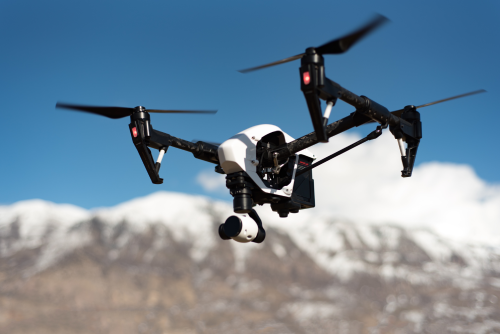
Autel Dragonfish Lite is an active enterprise/industrial VTOL fixed-wing drone from Autel Robotics. It is aimed at professional users who need vertical takeoff and landing convenience but want the area-coverage benefits that fixed-wing aircraft typically provide. That combination matters for teams comparing mission aircraft for surveying, inspection, monitoring, and other workflow-driven operations. In practical procurement terms, this is the kind of platform that sits between simple multirotor convenience and more specialized long-area mission efficiency. For organizations that regularly operate over broad sites, linear corridors, or remote field locations, that design category can be strategically important.
Quick Summary Box
- Drone Name: Autel Dragonfish Lite
- Brand: Autel
- Model: Dragonfish Lite
- Category: Enterprise/industrial VTOL fixed-wing drone
- Best For: Professional operators needing runway-free deployment and fixed-wing-style mission efficiency
- Price Range: Not publicly confirmed in supplied data
- Launch Year: Not publicly confirmed in supplied data
- Availability: Not publicly confirmed in supplied data
- Current Status: Active
- Overall Rating: Not rated due to limited confirmed data
- Our Verdict: A potentially interesting Autel enterprise VTOL platform, but buyers should verify payload, endurance, software, support, and pricing before making a shortlist decision
Introduction
As an active Autel Robotics platform under the Autel brand, the Dragonfish Lite sits in the enterprise/industrial segment rather than the consumer camera-drone market. That means its value is less about casual flying and more about mission efficiency, deployment flexibility, and workflow fit. If you are comparing VTOL fixed-wing drones for surveying, inspection, public-safety support, or large-site observation, this is the kind of aircraft category worth tracking closely.
That distinction is important because enterprise drones are rarely purchased on the basis of headline marketing alone. Professional buyers usually care about how the aircraft fits into a repeatable operational process: how fast it can be deployed, how much area it can cover in a mission, how well it integrates with mapping or inspection software, what type of payload it can carry, and whether the supplier can support it over the long term. A drone in this segment succeeds or fails less on appearance and more on whether it reduces labor, shortens field time, improves data collection, or expands what a team can safely inspect.
The Dragonfish Lite is therefore best understood as a potential mission tool, not a recreational flying platform. It belongs in discussions around aerial surveying, infrastructure oversight, environmental monitoring, and professional situational awareness. At the same time, the currently supplied record leaves major gaps around payloads, software, and hard performance numbers. So while the concept is attractive, especially for buyers who want VTOL convenience without giving up fixed-wing efficiency, any real purchasing decision should be based on direct validation rather than assumption.
Overview
What kind of drone is it?
The Dragonfish Lite is a VTOL fixed-wing drone from Autel Robotics, a manufacturer based in China according to the supplied record. VTOL means it can launch and recover vertically like a multirotor, while fixed-wing cruise is generally used for more efficient forward flight over larger areas. In practical terms, that usually makes this type of aircraft more mission-oriented than a standard quadcopter.
That airframe class exists to solve a very specific operational problem. Traditional fixed-wing drones can be excellent at covering large distances and preserving battery efficiency, but they often require more launch and recovery space, more operator technique, or support equipment such as a catapult, bungee launcher, or landing strip. Multirotors are easy to deploy almost anywhere, but they usually sacrifice endurance and area coverage. VTOL fixed-wing designs attempt to bridge that gap: vertical launch and recovery for access, then airplane-style cruise for efficiency.
For buyers, that means the Dragonfish Lite should not be judged by the same criteria as a small folding camera drone. It belongs to a category where route planning, payload fit, and mission economics matter more than creator-friendly features or casual portability.
Who should buy it?
This model is aimed at enterprise and industrial users, not hobby pilots. Likely buyers include survey teams, infrastructure operators, industrial site managers, public-safety organizations, environmental monitoring groups, utility operators, and other professional users who need outdoor aerial coverage without relying on a runway or catapult-style launch system.
In many organizations, the most likely decision-maker is not even the remote pilot alone. It may be a program manager, procurement lead, GIS specialist, engineering department, public-safety unit, or operations director evaluating whether the aircraft fits an existing workflow. In that context, the Dragonfish Lite would make the most sense where missions are repetitive, geographically broad, and time-sensitive enough that aircraft efficiency matters.
It may also be relevant to mixed-fleet operators. Some enterprise teams keep both multirotors and VTOL fixed-wing aircraft in service: multirotors for close inspection and hover-based work, VTOL fixed-wing platforms for broad-area mapping or site coverage. If that is your operating model, the Dragonfish Lite may be considered as the long-range or large-footprint complement rather than a one-aircraft solution for every task.
What makes it different?
The biggest differentiator is the airframe concept itself: VTOL fixed-wing. That layout bridges two worlds by combining vertical launch/recovery with fixed-wing mission efficiency. The Lite name suggests it may sit as a lighter or more accessible member of the Dragonfish family, but the exact positioning versus other Dragonfish variants is not publicly confirmed in the supplied data.
What matters more than the naming, however, is the operational promise behind the format. A platform like this can potentially help teams launch from restricted ground locations, fly farther or cover more area than a typical multirotor, then recover in places where a conventional fixed-wing aircraft would be less practical. That makes it especially attractive in real-world field conditions where ideal launch infrastructure does not exist.
The term “Lite” may also suggest a more streamlined package, possibly emphasizing easier transport, simpler setup, lower procurement cost, or a narrower payload focus. But those are still assumptions until confirmed by official product documentation or a dealer configuration sheet. For now, the differentiator is clear at the category level even if some details remain unverified at the model level.
Key Features
-
VTOL fixed-wing airframe
The core feature is the hybrid aircraft architecture. This is the defining reason to look at the Dragonfish Lite in the first place, because it combines vertical launch and landing with efficient forward cruise. -
Enterprise/industrial mission focus
This is not positioned as a recreational or creator drone. Its role is more likely tied to worksite operations, surveying, observation, and data collection. -
Active model status
Active status matters in enterprise procurement because buyers generally want ongoing firmware support, parts access, and some level of continuing manufacturer relevance. -
Manufactured by Autel Robotics under the Autel brand
Brand recognition can matter for organizations comparing ecosystems, especially if they already know Autel from other product lines or prefer to work with a familiar vendor network. -
Designed for professional outdoor operations rather than casual recreational flying
The aircraft category implies field deployment, mission planning, and repeatable work operations instead of casual short flights. -
Likely intended for runway-free deployment in field conditions, based on its VTOL class
This is one of the strongest reasons organizations choose VTOL fixed-wing platforms. They are designed to make operations possible in places where a conventional fixed-wing aircraft would be harder to launch or recover. -
Likely better suited to larger-area coverage than a pure hover-first multirotor, based on fixed-wing design logic
Fixed-wing cruise is generally more energy-efficient than sustained multirotor flight, which often translates to better broad-area mission economics. -
Potential fit for corridor, perimeter, and site-overview work
Even without confirmed software or sensor details, the class itself points toward use in infrastructure, land, and monitoring missions. -
Payload, camera, endurance, range, and software details are not publicly confirmed in the supplied data
This remains the main caution point. A professional aircraft is only as useful as its actual payload and workflow capability, so these details must be verified before procurement.
Full Specifications Table
| Field | Specification |
|---|---|
| Brand | Autel |
| Model | Dragonfish Lite |
| Drone Type | VTOL fixed-wing |
| Country of Origin | China |
| Manufacturer | Autel Robotics |
| Year Introduced | Not publicly confirmed in supplied data |
| Status | Active |
| Use Case | Enterprise/industrial |
| Weight | Not publicly confirmed in supplied data |
| Dimensions (folded/unfolded) | Not publicly confirmed in supplied data |
| Max Takeoff Weight | Not publicly confirmed in supplied data |
| Battery Type | Not publicly confirmed in supplied data |
| Battery Capacity | Not publicly confirmed in supplied data |
| Flight Time | Not publicly confirmed in supplied data |
| Charging Time | Not publicly confirmed in supplied data |
| Max Range | Not publicly confirmed in supplied data |
| Transmission System | Not publicly confirmed in supplied data |
| Top Speed | Not publicly confirmed in supplied data |
| Wind Resistance | Not publicly confirmed in supplied data |
| Navigation System | Not publicly confirmed in supplied data |
| Obstacle Avoidance | Not publicly confirmed in supplied data |
| Camera Resolution | Not publicly confirmed in supplied data |
| Video Resolution | Not publicly confirmed in supplied data |
| Frame Rates | Not publicly confirmed in supplied data |
| Sensor Size | Not publicly confirmed in supplied data |
| Gimbal | Not publicly confirmed in supplied data |
| Zoom | Not publicly confirmed in supplied data |
| Storage | Not publicly confirmed in supplied data |
| Controller Type | Not publicly confirmed in supplied data |
| App Support | Not publicly confirmed in supplied data |
| Autonomous Modes | Not publicly confirmed in supplied data |
| Payload Capacity | Not publicly confirmed in supplied data |
| Operating Temperature | Not publicly confirmed in supplied data |
| Water Resistance | Not publicly confirmed in supplied data |
| Noise Level | Not publicly confirmed in supplied data |
| Remote ID Support | Not publicly confirmed in supplied data |
| Geo-fencing | Not publicly confirmed in supplied data |
| Certifications | Not publicly confirmed in supplied data |
| MSRP / Launch Price | Not publicly confirmed in supplied data |
| Current Price | Not publicly confirmed in supplied data |
A table like this is useful not only for what it shows, but for what it does not. In the enterprise segment, gaps around payload support, endurance, and software are not minor omissions; they are often the deciding factors in whether the drone makes operational sense. If you are actively evaluating the Dragonfish Lite, request an official technical sheet, exact package contents, and mission-specific documentation rather than relying on broad category assumptions.
Design and Build Quality
Specific materials, dimensions, and transport configuration are not publicly confirmed in the supplied data, so any judgment here has to stay at the airframe level. What is clear is that the Dragonfish Lite belongs to the VTOL fixed-wing class, which usually means a more complex and mission-focused structure than a simple foldable quadcopter.
That generally implies a central fuselage, fixed-wing lifting surfaces, and dedicated vertical-lift propulsion for takeoff and landing. Compared with a consumer multirotor, this kind of airframe is usually less about backpack convenience and more about efficient outdoor mission work. It also typically places more importance on field assembly, preflight checks, and operational discipline.
In practical use, build quality in this category is about more than surface finish. Buyers should think in terms of transport durability, wing attachment integrity, propulsion mounting robustness, cable routing, landing stability, and how well the airframe tolerates repeated deployment cycles. A drone used in enterprise fieldwork may be assembled and disassembled frequently, moved in vehicles, flown from uneven surfaces, and exposed to dust, temperature changes, and varying wind conditions. A platform that looks sophisticated on paper but is slow or fragile to deploy can become operationally inefficient very quickly.
Because it is an enterprise/industrial platform, buyers should expect build quality priorities to center on serviceability, transport protection, and repeatable deployment rather than style or portability alone. However, the exact ruggedness, weather tolerance, landing design, and spare-part architecture are not publicly confirmed in the supplied data and should be verified directly before purchase.
When assessing design quality during a demo or evaluation, useful questions include:
- How many steps are required from case to launch?
- Do wings or tail surfaces attach without tools, or with field tools?
- How durable are the connectors and locking mechanisms?
- Are propulsion components easy to inspect or replace?
- Is the payload bay protected and easy to access?
- How long does a battery swap actually take in field conditions?
- Does the transport case support frequent commercial travel or rough vehicle transport?
Those questions often reveal more about real-world usability than marketing photos. Enterprise buyers should also pay attention to whether the aircraft appears designed for long-term program ownership rather than one-time demonstration use. Serviceability and maintainability are major parts of build quality in this class.
Flight Performance
No confirmed figures for endurance, range, top speed, ceiling, or wind resistance are provided in the supplied data. That means the Dragonfish Lite cannot be fairly rated on raw performance numbers from this profile alone.
What can be said, based on the VTOL fixed-wing format, is that its likely flight character differs significantly from a normal multirotor. This class is usually chosen because it can launch vertically from tighter field locations and then transition into more efficient forward flight for larger-area missions. That tends to make it more attractive for outdoor corridor work, site mapping, and broad-area observation than for close-in hover work.
A useful way to think about performance here is by mission phase:
- Vertical takeoff phase – The aircraft uses lift motors to rise safely from a confined area.
- Transition phase – It shifts from hover-style lift into forward airplane-like flight.
- Cruise phase – Fixed-wing efficiency becomes the main advantage for covering ground.
- Approach and vertical recovery – The drone slows, transitions back, and lands vertically.
Each of those phases places different demands on the airframe, flight controller, and operator procedures. In enterprise use, performance is not just about maximum values on a spec sheet; it is also about consistency. Can the aircraft transition reliably in moderate wind? Does it hold route accuracy well enough for survey overlap? Does it loiter efficiently for observation? How predictable is recovery in changing weather? These are the questions that matter in actual operations.
The tradeoff is complexity. VTOL transition, fixed-wing cruise behavior, and mission planning generally demand more operator training and clearer procedures than a simple takeoff-hover-land quadcopter workflow. Indoor use would usually not be the natural fit for this type of aircraft, and even in outdoor use, buyers should confirm transmission reliability, failsafe behavior, and wind limits before relying on it for critical operations.
Another important point is that “longer flight time” in fixed-wing systems does not automatically mean “better for every job.” If the mission requires prolonged stationary inspection of a tower, roof edge, flare stack, or bridge component, a multirotor may still be the more practical tool. A VTOL fixed-wing aircraft usually creates its biggest value when the task involves distance, repeated coverage, or large-area observation rather than fine hover control.
Before shortlisting the Dragonfish Lite for flight performance reasons, ask for confirmation of:
- Realistic endurance with the payload you intend to use
- Wind tolerance in both hover and cruise phases
- Maximum operational distance under your local regulations
- Link reliability and redundancy options
- Transition behavior and recovery procedures
- Emergency landing and lost-link behavior
- GNSS dependence and navigation backup strategy
Those answers matter far more than a single headline flight-time claim.
Camera / Payload Performance
The supplied data does not publicly confirm the Dragonfish Lite’s payload options, camera system, gimbal specification, zoom capability, or supported sensor classes. That is a major limitation for any serious buying decision, because enterprise aircraft are often defined more by their payload ecosystem than by the airframe alone.
For this type of drone, the key questions are usually:
- What sensor packages are supported?
- Is there a stabilized EO camera, thermal option, zoom payload, or mapping camera?
- How quickly can payloads be swapped?
- What payload weight limit is allowed?
- What image and video outputs are available for live and post-mission workflows?
Until those details are confirmed, the Dragonfish Lite is best viewed as a mission platform with unconfirmed payload configuration rather than a camera-first drone. For survey, inspection, or public-safety buyers, payload fit should be one of the first items verified with the manufacturer or an authorized enterprise dealer.
This is especially important because different enterprise missions often require very different sensor logic:
- Mapping and photogrammetry usually benefit from calibrated or survey-oriented imaging workflows, strong geotagging, stable overlap planning, and predictable route execution.
- Inspection often prioritizes zoom, stabilization, thermal capability, and operator control over viewing angles.
- Public safety may require live-stream utility, thermal imaging, quick deployment, and broad situational awareness rather than map-grade outputs.
- Environmental or agricultural observation may depend on multispectral, thermal, or other specialized sensing.
A strong airframe with the wrong payload ecosystem can still be the wrong purchase. For example, if your mission is corridor mapping, you may need not just a compatible camera but also reliable geospatial export, overlap planning, and processing compatibility. If your mission is surveillance or incident response, you may care more about stabilized live video, zoom clarity, and operator-friendly target observation. Those are completely different value propositions.
Additional payload-related questions worth asking include:
- Does the aircraft support single or multiple payload options?
- Are payloads proprietary, third-party, or both?
- Is the payload integrated aerodynamically for survey efficiency?
- Does the system record geotagged stills, video, or both?
- Is there onboard storage and what file formats are produced?
- Are time synchronization and metadata quality suitable for GIS workflows?
- Can the operator control the payload independently of the aircraft route?
The answers determine whether the Dragonfish Lite is a viable data-collection platform or simply an interesting airframe concept.
Smart Features and Software
Model-specific software and autonomy details are not publicly confirmed in the supplied data. That includes controller type, mission-planning environment, waypoint support, return-to-home behavior, app compatibility, SDK access, and fleet-management functions.
For an enterprise VTOL aircraft, these software questions matter almost as much as the airframe itself. Prospective buyers should verify:
- Waypoint and route planning support
- Mapping and survey workflow tools
- Failsafe and return procedures
- Live video and telemetry options
- Cloud or fleet-management tools
- Third-party integration support
- Export formats for geospatial or inspection workflows
Remote ID support and geo-fencing details are also not publicly confirmed in the supplied data. If software maturity is central to your buying process, the Dragonfish Lite should be evaluated only after a full dealer or manufacturer demonstration of the exact configuration being sold.
In many enterprise programs, software is where platforms either become genuinely useful or become operational burdens. A capable airframe without a mature mission-planning environment can create extra manual work, inconsistent outputs, and training headaches. A slightly less impressive airframe with better software may actually be the better business decision because it integrates more cleanly into daily operations.
For this class of aircraft, important software considerations often include:
- Pre-mission planning: Can operators define corridors, polygons, grids, and inspection routes easily?
- Terrain awareness: Is terrain follow or elevation-aware planning supported where needed?
- Mission repeatability: Can the same route be repeated accurately for change detection or periodic inspections?
- Data export: Are results easy to move into GIS, photogrammetry, or reporting tools?
- Permissions and user roles: Can organizations manage multiple pilots, devices, and aircraft securely?
- Post-flight logging: Does the system preserve detailed logs for compliance, troubleshooting, and incident review?
- Firmware management: Are updates predictable, documented, and manageable in controlled enterprise environments?
Organizations with strict IT or security rules may also want to know whether the system supports offline planning, local data storage policies, or controlled synchronization options. These details are often overlooked early in procurement, then become major issues during deployment.
If your team is considering the Dragonfish Lite seriously, a software demo should be treated as mandatory, not optional. Watching the full workflow from mission creation to data export is often the fastest way to understand whether the platform is ready for professional use.
Use Cases
Given its VTOL fixed-wing enterprise positioning, the most realistic use cases are:
-
Large-area surveying and mapping, if compatible mapping payloads are available
This is one of the most natural fits for the category. VTOL launch helps teams operate from compact field locations, while fixed-wing cruise can improve efficiency over large parcels. -
Infrastructure and corridor inspection
Roads, rail lines, pipelines, transmission corridors, and similar long linear assets are often better matched to aircraft that can cover distance efficiently. -
Utility, energy, and industrial site monitoring
Large solar farms, substations, refineries, quarries, and distributed facilities may benefit from wide-area aerial oversight, especially when ground inspection is slow or difficult. -
Environmental and land-management observation
Forestry, watershed monitoring, habitat review, erosion tracking, and land-use oversight can benefit from large-footprint flights over remote areas. -
Disaster assessment and incident-area overview
After storms, fires, floods, or other major events, a VTOL fixed-wing platform may help provide broad situational awareness over areas too large for efficient multirotor coverage. -
Search support for public-safety teams, subject to local law and payload fit
Search missions vary widely, but if the payload supports the required live imaging or thermal capability, broad-area scanning may be a realistic role. -
Perimeter and site-awareness missions for large private facilities, where legally permitted
Large campuses, industrial perimeters, or remote infrastructure sites may benefit from periodic aerial overwatch missions.
The key phrase across all these examples is mission fit. The Dragonfish Lite is unlikely to be the right answer for close-proximity hover inspection, indoor work, cinematic filming, or quick creator-style shooting. Its strongest use cases are those where an organization benefits from repeatedly covering more ground with fewer launches and less dependence on prepared takeoff space.
A simple decision test is this: if your aircraft spends most of its mission hovering in one place, a multirotor may be better. If your aircraft spends most of its mission moving across broad territory, a VTOL fixed-wing platform becomes much more attractive.
Pros and Cons
Pros
- VTOL fixed-wing layout is attractive for buyers who need vertical launch and landing without giving up fixed-wing mission logic
- Enterprise/industrial positioning makes it more relevant to professional workflows than to casual consumer use
- Active status lowers the risk associated with adopting a clearly discontinued platform
- Autel is a recognized drone brand, which can matter for procurement confidence and ecosystem familiarity
- Likely better suited to larger outdoor mission areas than a standard multirotor, based on airframe class
- Potentially useful for organizations building a mixed fleet with both hover-first and area-coverage aircraft
- May appeal to buyers who prefer runway-free deployment but still want broader mission efficiency than a pure multirotor can usually deliver
Cons
- Core performance specs such as endurance, range, speed, and payload are not publicly confirmed in the supplied data
- Camera and sensor options are not publicly confirmed, which makes mission planning difficult
- Pricing and bundle structure are not publicly confirmed in the supplied data
- Software, autonomy, controller, and fleet-management details are not publicly confirmed
- VTOL fixed-wing aircraft usually demand more training and operating process than simpler multirotors
- This is not the best fit for indoor flying, casual hobby use, or buyers who need a plug-and-play creator drone
- Procurement value is hard to assess until dealers clarify support, spare parts, and exact mission package contents
Comparison With Other Models
Because public Dragonfish Lite data is limited in the supplied record, the comparison below is best treated as market positioning rather than a strict spec-for-spec verdict. The goal here is not to declare a hard winner from incomplete data, but to show how the Dragonfish Lite likely enters the conversation when professional buyers compare VTOL fixed-wing platforms.
| Model | Price | Flight Time | Camera or Payload | Range | Weight | Best For | Winner |
|---|---|---|---|---|---|---|---|
| Autel Dragonfish Lite | Not publicly confirmed in supplied data | Not publicly confirmed in supplied data | Not publicly confirmed in supplied data | Not publicly confirmed in supplied data | Not publicly confirmed in supplied data | Buyers wanting an Autel-branded VTOL fixed-wing enterprise platform | Best if Autel ecosystem fit is the main priority |
| WingtraOne GEN II | Enterprise pricing; verify with dealer | Marketed as a long-duration VTOL mapping platform | Mapping-focused payload ecosystem | Built around large-area survey workflows | Enterprise VTOL class | Surveying and photogrammetry | Better if mapping workflow clarity is your top priority |
| Quantum-Systems Trinity F90+ | Enterprise pricing; verify with dealer | Marketed as a long-duration eVTOL platform | Modular survey and inspection payload approach | Built for wide-area professional missions | Enterprise VTOL class | Mapping, inspection, and corridor operations | Better if you want a well-known alternative in modular civil VTOL operations |
Dragonfish Lite vs a close competitor
A close competitor is WingtraOne GEN II, especially for survey buyers. Wingtra is publicly associated very strongly with mapping workflows, so it can be easier to evaluate if photogrammetry is your main requirement. Dragonfish Lite may still be compelling, but only if its actual payload and software package matches your mission needs after verification.
The main strategic difference in a comparison like this is often not the airframe category, since both are VTOL survey-capable concepts, but workflow maturity. If your organization already knows it needs map production, repeatable survey outputs, and established geospatial support, a competitor with clearer mapping-oriented documentation can be easier to justify internally. The Dragonfish Lite, by contrast, may appeal more to buyers who are open to the Autel ecosystem or want to see whether its package offers a broader or differently balanced mission profile.
Dragonfish Lite vs an alternative in the same segment
Quantum-Systems Trinity F90+ is a realistic same-segment alternative for organizations comparing professional VTOL fixed-wing aircraft. The decision would likely come down to payload ecosystem, software maturity, support availability, and procurement fit rather than brand alone. With Dragonfish Lite, those specifics still need direct confirmation.
This is often how enterprise comparisons really work in practice. Procurement teams usually narrow choices by asking:
- Which platform has the right sensor package?
- Which one integrates with the software already used by the organization?
- Which one has local service and training coverage?
- Which one matches the regulatory environment and pilot skill level?
- Which one offers the strongest total cost of ownership over several years?
In other words, the winning platform is rarely chosen just because it is technically VTOL fixed-wing. It is chosen because the entire operational package makes sense.
Dragonfish Lite vs an older or previous-generation option
The supplied data does not identify a clearly documented previous-generation Dragonfish Lite model. Buyers should compare it against current Dragonfish family offerings and current enterprise VTOL competitors rather than assume a simple one-step predecessor upgrade path.
That matters because some enterprise aircraft families evolve through payload options, software packages, and regional bundles rather than obvious consumer-style yearly refreshes. If you are evaluating the Dragonfish Lite as part of a replacement or fleet expansion plan, compare the exact configuration being quoted rather than relying on product naming alone.
Manufacturer Details
Autel Robotics is the manufacturer, while Autel is the brand name used on the aircraft and related product line. According to the supplied record, the company’s country of origin is China.
In the broader drone market, Autel is known for both camera drones and enterprise platforms. Its product recognition has often been strongest in the consumer and prosumer space, but the Dragonfish line represents its push into more mission-oriented aerial systems. For many buyers, that makes Autel relevant as an alternative brand to larger incumbents in the drone industry.
For procurement teams, manufacturer details matter in several practical ways:
- Brand stability and continuity
- Enterprise roadmap commitment
- Regional dealer presence
- Documentation quality
- Firmware and software support cadence
- Parts and service logistics
- Security and compliance review requirements
Founding-year details, parent-company structure, and deeper corporate background are not publicly confirmed in the supplied data for this page. Buyers needing procurement-level due diligence should verify the latest company information directly through official corporate materials.
A recognizable brand can be a meaningful advantage, but in enterprise purchasing it should still be balanced against mission fit and long-term support quality. Even a well-known name is not enough if the exact platform package does not meet operational needs.
Support and Service Providers
Support quality matters more with enterprise VTOL aircraft than with casual consumer drones. In this class, buyers should expect support to come through official support channels, authorized enterprise dealers, regional distributors, or approved service providers rather than through mass retail.
For the Dragonfish Lite specifically, the supplied data does not publicly confirm:
- Warranty structure
- Regional repair coverage
- Spare-part availability
- Training partners
- Field-service options
- Replacement turnaround times
Before buying, verify the following:
- Whether your region has authorized service support
- How repairs are handled
- Whether spare batteries and propulsion components are stocked locally
- Whether operator training is available
- How software and firmware updates are delivered
- Whether mission-critical operators can obtain priority support or loaner coverage
This section deserves more attention than many buyers initially give it. A professional drone that sits grounded for weeks due to a motor issue, damaged wing component, or unavailable battery can create expensive downtime. In some organizations, especially utilities, engineering firms, or emergency support units, that may matter more than small differences in top speed or advertised endurance.
Ideally, enterprise support should include more than reactive repair. Strong support often means access to:
- Onboarding and setup assistance
- Pilot and mission planning training
- Documentation and maintenance schedules
- Spare-parts recommendations
- Update management guidance
- Escalation paths for technical issues
- Clear turnaround targets for service cases
If your use case is mission-critical, ask whether service-level expectations can be documented in writing. That may sound formal, but it is normal in professional procurement, especially when the aircraft will be tied to revenue-generating work or operational readiness.
Where to Buy
The Dragonfish Lite should be treated as an enterprise procurement product unless local retail availability is clearly confirmed. That usually means the most realistic buying channels are:
- Official brand sales channels
- Authorized enterprise dealers
- Regional industrial drone distributors
- Specialist integrators serving survey, inspection, utilities, or public-safety customers
It may not follow the same simple buy-now retail pattern as mainstream consumer quadcopters. Availability can also vary by country, sector, and regulatory environment, so regional confirmation is important before budgeting or planning deployment.
For many organizations, the best buying route is through a dealer or integrator that understands the actual mission. That can be more valuable than buying from a generic reseller because enterprise aircraft often need package-level advice: which payload, how many batteries, what software license, what training, and what regulatory support are required.
Before committing to a seller, it is wise to ask for:
- A full written quotation with line-item inclusions
- Exact aircraft and payload configuration details
- Demonstration or evaluation flight options
- Lead times for delivery and spare parts
- Warranty and service terms
- Training availability
- Software licensing details
- Any region-specific compliance notes
In some sectors, pilot projects or proof-of-concept deployments are common before full fleet purchase. That approach makes sense for a platform like this, especially when public documentation is limited.
Price and Cost Breakdown
As of March 2026, launch price and current price are not publicly confirmed in the supplied data. That makes it impossible to give a trustworthy MSRP estimate here.
For enterprise buyers, the total cost is usually much more than the airframe alone. A realistic budget check should include:
- Airframe package
- Payload or sensor package
- Extra batteries
- Charging equipment
- Ground controller
- Carrying or transport cases
- Software or cloud subscriptions, if applicable
- Spare propellers and maintenance parts
- Repair contingency
- Training and certification costs
- Insurance, where relevant
If you are pricing Dragonfish Lite for real deployment, ask for a complete quote that specifies exactly what is included. Enterprise drones are often sold in bundles, and the difference between a base airframe and a mission-ready package can be substantial.
It is also helpful to think in terms of total cost of ownership, not just purchase price. Over one to three years, the meaningful costs may include:
- Battery replacement cycles
- Routine wear items
- Payload upgrades
- Mapping or analytics software
- Staff training time
- Travel and deployment logistics
- Compliance documentation
- Repair downtime
- Data-processing workflow costs
A drone that costs more upfront can still be the better value if it saves field hours, reduces repeat flights, or produces more usable data per mission. Conversely, a lower initial price may not be attractive if the system requires additional software, weak support, or costly workflow workarounds.
For that reason, the most useful pricing question is rarely “How much does it cost?” It is usually “What does a mission-ready, supportable package cost for our actual use case?”
Regulations and Compliance
Enterprise/industrial drone operations are usually more regulated than casual recreational flying, and VTOL fixed-wing aircraft can attract closer operational scrutiny than small hobby multirotors. Buyers should assume that registration, pilot qualification, airspace authorization, and operational limitations may apply depending on country and mission type.
Important points to verify locally include:
- Aircraft registration requirements
- Commercial pilot or operator licensing rules
- Remote ID requirements
- Airspace permissions
- Operations near people, roads, or sensitive infrastructure
- Privacy and data-handling obligations for imaging payloads
- Rules around beyond visual line of sight or extended-area missions
Remote ID support, geo-fencing, and certifications are not publicly confirmed in the supplied data for this model. Do not assume universal compliance in every market. Always verify the specific aircraft configuration against local law before deployment.
This matters even more for VTOL fixed-wing systems because their typical missions often involve broader coverage areas than simple point inspections. That can trigger additional questions around visual line of sight, observer requirements, operational risk assessment, or permissions for flying near critical assets and transport corridors.
Surveying and inspection teams should also think beyond flight law alone. Depending on region and sector, there may be separate issues around:
- Data storage and retention
- Imaging permissions over private or sensitive property
- Infrastructure owner approval
- Geospatial data export restrictions
- Internal corporate safety management rules
- Insurance requirements
- Site-specific operating procedures
Public-safety operators may have additional legal and policy considerations, while utility or industrial operators may need site-specific authorization frameworks. In other words, compliance is not just about whether the aircraft can legally fly; it is about whether the entire operation is lawful, documented, and insurable.
A responsible procurement process for the Dragonfish Lite should therefore include a compliance review covering both aircraft capability and mission profile.
Who Should Buy This Drone?
Best for
-
Enterprise teams comparing VTOL fixed-wing platforms
Especially those already evaluating broad-area mission aircraft rather than small inspection-only multirotors. -
Buyers who need vertical launch and landing without using a runway
This is the central promise of the category and one of the strongest reasons to consider the platform. -
Organizations covering larger outdoor areas than a typical quadcopter can efficiently handle
Site mapping, corridor observation, and land management are the obvious examples. -
Program managers already considering the Autel ecosystem
Brand familiarity, supplier preference, or existing relationships may make this worth investigating further. -
Professional operators willing to verify payload and support details before purchase
This is a suitable candidate for structured procurement and testing, not impulse buying.
Not ideal for
-
Casual hobby pilots
The aircraft category, likely setup demands, and enterprise focus make it unsuitable for most recreational users. -
Indoor operators
VTOL fixed-wing drones are generally designed for outdoor mission profiles, not confined indoor spaces. -
Content creators who need confirmed camera specs before buying
Without verified camera details, this is not a sensible creator-first option. -
Budget-focused buyers looking for transparent retail pricing
Enterprise procurement usually means quoting, bundling, and configuration decisions rather than simple shelf pricing. -
Teams that only want plug-and-play multirotor simplicity
VTOL fixed-wing systems often bring more setup and training overhead. -
Buyers who need complete public documentation before shortlisting a platform
At present, this model still requires direct verification of major details.
Final Verdict
The Autel Dragonfish Lite is most compelling on concept: an active Autel enterprise platform built around a VTOL fixed-wing layout, which is exactly the kind of architecture that can make sense for runway-free deployment and larger-area professional missions. That is its biggest strength.
The logic behind the platform is easy to understand. Many professional teams want more efficient area coverage than a conventional multirotor can usually provide, but they do not want the launch and recovery constraints of a traditional fixed-wing aircraft. A VTOL fixed-wing design directly addresses that gap. For surveying, corridor work, remote site monitoring, and other field-driven operations, that can be a very practical proposition.
Its biggest weakness, at least from the supplied data, is the lack of publicly confirmed detail around the numbers and features that usually decide a purchase: endurance, range, payload options, software capability, and price. Those are not secondary details in the enterprise segment. They are the details. Without them, the Dragonfish Lite remains promising, but not yet fully assessable from public information alone.
So while the Dragonfish Lite is worth serious attention from enterprise buyers, it should be treated as a procurement-led platform that demands direct verification rather than a simple off-the-shelf buy. If your organization wants an Autel-branded VTOL fixed-wing aircraft and is ready to validate the exact mission package through official channels, it belongs on the shortlist. If you need complete public clarity before even considering a product, you may want to wait for fuller documentation or compare it alongside competitors with more transparent workflow and payload details.
In short: the Dragonfish Lite looks strategically relevant, but the real verdict depends on what Autel or its dealers can confirm about the exact package you would actually fly.
